Contents
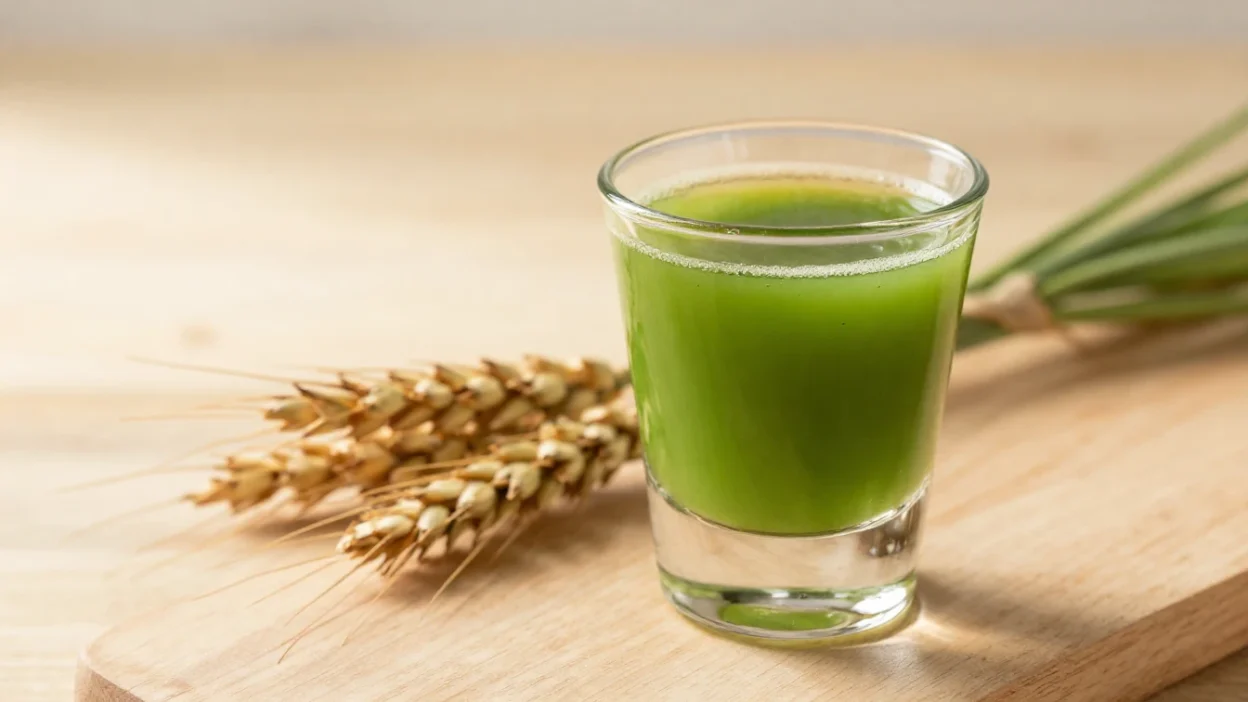
You’ve seen it at the juice bar — that tiny shot glass filled with something intensely green, ordered by the person who looks like they haven’t been sick in years. Maybe you’ve tried it once and made a face. Maybe you’ve been curious but never quite convinced it was worth the hype.
Here’s the thing: wheatgrass has been around a lot longer than the wellness trend it’s associated with. People have been using it for centuries in traditional medicine, and modern research is starting to catch up with what many cultures already knew.
But let’s be real — a lot of what circulates online about wheatgrass is either exaggerated or vague. “Detoxifies your body.” “Cures everything.” “Green blood.” It all sounds a bit dramatic.
So this article is here to cut through the noise. We’ll look at what wheatgrass actually contains, what science genuinely supports, how it can fit into your daily routine, and what to watch out for. No miracle claims — just honest, practical information about a plant that’s genuinely worth knowing.
What Is Wheatgrass, Exactly?
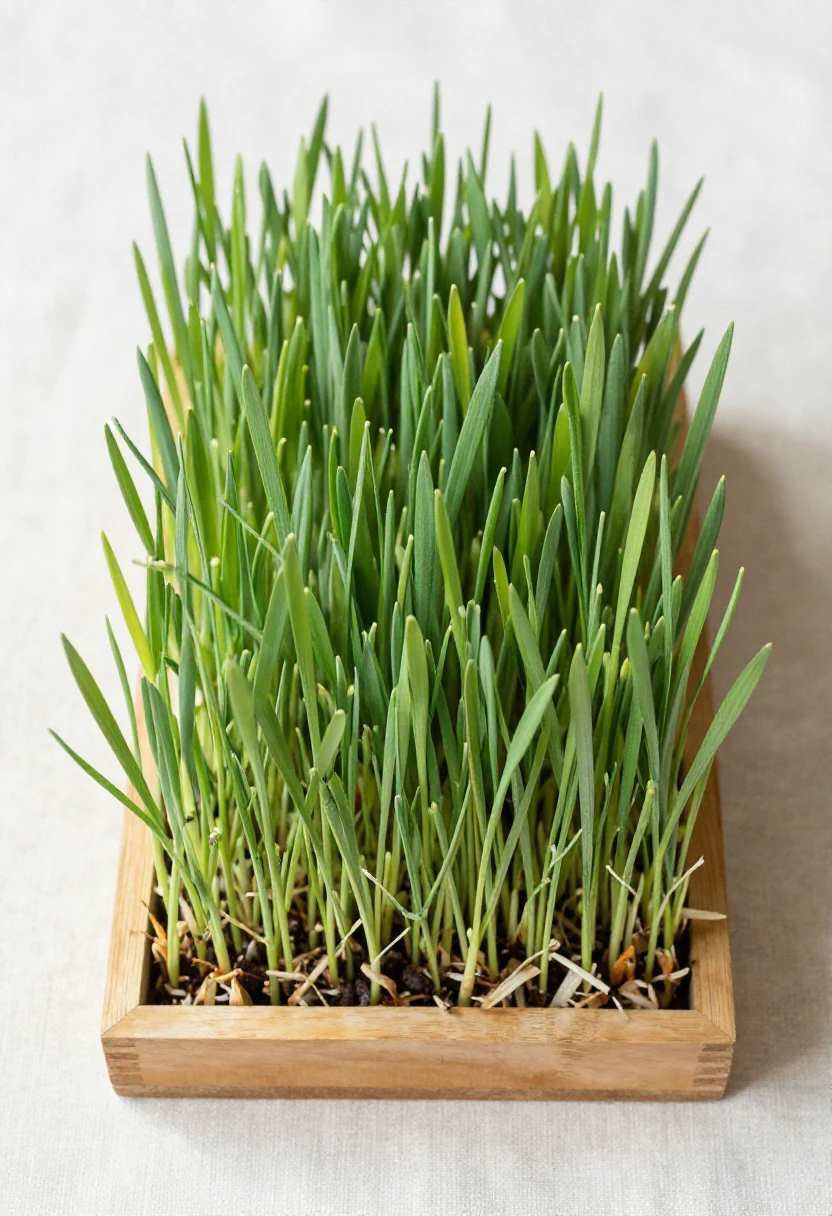
Wheatgrass is exactly what it sounds like — the young, freshly sprouted grass of a wheat plant (Triticum aestivum). But don’t let the simplicity fool you. This is not the same wheat that ends up in your bread or pasta. Wheatgrass is harvested incredibly early — usually just 7 to 10 days after the seed sprouts, when the plant is still small, bright green, and packed with nutrients.
At that stage, before the plant “joints” (starts developing its mature stem), the concentration of chlorophyll, vitamins, enzymes, and antioxidants is at its absolute peak. Once the plant grows past that window, those levels drop sharply. So timing matters — and that’s why wheatgrass is always harvested young.
It’s sometimes called “green blood” — a nickname that comes from its unusually high chlorophyll content and the structural similarity between chlorophyll and hemoglobin. Poetic, and actually not that far from the truth.
Where Does It Come From?
Wheatgrass has roots in both ancient tradition and modern wellness culture. It was used in Ayurvedic medicine for thousands of years to treat everything from inflammation to digestive issues. In the Western world, it gained popularity in the 1930s thanks to an American agricultural chemist named Charles Schnabel, who became so convinced of its nutritional value that he fed it to his sick hens — and watched them recover and lay more eggs than ever. By 1940, powdered wheatgrass was being sold in pharmacies across the US and Canada.
It never really went away after that. And today, you’ll find it at every juice bar, health food store, and wellness brand worth its salt.
Fresh Juice, Powder, or Capsules — What’s the Difference?
Wheatgrass comes in a few different forms, and the one you choose matters more than you might think:
- Fresh juice — cold-pressed from young shoots, this is considered the most nutrient-dense form. It should ideally be consumed within 10–15 minutes of pressing to avoid oxidation and enzyme loss. This is the “living food” version.
- Frozen juice — a solid second option when fresh isn’t practical. Freezing preserves most of the nutrients without the damage that heat causes.
- Powder — made by drying wheatgrass at low temperatures (under 40°C). Convenient, shelf-stable, and easy to add to smoothies. Some nutrients are reduced in the process, but a good-quality powder still delivers real value.
- Capsules — the most convenient option, ideal for travel or when you simply can’t stomach the taste. Less bioavailable than juice, but still a practical way to get your daily dose.
If you have access to fresh wheatgrass juice — go for that. If not, a quality powder from a trusted brand is a perfectly good everyday option.
Wheatgrass Nutrition Facts
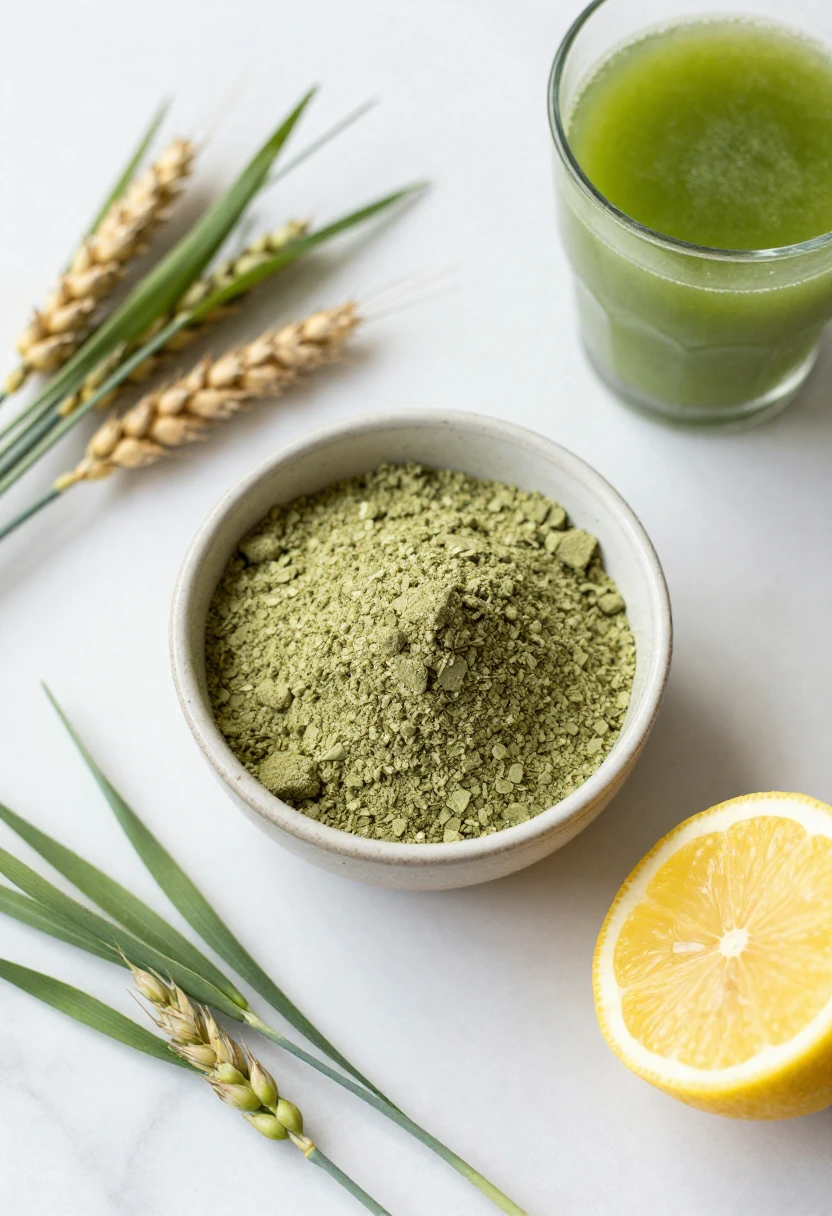
Before we get into what wheatgrass can do for you, it helps to understand what’s actually in it. Because the benefits don’t come from magic — they come from a genuinely impressive nutritional profile packed into something the size of a small handful of grass.
Vitamins and Minerals at a Glance
Wheatgrass is a concentrated source of nutrients. In a single serving of wheatgrass powder (about 1 tablespoon), you get a meaningful dose of:
- Vitamin A — supports eye health, skin, and immunity
- Vitamin C — antioxidant powerhouse, collagen production
- Vitamin E — protects cells from oxidative damage
- Vitamin K — essential for blood clotting and bone health
- B vitamins — including B1, B2, B3, B6, B9 (folate), and B12 precursors
- Iron — critical for red blood cell production
- Potassium — supports heart and muscle function
- Zinc, selenium, magnesium, calcium, phosphorus
It’s not a replacement for a balanced diet — no single food is. But as a concentrated nutritional boost, it’s hard to argue with that list.
Chlorophyll — The Star of the Show
If there’s one thing wheatgrass is truly famous for, it’s chlorophyll. And for good reason — chlorophyll makes up roughly 70% of wheatgrass’s dry weight. That’s an extraordinary amount.
Chlorophyll is the pigment that gives plants their green color, but its role goes beyond aesthetics. It’s structurally very similar to hemoglobin — the molecule that carries oxygen in your blood — with one key difference: hemoglobin has iron at its center, while chlorophyll has magnesium. This similarity is part of why wheatgrass has been studied for its potential to support healthy blood and oxygen delivery in the body.
Beyond that, chlorophyll is a potent antioxidant. Research suggests it may help with everything from managing inflammation and supporting detoxification to promoting healthy skin and even freshening breath. A 2024 study highlighted its potential role in weight management, immune support, and slowing certain effects of aging.
Amino Acids, Enzymes, and Antioxidants
This is where wheatgrass gets genuinely interesting from a scientific standpoint.
Amino acids: Wheatgrass contains both essential and non-essential amino acids — the building blocks of protein. Research has identified at least 17 different amino acids in wheatgrass, including 8 of the 9 essential ones your body can’t produce on its own. These contribute to muscle repair, digestion, and overall cellular function.
Enzymes: Wheatgrass is rich in active enzymes — including superoxide dismutase (SOD), one of the body’s most important natural antioxidant defenses. These enzymes are sensitive to heat, which is exactly why fresh or cold-processed wheatgrass is always preferable to anything that’s been heat-treated.
Antioxidants: Beyond chlorophyll, wheatgrass contains flavonoids, phenolic compounds, and vitamins C and E — all working together to neutralize free radicals and reduce oxidative stress in the body.
Put it all together, and you have a plant that’s genuinely nutrient-dense — not just trendy.
8 Real Health Benefits of Wheatgrass
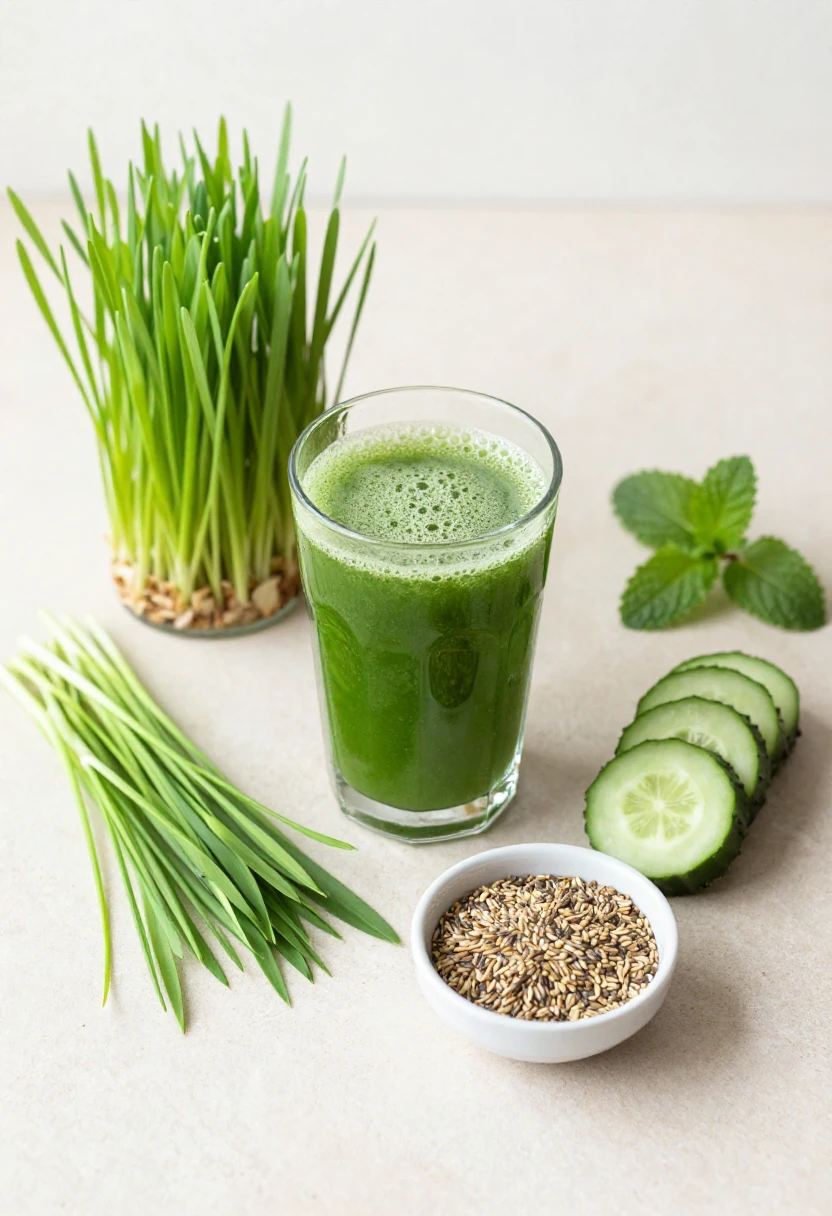
Let’s be clear from the start: wheatgrass isn’t a cure-all. But when you look at what’s inside it and what research has found so far, there are some genuinely compelling reasons to make it part of your routine. Here’s what the science actually says.
1. Powerful Antioxidant Protection
Every day, your body produces free radicals — unstable molecules that damage cells, accelerate aging, and contribute to chronic diseases like heart disease and cancer. Antioxidants are what keep them in check.
Wheatgrass is loaded with them. Vitamins C and E, chlorophyll, flavonoids, phenolic compounds — they all work together to neutralize oxidative stress before it causes lasting damage. Studies have confirmed that wheatgrass has significant free radical scavenging activity, meaning it actively seeks out and disarms those harmful molecules.
Think of it as a daily maintenance dose for your cells.
2. Anti-Inflammatory Effects
Chronic inflammation is behind a surprising number of modern health problems — from joint pain and skin conditions to heart disease and type 2 diabetes. It’s quiet, slow-burning, and often goes unnoticed until it becomes a real issue.
The antioxidants and bioactive compounds in wheatgrass have been shown to help reduce inflammatory markers in the body. Research published in the Journal of Biologically Active Products from Nature found that wheatgrass’s high antioxidant content may help suppress inflammation at the cellular level. It won’t replace an anti-inflammatory diet or medical treatment — but as a daily addition, it can genuinely move the needle.
3. Supports Digestion and Gut Health
Your gut does a lot more than just process food — it plays a central role in immunity, mood, and overall health. And wheatgrass gives it some meaningful support.
First, it’s a good source of dietary fiber, which feeds beneficial gut bacteria and keeps things moving. Second, its amino acids support the production of digestive enzymes, making it easier for your body to break down and absorb nutrients. And third, research — including a 2014 review — found that wheatgrass juice showed real promise in helping manage ulcerative colitis, reducing disease activity and rectal bleeding in participants who consumed 100ml of wheatgrass juice daily for a month.
If your digestion feels sluggish or your gut needs some extra care, wheatgrass is worth considering.
4. May Help With Blood Sugar Balance
This one is particularly interesting for anyone managing their energy levels or concerned about metabolic health. Traditional medicine — including Ayurveda — has long used wheatgrass to help regulate blood sugar, and modern science is beginning to explore why.
A 2016 study on rats found that wheatgrass raised insulin levels and helped lower blood glucose. While human studies are still limited, the anti-inflammatory properties of wheatgrass likely play a role here too — since chronic inflammation is closely linked to insulin resistance and type 2 diabetes. It’s not a substitute for medical management, but it’s a promising area of ongoing research.
5. Boosts Immunity
Your immune system is your body’s first line of defense — and wheatgrass gives it a solid foundation to work from. The combination of vitamins A, C, and E, along with zinc, selenium, and iron, covers most of the key micronutrients your immune system relies on daily.
A preliminary 2020 study found that wheatgrass juice may have positive effects on immune function, particularly in people undergoing chemotherapy — a group whose immunity is severely compromised. A 2024 review also highlighted wheatgrass as a potentially valuable dietary addition for people with colorectal cancer, specifically for its immune-supporting nutrients.
These are early findings, and more large-scale research is needed. But the nutritional foundation is real and solid.
6. Supports Energy Levels
This isn’t about a caffeine-style jolt. It’s quieter and more sustained than that.
Wheatgrass provides complex carbohydrates for steady energy, along with iron — which is critical for oxygen transport in the blood. Low iron is one of the most common reasons people feel constantly tired, especially women. Add to that the full spectrum of B vitamins, which play a direct role in how your body converts food into usable energy, and you start to understand why so many people report feeling more alert and less sluggish after adding wheatgrass to their mornings.
It’s not magic. It’s just good nutrition, delivered efficiently.
7. May Aid Detoxification
The word “detox” gets thrown around so carelessly that it’s almost lost its meaning. So let’s be specific about what wheatgrass actually does here.
Your liver is your body’s primary detox organ — and chlorophyll, wheatgrass’s dominant compound, has been shown to support liver function and help the body eliminate stored toxins. Chlorophyll may also bind to certain heavy metals and carcinogens in the digestive tract, reducing their absorption. This isn’t about juice cleanses or dramatic resets — it’s about giving your liver the nutritional tools it needs to do its job well, every day.
8. Potential Role in Cancer Support
This is the benefit that requires the most nuance — and the most honesty.
Some research, including a 2024 review, suggests that wheatgrass has anti-inflammatory and antioxidant properties that may offer some protective effects against certain cancers, including colorectal, oral, cervical, and breast cancer. Its ability to reduce oxidative stress and support immune function makes it a theoretically valuable addition for people at risk or undergoing treatment.
However — and this is important — wheatgrass is not a cancer treatment. The American Cancer Society is clear that available evidence does not support the idea that wheatgrass can cure or prevent cancer. What it can do is contribute to the kind of nutrient-rich, anti-inflammatory diet that is broadly associated with lower cancer risk.
Use it as part of a healthy lifestyle. Not as a replacement for medical care.
How to Use Wheatgrass Every Day
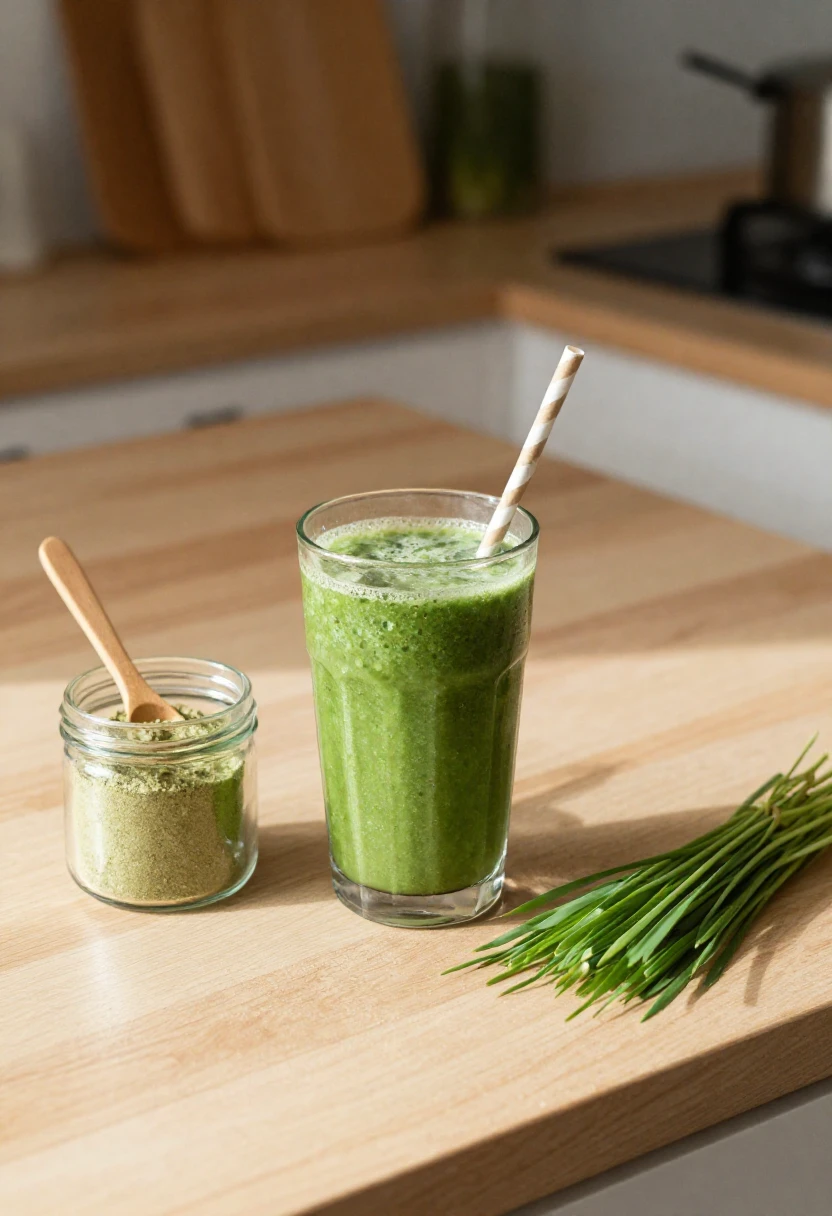
Knowing wheatgrass is good for you is one thing. Actually getting it into your routine is another. The taste alone is enough to make some people hesitate — it’s grassy, earthy, and intensely green in a way that takes some getting used to. But once you find the format that works for you, it becomes surprisingly easy to stick with.
Here are your options.
Fresh Juice Shots — The Classic Way
This is the original, most potent form. A small 1–2 oz shot of freshly cold-pressed wheatgrass juice is what you’ll find at juice bars, and for good reason — it delivers the highest concentration of active enzymes, chlorophyll, and nutrients with nothing lost to processing.
The catch? It needs to be consumed quickly. Once pressed, wheatgrass juice starts oxidizing almost immediately. Ideally, drink it within 10–15 minutes of juicing. That’s why the juice bar experience works so well — it’s pressed and handed to you on the spot.
If you want to make it at home, you’ll need a slow juicer or a dedicated wheatgrass juicer (regular blenders don’t do the job properly — they generate too much heat and destroy the enzymes). Grow your own trays of wheatgrass, cut what you need, juice it fresh, and drink it straight or chase it with a slice of lemon or orange to soften the flavor.
Yes, it tastes like a lawn. But you get used to it faster than you’d think.
Adding Powder to Smoothies
This is the most popular everyday option — and honestly, the most practical one for most people.
A good-quality wheatgrass powder, made from low-temperature dried juice, retains a solid portion of its nutrients and is incredibly easy to use. Just add 1 teaspoon to 1 tablespoon to your morning smoothie and you won’t even taste it if you pair it with:
- Banana + frozen mango + coconut water
- Pineapple + cucumber + ginger + lime
- Apple + spinach + lemon + a splash of green apple juice
The sweetness and acidity of fruit cuts right through the grassy flavor. It becomes a completely invisible upgrade to your morning routine — and your smoothie turns a satisfying shade of green.
One tip: always add wheatgrass powder after blending, or blend briefly at low speed. High-speed blending generates heat that can degrade some of the sensitive enzymes.
Capsules for When You’re On the Go
Some days there’s no time for smoothies, no juice bar nearby, and no desire to taste anything green whatsoever. That’s what capsules are for.
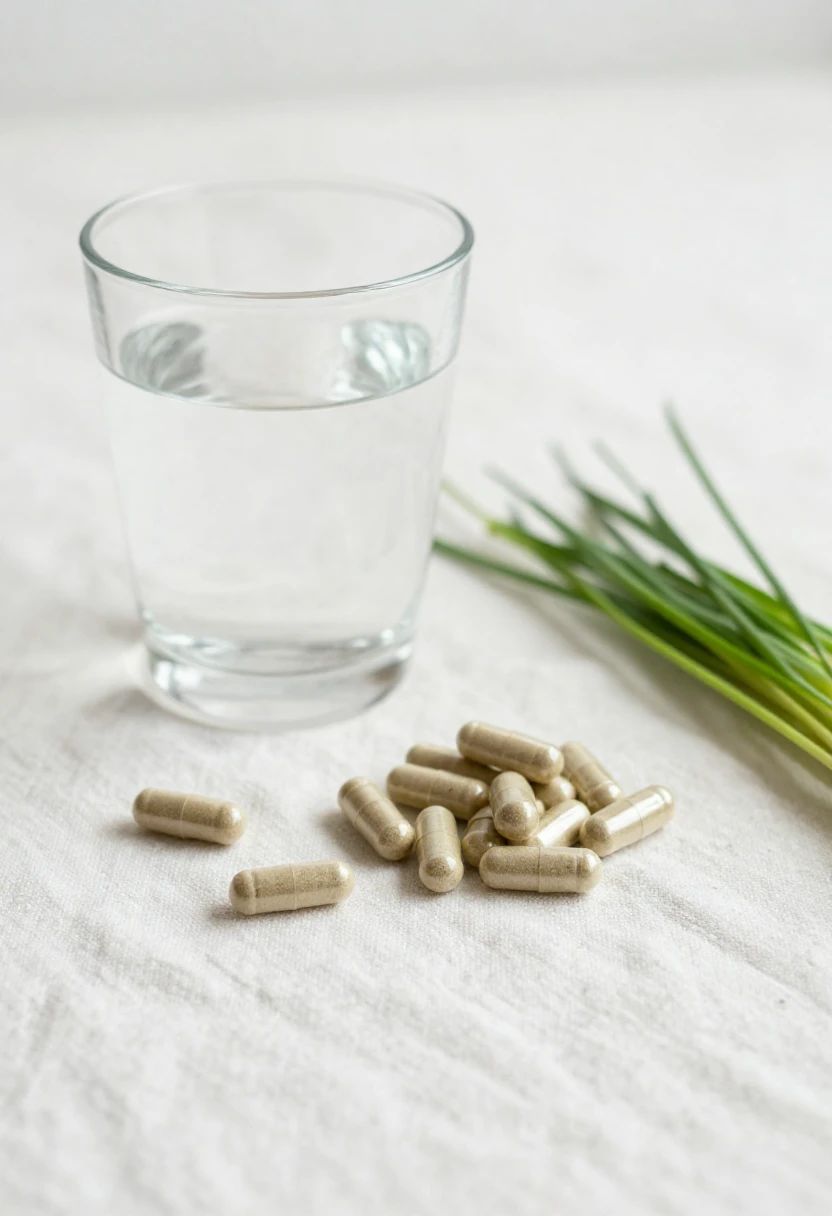
Wheatgrass capsules are the least bioavailable form — meaning your body absorbs the nutrients slightly less efficiently than from juice or powder — but they’re still a meaningful source of vitamins, minerals, and antioxidants. And the convenience factor is real. Toss them in your bag, take them with a glass of water in the morning, done.
If you travel frequently, are new to wheatgrass, or just struggle with the taste, capsules are a perfectly valid way to start.
How Much Wheatgrass Per Day?
There’s no one-size-fits-all answer, but here are some practical guidelines:
- Fresh juice: 1–2 oz (30–60ml) per day is the standard starting point
- Powder: 1 teaspoon (3–5g) per day, working up to 1 tablespoon if well tolerated
- Capsules: follow the manufacturer’s dosage, typically 2–4 capsules daily
Start small. Seriously. Wheatgrass is potent, and jumping straight into large doses can cause nausea, headaches, or digestive discomfort — especially if your body isn’t used to concentrated greens. Give yourself a week or two at a low dose before increasing.
Morning is the best time to take wheatgrass — on an empty stomach or alongside breakfast — so your body can absorb the nutrients without competition from a heavy meal.
And one more thing: consistency beats intensity. A small daily dose over weeks and months will do far more for you than a large dose once in a while. Think of it as a daily habit, not an occasional health kick.
Does Wheatgrass Have Any Side Effects?
Wheatgrass has a strong safety record for most people — but “natural” doesn’t automatically mean “suitable for everyone in any amount.” There are a few things worth knowing before you make it a daily habit.
Who Should Be Careful
Pregnant and breastfeeding women should consult their doctor before adding wheatgrass to their routine. There simply isn’t enough research on its effects during pregnancy to say it’s completely risk-free.
People with wheat or grass allergies should approach wheatgrass cautiously. While wheatgrass itself is gluten-free when harvested before the grain develops, cross-contamination is possible — and if you have a known sensitivity to grasses or pollen, you may react to wheatgrass even in its pure form.
People with celiac disease should look for certified gluten-free wheatgrass products and ideally check with their doctor first, just to be safe.
Anyone on blood thinners — such as warfarin — should be aware that wheatgrass is high in vitamin K, which plays a role in blood clotting. It doesn’t mean you can’t have it, but consistency matters. Sudden large increases in vitamin K intake can interfere with how blood-thinning medications work.
Immunocompromised individuals should be cautious with fresh wheatgrass juice specifically. Because it’s consumed raw, there’s a small but real risk of bacterial contamination from the soil. For people with weakened immune systems, a high-quality powder or capsule may be a safer choice.
Signs You’re Taking Too Much
Most side effects associated with wheatgrass are mild and temporary — and they almost always come down to taking too much, too fast. The most commonly reported ones include:
- Nausea — especially when taken on an empty stomach in large amounts
- Headaches — often a sign your body is adjusting to the detoxifying effects
- Digestive discomfort — bloating or loose stools, particularly when starting out
- Mild allergic reactions — in rare cases, hives or throat swelling have been reported
The solution is almost always the same: slow down. Drop back to a smaller dose, let your body adjust, and build up gradually. Most people who experience these symptoms at the beginning find they disappear entirely within a week or two.
If you experience anything more serious — significant allergic reactions, persistent nausea, or anything that feels genuinely alarming — stop taking wheatgrass and speak with your doctor.
The bottom line: wheatgrass is safe and well-tolerated for the vast majority of people. It just asks you to be patient with it at the start.
Can You Grow Wheatgrass at Home?

Here’s something most people don’t realize: wheatgrass is one of the easiest things you can grow at home. No garden required. No green thumb needed. Just a windowsill, a tray, some soil, and a bag of wheat berries.
Growing your own means you know exactly what went into it — no pesticides, no mystery ingredients, just fresh living greens that you harvest and juice yourself. It’s also significantly cheaper than buying shots at a juice bar every day.
What You Need
The setup is minimal:
- Hard winter wheat berries — available at health food stores or online
- A shallow growing tray — any flat container about 2–3 inches deep works
- Organic potting soil or a growing medium — coconut coir is a popular choice
- A spray bottle for watering
- A slow juicer or wheatgrass juicer — if you want fresh juice
- A sunny windowsill or a spot with good indirect light
That’s genuinely it. No special equipment, no complicated setup.
Step-by-Step Basics
Step 1 — Soak the seeds. Place your wheat berries in a jar, cover with water, and soak for 8–12 hours. This kickstarts the germination process and gives your seeds a head start.
Step 2 — Prepare your tray. Fill your tray with about an inch of moist potting soil. Spread the soaked seeds evenly across the surface — they should be close together but not piled on top of each other.
Step 3 — Cover and wait. Cover the tray loosely with another tray or a damp cloth for the first 2–3 days. This keeps moisture in and encourages sprouting. Mist with water once or twice a day.
Step 4 — Uncover and grow. Once you see green shoots emerging — usually by day 3 or 4 — remove the cover and place the tray in indirect sunlight. Continue misting daily to keep the soil moist but not waterlogged.
Step 5 — Harvest. By day 7 to 10, your wheatgrass will be around 6–7 inches tall and ready to cut. Use clean scissors to cut just above the soil line. Juice immediately for the freshest, most nutrient-dense shot possible.
One tray typically yields enough for several days of shots. And if you start a new tray every few days, you’ll have a continuous rolling supply of fresh wheatgrass all year round — right from your kitchen counter.
Final Thoughts
Wheatgrass isn’t a miracle. It won’t fix everything overnight, and it shouldn’t replace real food, proper sleep, or medical care when you need it. But for what it is — a small, concentrated dose of genuinely impressive nutrition — it earns its place in a healthy daily routine.
The chlorophyll, the antioxidants, the amino acids, the vitamins and minerals — they all add up. And unlike a lot of wellness trends that come and go, wheatgrass has been around for centuries, used across cultures, and is now backed by a growing body of modern research.
Start small. Be consistent. Find the format that works for your life — whether that’s a morning shot, a green smoothie, or a couple of capsules with your breakfast. Give it a few weeks before you judge it.
Sometimes the simplest things, done quietly and consistently, make the biggest difference.
Frequently Asked Questions
Q: Does wheatgrass actually taste that bad? It depends on your palate — but yes, it’s an acquired taste. Fresh juice is intensely grassy and earthy. Most people find it much easier to handle when chased with citrus, or mixed into a fruit smoothie as a powder. Give it a week and you’ll barely notice it.
Q: Is wheatgrass safe to take every day? For most healthy adults, yes. A daily dose of 1–2 oz of fresh juice or 1 teaspoon of powder is well within a safe and beneficial range. If you’re pregnant, on medication, or have a known allergy to grasses or wheat, check with your doctor first.
Q: Does wheatgrass contain gluten? Wheatgrass itself — harvested before the grain develops — is naturally gluten-free. However, contamination can occur during processing. If you have celiac disease or a serious gluten sensitivity, look specifically for certified gluten-free wheatgrass products.
Q: How long does it take to feel the benefits of wheatgrass? Most people don’t feel a dramatic overnight change — and that’s normal. The benefits of wheatgrass are cumulative. With consistent daily use, many people report noticing improvements in energy, digestion, and general wellbeing within 2 to 4 weeks.