Contents
- Before Croissants: The Austrian Kipferl
- The Famous Vienna Legend 🌙
- How the Pastry Eventually Reached France 🇫🇷
- The Moment Croissants Became… Croissants 🧈
- Croissants and the French Breakfast Tradition ☕
- When Croissants Went Global 🌍
- Modern Croissant Variations 🍫
- Creative Pastry Trends
- Why the Croissant’s Story Is So Interesting
- A Pastry That’s Still Evolving 🥐
There’s something oddly comforting about a croissant. It’s one of those foods that feels simple at first glance, yet somehow manages to feel a little special every time you eat it. Maybe it’s the smell of butter drifting through a bakery early in the morning. Or maybe it’s that soft crackling sound when the crust breaks and the flaky layers inside start to pull apart. Whatever the reason, croissants have a way of making ordinary mornings feel slightly better.
You start to notice this if you travel a bit. Walk into a café in Paris, a small bakery in Amsterdam, a coffee shop in New York, or even a busy café in Seoul, and chances are good you’ll see a tray of croissants sitting near the counter. They’re usually golden, slightly curved, and stacked in a way that makes them hard to ignore. People grab one with their coffee, sometimes without even thinking about it. ☕
In a strange way, croissants feel both elegant and casual at the same time. They show up in fancy hotel breakfasts, but also in quick grab-and-go cafés. They’re equally at home on a quiet Sunday morning or during a rushed weekday commute.
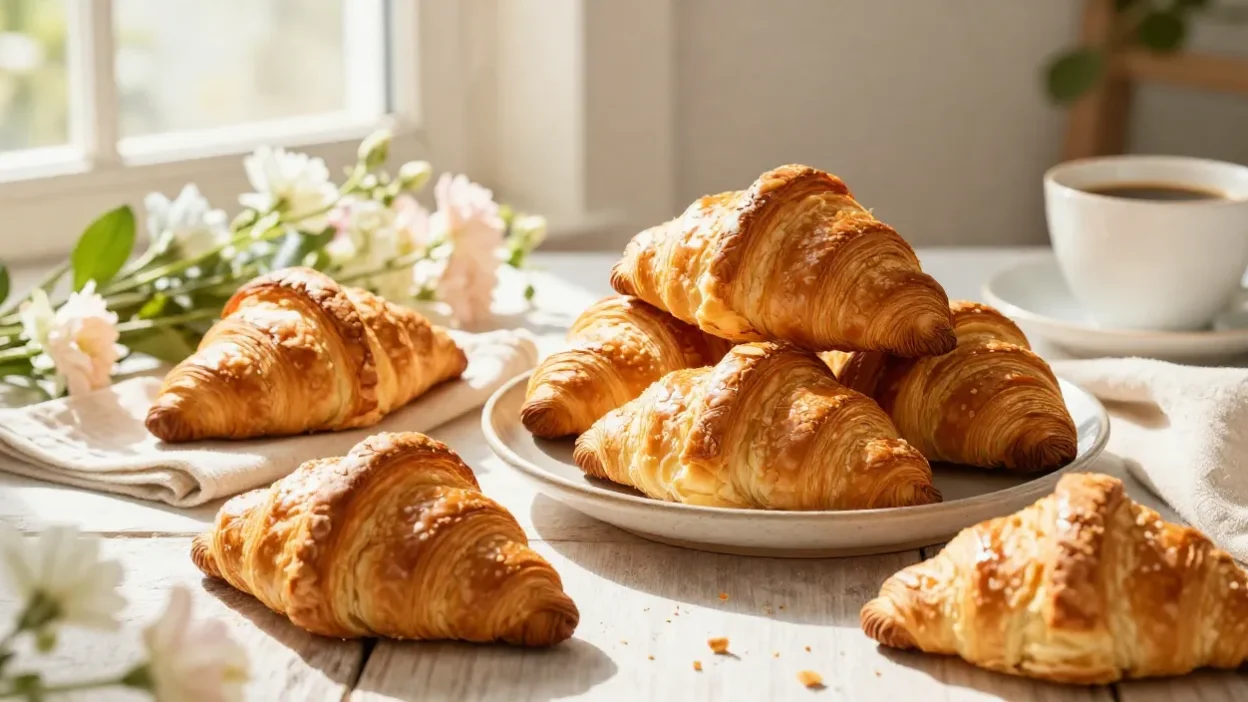
That everyday familiarity might be why most people never really question where croissants came from. The connection with France feels almost automatic. If you ask someone to picture a French breakfast, they’ll probably imagine a scene that looks something like this:
- a small café table near the window
- a cup of coffee or café au lait
- maybe a newspaper or phone on the table
- and of course, a warm croissant on a plate 🥐
It’s such a strong image that many people assume croissants must have been invented in France. But here’s the part that tends to surprise people: they actually weren’t.
The pastry that eventually became the croissant started its story somewhere else entirely. Long before Parisian bakeries became famous for buttery pastries and elegant displays, bakers in Austria were already making a crescent-shaped bread called the kipferl.
Over time, that modest pastry slowly traveled across Europe. The recipe changed along the way — sometimes a little, sometimes quite dramatically. New baking techniques appeared, ingredients evolved, and different cultures left their mark on the pastry.
So the croissant we recognize today didn’t appear overnight. It’s really the result of centuries of small adjustments, experiments, and baking traditions blending together. In other words, when you bite into a croissant, you’re tasting a pastry that has been evolving for hundreds of years.
Before Croissants: The Austrian Kipferl
To understand where croissants came from, we have to go back several centuries — long before laminated dough, modern pastry schools, or Instagram-worthy bakery displays were even a thing.
In medieval Austria, bakers were already making pastries shaped like crescents. These early treats were known as kipferl, and historians believe some versions may date back as far as the 1200s. That’s a long time ago, and naturally many of the original recipes have been lost to history. Still, enough references remain to give us a general idea of what these pastries were like.
The most important thing to know is that kipferl were quite different from modern croissants. They shared the same curved shape, but the texture and preparation were not the same at all.
Instead of the delicate flaky layers we expect from croissants today, kipferl were usually made from a yeast dough. The result was softer and more bread-like. If you imagine something halfway between a small bread roll and a pastry, you’re probably on the right track.
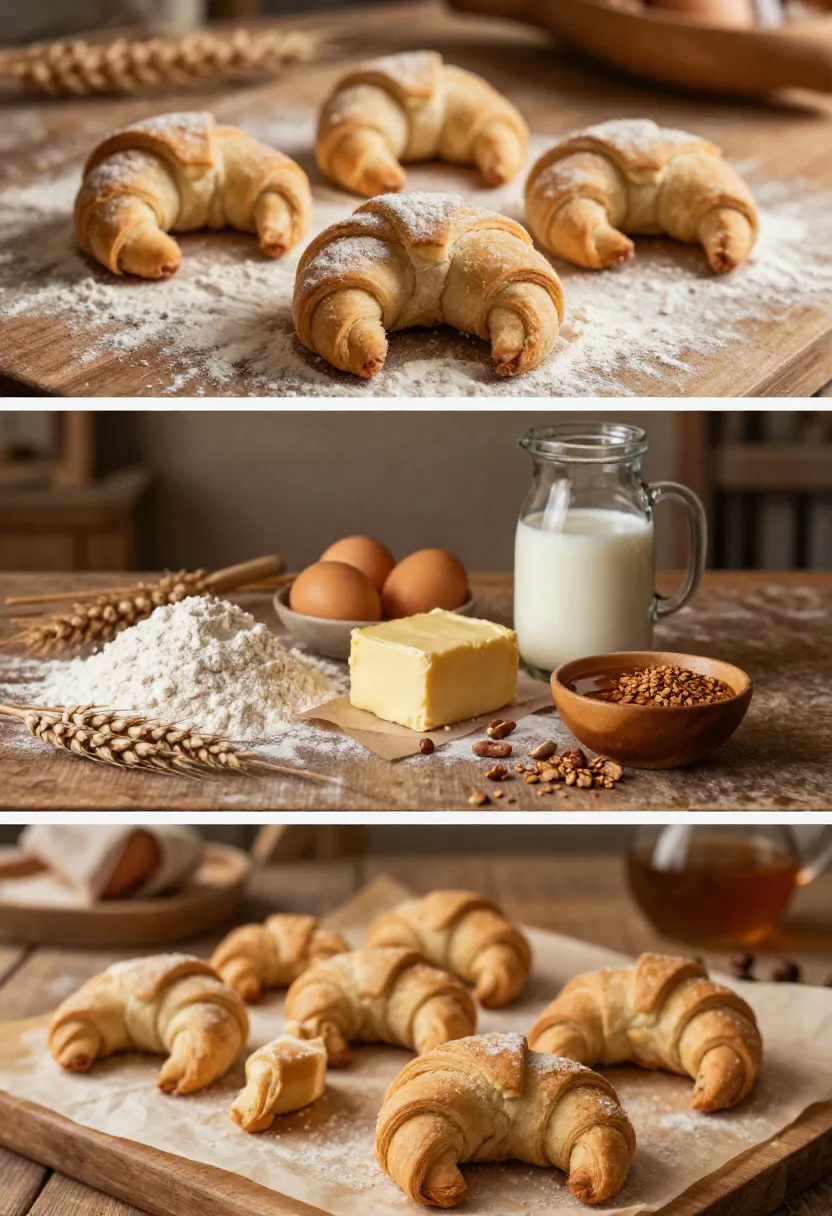
Another interesting detail is that kipferl weren’t always sweet. Some were lightly sweetened with honey or sugar, while others leaned toward the savory side. Recipes changed depending on the region, the baker, and whatever ingredients happened to be available.
Many traditional versions used ingredients such as:
- wheat flour
- yeast
- milk or cream
- eggs
- butter or sometimes lard
- sugar, honey, or ground nuts 🌰
Because the recipe was flexible, bakers often adapted it to their own tastes. In some regions, almonds or walnuts were mixed into the dough. Other versions were brushed with butter and sprinkled with sugar or spices after baking.
Despite all these variations, one thing stayed the same: the crescent shape. That simple curved silhouette became the defining feature of the kipferl, and eventually it would inspire one of the most famous pastries in the world.
At the time, though, it was just another baked good — something people enjoyed with coffee or during celebrations, without realizing it would one day influence global pastry culture.
The Famous Vienna Legend 🌙
Whenever people start talking about the origins of croissants, one particular story almost always comes up. It’s a dramatic one, and honestly it sounds a bit like something from a historical movie.
The legend takes place during the Siege of Vienna in 1683, when Ottoman forces attempted to capture the city. According to the story, the invading army tried to sneak into Vienna by digging tunnels beneath the city walls under the cover of darkness.
Now here’s where the bakers enter the scene.
Because bakers traditionally start working very early — often long before sunrise — they were supposedly awake while the rest of the city slept. As the story goes, they heard unusual digging sounds underground and quickly alerted the city’s guards.
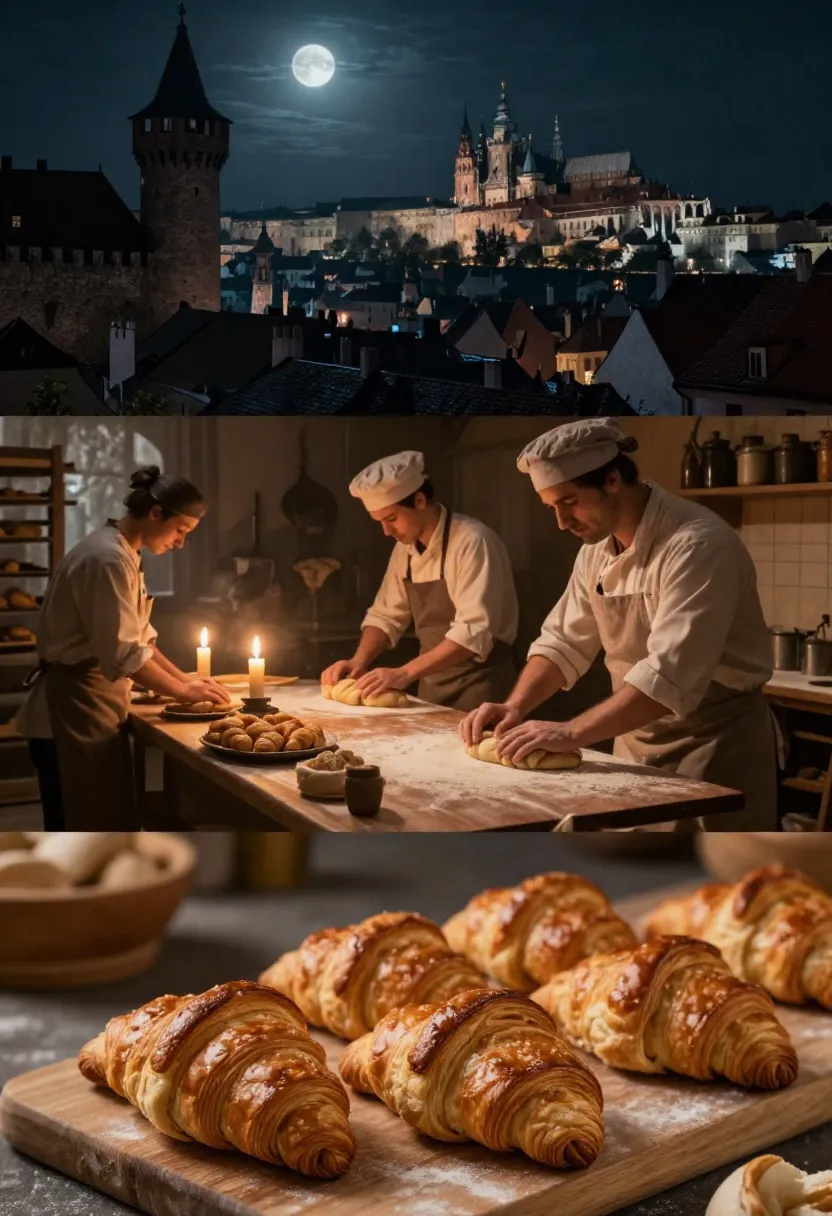
That warning helped stop the surprise attack before it could succeed.
To celebrate the victory, Viennese bakers reportedly created a pastry shaped like the crescent moon symbol found on the Ottoman flag. Eating the pastry was meant to represent defeating the enemy.
It’s a great story, and you can see why it has survived for centuries. Still, historians tend to be a little cautious about it. Crescent-shaped pastries were already known in Europe before the siege, which suggests the shape probably wasn’t invented specifically for that event.
But even if the details are a bit exaggerated, the legend remains part of croissant folklore. Stories like this often linger because they make history easier to remember — and honestly, they make the journey of a pastry far more entertaining.
After all, the croissant’s backstory suddenly includes a few unexpected elements:
- midnight bakers working before sunrise
- secret tunnels beneath a city
- a military siege
- and a pastry that became a symbol of victory 🥐
Not bad for something that most of us simply eat with coffee in the morning.
How the Pastry Eventually Reached France 🇫🇷
Food traditions have a funny way of traveling. A recipe might start in one small region and, decades or even centuries later, show up somewhere completely different. Sometimes it spreads through trade, sometimes through migration, and occasionally simply because one baker tasted something interesting and decided to recreate it at home.
Something similar happened with the pastry that would eventually become the croissant.
By the 18th century, Paris was already turning into one of Europe’s most exciting culinary hubs. Bakers, chefs, and confectioners from different countries were constantly arriving in the city, bringing their own techniques and recipes with them. If you were a baker looking for opportunity back then, Paris was a pretty good place to be.
At some point during this period, the Austrian kipferl began appearing in Parisian bakeries. The exact moment when it arrived isn’t perfectly documented — which isn’t surprising, considering recipes rarely come with passports or travel records. Still, many food historians believe Austrian bakers likely introduced the pastry to the French capital.
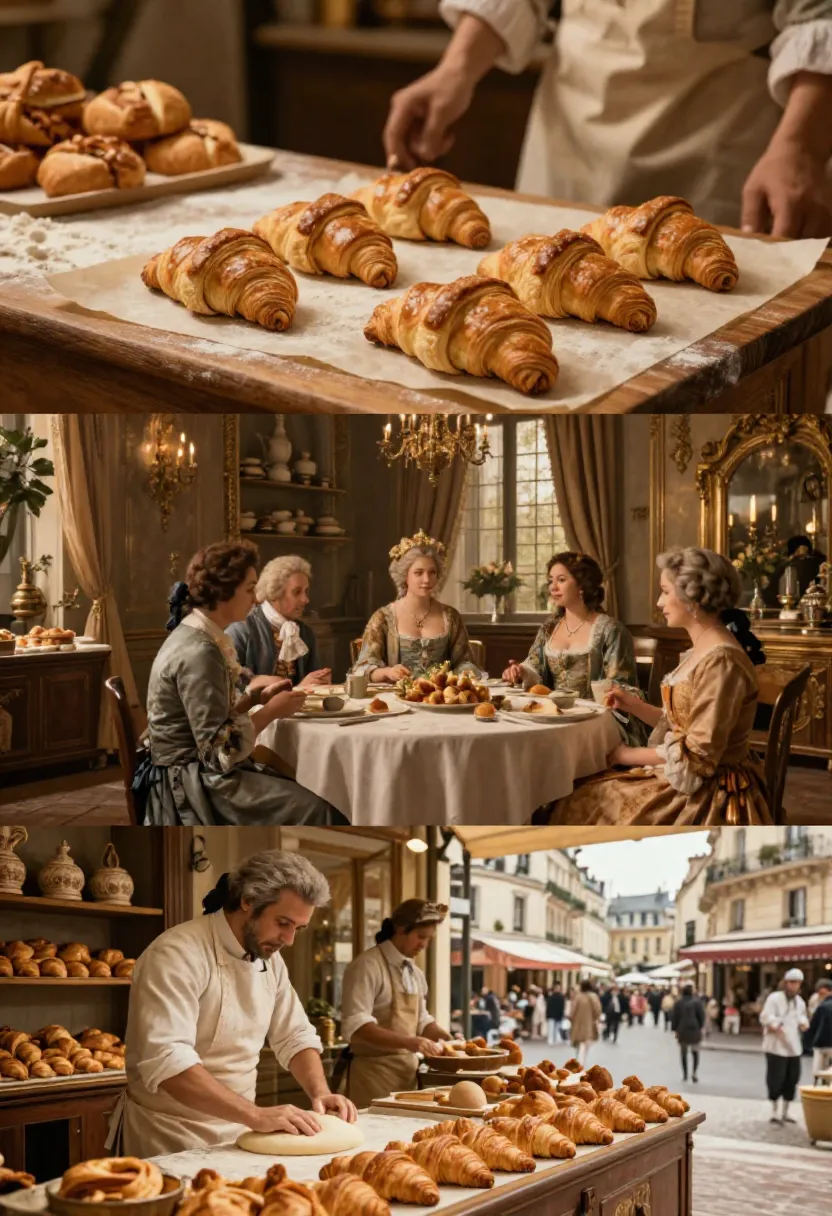
Another explanation that often appears in food history involves Marie Antoinette. Before she became Queen of France, she was an Austrian archduchess, and like many people living abroad, she may have missed certain foods from home. According to a popular story, she asked French bakers to recreate pastries similar to the kipferl she remembered from Austria.
Now, whether this actually happened exactly that way is hard to prove. Historians still debate it. But the idea itself illustrates something important: culinary ideas were constantly moving across Europe at the time.
Recipes traveled through many different channels, including:
- royal courts and aristocratic households 👑
- traveling chefs and bakers
- trade routes between European cities
- cultural exchanges between neighboring countries
Once the crescent-shaped pastry appeared in France, local bakers did what bakers tend to do — they experimented. They didn’t simply copy the Austrian recipe. Instead, they began adjusting it, tweaking techniques, and gradually shaping the pastry into something that better matched French baking traditions.
At first the changes were probably small. But over time, those small adjustments began to add up.
Eventually, the pastry started to look very different from the original kipferl.
The Moment Croissants Became… Croissants 🧈
The biggest transformation happened when French bakers introduced a technique called lamination. If you’ve ever watched someone prepare croissants from scratch, you know the process looks almost a little obsessive at first.
The dough is rolled out.
Then folded.
Then chilled.
Then rolled again.
And then the whole process repeats several more times.
It might seem excessive, but every one of those folds plays an important role. Laminated dough works by trapping thin layers of butter between layers of dough. When the pastry bakes, the butter melts and releases steam, which pushes those layers apart.
That’s what creates the delicate structure croissants are famous for.
The lamination process typically involves a few key steps:
- butter is placed between sheets of dough
- the dough is folded repeatedly
- each fold multiplies the number of layers
- steam forms during baking and separates those layers
The difference this technique makes is enormous. Instead of the soft, bread-like texture of a kipferl, the pastry becomes light, airy, and flaky. The outside turns golden and crisp, while the inside develops dozens of delicate layers.
At that point, the pastry had essentially become something new.
It still kept the familiar crescent shape, but the texture and flavor were completely different. Richer, lighter, and far more delicate than its Austrian ancestor.
Eventually the pastry gained a new name: croissant, which simply means “crescent” in French. 🥐
By the early 19th century, croissants had begun appearing regularly in Parisian bakeries. They weren’t yet the iconic symbol of French breakfast we recognize today — but they were definitely on their way.
Croissants and the French Breakfast Tradition ☕
Interestingly enough, croissants didn’t instantly become the star of the French breakfast table. For a while, they were simply one pastry among many options available at local bakeries.
But over time, they slipped quite naturally into the rhythm of French mornings.
Traditional French breakfasts are usually lighter than those in many other countries. Instead of large plates filled with eggs, bacon, and potatoes, the focus tends to be on simpler foods — bread, pastries, and a good cup of coffee.
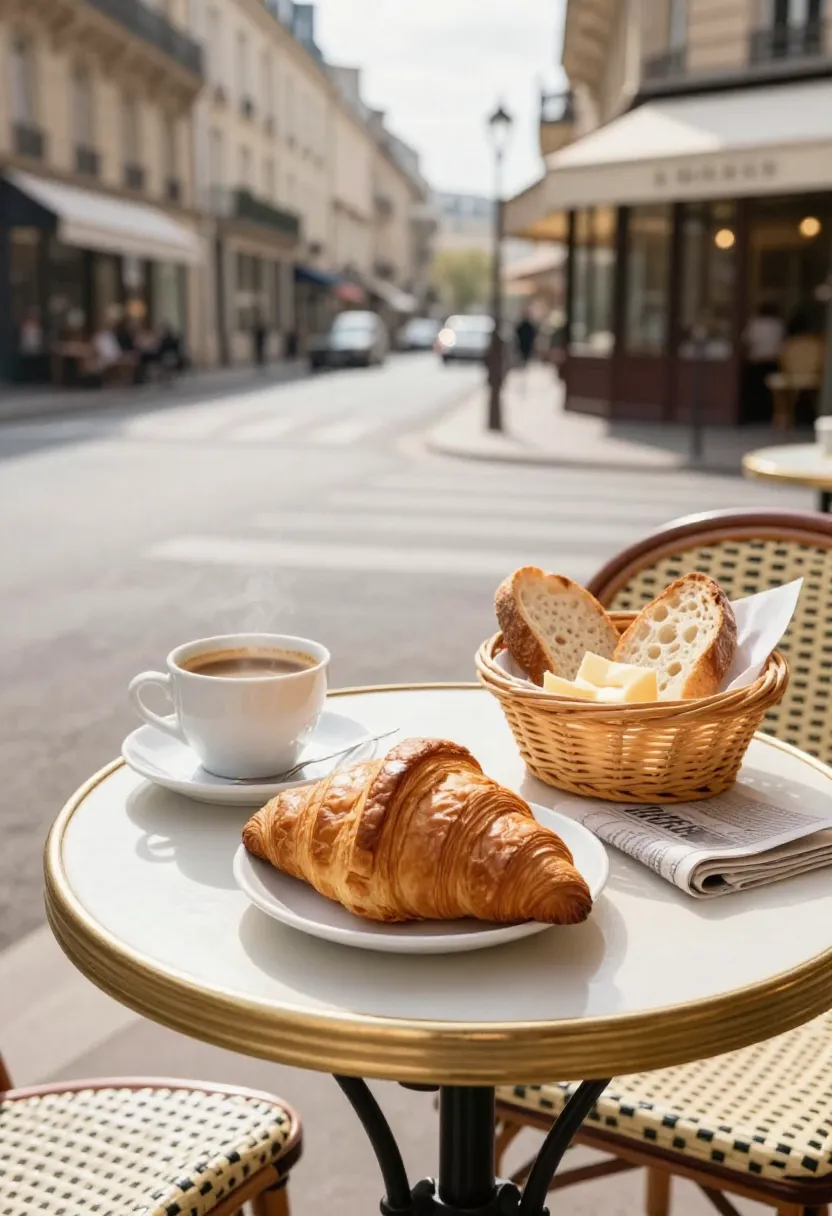
A typical everyday breakfast in France might include:
- a croissant or another pastry 🥐
- coffee, espresso, or café au lait
- a small piece of bread with butter and jam
That combination turns out to work surprisingly well. Croissants are rich and buttery, but they aren’t heavy enough to feel overwhelming first thing in the morning. Paired with coffee, they create a quick but satisfying breakfast.
Over time, the croissant became closely tied to French café culture. The image is almost cinematic at this point: someone sitting at a small table outside a café, sipping coffee while tearing apart a flaky croissant.
Even today, that routine still exists. In many French neighborhoods, people stop by the local bakery early in the morning to pick up fresh bread and pastries for the day.
And more often than not, at least one croissant ends up in the bag. ☕🥐
When Croissants Went Global 🌍
For a long time, croissants were mostly associated with France. You could certainly find similar pastries in nearby European countries, but the croissant itself still felt like a fairly regional specialty. That slowly started to change during the 20th century.
As travel became easier and tourism grew, people began encountering French food in new places. Visitors would try pastries in Parisian cafés, fall in love with them, and then return home with the memory — and sometimes the recipe. Little by little, croissants started appearing outside France.
Another thing was happening at the same time: French cuisine was gaining a strong international reputation. Culinary schools began teaching French techniques to chefs from all over the world. Baking students learned about laminated dough, butter quality, and the careful folding process required to produce those delicate layers.
By the middle of the 20th century, croissants were no longer limited to French bakeries. You could find them in cafés across Europe and North America, and eventually they began appearing in places that might have seemed unlikely decades earlier.
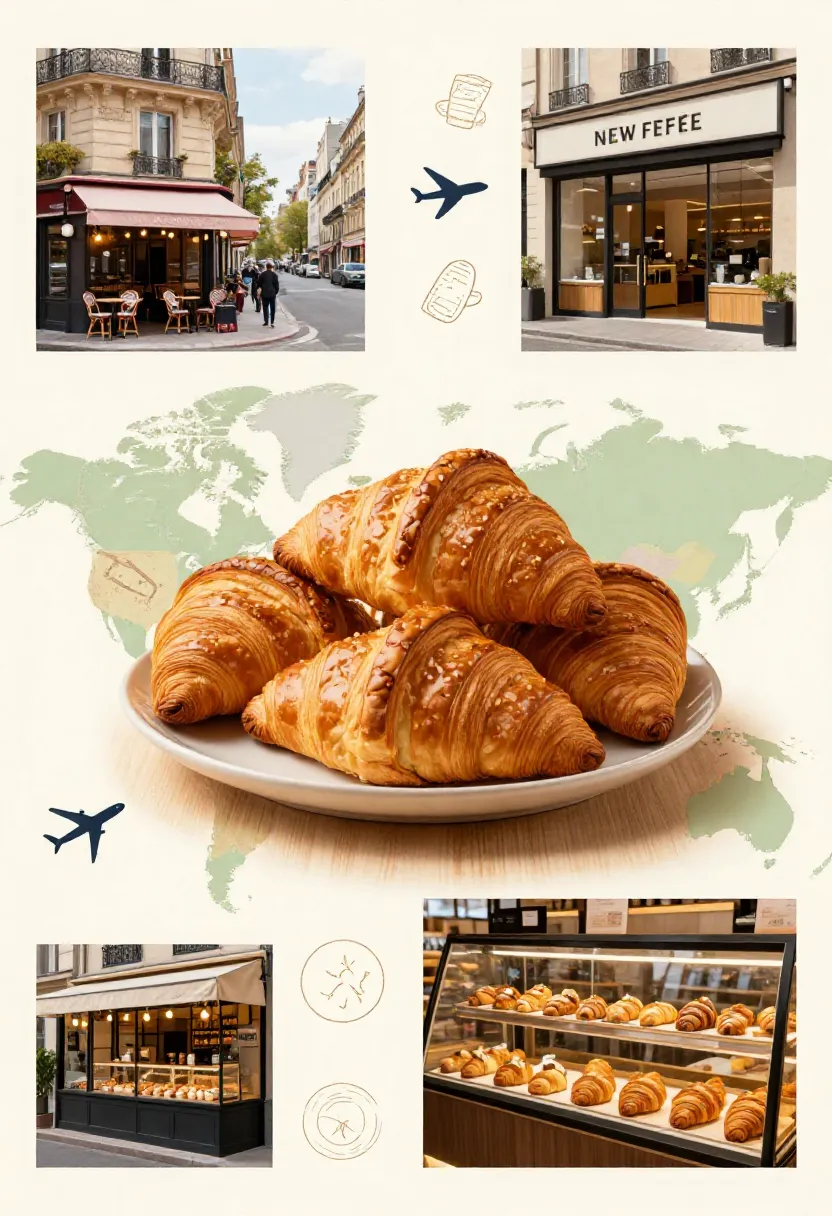
Several factors quietly helped the croissant spread around the world:
- the rise of international tourism ✈️
- French culinary schools teaching pastry techniques
- the growing popularity of café culture
- improved commercial baking technology
Once those things lined up, the pastry started traveling quickly.
Today croissants are so common that it’s easy to forget they were once tied to a specific region. In many cities they’ve become part of the local food culture rather than something imported.
Take Tokyo, for example. Some bakeries there are famous for incredibly delicate croissants with extremely thin layers and precise shapes. In New York, pastry chefs often experiment with new flavors and dramatic presentations. Across much of Europe, croissants are simply part of everyday breakfast — something people pick up at the bakery on the way to work.
In other words, the croissant quietly became global. 🥐
Modern Croissant Variations 🍫
Once croissants spread beyond France, something interesting happened: bakers started experimenting.
At first the classic butter croissant remained the standard. It still is, in many places. But it didn’t take long before bakeries began adding fillings, toppings, and entirely new twists on the pastry.
Some versions leaned toward dessert territory, while others became more like breakfast sandwiches. The croissant turned out to be surprisingly adaptable — its flaky layers worked well with both sweet and savory ingredients.
Today, if you walk into a bakery almost anywhere in the world, you might see variations such as:
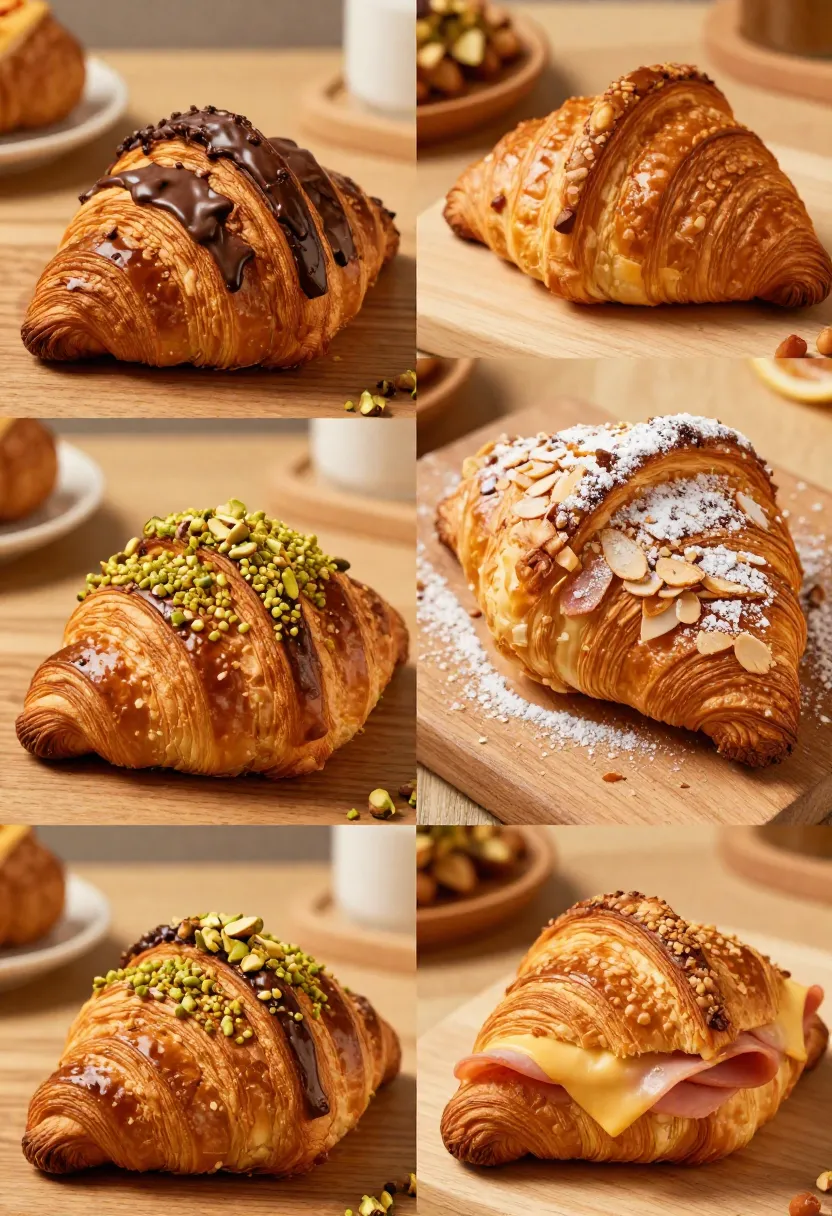
- chocolate croissants (pain au chocolat) 🍫
- almond croissants filled with almond cream
- pistachio croissants topped with crushed nuts
- ham and cheese croissants 🧀
- croissant breakfast sandwiches with eggs and bacon
Each of these versions keeps the essential structure of the pastry but adds a slightly different personality.
And that flexibility is probably one of the reasons croissants became so widely loved. The basic dough stays the same, but the fillings and toppings can change depending on local tastes.
In some countries croissants are served mostly as sweet pastries, while in others they appear on café menus as savory sandwiches. Either way, the flaky texture tends to work beautifully.
Creative Pastry Trends
In the past decade or so, croissants have entered a new phase — one driven partly by creativity and partly by the internet. Social media has turned pastries into visual experiences, and bakeries often compete to create desserts that look just as impressive as they taste.
That environment has encouraged pastry chefs to experiment with croissants in ways that might have seemed unusual before.
Some bakeries now play with the shape itself, creating pastries that still use croissant dough but look quite different from the traditional crescent. Others combine croissants with entirely different desserts to produce something new.
A few recent trends that have appeared in bakeries include:
- cube-shaped croissants that reveal the layered interior
- spiral or rolled croissants with visible layers
- oversized filled croissants with creams or custards
- hybrid pastries that mix croissants with other desserts
Perhaps the most famous example of this creative wave is the cronut. This pastry combines croissant dough with the shape and frying method of a donut. When it first appeared in New York, it caused a surprisingly large sensation. People reportedly lined up outside bakeries early in the morning just to buy one before they sold out.
Whether these trends last forever is hard to say. Food fashions change quickly.
But they do show something interesting: even a pastry that dates back centuries can still evolve in new and unexpected directions. And honestly, that’s probably part of the croissant’s charm. 🥐✨
Why the Croissant’s Story Is So Interesting
At first glance, the history of the croissant might not seem particularly dramatic. It’s easy to think of it as just another pastry with a long recipe behind it. After all, bakeries all over the world make breads and pastries that date back centuries, so why should this one be any different?
But the croissant’s story becomes much more interesting once you take a closer look.
What seems like a simple breakfast pastry actually reflects a much bigger pattern in food history. Recipes rarely stay in one place. They move with travelers, bakers, and families who carry their traditions with them. When those recipes arrive somewhere new, they almost always change — sometimes slightly, sometimes in ways that completely reshape the dish.
That’s exactly what happened with the croissant.
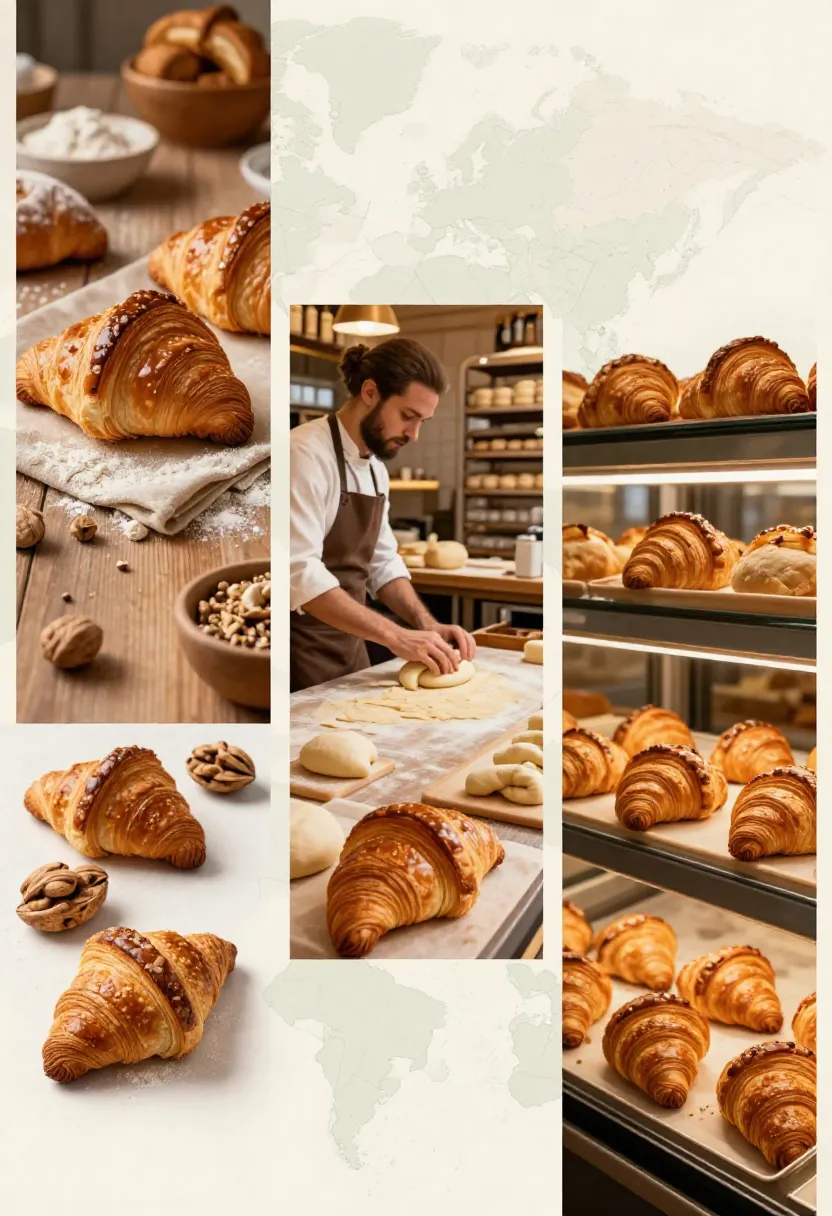
It began as the Austrian kipferl, a crescent-shaped pastry that had been baked in Central Europe for generations. When the idea reached France, local bakers adapted it using their own techniques and ingredients. Over time, the pastry evolved into the flaky croissant we know today.
Seen from that perspective, the croissant’s history is really a story about cultural exchange. A single pastry passed through different kitchens and gradually absorbed new ideas along the way.
If you trace the journey, you can see how several stages shaped the croissant’s identity:
- an early crescent-shaped pastry from Austria
- French bakers introducing laminated dough techniques
- Parisian cafés turning the croissant into a breakfast staple
- international bakeries adapting it to local tastes 🌍
By the time croissants spread around the world in the 20th century, they were already the result of centuries of experimentation and cultural influence.
And that’s part of what makes the story so appealing. The croissant may look simple, but its history quietly connects different countries, traditions, and generations of bakers.
A Pastry That’s Still Evolving 🥐
Even today, the story of the croissant isn’t really finished.
Walk into a traditional French bakery and you’ll still find the classic butter croissant — golden, flaky, and usually served plain. Many bakers remain deeply committed to the traditional method, carefully folding the dough and butter again and again until the layers form perfectly.
But at the same time, croissants continue to evolve.
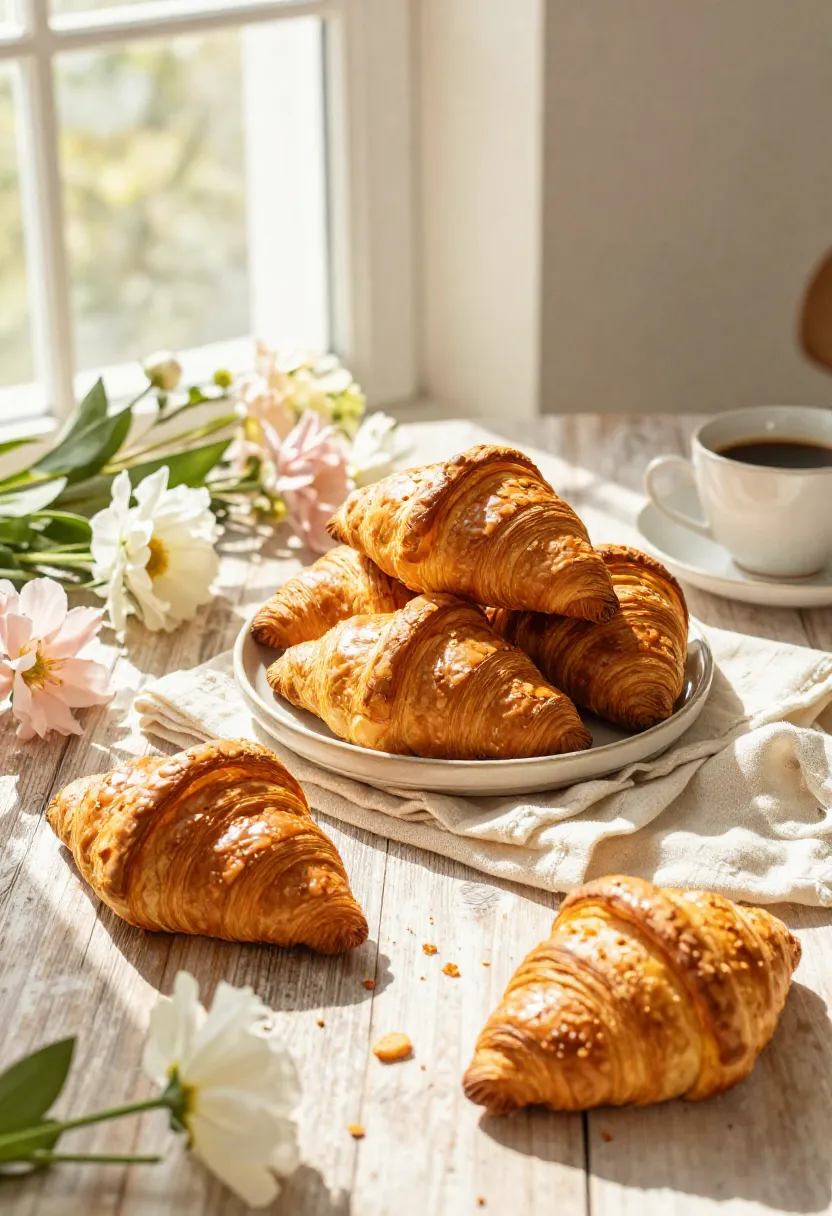
In cities around the world, pastry chefs experiment with flavors, shapes, and fillings. Some create rich dessert-style croissants filled with creams or chocolate. Others turn them into savory breakfast sandwiches or elaborate café dishes. And every so often, a completely new variation appears that catches people’s attention.
Today you can find croissants in many different forms, including:
- traditional butter croissants 🧈
- filled croissants with chocolate, almond, or pistachio
- savory croissants with cheese, ham, or eggs
- creative bakery versions with unusual shapes or toppings
Despite all these variations, the essential idea hasn’t really changed. At its core, a croissant is still built from the same elements: dough, butter, careful folding, and patience during baking.
Maybe that’s what makes the pastry so remarkable. After hundreds of years, countless bakers, and endless small variations, the croissant still manages to feel both simple and special at the same time.
Not bad for something that began centuries ago as a modest crescent-shaped pastry in a European bakery. 🥐✨