Contents
You notice it in the shower first.
A little more hair than usual circling the drain. Then you catch yourself in the bathroom mirror under harsh lighting — and your hair just looks… tired. Thinner at the temples. Less shine. More frizz. You’ve tried the serums, the scalp massages, the expensive shampoos. But nothing seems to stick.
Here’s what most people don’t think to check: what they’re eating.
Your hair is one of the fastest-growing tissues in your body — but it’s also one of the lowest on your body’s priority list. When nutrients are scarce, your body sends them to your heart, your brain, your organs first. Hair gets whatever’s left. And when there isn’t much left? It shows. Slowly, quietly, strand by strand.
The good news is that this works both ways. The right foods — eaten consistently, not perfectly — can genuinely transform the quality, thickness, and growth of your hair. Not overnight. But faster than you’d think.
This article breaks down exactly which nutrients your hair needs, which foods deliver them, what’s worth avoiding, and how to build a simple eating pattern that your hair will actually thank you for.
Your Hair Is Basically a Living Food Diary
Think of your hair as a timeline. Scientists can actually analyze a single strand and learn what you’ve been through — stress, illness, nutritional gaps, even certain medications. It holds that information for months.
That’s not a metaphor. It’s biology.
And it means that what you ate three months ago is literally growing out of your head right now.
Why Hair Is the First Thing to Suffer When Your Diet Slips
Your body is incredibly smart about prioritization. When you’re not getting enough of something — iron, protein, B vitamins — your body makes hard choices. It keeps your heart pumping, your brain functioning, your immune system running. Hair follicles? They’re considered non-essential in a crisis. So they get cut off first.
This is why hair loss and dullness are so often early warning signs of nutritional deficiency — sometimes months before any blood test would raise a red flag.
It’s also why crash diets hit hair so hard. You might lose weight quickly, but three months later, clumps of hair come with it. There’s even a name for it: telogen effluvium — a type of stress-related shedding triggered by sudden dietary restriction.
How the Hair Growth Cycle Works (And Where Nutrition Fits In)
Each strand of hair goes through three phases:
- Anagen (growth phase) — lasts 2–7 years. This is when your follicle is actively building hair, and this is when nutrition matters most.
- Catagen (transition phase) — a short 2–3 week window where growth slows.
- Telogen (resting phase) — the follicle rests for about 3 months, then sheds the hair and restarts.
At any given moment, roughly 85–90% of your hair is in the growth phase. That’s a lot of active building happening simultaneously — and all of it requires raw materials. Protein, iron, vitamins, minerals. Every single day.
When those materials are missing or inconsistent, follicles can drop out of the growth phase early and shift into resting — leading to more shedding, slower regrowth, and thinner hair over time.
The takeaway? Your hair isn’t just decoration. It’s a reflection of what’s been going on inside your body — sometimes for the past several months.
The Nutrients Your Hair Can’t Live Without
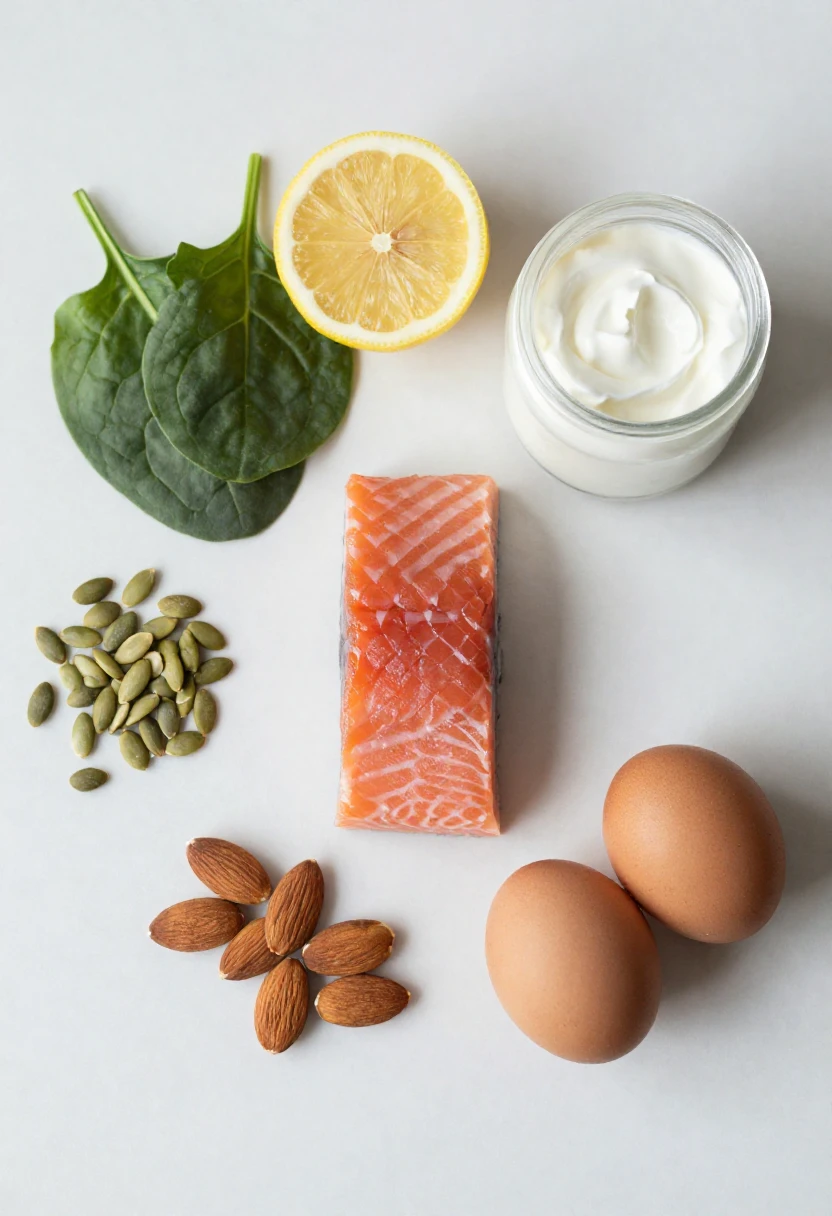
Before we get to specific foods, let’s talk about what your hair is actually looking for. Because eating “healthy” in a general sense is great — but if you’re missing one or two key nutrients, your hair will let you know.
Protein — The Literal Building Block
Hair is made of keratin — a fibrous structural protein. That’s not a metaphor either. Your hair strand is, chemically speaking, almost entirely protein.
So if you’re not eating enough of it, your body simply doesn’t have the raw material to build strong hair. What you get instead is brittle, slow-growing, dull strands that break easily.
Most adults need somewhere between 45–60g of protein per day at minimum — and if you’re active, stressed, or recovering from illness, you likely need more. Eggs, meat, fish, legumes, dairy — these aren’t just gym foods. They’re hair foods too.
Iron — The Silent Culprit Behind Shedding
Iron deficiency is one of the most common nutritional causes of hair loss — especially in women. And the frustrating thing is that you can be iron-deficient without being fully anemic. Your doctor might look at your numbers and say everything’s fine, while your hair is quietly thinning.
Iron helps red blood cells carry oxygen to your follicles. Less iron means less oxygen delivery. Less oxygen means follicles struggle to stay in the growth phase — and start dropping out early.
If you’ve noticed increased shedding with no obvious explanation, low ferritin (your iron storage protein) is worth asking your doctor about specifically.
Biotin & B Vitamins — The Hair Growth MVPs
You’ve seen biotin on the front of every hair supplement ever made. The hype isn’t entirely wrong — but it’s often misunderstood.
Biotin (Vitamin B7) plays a key role in keratin production. True biotin deficiency does cause hair loss. The catch? Actual deficiency is rare in people eating a reasonably varied diet. If you’re already getting enough, taking more won’t necessarily grow you a thicker mane.
That said, the broader B vitamin family — B12, folate, niacin — all support healthy red blood cell production and follicle metabolism. Vegetarians and vegans are particularly vulnerable to B12 deficiency, which can quietly contribute to shedding over time.
Vitamin C — More Than Just Immunity
Most people think of Vitamin C as the thing you take when you feel a cold coming on. But for hair, it plays two important roles:
- It’s a powerful antioxidant that protects follicles from oxidative stress — the kind caused by pollution, UV exposure, and chronic stress.
- It helps your body absorb non-heme iron (the kind found in plants). Eating spinach? Add some lemon juice or bell pepper alongside it, and you’ll absorb significantly more of that iron.
That second point is underrated. You could be eating plenty of iron-rich plant foods and still come up short if your Vitamin C intake is low.
Zinc — The Underrated Mineral
Zinc quietly does a lot of heavy lifting in hair health. It supports the oil glands around your follicles, helps with protein synthesis, and plays a role in tissue repair — including the repair of follicle cells.
Both deficiency and excess zinc can trigger hair loss. This is one reason that blindly taking high-dose zinc supplements isn’t a great idea. Food sources — pumpkin seeds, beef, lentils, chickpeas — give you zinc in amounts your body can actually regulate properly.
Omega-3 Fatty Acids — Scalp Health From the Inside
Think of omega-3s as the moisturizer you never have to apply. These healthy fats nourish hair follicles from within, support scalp circulation, and help reduce the inflammation that can interfere with healthy hair growth.
A dry, flaky scalp? Brittle ends? Dull texture? These are often signs that your diet is heavy on omega-6 fats (processed oils, fast food) and light on omega-3s (fatty fish, flaxseed, walnuts).
You don’t need to eat salmon every day. But getting omega-3s into your diet a few times a week makes a real, visible difference over time.
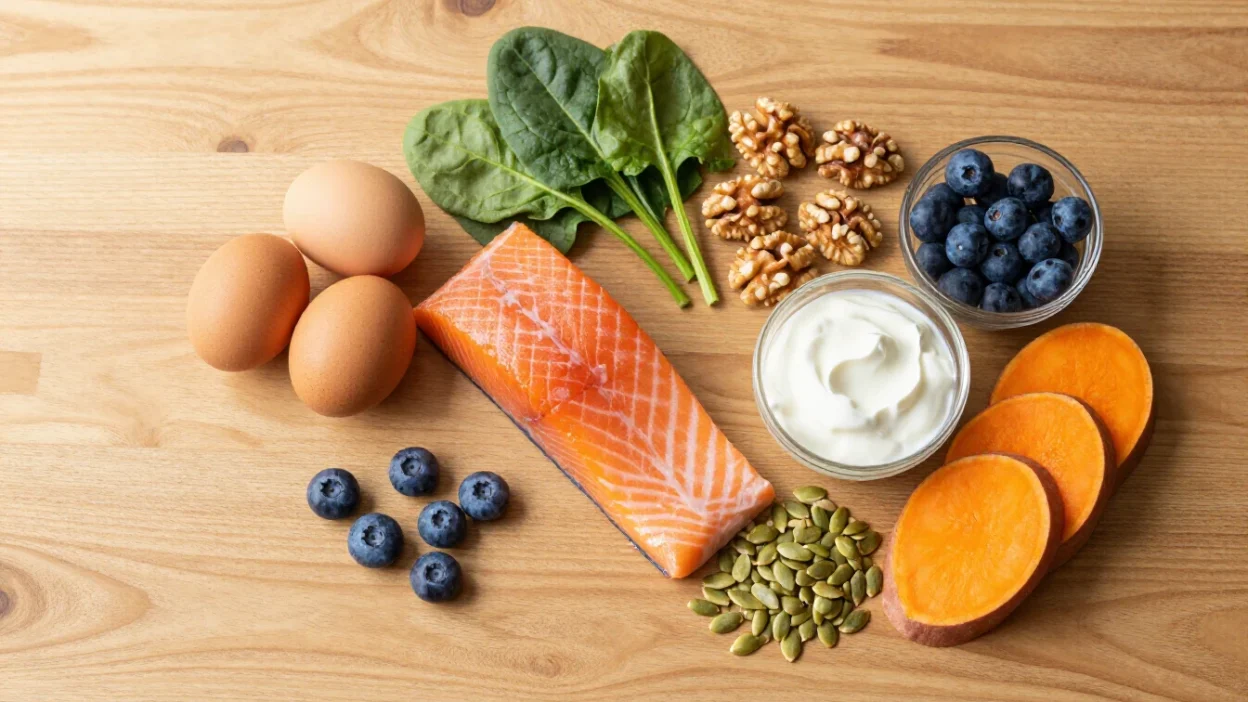
The Best Foods to Eat for Stronger, Healthier Hair
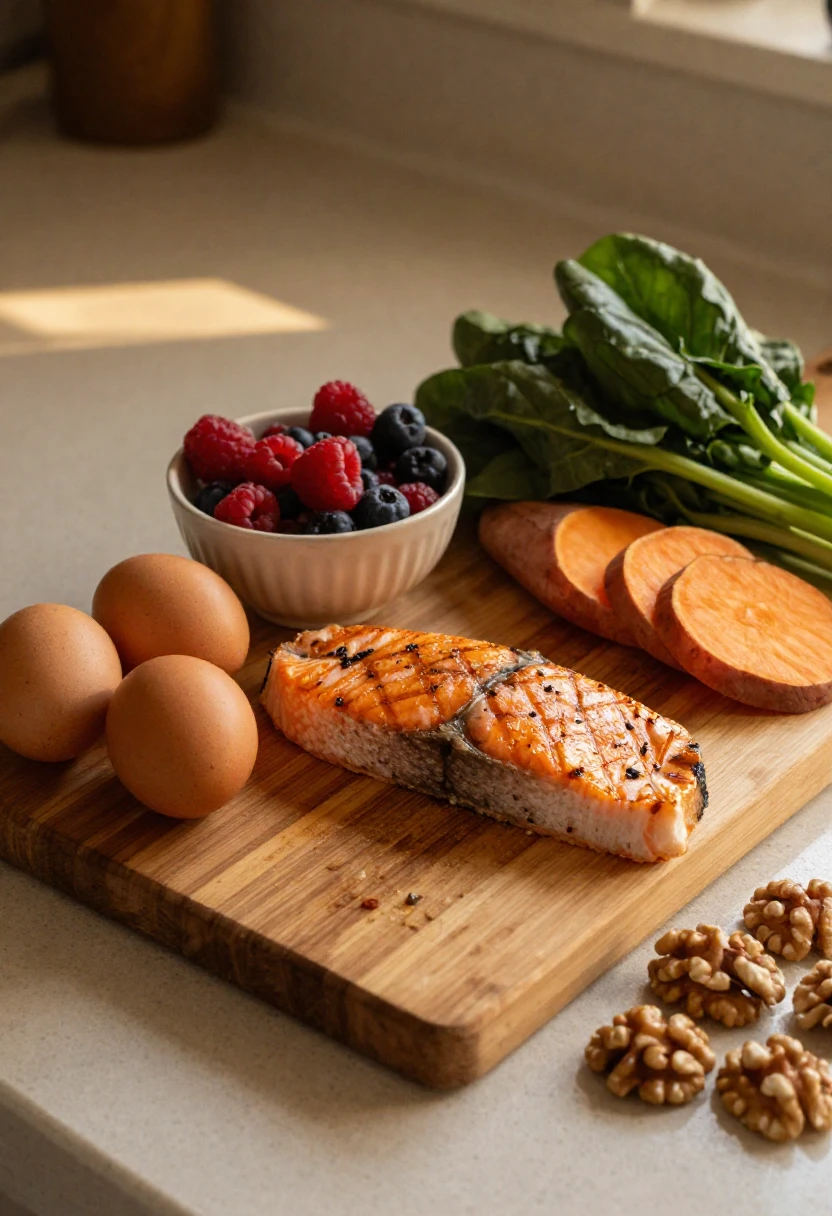
Now we get to the practical part. You know what your hair needs — here’s where to actually find it. These aren’t superfoods in the marketing sense. They’re just genuinely good, accessible foods that happen to be packed with exactly what your follicles are asking for.
Eggs
If you could only add one food to your diet for hair health, eggs would make a strong case for the top spot.
They contain both protein and biotin in one package — the two nutrients most directly linked to keratin production. One egg gives you around 6g of complete protein and a solid hit of B12, selenium, and zinc on top of that.
The yolk especially is where the nutrition lives. Don’t skip it.
Scrambled, poached, boiled, baked into things — eggs are one of the easiest daily habits you can build. Two eggs at breakfast is a quiet investment in your hair that compounds over months.
Fatty Fish (Salmon, Mackerel, Herring)
Fatty fish is basically a complete hair health package in one ingredient.
You get omega-3 fatty acids for scalp nourishment and reduced inflammation. You get high-quality protein. You get vitamin D, which is increasingly linked to hair follicle cycling. And you get selenium — an antioxidant mineral that protects follicles from damage.
Salmon gets all the attention, but mackerel and herring are just as nutrient-dense — and often cheaper and more sustainable. Aim for two to three servings a week, and you’ll notice the difference in your scalp texture before you notice it in your strands.
Spinach and Dark Leafy Greens
Spinach is quietly one of the most hair-friendly vegetables you can eat. In one cup of cooked spinach, you get:
- Iron — to keep your follicles oxygenated
- Folate — to support red blood cell production
- Vitamin A — to help your scalp produce sebum (its natural conditioner)
- Vitamin C — to boost iron absorption and fight oxidative stress
The key is pairing it with something vitamin C-rich — a squeeze of lemon, some tomatoes, a handful of bell pepper. That combination unlocks significantly more of the iron your body can actually use.
Kale, Swiss chard, and collard greens work beautifully here too if spinach isn’t your thing.
Sweet Potatoes and Carrots
These get their vibrant orange color from beta-carotene — a compound your body converts into Vitamin A. And Vitamin A is essential for the production of sebum, the natural oil that keeps your scalp moisturized and your strands from becoming brittle and dry.
The sweet spot matters though. Too little Vitamin A and your scalp dries out. Too much — usually from supplements, not food — and it can actually trigger hair loss. Getting it through sweet potatoes and carrots keeps you firmly in the safe, beneficial range.
A roasted sweet potato a few times a week. Carrot sticks as a snack. Simple additions that your scalp will quietly appreciate.
Berries
Berries — especially strawberries, blueberries, and blackcurrants — are loaded with Vitamin C and antioxidants that protect your follicles from the kind of oxidative stress that ages and weakens them over time.
Strawberries in particular are a surprisingly powerful source of Vitamin C — more per gram than many citrus fruits. And because Vitamin C also helps synthesize collagen, which strengthens hair structure, berries pull double duty here.
A handful on your morning yogurt. Blended into a smoothie. Eaten straight from the bowl standing at the kitchen counter — however you get them in, they count.
Nuts and Seeds
Nuts and seeds are one of the most convenient, nutrient-dense hair foods you can keep on hand.
- Walnuts are rich in omega-3 fatty acids and Vitamin E
- Almonds deliver Vitamin E and magnesium
- Pumpkin seeds are one of the best plant-based sources of zinc
- Flaxseeds and chia seeds give you omega-3s in an easy, sprinkle-on-anything format
- Sunflower seeds are packed with Vitamin E and selenium
A small handful of mixed nuts as a snack. A tablespoon of flaxseed stirred into oatmeal. These aren’t dramatic changes — but over months, they build a meaningful nutritional foundation for your hair.
Greek Yogurt
Greek yogurt brings high-quality protein in a form that’s easy to eat at any time of day. It also contains Vitamin B5 (pantothenic acid) — an ingredient you’ll find listed on plenty of hair care products, because it supports blood flow to the scalp and helps with follicle strength.
Beyond that, the probiotics in yogurt support gut health, which is increasingly connected to nutrient absorption overall. If your gut isn’t absorbing nutrients efficiently, it doesn’t matter how well you eat — your follicles may still come up short.
Full-fat Greek yogurt with some berries and a sprinkle of pumpkin seeds is, genuinely, one of the best hair-health breakfasts you can build.
Foods That Are Quietly Wrecking Your Hair
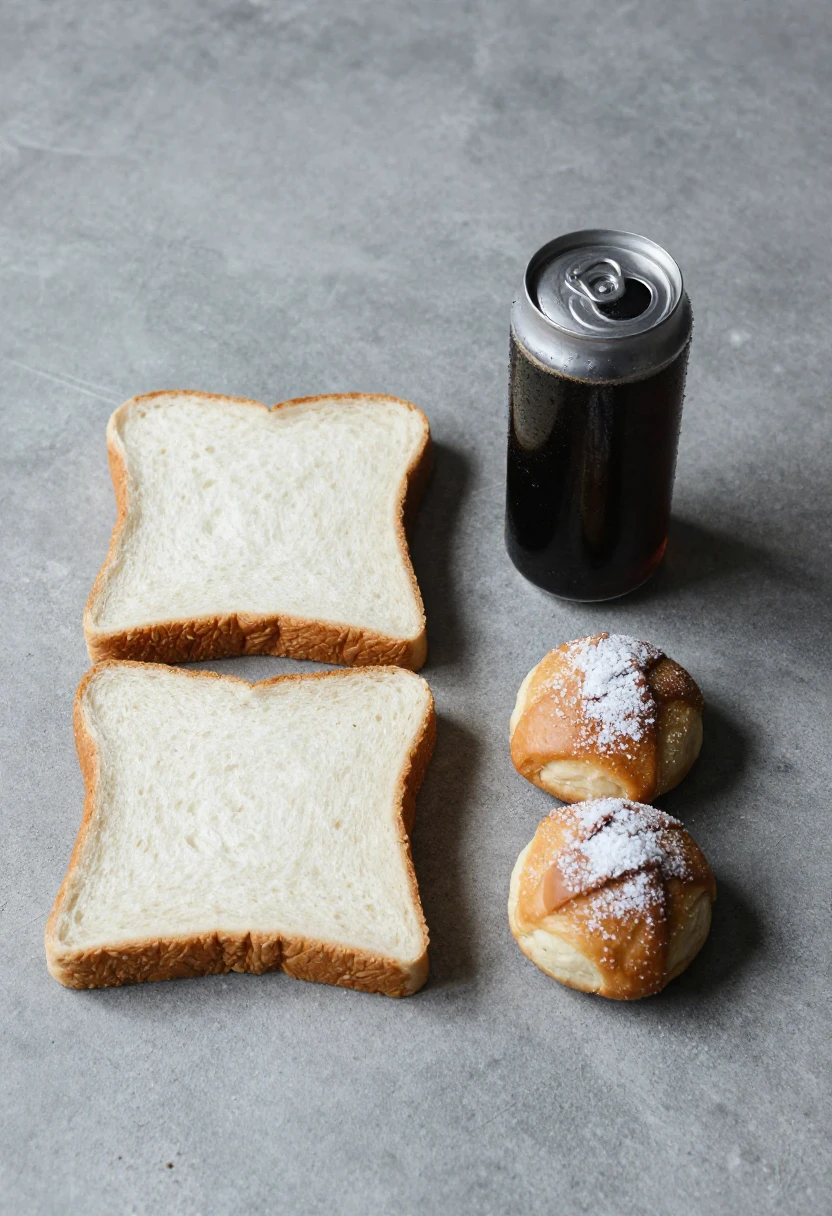
Nobody wants to hear this part. But it’s worth knowing — because sometimes the problem isn’t what you’re not eating. It’s what you’re eating too much of.
The good news: this isn’t about perfection. It’s about patterns. One sugary meal won’t cost you your hair. But consistent habits in the wrong direction? Those add up in ways you’ll eventually see in the mirror.
Sugar and Refined Carbs
This one is probably the most underestimated hair villain in the modern diet.
When you eat a lot of sugar and refined carbohydrates — white bread, pastries, sugary drinks, processed snacks — your body responds with a spike in insulin. That spike triggers a cascade of hormonal changes, including an increase in androgens (male hormones present in everyone). Elevated androgens are directly linked to hair follicle miniaturization — the process that leads to thinning hair and, over time, hair loss.
There’s also the nutrient displacement problem. A diet heavy in processed carbs tends to crowd out the protein, iron, and vitamins your follicles actually need. You’re full, but your hair is starving.
This doesn’t mean cutting carbs entirely. It means leaning toward whole grains, legumes, and vegetables over ultra-processed options — most of the time.
Crash Diets and Extreme Calorie Restriction
If you’ve ever lost weight very quickly and then noticed your hair shedding three to four months later — this is exactly why.
Extreme calorie restriction puts your body into survival mode. As we covered earlier, hair follicles are considered non-essential tissue. They get cut off almost immediately when energy and nutrients become scarce. The follicles shift from the growth phase into the resting phase en masse — and then, a few months later, they all shed at once.
This is called telogen effluvium, and it’s remarkably common after crash diets, restrictive eating periods, or major weight loss surgery. The hair often grows back — but it can take six months to a year, and the process is deeply unsettling when you don’t know what’s causing it.
Slow, sustainable weight loss — if that’s your goal — is genuinely better for your hair. Even a moderate daily deficit maintained consistently is far less traumatic to your follicles than dramatic restriction.
Too Much Vitamin A (Yes, Really)
This one surprises people.
Vitamin A is essential for hair health — we just talked about sweet potatoes and carrots delivering it in beneficial amounts. But excess Vitamin A, almost always from high-dose supplements rather than food, is actually a well-documented cause of hair loss.
It’s one of the clearest examples of why more isn’t always better when it comes to supplements. The upper tolerable limit for Vitamin A is around 3,000 mcg per day for adults. Many hair and skin supplements push well beyond that. Over time, this can accelerate the hair growth cycle abnormally, causing follicles to burn out faster than they can regenerate.
If you’re taking a multivitamin plus a separate hair supplement plus a skin supplement — it’s worth checking the combined Vitamin A load. Food sources won’t get you into dangerous territory. Supplement stacking can.
Alcohol and Heavily Processed Food
Alcohol interferes with hair health in several overlapping ways:
- It depletes zinc — one of the key minerals for follicle function
- It disrupts protein synthesis — meaning your body becomes less efficient at building keratin
- It impairs the absorption of B vitamins, particularly folate and B12
- It dehydrates the scalp and strands, contributing to dryness and breakage
None of this means a glass of wine ruins your hair. But heavy or frequent drinking creates a nutritional environment that’s consistently working against your follicles.
Heavily processed foods tell a similar story — not because any single ingredient is dramatically harmful, but because a diet dominated by them tends to be chronically low in the protein, iron, zinc, and vitamins your hair depends on. The problem is cumulative, and it shows up slowly enough that most people never connect it to what they’re eating.
Should You Take Hair Supplements?
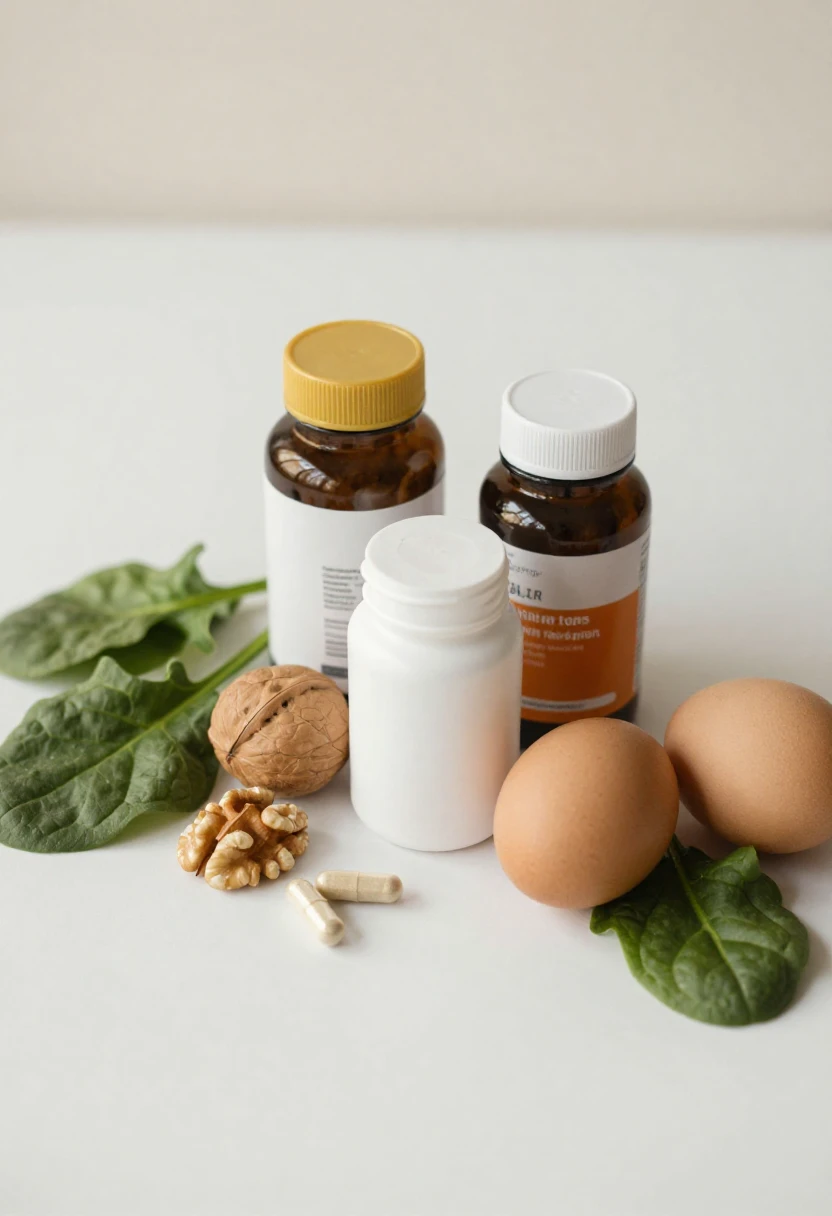
Walk into any pharmacy or scroll through Instagram for five minutes and you’ll find dozens of products promising thicker, longer, shinier hair — gummies, capsules, powders, all with before-and-after photos that look almost too good to be true.
Spoiler: sometimes they are.
That doesn’t mean supplements are useless. But the conversation around them is a lot more nuanced than the marketing suggests.
What the Research Actually Says
Here’s the honest summary: hair supplements work best when they’re correcting a deficiency.
If your hair is thinning because your iron is low, restoring your iron levels will likely help. If you’re shedding because you’ve been eating very little protein for months, fixing that will make a difference. If you’re genuinely deficient in biotin — which is rare but does happen — supplementing it can support hair regrowth.
But if your levels are already normal? Adding more of the same nutrient on top rarely produces dramatic results. Your follicles aren’t going to grow faster just because you’re taking extra biotin when you already have plenty. The body doesn’t work that way.
A 2017 review published in the journal Dermatology and Therapy found that nutritional deficiencies are a real and underdiagnosed cause of hair loss — but also that supplementing nutrients you’re not actually deficient in showed little to no benefit for hair growth in healthy individuals.
The research points in one consistent direction: identify the gap first, then fill it.
When Supplements Make Sense (And When They Don’t)
Supplements are genuinely worth considering if:
- You follow a vegan or vegetarian diet — you may be low in B12, iron, zinc, or omega-3s
- You’ve had bloodwork confirming a deficiency in iron, ferritin, vitamin D, or B12
- You’re pregnant or postpartum — nutritional demands shift significantly during this period
- You’ve recently gone through major surgery, illness, or extreme stress that may have depleted key nutrients
- Your diet is genuinely restricted due to allergies, intolerances, or food access
Supplements are probably not necessary if:
- You eat a varied, balanced diet with plenty of protein, vegetables, and whole foods
- Your bloodwork comes back normal across the board
- You’re just hoping to grow your hair faster than biology allows
There’s no supplement that overrides your genetics or accelerates a healthy growth cycle beyond its natural pace. If someone is selling you that idea — they’re selling you something else entirely.
The Supplement Industry’s Dirty Secret
Here’s something worth knowing before you spend money on that pretty bottle.
Supplements are not regulated the same way medications are. In most countries, manufacturers don’t need to prove their product works before putting it on the shelf. They just need to avoid making direct disease claims. “Supports healthy hair” is legally very different from “clinically proven to regrow hair” — and companies know exactly how to walk that line.
Many popular hair gummies contain doses of biotin far beyond what any study has shown to be beneficial — sometimes 1,000% of the daily recommended value. That’s not science. That’s marketing. High biotin doses can also interfere with certain lab tests, including thyroid panels and cardiac troponin tests — a fact that the FDA has actually issued warnings about.
This isn’t to say every supplement is a scam. Some are genuinely helpful in the right context. But the most important supplement you can take is the boring one: a conversation with your doctor and a basic blood panel to find out what you’re actually missing.
That information is worth more than any gummy.
Simple Daily Habits to Build a Hair-Friendly Diet
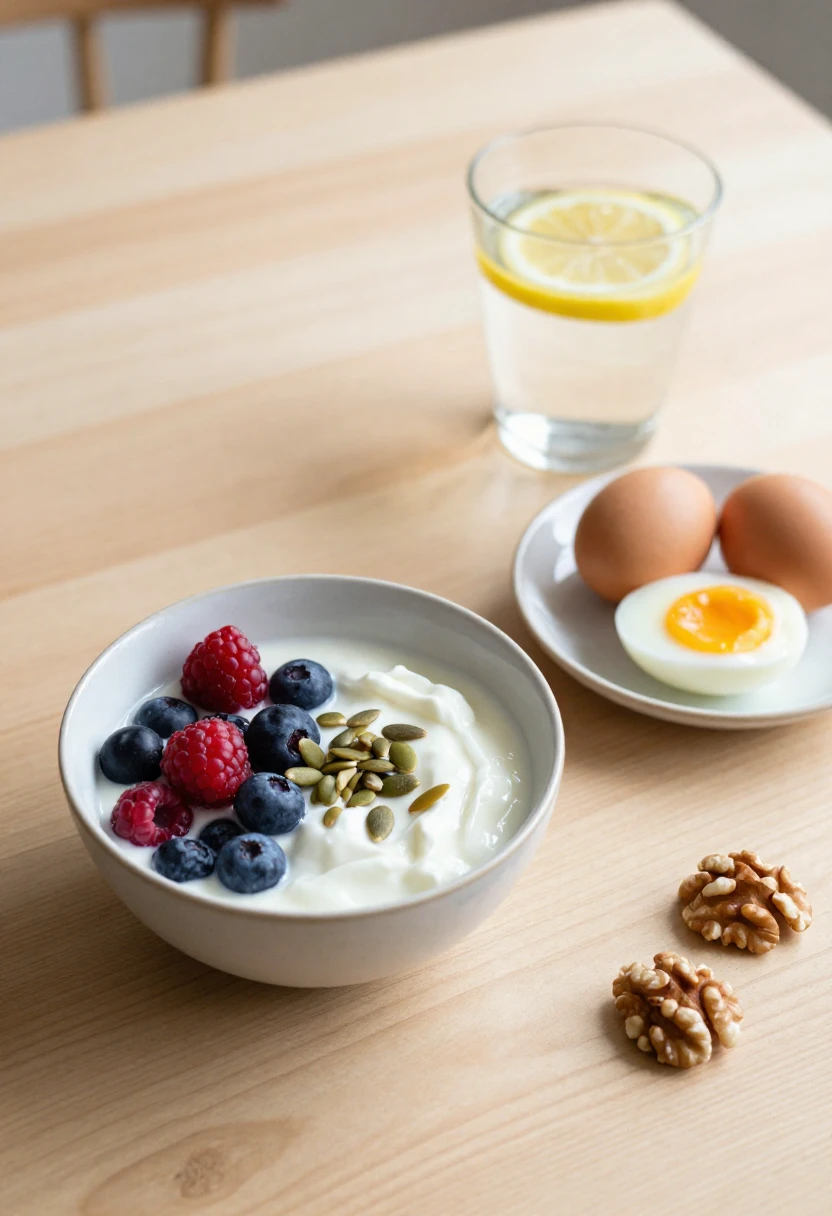
Here’s where everything comes together. Because knowing which nutrients matter and which foods contain them is one thing — but actually building a sustainable eating pattern around that information is another.
You don’t need a strict meal plan. You don’t need to overhaul your entire diet overnight. What works is small, consistent shifts that become second nature over time.
What a “Hair-Healthy” Day of Eating Looks Like
This isn’t a prescription. It’s an example of how naturally all of this can fit together without any dramatic effort.
Morning:
- Two scrambled eggs with a handful of spinach and some cherry tomatoes
- A bowl of Greek yogurt with mixed berries and a sprinkle of pumpkin seeds
- Or simply — both, if you’re hungry
You’ve already hit protein, biotin, iron, Vitamin C, zinc, and antioxidants before 9am.
Midday:
- A salad with dark leafy greens, chickpeas, roasted sweet potato, and a lemon-tahini dressing
- Or a piece of grilled salmon with some whole grains and steamed broccoli
Omega-3s, more iron, folate, Vitamin D, complex carbohydrates. Done.
Snack:
- A small handful of walnuts and almonds
- Or carrot sticks with hummus
Omega-3s, Vitamin E, zinc, beta-carotene — in five minutes, zero effort.
Evening:
- Whatever you enjoy — just anchor it around a good protein source and some vegetables
- A glass of water instead of a second glass of wine, most nights
That’s it. No superfoods you’ve never heard of. No expensive powders. Just real food, eaten consistently, with your follicles quietly benefiting in the background.
Small Swaps That Add Up Over Time
You don’t have to eat perfectly. You just have to eat better than yesterday, more often than not. These micro-swaps are where real change happens:
- Swap white bread for whole grain — more B vitamins, more sustained energy, less insulin spiking
- Add a squeeze of lemon to iron-rich meals — dramatically improves non-heme iron absorption
- Replace sugary snacks with nuts or seeds — same convenience, completely different nutritional impact
- Choose fatty fish over deli meats a couple of times a week — omega-3s instead of sodium and preservatives
- Stir a tablespoon of ground flaxseed into your oatmeal — one of the easiest omega-3 upgrades imaginable
- Drink water consistently — dehydration affects scalp health more than people realize
- Add one extra handful of leafy greens somewhere in your day — smoothies, eggs, soups, sandwiches, it doesn’t matter where
None of these feel like sacrifice. That’s the point. Hair-healthy eating isn’t a punishment diet — it’s just a slightly more intentional version of what you’re probably already doing.
One More Thing Worth Remembering
Hair changes slowly. New growth takes time to become visible. The habits you build this month will show up in your strands three, four, five months from now — not next week.
That lag can be discouraging if you’re expecting rapid results. But it also means that every good meal is already doing its work, even when you can’t see it yet. The investment is real. The return just takes a little patience.
Think of it less like a treatment and more like a long-term relationship with your own body. Feed it well, consistently, and it will show — eventually, visibly, in the mirror.
Conclusion
Your hair tells a story — and a lot of that story is written in the kitchen.
It doesn’t require a dramatic overhaul or an expensive supplement stack. It requires consistency. Eggs at breakfast. A handful of nuts in the afternoon. Fatty fish a couple of times a week. More leafy greens, less processed everything. Small habits, repeated often enough to become invisible.
The results won’t show up overnight — that’s just the nature of hair biology. But three or four months from now, with a little patience and a more intentional plate, you may find yourself standing in that same bathroom mirror thinking: something’s different. It looks healthier. Fuller. More alive.
That’s not a coincidence. That’s your body responding to being fed well.
Start with one change. Then another. Your follicles are paying attention, even when you’re not.
Frequently Asked Questions
Can eating certain foods really make my hair grow faster? Not exactly faster — your hair grows at a genetically determined pace of about half an inch per month. But good nutrition keeps more follicles in the active growth phase, reduces shedding, and improves the quality and thickness of the hair that does grow. The difference isn’t speed — it’s fullness and health.
How long does it take to see results from changing my diet? Most people notice a difference in hair texture and shedding within two to three months of consistent dietary changes. Visible new growth typically takes four to six months, since that’s how long the hair cycle runs. Patience is genuinely part of the process here.
Is hair loss always related to diet? Not always. Hair loss can be caused by hormonal changes, thyroid conditions, genetics, stress, medications, and autoimmune conditions like alopecia areata. Diet is one important piece of the puzzle — but if you’re experiencing significant or sudden hair loss, it’s worth getting a full blood panel and talking to a dermatologist or your GP.
Do I need to take biotin supplements for healthy hair? Only if you’re actually deficient in it — which is uncommon in people eating a varied diet. If you’re already getting enough biotin from eggs, nuts, and whole grains, adding more through supplements is unlikely to produce noticeable results. Focus on your overall nutritional picture first, and supplement only what bloodwork shows you’re genuinely missing.