Contents
A Comforting Italian Classic You’ll Want to Cook Again and Again 🍝
Some meals are just food. You cook them, you eat them, and that’s pretty much the end of the story. Pork ragù, though, is a little different. It’s one of those dishes that slowly turns dinner into an event without you even trying.
The funny thing about ragù is that it doesn’t look fancy while it’s cooking. At first it’s just a pot of simple ingredients—tomatoes, onions, herbs, pieces of pork. Nothing particularly impressive. But then time starts doing its thing. The sauce simmers quietly, the pork softens, the aroma fills the kitchen, and suddenly everyone in the house becomes very interested in what’s happening on the stove.
If you’ve ever walked into a kitchen where a meat sauce has been cooking for hours, you probably know the smell I’m talking about. It’s warm, savory, slightly sweet from the tomatoes, and just rich enough to make you immediately hungry. That’s ragù working its magic.
Italian cooking has always been very good at this sort of thing—taking everyday ingredients and letting them slowly transform into something memorable. There are no complicated tricks involved. It’s mostly patience. You give the ingredients time to blend together, and the result is a sauce that feels deep, comforting, and full of flavor.
And when that sauce finally lands on a plate of pasta… well, that’s where things get really good.
Wide noodles like pappardelle or tagliatelle are especially perfect for ragù because they hold onto the thick sauce so well. Every bite becomes a mix of pasta, tender pork, and tomato-rich sauce. It’s hearty without being heavy, rustic but still satisfying in that “I might go back for another bowl” kind of way.
Honestly, it’s the type of meal people linger over. Not rushed. Just good food and time at the table.
Why Pork Makes an Incredible Ragù 🐖
Most people hear the word ragù and immediately think of beef. That’s understandable—beef ragù is probably the most widely known version. But pork brings something a little different to the dish, and many cooks would argue it actually works even better for slow cooking.
The main reason comes down to the cut of meat typically used. Pork shoulder, which is ideal for ragù, contains plenty of connective tissue and natural marbling. At the beginning of the cooking process, that meat can seem a bit tough. But after a few hours of gentle heat, something pretty amazing happens.
The connective tissue breaks down, the fat slowly melts into the sauce, and the pork becomes incredibly tender.

Instead of large chunks of meat floating around in the sauce, the pork eventually starts falling apart into soft strands. You barely need a knife. A fork will do the job easily.
That texture is exactly what makes pork ragù so satisfying. The meat blends into the sauce rather than sitting on top of it. Every spoonful has a little bit of everything—pork, tomato, herbs, and pasta all working together.
Another thing pork does really well is absorb flavor. As it cooks, it picks up the aromas of garlic, onions, herbs, and wine. By the time the sauce is finished, the pork isn’t just tender—it’s deeply seasoned from the inside out.
A few qualities make pork particularly great for ragù:
- it becomes extremely tender during slow cooking
- the natural fat enriches the sauce without making it greasy
- it absorbs the surrounding flavors beautifully
Put all that together, and you end up with a sauce that feels rustic, rich, and comforting in the best possible way.
The Beauty of Using a Slow Cooker ⏳
Traditionally, ragù is the kind of dish that sits on the stove for hours. In many Italian homes, it’s something that starts cooking in the morning and slowly simmers until dinner time. The process works wonderfully, but it does require some occasional attention—stirring the sauce, adjusting the heat, making sure nothing sticks to the bottom.
A slow cooker changes that dynamic quite a bit.
Instead of keeping an eye on the pot all afternoon, you can simply prepare the ingredients, place everything in the cooker, and let it handle the rest. Once the lid goes on, the temperature stays low and steady, which is exactly what this kind of sauce needs.
Slow cooking is particularly perfect for pork. Tough connective tissues need time to break down properly, and the gentle heat of a slow cooker allows that to happen gradually. The pork softens little by little until it becomes tender enough to shred with almost no effort.
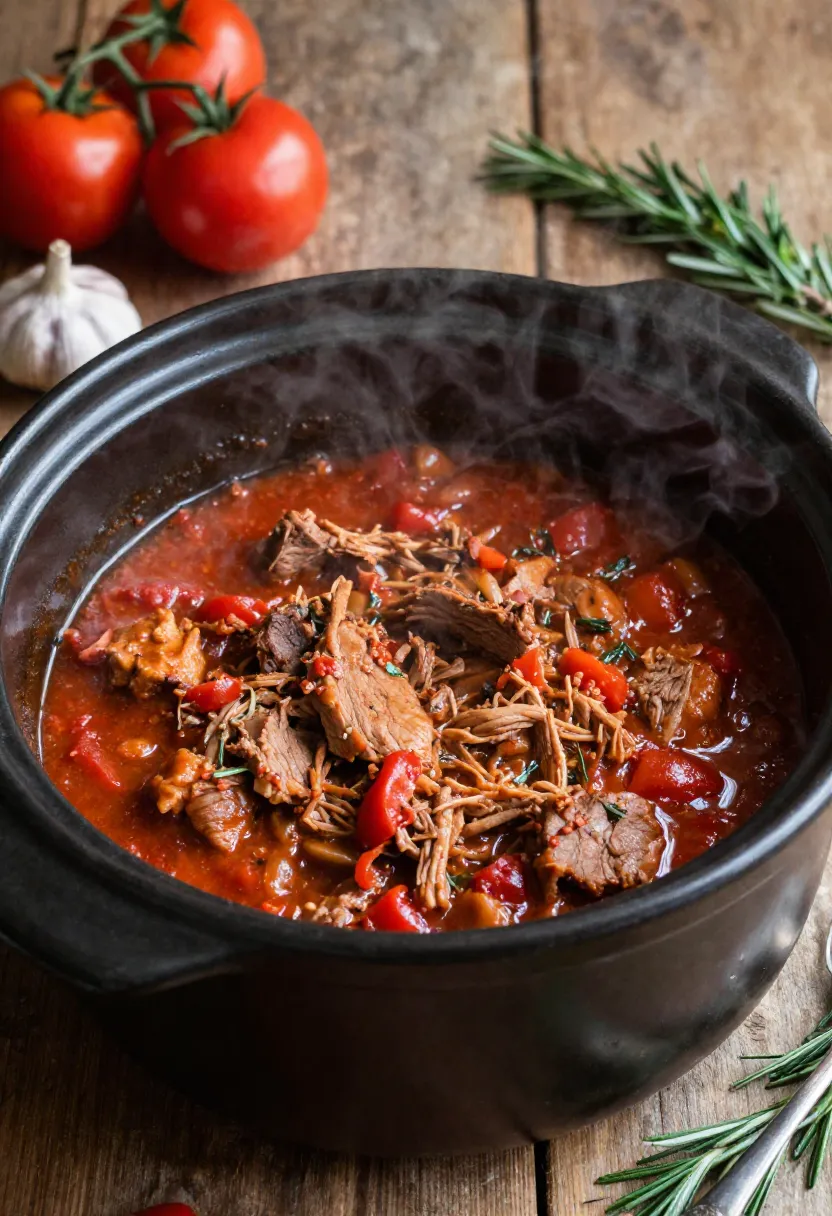
Meanwhile, the sauce is doing its own quiet work. The tomatoes mellow out, the herbs release their aroma, and the flavors slowly blend together into something deeper and richer than they were at the start.
One of the nicest things about using a slow cooker is the way the kitchen smells a few hours later. You might not think about the sauce much while it’s cooking, but eventually the aroma drifts through the house and reminds you that something good is happening in there.
It’s the kind of smell that makes people wander into the kitchen and lift the lid just to check.
And by the time dinner rolls around, the ragù tastes like it’s been carefully tended all day—even if most of the cooking happened quietly in the background.
For busy cooks who still want something homemade and comforting on the table, that’s a pretty great deal.
Pork Ragù Recipe 🍝
A Rich and Comforting Pasta Sauce
If there is one dish that truly shows how powerful slow cooking can be, it’s pork ragù. At first glance the ingredients seem almost ordinary—pork, tomatoes, a few vegetables, herbs, and wine. Nothing complicated. But once these ingredients start cooking together slowly, something remarkable happens. The flavors deepen, the pork softens, and the sauce develops that rich, cozy taste that makes homemade pasta dishes so satisfying.
One of the best things about this recipe is how forgiving it is. You don’t need perfect knife skills or restaurant-level technique. Most of the magic happens while the sauce quietly cooks on its own. Over several hours, the pork becomes incredibly tender and begins to fall apart into delicate strands that blend naturally with the tomato sauce.
The result is a thick, savory ragù that clings beautifully to wide pasta noodles. Every bite has a bit of everything—soft pasta, juicy shredded pork, and a tomato sauce that tastes like it has been simmering all day.
And honestly, the smell alone makes this recipe worth cooking. After a few hours, the kitchen fills with the aroma of garlic, herbs, and slow-cooked meat. It’s the kind of scent that makes people wander in and ask when dinner will be ready.
Pork ragù works especially well for relaxed meals with family or friends. It’s hearty, comforting, and generous—exactly the type of food that encourages everyone to sit down, take their time, and maybe even go back for another bowl.
Ingredients
For the ragù sauce
- 2½ pounds pork shoulder, cut into large chunks
- 2 tablespoons olive oil
- 1 large onion, finely chopped
- 2 carrots, diced
- 2 celery stalks, diced
- 4 garlic cloves, minced
- 2 tablespoons tomato paste
- 1 cup dry red wine
- 1 can (28 oz) crushed tomatoes
- 1 cup chicken broth
- 1 teaspoon salt
- 1 teaspoon black pepper
- 1 teaspoon dried oregano
- 2 sprigs fresh thyme
- 1 sprig rosemary
- 2 bay leaves
- ½ teaspoon chili flakes (optional)
For serving
- 1 pound pappardelle or tagliatelle pasta
- freshly grated Parmesan cheese
- chopped parsley or basil
Instructions
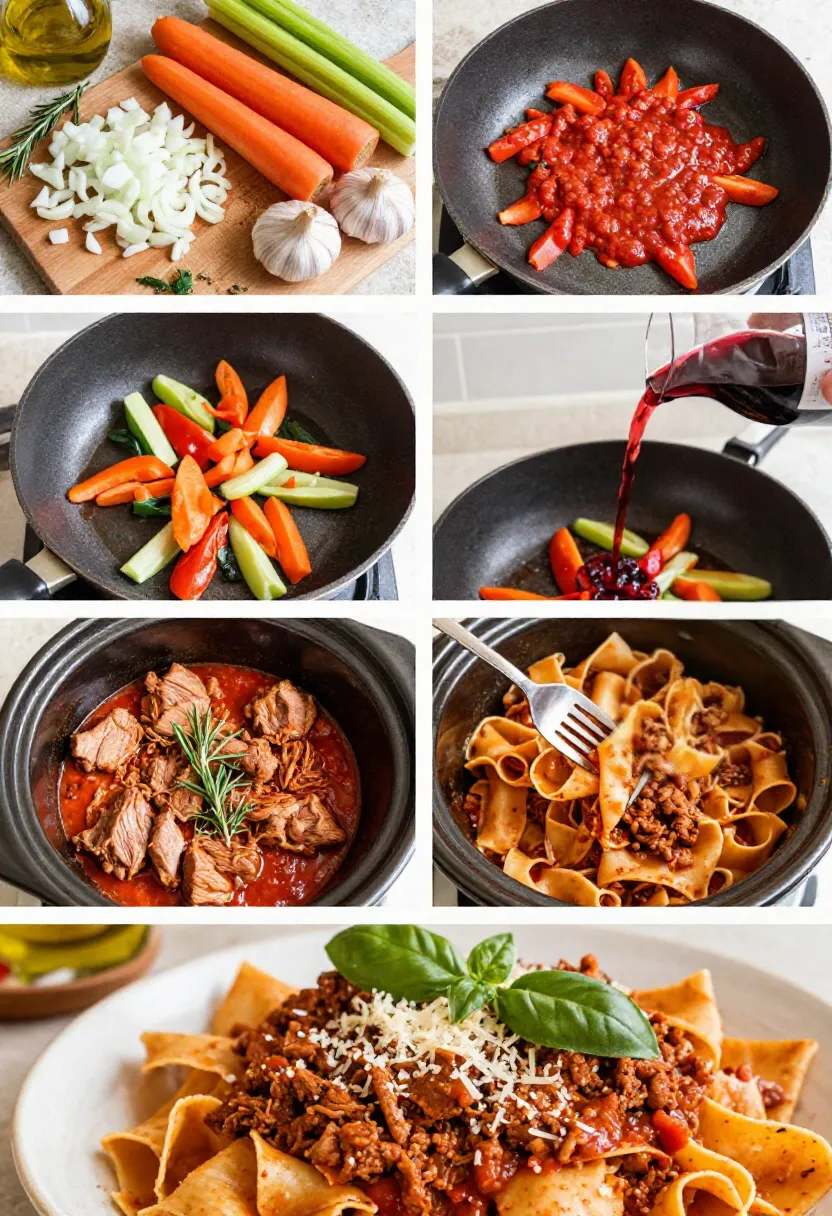
- Heat olive oil in a large skillet over medium heat. Add the onion, carrot, and celery and cook for about 6–8 minutes, stirring occasionally, until the vegetables become soft and fragrant.
- Add the minced garlic and cook for another minute. At this stage the kitchen will already start smelling pretty good.
- Stir in the tomato paste and let it cook for a minute or two. This step helps deepen the tomato flavor and gives the sauce a richer color.
- Pour the red wine into the skillet and gently scrape the bottom of the pan with a spoon to loosen any browned bits. Let the wine simmer briefly.
- Transfer the vegetable mixture to the slow cooker.
- Add the pork shoulder pieces, crushed tomatoes, chicken broth, salt, pepper, oregano, thyme, rosemary, bay leaves, and chili flakes. Stir everything gently so the pork is partially covered by the sauce.
- Cover the slow cooker and cook on low for 7–8 hours or high for 4–5 hours. During this time the pork will gradually become tender and absorb the surrounding flavors.
- When the pork is very soft, remove it from the slow cooker and place it on a cutting board.
- Using two forks, shred the pork into bite-size strands. It should fall apart quite easily at this stage.
- Return the shredded pork to the sauce and stir everything together.
- Cook the pasta in salted boiling water until al dente. Before draining, reserve a small cup of pasta water.
- Combine the pasta with the ragù sauce. If the sauce seems too thick, add a splash of the reserved pasta water to loosen it slightly.
- Serve the pasta hot, topped with grated Parmesan cheese and fresh herbs.
Small Tips & Kitchen Hacks 👨🍳
A few simple tricks can make this dish even better:
- Brown the pork first if you have time. A quick sear in a pan adds extra flavor to the sauce.
- Don’t skip the wine. It adds depth and balances the richness of the pork.
- Let the sauce rest for 10–15 minutes before serving. The flavors settle and the texture improves.
- Use wide pasta shapes. Pappardelle or tagliatelle hold the thick ragù much better than thin spaghetti.
- Make extra. Pork ragù tastes even better the next day and freezes very well.
Once you make this sauce once, there’s a good chance it will become one of those recipes you keep coming back to—especially on days when you want something warm, comforting, and deeply satisfying. 🍝
Serving Pork Ragù Like a True Comfort Dish 🍝
Ragù is, at its heart, a rustic dish. It isn’t meant to look overly polished or restaurant-perfect. In fact, part of its charm is how generous and slightly messy it can be on the plate. Still, a little attention to how you serve it can make the whole experience even more enjoyable.
The first thing to think about is the pasta. Pork ragù is thick and hearty, which means it pairs best with pasta shapes that can actually hold onto the sauce. Wide noodles are perfect for this. They give the ragù space to cling to the pasta rather than sliding to the bottom of the plate.
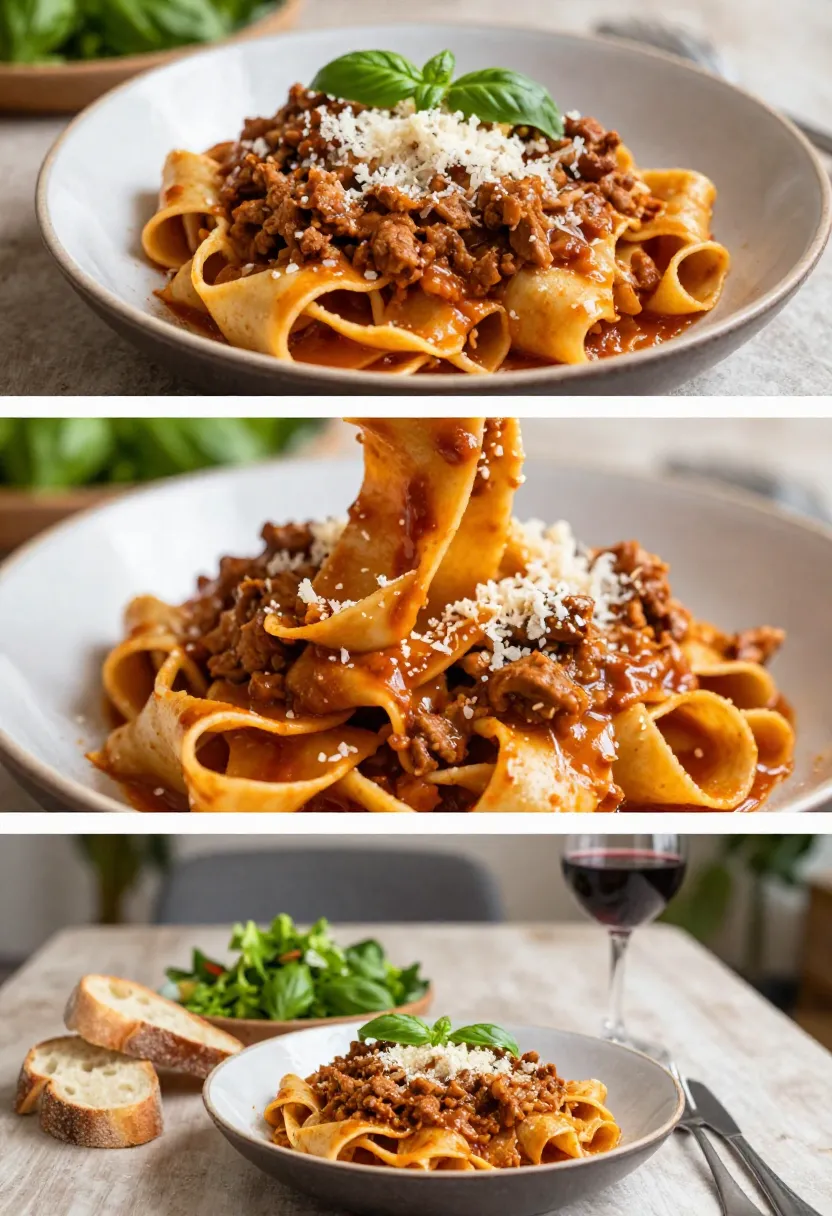
Pappardelle is probably the most classic choice. Those broad ribbons of pasta catch the sauce beautifully and create that satisfying mix of noodles and meat in every bite. Tagliatelle and fettuccine also work wonderfully and are often easier to find at the grocery store.
Once the pasta is tossed with the sauce, the finishing touches matter more than you might expect. A generous handful of freshly grated Parmesan melts slightly into the warm ragù, adding a salty, nutty richness that ties everything together. A sprinkle of fresh herbs—parsley or basil are both great—brings brightness and color to the dish.
If you want to make the meal feel a bit more complete, a few simple additions work beautifully alongside ragù:
- a slice of warm crusty bread to soak up the sauce 🥖
- a small green salad with a light vinaigrette
- a glass of red wine that matches the wine used in the sauce 🍷
None of these are complicated, but together they create a relaxed, satisfying meal that feels welcoming and generous. The kind of dinner where people linger at the table long after the plates are empty.
Tips That Make the Sauce Even Better 👨🍳
Pork ragù is a very forgiving dish, which is one of the reasons people love cooking it. Even if you adjust a few ingredients or cooking times slightly, it almost always turns out delicious. Still, there are a few small tricks that can make the sauce even better.
One of the most helpful techniques is browning the pork before adding it to the slow cooker. This step isn’t strictly necessary, but it does create a deeper flavor. When the meat is seared in a hot pan, it develops caramelized edges that add extra savory notes to the final sauce.
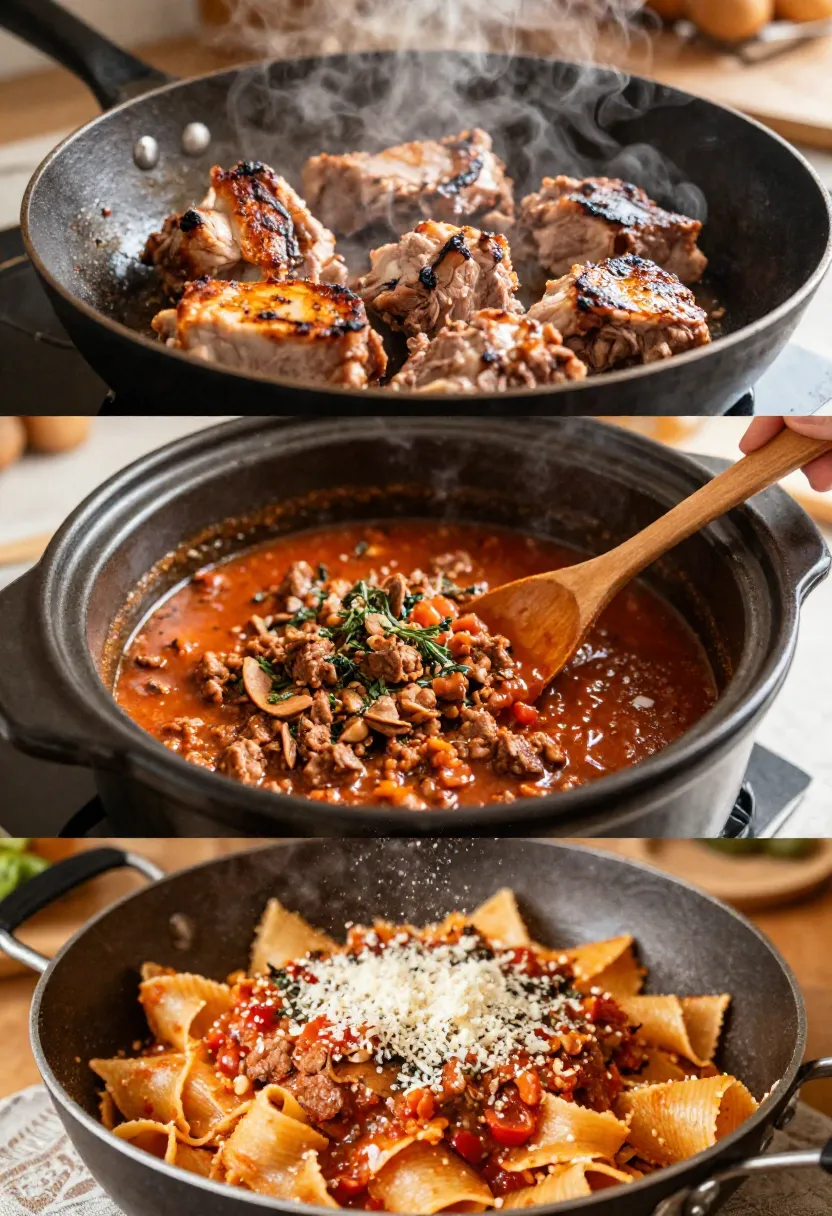
Another little detail that many cooks overlook is letting the ragù rest for a short time before serving. After hours of cooking, giving the sauce ten or fifteen minutes to settle allows the flavors to come together even more. The texture also thickens slightly as it sits.
If you ever notice that the sauce seems a bit thinner than you’d like, there’s an easy fix. Simply remove the lid from the slow cooker during the final part of cooking. As the liquid evaporates, the sauce naturally thickens and becomes richer.
Here are a few simple tips that can make a noticeable difference:
- Sear the pork before slow cooking for deeper flavor
- Taste the sauce near the end and adjust salt if needed
- Let the ragù rest briefly before serving
- Use a little pasta water to help the sauce coat the noodles
Small details like these may seem minor, but they often make the difference between a good ragù and one that people remember.
Why This Dish Feels So Special ❤️
There’s something about slow-cooked meals that feels different from everyday cooking. Maybe it’s the time involved, or maybe it’s the way the aromas gradually fill the kitchen while everything simmers. Either way, dishes like pork ragù tend to create a certain kind of atmosphere.
It’s the sort of meal that encourages people to slow down a little. Instead of rushing through dinner, you end up sitting at the table longer than expected. Someone reaches for another piece of bread to scoop up the sauce, someone else asks for a second helping, and conversation keeps going.

Pork ragù fits perfectly into those moments. It’s warm, deeply flavorful, and satisfying in a way that quick meals rarely manage to be. And even though the final dish tastes complex, the process of making it is surprisingly simple.
Maybe that’s part of the appeal. You start with a handful of everyday ingredients and a bit of patience, and a few hours later you have a dish that feels comforting, generous, and somehow a little special.
Many people discover that once they’ve made ragù at home, it quietly becomes one of those recipes they return to again and again. Not because it’s complicated or impressive—but because it simply works. Every time. 🍝✨