Contents
Some recipes don’t just feed you — they shift your mood a little. Not dramatically, not in a way you’d immediately point out, but subtly. You sit down, take a bite, and something changes. The pace of the day slows down, your thoughts stop jumping around as much, and for a moment everything feels a bit more… manageable.
Mohnnudeln fall into that category 🍽️
They’re not the kind of dish that grabs your attention right away. In fact, if you saw them on a table without context, you might not even think twice. There’s nothing flashy about them — no bold colors, no complex presentation, nothing that looks particularly “modern” or styled for photos.
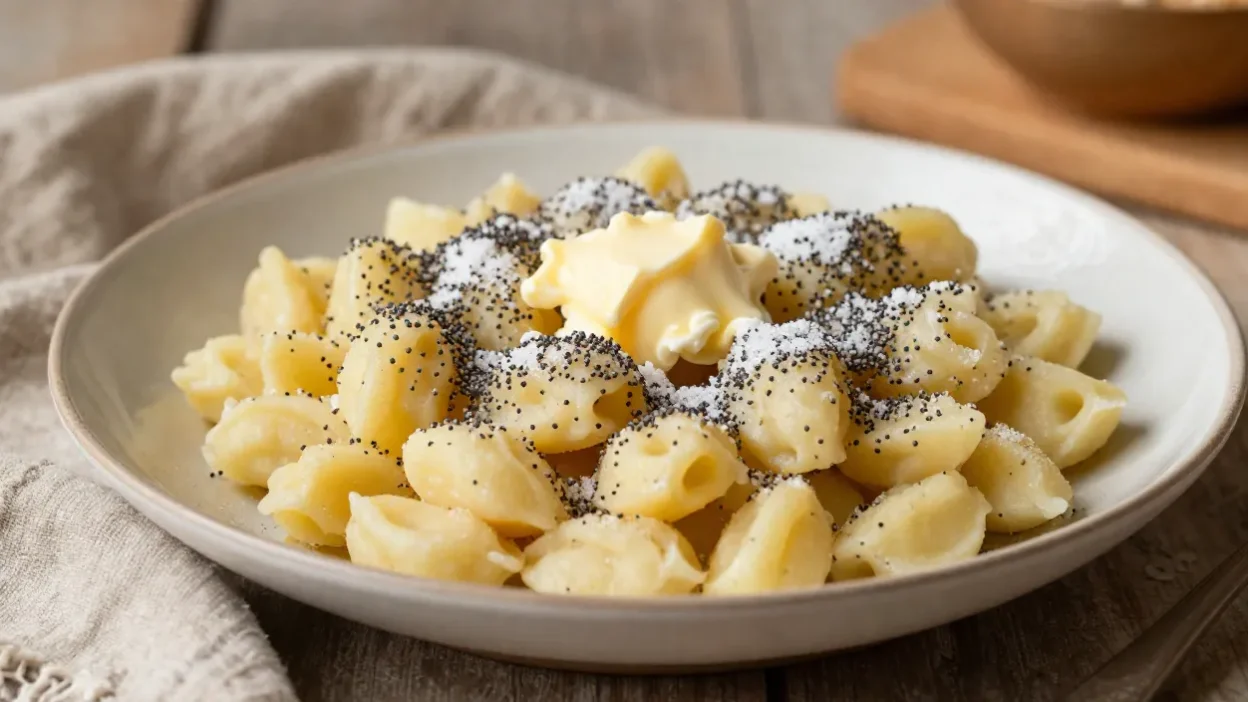
It’s just soft potato dough shaped into small noodles, coated in butter, finished with poppy seeds and a bit of sugar.
And yet, once you actually taste them, that first impression starts to fall apart.
The texture is softer than you expect, but not mushy. The butter adds richness, but doesn’t overwhelm. The poppy seeds bring in something slightly deeper — not exactly sweet, not exactly savory either. It all comes together in a way that feels balanced, but also a little unusual if you’re trying it for the first time.
You might not even react immediately. Sometimes it takes a second bite. Or a third.
And then it clicks.
It’s one of those dishes that doesn’t try to prove anything. It just exists as it is — simple, a bit old-fashioned, and quietly satisfying. And maybe that’s exactly why it stays with you longer than something more complicated ever would.
🥔 Where Simplicity Meets Craft
At a glance, the ingredient list for Mohnnudeln doesn’t suggest anything special. It’s the kind of list you could probably recreate from memory after seeing it once: potatoes, flour, eggs, butter. That’s about it.
But the interesting part isn’t what goes into the dish — it’s how you work with it.
There’s a certain level of attention required that you don’t always get with more straightforward recipes. You start noticing small details. The way the potatoes feel after boiling. Whether they’re too moist or just right. How the dough changes as you mix it — when it stops being sticky and starts holding together properly.
It’s not difficult, but it does ask you to be present.
And then comes the shaping.
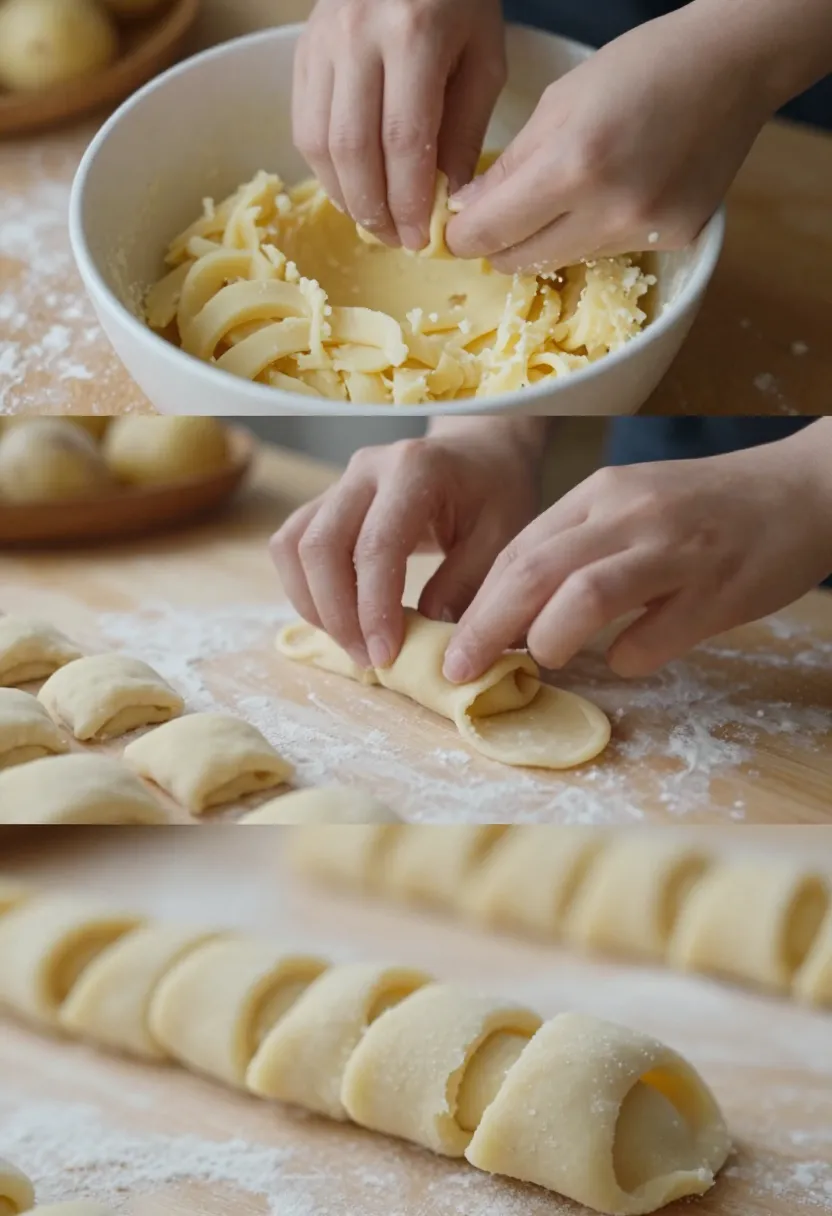
This is usually the point where people either rush… or slow down. And if you let yourself slow down a bit, the whole process becomes surprisingly enjoyable. You roll the dough, cut it into pieces, shape each one by hand. They don’t need to be identical — and honestly, they won’t be.
Some will be slightly uneven. A few might look a bit awkward. That’s completely normal.
In fact, those small differences are what make the final dish feel homemade rather than manufactured.
There’s also something repetitive about this step in a good way. After a few minutes, your hands sort of take over, and your mind drifts. It’s not something you have to think about constantly — more something you fall into.
A few things that really make a difference here:
- working with warm (not hot) potatoes helps the dough come together more smoothly
- adding flour gradually prevents the dough from becoming too heavy
- handling the dough gently keeps the final texture soft instead of dense
None of these are complicated steps, but together they change the outcome more than you might expect.
By the time you’re done shaping, the dish already feels a little more personal. You’ve spent time with it. You’ve adjusted it, worked with it, paid attention to it. And that shows in the end result.
🌰 The Flavor That Surprises Everyone
For a lot of people, poppy seeds are a background ingredient. Something you sprinkle on top of bread or mix into baked goods without thinking too much about it.
Mohnnudeln change that completely.
Here, poppy seeds aren’t just an accent — they’re central to the dish. And once they’re ground, their flavor becomes much more noticeable. It’s not sharp or overpowering, but it has a certain depth that’s hard to describe if you haven’t experienced it before.
Somewhere between nutty and earthy, with a slight warmth that builds as you eat.
When combined with butter, that flavor softens and spreads more evenly across the dish. The sugar doesn’t dominate — it just lifts everything slightly, making the overall taste feel more rounded.
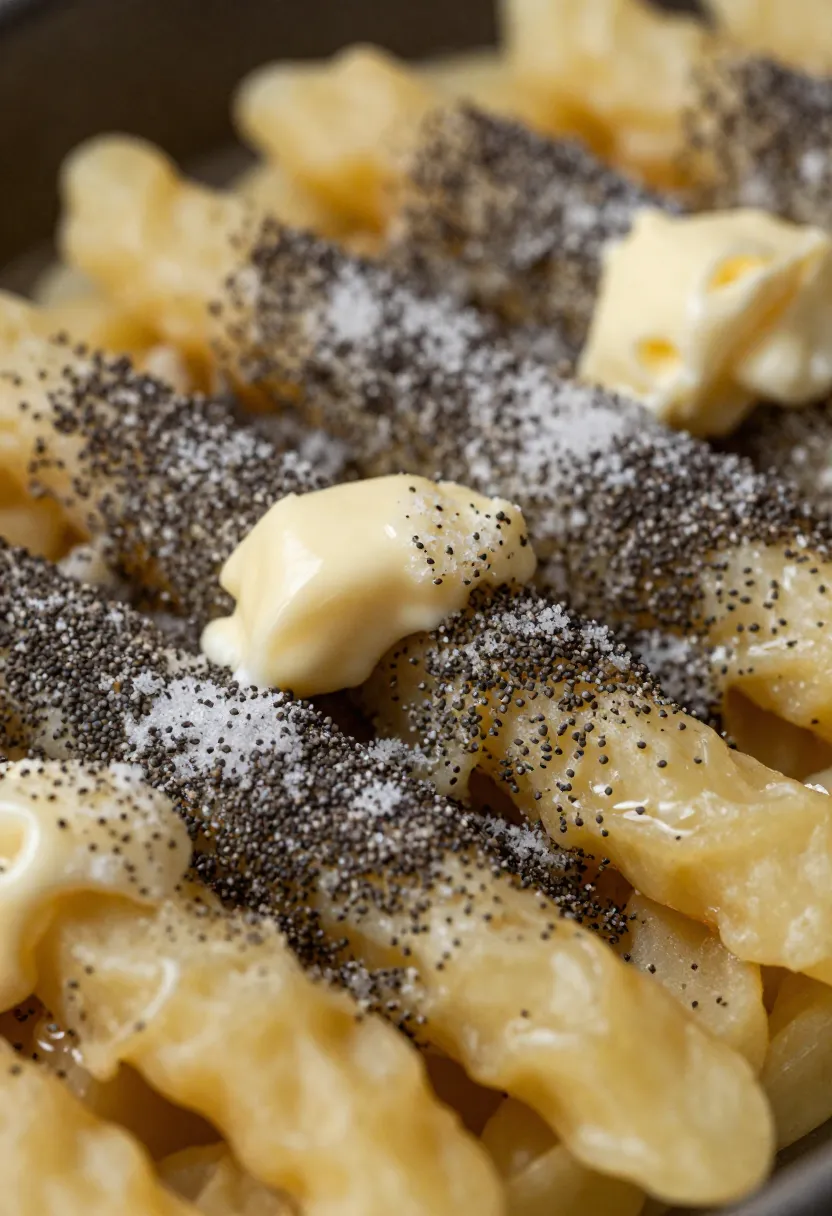
What’s interesting is that nothing stands out too much on its own. It’s more about how everything blends together.
You get this balance that feels very natural:
- the softness of the potato noodles gives the dish its base
- the butter adds a smooth, rich layer that ties everything together
- the poppy seeds introduce texture and a deeper, more complex flavor
And the longer you eat, the more you notice those layers.
It’s not the kind of dish that overwhelms you right away. If anything, it does the opposite. It feels calm, steady, and a bit understated.
But then somewhere in the middle of eating — usually without realizing it — you slow down and think, “This is actually really good.”
Not in a dramatic way. Just a quiet realization.
And those are often the dishes people come back to the most 😊
🥄 Mohnnudeln Recipe (Sweet Austrian Potato Noodles)
Mohnnudeln are one of those dishes that don’t really fit into a single category — and that’s part of their charm. Depending on how you serve them (and honestly, your mood that day), they can feel like a comforting main course or a warm, satisfying dessert.
They’re rich, but not in a heavy, overwhelming way. The butter gives them depth, the potatoes keep everything soft and balanced, and the poppy seeds add this slightly nutty, almost cozy flavor that makes the whole dish feel complete.
It’s also the kind of recipe that feels a bit more hands-on than your usual quick meal. You’re shaping each piece, paying attention to the texture, adjusting as you go. It’s not difficult, but it does ask you to slow down a little — which, in a way, is exactly what makes it enjoyable.
This is the kind of food that works especially well when:
- you’re not in a rush
- you want something warm and comforting
- you feel like cooking, not just “making food”
It’s simple, yes — but it doesn’t feel basic.
🧾 Ingredients
For the dough:
- 500 g starchy potatoes
- 180–200 g all-purpose flour
- 3 egg yolks
- 2 tablespoons softened butter
- 1 teaspoon salt
For the poppy seed coating:
- 60 g finely ground poppy seeds
- 30 g sugar (adjust to taste)
- 80–100 g butter
- 1 teaspoon vanilla extract (or vanilla seeds)
- A small pinch of salt
Optional:
- Powdered sugar for serving
- Applesauce or plum compote
👩🍳 Instructions
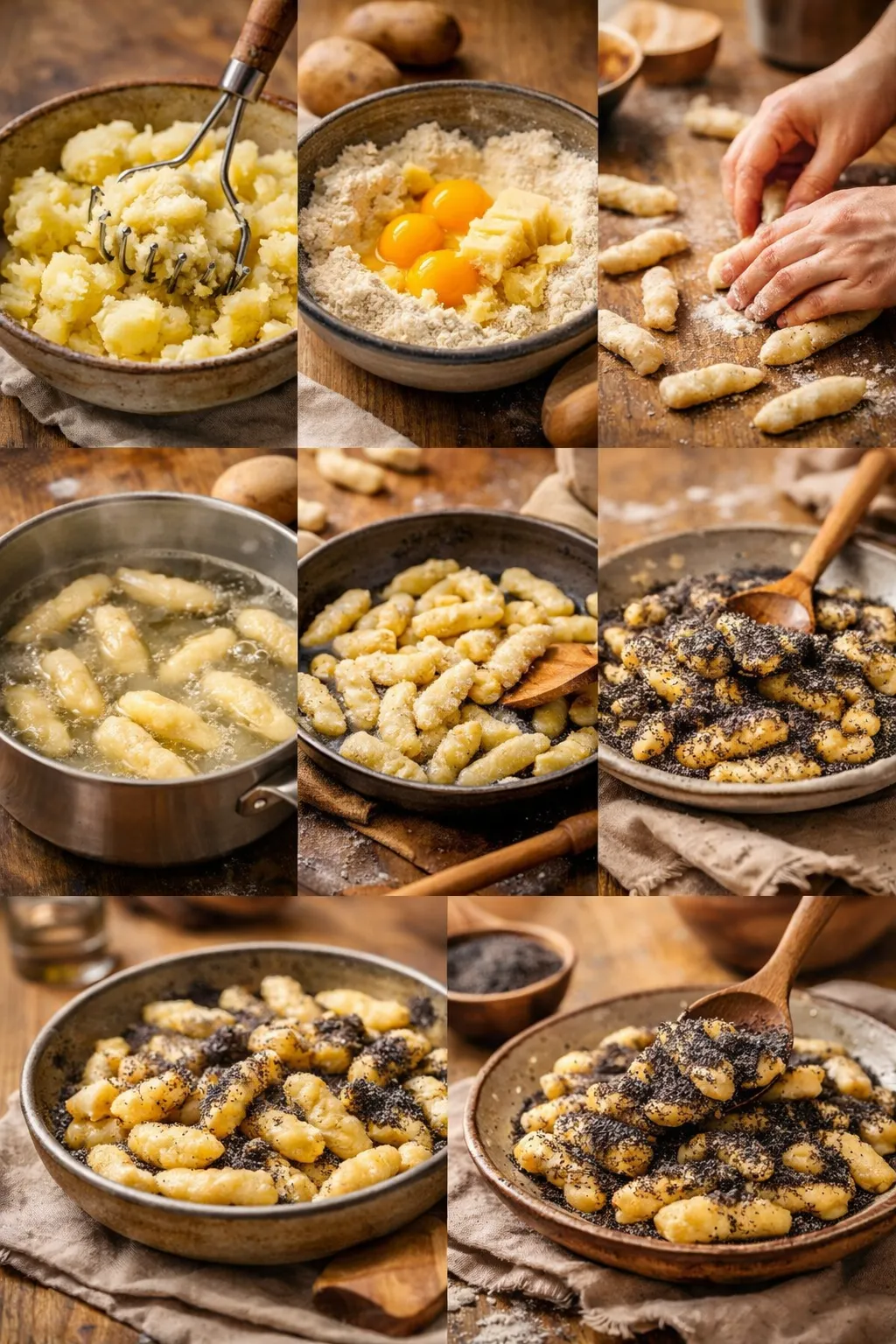
- Peel the potatoes and boil them in salted water until they are fully tender. You don’t want any resistance when you pierce them — they should feel soft all the way through. Drain them well and let them sit for a few minutes so excess moisture can evaporate.
- While still warm, mash or rice the potatoes until smooth. Take your time here — small lumps might not seem like a big deal now, but they can affect the final texture later.
- Add the flour, egg yolks, butter, and salt to the mashed potatoes. Mix gently until a soft dough forms. It should hold together easily but still feel light. If it sticks too much, add a little more flour — but don’t overdo it.
- Divide the dough into manageable portions. Roll each portion into a long rope, then cut into small pieces.
- Shape each piece into a short, finger-length noodle with slightly tapered ends. They don’t need to be identical — actually, they shouldn’t be. A bit of variation makes the dish feel more natural and homemade.
- Bring a pot of salted water to a gentle simmer (not a rolling boil). Add the noodles and cook until they float to the surface. Once they do, let them cook for another 30–60 seconds, then remove them carefully.
- In a large pan, melt the butter over low heat. Add vanilla and a pinch of salt. Let it warm slowly — this helps the flavors come together without burning anything.
- Add the cooked noodles into the pan and gently toss them in the butter until fully coated.
- Sprinkle the ground poppy seeds and sugar over the noodles. Toss again until everything is evenly distributed. At this point, you’ll start to notice the smell — warm, slightly nutty, a little sweet.
- Serve immediately while warm. You can finish with powdered sugar or add fruit on the side if you want a bit of contrast.
✨ Small Tips That Make a Big Difference
- Let the potatoes dry properly after boiling — too much moisture is the main reason the dough turns sticky
- Don’t rush the shaping step — a steady, relaxed pace actually makes everything easier
- Keep the water at a gentle simmer, not a full boil, to avoid breaking the noodles
- Grind the poppy seeds finely — this really affects both flavor and texture
- Taste and adjust the sugar at the end — it’s easier to add more than to fix it later 😊
🧡 More Than Just Food
There’s something quietly reassuring about recipes that don’t try to reinvent themselves every few years. No trends, no shortcuts dressed up as innovation — just a way of cooking that has clearly worked for a long time.
Mohnnudeln feel like one of those dishes.
When you make them yourself, you start to notice that the experience goes beyond just following steps. It’s not only about the end result sitting on the plate. It’s about everything that happens in between — the small, almost routine actions that slowly pull you into the process.
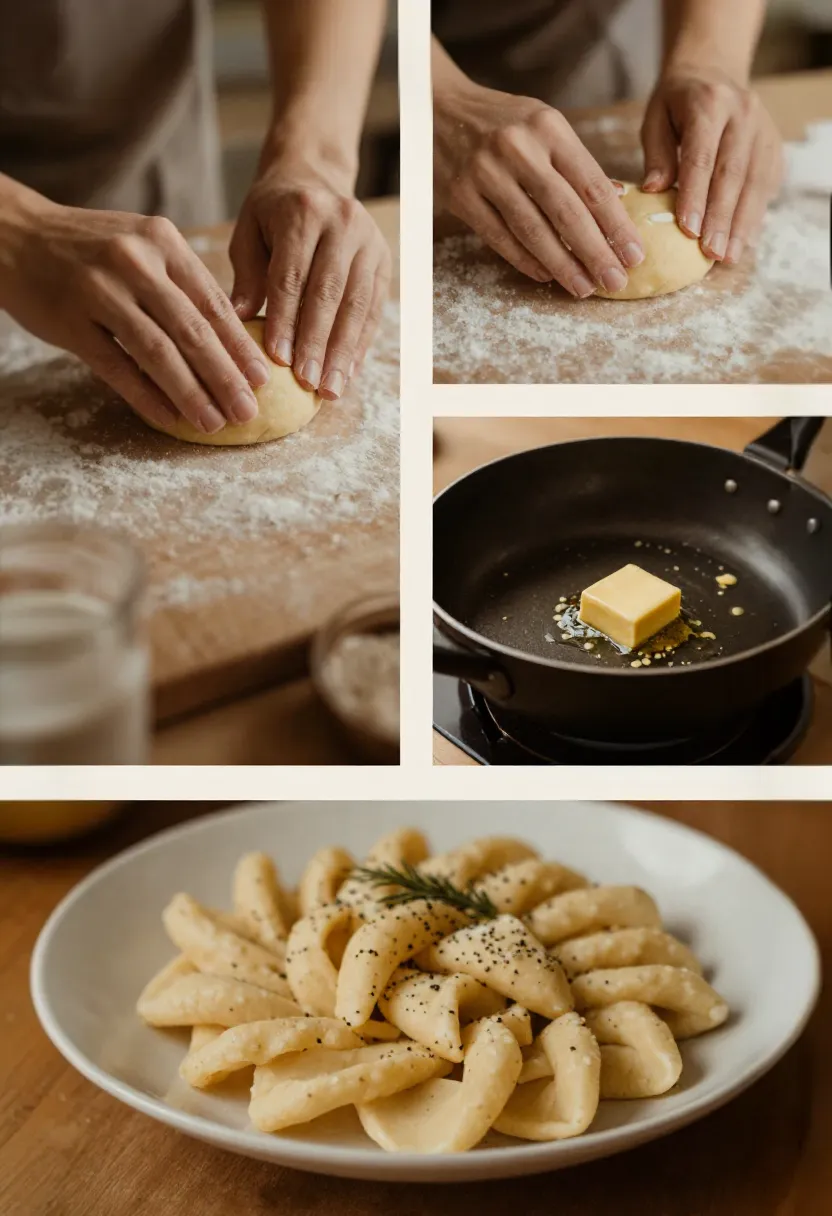
You roll the dough without thinking too much about it. You shape one piece, then another, and after a while your hands just keep going on their own. There’s no pressure to make them perfect. In fact, the slightly uneven ones often feel more “right” than the perfectly shaped ones.
At some point, the kitchen starts to smell different. The butter melts, the vanilla opens up, and there’s this soft, warm aroma that fills the space. It’s not strong or overpowering — just enough to make you pause for a second and notice it.
And that’s usually when it clicks.
This isn’t fast cooking. It’s not about efficiency or getting things done quickly. It’s slower, a bit repetitive, and strangely calming. The kind of process that doesn’t demand your full attention, but still keeps you present.
And maybe that’s exactly why dishes like this stay with people. Not because they’re impressive, but because they feel familiar in a way that’s hard to explain.
🍎 How to Serve and Truly Enjoy Mohnnudeln
Mohnnudeln don’t come with strict rules about how they should be served, and that’s part of what makes them so easy to adapt. You can lean into the sweetness, keep things more neutral, or even adjust them depending on what you’re pairing them with.
Sometimes they feel like dessert. Other times, they’re more like a warm, comforting main dish you’d eat on a quiet evening.
What’s interesting is how small changes can shift the entire feel of the dish. You don’t need to completely reinvent it — just tweak a few elements.
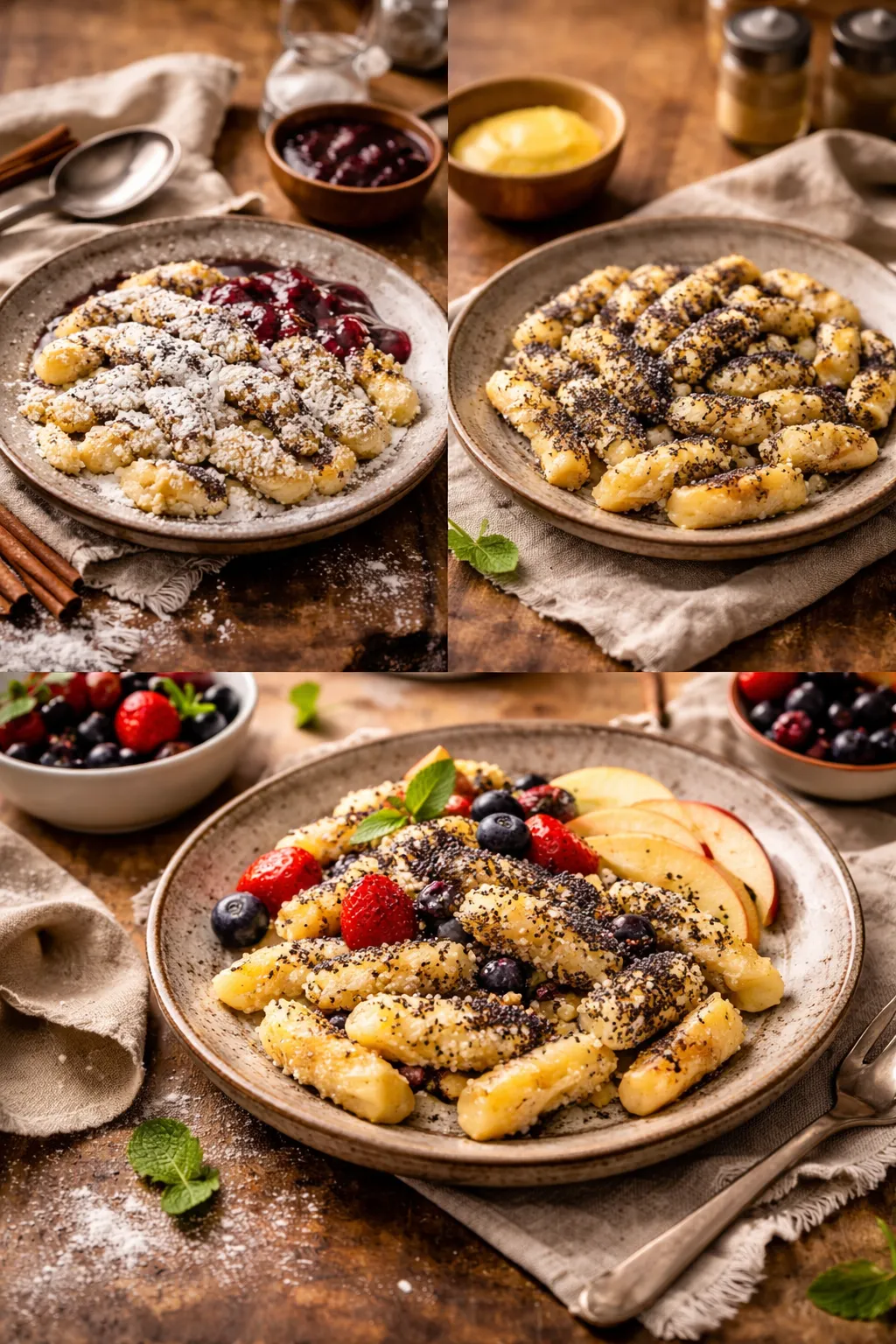
Here’s a simple way to think about it:
| Style | What to Add | How It Feels |
|---|---|---|
| Dessert version | Powdered sugar, fruit compote | Sweet, soft, slightly indulgent |
| Balanced version | Less sugar, more butter | Mild, comforting, not too heavy |
| Light twist | Fresh berries or apple slices | Fresher, slightly tangy contrast |
In reality, though, it’s rarely this structured.
You might start serving them one way and change your mind halfway through eating. Maybe you add a bit more sugar after the first bite. Or you realize the dish needs something fresh on the side to balance it out.
That flexibility is part of the appeal. It doesn’t feel strict or fixed — more like something you can adjust depending on what you’re in the mood for.
And over time, you naturally find your own version. The one that feels just right to you.
🔑 Small Details That Change Everything
With a dish like Mohnnudeln, the biggest improvements don’t come from major changes — they come from small adjustments that are easy to overlook.
At first, it might all seem straightforward. Boil, mix, shape, cook. But once you’ve made it a couple of times, you start noticing where things can go slightly off — and what makes them better.
For example, potatoes that are just a bit too wet can change the entire dough. It becomes stickier, harder to work with, and you end up adding more flour than you originally planned. That, in turn, affects the final texture.
Or the way you handle the dough. If you rush or press too hard, the noodles can turn out denser than they should be. Not bad, just… not as light and soft as they could be.
And then there’s the final step — the one that’s easiest to underestimate.
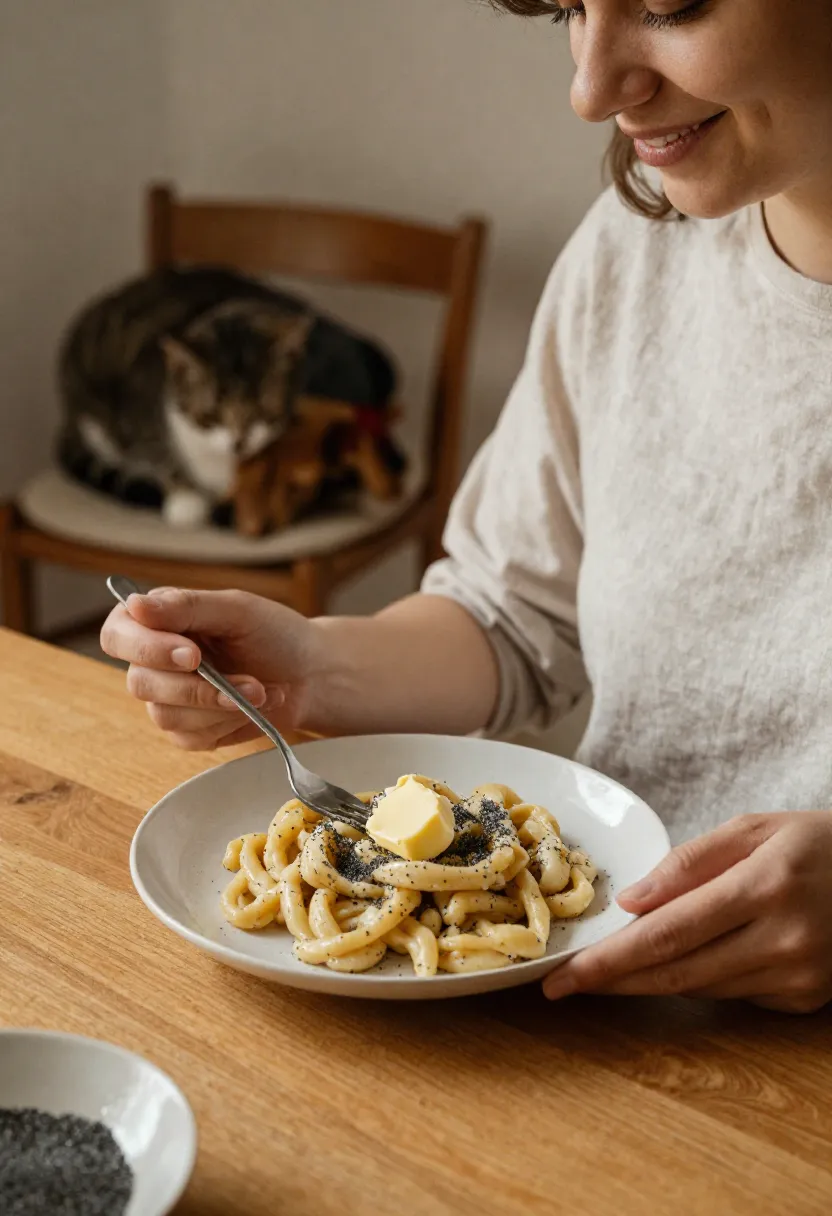
When everything is cooked and ready, it’s tempting to just combine it quickly and serve. But if you slow down here, even just a little, the difference is noticeable. The butter coats more evenly, the poppy seeds distribute better, and the whole dish feels more cohesive.
A few small things that tend to make a real difference:
- letting the potatoes sit and release steam before mixing the dough
- adding flour gradually instead of all at once
- keeping the water at a gentle simmer so the noodles don’t break apart
- tossing everything slowly in the pan instead of rushing the final step
- tasting at the end and adjusting — especially the balance between butter and sugar
None of this is complicated. But together, these details shape the final result more than any single ingredient does.
And after a while, you stop thinking about these steps as “rules.” They just become part of how you cook the dish.
Which is usually a sign that it’s not just a recipe anymore — it’s something you’ve made your own 😊