Contents
- Why Melted Brie Works So Well (Even When You Don’t Try That Hard) 🧀🍯
- Choosing Ingredients Without Overthinking Them 🌿
- The Actual Recipe: Melted Brie with Honey & Pistachios 🧀🍯
- When This Dish Makes the Most Sense 🍷
- Small Variations That Keep It Interesting 🌿
- Why Simple Dishes Are the Ones We Come Back To 💛
Some dishes are built around precision. Exact temperatures. Exact timing. Exact presentation.
This isn’t one of them. 🕯️
Melted brie with honey and pistachios lives in a different category. It’s not about technique or rules — it’s about a moment. A mood. That quiet point in the evening when you realize you don’t want anything complicated, but you also don’t want something boring.
It’s the kind of food that appears when:
- the day was long
- the fridge is half-empty
- you still want to treat yourself
- or someone texts, “I’m coming over, hope that’s okay?”
There’s no pressure with this dish. No expectation of perfection. You don’t plate it carefully. You don’t measure the honey down to the gram. You don’t even always sit down to eat it.
Sometimes you just stand there. Bread in hand. Cheese still bubbling a little. And that’s exactly how it’s supposed to be.
What makes it special isn’t how it looks — it’s how it feels.
Warm food has a way of slowing people down. Melted cheese especially. It makes conversations softer. Less rushed. A bit more honest. You don’t “attack” this dish. You ease into it.
And maybe that’s why people remember it.
Why Melted Brie Works So Well (Even When You Don’t Try That Hard) 🧀🍯
Brie is already a generous cheese. Mild, creamy, never aggressive. When you heat it, something shifts. The texture loosens. The aroma deepens. It becomes less formal and more… approachable.
Add honey, and suddenly the richness has somewhere to go. The sweetness doesn’t fight the cheese — it smooths it out. Softens the edges. Makes each bite feel round instead of heavy.
Then come the pistachios.
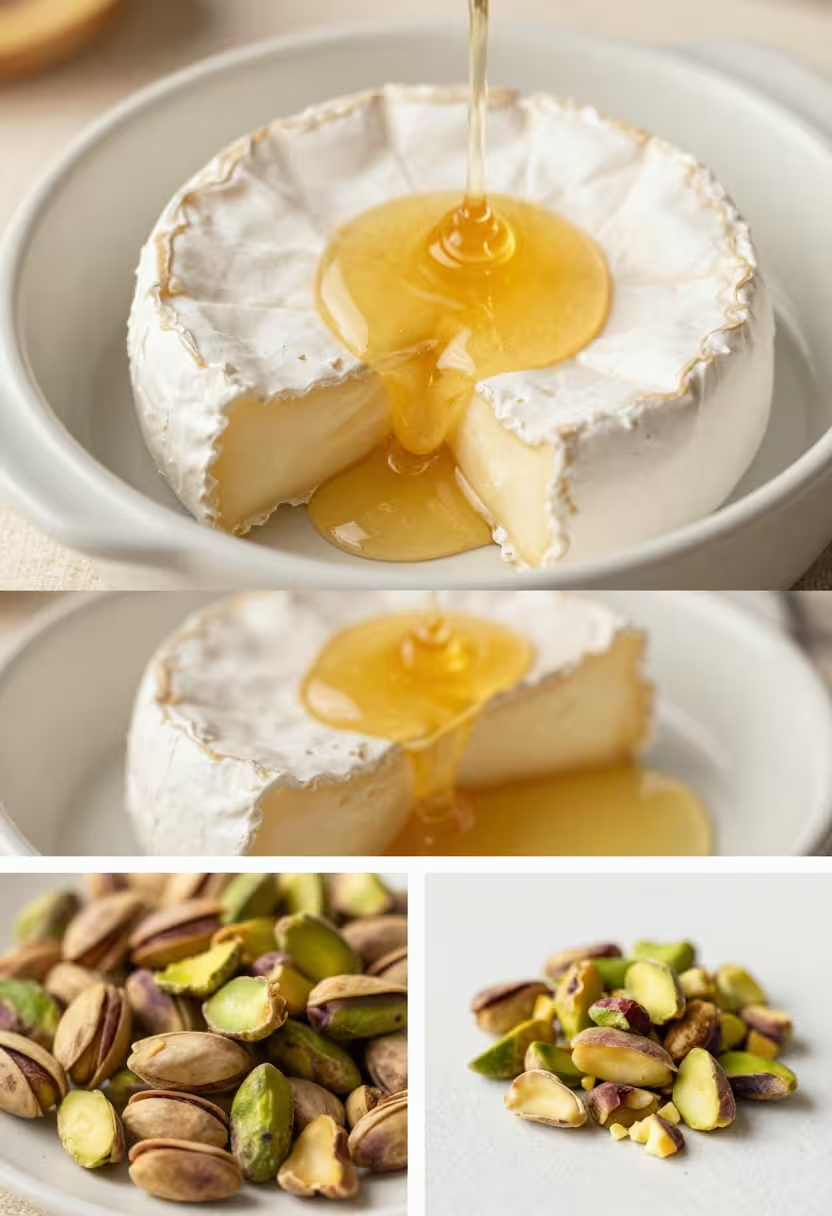
They’re not there to steal attention. They’re there to interrupt the softness just enough. A bit of crunch. A hint of salt. Something to remind you that texture matters as much as flavor.
The balance works because none of the elements are loud.
- The brie is creamy but not sharp
- The honey is sweet but not sugary
- The pistachios are crunchy but not overpowering
Nothing dominates. Everything supports.
And warmth ties it all together. Warmth changes how we taste. It amplifies aroma, softens flavors, and makes simple ingredients feel more indulgent than they really are.
This is why the dish works even when:
- the honey pour wasn’t perfect
- the pistachios were chopped unevenly
- the brie melted a bit more than planned
It’s forgiving. And forgiving food is the kind people actually make again.
Choosing Ingredients Without Overthinking Them 🌿
One of the biggest mistakes people make with simple dishes is trying to make them “better” by complicating them.
This dish doesn’t need that.
It needs decent ingredients and a bit of attention — nothing more.
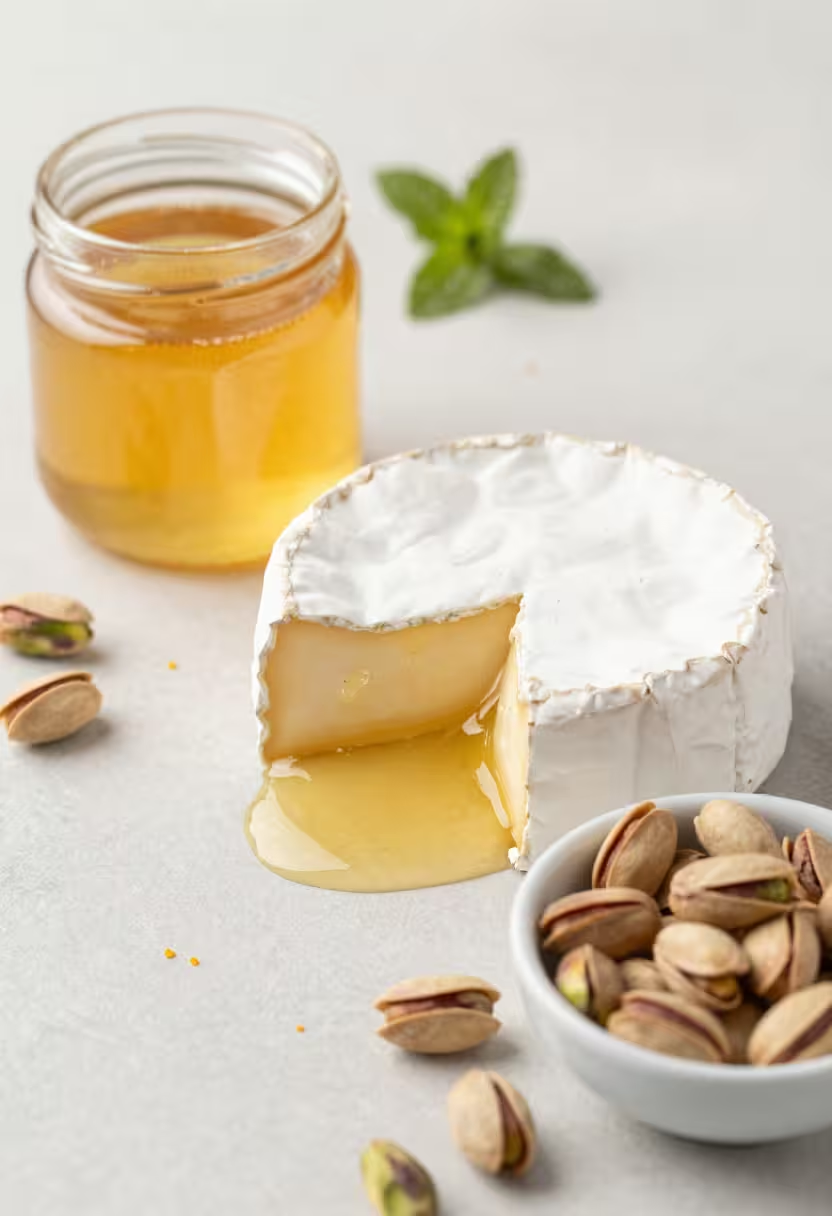
About the brie
Go for full-fat brie. Always.
Low-fat versions don’t melt properly and tend to lose that soft, luxurious texture that makes this dish worth making.
A small to medium wheel is ideal. It should feel slightly soft when you press it, but not runny. The smell should be mild and buttery. If it hits you with something sharp or ammonia-like, put it back.
Leave the rind on.
It’s edible, and more importantly, it keeps the cheese from collapsing too fast in the oven. Think of it as a natural container, not something to remove.
About the honey
This is not the moment for aggressively strong honey.
Mild, floral varieties work best:
- clover
- wildflower
- acacia
You want sweetness that complements the cheese, not competes with it. The honey should feel like a background note, not a solo.
About the pistachios
Shelled pistachios, lightly salted if possible. Chop them roughly. Uneven pieces are actually better here — they give the dish a more natural texture.
And no, you don’t need to toast them. You can, but you don’t have to. The oven heat will wake them up just enough.
Optional extras (only if you feel like it)
This is where personal taste comes in:
- fresh thyme or rosemary 🌿
- cracked black pepper
- citrus zest for brightness
- flaky salt for contrast
Add them because you want to — not because you think you should.
If there’s one rule here, it’s this: the dish should feel relaxed, not overworked.
The Actual Recipe: Melted Brie with Honey & Pistachios 🧀🍯
This is one of those dishes that sounds fancier than it really is. On paper, it feels like something you’d order at a wine bar or get served at a dinner party where everyone pretends it was “no effort at all”.
In reality, it’s simple. Almost suspiciously simple.
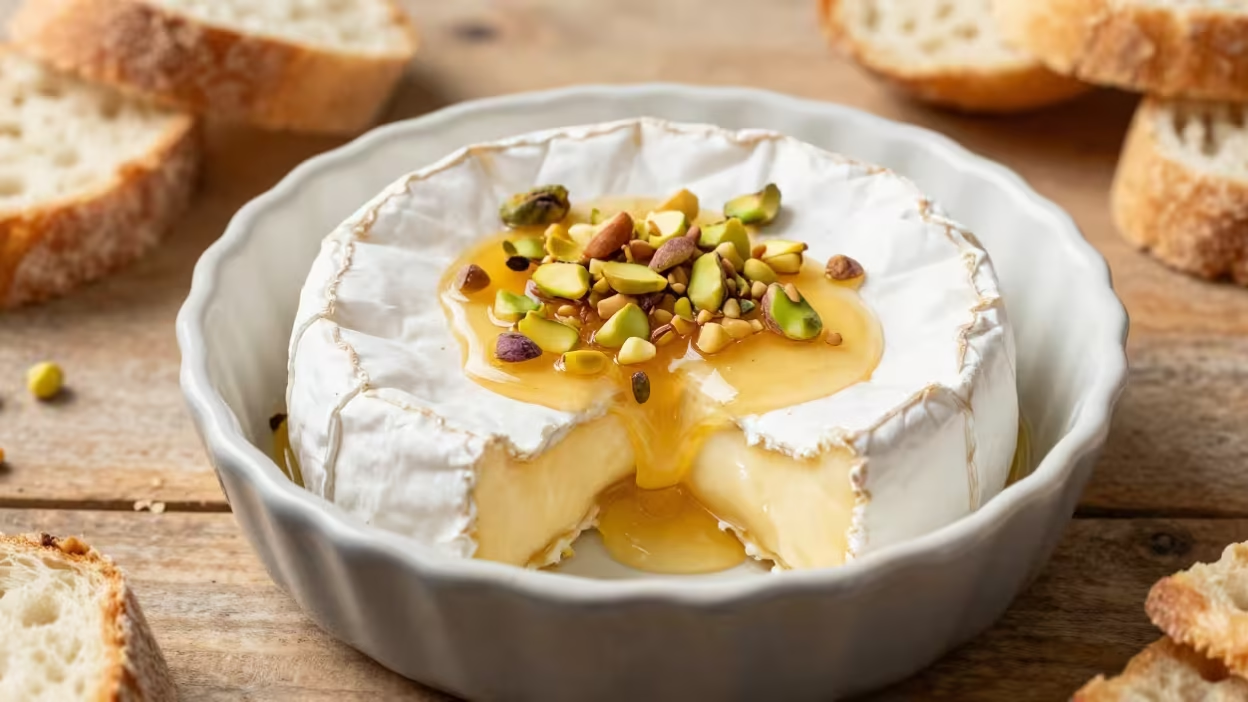
Warm brie becomes soft and creamy in the center, the honey seeps into every little crack, and the pistachios add just enough crunch to keep things interesting. The result is rich but not heavy, sweet but not dessert-like, indulgent without crossing the line.
It’s the kind of dish you make when you want comfort and a little drama — without actually working for it.
Ingredients
- 1 small wheel of full-fat brie (8–12 oz)
- 3–4 tablespoons honey (or more, depending on mood)
- ¼ cup pistachios, roughly chopped
Optional, if you feel like it:
- fresh thyme or rosemary 🌿
- cracked black pepper
- lemon or orange zest
- a pinch of flaky sea salt
You don’t need everything on the list. The base version already does its job.
How to Make It
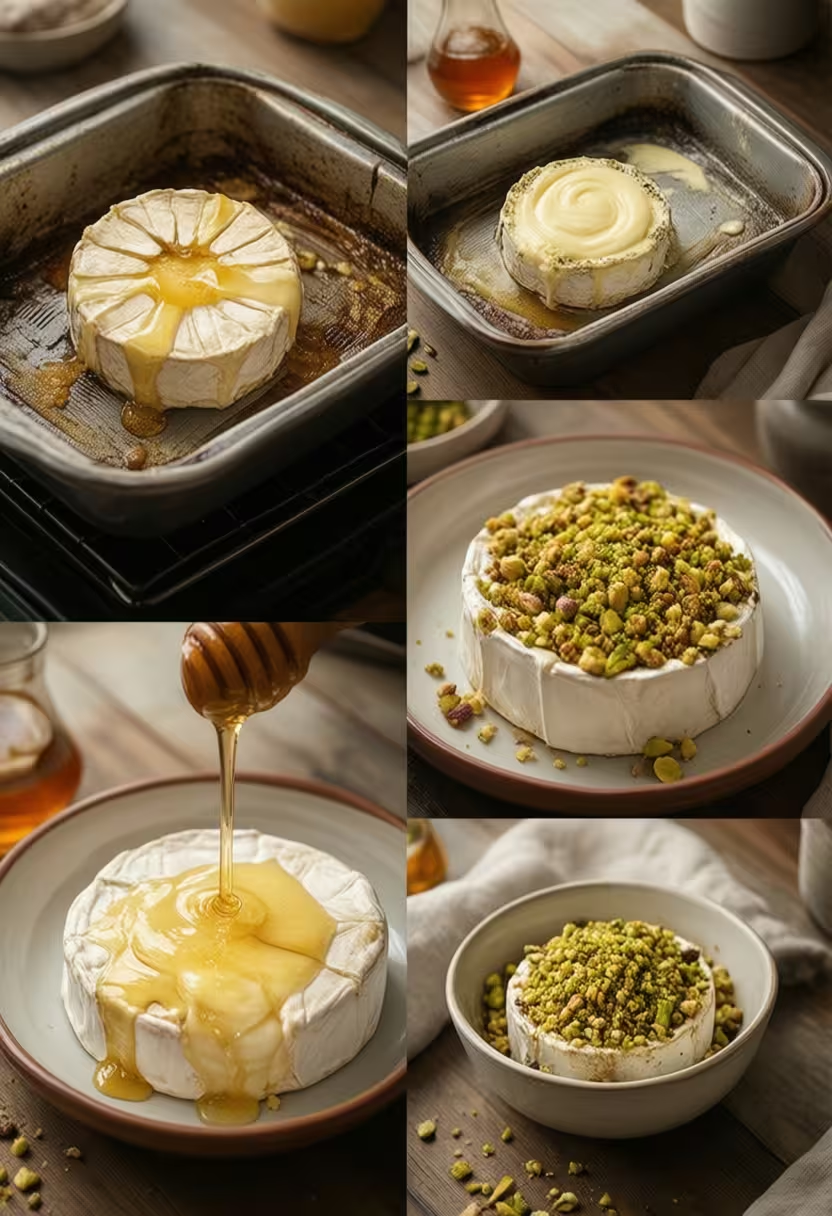
- Preheat the oven
Set your oven to 375°F (190°C).
If you forget and do this halfway through prepping, you’re in good company. - Place the brie in a baking dish
Use a small oven-safe dish that fits the brie snugly. Keep the rind on — it helps the cheese hold its shape as it melts.
If you want, lightly score the top with a knife. This step is optional and not life-changing. - Bake until soft
Put the brie in the oven, uncovered, and bake for about 10–15 minutes.
You’re looking for a soft, yielding center — not a fully collapsed cheese. Keep an eye on it during the last few minutes. - Add the honey
Remove the brie from the oven and immediately drizzle honey over the top. Don’t overthink it. Let it run, let it drip, let it pool around the edges. - Finish with pistachios
Sprinkle the chopped pistachios generously over the cheese. Some will stick, some won’t — both are fine. - Optional finishing touches
Add herbs, zest, black pepper, or flaky salt if you’re using them. This is where the dish becomes a little more personal. - Serve right away
This dish waits for no one. Serve it while it’s warm and gooey, ideally with bread, crackers, or whatever you have nearby.
A Few Small Tips That Actually Help 😉
- Take it out earlier than you think.
Brie keeps melting even after you remove it from the oven. If it already looks very soft inside, that’s your cue. - Let the honey do its thing.
Don’t try to spread it evenly. Drizzling looks better, feels more natural, and tastes the same — if not better. - Texture matters more than precision.
Roughly chopped pistachios give better contrast than perfectly even pieces. This dish likes a bit of chaos. - Serve it where it’s baked.
Transferring melted brie to another plate usually makes a mess. The baking dish is the serving dish. - This is not a “wait for guests” appetizer.
Melted brie is happiest in the first few minutes. If people aren’t ready yet — that’s on them 😌
When This Dish Makes the Most Sense 🍷
Melted brie with honey and pistachios isn’t an everyday snack. Not because it’s complicated — it’s not — but because it feels like a pause. A small celebration built into an otherwise normal day.
This is the kind of dish that works best when you’re not rushing.
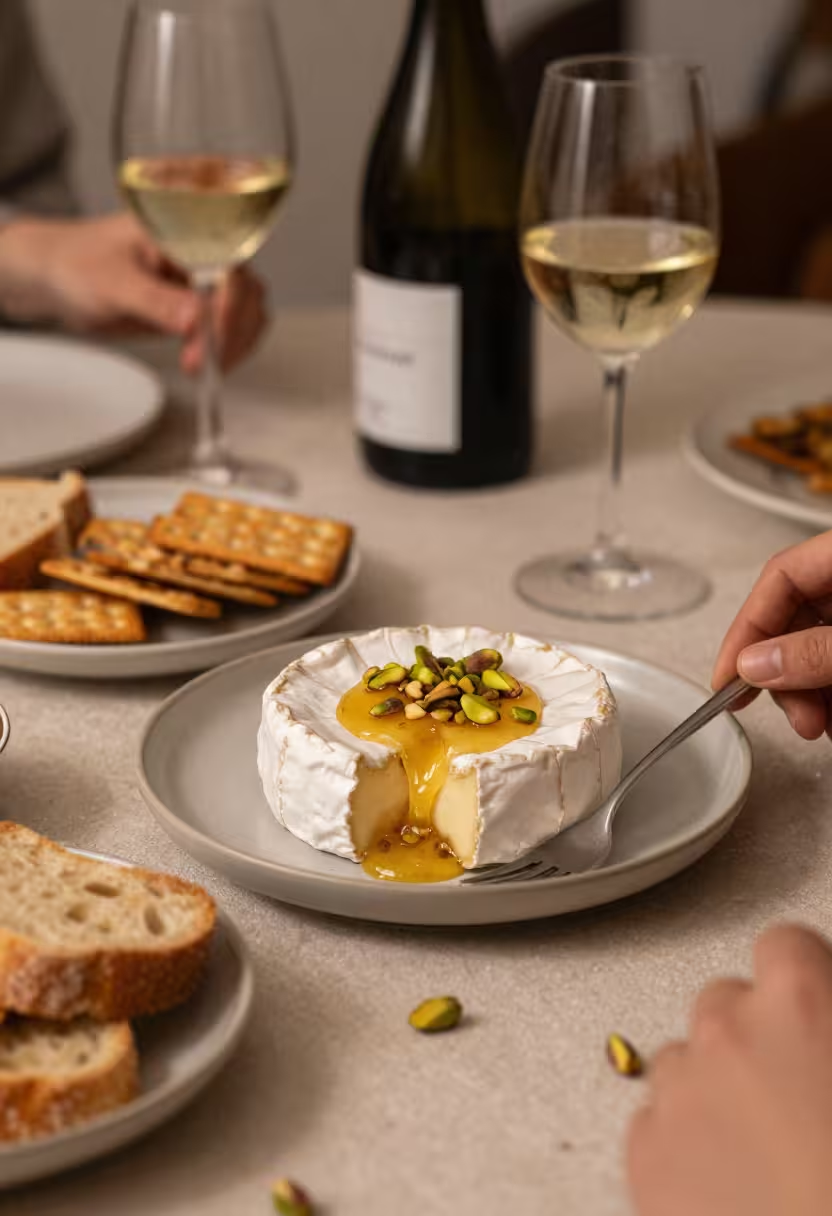
It fits naturally into moments like:
- casual dinner parties where no one wants a formal appetizer
- wine nights that start “just one glass” and somehow last for hours
- holidays when the table is full but people keep circling the kitchen
- quiet evenings when cooking feels like too much effort, but ordering in feels like giving up
There’s something about warm brie that invites people to slow down. No one eats it quickly. No one rushes back to their phone. It asks for attention — gently, without demanding it.
And that’s rare.
Small Variations That Keep It Interesting 🌿
Once you’ve made this dish a couple of times, it starts to feel less like a recipe and more like a template. A base you can adjust depending on the mood, the season, or whatever happens to be in your kitchen.
Some variations are obvious. Others are more intuitive.
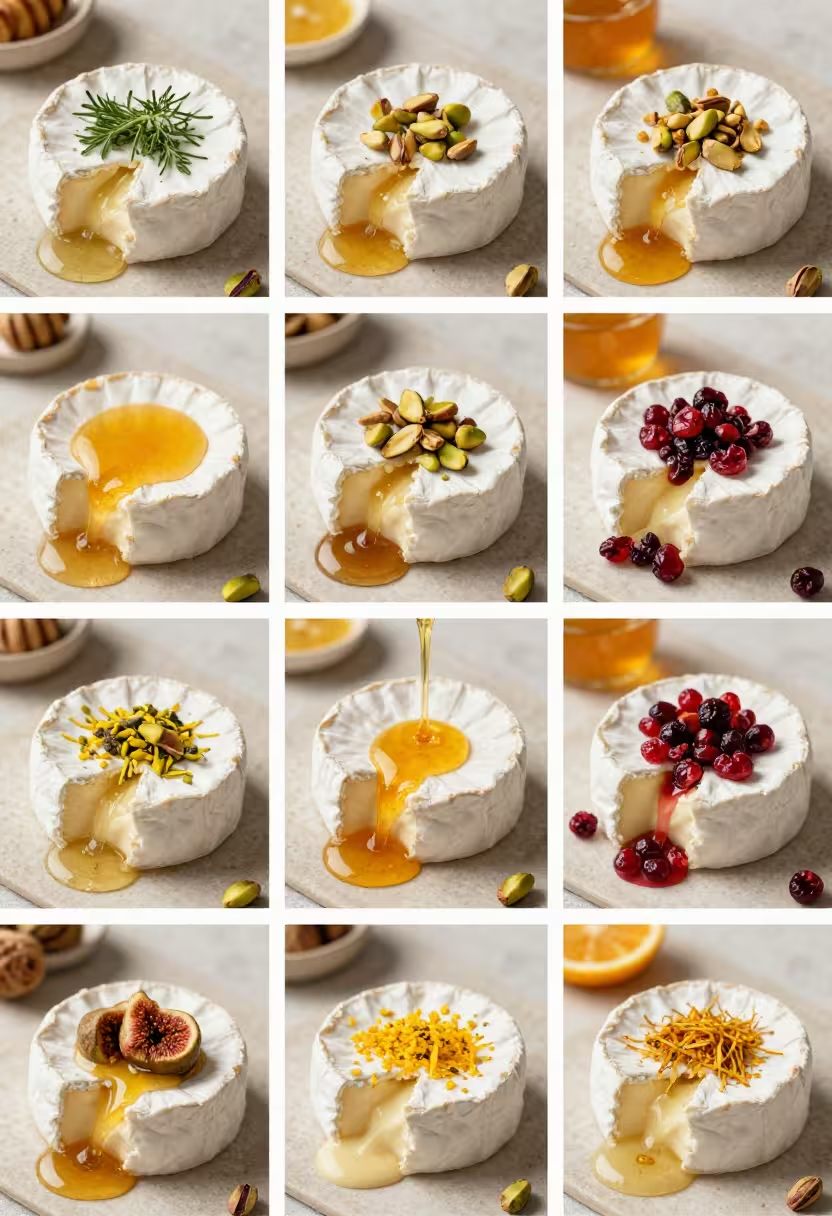
You might:
- add fresh thyme or rosemary for a more savory, cozy feel
- swap regular honey for hot honey when you want a little kick 🌶️
- sprinkle dried figs or cranberries for sweetness and chewiness
- finish with lemon or orange zest when the richness needs lifting
None of these changes turn the dish into something unrecognizable. They just nudge it in a slightly different direction.
And that’s the beauty of it.
You’re not locked into one “correct” version. You’re allowed to adapt. To experiment. To repeat yourself when something works.
Food like this doesn’t need reinvention — it just needs attention.
Why Simple Dishes Are the Ones We Come Back To 💛
There are plenty of recipes that look impressive on paper but rarely make it into real life. They take too long, require too much attention, or demand a level of planning that most everyday evenings simply don’t allow.
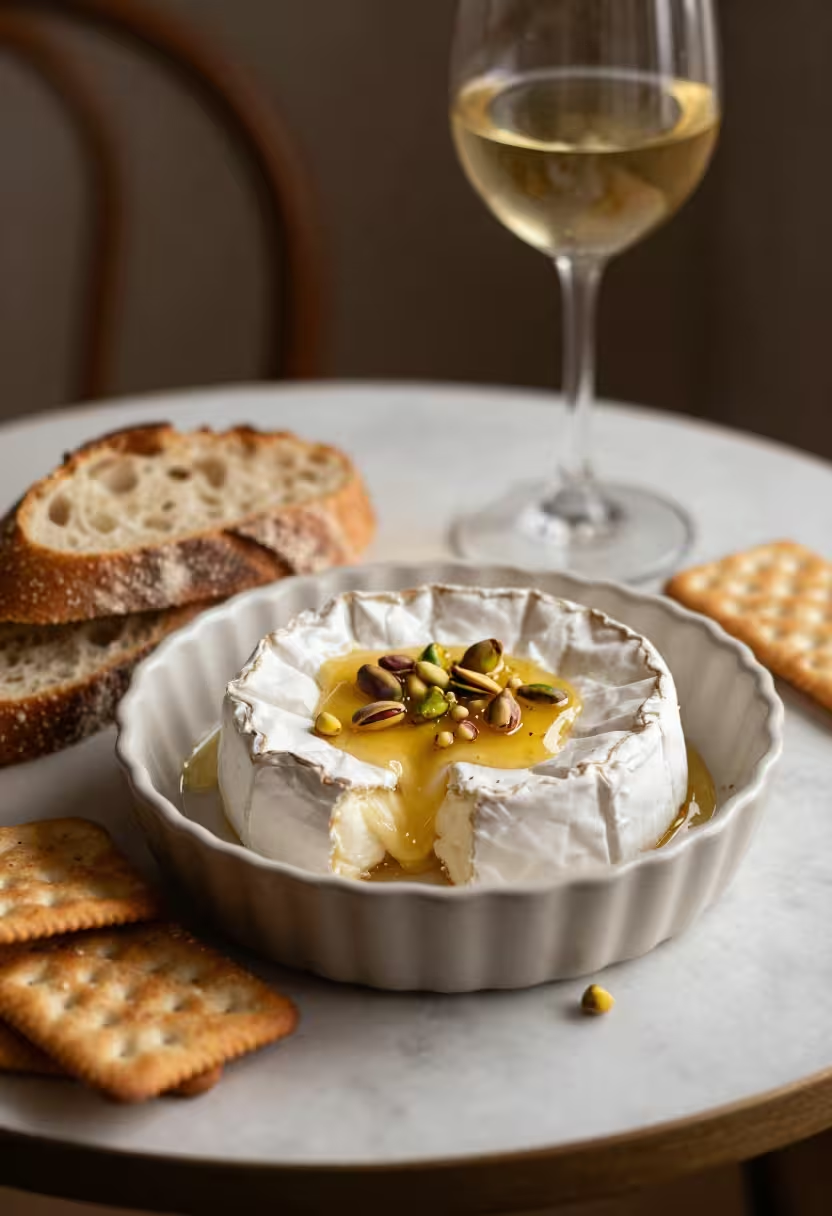
Melted brie with honey and pistachios is different. Over time, it stops feeling like a recipe at all and becomes something closer to a reliable fallback. It’s the dish you remember when the fridge feels uninspiring, when guests arrive unexpectedly, or when you want something warm without committing to a full cooking project.
You don’t make it to demonstrate skill or follow trends. You make it because it consistently delivers comfort with very little effort. Even when things aren’t perfectly measured or timed, the result is still satisfying. The cheese melts a bit more than planned, the honey pours a little heavier than intended, and the pistachios aren’t chopped evenly — and none of that actually hurts the final dish.
What makes this recipe stick isn’t originality or complexity, but reliability. It asks very little and gives a lot in return. You put something warm on the table, people gather around it naturally, and the moment takes care of itself. In everyday cooking, that kind of dependability is often what matters most.