
Contents
- What Does a Healthy Lifestyle Actually Mean?
- Start With What You Eat
- Move Your Body — In Ways You Actually Enjoy
- Sleep Is Not a Luxury — It’s the Foundation
- Hydration: The Easiest Health Habit You’re Probably Ignoring
- Stress, Mental Health, and the Habits Nobody Talks About
- Building Habits That Actually Last
- Conclusion
- FAQ
Most people decide to “get healthy” on a Monday.
They make a list. Cut sugar, start running, drink more water, sleep earlier, stress less. By Wednesday, life happens. By Friday, the list is forgotten somewhere between a deadline and a takeout order.
Sound familiar?
Here’s the thing — the problem usually isn’t motivation. It’s the approach. We treat a healthier lifestyle like a project to complete rather than a way of living to gradually build. And that’s exactly where things fall apart.
This guide isn’t about a 30-day transformation or a strict plan you have to follow perfectly. It’s about understanding what a healthy lifestyle actually looks like in real life — messy schedules, busy weeks, and all — and learning how to build habits that don’t disappear the moment things get hard.
Because the habits that stick aren’t the ones that look impressive on paper. They’re the ones that feel natural, fit into your actual life, and compound quietly over time.
Let’s start there.
What Does a Healthy Lifestyle Actually Mean?
Ask ten people what a healthy lifestyle looks like, and you’ll get ten different answers. A triathlete will tell you it’s about training. A nutritionist will talk about food quality. A therapist might bring up boundaries and emotional wellbeing.
They’re all right. And that’s kind of the point.
A healthy lifestyle isn’t one thing — it’s the sum of several smaller things working together. And the version that works for you will look different from the version that works for your neighbor, your colleague, or the person you follow on Instagram.
It’s Not About Perfection
Let’s get this out of the way early: healthy living is not about being perfect.
It’s not about never eating pizza, never skipping a workout, or waking up at 5am every morning to meditate. That version of “health” is exhausting — and frankly, unsustainable for most people.
What it is about is consistency over time. Eating well most of the time. Moving your body regularly. Getting enough sleep. Managing stress before it manages you. Staying connected to people and things that matter.
None of that requires perfection. It just requires showing up — imperfectly, repeatedly, over a long period of time.
The Pillars: Food, Movement, Sleep, Stress, and Connection
Think of a healthy lifestyle as a table with five legs:
- Food — what you eat and how it fuels your body
- Movement — how you keep your body active and strong
- Sleep — how well you recover and restore
- Stress management — how you handle pressure without it wearing you down
- Connection — relationships, community, and a sense of purpose
When one leg is shaky, the whole table wobbles. You can eat perfectly and still feel awful if you’re sleeping four hours a night. You can exercise every day and still burn out if chronic stress is eating you alive.
That’s why this guide covers all five — not just the ones that trend on wellness blogs.
Start With What You Eat
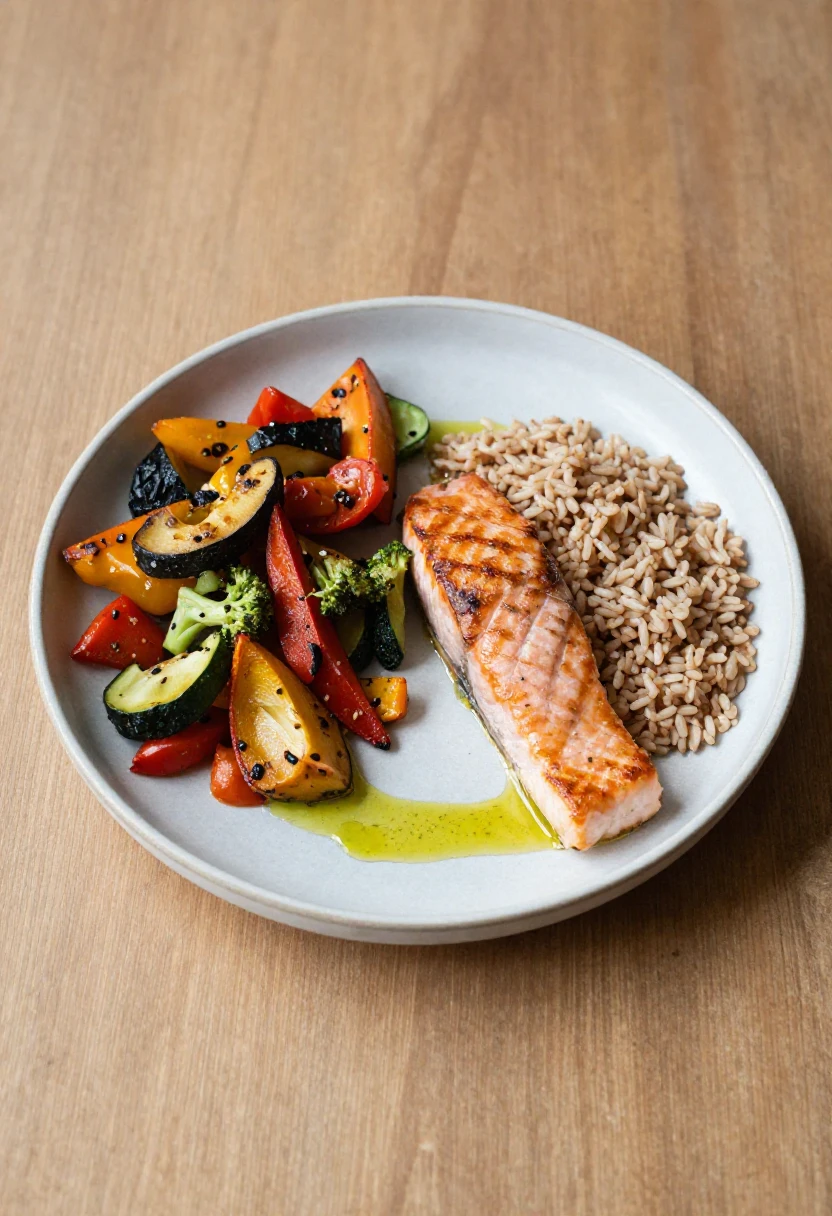
Food is where most people begin when they decide to live healthier — and for good reason. What you eat affects your energy, your mood, your sleep, your skin, your focus, and your long-term health in ways that are hard to overstate.
But food is also where most people get overwhelmed fastest.
Suddenly there are rules. No carbs. Only carbs. Eat before noon. Never eat after 6pm. Count macros. Don’t count anything. Drink celery juice. Avoid fruit sugar. It’s exhausting — and most of it isn’t even necessary.
Let’s simplify.
Whole Foods vs. Processed — The Real Difference
You don’t need a nutrition degree to eat well. You just need one basic principle:
Eat more food that looks like food.
Whole foods — vegetables, fruits, legumes, whole grains, eggs, fish, meat, nuts, seeds — are things your great-grandmother would recognize. They come from the ground, the sea, or an animal. They don’t have ingredient lists with 30 items.
Processed foods, on the other hand, are engineered. They’re designed to be hyper-palatable — meaning your brain gets a hit of pleasure that’s hard to stop at just one portion. That’s not a willpower failure. That’s food science working exactly as intended.
This doesn’t mean you can never eat processed food. It means the balance matters. When whole foods make up the majority of what you eat, your body gets what it needs — and you naturally crave junk less over time.
Building a Balanced Plate Without Counting Calories
Counting calories works for some people. For many others, it creates anxiety, obsession, and an unhealthy relationship with food that lasts for years.
There’s a simpler way to think about it.
Picture your plate:
- Half filled with vegetables and some fruit
- A quarter with a quality protein — chicken, fish, eggs, lentils, tofu
- A quarter with a complex carbohydrate — brown rice, sweet potato, whole grain bread, oats
- A small amount of healthy fat — olive oil, avocado, a handful of nuts
That’s it. No app needed. No measuring cups. Just a rough visual that keeps your meals balanced without turning eating into a math problem.
The goal isn’t to be precise. The goal is to be consistent and nourishing.
Small Food Swaps That Make a Big Impact
You don’t have to overhaul your entire diet overnight. In fact, the research consistently shows that small, gradual changes are far more likely to stick than dramatic ones.
Here are a few swaps worth starting with:
- White bread → whole grain bread. More fiber, more staying power, slower energy release.
- Sugary breakfast cereal → oats with fruit and nuts. Less sugar spike, longer satiety.
- Soda or juice → sparkling water with a slice of lemon. Same fizz, none of the sugar load.
- Snacking on chips → a handful of nuts or a boiled egg. Protein and fat keep you fuller, longer.
- Frying in seed oils → cooking with olive oil. A simple shift with real benefits over time.
- Eating at your desk → sitting down, away from screens. Mindful eating helps your body register fullness properly.
None of these changes will transform your health overnight. But done consistently? They add up to something real.
Move Your Body — In Ways You Actually Enjoy

Here’s something the fitness industry doesn’t want you to believe: you don’t have to suffer to be healthy.
The idea that exercise has to be hard, sweaty, and miserable to “count” has kept more people sedentary than almost anything else. Because when the only option feels like punishment, most of us find a very good reason not to show up.
The real secret to staying active long-term isn’t discipline. It’s finding movement that doesn’t feel like a chore.
Why You Don’t Need a Gym Membership
Gyms are great — if you love them. But the myth that a gym membership is a prerequisite for fitness has stopped a lot of people from even starting.
The human body was designed to move, not to lift barbells in a climate-controlled room. Walking, cycling, swimming, dancing, hiking, gardening, playing with your kids — all of it counts. All of it builds strength, improves cardiovascular health, and supports your mental wellbeing.
In fact, some of the longest-living populations in the world — the so-called Blue Zones like Sardinia, Okinawa, and the Greek island of Ikaria — don’t go to gyms at all. They move naturally throughout their day. They walk to the market. They tend their gardens. They take the stairs.
Movement is built into their lifestyle, not scheduled around it.
That’s a model worth borrowing.
The Underrated Power of Daily Walking
If there’s one form of exercise that almost everyone can do, is completely free, requires no equipment, and has an enormous body of research behind it — it’s walking.
A 30-minute walk every day can:
- Lower your risk of heart disease
- Improve blood sugar regulation
- Reduce anxiety and symptoms of depression
- Support healthy weight management
- Boost creative thinking and mental clarity
And you don’t need to do it all at once. Three 10-minute walks spread through your day deliver nearly the same benefits as one continuous 30-minute session. A walk after lunch. A short one after dinner. A morning stroll before you open your phone.
Small. Consistent. Genuinely powerful.
How to Build Consistency Over Intensity
This is the part most fitness advice skips — and it’s the most important part.
Intensity gets attention. Consistency gets results.
A person who goes for a 20-minute walk five days a week will be healthier in five years than someone who does brutal 90-minute workouts for three weeks and then burns out completely. The math isn’t even close.
A few things that actually help build movement consistency:
- Attach it to something you already do. Walk after your morning coffee. Do a few stretches after brushing your teeth. Link new habits to existing ones.
- Make it ridiculously easy to start. Don’t aim for an hour. Aim for ten minutes. Starting is always the hardest part — make it smaller than feels meaningful.
- Remove the all-or-nothing thinking. Missed two days? That’s fine. Three days? Still fine. The goal is the long game, not a perfect streak.
- Find a form of movement you actually look forward to. Even a little. Because enjoyment is the only fitness metric that predicts long-term success.
You don’t have to love exercise. But finding something you don’t dread? That changes everything.
Sleep Is Not a Luxury — It’s the Foundation

We live in a culture that quietly glorifies exhaustion.
“I’ll sleep when I’m dead.” “I only need five hours.” “Sleep is for the unambitious.” You’ve heard some version of this. Maybe you’ve even said it yourself.
But here’s what the science is unambiguous about: chronic sleep deprivation is one of the most damaging things you can do to your body and brain. Not dramatic. Not an exaggeration. Just true.
Sleep isn’t downtime. It’s when your body does its most important work.
What Happens to Your Body When You Don’t Sleep Enough
Most people underestimate what a bad night’s sleep actually costs them — because the damage is gradual and easy to normalize.
After just one night of poor sleep:
- Your concentration and reaction time drop significantly
- Your hunger hormones shift — ghrelin (which makes you hungry) goes up, leptin (which signals fullness) goes down
- Your emotional regulation weakens — small frustrations feel bigger, patience runs thinner
- Your immune system takes a hit, making you more vulnerable to getting sick
And when poor sleep becomes a pattern?
The consequences run deeper. Chronic sleep deprivation is linked to increased risk of type 2 diabetes, heart disease, obesity, anxiety, and depression. It accelerates cognitive decline. It disrupts hormonal balance in ways that affect everything from your metabolism to your libido.
You cannot out-supplement, out-exercise, or out-eat consistently bad sleep. It undermines everything else you’re trying to do for your health.
Simple Habits for Better Sleep Quality
The good news is that sleep quality responds remarkably well to small, consistent changes. You don’t need medication or a $3,000 mattress to sleep better — though a decent pillow never hurts.
Here’s what actually works:
- Keep a consistent sleep schedule. Go to bed and wake up at roughly the same time every day — yes, even on weekends. Your body runs on a circadian rhythm, and consistency is what keeps it calibrated.
- Make your bedroom cool, dark, and quiet. Your body temperature needs to drop slightly to initiate sleep. A cooler room — around 17–19°C — makes that easier. Blackout curtains and white noise can do more than you’d expect.
- Cut the screens an hour before bed. The blue light from your phone suppresses melatonin — the hormone that signals to your brain it’s time to sleep. Reading a physical book, taking a warm shower, or doing some light stretching are far better pre-sleep rituals.
- Watch the caffeine window. Caffeine has a half-life of about five to six hours. That afternoon coffee at 4pm? Half of it is still in your system at 10pm. For most people, cutting caffeine after 2pm makes a noticeable difference.
- Don’t lie in bed awake for long periods. If you can’t sleep after 20 minutes, get up. Do something calm and low-light until you feel sleepy. Lying there frustrated actually trains your brain to associate bed with wakefulness — the opposite of what you want.
- Wind down intentionally. Sleep doesn’t start the moment your head hits the pillow. It starts when you begin to slow down. Build a small evening ritual — even ten minutes — that signals to your nervous system that the day is done.
Sleep isn’t passive. It’s one of the most active, productive things your body does. Treat it like the priority it is — and everything else gets easier.
Hydration: The Easiest Health Habit You’re Probably Ignoring

Of all the healthy habits you could build, drinking enough water is probably the simplest. No special equipment, no meal prep, no gym bag required. Just water.
And yet — most people are walking around mildly dehydrated on a daily basis without even realizing it.
Not dramatically dehydrated. Not crisis-level thirsty. Just… not quite enough. That low-grade, chronic under-hydration that quietly affects your energy, your focus, your digestion, and your mood in ways that are easy to miss because they creep up so gradually.
How Much Water Do You Really Need?
You’ve probably heard “eight glasses a day.” It’s a reasonable starting point, but the truth is a little more nuanced.
Your actual water needs depend on:
- Your body size — larger bodies need more
- Your activity level — the more you move, the more you sweat, the more you need to replace
- The climate you live in — hot or humid environments increase fluid loss significantly
- What you eat — a diet rich in fruits and vegetables provides a surprising amount of water; a diet heavy in processed food does not
- Your health status — certain conditions and medications affect hydration needs
A more practical guideline than counting glasses: drink enough that your urine is pale yellow for most of the day. Clear means you’re over-hydrated. Dark yellow or amber means you need more water. Simple, honest, and requires no tracking app.
For most adults, somewhere between 1.5 and 2.5 liters per day covers the baseline — and more on active or hot days.
Tips to Drink More Without Thinking About It
The challenge with hydration isn’t knowledge — everyone knows water is important. The challenge is building it into your day so naturally that it happens without effort.
A few approaches that genuinely work:
- Start your morning with a glass of water before anything else. Before coffee, before your phone, before breakfast. Your body wakes up slightly dehydrated after several hours without fluid. Starting with water is one of the highest-return habits you can build — it costs you thirty seconds.
- Keep water visible. This sounds almost too simple, but it works. A glass on your desk, a bottle on the kitchen counter, a water bottle in your bag. Out of sight really does mean out of mind when it comes to hydration.
- Drink a glass before every meal. This habit serves double duty — it helps with hydration and also gives your stomach a head start on the digestive process. Some research also suggests it helps with appetite regulation.
- Flavor it if plain water bores you. A slice of lemon, a few mint leaves, a wedge of cucumber, some frozen berries — small additions that make water feel more like a choice and less like a chore. Herbal teas count too. Sparkling water counts. Even water-rich foods like cucumber, watermelon, oranges, and celery contribute.
- Set gentle reminders if you genuinely forget. There’s no shame in using your phone alarm or a hydration app until the habit is formed. You’re building a new pattern — tools are allowed.
One thing worth remembering: thirst is a late signal. By the time you feel thirsty, you’re already mildly dehydrated. Don’t wait for thirst to remind you to drink. Make water a background habit that runs quietly through your whole day.
It’s the smallest investment with some of the most immediate returns — more energy, clearer thinking, better skin, smoother digestion. For something that costs nothing and takes almost no effort, it’s hard to justify not making it a priority.
Stress, Mental Health, and the Habits Nobody Talks About

Ask most people to list their healthy habits and you’ll hear about salads, gym sessions, and early bedtimes.
Stress management rarely makes the list.
Which is strange — because chronic stress might be doing more damage to your health than almost anything else. It’s the silent variable that undermines your sleep, disrupts your eating, tanks your immune system, and makes every other healthy habit harder to maintain.
We talk a lot about what to eat and how to move. We talk far less about what’s happening in our heads — and how much it matters.
Chronic Stress and Your Physical Health
Stress isn’t just a feeling. It’s a full-body physiological response.
When you perceive a threat — a looming deadline, a difficult conversation, financial pressure, a chaotic home — your body releases cortisol and adrenaline. Your heart rate rises. Your digestion slows. Your muscles tense. Your immune system gets temporarily suppressed.
This response is brilliant in short bursts. It evolved to help you survive genuine danger — run from a predator, react fast in a crisis.
The problem is that your nervous system doesn’t distinguish between a lion and an overflowing inbox. It responds to perceived threat the same way, every time.
And when stress becomes chronic — when the alarm never fully turns off — the consequences accumulate:
- Elevated cortisol disrupts sleep, increases appetite for high-sugar and high-fat foods, and promotes fat storage around the abdomen
- Chronic inflammation rises, which is linked to heart disease, autoimmune conditions, and accelerated aging
- Digestive issues become more frequent — bloating, irritable bowel, acid reflux
- Mental health suffers — anxiety, irritability, and low mood become harder to shake
- Immune function weakens, making you more susceptible to illness and slower to recover
You can eat perfectly and sleep eight hours a night. But if you’re living in a constant state of low-grade stress, your body is still paying a price.
Mindfulness, Breathing, and Small Mental Resets
The good news is that your nervous system is remarkably responsive. Small, consistent practices can genuinely shift your baseline — moving you out of that chronic stress state and into something calmer and more sustainable.
You don’t need to meditate for an hour or go on a silent retreat. You need small resets, done regularly.
Breathing is the fastest tool you have.
Your breath is the only part of your autonomic nervous system you can consciously control — and it’s a direct line to your stress response. A few slow, deliberate exhales can physically calm your nervous system within minutes.
Try this: inhale for four counts, hold for four, exhale for six. Repeat four or five times. It feels almost too simple. It works anyway.
A few other small practices worth building in:
- A genuine screen-free moment each day. Not just putting your phone face-down — actually stepping away. A short walk without headphones, five minutes of sitting with your coffee before checking anything. Your nervous system needs actual quiet, not just quieter noise.
- Journaling — even just a few lines. Writing down what’s weighing on you externalizes it. It moves the stress from a loop in your head to something on a page that you can actually look at. Research consistently shows it reduces anxiety and improves emotional processing.
- Time in nature. Studies show that even 20 minutes in a green space — a park, a garden, a tree-lined street — measurably lowers cortisol levels. It doesn’t need to be a forest hike. Just outside, away from screens.
- Knowing when to say no. This one is uncomfortable but important. Chronic overcommitment is one of the most common sources of sustained stress — and it’s one that only you can address. Protecting your time and energy isn’t selfishness. It’s maintenance.
- Connection as medicine. A real conversation with someone you trust — not a text thread, an actual conversation — has a measurable calming effect on the nervous system. Humans are wired for genuine social connection, and its absence registers as stress in the body.
Mental health isn’t separate from physical health. It’s woven into it. Taking care of your mind is taking care of your body — and it deserves just as much attention as what’s on your plate.
Building Habits That Actually Last
Everything we’ve covered so far — eating well, moving your body, sleeping enough, staying hydrated, managing stress — sounds straightforward in theory.
The hard part was never the information.
The hard part is doing it consistently, in a real life full of busy weeks, bad days, competing priorities, and moments where the couch and a bag of crisps genuinely seem like the best available option.
So let’s talk about the part most wellness guides skip: how you actually make this stuff stick.
Why Willpower Isn’t the Answer
If you’ve ever tried to change a habit through sheer willpower and failed — you didn’t fail because you’re weak. You failed because willpower is a fundamentally unreliable system.
Research in behavioral psychology is pretty clear on this: willpower is a finite resource. It depletes throughout the day as you make decisions, resist temptations, and manage demands. By evening, most people have very little of it left — which is exactly why the late-night snacking, the skipped workouts, and the scrolling-until-midnight tend to happen.
Relying on willpower to maintain healthy habits is like filling a leaking bucket and hoping for the best.
What actually works is designing your environment and your routines so that healthy choices become the default — not the result of constant mental effort.
- Keep fruit on the counter instead of in the fridge drawer where you’ll forget it
- Sleep in your workout clothes if you exercise in the morning
- Put your phone charger outside the bedroom so it can’t pull you into a late-night scroll
- Meal prep one or two things on Sunday so healthy eating requires less decision-making on Tuesday night when you’re exhausted
These aren’t tricks. They’re architecture. You’re building a life where the healthy choice is simply the easier choice.
The “Tiny Changes” Approach
One of the most well-supported ideas in habit research is deceptively simple: start smaller than you think you need to.
Not “I’ll go to the gym five times a week.” Start with: “I’ll put on my shoes and walk to the end of the street.”
Not “I’ll overhaul my entire diet.” Start with: “I’ll add one vegetable to dinner tonight.”
Not “I’ll meditate every morning.” Start with: “I’ll take three slow breaths before I open my phone.”
This approach works for two reasons:
First, tiny habits are easy enough that you actually do them — even on bad days. And doing them on bad days is exactly what builds the identity of someone who shows up consistently.
Second, small actions create momentum. Once you’re outside with your shoes on, you usually keep walking. Once you’ve added one vegetable, you start noticing other small improvements you could make. Behavior breeds behavior.
The goal at the beginning isn’t transformation. It’s repetition. You’re teaching your brain a new pattern — and brains learn through frequency, not intensity.
How to Get Back on Track After Falling Off
Here’s something nobody tells you enough: everyone falls off.
Everyone has the week where sleep goes out the window, vegetables disappear from the menu, exercise stops happening, and stress takes over completely. Everyone. The people who appear to have it together on the outside have these weeks too — you just don’t see them.
The difference between people who build lasting healthy habits and people who don’t isn’t that the first group never falls off. It’s that they’ve stopped treating a slip as a failure.
A few mindset shifts that genuinely help:
- Never miss twice. Miss one day, one meal, one workout — fine, completely human. But try hard not to miss two in a row. One miss is an accident. Two starts to become a pattern.
- Scale down, don’t stop. When life gets hard, instead of abandoning your habits entirely, shrink them. Can’t do your full workout? Do ten minutes. Can’t cook a proper meal? Make it a slightly better version of something quick. Keeping the thread alive — even thinly — makes it far easier to return to full strength.
- Ditch the all-or-nothing thinking. This one is worth repeating because it’s the most common trap. A healthy lifestyle isn’t a test you pass or fail. It’s a direction you move in, imperfectly, over time. Three good days followed by two harder ones is still progress. It’s still forward.
- Be as kind to yourself as you’d be to a friend. If your friend told you they’d had a rough week and hadn’t been eating well or sleeping enough — you wouldn’t tell them they’d ruined everything and should start over on Monday. You’d tell them it’s okay, that one week doesn’t define anything, and that they can just pick it back up tomorrow. Talk to yourself the same way.
The goal was never perfection. It was never a flawless streak or an immaculate diet or a body that never needs rest. The goal is a life that feels good to live — one where health is woven quietly into the background, not something you’re constantly fighting for.
That’s what real, lasting habits look like.
Conclusion
A healthier lifestyle isn’t a destination you arrive at one day when everything is finally perfect. It’s something you build — slowly, imperfectly, and on your own terms.
You don’t have to change everything at once. You don’t have to be consistent seven days a week or follow a plan that leaves no room for real life. You just have to keep moving in the right direction — one small choice at a time, repeated often enough that it starts to feel like simply who you are.
Eat food that nourishes you most of the time. Move your body in ways you don’t dread. Protect your sleep like it matters — because it does. Drink your water. Slow down enough to let your nervous system breathe. And when you fall off, which you will, pick it back up without the drama.
That’s it. That’s the whole thing.
Not glamorous. Not viral-worthy. But genuinely, sustainably effective — and yours to build in whatever way fits your life.
Start with one thing this week. Just one. And see where it takes you.
FAQ
Q: How long does it take to see results from living a healthier lifestyle?
It depends on what you’re changing and what results you’re looking for. Some things shift quickly — energy levels, sleep quality, and mood can improve within one to two weeks of better habits. Physical changes like weight or muscle tone take longer, typically several weeks to months of consistency. The honest answer is: start now, and stop looking for the finish line.
Q: Do I have to give up all unhealthy food to eat well?
No — and anyone who tells you otherwise is making healthy eating harder than it needs to be. The goal is a pattern, not perfection. If 80% of what you eat is whole, nourishing food, there’s plenty of room for pizza, chocolate, or whatever you genuinely enjoy. Restriction breeds obsession. Balance breeds sustainability.
Q: What if I have no time for exercise?
Start with walking. A 20-minute walk during your lunch break, a short one after dinner — it counts, it helps, and it requires almost no scheduling. Most people don’t have a time problem; they have an expectation problem. Exercise doesn’t need to be a 90-minute gym session to be worth doing.
Q: How do I stay motivated when I don’t see progress?
Stop relying on motivation — it’s unreliable. Build systems instead. Track small wins, not just big outcomes. Notice how you feel after a good week of sleep, or after a few days of eating well. Progress isn’t always visible in the mirror. It shows up in your energy, your mood, your patience, your focus. Pay attention to those signals — they’re real, and they come faster than the visible ones.