Contents
- Why Frozen Berries Deserve a Place in Your Freezer
- What Makes Frozen Berries Truly Nutritious
- Frozen vs Fresh Berries: The Real Difference
- Top Health Benefits Backed by Science
- How Frozen Berries Support a Balanced, Healthy Diet
- Practical Ways to Use Frozen Berries Every Day
- Easy Berry-Forward Recipes to Try (Quick + Tasty)
- Tips for Shopping and Storing Frozen Berries
- Cost-Effectiveness and Zero Waste Benefits
- Common Misconceptions About Frozen Fruit
- Frequently Asked Questions (FAQ)
- Conclusion — Making Frozen Berries a Habit for Everyday Health
Why Frozen Berries Deserve a Place in Your Freezer
There’s a quiet moment many of us know well.
You open the refrigerator, hoping for something fresh and colorful — maybe strawberries, blueberries, or raspberries — and instead, you find a few tired fruits that have already passed their best days. Soft. Dull. Forgettable.
It’s a small disappointment.
But it happens often.
Fresh berries are beautiful, delicate, and fleeting. They shine brightly for a few days… and then disappear just as quickly. For much of the year, they’re expensive, imported from far away, or simply not very good.
That’s where frozen berries step in — quietly, reliably, without asking for attention.
They wait in your freezer.
Ready when you are.
For years, frozen fruit carried an unfair reputation. “Not as good as fresh.” “Only for smoothies.” “A second-best option.” But science, nutrition experts, and everyday home cooks now tell a different story.
Frozen berries are often picked at peak ripeness and frozen within hours. Their vitamins, antioxidants, and natural flavor are locked in — sometimes better preserved than in fresh fruit that travels for days before reaching your kitchen.
And beyond nutrition, they offer something even more valuable: consistency.
No waste.
No rush.
No pressure to “use them before tomorrow.”
Just nourishment, waiting patiently.
In this article, we’ll explore:
- why frozen berries are so nutritious,
- how they compare to fresh fruit,
- the health benefits they support,
- and easy, enjoyable ways to use them every day.
Whether you’re building a healthier routine, feeding a busy family, or simply trying to eat more colorfully year-round, frozen berries may become one of your most trusted kitchen allies.
Let’s take a closer look.
What Makes Frozen Berries Truly Nutritious
When people hear “frozen fruit,” they often imagine something processed, diminished, or somehow less alive than fresh produce.
But in reality, frozen berries are often captured at their very best moment.
To understand why they’re so nutritious, it helps to look at what happens before they ever reach your freezer.
Picked at Peak Ripeness
Most berries grown for freezing are harvested when they are fully ripe.
This matters more than most people realize.
At peak ripeness, berries contain their highest levels of:
- vitamins,
- antioxidants,
- natural sugars,
- and protective plant compounds.
Fresh berries sold in supermarkets are often picked earlier, while still firm, so they can survive long transport. During that time, some nutrients slowly decline.
Frozen berries skip that long journey.
They’re picked when flavor and nutrition are at their peak — and preserved almost immediately.
Flash-Freezing Locks In Nutrients
Shortly after harvest, berries are cleaned and flash-frozen.
Flash-freezing happens very quickly at extremely low temperatures. This process forms tiny ice crystals instead of large ones, which helps protect the fruit’s structure and nutrients.
As a result:
- vitamin C is largely preserved,
- antioxidants remain stable,
- color and flavor stay vibrant.
In many cases, frozen berries retain as much — or even more — nutrition than “fresh” berries that have been sitting in storage for days.
Rich in Protective Plant Compounds
Berries are famous for their high levels of polyphenols and anthocyanins — the natural compounds responsible for their deep red, blue, and purple colors.
These compounds are linked to:
- reduced inflammation,
- better heart health,
- improved brain function,
- and cellular protection.
Freezing does not destroy these compounds. In fact, studies show they remain remarkably stable in frozen fruit.
That’s one reason frozen blueberries, blackberries, and raspberries remain nutritional powerhouses year-round.
Minimal Processing, Maximum Simplicity
High-quality frozen berries usually contain just one ingredient: fruit.
No syrups.
No added sugar.
No preservatives.
They’re washed, frozen, and sealed.
That’s it.
Compared to many packaged “health foods,” frozen berries are refreshingly honest.
Consistent Nutrition, Every Season
One hidden benefit of frozen berries is reliability.
When you buy fresh fruit in winter, it may look fine — but taste flat and offer lower nutrient levels due to long storage and transport.
Frozen berries provide the same nutritional profile whether it’s July or January.
Your body gets consistent nourishment, regardless of season.
A Quiet Advantage: Reduced Oxidation
Once fruit is harvested, exposure to air and light begins breaking down sensitive nutrients.
Because frozen berries are sealed quickly, oxidation is slowed dramatically. This helps preserve fragile vitamins and flavor compounds that might otherwise degrade.
It’s like pressing pause on freshness.
Why This Matters for Everyday Health
All of this means one simple thing:
When you scoop frozen berries into your smoothie, oatmeal, or yogurt, you’re not “settling.”
You’re choosing fruit that has been protected, preserved, and prepared to nourish you consistently.
Not occasionally.
Not seasonally.
But all year long.
Frozen vs Fresh Berries: The Real Difference
Few topics in healthy eating spark more quiet debate than this one.
Fresh or frozen?
At first glance, the answer seems obvious. Fresh sounds better. It looks better. It feels more “natural.” And when berries are perfectly ripe, locally grown, and eaten right away, they truly are wonderful.
But that ideal situation is rarer than we like to admit.
Most of the time, the comparison isn’t between garden-fresh berries and frozen ones.
It’s between travel-worn “fresh” fruit and carefully preserved frozen fruit.
And that changes everything.
What Happens to “Fresh” Berries After Harvest
Once berries are picked, their decline begins immediately.
They continue to breathe.
They lose moisture.
Sensitive vitamins start breaking down.
If berries are shipped long distances, they may spend:
- days in transit,
- time in cold storage,
- more time on store shelves,
- and finally more time in your refrigerator.
By the time you eat them, they may be a week old — or more.
They still look appealing.
But nutritionally, they are no longer at their peak.
Why Frozen Berries Often Win Nutritionally
Frozen berries follow a different path.
They are usually harvested when ripe, then frozen within hours. Their nutrients are locked in almost immediately.
This means:
- less vitamin loss,
- better antioxidant retention,
- more consistent quality.
In many studies, frozen berries match — and sometimes surpass — fresh berries in nutritional value when those fresh berries have traveled long distances.
Taste: It Depends on Timing
Taste is where people often hesitate.
Fresh berries in season can be extraordinary — fragrant, juicy, bursting with flavor.
But out of season? They’re often bland, watery, or sour.
Frozen berries, on the other hand, taste like ripe berries. Because that’s what they were when frozen.
Once thawed, they may be softer. But their flavor is usually deeper and more reliable.
Texture: The One True Difference
Texture is the main area where frozen berries differ.
Freezing breaks down some cell walls, which makes thawed berries softer and juicier. They’re perfect for smoothies, baking, sauces, and oatmeal — but less ideal for decorating cakes or eating whole.
Fresh berries keep their structure longer, which makes them better for fruit bowls and snacking.
Each has its place.
Cost and Accessibility Matter Too
Fresh berries can be expensive, especially outside of summer.
Frozen berries are often:
- cheaper,
- available year-round,
- sold in larger quantities,
- less likely to go to waste.
For many families, this makes them a more realistic way to eat fruit regularly.
And consistency matters more than perfection.
Food Waste: An Invisible Factor
One of the biggest advantages of frozen berries is how little goes to waste.
Fresh berries spoil quickly. Many end up forgotten in the fridge and thrown away.
Frozen berries wait patiently. You use what you need. The rest stays good.
Less waste means:
- more savings,
- more sustainability,
- less guilt.
So… Which Should You Choose?
The honest answer is: both.
Choose fresh berries when they’re local, in season, and truly ripe.
Choose frozen berries when you want reliability, nutrition, affordability, and convenience.
A healthy diet isn’t about choosing sides.
It’s about choosing what works — today, this week, this season.
Top Health Benefits Backed by Science

Berries have earned their reputation as “superfoods” not because of hype, but because of what they quietly deliver to the body, day after day. And when those berries are frozen at peak ripeness, many of those benefits remain fully intact.
Let’s look at what regular consumption of frozen berries can truly support — beyond trends and headlines.
Powerful Antioxidant Protection
One of the most important reasons berries are so valued in nutrition is their high antioxidant content.
Blueberries, blackberries, raspberries, and strawberries are rich in anthocyanins and other polyphenols — compounds that help protect cells from oxidative stress. This kind of stress builds up naturally through daily life: pollution, poor sleep, emotional strain, intense exercise, even normal aging.
Over time, excessive oxidative stress is linked to inflammation and chronic disease. Antioxidants don’t “cure” anything overnight, but they help create an internal environment that supports long-term resilience.
Frozen berries retain most of these compounds, making them a reliable year-round source of cellular protection.
Support for Heart Health
Regular berry consumption has been associated with improved cardiovascular markers.
Studies suggest that berries may help:
- support healthy blood pressure,
- improve cholesterol balance,
- enhance blood vessel function.
This is largely due to their combination of fiber, antioxidants, and plant compounds that influence inflammation and circulation.
Adding frozen berries to breakfast or snacks is a simple way to support heart health without changing your entire diet.
Gentle Immune System Support
Berries are naturally rich in vitamin C and other immune-supportive nutrients.
While they won’t prevent illness on their own, they contribute to:
- stronger immune responses,
- faster recovery,
- better overall resilience.
During colder months — when fresh fruit options are limited — frozen berries become especially valuable.
They help fill seasonal nutrition gaps quietly and consistently.
Improved Digestive Health
Most berries contain both soluble and insoluble fiber.
This combination supports:
- regular digestion,
- healthy gut bacteria,
- balanced blood sugar response.
Fiber also contributes to satiety, helping you feel satisfied longer after meals. This can support healthy eating patterns without conscious restriction.
When frozen berries are blended into smoothies or cooked into oats, their fiber remains active and beneficial.
Brain and Cognitive Support
Emerging research suggests that berry compounds may play a role in protecting brain health.
Anthocyanins have been linked to:
- improved memory,
- better focus,
- reduced age-related cognitive decline.
While no single food can guarantee mental sharpness, regular berry intake appears to be one small, meaningful investment in long-term brain function.
Natural Support for Healthy Weight Management
Frozen berries are relatively low in calories and high in volume, fiber, and flavor.
This combination makes them excellent for:
- satisfying sweet cravings,
- replacing highly processed desserts,
- adding pleasure to nutritious meals.
They help make healthy eating feel abundant rather than restrictive.
Anti-Inflammatory Effects
Chronic low-grade inflammation is associated with many modern health issues, from joint discomfort to metabolic imbalance.
Berry compounds help modulate inflammatory pathways. Over time, this can contribute to better physical comfort and metabolic health.
Again, it’s not about instant results — it’s about cumulative support.
A Sustainable Way to Eat Well
Perhaps the most underrated health benefit of frozen berries is psychological.
Because they’re affordable, accessible, and long-lasting, they make healthy eating feel doable.
Not fragile.
Not stressful.
Not expensive.
And when nourishing habits feel easy, they last.
How Frozen Berries Support a Balanced, Healthy Diet
Healthy eating often fails not because people lack information, but because it feels complicated.
Too many rules.
Too many “superfoods.”
Too many things to buy, prepare, and remember.
Frozen berries quietly solve part of that problem.
They are simple, flexible, and easy to return to — even when life becomes busy.
They Add Color and Variety Without Effort
Nutrition experts often talk about “eating the rainbow.” In practice, that’s harder than it sounds.
Fresh produce varies by season, price, and availability. Some weeks, your fridge is full of greens. Other weeks, it’s mostly beige.
Frozen berries bring deep reds, blues, and purples to your plate year-round. These colors signal different protective compounds that support overall health.
With one bag in your freezer, you automatically increase dietary diversity.
They Fit Naturally Into Everyday Meals
Frozen berries don’t demand special treatment.
They blend into what you already eat.
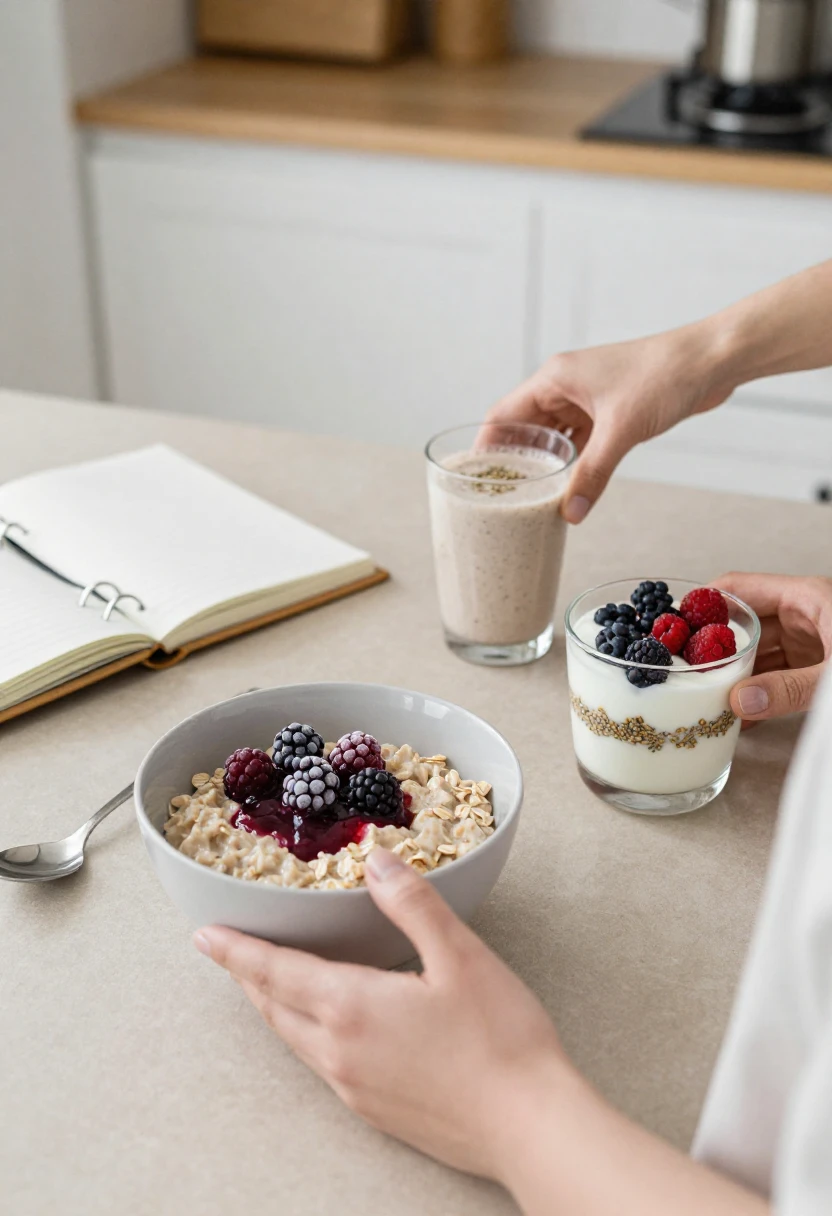
Stirred into oatmeal, they soften and release natural sweetness. Mixed into yogurt, they add texture and brightness. Blended into smoothies, they create body and flavor. Cooked into sauces, they balance savory dishes.
You don’t have to “plan” for them. You just use them.
And that’s why they work.
They Support Better Blood Sugar Balance
Unlike many sweet snacks, berries contain fiber and water along with natural sugars.
This slows digestion and helps prevent sharp blood sugar spikes.
When you add frozen berries to breakfast or snacks, you’re:
- reducing reliance on refined sugar,
- increasing nutrient density,
- improving energy stability.
It’s a small change with meaningful impact.
They Make Healthy Choices Feel Satisfying
Many people struggle with healthy eating because it feels joyless.
Plain foods.
No sweetness.
No comfort.
Frozen berries bring pleasure back into nutritious meals.
They taste good.
They look beautiful.
They feel like a treat.
That emotional satisfaction matters. It’s what makes habits sustainable.
They Encourage Home Cooking
When you have frozen berries on hand, you’re more likely to prepare food at home.
A smoothie becomes possible.
A quick dessert becomes simple.
A balanced breakfast becomes easier.
Each small home-prepared meal reduces dependence on ultra-processed foods and supports long-term health.
They Adapt to Different Eating Styles
Whether you follow a plant-based diet, high-protein approach, Mediterranean pattern, or simply “eat intuitively,” frozen berries fit in.
They don’t belong to one trend.
They belong to nourishment.
They pair with nuts, seeds, dairy, grains, and vegetables without conflict.
They Reduce Decision Fatigue
One underrated barrier to healthy eating is mental exhaustion.
What should I eat?
Is this healthy?
Do I have time?
Frozen berries simplify decisions.
If you’re unsure what to add, you add berries.
It’s rarely wrong.
Building Small, Repeatable Habits
Long-term health is shaped by small actions repeated thousands of times.
Adding a handful of berries to breakfast.
Blending them into a snack.
Stirring them into dessert.
These moments accumulate.
Over months and years, they create nutritional security without drama.
And that’s the kind of balance that lasts.
Practical Ways to Use Frozen Berries Every Day
One of the greatest strengths of frozen berries is how effortlessly they fit into real life.
They don’t require planning.
They don’t demand perfect timing.
They don’t spoil if you forget about them for a few days.
They simply wait — ready to make your meals better whenever you need them.
And once you begin using them regularly, they become second nature.
Making Breakfast More Nourishing Without Extra Work
Mornings are often rushed. That’s when frozen berries are especially helpful.
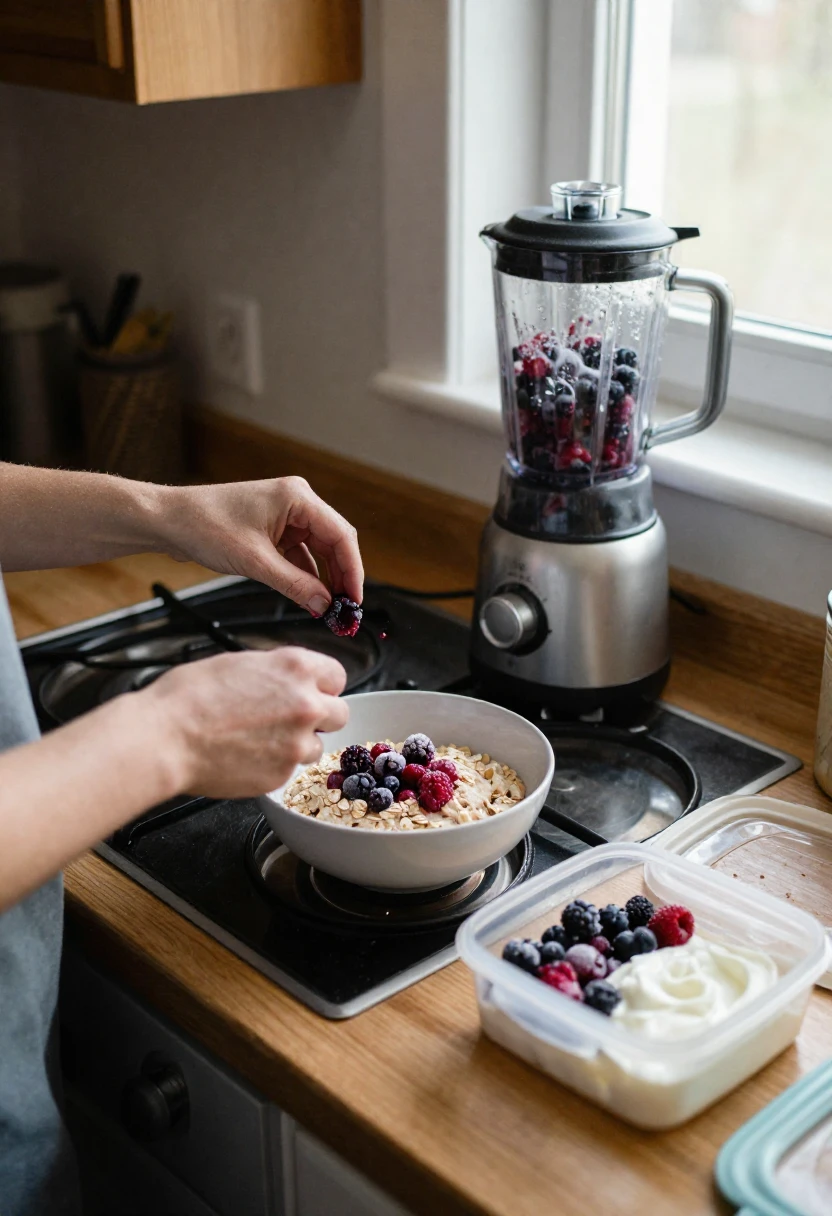
A handful added to oatmeal turns a plain bowl into something colorful and satisfying. As they warm, they release their juices, naturally sweetening the dish without extra sugar.
Mixed into yogurt, they slowly thaw and create little pockets of flavor. With granola and seeds, this becomes a balanced breakfast that takes minutes.
Blended into smoothies, frozen berries replace ice while adding nutrients and texture. You don’t need fancy recipes — berries, liquid, and one protein source are enough.
Turning Simple Snacks Into Real Nourishment
Many snacks fail because they’re either too empty or too heavy.
Frozen berries help create something in between.
A small bowl of thawed berries with cottage cheese, yogurt, or nut butter becomes both comforting and filling. Even blended into a quick sorbet with a banana, they offer a healthier alternative to packaged desserts.
These small choices matter more than occasional “perfect” meals.
Adding Depth to Lunch and Dinner
Berries aren’t only for sweet dishes.
Simmered into sauces, they pair beautifully with savory foods. A quick berry compote can balance roasted vegetables or grilled proteins. A handful added to salads brings acidity and brightness.
In some kitchens, berries even become part of soups and grain bowls — adding contrast and complexity.
They teach you to think beyond categories.
Making Better Desserts Without Overthinking
When you want something sweet, frozen berries offer a natural solution.
Warm them gently with a touch of honey and cinnamon. Spoon them over yogurt or pancakes. Bake them into simple crumbles.
You still get comfort.
You just get it with more nutrients and less regret.
Supporting Hydration and Refreshment
Frozen berries can also improve how much water you drink.
Added to pitchers of cold water, they slowly release flavor and color. Suddenly, hydration feels more inviting.
In summer, blending berries with ice and water creates refreshing slushies that are far better than sugary drinks.
Cooking in Batches, Eating With Ease
Because frozen berries last so long, they’re ideal for batch cooking.
You can prepare berry sauces, smoothie packs, or baked goods in advance and use them throughout the week. This reduces daily cooking stress and keeps healthy options available.
Consistency becomes easier.
Letting Them Guide Your Creativity
Over time, frozen berries stop feeling like an “ingredient” and start feeling like a companion.
You begin to think:
“What if I add berries here?”
“Would this be better with something bright?”
“Could this use a little sweetness?”
Often, the answer is yes.
And slowly, your cooking becomes more intuitive, colorful, and nourishing.
Easy Berry-Forward Recipes to Try (Quick + Tasty)
You don’t need a long recipe book or special equipment to enjoy frozen berries more often.
In fact, the best berry-based dishes are usually the simplest ones — the kind you can make half-awake in the morning, between meetings, or late in the evening when you want something comforting but light.
These ideas are meant to fit into real life, not idealized kitchens.
The Everyday Berry Smoothie (That Never Gets Boring)
A good smoothie doesn’t need ten ingredients.
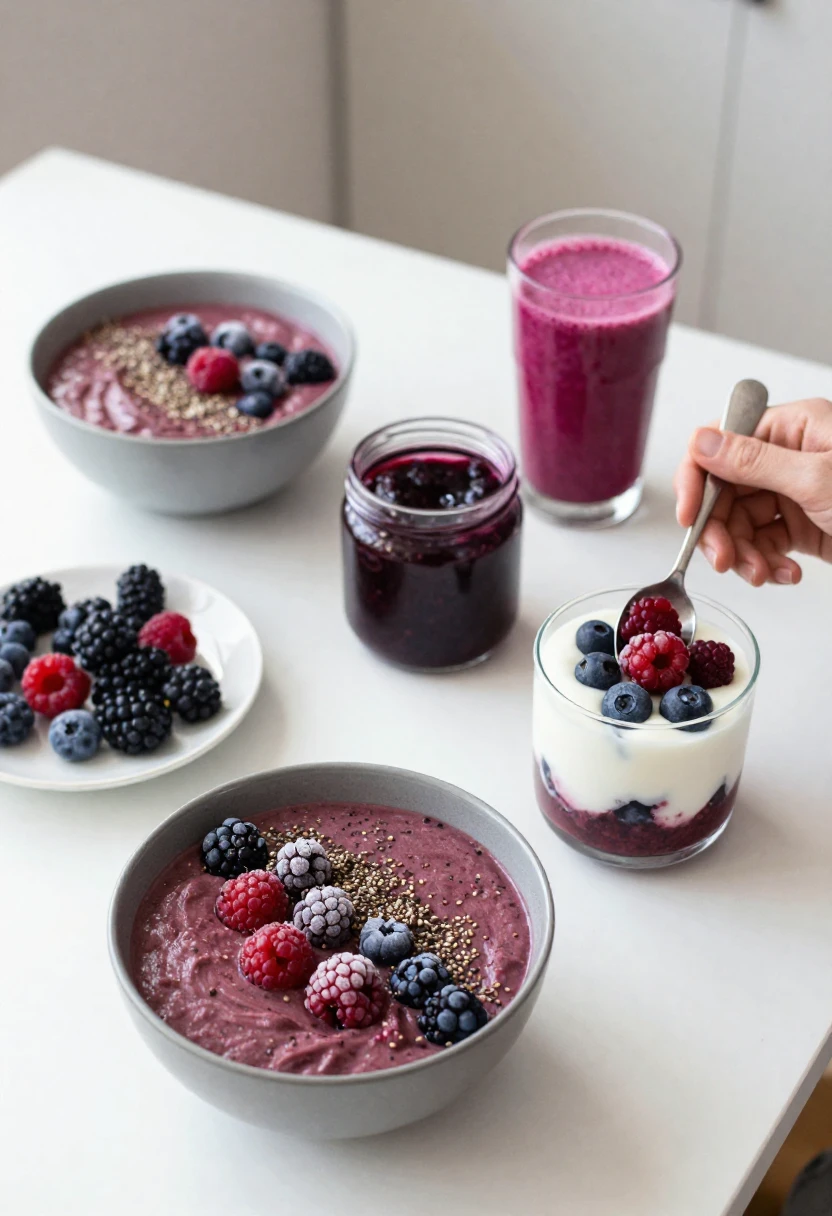
Start with frozen berries, add a liquid you enjoy, and include one element that makes it filling — yogurt, protein powder, nut butter, or oats. From there, you can adjust endlessly.
Some mornings it’s creamy and thick.
Other days it’s light and refreshing.
Sometimes it’s breakfast. Sometimes it’s a snack.
It adapts to you.
And because frozen berries replace ice, the texture is always smooth and satisfying.
Warm Berry Oatmeal for Slow Mornings
There’s something deeply comforting about warm berries in the morning.
Add frozen berries directly to your oats while they cook. As they soften, they release color and natural sweetness. The whole bowl turns gently pink or purple, and suddenly breakfast feels special.
A spoon of yogurt, a drizzle of honey, or a sprinkle of nuts makes it even better — but it’s already complete on its own.
This is one of the easiest ways to turn a basic habit into a nourishing ritual.
Yogurt and Berry Bowl for Busy Days
On days when cooking feels like too much, a bowl can do everything.
Layer yogurt, frozen berries, and whatever you have on hand — seeds, granola, nut butter, or coconut flakes. Let the berries thaw slightly and mix into the yogurt.
In ten minutes, you have something balanced, colorful, and filling.
No stress. No cleanup. No excuses.
Simple Berry Sauce for Sweet and Savory Dishes
A quick berry sauce can transform many meals.
Warm frozen berries in a small pan with a little water and a touch of sweetener. Let them break down naturally. In five minutes, you’ll have a soft, fragrant compote.
This works on pancakes, toast, yogurt, oatmeal, and even alongside savory dishes like roasted vegetables or grilled proteins.
Once you start making this regularly, you’ll wonder how you lived without it.
Quick Berry “Sorbet” Without a Machine
When you want something cold and refreshing, frozen berries shine.
Blend them straight from the freezer with a small amount of liquid — just enough to get things moving. The result is thick, spoonable, and surprisingly creamy.
It feels like dessert.
It behaves like fruit.
For many people, this becomes a favorite evening treat.
Baked Berry Crumble for Comfort Days
Some days call for warmth.
A simple crumble made with frozen berries, oats, butter, and a little sugar can be baked in one dish and enjoyed for days. It’s not overly sweet, not heavy — just comforting and familiar.
Served with yogurt instead of ice cream, it becomes a balanced dessert you can enjoy without overthinking.
Berry-Infused Water for Gentle Hydration
Not every “recipe” needs a stove.
Drop frozen berries into a jug of cold water. Let them slowly thaw and release color and flavor. Drink throughout the day.
It’s subtle, refreshing, and encourages you to hydrate more — without artificial flavors.
Letting Recipes Evolve Naturally
The most important thing about these ideas is that they’re starting points.
Over time, you’ll adjust them. You’ll add what you like. You’ll remove what you don’t. You’ll discover combinations that feel “yours.”
That’s how frozen berries become part of your lifestyle — not just something you use occasionally.
Tips for Shopping and Storing Frozen Berries
Frozen berries may seem simple — just pick a bag and go. But small choices at the store and at home can make a big difference in flavor, texture, and long-term value.
When you learn how to choose and store them well, frozen berries become even more reliable.
How to Choose High-Quality Frozen Berries
Start by turning the bag over and reading the ingredients.
Ideally, it should list just one thing: berries.
No added sugar.
No syrups.
No “fruit preparations.”
The simpler, the better.
Next, look at the berries through the packaging if possible. They should appear mostly separate, not clumped into one large frozen block. Large ice chunks often mean the berries partially thawed and refroze, which can affect texture.
Also pay attention to color. Good frozen berries still look vibrant — deep red, rich blue, or dark purple. Dull or grayish fruit usually means lower quality.
Understanding Labels and Claims
Words like “organic,” “wild,” or “premium” can be helpful — but they’re not everything.
What matters more is how the berries were handled and frozen. Many non-organic frozen berries are still highly nutritious and well processed.
Focus on:
- minimal ingredients,
- good color,
- solid packaging,
- and reasonable price.
Consistency beats perfection.
Buying in the Right Size for Your Lifestyle
Frozen berries last a long time, but they’re best when used within a few months of opening.
If you eat them daily, larger bags make sense and save money.
If you use them occasionally, smaller packages prevent freezer burn and loss of flavor.
Match the size to your real habits, not your intentions.
Storing Frozen Berries Properly at Home
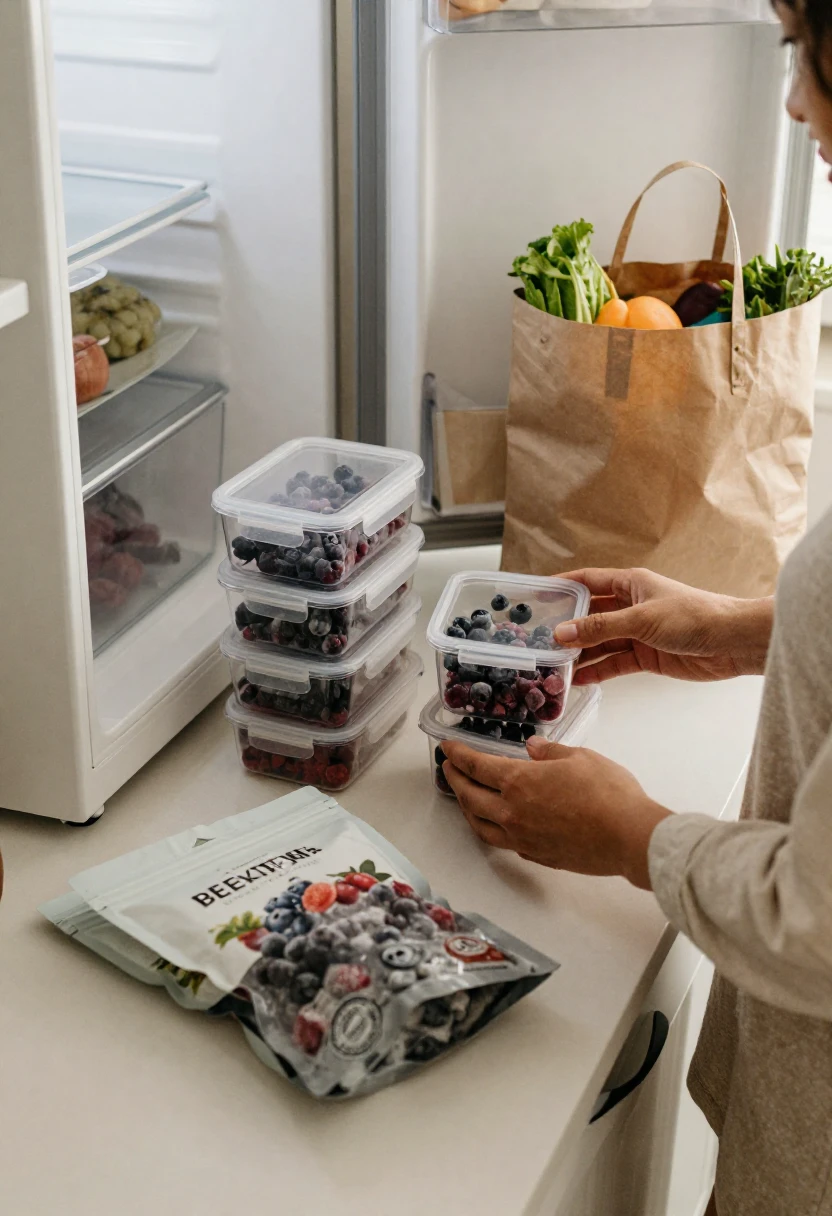
Once opened, always reseal the bag tightly or transfer berries to an airtight container.
Air is the enemy of frozen food. It causes freezer burn, dryness, and flavor loss.
Try to remove as much air as possible before closing.
Keep berries in the main part of the freezer, not in the door, where temperature fluctuates more.
Avoiding Repeated Thawing
Repeated thawing and refreezing damages texture and increases moisture loss.
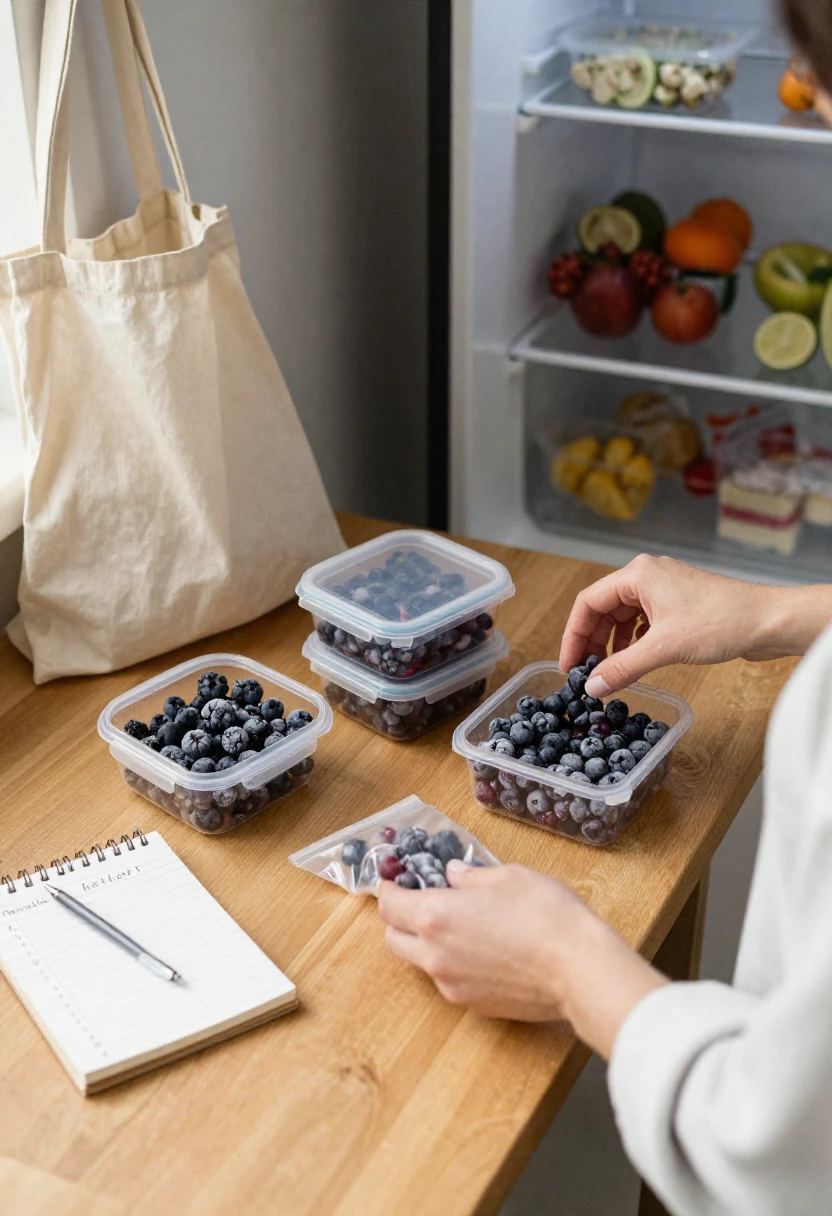
If you often take small amounts, consider portioning berries into smaller containers or freezer bags. This way, you only thaw what you need.
It keeps the rest in perfect condition.
Freezing Fresh Berries at Home
When berries are in season and affordable, freezing your own can be deeply satisfying.
Wash and dry them thoroughly. Spread them in a single layer on a baking tray. Freeze until solid, then transfer to freezer bags.
This method prevents clumping and preserves texture.
Homemade frozen berries often taste incredible in winter — like a reminder of summer.
Shelf Life and Quality
Most frozen berries are best within 8 to 12 months, though they remain safe longer if stored well.
Over time, they may lose some aroma and brightness, but their basic nutrition remains largely intact.
If they smell strange, taste flat, or look heavily frosted, it’s time to replace them.
Creating a “Frozen Fruit Habit”
Many people benefit from designating one freezer section for fruit.
When berries are visible and easy to reach, you use them more often. When they’re buried, you forget about them.
Good storage supports good habits.
Cost-Effectiveness and Zero Waste Benefits
Eating well is often portrayed as expensive, complicated, and time-consuming.
But in reality, some of the most nourishing choices are also the most practical.
Frozen berries are a perfect example.
They quietly support both your health and your budget — without asking you to sacrifice quality.
Why Frozen Berries Are Usually More Affordable
Fresh berries are fragile. They spoil quickly. They require careful transport and storage. All of that adds cost.
Frozen berries skip much of that complexity.
Because they’re frozen at peak ripeness and stored long-term, producers can:
- reduce losses,
- transport more efficiently,
- sell in larger volumes.
Those savings are often passed on to consumers.
As a result, frozen berries tend to be cheaper per serving than fresh ones, especially outside of peak season.
Paying for What You Actually Eat
With fresh berries, a hidden cost is waste.
You buy a beautiful container. You use half. The rest softens, molds, and ends up in the trash.
With frozen berries, you use exactly what you need.
A handful today.
A scoop tomorrow.
The rest stays perfectly fine.
Nothing rushes you. Nothing spoils overnight.
Over time, this makes a noticeable difference in grocery spending.
Reducing Food Waste at Home
Food waste isn’t only about money. It’s about resources.
Growing, transporting, and packaging food takes water, energy, and labor. When food is thrown away, all of that is wasted too.
Because frozen berries last so long, they help households waste less — almost automatically.
You don’t have to be perfectly organized. The freezer does the work for you.
Supporting Sustainable Eating Habits
Buying frozen fruit can also reduce pressure on long-distance shipping of out-of-season produce.
Instead of importing fresh berries year-round, many producers freeze local harvests and distribute them later.
This often results in:
- lower carbon emissions,
- better use of seasonal crops,
- more stable supply chains.
It’s a quieter, more balanced system.
Making Healthy Eating More Accessible
One of the biggest barriers to good nutrition is inconsistency.
People want to eat better, but:
- prices fluctuate,
- produce quality changes,
- availability varies.
Frozen berries smooth out these ups and downs.
They make nutritious food predictable.
When something is predictable, it becomes part of your routine.
Saving Time Is Saving Money
Time has value too.
Frozen berries require:
- no washing,
- no trimming,
- no sorting,
- no emergency “use-it-now” cooking.
They’re ready when you are.
That convenience reduces stress and makes home cooking more realistic — which often leads to fewer takeout meals and more savings.
A Small Habit With Big Impact
Keeping a bag of frozen berries in your freezer may seem insignificant.
But over months and years, it adds up.
Less waste.
Lower costs.
More home-prepared meals.
Better nutrition.
Few foods offer that kind of return on investment.
Common Misconceptions About Frozen Fruit
Despite their convenience and nutritional value, frozen berries still carry a surprising amount of misunderstanding. Many people hesitate to buy them because of ideas that sound logical on the surface — but don’t hold up when you look closer.
Let’s gently clear some of those away.
“Frozen Berries Are Less Nutritious Than Fresh”
This is the most common myth.
It comes from the assumption that “fresh” automatically means “better.” But as we’ve seen, many fresh berries spend days or weeks traveling and sitting in storage before they’re eaten.
During that time, sensitive nutrients slowly decline.
Frozen berries, by contrast, are usually preserved shortly after harvest, locking in much of their vitamin and antioxidant content.
In real life, frozen berries are often nutritionally equal to — and sometimes better than — out-of-season fresh ones.
“They’re Full of Sugar”
Another common fear is that frozen fruit contains added sugar.
In most high-quality products, this simply isn’t true.
Plain frozen berries contain only natural fruit sugars. No syrups. No sweeteners. No extras.
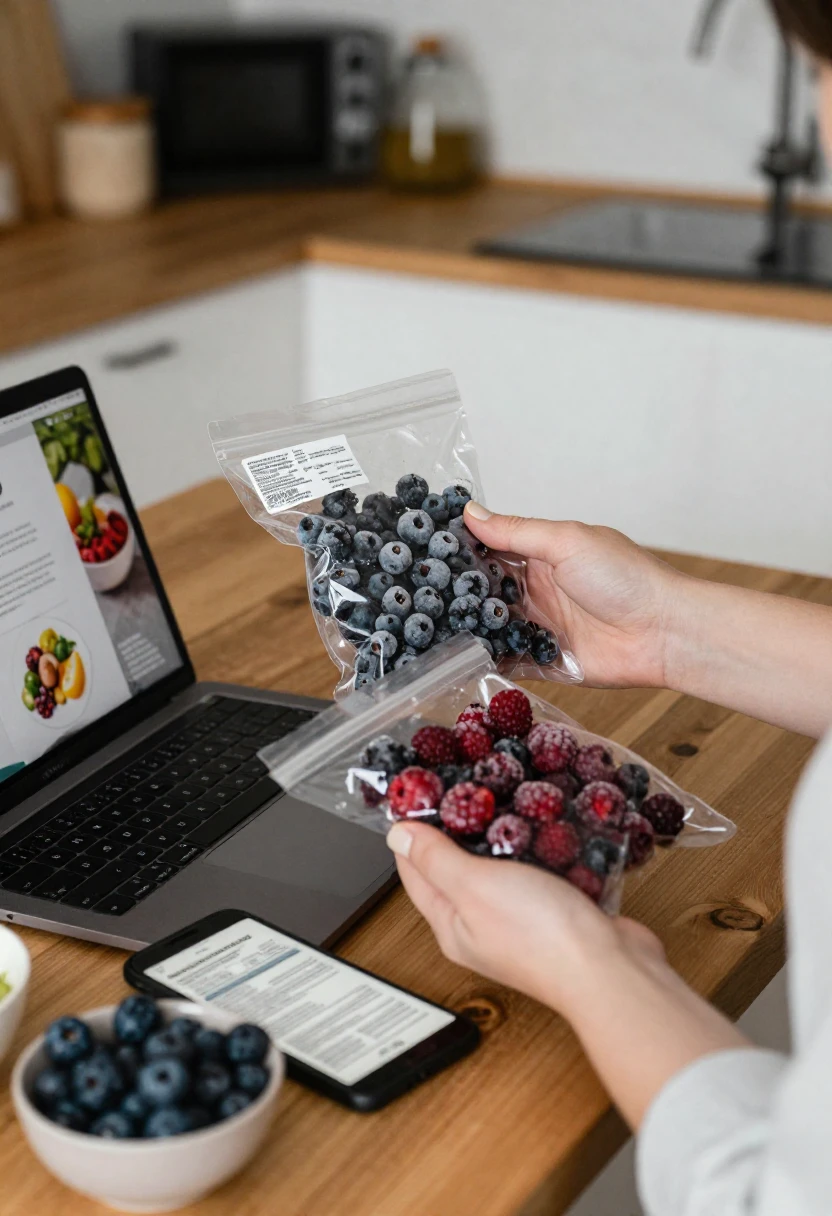
The confusion often comes from packaged fruit mixes or dessert-style frozen products, which may include added sugar. Reading the ingredient list solves this immediately.
If it says “berries,” you’re good.
“They’re Only Good for Smoothies”
Smoothies are popular for a reason — frozen berries work beautifully in them.
But that’s only one small part of the picture.
Frozen berries can be used in:
- baking,
- sauces,
- oatmeal,
- salads,
- yogurt bowls,
- desserts,
- even savory dishes.
Limiting them to smoothies means missing most of their potential.
“They’re Highly Processed”
Freezing is one of the oldest and gentlest preservation methods.
For most frozen berries, “processing” means washing and freezing.
That’s it.
No chemical treatment.
No artificial preservation.
No flavor manipulation.
Compared to many packaged foods marketed as “healthy,” frozen berries are remarkably close to their natural state.
“They Don’t Taste Good”
Texture changes after freezing, yes. Thawed berries are softer.
But flavor? Often richer.
Because frozen berries are picked ripe, they usually taste more intense than fresh berries harvested early for transport.
When used properly — blended, warmed, mixed, or baked — their flavor shines.
“They’re Only for Winter”
Some people see frozen fruit as a cold-season substitute.
In reality, many people use frozen berries most in summer — for smoothies, iced drinks, and chilled desserts.
They’re not seasonal food.
They’re year-round food.
“They’re Inferior to Organic Fresh Fruit”
Organic fresh fruit can be wonderful — when it’s truly fresh.
But organic frozen berries are also widely available. And even non-organic frozen berries can be highly nutritious and safe when sourced from reputable brands.
The bigger picture matters more than one label.
Consistency, variety, and balance are more important than perfection.
Why These Myths Persist
Many food myths survive because they feel intuitive.
Fresh looks better.
Frozen sounds industrial.
Packages feel suspicious.
But when you understand how food systems work, frozen berries start to look less like a compromise — and more like a smart adaptation.
Frequently Asked Questions (FAQ)

As frozen berries become a regular part of people’s kitchens, certain practical questions naturally come up. These aren’t about trends or rules — they’re about everyday use, comfort, and confidence.
Here are clear, honest answers to the ones readers ask most often.
Are frozen berries as healthy as fresh ones?
In many cases, yes — and sometimes even healthier.
Frozen berries are usually picked at peak ripeness and frozen quickly, which helps preserve vitamins and antioxidants. Fresh berries that travel long distances may lose some nutrients over time.
When fresh berries are local, seasonal, and eaten quickly, they’re wonderful. When they’re not, frozen berries are often the better option.
Do frozen berries contain preservatives?
Plain frozen berries usually contain no preservatives at all.
They’re preserved by temperature, not chemicals.
Always check the ingredient list. If it says only “berries,” you’re getting pure fruit.
Should I wash frozen berries before using them?
Most frozen berries are washed before freezing.
For smoothies and cooked dishes, extra washing isn’t necessary. For direct use after thawing, a quick rinse can be done if you prefer, but it’s not essential.
Why are my frozen berries mushy after thawing?
Freezing breaks down some cell walls inside the fruit. When berries thaw, they release water and become softer.
This is normal.
That’s why frozen berries are best used in blended, cooked, or mixed dishes rather than eaten plain.
Can I eat frozen berries straight from the freezer?
You can, especially in smoothies or as a frozen snack.
However, some people find them too hard on teeth when fully frozen. Letting them soften slightly first is usually more comfortable.
How much frozen fruit should I eat per day?
There’s no strict rule.
A handful to one cup per day fits easily into most balanced diets. Some people eat more, especially if berries are part of smoothies or breakfasts.
Variety matters too — berries work best as part of a diverse diet.
Are frozen berries safe for children?
Yes.
Plain frozen berries are generally safe and nutritious for children. They provide vitamins, fiber, and natural sweetness.
For younger children, it’s best to thaw or blend them to avoid choking hazards.
Can frozen berries be used in baking?
Absolutely.
They work well in muffins, pies, crumbles, and cakes. In many cases, you can use them straight from the freezer.
Tossing them lightly in flour before baking can help prevent excess moisture in some recipes.
How long do frozen berries last?
When stored properly in airtight packaging, frozen berries are best used within 8 to 12 months.
They may remain safe longer, but flavor and texture slowly decline over time.
Why do frozen berries sometimes have ice crystals?
Ice crystals usually mean the berries have been exposed to air or temperature changes.
They’re still safe to eat, but texture and flavor may be affected. Proper sealing helps prevent this.
Conclusion — Making Frozen Berries a Habit for Everyday Health

Sometimes the most powerful changes in our lives come from the smallest, quietest decisions.
Choosing frozen berries is one of them.
It doesn’t feel dramatic.
It doesn’t require discipline.
It doesn’t ask you to change who you are.
It simply asks you to open your freezer and reach for something nourishing.
Over time, that small act becomes a rhythm.
A handful in your morning oats.
A scoop in your afternoon smoothie.
A warm berry sauce over yogurt at night.
These moments add color, flavor, and care to your day — without pressure.
Frozen berries teach us an important lesson about health: consistency matters more than perfection.
You don’t need rare ingredients.
You don’t need seasonal access.
You don’t need complicated recipes.
You need food that supports you — reliably, gently, and joyfully.
Because they’re affordable, long-lasting, and deeply nutritious, frozen berries make healthy eating feel possible even on busy, imperfect days. They meet you where you are.
And that’s why they last.
Not just in your freezer.
But in your habits.
When nourishment is easy, it becomes natural.
And when it becomes natural, it becomes lasting.