
Contents
- Understanding Pre-Diabetes & Why Diet Helps
- Core Principles of the Pre-Diabetes Diet
- Top Foods to Embrace & Foods to Moderate
- Building Sustainable Meals & A Sample Day That Feels Doable
- Lifestyle Habits That Reinforce Diet
- Common Pitfalls & How to Avoid Them
- Conclusion — Turning Awareness Into Empowerment
Hearing the words “you’re in the pre-diabetes range” can feel like a quiet alarm going off in the background of your life. It’s not a diagnosis, but it is a warning — the kind that makes you pause at the kitchen counter, rethink your habits, and wonder what comes next.
The empowering part?
Pre-diabetes is one of the few health conditions where everyday choices — especially what you eat — can genuinely change the story. Your meals become more than fuel; they become tools for stability, prevention, and long-term wellbeing.
You don’t need extreme diets, expensive ingredients, or rigid rules.
In fact, the most effective pre-diabetes diet is practical, flexible, and deeply satisfying. It’s about eating in a way that keeps blood sugar steadier, supports insulin sensitivity, and gives your body the kind of nourishment that makes you feel good now — and protected later.
This guide breaks it down simply and gently.
We’ll explore what pre-diabetes really means, how food affects blood sugar, which meals help most, and how to build a daily rhythm you can actually stick to. Think of it as a friendly roadmap — clear, realistic, and full of foods that taste as good as they are supportive.
Understanding Pre-Diabetes & Why Diet Helps
Pre-diabetes sounds serious — and it is something to take seriously — but it’s also one of the most changeable conditions you can face. It simply means your blood sugar is higher than normal, but not yet in the diabetes range.
Think of it as your body sending a gentle, early signal:
“I’m working harder than I should. Help me out a little.”
Most people don’t feel symptoms.
They just notice things in hindsight — a little more fatigue, cravings that hit harder, appetite swings, or weight creeping up despite nothing major changing. That’s because pre-diabetes develops slowly, often over years.
But the hopeful truth is this:
your daily habits — especially what you eat — have a powerful ability to turn things around.
Why Blood Sugar Rises in the First Place
Blood sugar increases when the body becomes less sensitive to insulin, the hormone that helps move sugar from your bloodstream into your cells for energy. When insulin isn’t working efficiently, sugar stays in the blood longer — and levels gradually climb.
This shift can be influenced by:
- long periods of sitting or low activity
- meals high in refined carbs or sugar
- chronic stress
- poor sleep
- genetics
- weight gain around the waist
You don’t have to “fix everything.”
Changing just a few of these makes a measurable difference.
How Diet Helps More Than You Might Think
The foods you choose determine:
- how quickly sugar enters your blood
- how hard insulin has to work
- how steady or spiky your energy feels
- whether your blood sugar gently rises… or jumps
A nourishing pre-diabetes diet focuses on:
- fiber-rich foods that slow sugar absorption
- lean protein to steady energy
- healthy fats that keep you full
- whole grains instead of refined ones
- balanced meals rather than glucose-spiking snacks
These shifts help your body respond better to insulin — a major win.
This Isn’t About Restriction — It’s About Balance
A common fear is, “Does this mean I can never enjoy carbs again?”
Absolutely not.
It’s less about cutting foods out and more about:
- choosing the right types
- pairing them with protein and fats
- eating them at the right pace
- building meals that digest slowly and steadily
Better balance = better blood sugar.
Pre-Diabetes Is a Beginning, Not an Ending
With the right diet and small lifestyle tweaks, many people bring their blood sugar back into a healthy range.
It’s not about perfection. It’s about consistency, smart choices, and staying kind to yourself along the way.
Core Principles of the Pre-Diabetes Diet
When you’re navigating pre-diabetes, food becomes one of your strongest tools — not in a restrictive, stressful way, but in a guided, supportive way.
Instead of counting every calorie or cutting out entire food groups, the goal is simple:
Eat in a way that keeps blood sugar steady and insulin working efficiently.
Here are the gentle, realistic principles that make the biggest difference.
1. Build Your Plate Around Fiber (It’s Your Secret Weapon)
Fiber slows down how quickly sugar is absorbed, which helps keep blood sugar from spiking after meals.
It also keeps you fuller longer — a major win for appetite and weight management.
Focus on:
- vegetables
- beans and lentils
- whole fruits
- whole grains
- nuts and seeds
Think of fiber as the anchor of every meal.
2. Pair Carbs with Protein or Healthy Fats (The Balancing Act)
Carbs aren’t the enemy — unbalanced carbs are.
When eaten alone, they can spike blood sugar.
But when paired with protein or healthy fats, they digest more slowly.
Easy pairings:
Your goal isn’t to avoid carbs — it’s to support them.
3. Choose Low-Glycaemic Carbs More Often
Low-GI foods release energy slowly, keeping glucose levels steady.
Great choices include:
- whole oats
- quinoa
- wholegrain pasta
- barley
- sweet potatoes
- berries
- legumes
These foods fuel your body gently — no rush, no crash.
4. Eat Regular Meals (Your Blood Sugar Loves Rhythm)
Skipping meals or eating huge gaps apart can cause:
- blood sugar dips
- overeating
- insulin spikes
- cravings
A steady rhythm — breakfast, lunch, dinner, maybe a snack — keeps your metabolism stable.
5. Focus on Whole, Minimally Processed Foods
Processed foods often hide:
- added sugars
- refined carbs
- inflammatory fats
- low fiber
Whole foods naturally steady blood sugar because they’re slower to digest and richer in fiber and nutrients.
6. Fill Half Your Plate with Non-Starchy Veggies
This simple habit:
- adds volume
- boosts fiber
- slows digestion
- stabilizes glucose
- supports weight balance
Examples: leafy greens, broccoli, peppers, cauliflower, tomatoes, zucchini.
7. Hydrate Steadily Throughout the Day
Dehydration can make blood sugar rise faster.
Water, mineral water, herbal tea — your body benefits from all of them.
Aim for consistent sipping, not chugging.
8. Mindful Eating Matters More Than You Think
Eating slowly helps your body regulate blood sugar naturally.
Plus, it prevents overeating without needing strict rules.
Simple shifts:
- eat at the table
- notice flavors and textures
- pause between bites
- breathe before you begin
You digest better when you eat calmly.
These principles are realistic, flexible, and designed for everyday life.
Perfect for people who want to manage pre-diabetes without feeling deprived or overwhelmed.
Top Foods to Embrace & Foods to Moderate
The good news about eating for pre-diabetes is this: you don’t need a strict list of “good” and “bad” foods.
Instead, think in terms of frequency and balance — some foods help your blood sugar stay steady, while others are better enjoyed occasionally or paired with fiber, protein, or healthy fats.
Here’s a simple, supportive guide to what your plate should lean toward… and what to approach with a little more awareness.
🟢 Foods to Embrace
These foods naturally support steadier blood sugar, better energy, and healthier digestion.
1. High-Fiber Powerhouses
Fiber slows glucose absorption and keeps you full longer.
Include more:
- beans and lentils
- chickpeas
- oats
- quinoa, barley, buckwheat
- apples, pears, berries
- chia and flax seeds
Real-life tip: Add a spoonful of seeds or beans to any meal — it’s an effortless blood sugar balancer.
2. Non-Starchy Vegetables (Fill Half Your Plate)
Low in calories, high in fiber, rich in nutrients.
Best picks:
- leafy greens
- broccoli, cauliflower
- peppers
- zucchini
- tomatoes
- mushrooms
- carrots
These help slow digestion and keep meals satisfying.
3. Lean Proteins That Keep You Steady
Protein keeps blood sugar from rising too quickly.
Excellent options:
- chicken or turkey
- fish (especially salmon and sardines)
- tofu or tempeh
- eggs
- Greek yoghurt
- beans and lentils (yes, they count as both protein and carbs)
4. Healthy Fats for Fullness & Balance
Healthy fats slow digestion, reducing glucose spikes.
Choose:
- olive oil
- avocado
- nuts
- seeds
- oily fish
Add a drizzle, sprinkle, or dollop — small amounts go a long way.
5. Low-Glycaemic Fruits
Fruits are absolutely allowed — just choose those that digest more slowly.
Best choices:
- berries
- apples
- pears
- citrus
- plums
- peaches
Pair fruit with a protein or fat for even steadier energy.
🟡 Foods to Moderate (Not Eliminate!)
These foods aren’t “forbidden” — they just need companionship (fiber, protein, or healthy fats) or mindful portions.
1. Refined Carbohydrates
They digest quickly and cause blood sugar spikes.
Be mindful with:
- white bread
- white rice
- regular pasta
- pastries
- cookies
- crackers
- sugary cereals
Swap idea:
Wholegrain toast → steadier than white.
Quinoa or barley → more filling than white rice.
2. Sugary Drinks & Sweets
These hit the bloodstream fast.
Examples:
- soda
- sweetened tea
- sweetened coffee drinks
- juices
- candy
- desserts high in sugar
Better approach:
Enjoy occasionally, ideally after a fiber-rich meal — never on an empty stomach.
3. Processed Meats
These don’t affect blood sugar directly, but they impact long-term metabolic health.
Limit:
- bacon
- sausages
- deli meats
- hot dogs
Choose fresh proteins when possible.
4. Alcohol
Alcohol can cause unpredictable blood sugar swings.
It often lowers glucose first, then triggers cravings later.
Safer choices:
- wine with meals
- light cocktails
- avoid sugary mixers
Moderation is key.
🔄 Gentle Meal Swaps (That Don’t Feel Like Dieting)
These simple changes make a huge difference:
- white rice → quinoa or brown rice
- regular pasta → wholegrain or chickpea pasta
- sweetened yoghurt → Greek yoghurt + berries
- juice → water infused with citrus
- cereal → oats or chia pudding
- bakery muffin → wholegrain toast + nut butter + fruit
These aren’t sacrifices — they’re upgrades.
The goal isn’t restriction.
It’s balance, confidence, and meals that work with your body instead of against it.
Building Sustainable Meals & A Sample Day That Feels Doable
One of the biggest fears people have after hearing the word pre-diabetes is that their meals will suddenly become strict, joyless, or complicated.
But a supportive plate can be incredibly comforting — warm bowls, satisfying textures, and flavors that feel familiar.
The secret is in how you build each meal: a steady base of fiber, a bit of protein to keep your energy even, some healthy fat for fullness, and carbs that digest more slowly.
A sustainable pre-diabetes meal isn’t a “diet meal.”
It’s simply a balanced one — the kind that makes you feel pleasantly full, not sluggish.
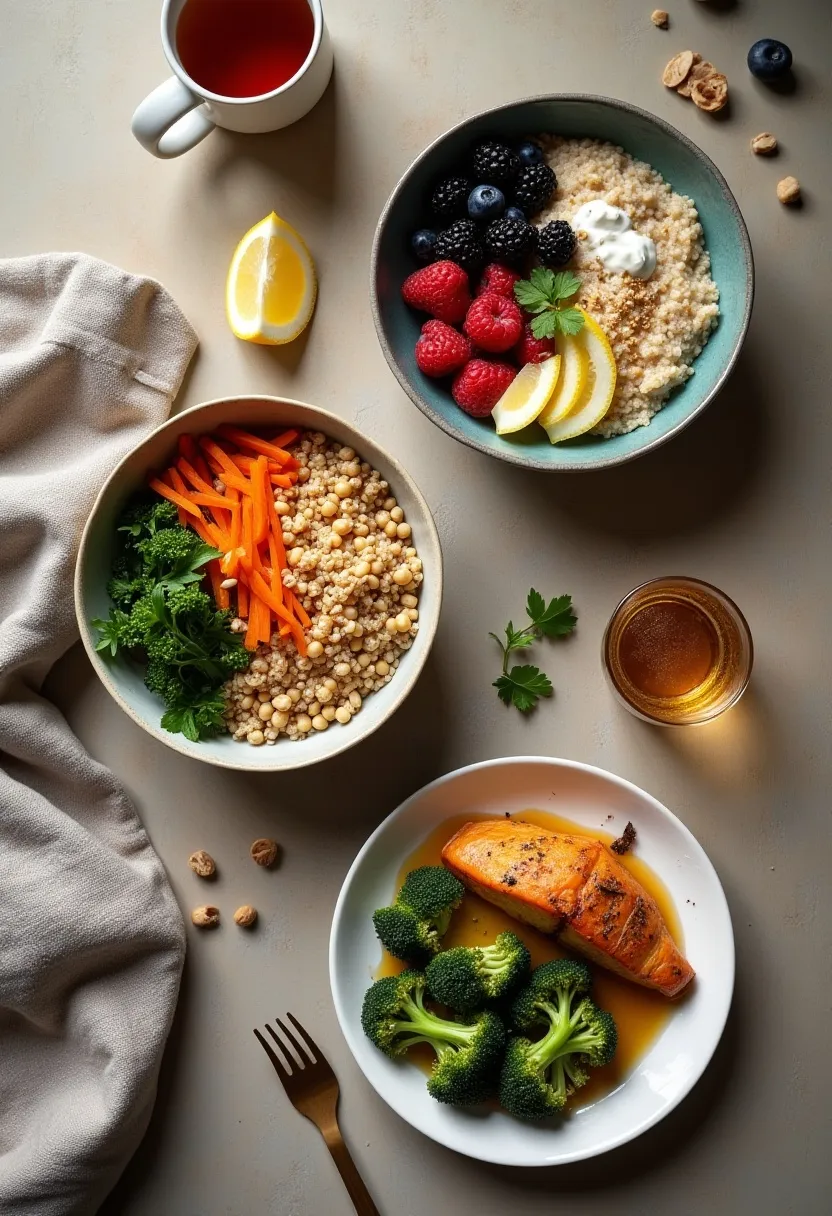
Imagine starting your day with something warm and grounding, like a bowl of oats stirred with yoghurt, berries, and a drizzle of nut butter. It’s cozy, gentle, and keeps your blood sugar from climbing too quickly.
Lunch might be a simple grain bowl — quinoa or brown rice topped with roasted vegetables and a piece of chicken, salmon, tofu, or even a generous spoon of hummus. It’s colorful, nourishing, and easy to throw together from leftovers.
Dinner works best when it feels steady rather than heavy.
Think of a plate where half is filled with vegetables (roasted, sautéed, or steamed), balanced with a source of protein and a small portion of wholegrains or starchy vegetables. A piece of salmon with roasted broccoli and sweet potato. A lentil stew with greens and a spoonful of Greek yoghurt on top. A chickpea pasta tossed with tomatoes, spinach, and olive oil.
Familiar foods — just built a little smarter.
Snacks still have a place, too.
A small apple with peanut butter, a handful of nuts, yoghurt with cinnamon, or even wholegrain crackers with cheese — all of these steady your blood sugar without leaving you hungry an hour later.
To bring everything together, here’s what a gentle, supportive day might look like:
You wake up and enjoy a warm bowl of oats topped with blueberries and a spoon of flaxseed — simple, soothing, and genuinely satisfying.
At midday, you put together a bowl using leftovers from the fridge: quinoa, roasted carrots, chickpeas, fresh greens, and a squeeze of lemon. It’s colorful and grounding.
In the evening, you sit down to a comforting dinner — maybe baked salmon with herby yoghurt, tender broccoli, and roasted sweet potato. A meal that feels both nourishing and familiar.
If you need something later, a few almonds or a small yoghurt with cinnamon carries you gently into the evening.
Nothing extreme. Nothing restrictive.
Just real food, balanced in a way that keeps your body steady and your meals enjoyable.
Lifestyle Habits That Reinforce Diet

Food plays a huge role in managing pre-diabetes, but the habits that surround your meals are just as influential.
Sometimes it’s the quiet choices — the way you move, breathe, or organize your day — that make your blood sugar easier to manage without added effort.
Think of these habits as the “soft edges” of your routine.
They don’t demand discipline or dramatic change.
They simply help your body work with you instead of against you.
A little movement, for example, is one of the most underestimated tools. A short walk after meals — even five or ten minutes — can help your muscles absorb glucose more efficiently, preventing the post-meal spike that often leads to cravings and fatigue. It’s a simple ritual that fits into almost any lifestyle: a loop around the block, tidying the kitchen, walking the dog, stepping outside for some fresh air.
Sleep plays its own subtle role.
When you’re tired, your body becomes more resistant to insulin, making it harder to keep blood sugar stable. People often blame willpower for late-night snacking or sugar cravings, when in reality, a tired body is simply trying to find quick energy. Better sleep doesn’t just help you feel rested — it supports your metabolism in a way food alone can’t.
Stress has a similar effect.
When your mind races, your body releases hormones that raise blood sugar, even if you haven’t eaten. So small calming rituals — a warm drink before dinner, a slower pace when eating, a few deep breaths before your first bite — help bring your body back into “rest and digest” mode. It’s a subtle shift, but you can often feel it immediately in how comfortably your meal sits.
Hydration also matters more than most people realize.
Staying gently hydrated throughout the day helps your blood sugar stay steady, supports digestion, and reduces the likelihood of mistaking thirst for hunger. It doesn’t have to be complicated — a glass of water on your desk, herbal tea in the evening, a sip or two between tasks.
And then there’s the rhythm of eating.
Your body loves routine — not strict rules, but steadiness. Eating at similar times each day helps prevent the swings that come from long gaps followed by big meals. When your body knows when to expect nourishment, it manages energy more efficiently.
None of these habits are dramatic, and that’s exactly why they work.
They fit naturally into your life and amplify the impact of a balanced pre-diabetes diet.
Together, they create an environment where your blood sugar can stay calmer, your energy more even, and your body more responsive to every good choice you make.
Common Pitfalls & How to Avoid Them
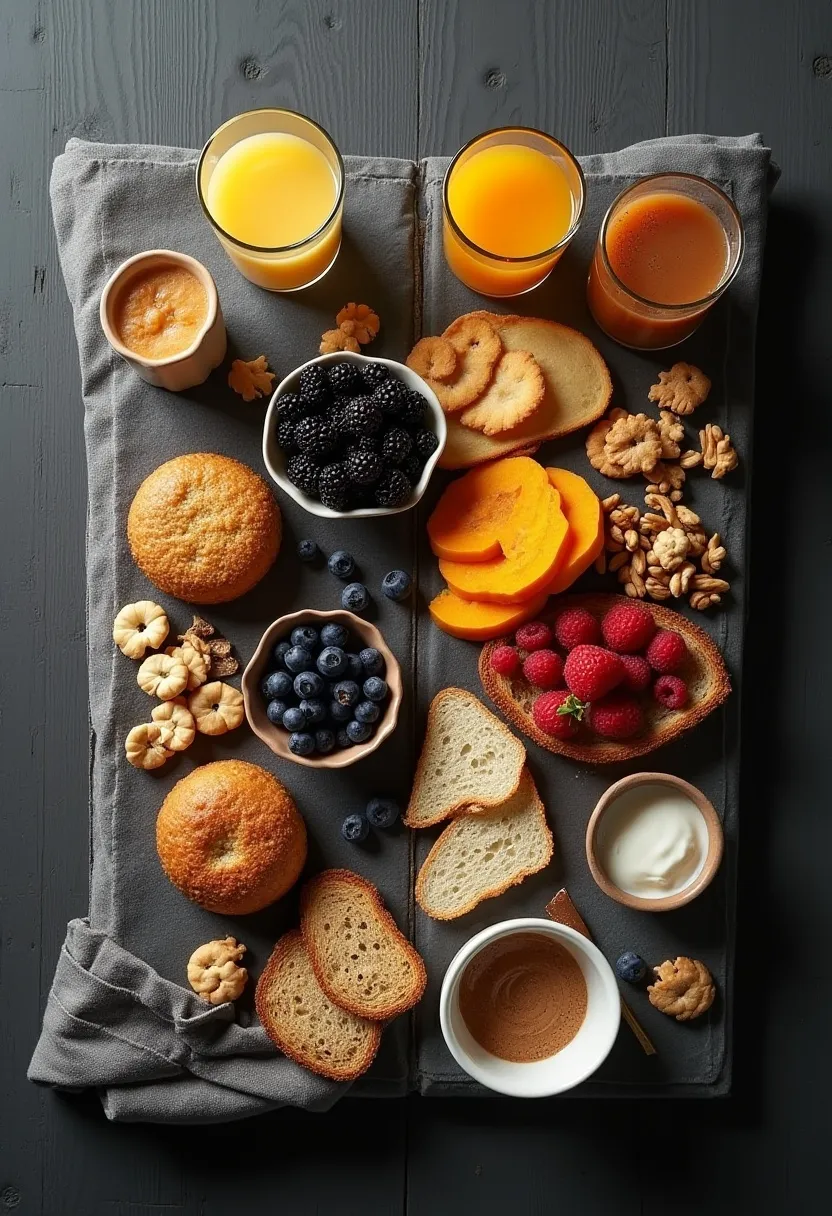
When people first learn they’re in the pre-diabetes range, the instinct is often to swing to extremes — cutting out entire food groups, fearing carbs, or trying intense diets that feel impossible to maintain. It’s a very human reaction. You want results, and you want them quickly. But pre-diabetes is best managed with steadiness, not shock tactics.
One of the most common pitfalls is believing that all carbohydrates are the problem. So people start avoiding bread, fruit, grains, even vegetables that contain a touch of sweetness. But the issue isn’t carbs themselves — it’s the speed at which some of them digest. Wholegrains, beans, lentils, and most fruits are incredibly helpful. They digest slowly, steady your blood sugar, and keep you full. The key is pairing them with protein or healthy fats, not removing them entirely.
Another trap is relying too heavily on “diet foods” or supplements. Sugar-free snacks, protein bars, drinks labeled “diabetic-friendly” — they can seem like the safer choice, but many contain artificial sweeteners or processed ingredients that still trigger cravings or digestive discomfort. Real, whole foods do a much better job of keeping your energy levelled.
Then there’s the problem of doing everything at once.
Some people overhaul their entire diet in a single weekend, stocking their fridge with vegetables they don’t actually enjoy and ingredients they’re not sure how to cook. By week two, motivation fades. Real progress comes from choosing one or two habits to focus on — like adding vegetables to half your plate, switching from white rice to quinoa, or walking after dinner — and letting those become your new normal before tackling the next step.
Emotional eating can also sneak in, especially if you’re feeling overwhelmed. Stress and worry raise blood sugar on their own, and turning to food for comfort is deeply understandable. The goal isn’t to eliminate comfort eating, but to make space for gentler coping tools too — a warm drink, a quiet moment, a short walk, a pause before reaching for something sweet.
The last pitfall is not noticing small wins.
People often look for dramatic shifts in blood sugar or weight, but the real progress shows up in quieter places: steadier energy, fewer cravings, clothes fitting more comfortably, or simply feeling more in control of your choices. These small wins add up — often faster than you think.
Avoiding these pitfalls isn’t about perfection. It’s about choosing a path that feels human, practical, and kind. With a few steady habits and supportive meals, pre-diabetes becomes something you can manage with confidence, not fear.
Conclusion — Turning Awareness Into Empowerment

Pre-diabetes can feel like a wake-up call, but it doesn’t have to feel like a threat.
If anything, it’s your body giving you time — time to adjust, time to nourish yourself differently, time to build habits that strengthen your health for years to come. Many people never get this early signal, which makes your awareness a powerful advantage.
The most important thing to remember is that progress doesn’t come from dramatic gestures. It comes from quiet consistency. A bowl of wholegrain oats instead of sugary cereal. A walk after dinner instead of collapsing into the couch immediately. A plate with more vegetables than before. A moment to slow down while eating. These tiny choices compound into measurable improvements in blood sugar, energy, sleep, mood, and long-term wellbeing.
You’re not aiming for a perfect diet — just a supportive one.
One that keeps your blood sugar steadier, your appetite calmer, and your confidence higher. One that still includes foods you love, but in combinations and portions that work with your body rather than against it.
Managing pre-diabetes is less about restriction and more about empowerment — the kind that grows each time you choose nourishment over urgency, balance over extremes, and sustainable habits over quick fixes.
Every supportive meal, every mindful moment, every step you take is a message to your body:
“I’m taking care of you. We’re doing this together.”
And that is where real change begins — gently, steadily, and with so much more hope than fear.



Hi there to all, for the reason that I am truly keen of reading this website’s post to be updated daily. It carries fastidious data.
I would like to thank you for the efforts you have put in writing this website. I’m hoping the same high-grade site post from you in the upcoming as well. Actually your creative writing skills has inspired me to get my own website now. Really the blogging is spreading its wings fast. Your write up is a great example of it.