Contents
There’s a reason certain dishes never disappear, no matter how dramatically food culture shifts around us. One year it’s all about elaborate tasting boards, the next it’s five-ingredient viral recipes, and somewhere in between everyone decides they need a new kitchen gadget. And still — quietly, without marketing campaigns or dramatic reinventions — chicken pot pie stays. 🥧✨
It doesn’t rely on trends. It doesn’t need exotic spices or complicated techniques. It survives because it delivers something far more powerful: comfort that feels honest. Mini chicken pot pies belong to that steady, dependable category of food that doesn’t try to impress you — it simply satisfies you.
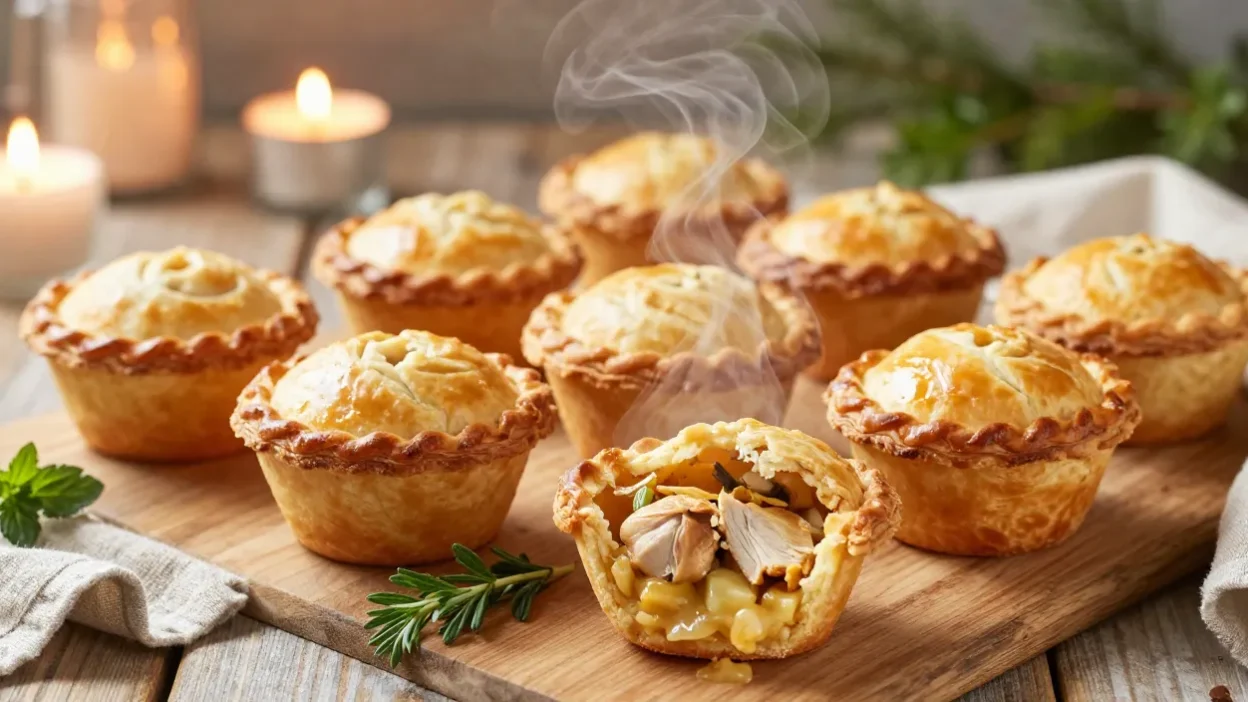
There’s something grounding about holding a warm mini pie in your hands. The buttery aroma hits first. Then the flaky crust gives way to creamy filling, tender chicken, and vegetables that still have just enough bite. Even if you didn’t grow up eating pot pie, it tends to trigger a familiar feeling. Maybe it reminds you of a slow Sunday dinner. Maybe of a cold evening when you needed something warm and filling. Or maybe it just taps into that universal craving for food that feels safe and nourishing.
The mini format elevates that feeling even further. A large pot pie is beautiful, sure, but slicing into it can be messy. The filling spills. The crust cracks. Portions end up uneven. With mini pot pies, each person gets their own perfectly golden serving — neat, structured, and self-contained. It feels personal in a subtle way. Almost like you thought ahead.
And that tiny shift — from one shared pie to individual portions — changes the atmosphere of the meal. It feels more intentional. A little more special. Not fancy, just thoughtful. 🧡
Why Mini Pot Pies Fit So Naturally into Modern Kitchens
We all want comfort food. But we also want it to fit into real life — busy schedules, limited time, unpredictable evenings. Mini chicken pot pies manage to bridge that gap in a way that feels almost effortless.
They’re practical without feeling utilitarian. They bake faster than a full-sized pie, cool quicker, and reheat beautifully. You can make them ahead, freeze them, and pull them out when the week gets chaotic. They don’t demand constant attention once they’re in the oven, and they don’t fall apart when reheated the next day.
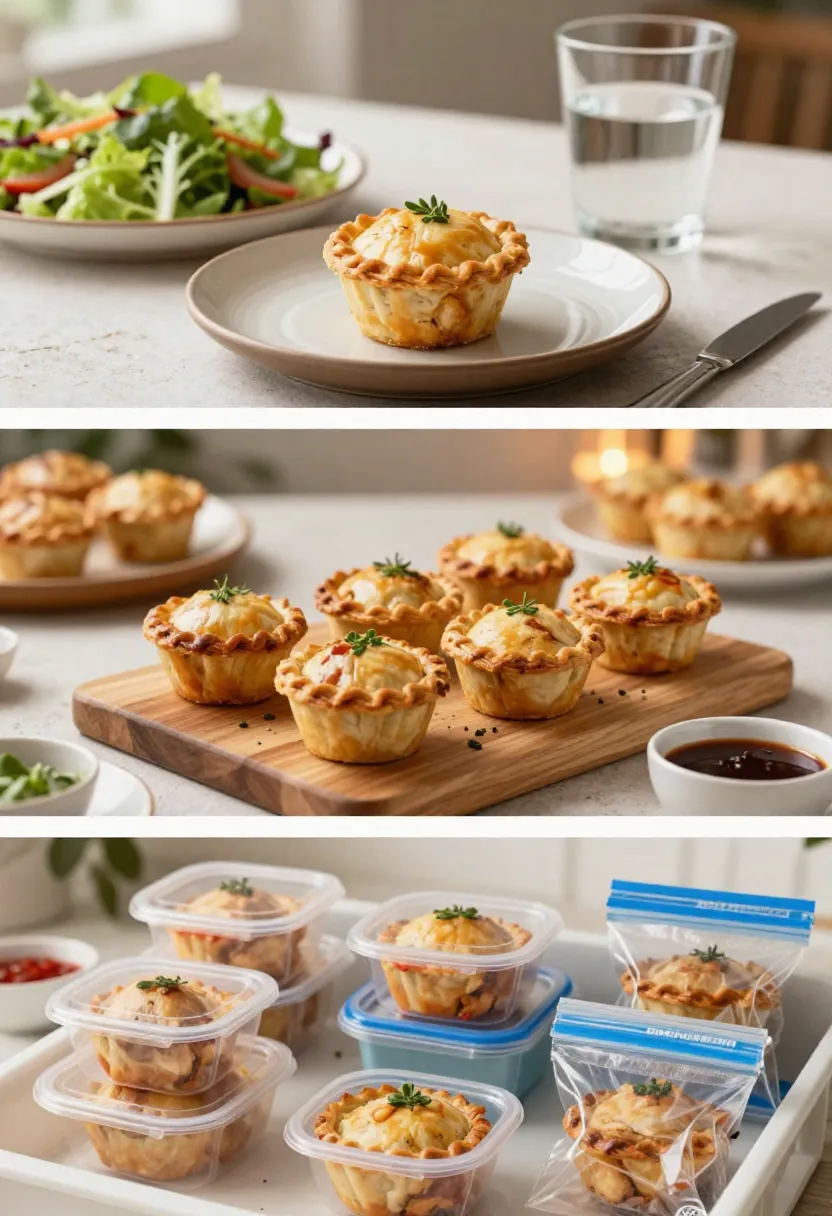
What makes them especially adaptable is how easily they move between occasions. They can feel:
- Cozy and casual with a simple side salad 🥗
- Slightly elevated when plated neatly for guests
- Kid-friendly thanks to their small size
- Meal-prep friendly for weekday lunches
- Freezer-friendly for future you
That flexibility is rare. Many comfort dishes taste amazing but lose structure when stored. Others freeze well but don’t feel special enough to serve to company. Mini pot pies somehow manage both.
And there’s another small but very real benefit: portion control. No awkward slicing. No debates over who got the bigger piece. No collapsing crust in the center. Each pie holds its shape, making serving smooth and surprisingly satisfying.
In a world where dinner often feels rushed, having something that’s both comforting and structured makes a difference.
Building Flavor Without Overcomplicating It
At first glance, chicken pot pie seems almost too simple to discuss at length. Butter, vegetables, chicken, broth, crust. That’s it, right? But simple recipes tend to reveal shortcuts quickly. Because there aren’t many ingredients, each one matters.
The onions need time to soften slowly, releasing their sweetness instead of staying sharp. Carrots and celery should become tender but not mushy. The roux — that mixture of butter and flour — has to cook long enough to lose its raw taste but not so long that it browns too deeply. It’s a balancing act, but not a complicated one.
The filling works best when built in layers. Not in a technical, chef-y way — just thoughtfully.
- Start with butter and aromatics to create depth.
- Develop the roux properly so the sauce thickens smoothly.
- Add broth gradually while whisking to avoid lumps.
- Finish with herbs for brightness and balance.
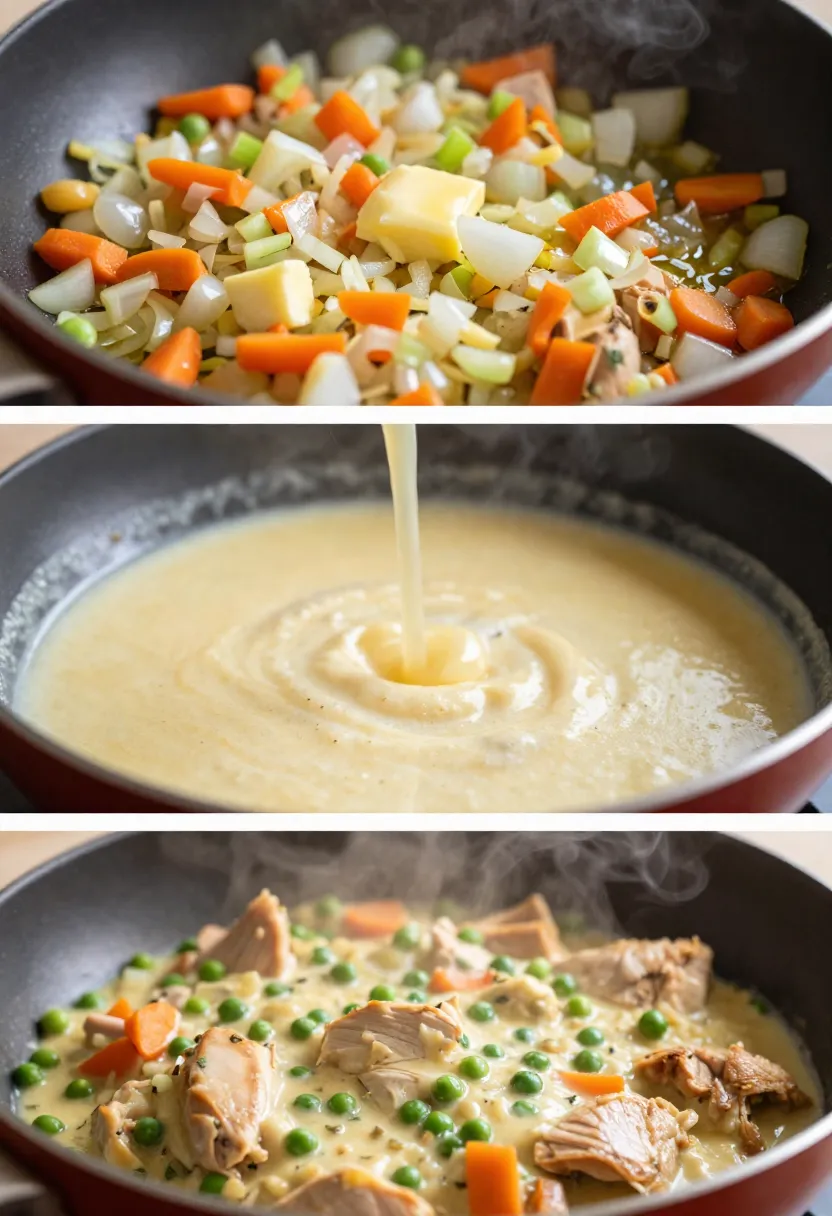
The sauce itself should land somewhere between thick and creamy. It shouldn’t feel like paste, and it definitely shouldn’t be watery. When you run a spoon through it, it should coat the back gently before settling. That texture ensures the filling stays rich without becoming heavy.
Then there’s seasoning. This is where many home cooks hesitate. Taste as you go. Adjust salt slowly. Add a small pinch of thyme or black pepper and see how it shifts the flavor. The filling should taste slightly bold before baking, because the crust will mellow everything once enclosed.
Texture plays a major role too. The chicken should be shredded or diced evenly so it distributes throughout the filling instead of clumping. The vegetables should offer a slight bite for contrast. And the crust — arguably the most satisfying element — needs to be flaky, golden, and sturdy enough to support the filling without turning soggy.
Keeping the dough cold before baking helps enormously. Cold fat in the dough creates steam in the oven, which forms those delicate flaky layers. It’s a small detail, but you’ll notice it in the final result.
When all of these elements come together — creamy filling, balanced seasoning, tender vegetables, flaky crust — something shifts. It stops feeling like just another dinner idea. It becomes one of those recipes people request again. The kind that tastes even better the next day. The kind that feels comforting without being heavy.
And honestly, in a busy world, that kind of food is priceless. 🥧💛
Mini Chicken Pot Pies Recipe 🥧
There’s something incredibly satisfying about breaking through a golden, flaky crust and watching a creamy filling slowly reveal itself underneath. These mini chicken pot pies are exactly that kind of experience. They’re rich without being heavy, comforting without feeling overwhelming, and balanced in a way that makes you want “just one more bite.”
Inside each little pie, you’ll find tender pieces of chicken coated in a silky, herb-kissed sauce, dotted with sweet carrots, soft celery, and bright green peas. The vegetables bring freshness and subtle sweetness, while the thyme and parsley add warmth and depth that linger gently in the background. The crust bakes into delicate layers that crack slightly when you press into them — not dry, not soggy, just perfectly flaky.
What makes these mini versions especially appealing is their structure. Each one holds its shape beautifully, making them ideal for serving at dinner parties, casual family meals, or even packing up for lunch the next day. They feel intentional and homemade in the best possible way — like something that took care and attention, even though the method itself is wonderfully straightforward.
They’re the kind of dish that smells like comfort long before you take the first bite. ✨
Ingredients
- 2 tablespoons unsalted butter
- 1 small yellow onion, finely diced
- ½ cup celery, finely chopped
- ½ cup carrots, finely chopped
- ⅓ cup all-purpose flour
- 1 ¾ cups chicken broth
- ½ cup whole milk or half-and-half
- 2 cups cooked chicken, shredded or diced
- 1 cup frozen peas
- 2 tablespoons fresh parsley, chopped
- ½ teaspoon salt (adjust to taste)
- ¼ teaspoon black pepper
- ½ teaspoon dried thyme
- 2 refrigerated pie crusts (or homemade dough)
- 1 egg, beaten (optional, for egg wash)
Instructions
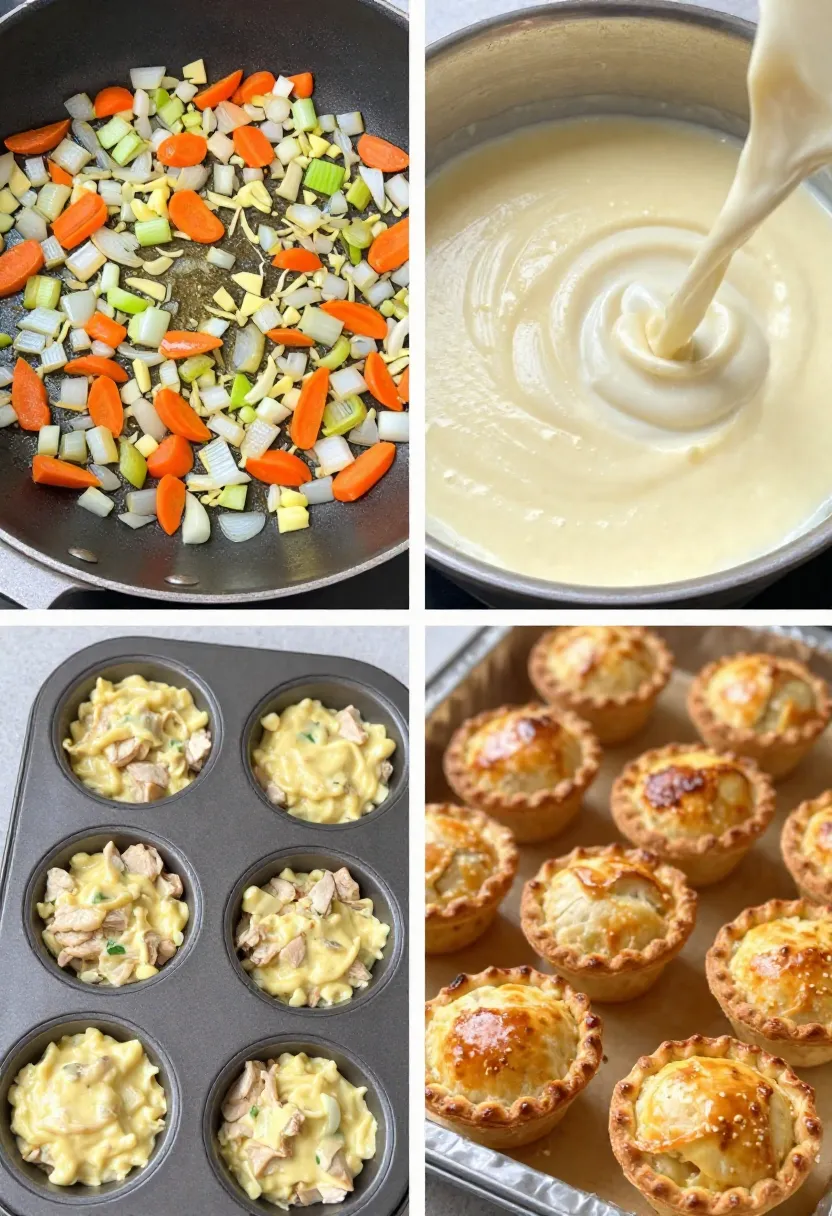
- Preheat your oven to 400°F (200°C). Lightly grease a standard 12-cup muffin tin. Let the refrigerated pie crust rest at room temperature for about 10–15 minutes so it softens slightly and becomes easier to roll and cut.
- In a large skillet over medium heat, melt the butter. Add the diced onion, celery, and carrots. Cook gently for 6–8 minutes, stirring occasionally, until the vegetables soften and release their aroma. You’re not looking for browning here — just tenderness and sweetness developing slowly.
- Sprinkle the flour evenly over the vegetables. Stir continuously for 1–2 minutes until the mixture forms a thick paste. Cooking the flour briefly at this stage prevents any raw taste in the final sauce.
- Gradually pour in the chicken broth while whisking to avoid lumps. Once smooth, add the milk or half-and-half. Continue stirring as the mixture simmers gently for 3–5 minutes, until it thickens into a creamy, cohesive sauce that coats the back of a spoon.
- Remove the skillet from heat. Stir in the cooked chicken, frozen peas, parsley, thyme, salt, and pepper. Taste carefully and adjust seasoning if needed. The filling should be flavorful and slightly bold, as the crust will soften the overall intensity during baking.
- Roll out the pie crust and cut 12 circles slightly larger than the openings of the muffin cups. Spoon the filling evenly into each cavity, filling close to the top but leaving a little space to prevent overflow during baking.
- Place a dough circle over each filled cup. Gently press around the edges to seal. Cut small slits in the center of each crust to allow steam to escape. Brush with beaten egg if you want a glossy, golden finish.
- Bake for 25–30 minutes, or until the tops are golden brown and the filling bubbles gently around the edges. Let the pies cool in the pan for 5–10 minutes before carefully lifting them out — this helps them set and hold their shape.
Serve warm and enjoy that perfect contrast between flaky crust and creamy filling. 🧡
Helpful Tips & Kitchen Hacks ✨
- If your filling feels too thick before baking, add a small splash of warm broth to loosen it slightly.
- For deeper flavor, add a tiny splash of white wine before pouring in the broth and let it reduce briefly.
- Keep the dough chilled until you’re ready to use it — cold dough creates flakier layers.
- Don’t overfill the muffin cups; the filling will bubble up as it bakes.
- Let the pies rest a few minutes before removing them — patience prevents crumbling.
These small details don’t complicate the recipe, but they absolutely elevate the result.
Serving Ideas That Truly Elevate the Experience 🍽️
Mini chicken pot pies are perfectly capable of standing on their own. They’re rich, creamy, flaky — the kind of dish that doesn’t really need support. But pairing them thoughtfully can completely change how the meal feels. It’s the difference between “nice dinner” and “this feels intentional.”
Because the filling is creamy and savory, balance is key. Something fresh and slightly acidic alongside it wakes up the palate and keeps the meal from feeling too heavy. A simple green salad with a lemon vinaigrette is almost foolproof. The brightness of citrus cuts through the richness of the sauce, and the crisp texture of fresh greens contrasts beautifully with the soft filling and flaky crust.
If you want something warm instead of raw greens, lightly roasted vegetables are a natural fit. Think asparagus with olive oil and sea salt, green beans with a squeeze of lemon, or even roasted carrots with a tiny drizzle of honey. They don’t compete with the pies — they frame them.

For colder evenings, you can lean fully into comfort. A small bowl of tomato soup next to a mini pot pie feels nostalgic in the best way. The acidity of the tomatoes complements the creamy filling, and together they create that cozy, slightly indulgent dinner that makes you slow down without even realizing it. 🧡
If you’re serving guests, small presentation choices make a noticeable difference. You don’t need complicated plating — just a bit of care. Mini pies look especially charming:
- arranged neatly on a wooden serving board
- paired with small ramekins of cranberry sauce for sweetness
- served with whole-grain mustard for a subtle sharp contrast
- topped with a sprinkle of freshly chopped herbs for color
Even something as simple as placing them on warm plates helps. It sounds minor, but warm plates keep the crust crisp longer and maintain that “just out of the oven” feeling.
The key idea here isn’t complexity. It’s intention. A thoughtful pairing makes the meal feel complete.
Make-Ahead, Storage, and Freezing Tips ❄️
One of the quiet strengths of mini chicken pot pies is how well they adapt to real schedules. They aren’t fragile. They don’t collapse after a day. They don’t lose all texture overnight. In fact, some people would argue they taste even better the next day, once the flavors have had time to settle together.
Once baked, they store beautifully in the refrigerator for up to four days. Just keep them in an airtight container to prevent the crust from absorbing moisture. When reheating, the oven really is worth the extra few minutes. About 10–15 minutes at 350°F (175°C) restores the crisp exterior and gently warms the filling without drying it out. The microwave works if you’re in a hurry, but expect a softer crust.
Freezing is where these little pies truly become weeknight heroes. You have two options: freeze them before baking or after.
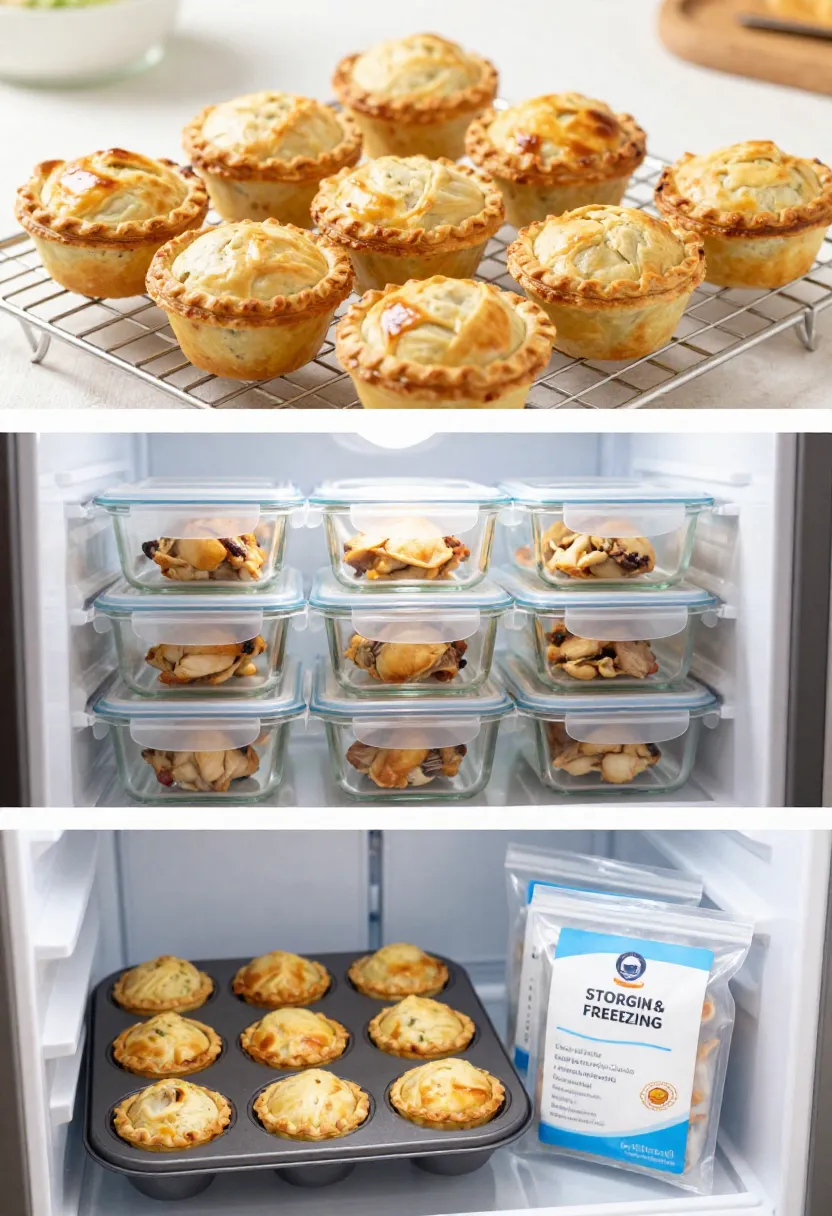
If freezing unbaked, assemble them fully in the muffin tin and place the entire tray in the freezer until solid. Once firm, transfer them to a freezer-safe bag or container. They can stay frozen for up to three months. When ready to bake, place them directly into a preheated oven and simply add 15–20 minutes to the original baking time. No thawing required.
If freezing after baking, allow them to cool completely first. Wrapping them individually can help prevent freezer burn. Reheat in the oven rather than the microwave to bring back texture.
Having a batch ready in the freezer feels surprisingly comforting. It’s like a small insurance policy against those evenings when everything runs late, everyone’s tired, and cooking from scratch feels overwhelming. Instead of ordering takeout, you pull out something homemade. And that feels different. ✨
Small Details That Quietly Make a Big Difference 🌿
Mini chicken pot pies are forgiving, but that doesn’t mean small adjustments don’t matter. In fact, tiny tweaks can elevate the final result in ways that aren’t dramatic — just noticeable in a satisfying way.
For example, using rotisserie chicken doesn’t just save time. It often adds deeper flavor because the meat has already been seasoned and roasted. A splash of dry white wine added after sautéing the vegetables (before adding broth) creates subtle complexity. It won’t taste like wine — it just rounds everything out.
Texture is another area where small changes shine. Sautéed mushrooms add an earthy note that complements the creaminess. Swapping regular pie crust for puff pastry gives you a lighter, more dramatic flake. Using half-and-half instead of milk creates a slightly richer sauce without becoming overly heavy.
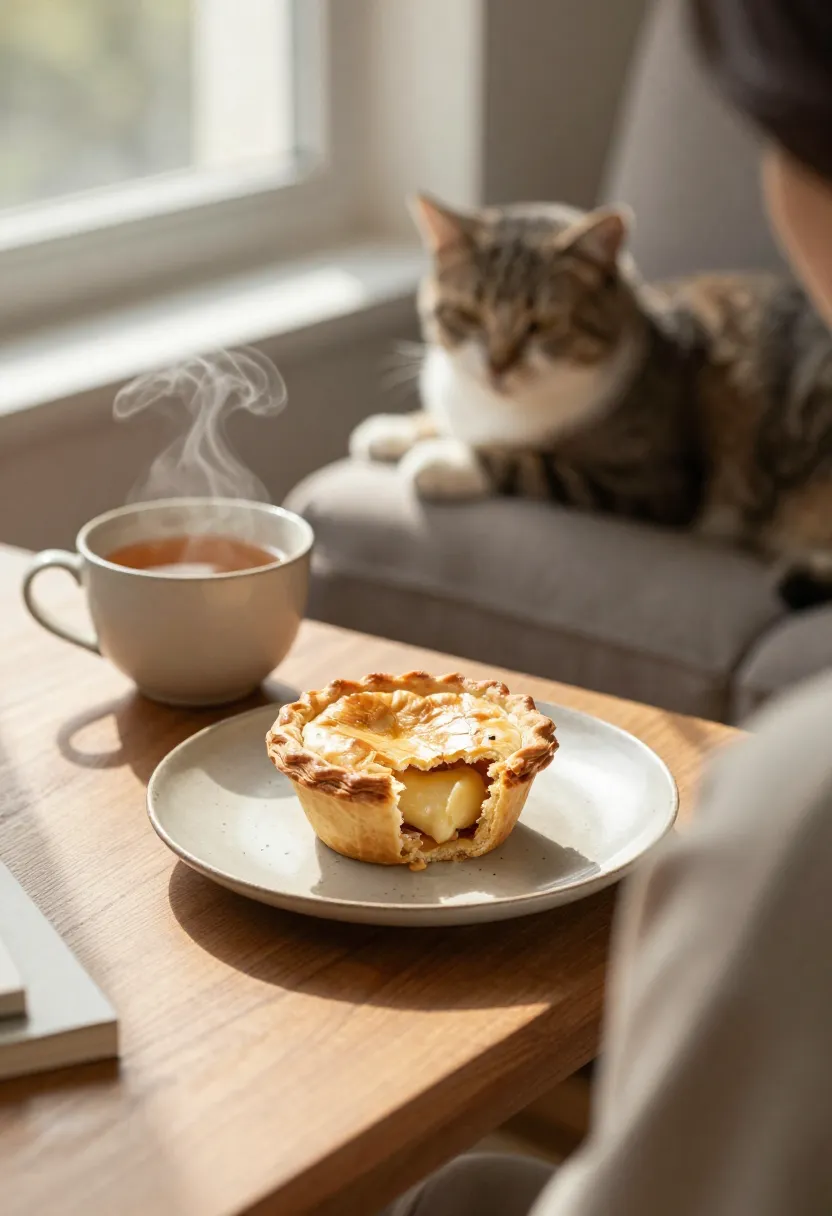
A few understated refinements you might try:
- add a pinch of nutmeg to the sauce for warmth
- increase the black pepper slightly if you prefer sharper contrast
- mix parsley with a bit of fresh thyme for brighter herbal depth
- brush the crust with egg wash and a tiny sprinkle of flaky salt before baking
- let the filling cool slightly before topping with crust to prevent steam buildup
None of these changes reinvent the recipe. They simply refine it.
That’s really the beauty of mini chicken pot pies. They’re stable enough to trust, flexible enough to adapt, and comforting enough to return to again and again. They don’t rely on trends or dramatic reinvention. They just work — quietly, reliably, and deliciously. 🥧💛