Contents
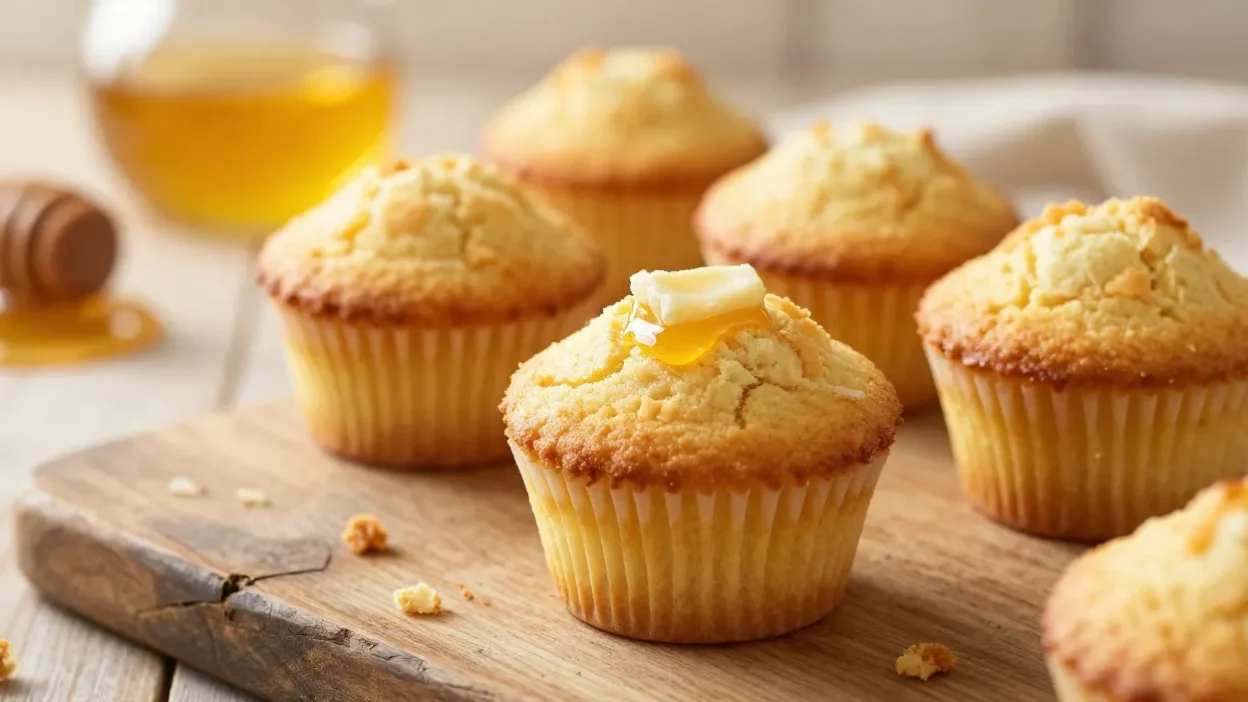
There are foods that impress you once… and then there are foods you keep coming back to without really thinking about it. No special reason, no occasion — you just find yourself making them again. Cornbread muffins fall into that second category.
At first glance, they don’t seem like anything special. No layers, no decorations, nothing that makes you stop and stare. They’re simple in a very honest way. Almost modest. But that changes the moment you take a bite. They’re warm, soft in the center, with just a slight crumble that actually feels satisfying instead of messy. There’s a gentle sweetness, a buttery note, and something about that corn flavor that feels familiar — even if you can’t quite connect it to a specific memory. 🌽
It’s not dramatic. It’s not overwhelming. And somehow, that’s exactly why it works.
You don’t feel like you’re eating something “fancy.” You feel like you’re eating something that belongs in your day without needing a reason. And that’s a different kind of comfort — quieter, but more lasting.
What makes them stand out is how naturally they fit into everyday life. You don’t need to plan for them. You don’t need to clear your schedule or prepare ingredients hours in advance. They’re the kind of thing you make when you’re a little tired but still want something warm. Or when dinner feels incomplete but you don’t want to cook something complicated.
They just… slide into your routine.
If you really think about it, they show up in all kinds of small moments:
- early mornings when the kitchen is still quiet and you’re moving slowly
- evenings when you want something warm but not heavy
- random in-between times when you’re not exactly hungry, but not not hungry either
And honestly, some of the best moments with cornbread muffins aren’t planned at all. You bake them, maybe intending to serve them properly, but then you end up eating one straight from the tray. No plate, no presentation. Just standing there, breaking it open while it’s still warm, maybe adding butter almost automatically.
That’s usually when they taste the best.
But here’s where things get a little tricky.
Even though they look simple — almost too simple — they’re surprisingly easy to get slightly wrong. Not in a way that ruins everything, but in a way that makes you pause after the first bite.
Like… something’s missing.
Maybe they’re a bit too dry, and you notice it right away. Maybe they’re denser than you expected, and instead of feeling soft and comforting, they feel a bit heavy. Or maybe they’re too sweet, and suddenly they lose that balance that makes cornbread feel like cornbread.
It’s never one big mistake. It’s usually small things adding up.
And that’s why getting them right feels so satisfying. That moment when the texture is soft but not weak, the sweetness is there but not dominant, and everything just works together without trying too hard.
🧈 The Quiet Details That Change Everything
Cornbread muffins are simple — but not careless. That’s probably the best way to describe them.
You can absolutely make them quickly, without overthinking, and still get something decent. But if you want them to be really good — the kind you actually remember — then the small details start to matter more than you’d expect.
Texture is where most of those details show up.
A good cornbread muffin doesn’t feel like a cupcake. It shouldn’t be light and airy in that way. But it also shouldn’t feel dense or compact. It lives somewhere in between — soft, slightly structured, with just enough crumble to feel natural.
When you break one open while it’s still warm, the inside should look tender, not dry. And when you take a bite, it should give easily, without falling apart completely.
And then there’s that moment when you add butter.
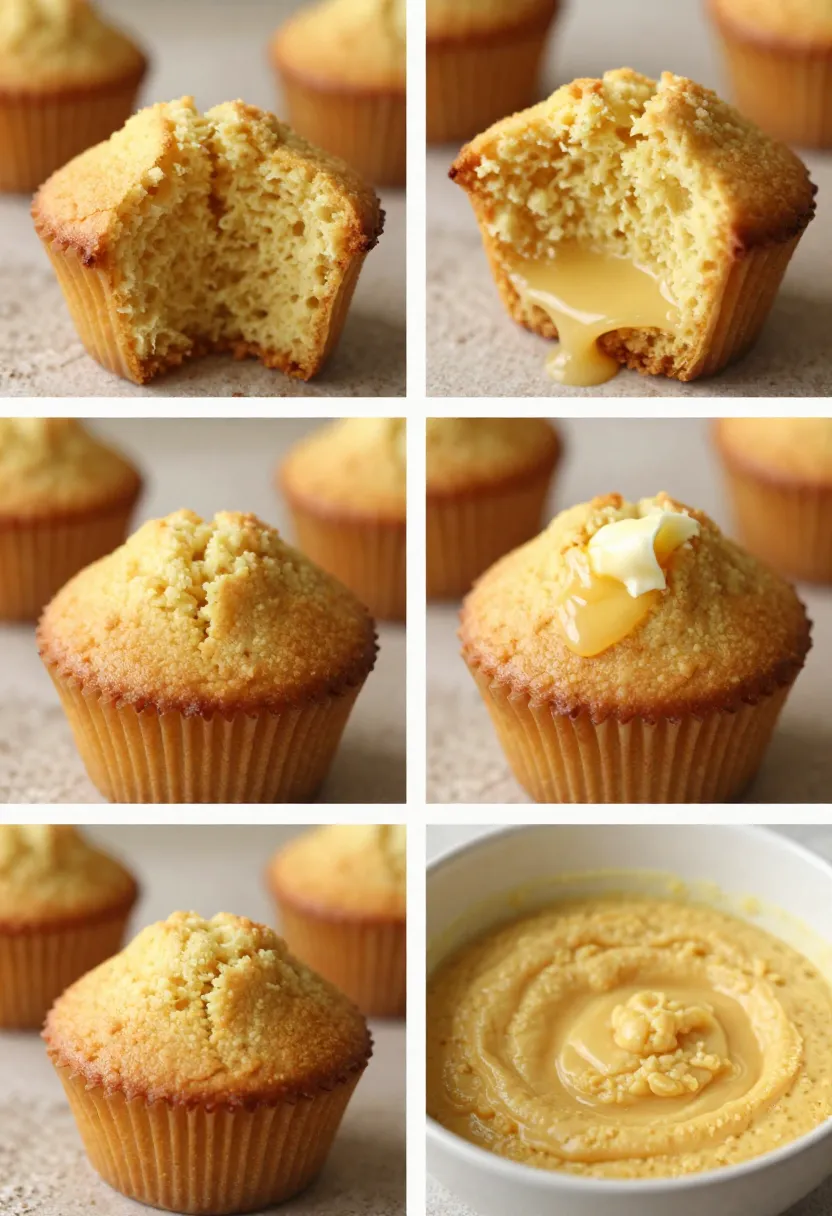
It melts slowly into the center, softening everything just a little more, making the texture feel richer without actually making it heavy. It’s a small thing, but it changes the experience quite a bit. 🧈
Flavor works the same way — it’s not supposed to be loud.
You’re not aiming for something that hits you all at once. Instead, it builds in layers. First, you notice the corn — mild, slightly earthy. Then comes the butter, adding depth. And finally, a gentle sweetness that ties everything together without taking over.
If any of those elements become too strong, the balance shifts.
Even the outside of the muffin plays a role, which people don’t always think about. That thin golden edge — not crunchy, just slightly firmer — gives contrast to the soft interior. Without it, everything feels a bit too uniform, almost flat.
There are a few small habits that consistently make a difference, even if they don’t seem important at first:
- mixing the batter just until everything comes together, even if it still looks a bit uneven
- letting the batter sit for a few minutes before baking so the texture settles
- checking the muffins visually instead of relying only on time
These aren’t complicated techniques. You don’t need experience for them. But they do require a bit of attention — and that’s usually the difference between something that’s “fine” and something that feels really satisfying.
🌾 Why Ingredients Matter More Than You Think
It’s easy to think that as long as you follow the recipe, everything should turn out the same every time. But with cornbread muffins, ingredients can shift the result more than you’d expect — sometimes in ways that are hard to notice until you compare batches.
Cornmeal is the most obvious example. It’s not just part of the recipe — it defines the entire character of the muffin. The texture, the flavor, even how it feels when you bite into it.
If the cornmeal is too fine, the muffins start to feel almost like regular cake. You lose that slight texture that makes cornbread feel distinct. On the other hand, if it’s too coarse, the texture can become distracting instead of pleasant. It’s one of those things where balance matters more than precision.
Flour works in the background, but it’s essential. It softens the crumb and gives the muffins enough structure to hold together. Without it, they can become fragile, especially once they cool down.
Buttermilk is one of those ingredients that doesn’t seem dramatic, but makes a noticeable difference. It adds moisture, of course, but also a slight tang that keeps the flavor from feeling flat. Without that, everything can taste a bit one-dimensional — not bad, just not as interesting.
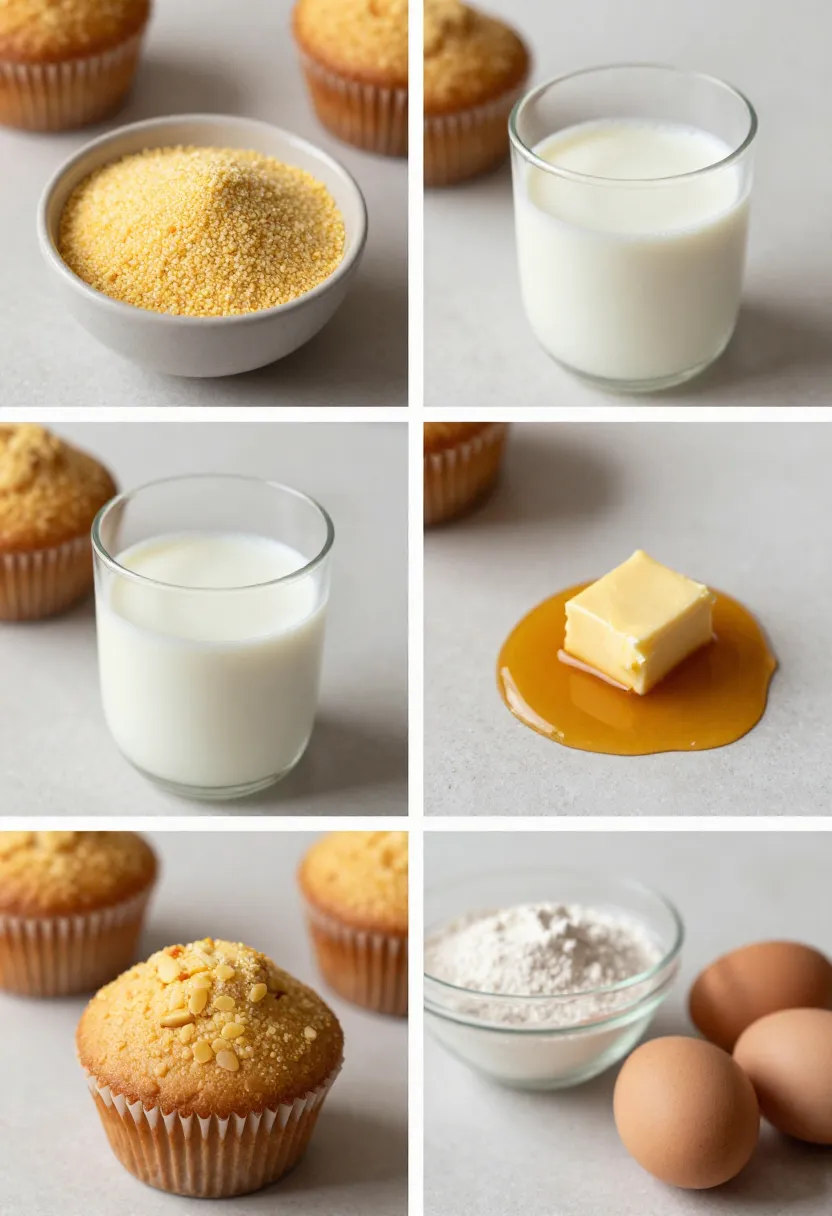
Butter adds richness, but also depth — especially if it’s browned slightly before being added to the batter. That extra step changes the aroma more than anything else. It gives the muffins a warmer, more rounded flavor that’s hard to describe, but easy to notice.
And then there’s the sweetener. This part is less about rules and more about preference. Some people like their cornbread barely sweet, almost savory. Others prefer a bit more sweetness. Honey tends to feel softer and more natural, while sugar is more direct.
If you want your muffins to turn out consistently well, a few small things are worth keeping in mind:
- choose a cornmeal with a texture that feels balanced, not too fine or too rough
- use fresh ingredients, especially baking powder and baking soda
- avoid changing too many things at once if you’re trying to improve the result
When you step back and look at everything together, it becomes clear that cornbread muffins aren’t about complexity.
They’re about attention.
Small adjustments, small observations, small choices — nothing dramatic on its own, but together they shape the final result. And once you start noticing those details, it becomes much easier to get them exactly where you want them to be. 🤍
🧁 The Perfect Cornbread Muffins Recipe
There’s something very reassuring about having a recipe you don’t have to question every time you use it. This is one of those recipes.
It’s not trying to be overly clever or complicated. Instead, it focuses on getting the basics exactly right — which, honestly, is what makes you come back to it again and again. The texture lands somewhere in that ideal middle: soft and tender inside, with just enough structure to hold together when you break it open. The flavor is balanced too — slightly sweet, gently buttery, with that warm corn taste that feels comforting without being heavy.
What I like about this version is that it doesn’t feel strict. You can follow it as it is and get a really solid result, or you can tweak it a little depending on your mood. Maybe a bit more honey one day, maybe a slightly longer bake for a deeper color — it adapts without falling apart.
And when they come out of the oven? That’s the moment. The smell is warm, a little nutty from the butter, and just sweet enough to make you want to try one immediately, even if they’re still too hot. If you cut one open right away, the inside is soft and steamy, and if you add a bit of butter, it melts almost instantly into the crumb. It’s simple, but it hits exactly the way you want it to. 🌽🧈
🛒 Ingredients
- 115 g (1/2 cup) unsalted butter
- 1 cup all-purpose flour
- 1 cup cornmeal
- 2 teaspoons baking powder
- 1/2 teaspoon baking soda
- 1 teaspoon salt
- 2 large eggs
- 1/3 cup honey
- 1 cup buttermilk
👩🍳 Instructions
- Preheat your oven to 220°C (425°F) and prepare a muffin tin with liners or light grease.
- Melt the butter over medium heat. Let it cook until it turns golden and develops a slightly nutty aroma. Keep an eye on it — it can go from perfect to too dark pretty quickly. Remove from heat and allow it to cool slightly.
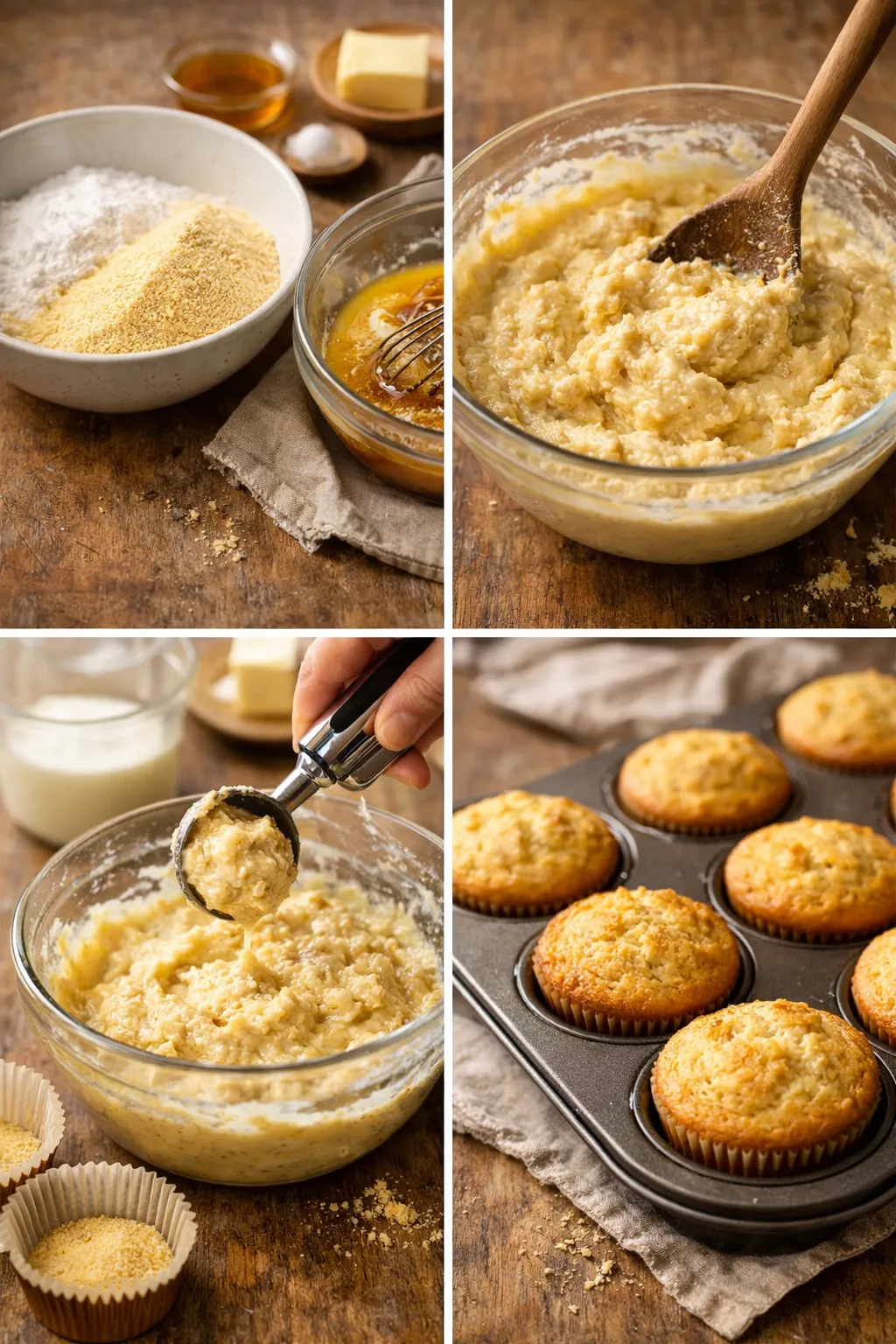
- In a large bowl, combine the flour, cornmeal, baking powder, baking soda, and salt. Mix until everything is evenly distributed.
- In a separate bowl, whisk together the eggs and honey until smooth. Add the buttermilk and continue mixing until fully combined.
- Pour the wet mixture into the dry ingredients. Stir gently until just combined. The batter doesn’t need to be perfectly smooth — in fact, it’s better if it isn’t.
- Add the melted (or browned) butter and fold it in carefully, making sure it’s evenly incorporated without overworking the batter.
- Let the batter rest for about 5–10 minutes. This step might seem optional, but it really helps the texture come together.
- Fill the muffin cups almost to the top. This helps create those nicely rounded, slightly domed tops.
- Bake for 15–18 minutes, or until the tops are golden and a toothpick inserted in the center comes out clean.
- Let the muffins cool for a few minutes before serving. They’re best when still warm, when the inside is soft and the edges have just a bit of structure.
✨ Small Tips That Make a Noticeable Difference
- don’t overmix the batter — a few lumps are completely fine and actually better
- if you have time, brown the butter for a deeper, slightly nutty flavor
- let the muffins rest for a few minutes after baking so the texture settles
- if they start to cool, warm them slightly before serving — it brings back that soft center
- taste and adjust sweetness next time if needed (a little more honey can change the feel a lot)
🌶️ Playing With Flavors Without Losing the Soul
Once you’ve made the base recipe a few times, something subtle starts to happen. You stop double-checking every step, you recognize the texture of the batter without thinking too much, and naturally — you begin to wonder what would happen if you changed just a little something.
And that’s usually how experimenting begins. Not in a big, planned way, but almost accidentally.
Cornbread muffins are surprisingly forgiving in that sense. They don’t collapse if you tweak something. They don’t suddenly become unrecognizable. But at the same time, they have a very clear identity — and if you push too far, you can lose what makes them feel like cornbread in the first place.
That balance is important.

Adding cheese, for example, doesn’t just make them “cheesy.” It shifts the entire feel. They become richer, a bit more filling, something that feels like it belongs next to a proper meal rather than just sitting quietly on the side. Jalapeños do something different — they don’t take over, but they wake up the flavor. It’s not about heat, really, more about contrast. And something as simple as corn kernels adds texture in a way that makes each bite feel slightly less predictable.
On the sweeter side, the changes are softer, but still noticeable. A bit more honey smooths everything out, making the muffins feel more comforting, almost closer to something you’d have with tea or coffee. Berries add little bursts of flavor that break up the uniform texture. And spices like cinnamon or a drop of vanilla don’t stand out on their own, but they quietly shift the overall tone.
The interesting part is that none of these changes need to be dramatic. In fact, they work better when they’re not.
A few simple directions you can take without overcomplicating things:
- savory additions like cheese, jalapeño, or corn for more depth and texture
- slightly sweeter versions with honey, berries, or warm spices
- small, single changes instead of combining too many flavors at once
The goal isn’t to turn cornbread muffins into something completely different. It’s more about adjusting them just enough to match your mood or the moment — without losing that familiar, comforting base.
🍽️ Serving Moments That Just Feel Right
Cornbread muffins don’t really belong to one specific type of meal, and that’s part of what makes them so easy to love.
They don’t require planning. You don’t need to build a menu around them. They just… fit. Quietly, naturally, without asking for attention.
Of course, there are the obvious pairings. Something warm and hearty, like chili or a thick soup, almost feels incomplete without them. They add a bit of softness, a bit of contrast, something to balance out stronger flavors. And when they’re fresh out of the oven, still slightly warm, they make everything around them feel more comforting.
But what’s interesting is how well they work outside of those “expected” moments.
A simple breakfast becomes more satisfying when there’s something warm on the side. Even something as basic as butter or honey feels enough. And then there are those in-between times — not quite a meal, not quite a snack — when you just want something small, something that doesn’t require effort.
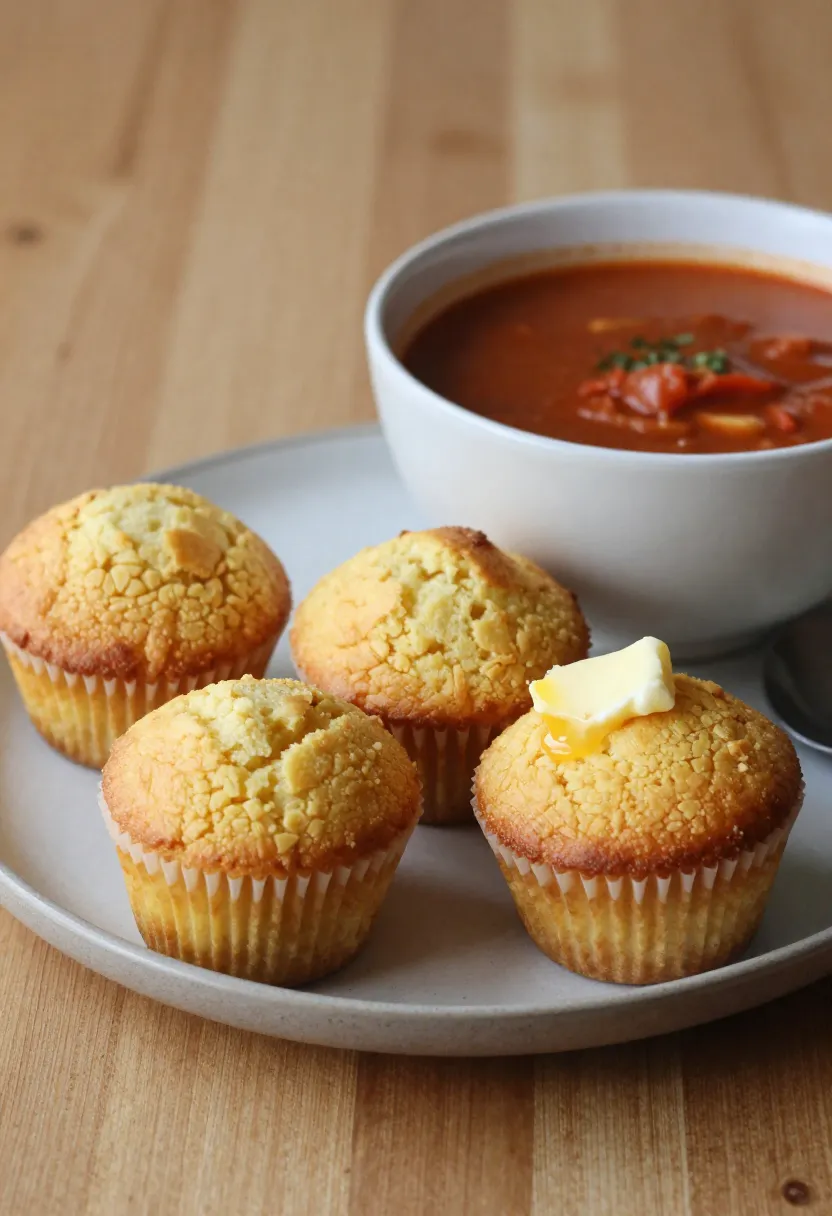
And honestly, some of the best moments aren’t planned at all.
You bake a batch, maybe with the intention of serving them later, but then you try one while it’s still warm. You break it open with your hands, not even thinking about presentation. Maybe you add butter, maybe you don’t. And suddenly that becomes the best one out of the whole batch.
They tend to show up in moments like:
- alongside warm, filling dishes where they balance out stronger flavors
- as part of a slow breakfast where nothing needs to be rushed
- in those unplanned kitchen moments where you just take one and move on
That’s the thing — they don’t need to be the main focus to feel important. They just need to be there.
🧊 Keeping the Texture and Flavor Alive
If you somehow end up with leftover cornbread muffins — which, to be fair, doesn’t always happen — keeping them in good condition is simpler than it seems, but still worth paying attention to.
Fresh out of the oven, they’re at their best. The texture is soft, the edges have a slight firmness, and everything feels balanced. But once they cool completely, things start to change a little. Not dramatically, but enough that you notice it.
The crumb can firm up. The edges lose some of that contrast. The flavor is still there, but the experience isn’t quite the same.
That’s where storage and reheating come in.
Keeping them at room temperature in an airtight container works well for a couple of days. It prevents them from drying out too quickly, which is usually the biggest issue. If they’re left uncovered, even for a few hours, you’ll notice the difference.
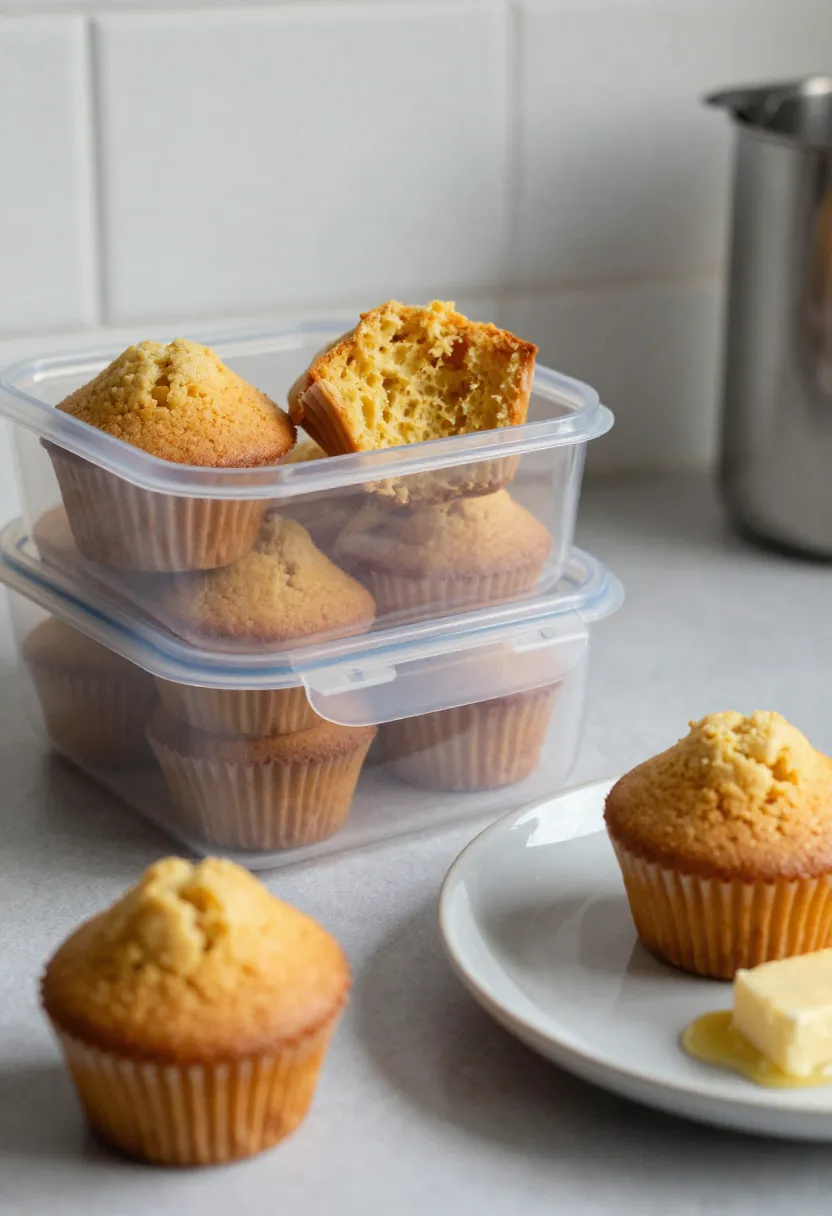
The fridge can extend their shelf life, but it also tends to make them a bit firmer. Not necessarily bad — just less soft than when they were fresh.
Reheating makes a bigger difference than people expect. A few seconds in the microwave brings back the softness inside, almost like resetting the texture. If you want to restore a bit of the outer structure too, using the oven works better. It takes a bit longer, but the result feels closer to freshly baked.
Freezing is another option that works surprisingly well. Wrapped properly, the muffins hold their texture and flavor much better than you might expect. And once reheated, they still feel good enough that you’re not thinking about the fact that they were frozen.
A few simple habits help keep them as close to fresh as possible:
- store them in a sealed container to keep moisture in
- reheat before serving to bring back softness and balance
- freeze extras if you don’t plan to eat them soon
At the end of the day, cornbread muffins don’t need complicated care. They just need a bit of attention — the same kind you gave them while making them. And when you do that, they stay just as enjoyable the next day… or even later. 🤍