Contents
A couple of weeks before Lunar New Year arrives, you can start noticing small signs that something special is coming. The change isn’t dramatic at first. It’s more like the atmosphere slowly shifting. Markets suddenly feel busier, shops begin displaying red decorations, and families start planning meals that will bring everyone together.
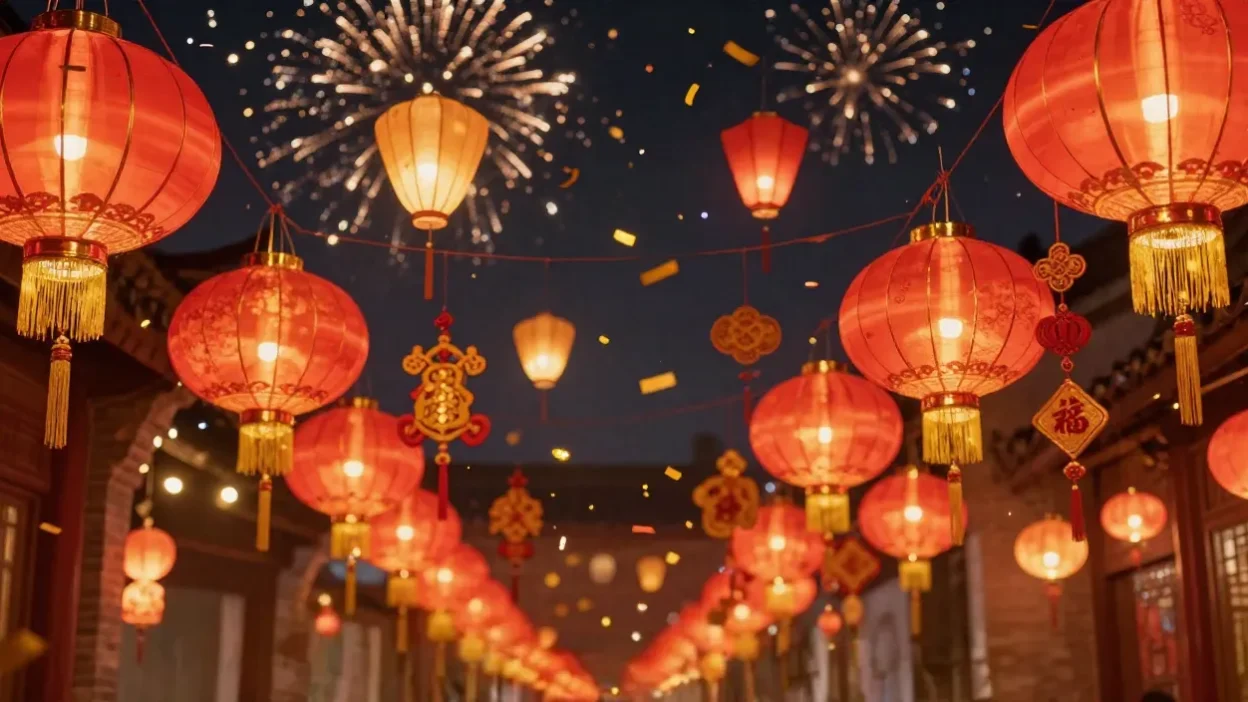
Inside homes, preparation often begins quietly. Red lanterns appear near doorways, decorative banners with gold characters are placed on doors, and bowls of bright mandarins or flowers are set out on tables. These decorations aren’t just for beauty — in Chinese culture they’re meant to attract good fortune, happiness, and prosperity for the year ahead.
But if you ask many families what really signals the beginning of the celebration, they’ll probably say the same thing: the kitchen.
A few days before the holiday, kitchens become lively places. Someone is chopping vegetables, someone else is preparing fillings, and there’s usually a pot simmering somewhere on the stove. The smells of ginger, garlic, soy sauce, and sesame oil begin drifting through the house. At that point it becomes clear — the celebration is officially starting.
Lunar New Year, sometimes called the Spring Festival, marks the beginning of a new year according to the lunar calendar. Yet culturally it represents much more than just the start of a new date. It’s a chance to reconnect with family, reflect on the past year, and welcome new opportunities with optimism.
Food plays a central role in this celebration. Unlike everyday meals, the dishes served during Chinese New Year are rarely chosen randomly. Many of them are included because they symbolize something positive for the coming year. In some cases the meaning comes from the shape of the food, while in others it comes from the way the name of the dish sounds in Chinese.
Over time these small symbolic connections became traditions that families continue to follow today. Because of that, the holiday table often includes foods representing wishes like:
- 💰 prosperity and financial success
- 🍀 good luck and fortune
- ❤️ family harmony and unity
- 🌱 progress and personal growth
- ⏳ health and long life
Another thing that makes the holiday meal special is how it’s prepared. In many homes, cooking isn’t a solo task — it’s something everyone participates in. Relatives gather in the kitchen, dividing the work naturally. Someone washes vegetables, someone rolls dough, and someone inevitably becomes the “expert” dumpling folder for the evening.
Grandparents often share traditional cooking techniques that have been passed down for years. Parents organize the ingredients and keep the process moving. Meanwhile children help with simple tasks like arranging plates or folding dumplings — even if the shapes don’t always turn out perfectly.
Those moments of cooking together often become some of the most memorable parts of the celebration. By the time the dishes reach the table, they carry more than flavor. They carry family traditions, shared effort, and stories that have been repeated year after year.
The Reunion Dinner: The Meal That Brings Everyone Back Together 🏮
Among all the traditions connected to Lunar New Year, one stands above the rest — the reunion dinner.
This meal takes place on the evening before the new lunar year officially begins, and for many families it’s the most important dinner of the entire year. No matter how busy life becomes, people often try their best to return home for this gathering.
And that can mean quite a journey.
In the days leading up to the holiday, millions of people travel across the country to reach their hometowns. Trains become packed, airports are crowded, and highways fill with cars heading toward family homes. Some people travel hundreds or even thousands of kilometers simply to sit down at the same table.
Because of this enormous movement of people, the travel period before Lunar New Year is often described as the largest annual migration in the world.
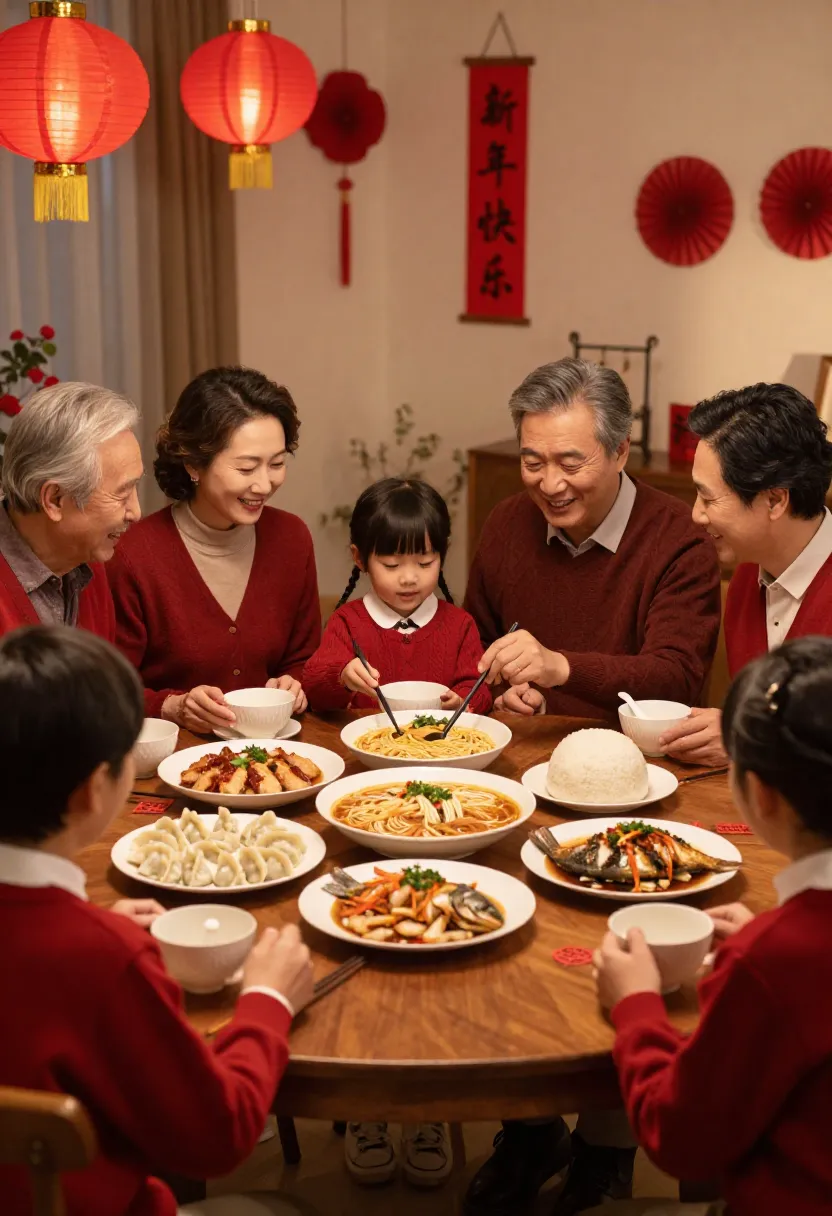
When the evening of the reunion dinner finally arrives, the table usually looks impressive. Families prepare a wide variety of dishes — often far more than they would serve during an ordinary meal. The abundance of food is intentional, symbolizing prosperity and good fortune for the year ahead.
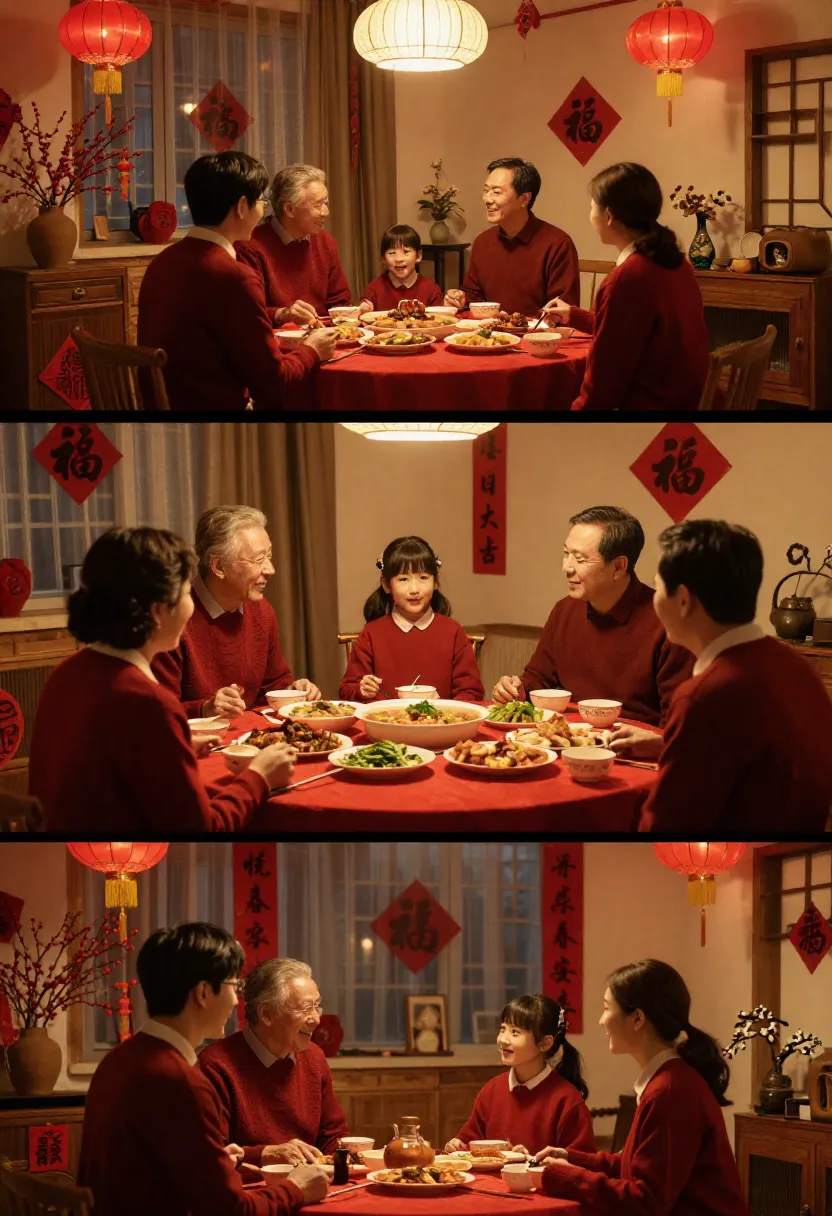
Unlike many Western-style dinners where everyone has their own plate, Chinese New Year meals are typically served family-style. Large bowls and platters are placed in the center of the table so everyone can share.
At first it might feel a little busy — chopsticks reaching across the table, dishes being passed around, relatives encouraging each other to try different foods. But that’s exactly how the meal is meant to be enjoyed. Sharing food creates conversation, laughter, and connection.
The atmosphere during the reunion dinner is usually warm and lively. Conversations move easily around the table, elders tell stories about celebrations from years ago, and younger family members talk about their plans for the future.
A few traditions almost always appear during this dinner:
- 🧧 children receive red envelopes filled with lucky money
- 🥢 relatives place food onto each other’s plates as a sign of care
- 🍊 fruits and sweets symbolize good fortune
- 🏮 lanterns and decorations create a festive atmosphere
The dishes themselves also carry meaning. Many families intentionally prepare foods that represent blessings for the coming year. Some dishes symbolize prosperity, others represent longevity, and some are meant to bring abundance.
For example, golden-colored foods are often associated with wealth. Dishes served whole can represent unity within the family. Even long noodles can symbolize a wish for a long and healthy life.
Different regions and families may have slightly different traditions, but certain dishes appear again and again on Chinese New Year tables. Over time these foods have become iconic symbols of the celebration.
And when those familiar dishes finally appear on the table, something shifts. The preparations are over, the family is together, and the new year is just about to begin. 🧧
Top 5 Traditional Chinese New Year Dishes
1. Dumplings (Jiaozi) – A Symbol of Wealth 🥟
When people think about Chinese New Year food, dumplings are usually one of the first dishes that come to mind. Known as jiaozi, these small folded pockets of dough appear on countless holiday tables every year. They may look fairly simple at first — just dough wrapped around a filling — but their meaning during the Lunar New Year goes much deeper than that.
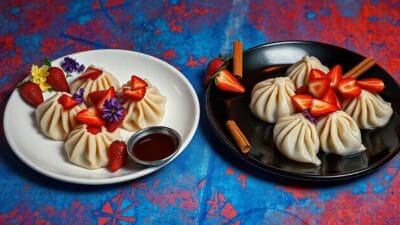
Traditionally, dumplings are shaped to resemble ancient Chinese silver and gold ingots, which were once used as currency hundreds of years ago. Because of that resemblance, eating dumplings during the New Year is believed to bring prosperity and financial success in the months ahead. In other words, the more dumplings you eat, the more luck you’re inviting into the new year — or at least that’s how the tradition goes.
Of course, dumplings aren’t only about symbolism. For many families, the process of making them is just as important as eating them. In fact, dumpling preparation often turns into a lively group activity. Relatives gather around a table with bowls of filling, stacks of wrappers, and a bit of friendly chaos as everyone starts folding dumplings together.
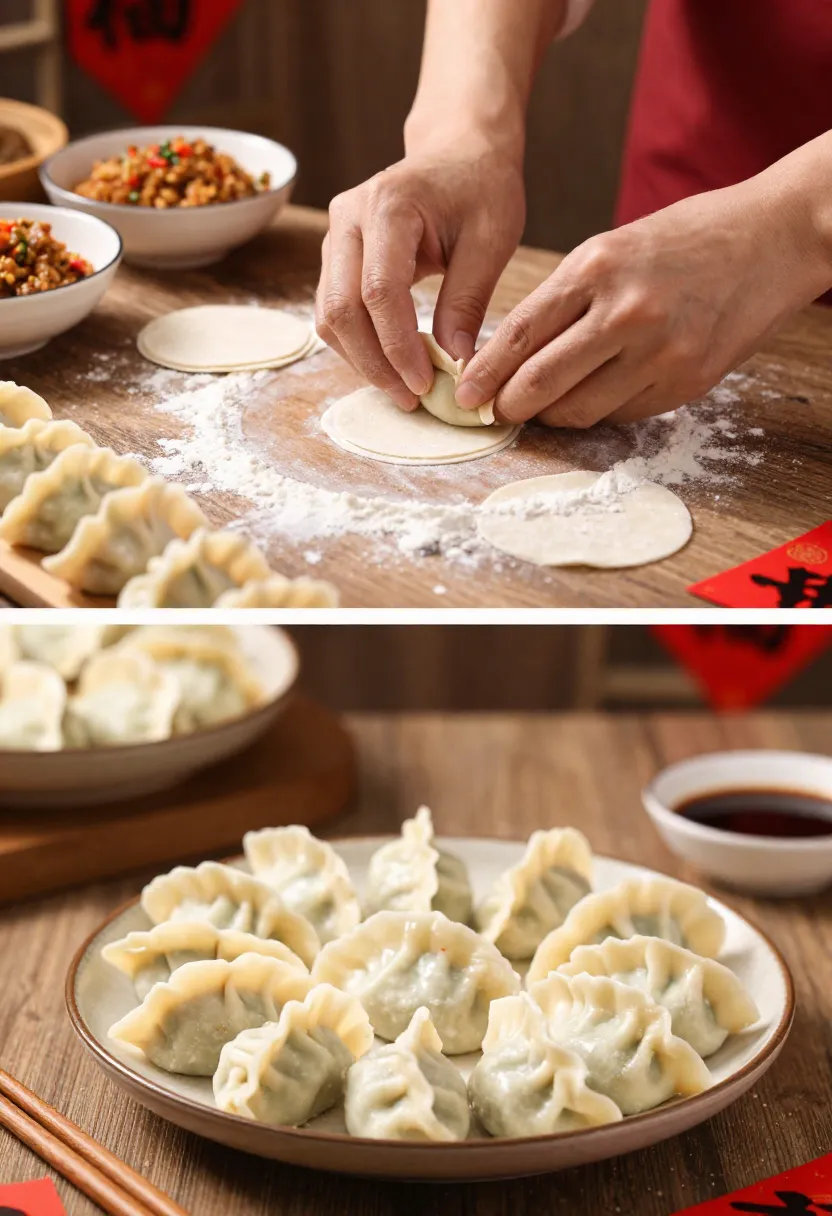
Someone usually takes charge of rolling the dough wrappers, another person mixes the filling, and before long everyone at the table is trying to perfect their folding technique. Some dumplings come out beautifully shaped, others look a little… unusual. But they all end up on the plate anyway.
The fillings used in dumplings can vary quite a bit depending on the region and family traditions. Some families stick to classic combinations, while others experiment with different ingredients. A few popular fillings include:
- 🥬 Pork and napa cabbage – a traditional combination with a rich, savory flavor
- 🦐 Shrimp and chives – lighter and slightly sweet with a fresh taste
- 🍄 Chicken and mushrooms – earthy and comforting
- 🥕 Vegetable dumplings – often made with cabbage, tofu, carrots, and glass noodles
Another fun tradition sometimes adds a bit of excitement to the meal. Some families hide a coin inside one of the dumplings before cooking them. Whoever finds the coin while eating is said to receive extra luck for the coming year. It’s a small detail, but it often turns into a memorable moment during the meal.
Beyond their connection to wealth, dumplings also represent something else that’s important during the holiday — togetherness. Sitting around the table folding dumplings gives families a chance to talk, laugh, and spend time together before the celebration begins.
Cooking tip: When sealing dumplings, press the edges firmly and remove any air pockets so they stay closed while cooking and keep the filling juicy.
2. Whole Fish (Yu) – A Wish for Abundance 🐟
Another dish that almost always appears on the Chinese New Year table is fish. At first glance it may seem like a regular main course, but fish actually carries one of the strongest symbolic meanings in the entire celebration.
The tradition comes from a simple but meaningful play on words. In Chinese, the word for fish — yu — sounds almost identical to the word that means surplus or abundance. Because of this linguistic connection, serving fish during the Lunar New Year represents the wish that the coming year will bring more than enough: more prosperity, more happiness, and more success.
Over time, this small language connection turned into a tradition that families continue to follow generation after generation.
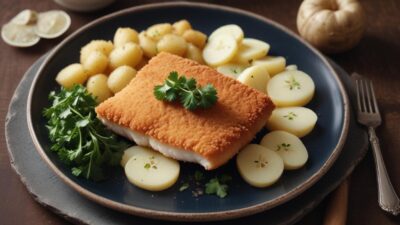
Fish prepared for the New Year dinner is usually served whole, meaning the head and tail remain intact. This presentation isn’t accidental. A whole fish symbolizes completeness and suggests that the year will begin and end well. It also reflects the idea that family life should remain whole and harmonious.
There is another interesting custom connected to this dish. In some households, the fish is served near the end of the meal, and a small portion is intentionally left uneaten. While that might seem unusual to outsiders, the meaning behind it is simple: leaving some fish behind symbolizes that abundance will continue into the next year rather than being completely used up.
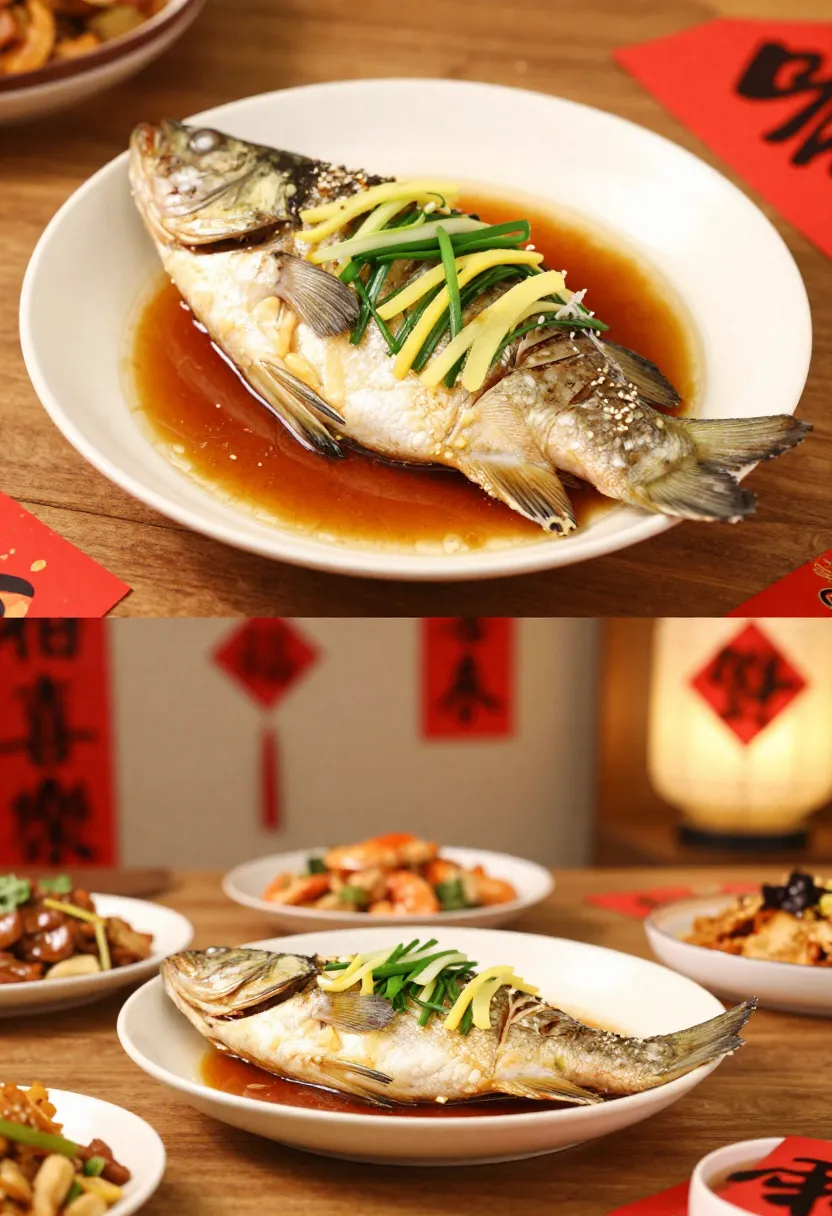
Different regions of China prepare fish in different ways, and families often have their own preferred recipes. Some dishes focus on delicate flavors, while others use richer sauces and spices. A few popular preparation styles include:
- 🌿 Steamed fish with ginger and scallions – light, aromatic, and very traditional
- 🍶 Soy-braised fish – savory with a deeper flavor
- 🔥 Roasted or grilled fish with herbs – slightly crisp on the outside with fragrant seasoning
Steamed fish is especially common during the holiday because it highlights the natural flavor of the fish and keeps the texture tender.
Serving fish during the reunion dinner carries a quiet but powerful message. It’s a way of wishing that the coming year will bring stability, prosperity, and a sense of abundance for everyone at the table.
Even families who simplify other dishes during the celebration often keep fish on the menu — simply because the symbolism is too meaningful to leave out.
Cooking tip: Steam the fish with fresh ginger, scallions, and a light drizzle of soy sauce to enhance its natural flavor while keeping the meat delicate and tender.
3. Longevity Noodles (Changshou Mian) – A Blessing for Long Life 🍜
Among the many foods served during Chinese New Year, longevity noodles carry one of the simplest yet most meaningful messages. These noodles, known as Changshou Mian, appear not only during Lunar New Year but also at birthdays and other important family celebrations. The reason is easy to understand once you know the symbolism behind them.
The key feature of longevity noodles is exactly what their name suggests — their length. Unlike many noodle dishes where noodles are cut into shorter pieces, these noodles are intentionally kept as long as possible. In Chinese culture, the length of the noodle represents a wish for a long, healthy life. Because of that, cooks usually try not to break the noodles during preparation.
It might sound like a small detail, but traditions like this often carry deep meaning. In fact, during the meal it’s not uncommon for someone at the table to jokingly remind others not to bite through the noodles too quickly. The idea, at least symbolically, is that keeping the noodle long preserves the blessing of longevity.
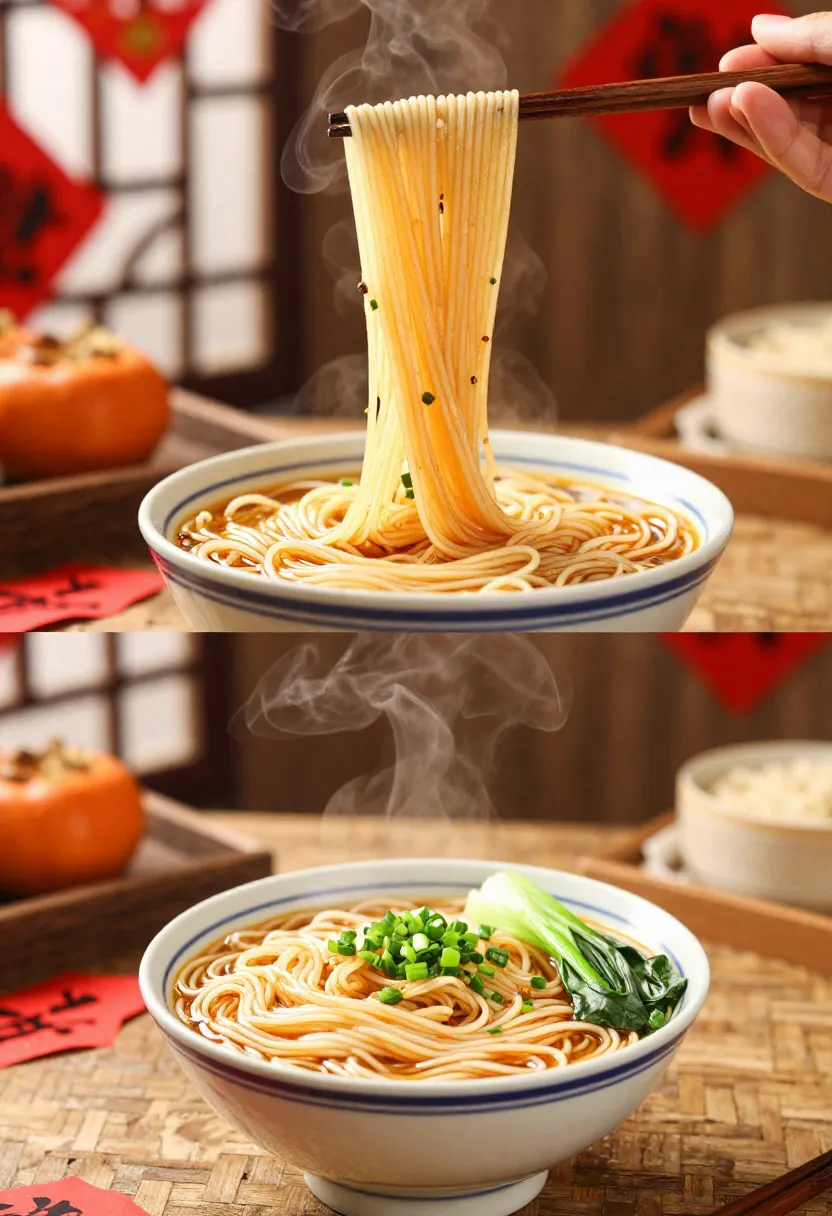
Longevity noodles are also quite flexible when it comes to how they’re prepared. Different regions and families have their own preferred versions, and the dish can easily be adapted depending on available ingredients or personal taste. Some people prefer bold flavors, while others enjoy simpler, lighter preparations.
A few common ways longevity noodles are served include:
- 🍜 Stir-fried noodles with vegetables and meat, creating a savory and slightly smoky dish
- 🍲 Noodles served in a warm broth with herbs, scallions, and aromatics
- 🌿 Simple sesame noodles tossed with soy sauce, sesame oil, and scallions
No matter how they’re cooked, the meaning behind the dish remains the same. Eating longevity noodles during the New Year celebration expresses a wish for health, vitality, and many good years ahead.
And honestly, the moment when everyone lifts those extra-long noodles with chopsticks often turns into a fun part of the meal. Someone usually laughs when a noodle stretches halfway across the bowl.
Cooking tip: Handle the noodles gently while cooking and stirring so they stay long and intact, preserving the traditional symbolism of longevity.
4. Spring Rolls – Golden Symbols of Prosperity 🌟
Spring rolls are one of the most popular dishes served during Chinese New Year celebrations, and it’s not hard to see why. Crispy on the outside and filled with savory ingredients, they’re the kind of food that disappears from the table surprisingly quickly.
But their popularity isn’t just about flavor. Spring rolls also carry a symbolic meaning connected to wealth and prosperity. When fried, the wrappers turn a rich golden color, and their long, slightly rectangular shape resembles ancient gold bars that were once used as currency in China.
Because of that resemblance, serving spring rolls during the New Year is believed to invite financial success and good fortune into the household. It’s one of those traditions where symbolism and taste come together perfectly.
Spring rolls are especially popular in southern parts of China as well as in places like Hong Kong, Taiwan, and several Southeast Asian countries where Lunar New Year celebrations are widely observed. In many homes they appear as appetizers, often placed on the table early in the meal so guests can enjoy them while other dishes are still being served.
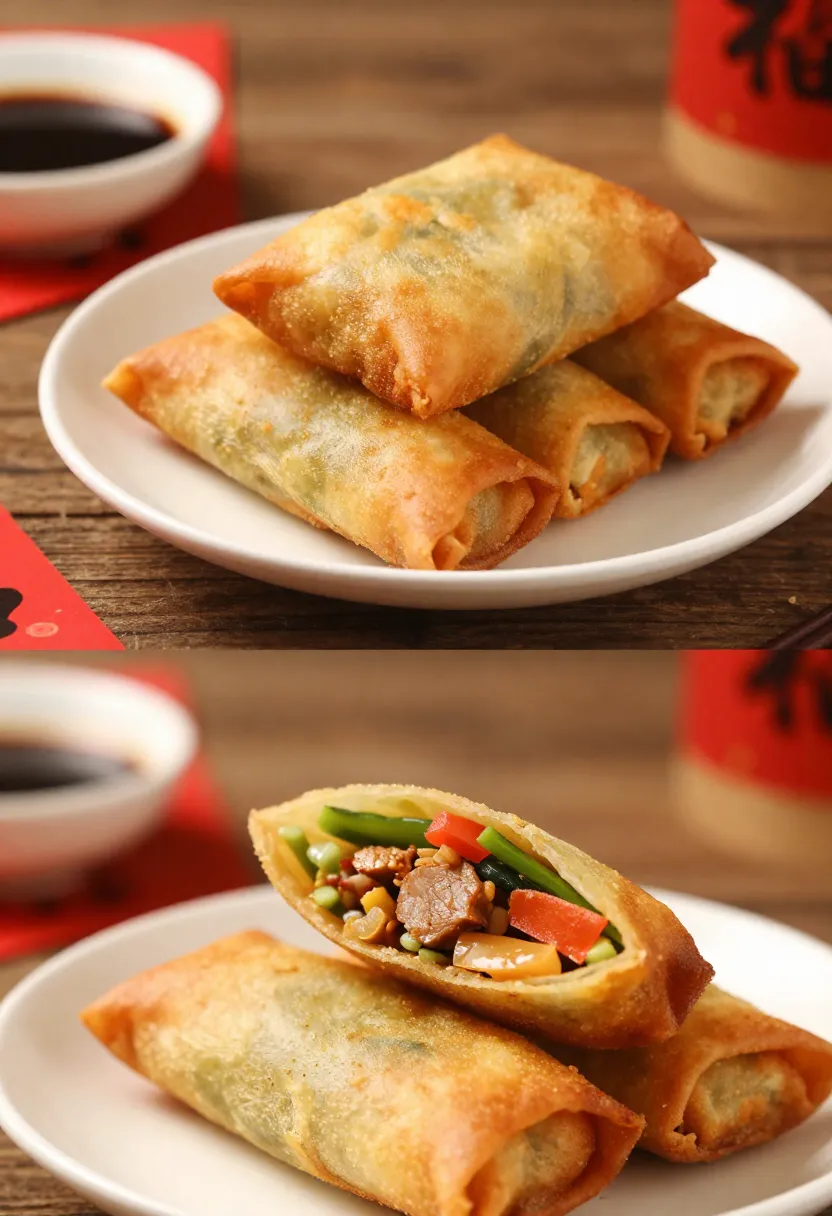
Another reason spring rolls are such a good fit for the holiday table is the texture they add. Many traditional New Year dishes are braised, steamed, or simmered, which means adding something crispy creates a nice contrast during the meal.
The fillings inside spring rolls can vary depending on regional traditions or personal preference. Some families keep the filling simple, while others include a mixture of meat and vegetables for a richer flavor.
A few common filling combinations include:
- 🥬 Shredded cabbage and carrots with light seasoning
- 🍄 Pork and mushrooms for a savory and slightly earthy taste
- 🦐 Shrimp and vegetables for a lighter seafood option
- 🌱 Bean sprouts with glass noodles for a vegetarian version
Because spring rolls can be made in large batches and easily shared, they work perfectly for family gatherings and festive dinners. And there’s something undeniably satisfying about biting through that crisp wrapper and reaching the warm filling inside.
Cooking tip: Fry spring rolls at a steady medium-high temperature so the wrappers become crisp and golden without soaking up too much oil.
5. Sticky Rice Cake (Nian Gao) – A Symbol of Progress and Success 🍰
Sticky rice cake, known as Nian Gao, is another traditional dish closely connected to Chinese New Year celebrations. Unlike dumplings or noodles, which are often served earlier in the meal, this dish usually appears closer to the end — sometimes as a dessert, sometimes as part of the final dishes shared around the table.
Despite its simple appearance, Nian Gao carries a strong symbolic message. The name of the dish sounds very similar to a Chinese phrase that suggests rising higher year after year. Because of this linguistic connection, eating Nian Gao represents hopes for growth, improvement, and success in the coming year.
For many people, the symbolism can apply to different areas of life. It might mean career advancement, academic success, or simply making progress toward personal goals.
The cake itself is made from glutinous rice flour, which gives it its distinctive chewy texture. Some people love the slightly sticky consistency, while others say it’s something you have to try a few times before fully appreciating it.
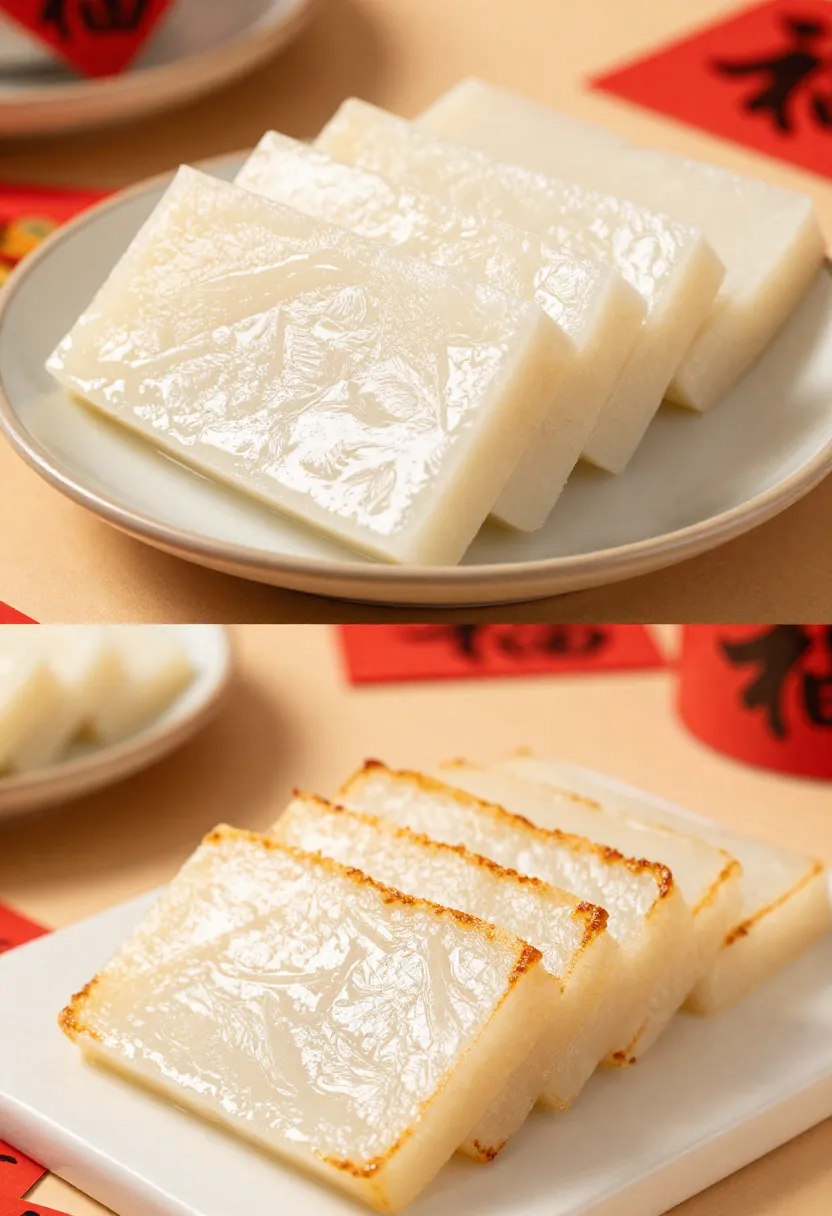
There are actually several variations of Nian Gao, depending on regional traditions and family recipes. Some versions lean toward sweet flavors, while others are savory and served as part of the main meal.
A few popular versions include:
- 🍯 Sweet Nian Gao with brown sugar, creating a rich caramel-like flavor
- 🫘 Rice cake filled with red bean paste, a classic dessert variation
- 🍳 Savory stir-fried Nian Gao with vegetables and meat
- 🌰 Rice cake topped with nuts or dried fruits for additional texture
Many families prepare Nian Gao ahead of the New Year celebration because the cake stores well and can be enjoyed over several days. Leftover slices are often pan-fried the next day, creating a lightly crispy exterior while keeping the inside soft and chewy.
The combination of comforting texture and hopeful symbolism makes Nian Gao a meaningful way to end the holiday meal. It’s a quiet reminder that each new year brings another opportunity to grow, improve, and move forward.
Cooking tip: Lightly pan-fry slices of steamed rice cake until the edges turn golden to add a delicate crispness while keeping the center soft.
The Meaning Behind the Chinese New Year Feast
When people talk about Chinese New Year food, they often focus on the dishes themselves — dumplings, fish, noodles, rice cakes. But the real meaning of the holiday meal goes far beyond the recipes. For many families, the feast represents a mix of tradition, memory, and cultural values that have been passed down for generations.
Each dish on the table usually carries some kind of symbolism. Dumplings may represent wealth, fish often stands for abundance, and long noodles symbolize longevity. These meanings might sound simple, but together they form a bigger picture. The meal becomes a way for families to express hopes for the coming year — hopes for success, stability, good health, and harmony within the household.
Another important part of the celebration is the process of preparing the food together. In many homes, the kitchen becomes a gathering place long before the holiday dinner begins. Grandparents often share cooking techniques that they learned many years ago, sometimes demonstrating methods that were never written down in recipes. Parents help organize the preparation, while children take part in smaller tasks and gradually learn the family traditions.
These moments of cooking together are often just as meaningful as the meal itself. Conversations happen naturally while ingredients are chopped and dishes are assembled. Stories about previous New Year celebrations are repeated, sometimes with small changes or added details each year. Over time, those memories become part of the tradition too.
Food during Chinese New Year also helps families stay connected to their cultural roots. This is especially true for people who live far from China. Many Chinese families around the world continue preparing traditional holiday dishes every year, even if ingredients or cooking styles change slightly depending on where they live.
For them, the New Year feast becomes a way of maintaining a connection to their heritage. It’s a reminder of where the family comes from and a way to ensure that traditions continue with the next generation.
Welcoming the New Year with Gratitude and Joy 🧧
At its heart, Chinese New Year is about new beginnings. The holiday marks the end of one cycle and the start of another, giving people an opportunity to reflect on the past year and look ahead to the future with renewed optimism.
The meal shared during the celebration plays an important role in that moment of transition. The dishes prepared for the feast symbolize the wishes people carry into the new year — hopes for prosperity, happiness, health, and stability for both themselves and the people they care about.
But while the food carries symbolic meaning, the most important part of the celebration is usually the gathering itself. The reunion dinner brings relatives together, sometimes after long periods apart. Sitting around the table allows families to reconnect, share stories, and enjoy time together in a relaxed and festive atmosphere.
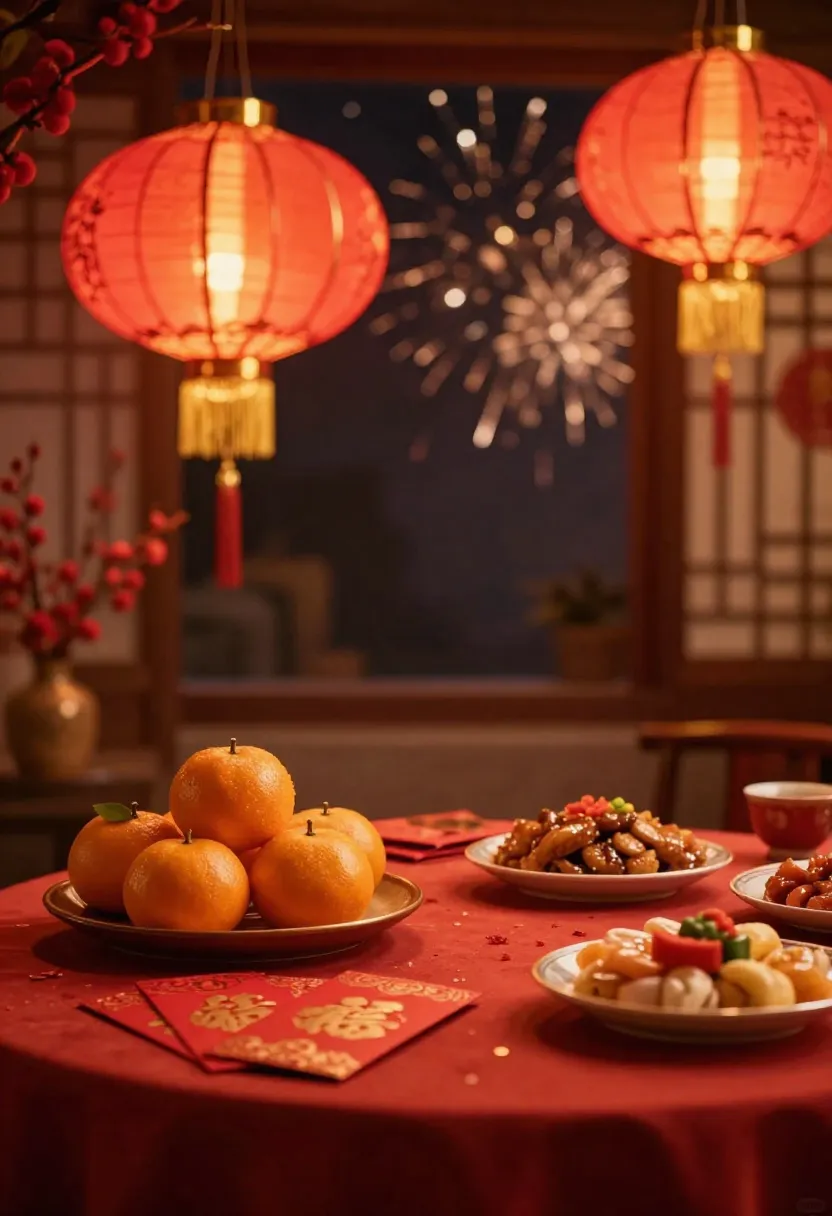
The evening often unfolds slowly. People talk, laugh, and revisit memories from past years while passing dishes around the table. Children open their red envelopes, elders offer blessings for the coming year, and everyone takes part in the shared moment.
By the time the meal ends, the table may be a little messy and the dishes half empty, but the feeling in the room is usually warm and satisfied. The celebration has done what it was meant to do — bringing people together and marking the start of a new chapter.
As the final dishes are cleared away, the meaning of the feast lingers. The traditions, the conversations, and the symbolic foods all carry the same quiet message: the new year has begun, and with it comes the promise of new opportunities, renewed hope, and another year of shared family moments. ✨