Contents
Some dishes are just there to do their job. You eat, you feel full, and a few hours later you barely remember what it even tasted like.
Jambalaya is not that kind of meal.
It has this way of pulling you in early, before it’s even finished. You start cooking, maybe not expecting much, and then suddenly the kitchen feels different. The sausage hits the pan first — that deep, smoky smell builds almost instantly. Then come the vegetables, softening slowly, giving off that slightly sweet, familiar aroma. And once the spices warm up in the oil, everything sort of blends together into something rich and hard to ignore. 🍲
There’s usually a moment where you pause for a second — not in a dramatic way, just naturally — because the smell is that good. And if there are other people around, they tend to drift into the kitchen without even realizing why.
Jambalaya doesn’t try to impress in a fancy way. It’s not about perfect presentation or delicate flavors layered with precision. It’s bold, filling, and a little rough around the edges — in a good way. The kind of dish that feels generous, like it was made to be shared straight from the pot, not carefully plated.
And that’s probably why it sticks with people. It feels honest. No unnecessary complexity, no pretending — just food that actually delivers.
If you had to describe the feeling it gives, it would be something like this:
- warm and comforting without being heavy
- rich, but still balanced enough to keep eating
- slightly spicy, just enough to keep things interesting 🌶️
It’s the kind of meal you remember, even if you didn’t expect to.
The Story Behind the Flavor
Jambalaya didn’t come from a single recipe written down somewhere. It’s more like something that slowly came together over time, shaped by different people cooking in the same place.
Louisiana has always been a mix of cultures, and that naturally shows up in the food. Instead of staying separate, different cooking traditions started influencing each other. Spanish-style rice dishes brought structure — the idea of cooking everything together with rice as the base. French cooking added a sense of order in how flavors were built step by step. And West African traditions contributed depth, especially the idea that a one-pot meal can be layered, rich, and full of character without being complicated.
None of these influences took over completely. They blended.
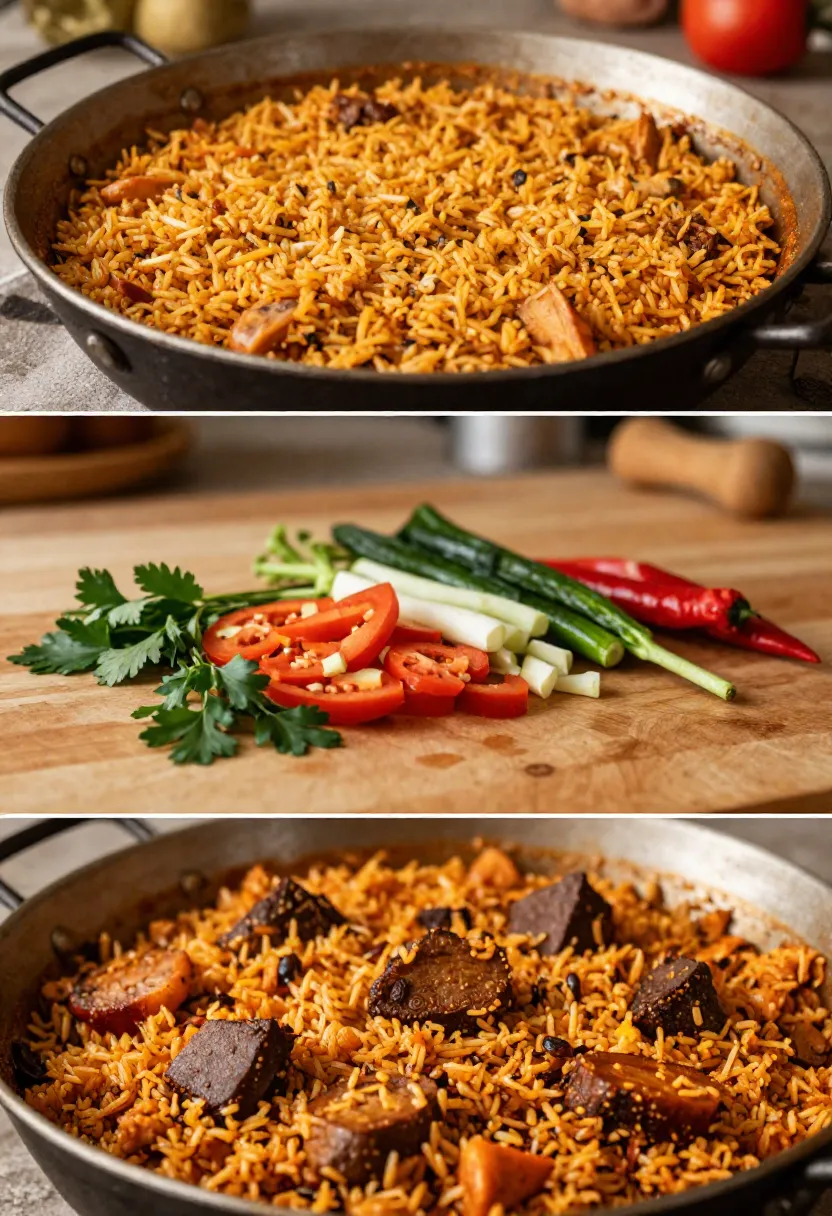
And that’s why jambalaya tastes the way it does. It doesn’t feel like a single idea — it feels like a combination of approaches that somehow fit together naturally.
What’s interesting is that you don’t really notice all of this while eating. You’re not thinking about history or technique. But you do notice that the flavor feels deeper than expected. Everything kind of merges — the rice absorbs the broth, the spices settle in, the meat adds richness — and it becomes one cohesive dish instead of separate parts.
If you break it down, you can still see those influences in simple ways:
- rice as the base of the entire dish
- layering ingredients instead of adding everything at once
- slow flavor development in a single pot
It’s simple on the surface, but there’s more going on underneath than it first appears.
Why Jambalaya Works So Well Every Time
There’s a reason people keep coming back to this dish, even after trying newer or more complicated recipes. It’s reliable in a way that feels almost effortless.
First, it’s practical. Everything happens in one pot, which already makes cooking feel less stressful. You’re not juggling multiple pans or trying to time everything perfectly. Instead, the process flows from one step to the next, and that makes a big difference — especially on days when you don’t feel like overthinking dinner.
At the same time, the way the flavor builds is surprisingly natural. Nothing feels forced. You’re just adding ingredients in stages, and each stage brings something new. By the end, those small changes add up to something that tastes much more complex than it actually is.
There’s also a kind of rhythm to cooking it. Once you’ve done it once or twice, you don’t really need to think too hard about the steps anymore. It becomes intuitive.
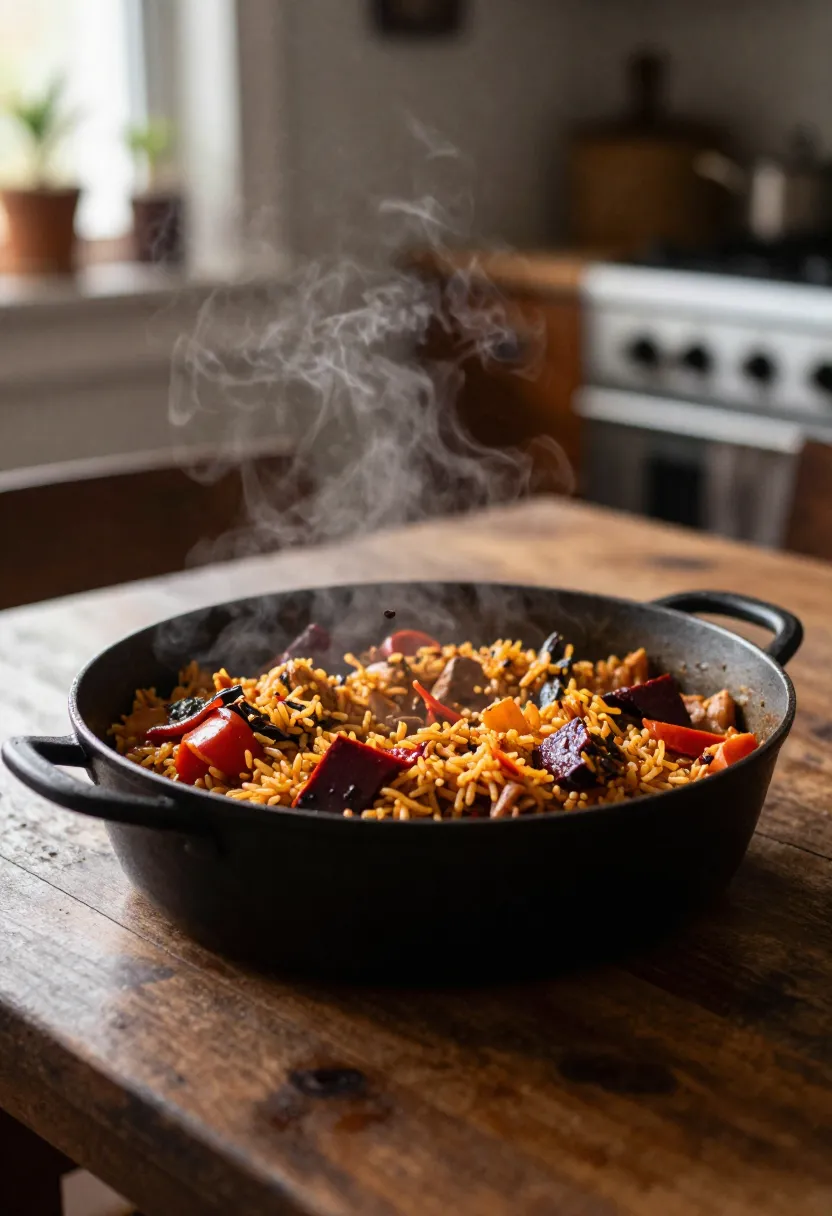
And then there’s the flexibility, which honestly might be the biggest reason it works so well.
You can adjust it without breaking the dish:
- use different proteins depending on what you have
- make it milder or spicier depending on your mood 🌶️
- slightly change the ratios and still end up with something good
It doesn’t punish small mistakes, which is rare.
Even if the rice is a little softer than planned, or the seasoning isn’t exactly measured — it usually still turns out satisfying. And that takes a lot of pressure off, especially if you’re not aiming for perfection.
In the end, jambalaya works because it’s balanced in a very practical way. It gives you strong flavor, a straightforward process, and enough flexibility to make it your own — all without making cooking feel like a chore.
🍤 Jambalaya Recipe: A Hearty One-Pot Classic You’ll Want to Make Again
This version of jambalaya is the kind of meal you make once… and then catch yourself thinking about a few days later.
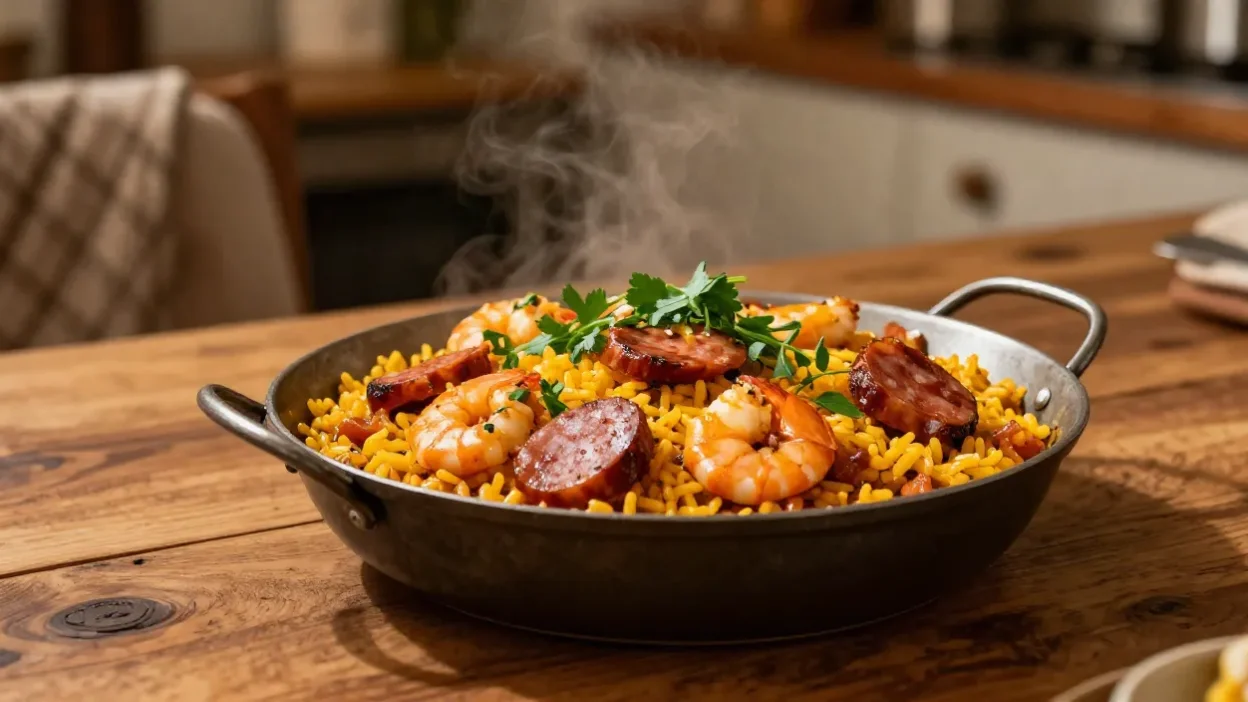
It’s not complicated, and that’s part of the appeal. But somehow, by the time everything comes together, it tastes like something that took much more effort than it actually did. The chicken turns tender, the sausage adds that smoky, slightly salty depth, and the shrimp brings a softer, almost sweet contrast that balances everything out.
And then there’s the rice — which honestly does more work than it gets credit for. As it cooks, it absorbs all the flavors around it: the broth, the spices, the juices from the meat. By the end, it’s not just “on the side” — it’s fully part of the dish.
What you end up with is something warm, rich, and just a little bit bold. Not overwhelming, but definitely not bland either. The kind of food that feels right whether you’re cooking for yourself on a quiet evening or putting something solid on the table for other people.
It’s also one of those recipes where the process feels calm. No rushing, no complicated timing — just steady cooking, step by step. 🍲
Ingredients
- 2 tablespoons olive oil
- 2 chicken breasts or thighs, cut into bite-sized pieces
- 250–300 g smoked sausage, sliced
- 1 medium onion, chopped
- 1 bell pepper, chopped
- 2 celery stalks, chopped
- 3 cloves garlic, minced
- 1 cup long-grain rice
- 1 can crushed tomatoes
- 3 cups chicken broth
- 1–2 teaspoons Cajun seasoning
- 1 teaspoon dried thyme
- 1 bay leaf
- 200–300 g shrimp, peeled and deveined
- Salt and black pepper to taste
- Fresh parsley or green onions for garnish
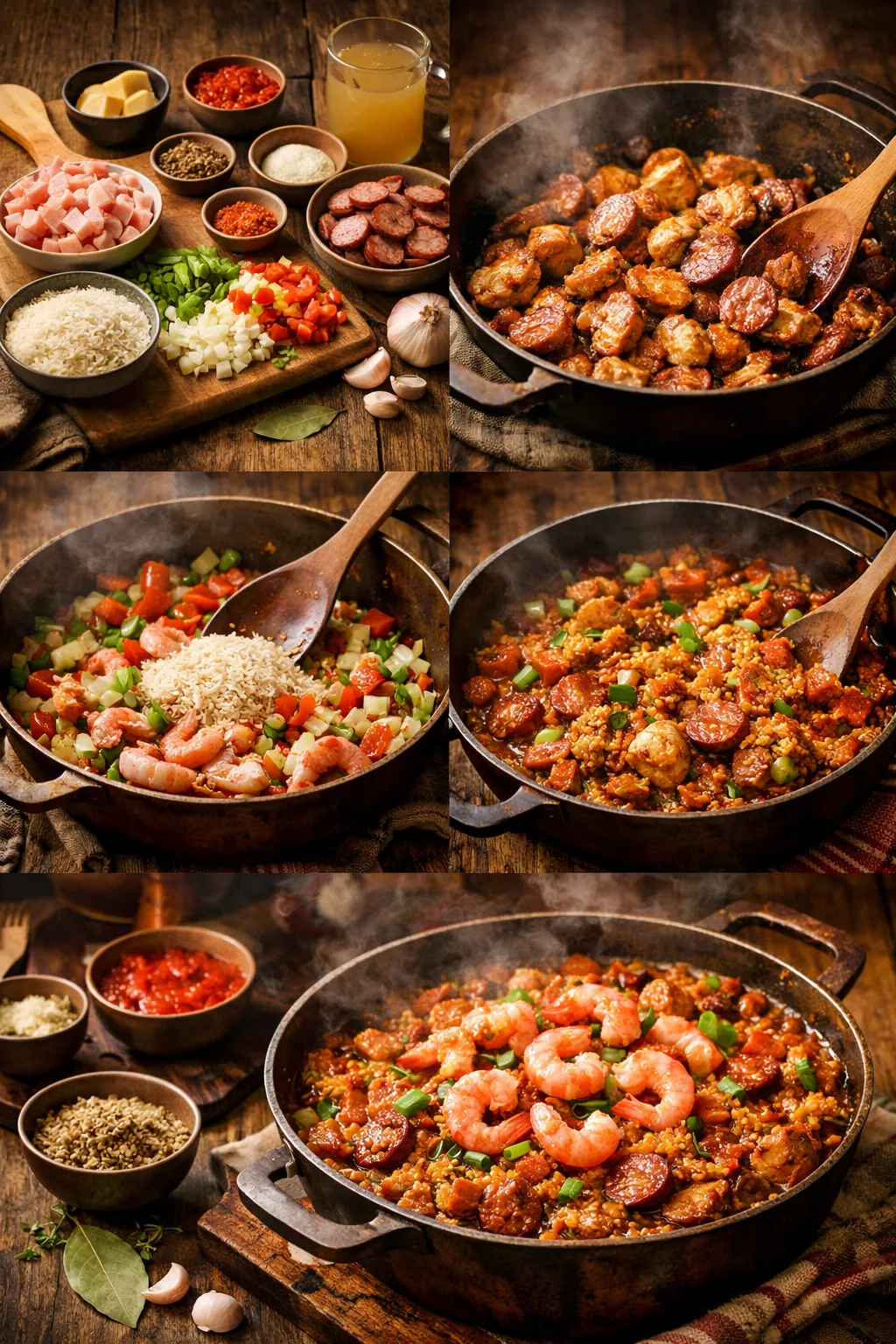
Instructions
- Heat olive oil in a large pot over medium heat. Add the chicken and let it cook without moving it too much at first — this helps it develop a nice golden-brown crust. Once ready, remove it from the pot and set aside.
- In the same pot, add the sliced sausage. Let it cook until it starts to brown slightly and release its aroma. This step adds a lot of flavor to the base, so it’s worth giving it a few extra minutes.
- Add the onion, bell pepper, and celery. Cook them until they soften and everything starts to smell well-balanced and slightly sweet. Stir occasionally so nothing sticks. Add the garlic and cook for about a minute.
- Stir in the rice, making sure it gets coated in the oil and flavors already in the pot. Let it toast lightly for a minute or two — this small step makes a noticeable difference.
- Pour in the crushed tomatoes and chicken broth. Add Cajun seasoning, thyme, and the bay leaf. Stir everything together so the spices are evenly distributed.
- Return the chicken to the pot. Bring the mixture to a gentle simmer, then reduce the heat slightly, cover, and let it cook for about 20–25 minutes. Try not to stir too often — letting the rice cook undisturbed helps it stay fluffy.
- Add the shrimp during the last 5 minutes of cooking. Stir gently and let them cook just until they turn pink and opaque. They cook quickly, so this step doesn’t take long.
- Remove the bay leaf, taste the dish, and adjust salt and pepper if needed. Let everything sit for a few minutes before serving — it helps the texture settle and the flavors come together.
💡 A Few Small Tips That Make a Big Difference
- Don’t rush the browning stage — that’s where a lot of flavor starts
- If the rice looks a bit dry while cooking, add a small splash of broth instead of stirring too much
- Add shrimp at the very end to keep them tender (overcooked shrimp get rubbery fast) 🍤
- Let the dish rest for a few minutes before serving — it really does improve the texture
🌿 Making It Your Own: Small Changes, Big Difference
One thing that becomes pretty clear after you cook jambalaya a couple of times is that it’s not a strict recipe — it’s more like a starting point.
At first, you might follow everything exactly as written, measuring spices carefully and sticking to the ingredient list. But then, the next time, you change something small… and it still works. Maybe even better. That’s usually the moment when you realize this dish is a lot more flexible than it looks.
Some days you might want something a bit lighter, especially if you’re not in the mood for a heavy, filling meal. In that case, reducing the amount of sausage or choosing a leaner version can make a noticeable difference without changing the overall feel of the dish. Other times, you might go in the opposite direction and lean more into seafood — adding extra shrimp, or even tossing in a handful of mussels if you have them. It shifts the flavor slightly, makes it feel a bit fresher, but still very much like jambalaya.
Spice is another thing that’s easy to adjust depending on who you’re cooking for. Some people enjoy that slow, building heat that lingers a little after each bite. Others prefer something milder, where the flavors are there but don’t overpower everything else. The good thing is, jambalaya doesn’t break if you play around with this. It’s pretty forgiving.
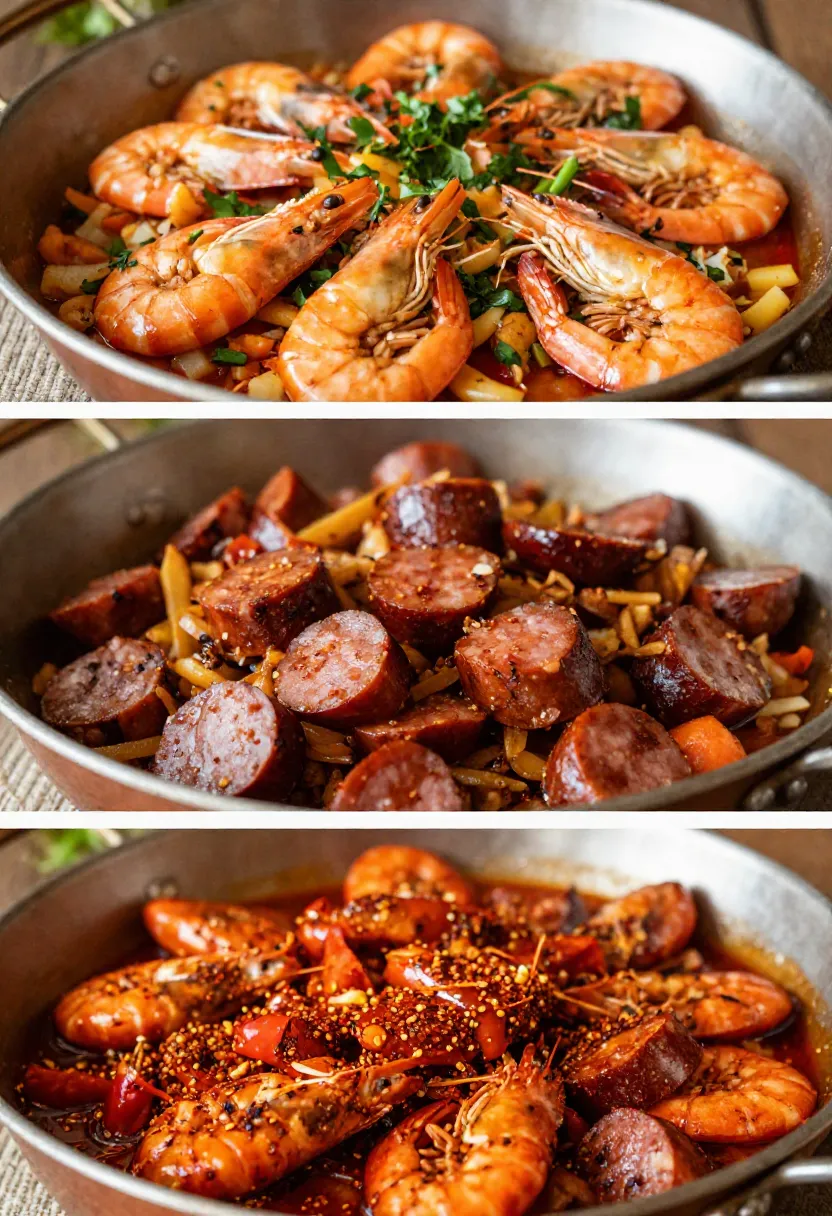
And honestly, that’s part of what makes it enjoyable to cook. You don’t feel locked into doing everything perfectly.
A few simple ways people usually tweak it:
- add more seafood if you want a lighter, slightly fresher taste 🍤
- reduce or swap sausage to control richness
- adjust spices depending on how much heat you actually feel like eating 🌶️
Over time, you kind of develop your own version without even trying. And that version usually ends up being the one you like the most.
🍽️ Serving Jambalaya Like a Pro
Serving jambalaya is one of those things that sounds like it should matter more than it actually does.
The truth is, it’s already a complete dish. Once it’s done, it looks inviting without much effort — the color, the texture, the mix of ingredients all kind of speak for themselves. You don’t need to do much to “improve” it.
Still, a few small touches can make it feel a bit more finished. A sprinkle of fresh parsley or green onions on top adds just enough brightness to balance the richness. It’s a small detail, but you notice it. The same goes for a squeeze of lemon — not enough to make it sour, just enough to lift everything slightly.
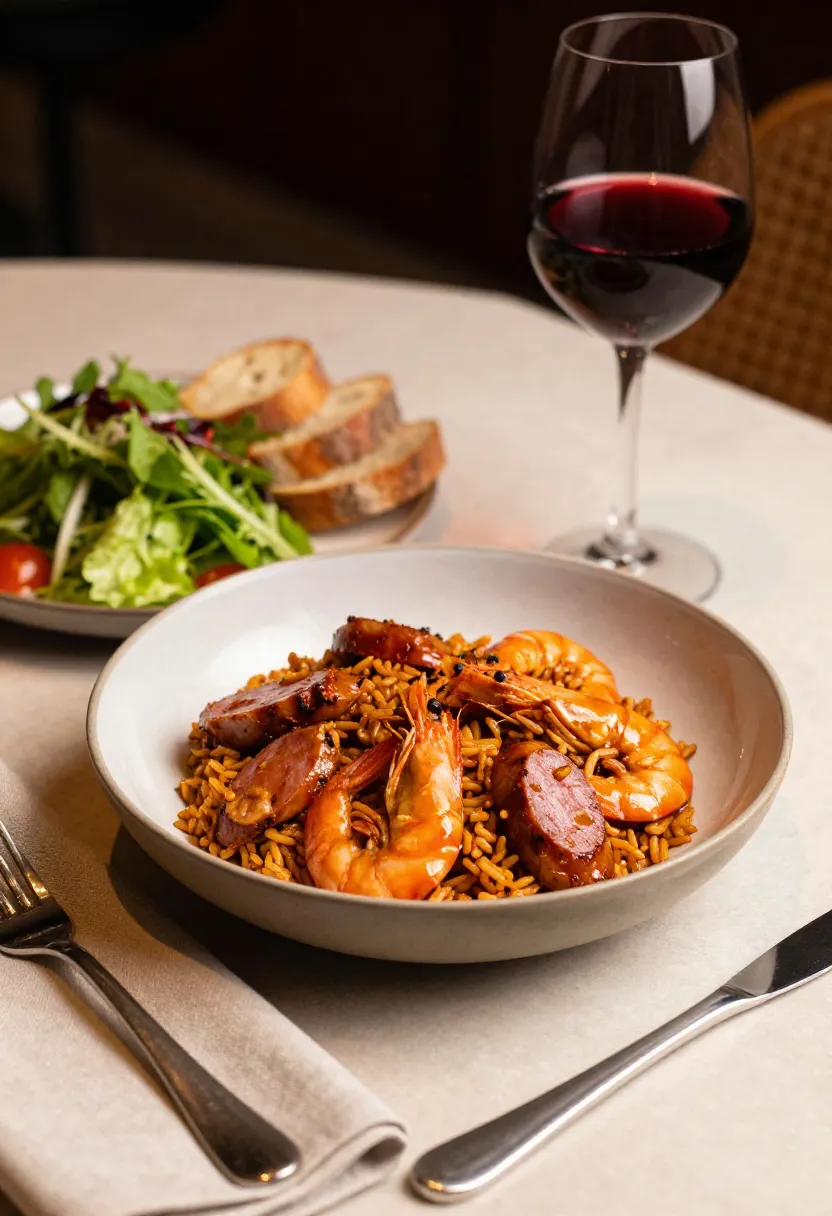
What’s nice is that you don’t have to overcomplicate the rest of the meal. In fact, it’s better if you don’t. Jambalaya already has a lot going on, so anything heavy on the side can feel like too much.
If you want to round things out, simple usually works best:
- a light salad to bring in some freshness 🥗
- crusty bread to scoop up the rice (and whatever’s left in the bowl) 🥖
- something cold to drink, just to balance the warmth of the dish
And if you’re eating with other people, there’s something genuinely nice about not plating it individually. Just bring the pot to the table, let everyone serve themselves. It feels more relaxed, less formal. People go back for seconds without thinking about it, conversations last longer, and the whole meal feels a bit more natural.
💛 Final Thoughts: Why This Dish Stays With You
Jambalaya is one of those meals that doesn’t try too hard — and somehow that’s exactly why it works.
You might cook it the first time just to try something new. But then, a few days later, it pops back into your head. Not in a dramatic way, just a quiet thought like, “that was actually really good.” And sooner or later, you make it again.
It fits into real life in a way some recipes don’t. You don’t need special equipment, you don’t need hard-to-find ingredients, and you don’t need to be in a perfect cooking mood. It works on a random weekday just as well as it does when you have people over.
And there’s something about the process itself that people tend to enjoy more than they expect. The gradual build of flavor, the smell filling the kitchen, the moment when everything comes together — it all feels a bit more rewarding than the effort would suggest.
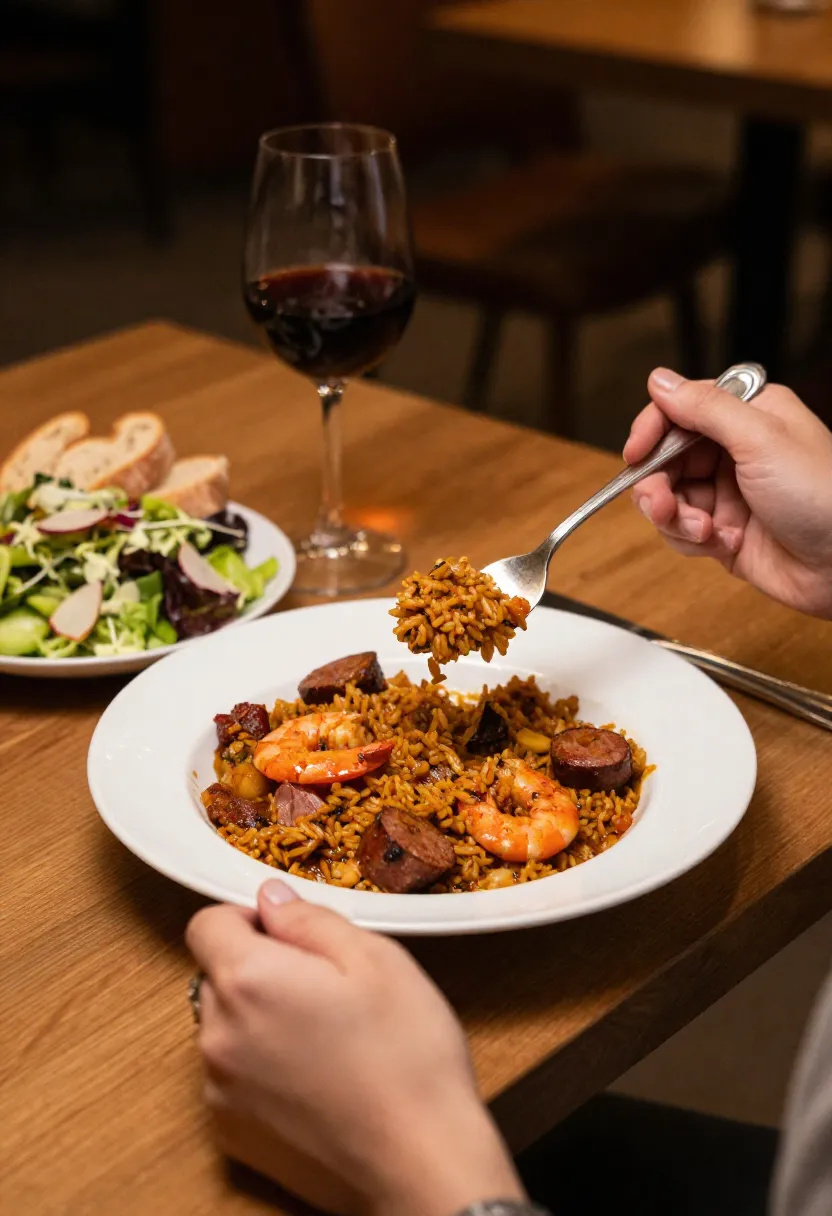
If you really think about it, the appeal comes down to a few simple things:
- it’s filling, but not in a heavy, tiring way
- it has strong flavor, but it’s still balanced
- it’s easy enough to make, but doesn’t feel basic
That combination is harder to find than it sounds.
And maybe that’s why jambalaya tends to stick. Not because it’s flashy or trendy, but because it quietly does everything you want a meal to do. It feeds you, it feels satisfying, and it gives you a reason to slow down for a bit — even if it’s just for one evening.
And usually, that’s enough to make you come back to it again ✨