Contents
Some recipes come and go without leaving much of an impression. You try them once, maybe you even enjoy them, but then they slowly fade into the background of your everyday cooking. They’re fine, they work, but they don’t really stay with you. After a while, you don’t even remember exactly how they tasted.
And then, every so often, you come across something that feels different.
It’s not always obvious at first. Sometimes it’s just a simple recipe with familiar ingredients. But as you start making it, you notice that it asks for a little more attention—not in a complicated or stressful way, but in a calm, steady rhythm. You begin to notice the process itself: the smell of citrus slowly filling the kitchen, the texture changing as ingredients come together, the small decisions you make along the way.
This blood orange and turmeric upside-down cake is exactly that kind of recipe 🍊
It doesn’t rush you, and it doesn’t try to impress with complexity. Instead, it naturally slows things down. Boiling whole oranges takes time, and there’s no real shortcut for that. Slicing the fruit evenly and arranging it in the pan requires a bit of care. Even mixing the batter feels more deliberate than usual, simply because you’ve already invested time into the earlier steps.
What’s interesting is that none of this feels like extra effort. It just feels… different from the usual routine.
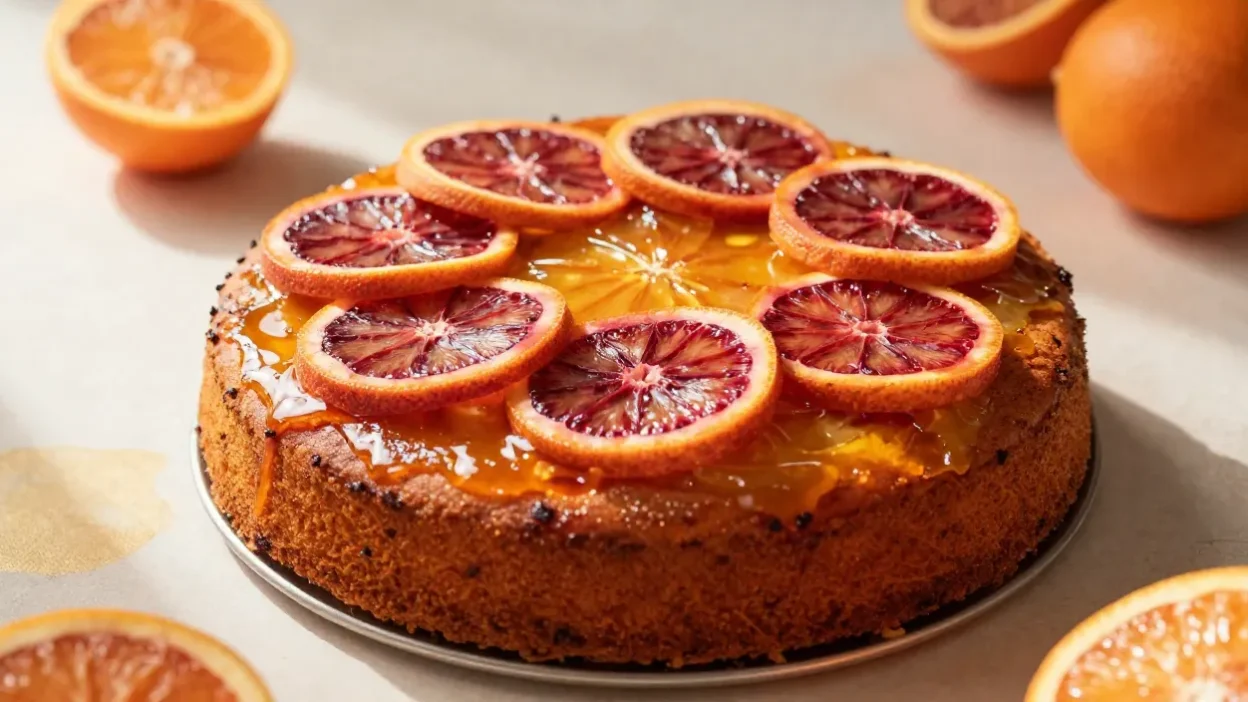
By the time the cake goes into the oven, you’ve already spent enough time with it to feel slightly more connected to the result. And when it comes out, that difference is visible. The top—once flipped—has a deep, rich color from the blood oranges, slightly glossy from the syrup. The inside is soft, warm-toned, and evenly textured, with a gentle golden shade from the turmeric.
There’s also something familiar and almost comforting about upside-down cakes as a concept. The method is simple and hasn’t really changed over time. You place fruit at the bottom, pour the batter over it, bake, and then flip. That final step still carries a small moment of uncertainty every time, even if you’ve done it before.
Sometimes the result isn’t perfect, and that’s part of the appeal. A slice might move slightly, or the pattern might not be exactly how you imagined. But that imperfection is what makes it feel homemade rather than staged. And when everything does come together nicely, the cake ends up looking far more impressive than the effort might suggest.
The Beauty of Unexpected Pairings
At first, the combination of blood oranges and turmeric might seem a little unusual. They come from very different flavor profiles, and it’s not an obvious pairing you’d immediately think of when baking a cake.
Blood oranges are bright and juicy, but they also carry a bit more complexity than regular oranges. There’s a slight bitterness, a soft sweetness, and a subtle depth that becomes more noticeable once they’re cooked. The flavor isn’t flat or predictable—it has layers that develop gradually as you eat.
Visually, they play an equally important role. As they cook, their color deepens into a rich red tone that almost looks too intense to be natural. When arranged at the base of the pan and later revealed on top of the cake, they create a finish that feels decorative without any extra effort.
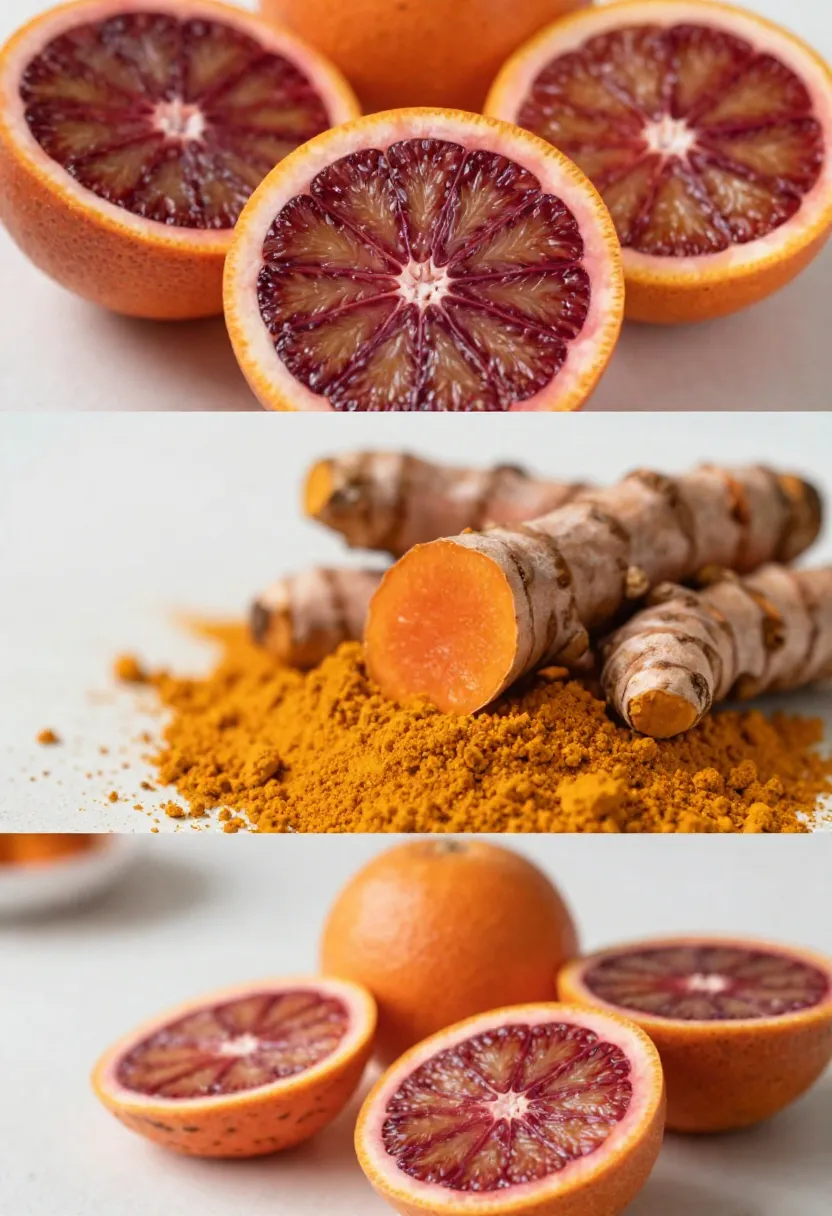
Turmeric works in a completely different way. It’s not there to stand out or dominate the flavor. Instead, it blends into the background and changes how everything else feels. It adds a gentle warmth and a slightly earthy note that softens the sharpness of the citrus.
You might not immediately think, “this tastes like turmeric,” but you would notice that the cake feels more balanced, less one-dimensional. It also affects the appearance of the cake, giving the crumb a warm, golden tone that pairs naturally with the deep red topping.
What makes this pairing successful is how naturally the contrast settles into balance. Nothing feels forced or overly experimental. Instead, the ingredients support each other in a way that feels intentional.
At its core, the flavor works because it combines:
- a fresh, slightly sharp citrus base
- a warm, grounding note from the turmeric
- and a subtle complexity that keeps each bite interesting
It’s not a combination that tries to surprise you—it’s one that slowly grows on you as you keep eating.
Why This Cake Stands Out
There are many citrus cakes out there, and most of them follow a similar structure. What makes this one different isn’t a single dramatic feature, but rather a series of small decisions that change the final result in noticeable ways.
One of the most important elements is the use of whole oranges. Instead of separating the fruit into juice and zest, the entire orange is cooked until soft and then blended into a purée. This approach gives the cake a deeper and more rounded flavor. The citrus doesn’t feel sharp or acidic—it feels integrated into the texture of the cake itself.
This method also affects moisture. Because the whole fruit is used, the cake retains a soft and slightly dense texture that doesn’t dry out easily. Each slice feels consistent, without crumbly or uneven areas.
Another detail that changes the character of the cake is the use of almond meal instead of traditional flour. This shifts the texture away from a typical sponge and into something a bit more substantial. The cake becomes softer and richer, but not heavy. It holds together well while still feeling tender.
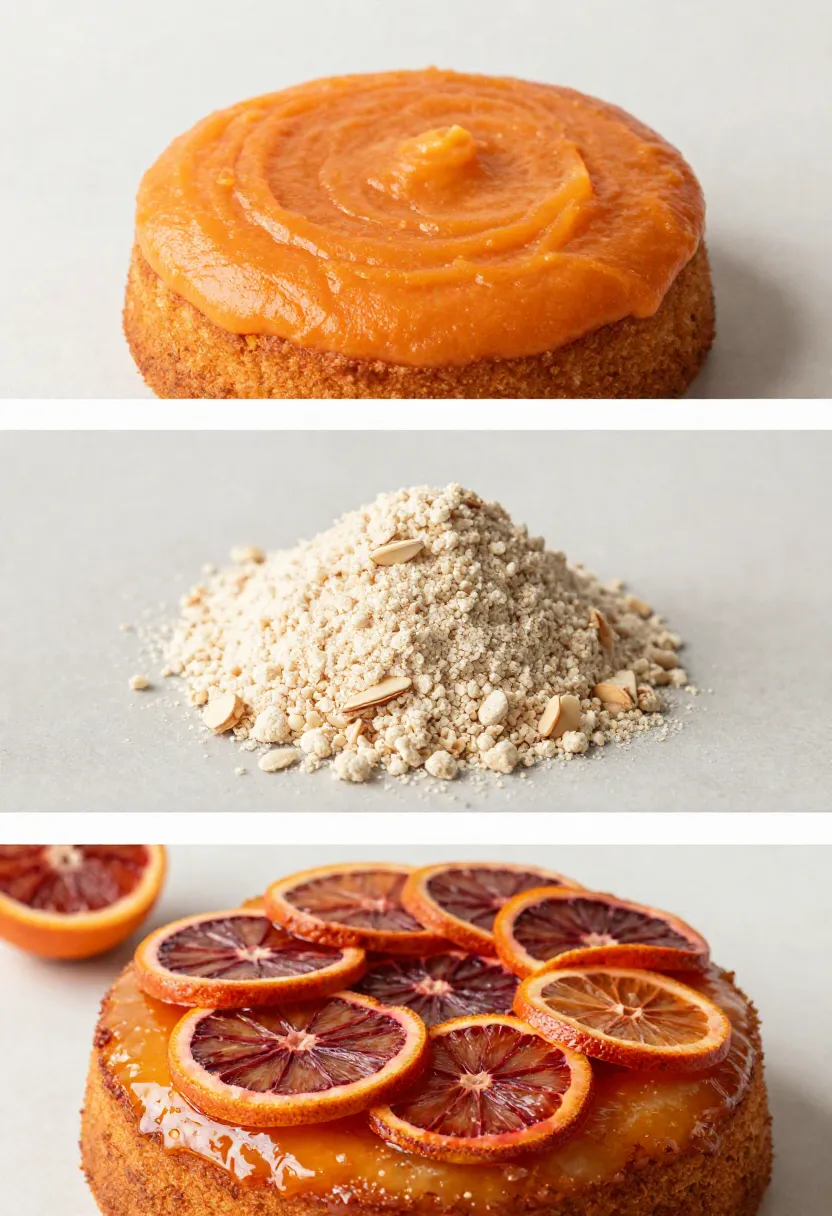
The upside-down technique adds another layer of difference. Instead of adding fruit as a topping after baking, it becomes part of the cooking process. The slices sit in syrup at the base of the pan, where they soften and develop a light caramelization. By the time the cake is flipped, they’ve transformed into a glossy, slightly sticky layer that adds both flavor and visual appeal.
What stands out most is how everything is built into the cake from the beginning. There’s no need to adjust or decorate it afterward. The structure, texture, and appearance all come from the way it’s made.
You can break it down into a few key elements:
- the orange purée provides both flavor and moisture
- the almond meal creates a soft, balanced texture
- the eggs give the cake its structure
- and the fruit layer forms its own natural topping during baking
All of these parts work together without any one element overpowering the others. The result is a cake that feels complete on its own—simple, but carefully put together in a way that makes it memorable 🍰
🍰 Recipe: Blood Orange & Turmeric Upside-Down Cake
This is one of those recipes that looks impressive without actually being complicated. At its core, it’s made from very basic ingredients—eggs, sugar, fruit—but the way they come together makes it feel a little more thoughtful than your average cake.
What really defines it is the combination of texture and color. The top layer (which, technically, starts at the bottom) becomes glossy and slightly sticky from the syrup, with deep red slices of blood orange that almost look like stained glass once the cake is flipped. Underneath that, the cake itself is soft, moist, and gently golden, with a subtle warmth from the turmeric that you notice more in the aftertaste than right away.
It’s not overly sweet, and it doesn’t rely on frosting or extra decoration. Everything is already built in. That’s probably why it works so well—it feels complete without needing anything else.
It does take a bit of time, especially at the beginning, but none of the steps are difficult. It’s more about letting things happen at their own pace rather than rushing through them. And in the end, that slower process is what gives the cake its depth and texture.
Ingredients
For the cake:
- 2 medium oranges
- 1 tablespoon freshly grated turmeric (or 1 teaspoon ground turmeric)
- 6 large eggs
- 200 g caster sugar
- 200 g almond meal
- 1 teaspoon baking powder
For the topping:
- 240 ml water
- 400 g sugar
- 2–3 blood oranges, thinly sliced
- 1 vanilla bean or 1 teaspoon vanilla extract
Method
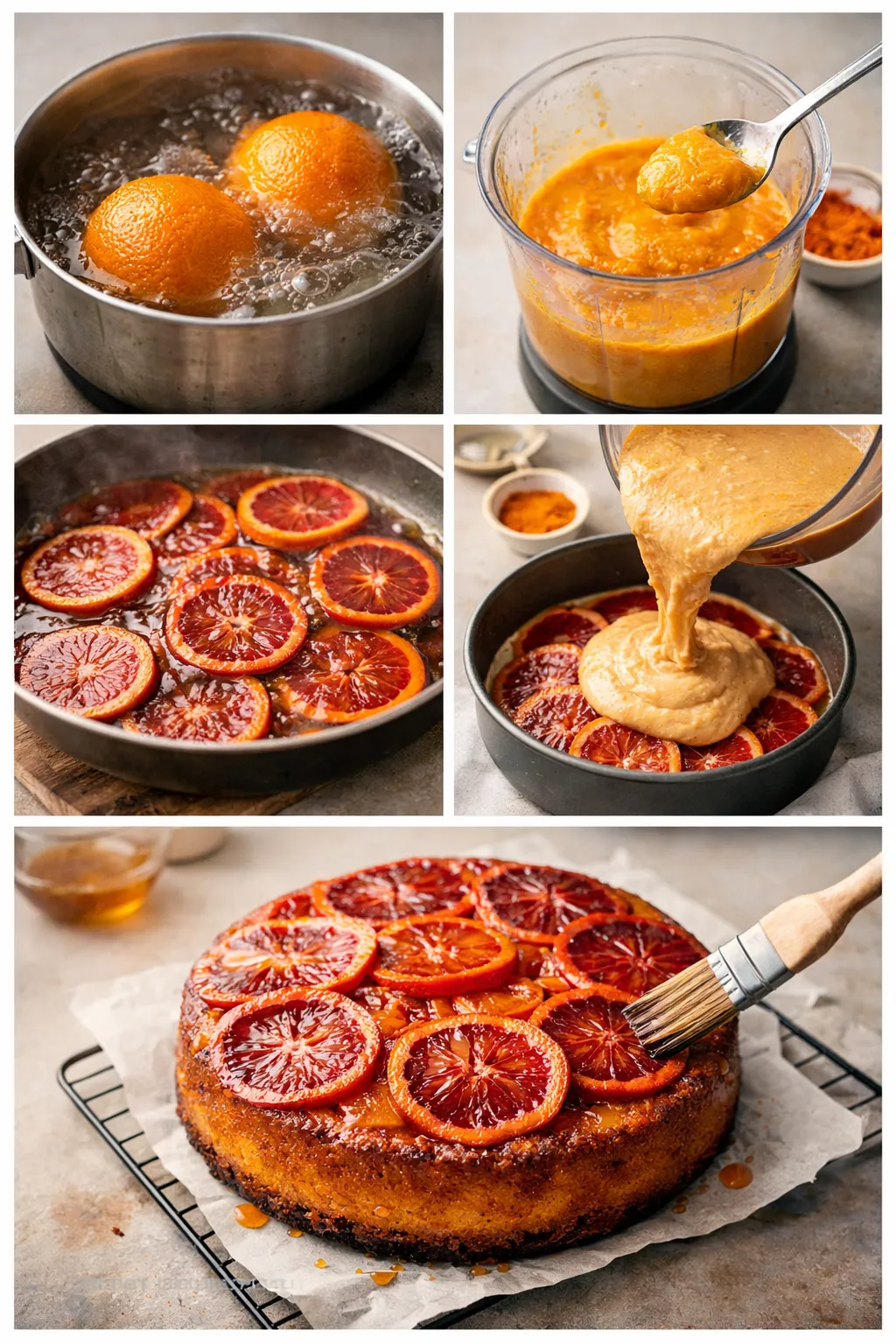
- Place the whole oranges in a pot of water and bring to a gentle boil. Let them simmer for about 1.5 to 2 hours until completely soft. Turn them occasionally so they cook evenly on all sides.
- Remove the oranges from the water and allow them to cool slightly. Cut them open, remove any seeds, and blend the entire fruit into a smooth purée. Stir in the turmeric and set aside.
- In a separate pan, combine the water and sugar over medium heat, stirring until the sugar fully dissolves. Add the blood orange slices and vanilla, then let everything simmer gently for about 25–30 minutes until the slices soften and become slightly translucent.
- Carefully lift the orange slices out of the syrup and set them aside to cool. Keep the syrup—you’ll use it later.
- Preheat the oven to 180°C (350°F). Line a 22 cm round cake tin with baking paper, making sure the base is fully covered.
- Arrange the cooked blood orange slices at the bottom of the tin. Slightly overlap them to create a pattern—this will become the top of the cake later, so it’s worth taking a minute here.
- In a large bowl, whisk the eggs and sugar together until the mixture becomes pale and slightly thickened. This step helps create a lighter texture, so don’t rush it too much.
- Gently fold in the orange and turmeric purée. Then add the almond meal and baking powder, mixing just until everything is combined. Try not to overmix at this stage.
- Pour the batter over the arranged orange slices and smooth the top with a spatula.
- Bake for 50–60 minutes, or until a skewer inserted into the center comes out clean. The top should be lightly golden and set.
- Let the cake cool in the tin. This part is important—if you flip it too early, it may break apart.
- Once cooled, carefully invert the cake onto a serving plate. Slowly remove the baking paper.
- Brush the top with the reserved syrup to give it a glossy finish and a bit of extra flavor.
✨ Small Tips That Make a Difference
- Try to slice the blood oranges as evenly as possible—it helps the cake look more balanced when flipped
- Don’t skip the long simmer for the whole oranges; it removes bitterness and softens the peel
- Let the cake cool properly before turning it out (this one’s easy to ignore, but it matters 😄)
- If the top starts browning too quickly in the oven, loosely cover it with foil
- Use a sharp knife when slicing the cake to keep those orange layers looking clean
Slowing Down in the Kitchen
There’s something about this cake that naturally slows things down. Not in an inconvenient way, and not to the point where it feels like too much effort—but enough to make you notice what you’re doing. And that’s surprisingly rare.
From the start, the process doesn’t really allow rushing. The oranges need time to soften properly, and even though it’s a simple step, it sets the tone for everything that follows. Then comes the slicing, arranging, mixing—none of it is difficult, but it all benefits from just a bit of attention. You can’t really multitask your way through it, at least not completely.
At first, it might feel like you’re spending more time than usual on a cake. But somewhere along the way, that feeling changes.
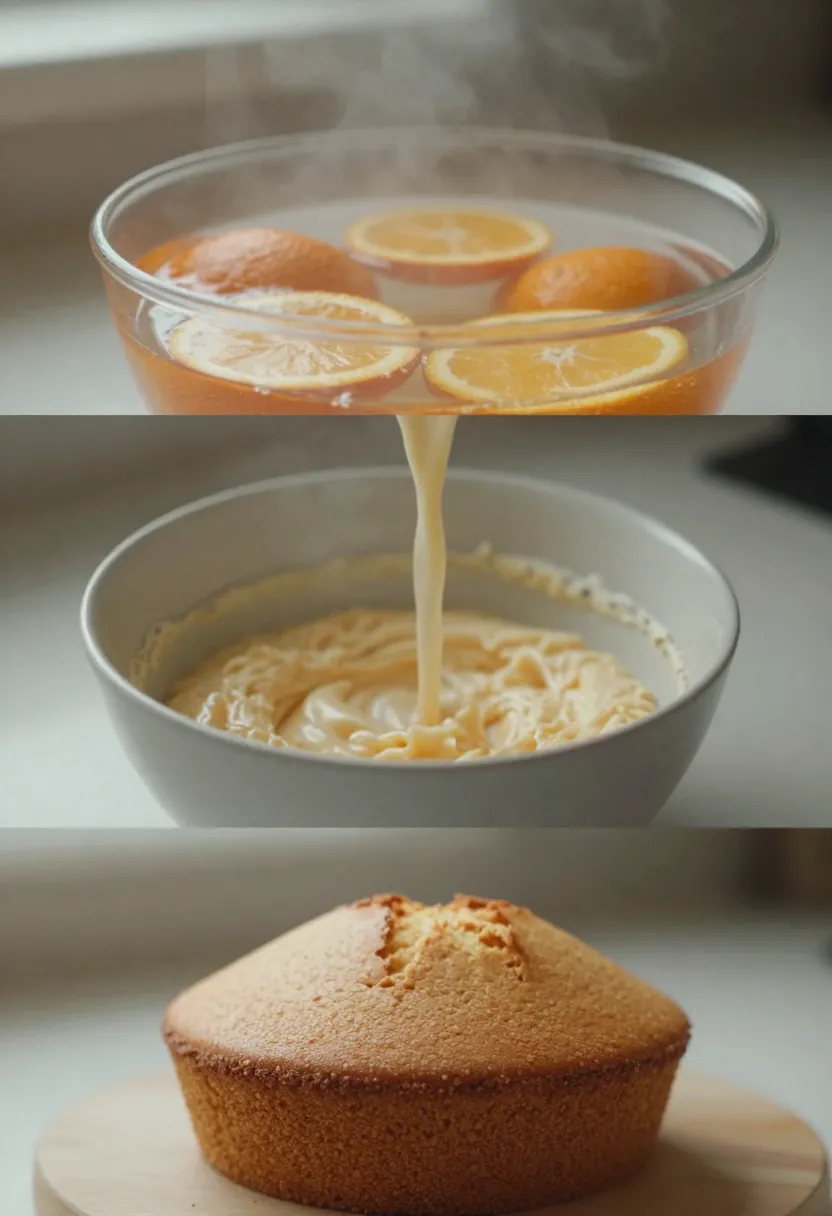
You stop thinking in terms of “how long this takes” and start noticing smaller things instead. The smell in the kitchen becomes stronger and warmer. The colors shift gradually—from bright citrus to deeper, richer tones. Even the batter has a different feel to it, slightly thicker, more textured.
And then there’s that moment when the cake is done, but not quite ready yet. You have to wait for it to cool before flipping it. It’s a small detail, but it forces you to pause again, even when you’re curious to see the result.
That pause matters more than it seems.
In a day that’s usually filled with quick tasks, notifications, and constant movement, this kind of recipe creates a small break. Nothing dramatic, just a slower pace for an hour or two. And in a way, that becomes part of why the cake feels satisfying—not just because of how it tastes, but because of how it was made.
Sharing It Makes It Better
This isn’t really the kind of cake that stays hidden in the kitchen for long. Even if you didn’t plan to share it, it almost feels like it should be seen. There’s something about the way it looks once it’s flipped that naturally draws attention.
When you place it on the table, there’s usually a short pause. Not a big reaction, just that quiet moment where people take a closer look. The glossy surface, the deep red-orange slices, the slightly uneven but very real pattern—it doesn’t look overly styled, but it still stands out.
And then comes the usual question, almost every time: “Did you actually make this?”
It’s a simple question, but it says a lot. Because the cake doesn’t look complicated, but it does look like it took effort.
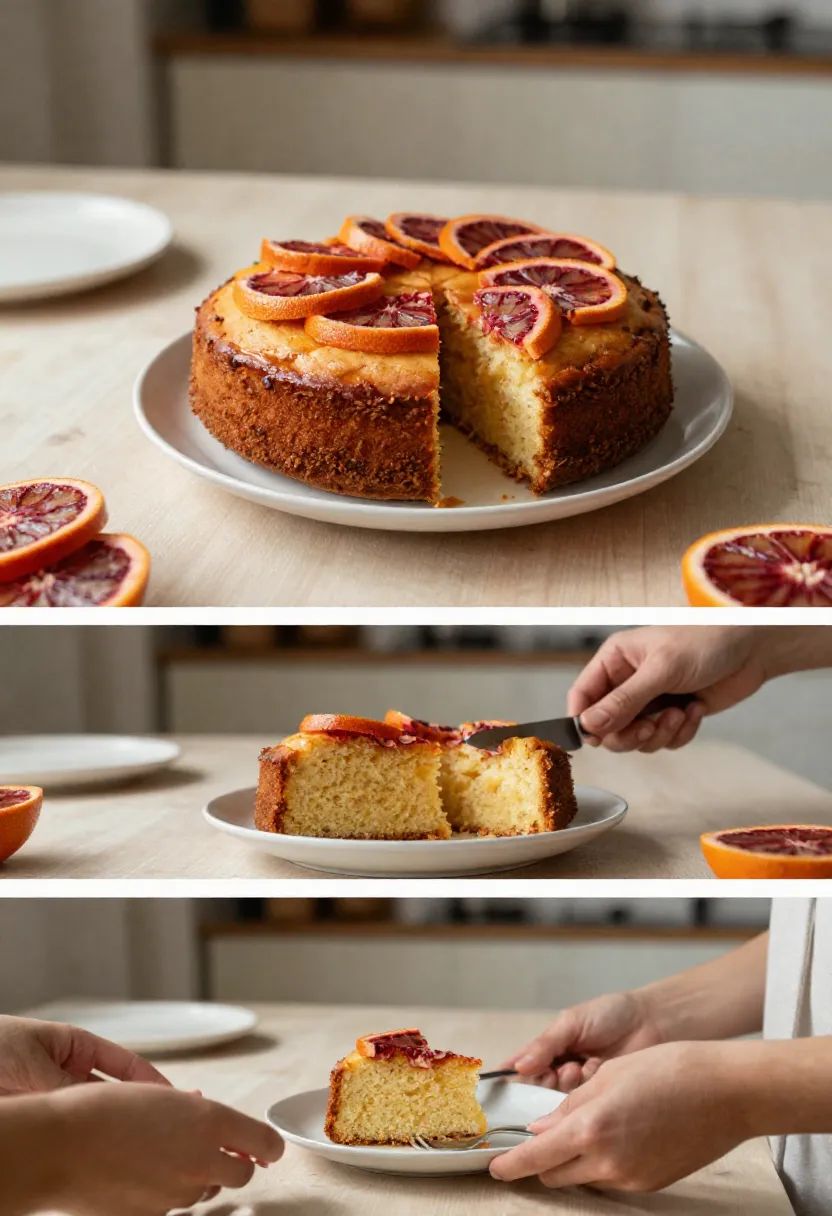
What makes it even better is that it doesn’t need much to be served well. It holds its own without extra layers or decoration. Still, a small addition on the side can make it feel more complete, depending on the moment.
Some easy options that work well:
- a spoonful of thick yogurt if you want a slight contrast to the sweetness
- lightly whipped cream for a softer, more dessert-like feel
- serving it slightly warm so the citrus aroma is more noticeable
It also works in different situations. You can serve it after dinner, bring it to a small gathering, or just have it with coffee in the afternoon. It adapts easily without needing to be changed.
And in many cases, it becomes one of those desserts people remember—not because it was overly rich or complicated, but because it felt balanced and just a bit different from the usual.
The Kind of Recipe You Come Back To
Some recipes are interesting the first time you try them, but they don’t really stay in your rotation. You enjoy the experience, maybe even think it turned out well, but you don’t feel a strong reason to make it again.
This cake doesn’t feel like that.
It has the kind of structure that makes you want to return to it—not necessarily right away, but eventually. Maybe a few weeks later, maybe when blood oranges are in season again, or just when you feel like baking something that’s familiar but not boring.
After making it once, you naturally start thinking about small adjustments. Not because anything is missing, but because it leaves space for variation. It’s the kind of recipe that doesn’t feel fixed.
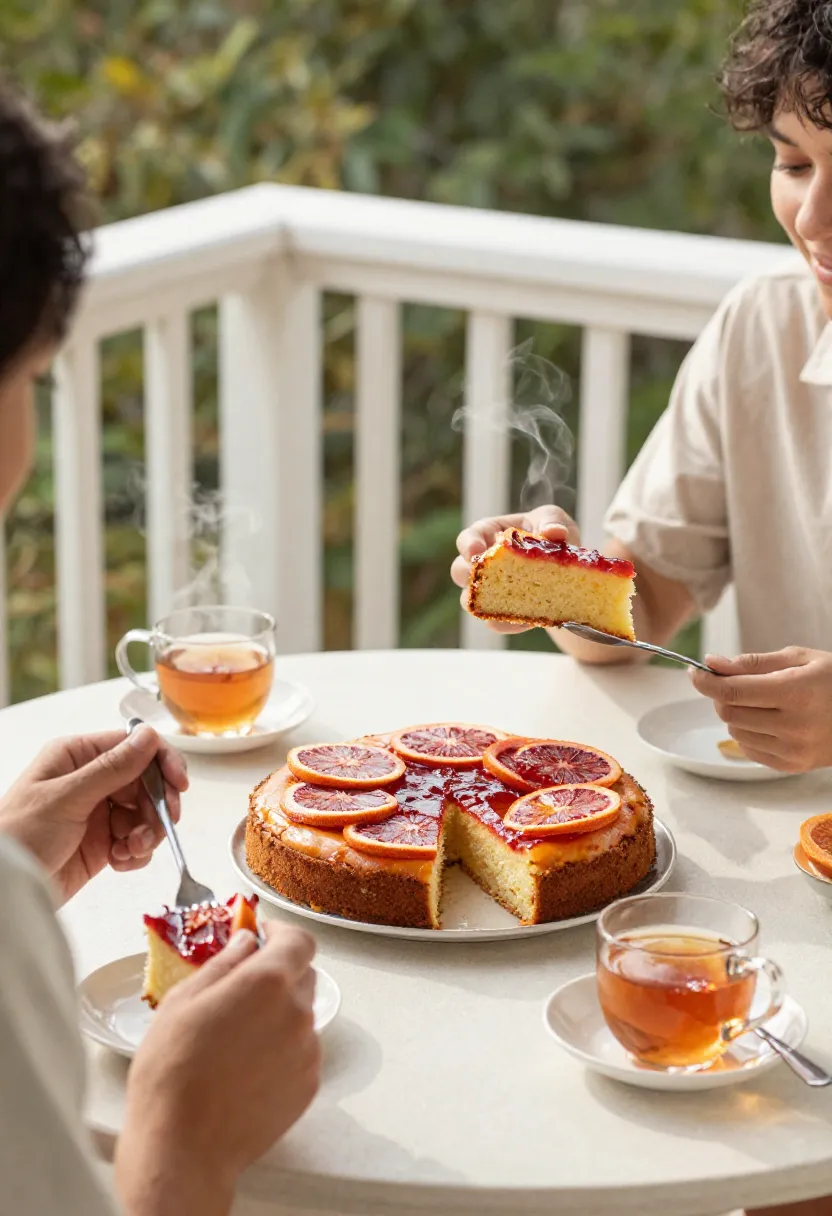
You might consider things like:
- adding a hint of spice, such as cardamom or ginger, for a slightly different warmth
- using a mix of citrus instead of only blood oranges
- adjusting the level of sweetness depending on your preference or the fruit
What’s important is that none of these changes feel risky. The base of the recipe is stable enough that you can experiment without worrying too much about ruining it.
Over time, it becomes less about following exact steps and more about understanding how the cake works. You remember the texture you’re aiming for, the balance of flavors, the way the top should look once it’s flipped.
And that’s usually a sign of a good recipe.
It stops being something you “try” and becomes something you “make.” Something familiar enough to rely on, but still interesting enough that you don’t get tired of it.
Those are the recipes that tend to stay—and this one definitely has that kind of potential 🍰