Contents
There are days when cooking feels less like something you want to do and more like something you kind of have to deal with. You stand in the kitchen, open the fridge, close it again, maybe check it one more time like something new might magically appear… and then you just sigh and think, “Alright, let’s not overcomplicate this.”
We’ve all been there.
And then, every once in a while, you land on a dish that changes the mood completely. Not because it’s fancy or impressive on paper — but because it just works. You throw a few things together, don’t overthink it, and somehow it turns out way better than expected.
Balsamic chicken skewers are exactly that kind of dish. 🍢
At first glance, they don’t look like much. It’s chicken, after all. Nothing groundbreaking. But once you actually start cooking, something shifts. The smell starts building slowly, then all at once. That slightly sweet, slightly tangy aroma fills the space, and suddenly it feels like you’re doing something a bit more special than just “making dinner.”
And the funny part? You didn’t really try that hard.
That’s probably why people keep coming back to this recipe. It doesn’t ask for much, and it doesn’t punish you if you’re a bit off with timing or measurements. It’s forgiving in that quiet, reliable way.
It also fits into real life pretty easily. Not “perfect Instagram dinner” life — actual life.
You can make it when:
- you’re tired and don’t want to deal with complicated steps
- you have people coming over but didn’t plan anything elaborate
- you need something that still tastes good the next day (because, let’s be honest, not everything does)
And maybe that’s the real charm here. It’s not trying to impress anyone. It just ends up doing it anyway.
🍯 The Flavor That Keeps You Coming Back
If you try to break this dish down, it really comes down to balance — but not in a technical, chef-y way. More like… that moment when something just tastes right and you don’t feel the need to adjust anything.
Balsamic vinegar is doing a lot of the heavy lifting here. It’s not as sharp as other vinegars, and it has that slightly deep, almost mellow sweetness to it. On its own, it’s already interesting. But once you add honey, things start to shift a bit.
The sharpness softens.
The sweetness doesn’t take over — it just kind of rounds everything out.
And suddenly the whole mixture feels smoother, more complete.
If you taste the marinade before cooking (which, honestly, you should), it might feel a bit strong at first. That’s normal. It’s supposed to be. Heat changes everything.
Once the skewers start cooking, that’s when things really come together.
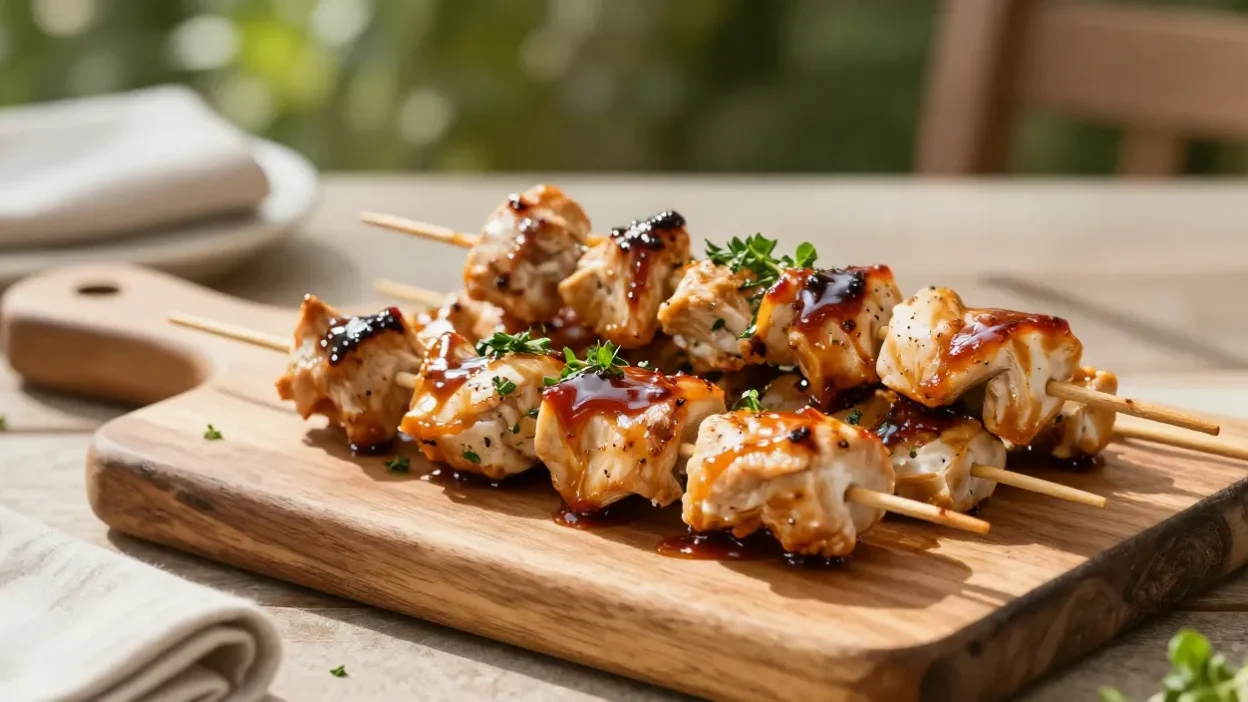
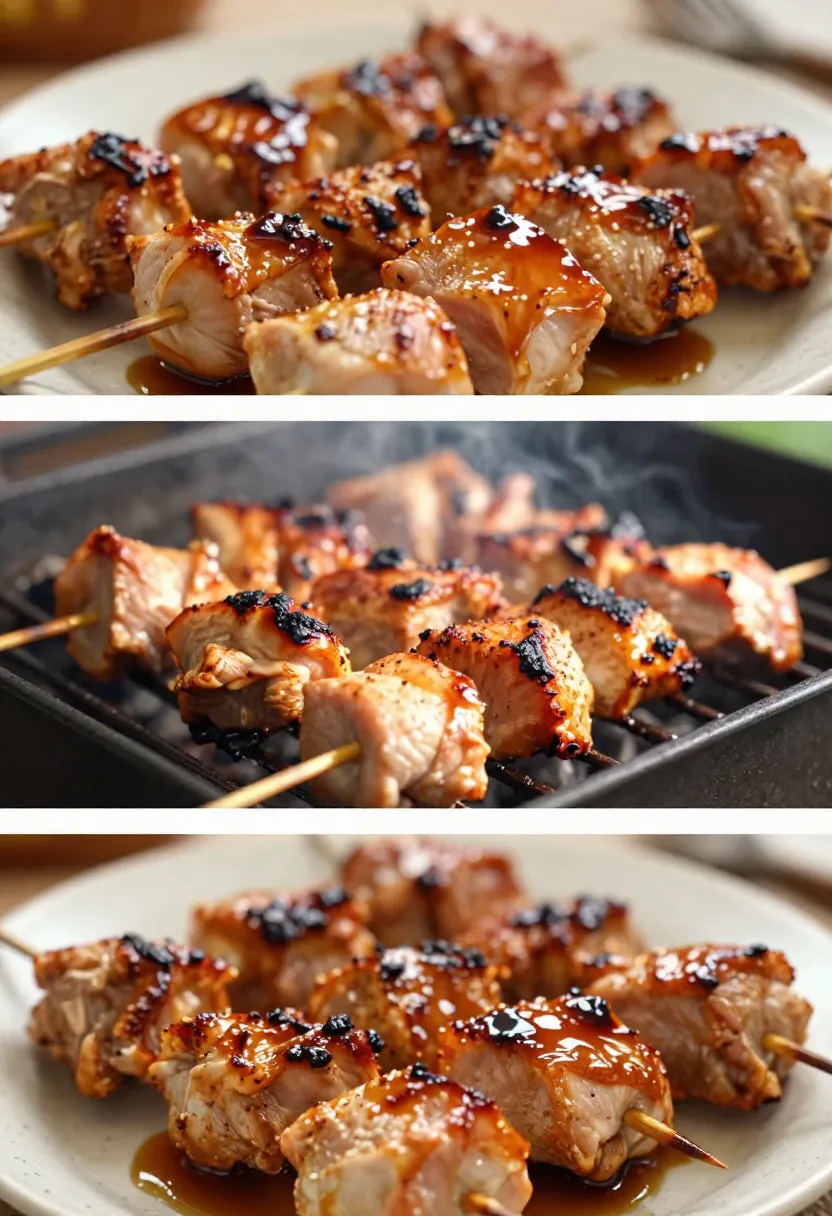
The marinade thickens slowly. The sugars start to caramelize. The color deepens into that darker, glossy coating. And somewhere in the middle of all that, the smell changes too — richer, warmer, a bit more intense.
It’s usually around that moment when someone walks into the kitchen and asks, “What are you making?”
And the final result isn’t just about flavor anymore. It’s about contrast, which sounds like a fancy word, but it’s actually pretty simple:
- the outside gets slightly sticky and glazed
- some edges pick up a bit of char
- the inside stays soft and juicy
That combination is what makes it hard to stop at one skewer. Not in an over-the-top way — just quietly addictive.
You don’t really notice it at first. You just reach for another one.
🔥 Why Skewers Just Work (Every Time)
There’s a reason skewers have been around forever, and it’s not just tradition or aesthetics.
They make cooking easier in ways you don’t always think about.
When chicken is cut into smaller pieces and spaced out on a skewer, heat can move around it more evenly. You don’t get those awkward situations where one part is dry and another part still needs time. Everything cooks at roughly the same pace, which takes a lot of guesswork out of the process.
They’re also easier to handle. You’re not flipping individual pieces or trying to keep track of what’s done and what’s not. You just turn the whole skewer, adjust the heat a little if needed, and that’s pretty much it.
And then there’s the texture.

Because each piece is exposed on multiple sides, you get more of those slightly caramelized edges. More surface area means more flavor — it’s as simple as that. That’s one of the reasons skewers often taste better than just cooking a whole chicken breast in a pan.
Here’s a simple way to look at it:
| Approach | What You Usually Get | Where It Falls Short |
|---|---|---|
| Whole chicken piece | Juicy inside, but limited texture | Less flavor on the surface |
| Skewered chicken | Even cooking + caramelized edges | Slightly more prep |
But honestly, beyond all the practical reasons, there’s something else going on too.
Food on a stick just feels different.
It’s less formal. Less structured. You don’t need to plate it perfectly or think about presentation too much. You just pick one up and eat.
And when you’re cooking for other people, that changes the whole vibe without you even trying.
People don’t sit there waiting politely. They move around, grab food when they feel like it, maybe stand in the kitchen a bit longer than planned. Someone always says they’ll “just try one”… and then goes back for more a few minutes later.
It’s relaxed. A little messy. But in a good way.
And those are usually the meals people remember.
🍗 Balsamic Chicken Skewers Recipe
There’s something really satisfying about a recipe that doesn’t try too hard — and still delivers. This is exactly that kind of dish.
At its core, it’s just chicken and a marinade. Nothing complicated, nothing overly technical. But once everything comes together, it feels like more than the sum of its parts. The balsamic brings depth, the honey softens it, the garlic adds that familiar savory note… and when heat hits it all, the transformation is kind of hard to ignore.
You’ll notice it while cooking. First the smell changes, then the color deepens, and then suddenly the chicken looks glossy and slightly caramelized, like something you’d expect from a restaurant rather than your own kitchen.
It’s also one of those recipes that doesn’t stress you out. You don’t have to measure everything perfectly. You don’t need perfect timing down to the second. As long as you keep an eye on it and trust the process a little, it turns out well.
And maybe that’s the best part — it feels approachable, but the result still feels like you made an effort (even if you didn’t, really).
🛒 Ingredients
- 900 g (2 lbs) chicken breast or chicken thighs, cut into medium chunks
- ½ cup balsamic vinegar
- 2–3 tablespoons honey
- 2 tablespoons olive oil
- 3 garlic cloves, finely minced
- 1 teaspoon salt
- ½ teaspoon black pepper
- Optional: chili flakes, fresh herbs, or a teaspoon of Dijon mustard
- Skewers (wooden or metal)
👨🍳 Instructions
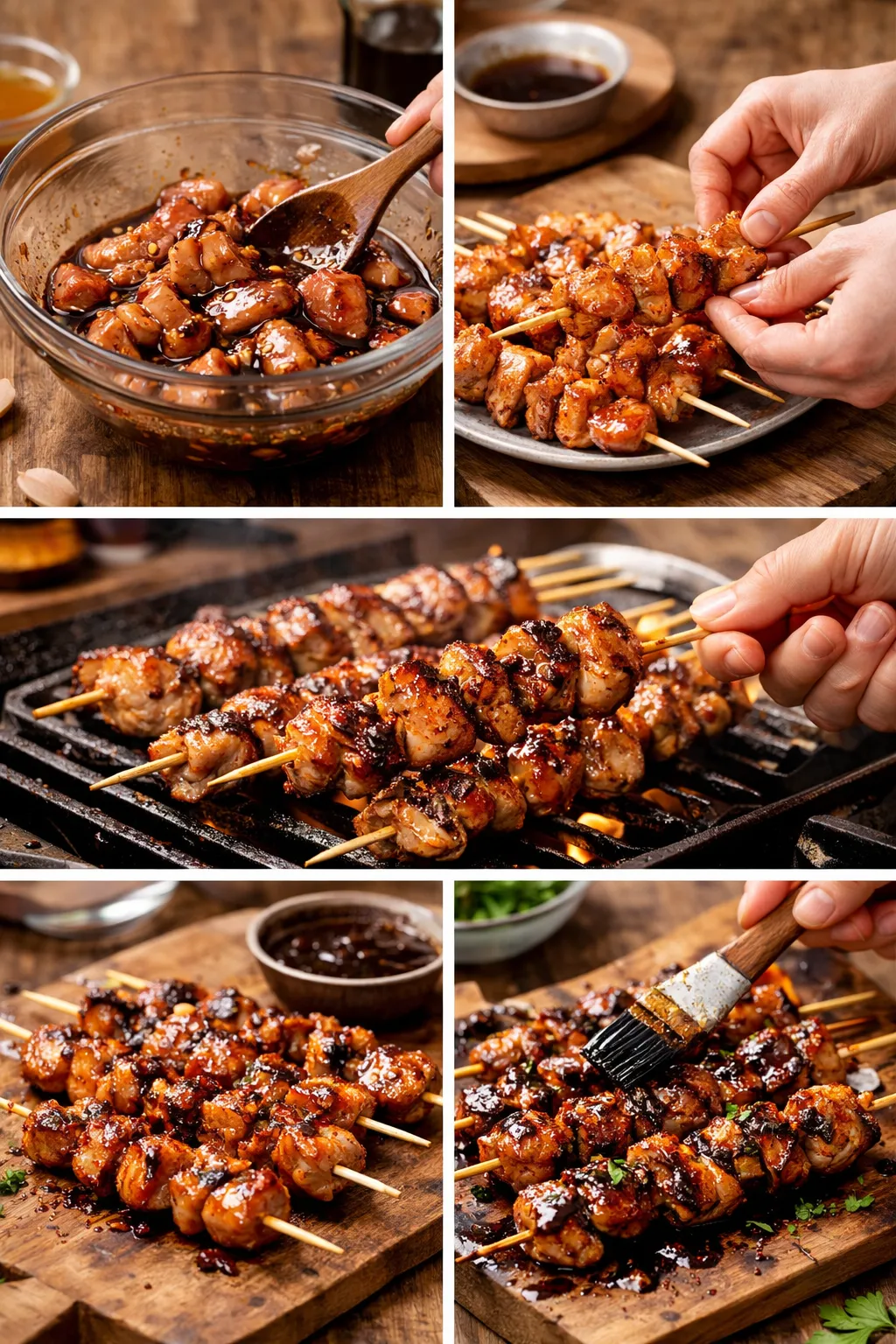
- In a medium bowl, combine the balsamic vinegar, honey, olive oil, garlic, salt, and black pepper. Stir everything together until it looks smooth and slightly thickened. It should smell balanced — a bit tangy, a bit sweet.
- Add the chicken pieces to the bowl and mix well, making sure every piece is coated. Don’t rush this part — the more evenly coated the chicken is, the better the final result will be. Cover and place it in the fridge for at least 30 minutes. If you have more time, letting it sit for a few hours really helps the flavor sink in.
- If you’re using wooden skewers, soak them in water for about 20 minutes. It’s a small step, but it saves you from dealing with burnt sticks later.
- Thread the chicken onto the skewers. Try not to press the pieces too tightly together — a little space helps everything cook more evenly.
- Preheat your grill, oven, or pan to medium-high heat. You don’t want it too aggressive, just hot enough to get some color on the outside without burning too quickly.
- Cook the skewers, turning them every few minutes so they brown evenly. Depending on your method, this usually takes around 10–15 minutes. You’ll know they’re ready when the outside looks slightly caramelized and the inside is cooked through.
- While the chicken is cooking, take the leftover marinade and pour it into a small saucepan. Bring it to a boil (this step matters for safety), then lower the heat and let it simmer gently. After a few minutes, it will start to thicken into a glaze.
- Once the skewers are done, brush that glaze over the hot chicken. It adds an extra layer of flavor and gives everything that slightly sticky, glossy finish.
- Let the skewers rest for a couple of minutes before serving. It’s tempting to eat them immediately (and honestly, you probably will), but giving them a short rest helps keep the juices inside.
💡 Quick Tips & Little Kitchen Tricks
- Don’t overcrowd the skewers — a bit of space makes a noticeable difference
- If the marinade tastes flat before cooking, add a pinch of salt or a little more honey
- Medium-high heat works better than very high heat (less burning, more control)
- Turn the skewers, but not constantly — let them develop some color first
- If you’re reheating later, brush a bit of extra glaze or add a splash of water to keep them from drying out
🎨 Small Changes That Make a Big Difference
After you’ve made this recipe a couple of times, something shifts. You stop looking at it like a strict set of steps and start treating it more like a base you can adjust. Not in a dramatic way — just small changes depending on what you have, what you feel like, or honestly… how much effort you want to put in that day.
That’s probably one of the reasons this dish doesn’t get boring.
Adding vegetables is usually the first thing people try, and it makes sense. It’s easy, it doesn’t require extra planning, and it changes both the look and the feel of the dish. Suddenly, it’s not just chicken — it feels more complete, more balanced, like something you could actually serve on its own without thinking about sides too much.
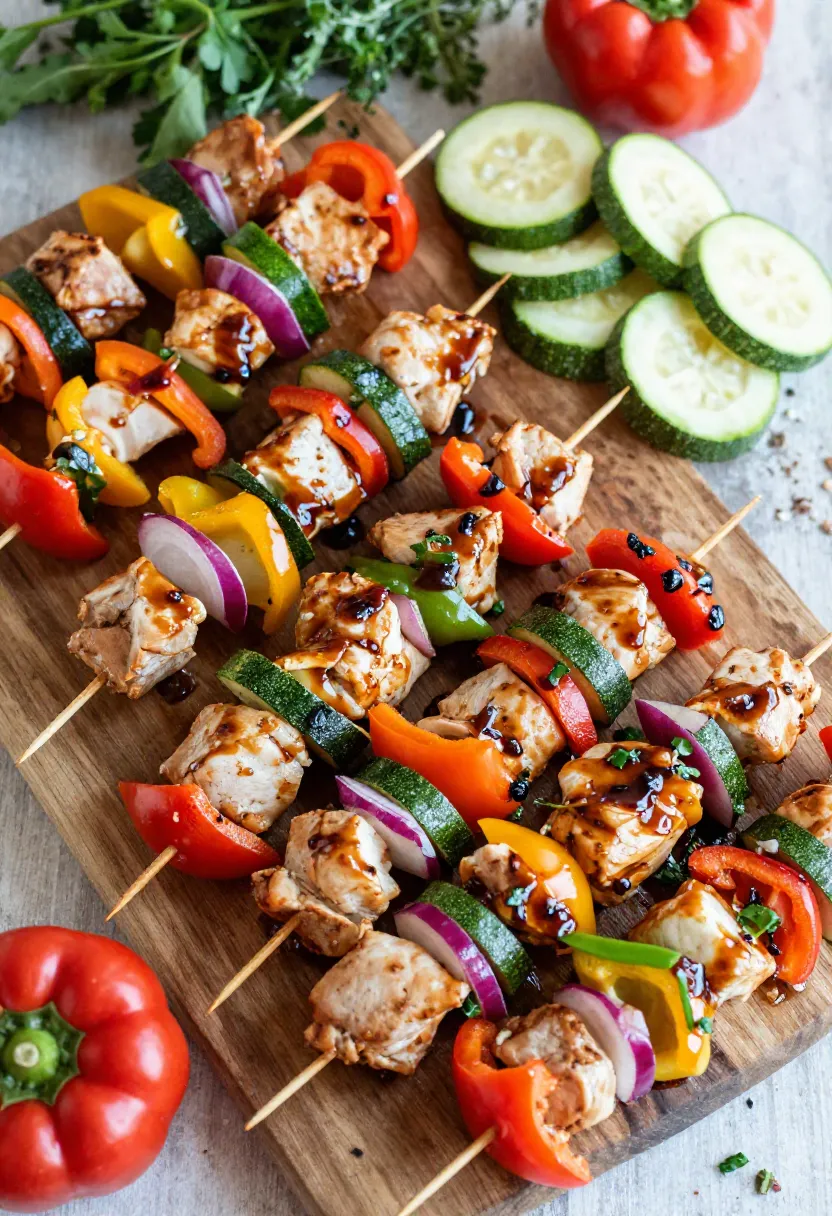
Some combinations that tend to work especially well:
- bell peppers 🫑 — they soften and become slightly sweet, which works really nicely with the glaze
- red onions — they lose their sharpness and get that mild, almost caramelized flavor
- zucchini — pretty neutral on its own, but it absorbs the marinade surprisingly well
- mushrooms — if you like them, they bring a deeper, more savory note
What’s interesting is how these small additions change the overall texture too. You get a bit of softness from the vegetables, a bit of char from the chicken, and it all starts to feel more layered.
And then there’s the flavor direction.
Some days, you might feel like the dish needs a bit more edge — that’s where a pinch of chili flakes or a drop of hot sauce comes in. Not enough to make it spicy, just enough to wake it up a little.
Other days, you might want the opposite. Something lighter. Fresher. That’s where herbs or a squeeze of lemon come in. It doesn’t completely transform the dish, but it shifts it just enough that it feels new again.
The point is, you don’t need to overthink it. This isn’t a recipe that breaks if you change one thing. It actually works better when you make it your own, little by little.
🍽️ Turning It Into a Full, Satisfying Meal
If we’re being honest, most people don’t start by plating this dish nicely. You cook the skewers, maybe let them sit for a minute… and then you grab one. Just to check. Then another. And at some point, you realize you’re already halfway through without even sitting down 😄
That’s kind of part of the charm.
Still, if you want to turn it into something that feels more like a complete meal — especially if you’re cooking for other people — it doesn’t take much to get there.
The main thing to think about is balance. The chicken has that sweet, slightly rich glaze, so it benefits from something lighter on the side. Not something complicated, just something fresh enough to offset it.
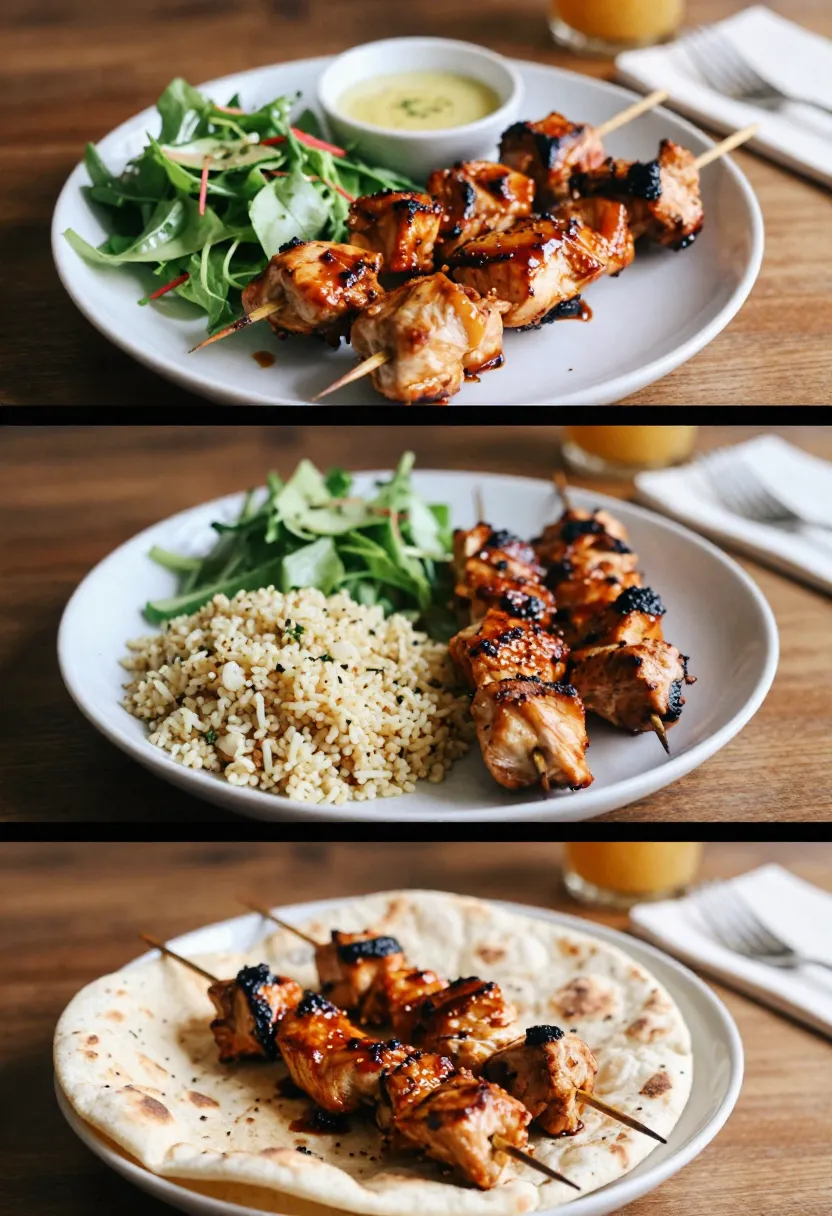
A simple salad usually does the job. Nothing fancy — just greens, maybe some cucumber or tomatoes, and a light dressing. It doesn’t steal attention, but it makes the whole plate feel more put together.
If you’re a bit hungrier, or just want something more filling, adding a base helps. Rice or quinoa are the easiest options because they don’t interfere with the flavor. They just make everything more satisfying without making it heavier than it needs to be.
Here are a few simple ways to build it into a full meal:
- a fresh salad 🥗 to bring in some lightness
- rice, quinoa, or couscous for something more filling
- flatbread or pita 🫓 if you want a more casual, hands-on option
Flatbread is especially interesting because it changes how you eat the dish. Instead of just picking up skewers, you can turn it into a wrap — add some chicken, a bit of salad, maybe a sauce, and suddenly it feels like something completely different.
And if you’re cooking for guests, the setup matters more than you’d expect. Instead of carefully plating everything, it often feels better to just put everything in the middle of the table.
People naturally:
- serve themselves
- go back for seconds without asking
- mix things the way they like
It creates a more relaxed, slightly informal atmosphere. And honestly, that usually leads to a better experience overall.
💡 Small Details, Better Results & Final Thoughts
A lot of what makes this recipe work doesn’t come from the ingredients themselves, but from the small decisions you make while cooking. The kind of things that don’t seem important at first, but end up making a noticeable difference.
For example, letting the chicken rest for a few minutes after cooking might feel unnecessary when you’re hungry, but it helps keep the meat juicy. If you cut into it immediately, you lose a lot of that moisture.
Cutting the chicken into evenly sized pieces is another one. It sounds obvious, but it’s easy to rush through. When the pieces are similar in size, everything cooks at the same rate, and you don’t end up with some parts overdone while others still need time.
Even how you place the chicken on the skewers matters. If everything is packed too tightly, the heat can’t move properly between the pieces. A little space goes a long way.
And then there’s tasting — probably the simplest thing, but also the one people skip the most.
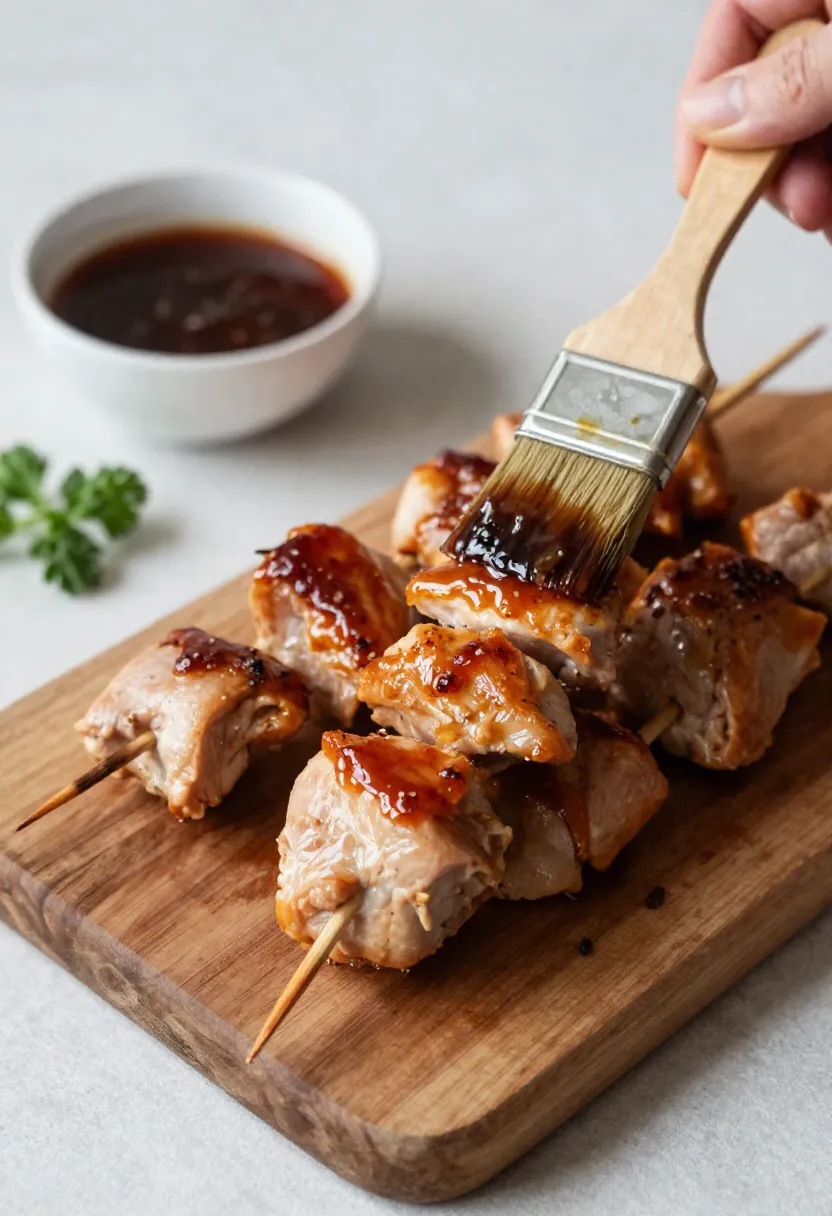
Before you even add the chicken, the marinade should already feel balanced. Not perfect, just… right enough that you’d be okay dipping bread into it. If something feels off, small changes usually fix it.
A few small things that are worth remembering:
- medium-high heat works better than very high (less burning, more control)
- turning the skewers occasionally is enough — no need to constantly move them
- giving the glaze time to thicken properly makes a big difference in flavor
- adjusting the marinade before cooking is easier than fixing it later
Over time, you stop thinking in exact measurements. You start trusting what you see, what you smell, what you taste. You adjust things without really planning to.
And that’s usually when cooking starts to feel more natural.
In the end, this dish isn’t trying to be impressive or complicated. It doesn’t rely on technique or precision.
It just works.
And honestly, those are the recipes that tend to stay — the ones you come back to without even thinking about it, because you already know they won’t let you down.