Contents
- What Are Apricot Seeds?
- A Brief History and Cultural Use
- Nutritional Profile (Without Hype)
- The Wellness Conversation Around Apricot Seeds
- Understanding Amygdalin — What You Need to Know
- Safety First: Why Moderation Matters
- Forms of Apricot Seeds Used in Wellness
- How Apricot Kernel Oil Fits into Wellness
- Who Should Avoid Apricot Seeds
- Mindful Wellness: Choosing Safety Over Trends
- Final Thoughts — A Balanced Perspective
Apricot seeds have a way of quietly appearing in wellness conversations. You might see them mentioned in traditional practices, niche wellness blogs, or ingredient lists that promise a more “natural” approach to health. Their presence often sparks curiosity — what are they, why are people talking about them, and how do they actually fit into a modern wellness routine?
At the same time, apricot seeds can feel confusing. Information about them is often fragmented, oversimplified, or presented without important context. In wellness spaces especially, complex ingredients are sometimes reduced to bold claims or trend-driven advice, leaving little room for nuance or safety.
This article takes a different approach.
Rather than promoting apricot seeds as a must-have or dismissing them outright, we’ll look at them thoughtfully and responsibly. We’ll explore what apricot seeds are, how they’ve been used traditionally, why they’re discussed in wellness circles today, and — just as importantly — what considerations and cautions matter when they’re mentioned.
Wellness is not about extremes. It’s about informed choices, moderation, and understanding how different ingredients interact with real bodies and real lives. Apricot seeds are a perfect example of why context matters more than trends.
Think of this guide as a calm, grounded starting point — one that prioritizes clarity over claims, and care over curiosity alone.
What Are Apricot Seeds?
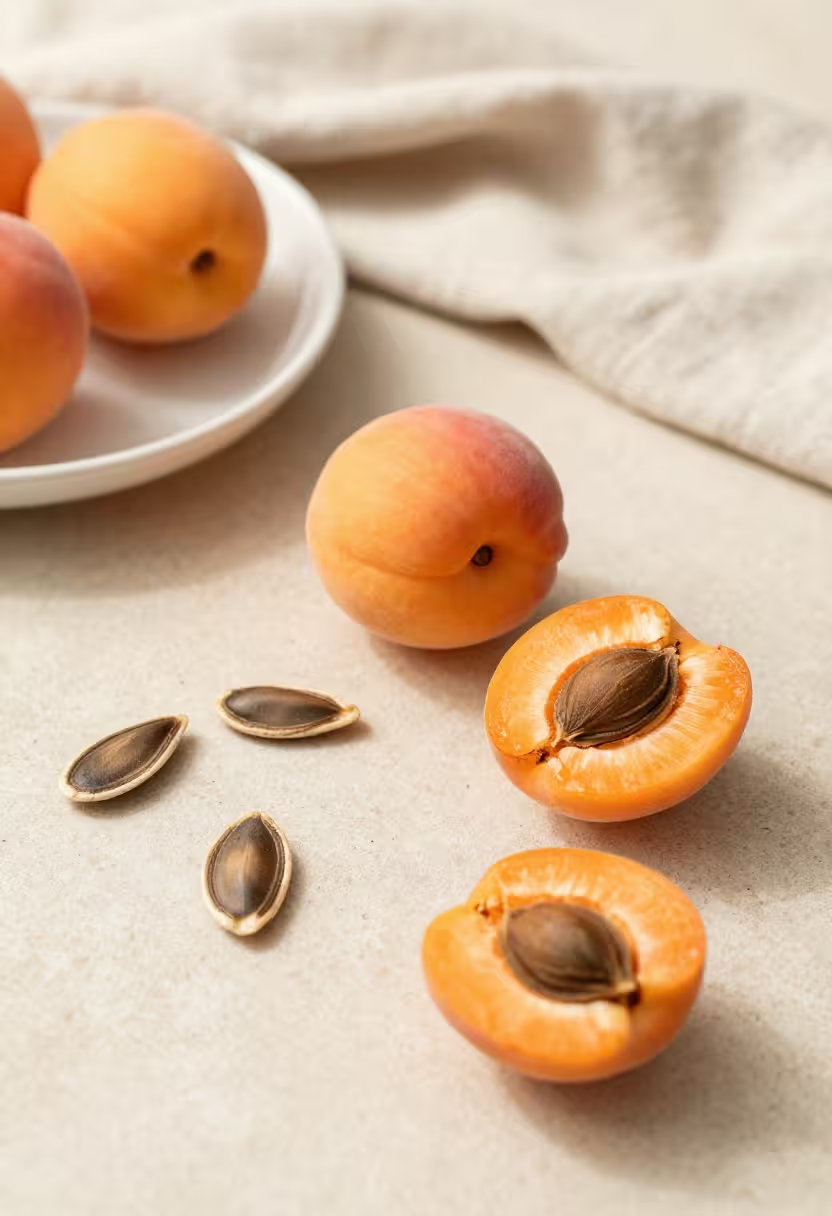
Apricot seeds — sometimes called apricot kernels — are the small, almond-shaped pits found inside the hard stone of an apricot. When you crack open an apricot pit, this inner seed is what you’ll find at the center. It looks deceptively familiar, often compared to an almond, which is part of why it has drawn attention in both culinary and wellness contexts.
Not all apricot seeds are the same. Broadly, they fall into two categories: sweet apricot seeds and bitter apricot seeds.
Sweet apricot seeds are more commonly used in food-related applications and have a mild, nutty flavor. Bitter apricot seeds, on the other hand, contain higher levels of naturally occurring compounds that require much more caution. This distinction is essential, yet it’s often glossed over in casual wellness conversations.
Traditionally, apricot seeds have appeared in small amounts in certain cuisines and cultural practices — sometimes ground, sometimes infused, sometimes used symbolically rather than regularly. In these contexts, they were typically handled with care and moderation, not consumed freely or in large quantities.
In modern wellness spaces, however, apricot seeds are often discussed outside of their original context. They may be presented as a “natural” ingredient without clearly explaining what that means, how they differ from other seeds or nuts, or why moderation matters. This lack of clarity can create confusion, especially for people trying to make informed choices.
Understanding what apricot seeds actually are — where they come from, how they differ, and why those differences matter — is the first step in approaching them responsibly. Before any discussion of benefits or uses, it’s important to ground the conversation in accurate definitions and realistic expectations.
A Brief History and Cultural Use
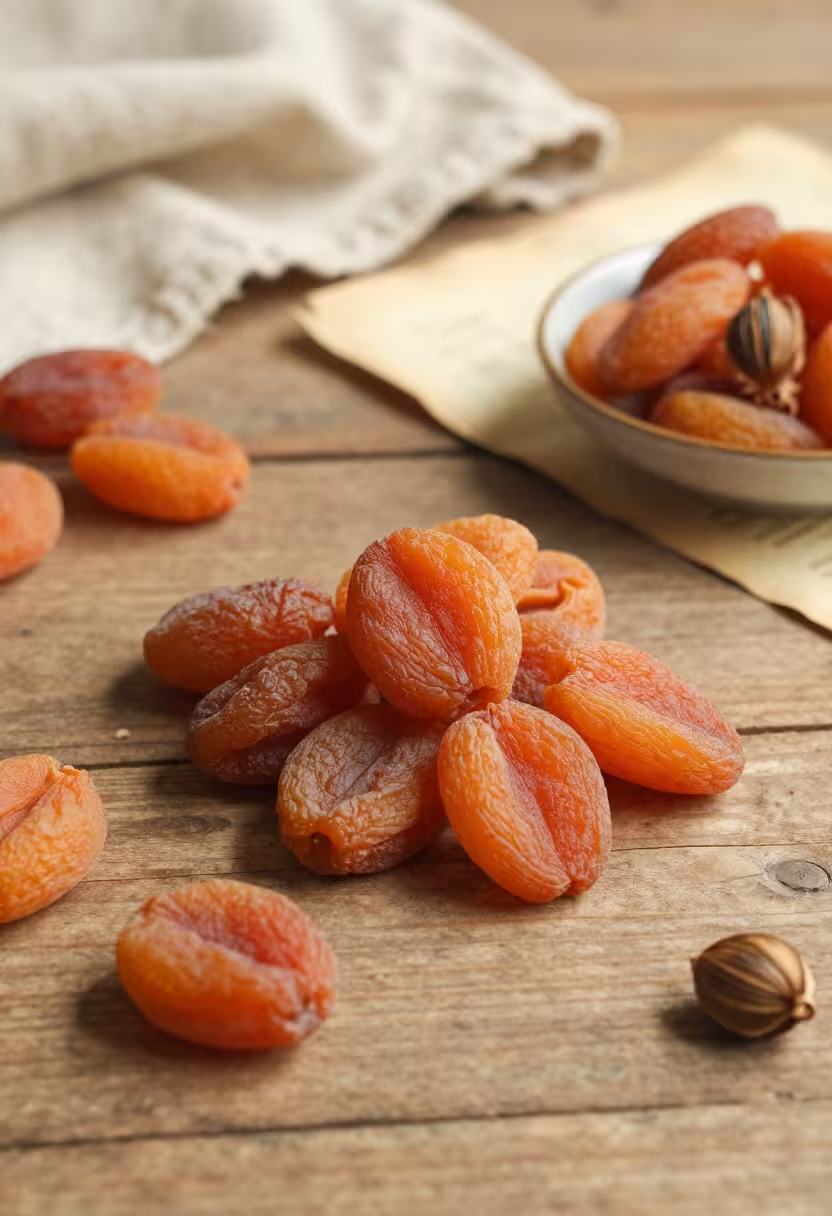
Long before apricot seeds appeared in modern wellness conversations, they existed quietly within traditional food cultures and folk practices. Their use was situational, symbolic, and restrained, shaped by local knowledge rather than trends or broad health claims.
In parts of Central Asia, the Middle East, and East Asia, apricot seeds were sometimes incorporated into traditional preparations — often in very small quantities. They might be ground and mixed into pastes, used as a flavoring element, or referenced in traditional systems that emphasized balance rather than isolated “active ingredients.” Importantly, these uses were typically guided by context, season, and moderation.
In some culinary traditions, sweet apricot seeds were treated similarly to almonds, valued for their subtle flavor rather than for any promised health effect. Bitter apricot seeds, where they appeared at all, were approached with far more caution and were never a casual, everyday food. Knowledge about limits and preparation was often passed down informally, reinforcing respect for the ingredient.
What’s worth noting is that traditional use does not automatically translate to modern wellness recommendations. Historical practices existed within very specific cultural, environmental, and dietary frameworks. Portions were small. Frequency was limited. And use was rarely separated from broader lifestyle patterns.
As apricot seeds entered contemporary wellness culture, much of this nuance was lost. Extracted from tradition and placed into a fast-moving health narrative, they began to be discussed as a standalone solution rather than a contextual ingredient. This shift — from tradition to trend — is where misunderstanding often begins.
Looking at the cultural history of apricot seeds helps ground the conversation. It reminds us that many traditional ingredients were never meant to be amplified or universalized. Instead, they were used carefully, intentionally, and with an understanding of limits.
Nutritional Profile (Without Hype)
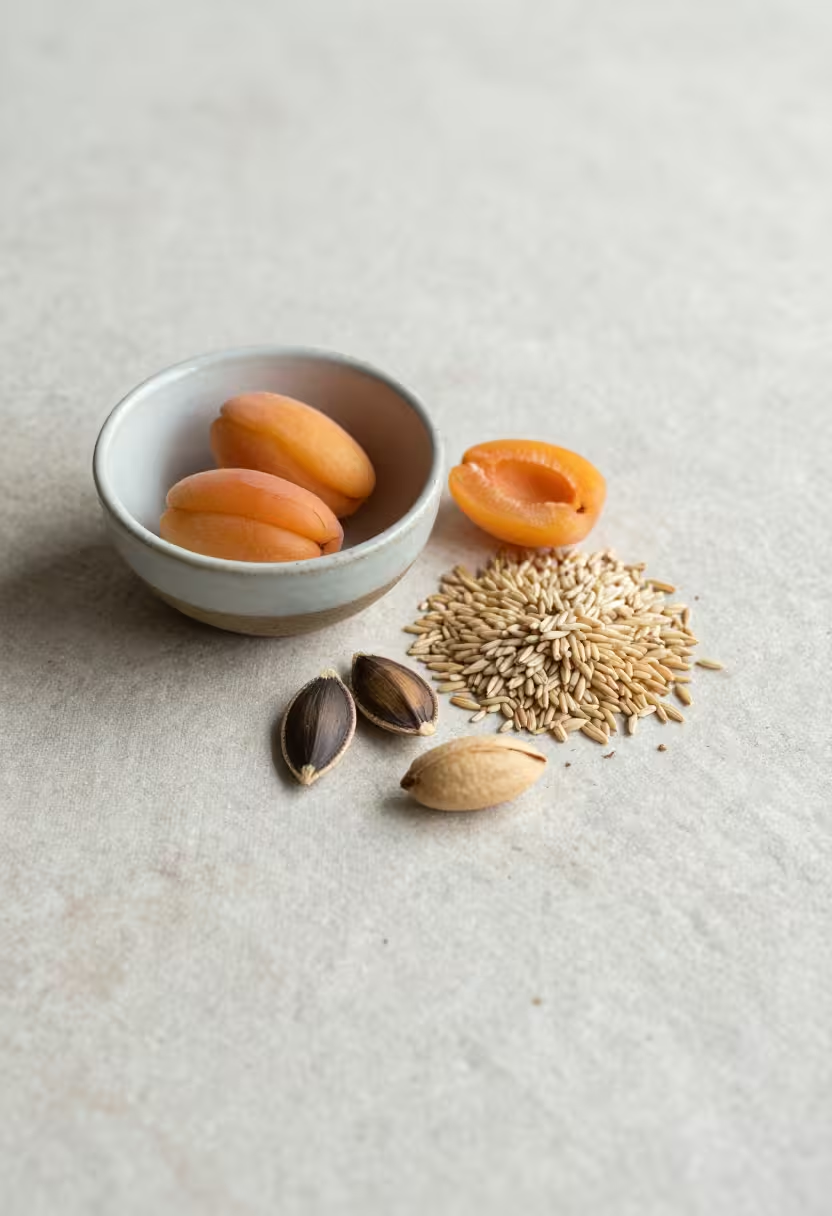
When apricot seeds are discussed in wellness spaces, their nutritional profile is often presented in an overly simplified way — as if a short list of nutrients could tell the whole story. In reality, understanding their composition requires a bit more nuance, and a clear separation between what they contain and how they should be approached.
Apricot seeds contain natural fats, primarily unsaturated fatty acids, similar in structure to those found in other plant seeds and nuts. These fats are part of why apricot kernel oil is commonly used in skincare and cosmetic applications — they contribute to a smooth texture and help support the skin barrier when used externally.
They also contain small amounts of plant-based compounds and trace micronutrients. On paper, this can make them look nutritionally appealing. But it’s important to remember that nutrient presence alone doesn’t determine suitability or safety. Context, quantity, and form matter just as much as composition.
One reason apricot seeds require a more careful lens is that some varieties — particularly bitter apricot seeds — contain naturally occurring compounds that can be harmful in higher amounts. This means their nutritional profile cannot be viewed in isolation from safety considerations. Unlike many common nuts or seeds, “more” is not better here.
This is where wellness messaging often goes wrong. Nutrients are sometimes framed as inherently beneficial regardless of source or dose, which can create a false sense of security around ingredients that require moderation. With apricot seeds, the presence of fats or plant compounds does not override the need for caution.
A more grounded way to think about their nutritional profile is this: apricot seeds are chemically complex, and their potential impact depends heavily on how they are processed, how much is used, and in what form. They are not nutritional staples, and they were never meant to function as one.
Understanding their composition without exaggeration helps set realistic expectations. It shifts the conversation away from promises and toward informed, responsible wellness choices.
The Wellness Conversation Around Apricot Seeds

Apricot seeds often enter wellness conversations quietly — mentioned in passing, recommended in niche communities, or framed as part of a “natural” approach to health. Their appeal is understandable. In a wellness culture that values traditional ingredients and plant-based solutions, apricot seeds can seem intriguing, even comforting. They carry a sense of history, simplicity, and connection to nature.
At the same time, the way apricot seeds are discussed today is often shaped by trend-driven wellness language. Complex ingredients are sometimes reduced to broad promises about balance, vitality, or detoxification — words that sound reassuring but rarely explain how or why something works, or what limitations exist.
This kind of framing can blur important distinctions. It may overlook differences between seed types, forms of use, or safe amounts. It can also unintentionally suggest that natural ingredients are automatically gentle or risk-free, which isn’t always the case. In reality, many plant-based substances are powerful precisely because they are biologically active — and that power deserves respect.
Another factor shaping the conversation is the desire for simple answers. Wellness culture often rewards quick fixes and single-ingredient solutions, especially when they feel alternative or “hidden.” Apricot seeds can easily be pulled into this narrative, even though their traditional use was never about singular effects or standalone benefits.
A more responsible wellness conversation invites curiosity without urgency. It asks questions instead of making claims. It acknowledges uncertainty and values moderation. Rather than asking, “What can apricot seeds do for me?” it asks, “How do they fit — if at all — into a thoughtful, balanced approach to wellness?”
By stepping back from hype and looking at the broader picture, apricot seeds become less of a trend and more of a case study in mindful wellness. They remind us that not every traditional ingredient needs to be adopted widely, and not every natural substance belongs at the center of a routine.
Understanding Amygdalin — What You Need to Know
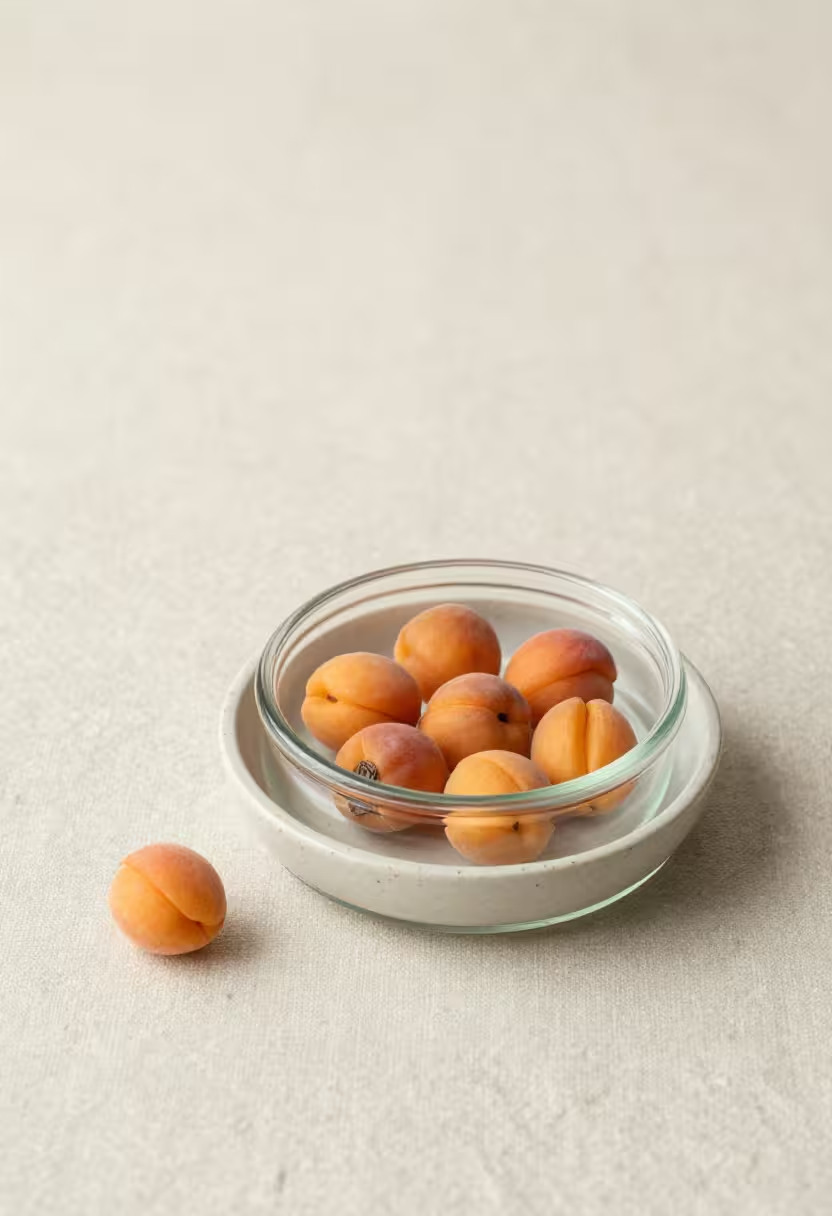
Any thoughtful discussion of apricot seeds needs to include amygdalin — not as a scare tactic, but as essential context. Amygdalin is a naturally occurring plant compound found in the seeds of certain fruits, including apricot kernels, especially the bitter varieties.
When amygdalin is broken down in the body, it can release substances that are harmful in sufficient amounts. This is why apricot seeds are fundamentally different from everyday nuts or seeds, and why they have always required caution in traditional use. The issue is not that amygdalin exists — many plants contain compounds that require limits — but that dose, form, and frequency matter greatly.
In wellness spaces, amygdalin is often discussed either too casually or too dramatically. On one end, it’s minimized or ignored entirely. On the other, it’s presented in ways that provoke fear without explanation. Neither approach is helpful. What is helpful is understanding that this compound is precisely why moderation and informed decision-making are non-negotiable.
It’s also important to recognize that amygdalin content can vary widely depending on:
- whether the seed is sweet or bitter
- how it’s processed
- how much is consumed
- individual sensitivity and metabolism
Because of this variability, apricot seeds are not an ingredient that lends itself well to generalized advice or routine use. What might seem like a small amount can be very different from one source to another, making blanket wellness recommendations unreliable.
This is one of the key reasons many health professionals urge caution — and why responsible wellness guidance emphasizes avoiding extremes and unsupervised use. Natural does not mean neutral, and traditional does not automatically mean safe in modern contexts.
Understanding amygdalin reframes the entire conversation. Apricot seeds are no longer something to experiment with casually or add to a routine out of curiosity alone. They become an ingredient that demands discernment, restraint, and respect for boundaries.
Safety First: Why Moderation Matters
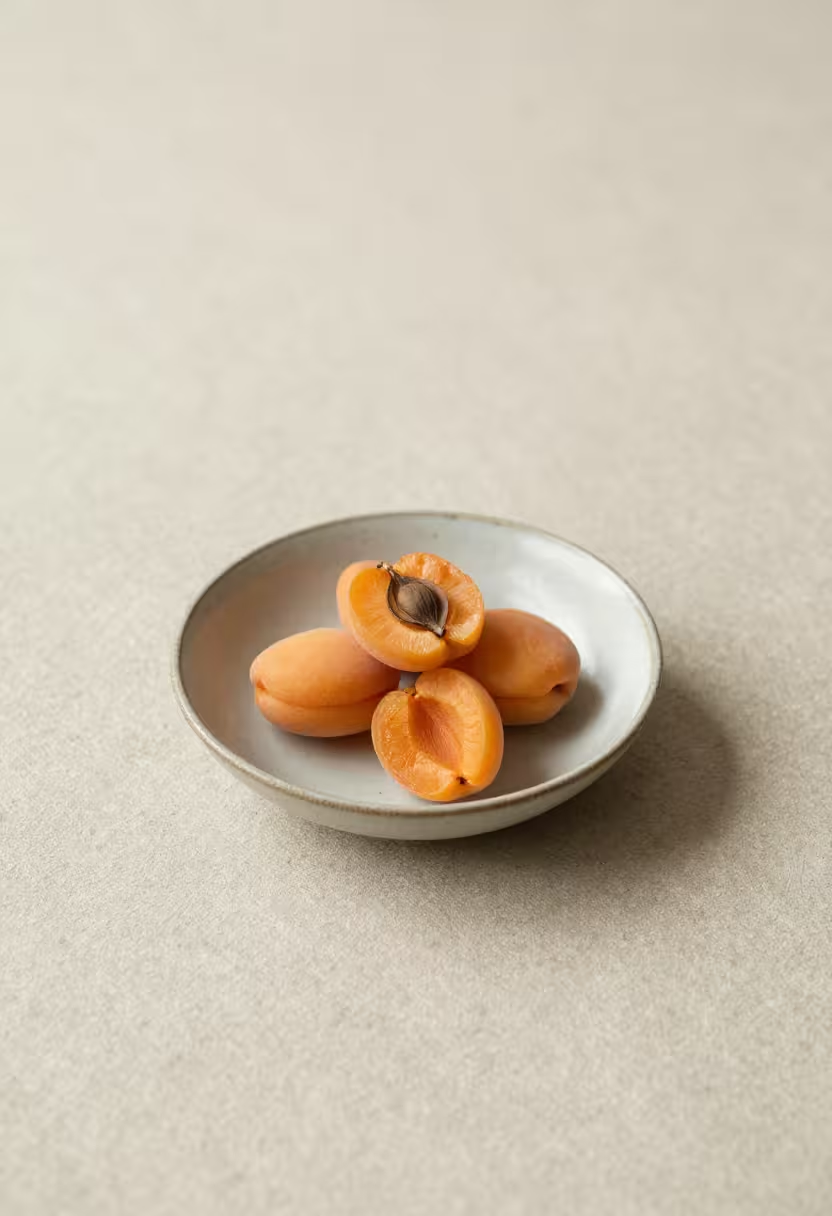
When it comes to apricot seeds, moderation isn’t just a wellness principle — it’s a safety requirement. This is one of those ingredients where the line between “a small amount” and “too much” can be surprisingly thin, especially when context and variability are ignored.
In traditional settings, apricot seeds were never treated as everyday foods. Their use was limited, intentional, and often guided by experience rather than experimentation. Modern wellness culture, however, sometimes encourages regular or unsupervised use, which is where problems can arise.
The reason moderation matters so much comes back to what we’ve already touched on: natural compounds can have strong effects. With apricot seeds, especially bitter ones, consuming more does not increase benefits — it increases risk. Unlike foods where excess simply becomes unnecessary calories, here excess can place real strain on the body.
Another challenge is inconsistency. Apricot seeds are not standardized. Two seeds from different sources can contain very different levels of active compounds. This makes “eyeballing” portions unreliable and adds another layer of uncertainty for casual use.
Moderation also means knowing when not to use something at all. Certain people — including children, pregnant or breastfeeding individuals, and those with specific health conditions — are often advised to avoid apricot seeds entirely. This isn’t about fear; it’s about reducing avoidable risk when safer alternatives exist.
A mindful wellness approach asks a simple but powerful question:
Is this adding meaningful support — or unnecessary complexity?
In many cases, the benefits people seek from apricot seeds (balance, nourishment, skin support, general wellness) can be found in other foods and practices without the same safety concerns.
Choosing moderation — or choosing to opt out — is not a failure to be “natural enough” or “holistic enough.” It’s a sign of discernment. True wellness is not about pushing limits; it’s about protecting long-term health.
Forms of Apricot Seeds Used in Wellness
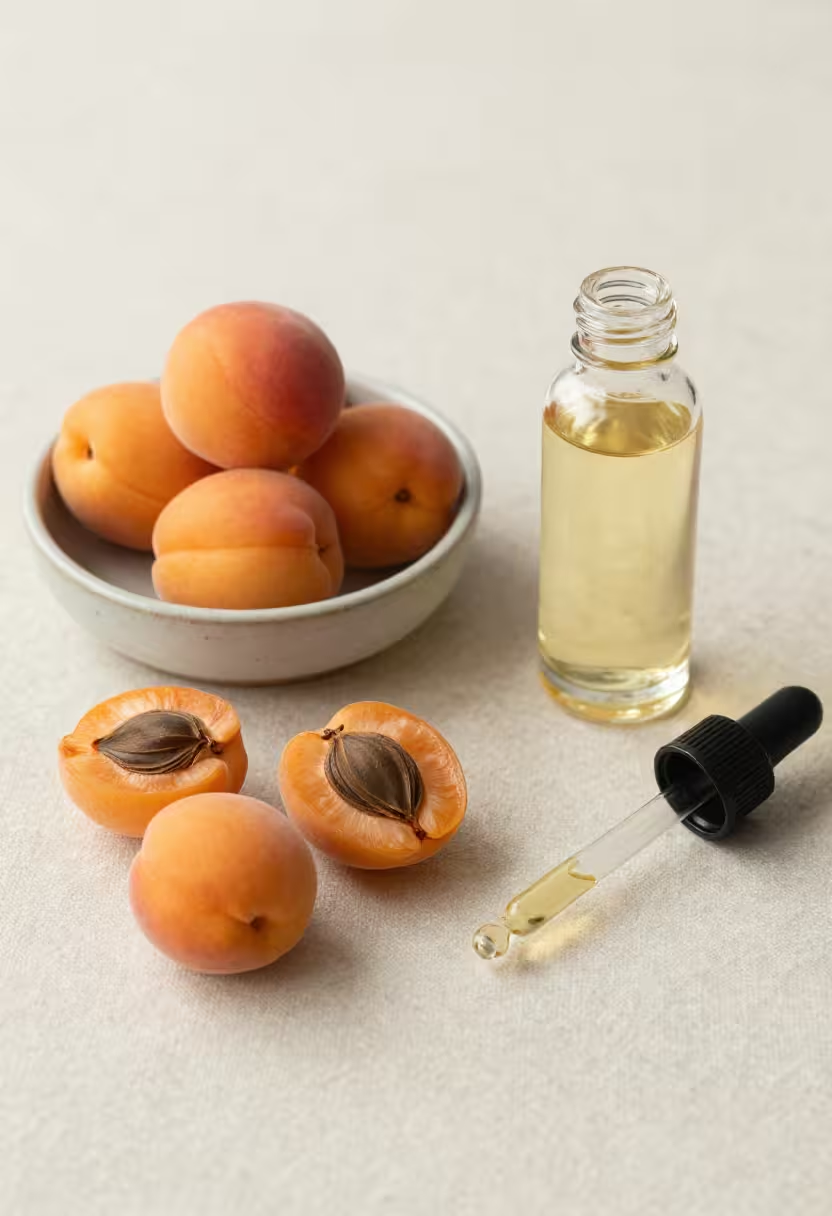
Apricot seeds appear in wellness contexts in several different forms, and understanding these distinctions is essential. The way an ingredient is used often matters just as much as the ingredient itself — especially when safety and moderation are part of the conversation.
Whole apricot seeds are the most straightforward form, but also the most sensitive. They are sometimes discussed in wellness circles as something to consume directly, often without enough clarity around type, quantity, or source. As we’ve already explored, this approach carries the highest level of uncertainty and risk, particularly with bitter apricot seeds. Because their composition can vary widely, whole seeds are not well-suited to casual or routine use.
Ground or powdered apricot kernels occasionally appear in supplements or niche products. While processing may change texture or absorption, it doesn’t automatically remove safety concerns. In some cases, powders can make it easier to consume larger amounts without realizing it, which is why this form still requires significant caution and professional guidance.
Apricot kernel oil is where apricot seeds are most commonly — and most safely — integrated into modern wellness routines. This oil is typically cold-pressed and used externally rather than consumed. It’s valued for its light texture and moisturizing properties, especially in skincare. When used topically, it allows people to benefit from the seed’s natural fats without introducing the same internal risks.
Cosmetic and personal care products often include apricot kernel oil as a supporting ingredient rather than a focal point. In these applications, the emphasis is on nourishment and texture, not on internal effects or health claims.
Understanding these forms helps reframe expectations. Apricot seeds are not a one-size-fits-all ingredient, and not every form is appropriate for every purpose. In many cases, the safest and most practical wellness use involves external application rather than internal consumption.
A thoughtful approach asks not just what an ingredient is, but how it’s being used — and whether that use aligns with both evidence and common sense.
How Apricot Kernel Oil Fits into Wellness
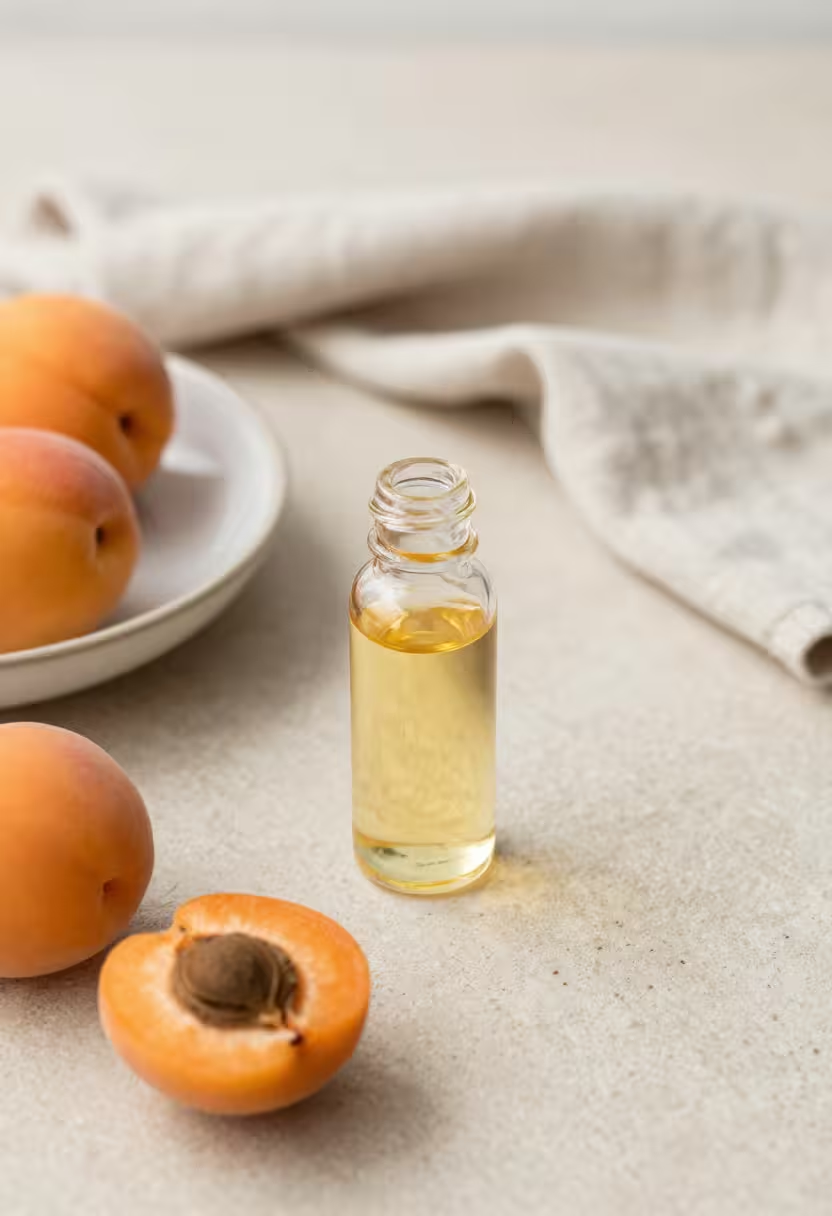
Among all the ways apricot seeds appear in wellness routines, apricot kernel oil stands out as the most approachable and widely accepted option. This is largely because it shifts the focus away from internal consumption and toward external care, where both benefits and risks are easier to manage.
Apricot kernel oil is typically cold-pressed from the seed and valued for its light, silky texture. In skincare and body care, it’s known for absorbing easily without feeling heavy or greasy. This makes it a popular choice for facial oils, body moisturizers, massage blends, and hair care products — especially for those who prefer gentle, plant-based ingredients.
From a wellness perspective, this kind of use aligns well with a low-risk, high-comfort approach. The oil supports the skin barrier, helps lock in moisture, and offers a soothing sensory experience. Importantly, it does this without introducing the internal safety concerns associated with consuming whole seeds or powders.
Another reason apricot kernel oil fits comfortably into modern wellness is that it doesn’t rely on dramatic claims. Its value is practical and experiential rather than performative. People use it because it feels nourishing, works well with sensitive skin, and blends easily with other oils or products — not because it promises transformation.
This also reflects a broader wellness principle: sometimes the most sustainable choices are the simplest ones. External care can still be deeply supportive. Touch, routine, and sensory comfort all play a role in how we experience well-being, even when the effects aren’t dramatic or measurable.
Choosing apricot kernel oil over internal seed use is, for many, a way of honoring curiosity while maintaining boundaries. It allows room for tradition and plant-based ingredients without pushing into unnecessary risk.
Who Should Avoid Apricot Seeds
While apricot seeds may appear in wellness discussions, they are not appropriate for everyone. In fact, there are several groups for whom avoiding apricot seeds altogether is the safest and most responsible choice.
Children should not consume apricot seeds. Their smaller body size and developing systems make them more vulnerable to the effects of naturally occurring compounds found in certain seeds, particularly bitter varieties. What might seem like a small amount to an adult can have a much stronger impact on a child’s body.
Pregnant and breastfeeding individuals are also generally advised to avoid apricot seeds. During these periods, the body is supporting another life or producing nourishment, which changes how substances are processed. When safer, well-established nutritional options exist, there’s little reason to introduce ingredients with known uncertainties.
People with underlying health conditions, especially those affecting the liver, digestion, or metabolism, should approach apricot seeds with caution or avoid them entirely. The way the body breaks down certain plant compounds can vary widely depending on individual health, medications, and overall resilience.
It’s also important to consider anyone drawn to apricot seeds because of strong health claims or promises. If an ingredient feels like it’s being used as a solution rather than a supplement to overall well-being, that’s a signal to pause. Wellness works best when it’s built on consistency, nourishment, and evidence — not urgency.
Even for generally healthy adults, apricot seeds are not a necessity. The qualities people seek from them — balance, nourishment, vitality — are readily available through a wide range of foods and practices that don’t carry the same risks.
Choosing to avoid an ingredient is not a failure to be adventurous or holistic. It’s an expression of discernment and self-respect. True wellness leaves room for opting out when something doesn’t clearly support safety and long-term health.
Mindful Wellness: Choosing Safety Over Trends

Wellness trends move quickly. Ingredients rise to popularity, circulate through social media and blogs, and are often presented as essential additions to a “healthy” lifestyle. Apricot seeds are one example of how easily this can happen — an ingredient lifted out of context and placed into a narrative of optimization and urgency.
Mindful wellness asks us to slow that process down.
Instead of asking “What’s trending right now?”, it asks “What actually supports my well-being over time?” This shift in perspective changes how we evaluate ingredients like apricot seeds. Rather than focusing on potential benefits in isolation, mindful wellness considers safety, necessity, and long-term impact.
Choosing safety over trends doesn’t mean rejecting curiosity or tradition. It means prioritizing stability over experimentation, especially when the risks are real and the benefits are uncertain. Wellness isn’t a race to try everything once — it’s a practice of selecting what truly fits into your life without creating stress, fear, or harm.
There’s also an emotional component here. Trend-driven wellness can quietly create pressure: pressure to keep up, to add more, to believe that health is always one ingredient away. Mindful wellness resists that idea. It recognizes that well-being is built through consistent nourishment, rest, movement, and care — not through rare or controversial additions.
Apricot seeds remind us that not everything labeled “natural” belongs in a daily routine. Some ingredients are better understood than adopted. Some are better left in cultural or historical context rather than modernized without guardrails.
In a mindful wellness framework, choosing not to use something can be just as intentional as choosing to include it. Discernment becomes part of self-care.
Final Thoughts — A Balanced Perspective
Apricot seeds sit at an interesting crossroads between tradition, curiosity, and modern wellness culture. They’re a reminder that not every ingredient needs to be embraced fully — and that understanding something deeply is often more valuable than using it.
Throughout this guide, one theme has remained constant: context matters. Apricot seeds are not inherently good or bad, powerful or pointless. Their role depends on how they’re framed, how they’re used, and whether safety and moderation are placed at the center of the conversation. When those elements are missing, confusion and risk tend to follow.
A balanced wellness perspective doesn’t rely on rare ingredients or bold claims. It values nourishment that’s steady, practices that are sustainable, and choices that support long-term health rather than short-term fascination. In many cases, the most supportive wellness routines are built from simple, familiar elements — foods, habits, and forms of care that don’t require constant explanation or caution.
If apricot seeds spark interest, let that interest be informational rather than impulsive. Learn where they come from. Understand their limits. Recognize that opting for safer alternatives — like external use through apricot kernel oil — can be a thoughtful way to engage without unnecessary risk.
Wellness is not about doing more. It’s about doing what aligns with care, clarity, and respect for the body. Sometimes, that means choosing not to add something at all.
Seen through this lens, apricot seeds become less of a recommendation and more of a lesson — one that reinforces the value of discernment, moderation, and grounded decision-making in a crowded wellness world.