Contents
There’s something difficult to fully explain about comfort food. It’s not only about how something tastes, even though that’s obviously part of it. It’s more about the feeling that comes with it—the kind that settles in almost immediately. You take a bite, and without really thinking, you relax a little. The food is warm, familiar, and somehow reassuring in a way that goes beyond logic.
Lasagna has always been one of those meals that carries that feeling. It’s rich, layered, and filling in a way that feels complete. Not just “good,” but deeply satisfying. The kind of dish that makes you slow down a bit while eating it. At the same time, it comes with a certain weight—not just in flavor, but in effort.
Because making lasagna is rarely a quick decision.
It usually means setting aside time, preparing multiple components, and accepting that you’ll probably have a fair amount of cleanup afterward. It’s worth it, of course. But it’s also the kind of meal people tend to associate with weekends, gatherings, or moments when you actually have the energy to commit to it.
The reality is, most evenings don’t really look like that.
More often than not, you come home already a bit tired. Maybe you’re hungry sooner than expected. Maybe you open the fridge and hope something will just make sense without too much effort. The idea of carefully layering pasta, sauce, and cheese starts to feel less appealing, even if the final result still sounds perfect.
And yet, the craving for that kind of food doesn’t just disappear.
You still want something that feels like a real meal. Something warm, a little rich, and genuinely comforting—not just quick, but satisfying in a deeper way. Something that feels like you actually cooked, even if you didn’t spend hours doing it.
That’s where this version starts to make sense in a very practical way.
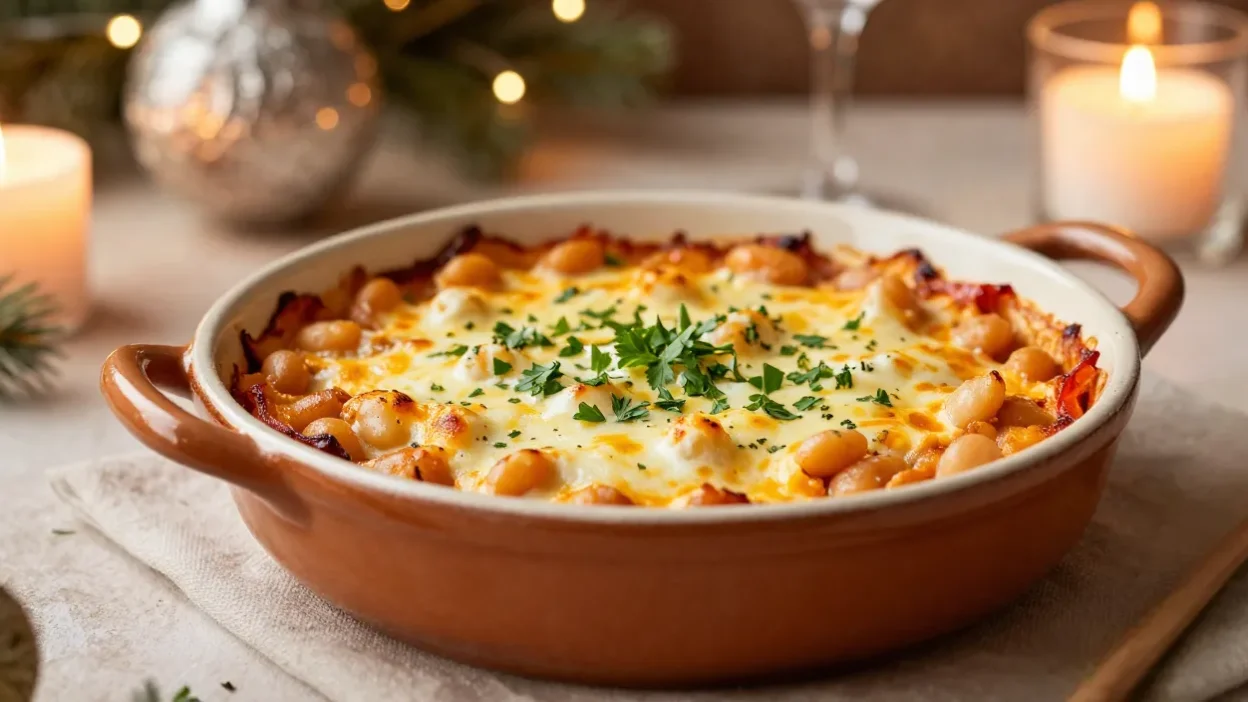
Lasagna beans take the core idea of lasagna—the richness of tomato sauce, the creaminess of cheese, the overall warmth of a baked dish—and simplify the structure. Instead of building careful layers, everything comes together more naturally, in one pan, without the same level of effort or precision.
What you end up with is something that fits much better into everyday life:
- it doesn’t require long preparation or planning
- it uses simple, easy-to-find ingredients
- it comes together without complicated steps
- and it still feels like proper comfort food, not a shortcut
That balance is what makes it so appealing. It’s not trying to replace the original—it just makes the experience more accessible.
A Different Kind of Comfort 🍅
At first, the idea of replacing pasta with beans can feel a little unexpected. It’s not the most obvious substitution, and it raises a fair question about texture and overall satisfaction.
But once you actually try it, the comparison starts to matter less.
White beans, especially softer varieties like cannellini or butter beans, have a naturally creamy interior that works surprisingly well in a tomato-based dish. When they cook in the sauce, they absorb flavor gradually, becoming part of the overall structure rather than sitting separately like pasta layers would.
The result is different, but not in a negative way. It simply shifts the experience.
Instead of defined layers, you get something more fluid. The texture lands somewhere between a baked casserole and a thick, hearty stew. It feels less structured, but also more relaxed—something you don’t have to think too much about while cooking or eating.
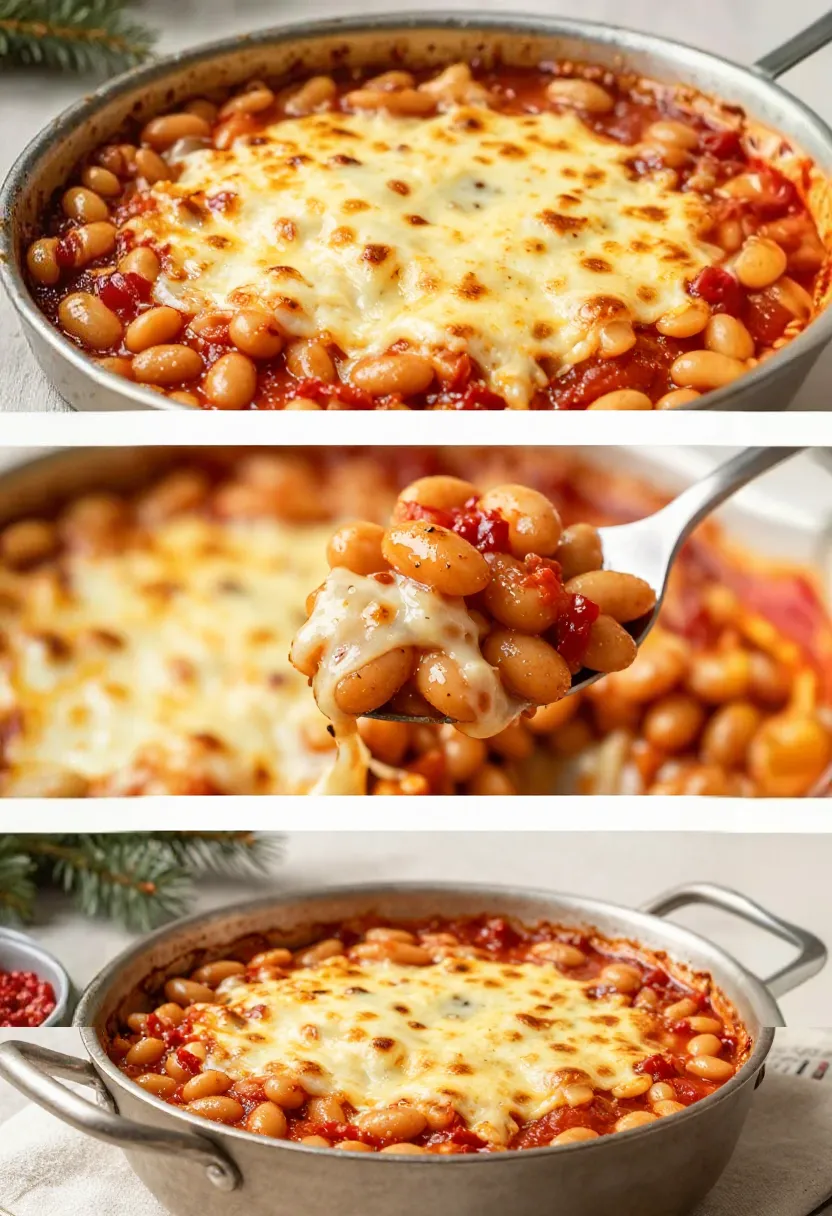
And that relaxed quality is part of what makes it comforting.
The sauce coats everything evenly, so each bite feels balanced. You don’t get distinct sections—you get a consistent, full flavor throughout. The beans soften slightly as they cook, blending into the sauce without losing their shape entirely.
After a few bites, a few things become clear:
- the dish feels filling, but not overly heavy
- the creaminess comes naturally, without needing extra ingredients
- the texture is softer and more cohesive than traditional lasagna
- and most importantly, it doesn’t feel like something is missing
There’s also a practical advantage that becomes obvious very quickly. By removing pasta, you eliminate an entire step from the process. No separate pot, no draining, no timing everything to come together at the right moment.
Everything happens in one place, at a steady pace.
And because of that, the whole experience—from cooking to serving—feels simpler and more manageable, especially on days when you don’t want to overcomplicate things.
Built on Flavor, Not Effort 🧄
One of the strongest aspects of this dish is how it builds flavor without relying on anything complicated. There’s no need for advanced techniques or precise timing. Instead, it follows a sequence that feels natural and easy to manage.
It begins with olive oil and onions. Letting the onions cook slowly is one of those small steps that makes a noticeable difference. They soften, release their natural sweetness, and create a base that supports everything else in the dish.
Garlic comes next, adding depth and aroma. It doesn’t take long—just enough time to become fragrant and blend into the oil and onions.
From there, the sauce develops in layers.
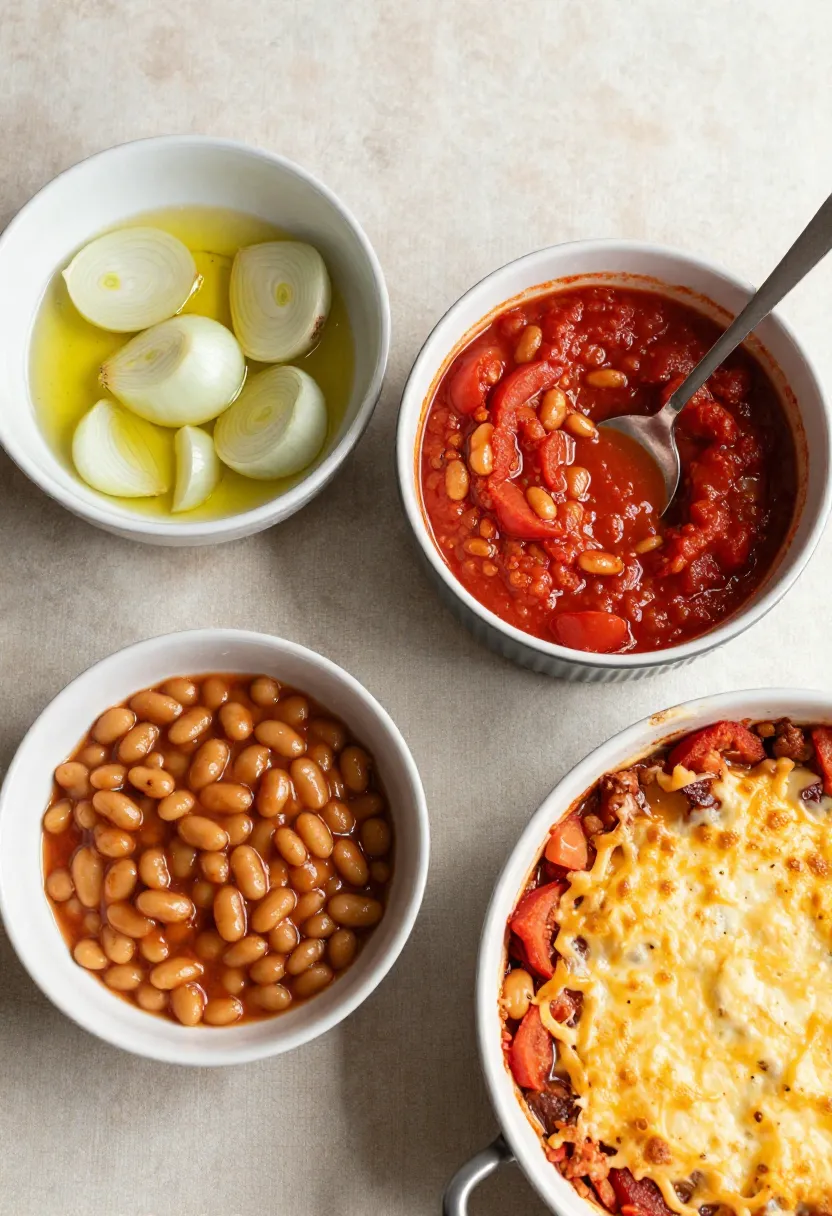
Tomato paste is added first, and this step matters more than it might seem. Giving it a minute or two to cook slightly intensifies its flavor, making the overall sauce taste richer and more developed. After that, crushed tomatoes are added, bringing balance and body.
Seasonings follow naturally—dried herbs for familiarity, salt and pepper for structure, and optionally a bit of chili for warmth. As everything simmers, the flavors begin to settle and combine, creating a sauce that feels deeper than the time it took to make it.
At this stage, the beans are added. They don’t require much attention—just a gentle stir and a few minutes to heat through and absorb the surrounding flavors.
The final layer comes from the cheese, which is added in a way that feels intentionally unstructured:
- ricotta is spooned in small portions, creating soft, creamy pockets
- mozzarella is spread over the top, forming a smooth, melty layer
- Parmesan adds a sharper, slightly salty finish that balances everything
Once the dish goes into the oven, everything comes together. The surface begins to bubble, the cheese melts and lightly browns, and the sauce thickens just enough to hold everything in place.
What stands out most is how approachable the entire process feels.
There’s no pressure to get everything exactly right. No single step that can go wrong in a significant way. It’s a dish that allows for small variations and still delivers a satisfying result.
And maybe that’s the key reason it works so well—it fits into real, everyday cooking. The kind where you don’t have unlimited time or energy, but still want something that feels warm, complete, and worth sitting down for. 💛
🧾 Recipe: Cheesy White Bean Lasagna Bake
🍲 A Simple Dish That Feels Like Home
There’s something very grounding about this dish. It doesn’t try to impress you with complexity or unusual techniques—it just quietly delivers everything you want from a comforting meal. Warm, rich, slightly cheesy, and the kind of food that makes you slow down without even realizing it.
What makes it especially nice is how balanced it feels. It’s definitely hearty, but not in a heavy, overwhelming way. The beans give it substance, the tomato sauce keeps it bright, and the cheese ties everything together without turning it into something overly rich.
It’s also the kind of meal that fits different moods. On a busy weekday, it feels like a small win—you didn’t just “make something quick,” you actually cooked a proper dish. And on a slower day, it still holds up as something cozy and satisfying, the kind of food you can enjoy without rushing.
Another thing you’ll probably notice is how approachable it is. No complicated prep, no need to multitask between five different pots. Everything builds in one pan, step by step, in a way that feels natural.
If anything, this is one of those recipes that quickly becomes familiar. The kind you don’t need to overthink after the first time—you just know how it works.
🛒 Ingredients
- 2 cans (400–450 g each) white beans (cannellini or butter beans), drained and rinsed
- 1 tablespoon olive oil
- 1 small onion, finely chopped
- 4 cloves garlic, minced
- 1 tablespoon tomato paste
- 1 large can crushed tomatoes
- 1 teaspoon dried Italian herbs
- Salt and black pepper to taste
- A pinch of chili flakes (optional 🌶️)
- ½ cup ricotta cheese
- 1–1½ cups shredded mozzarella
- ¼ cup grated Parmesan
- Fresh basil for serving
Optional:
- 200–300 g Italian sausage (or plant-based alternative)
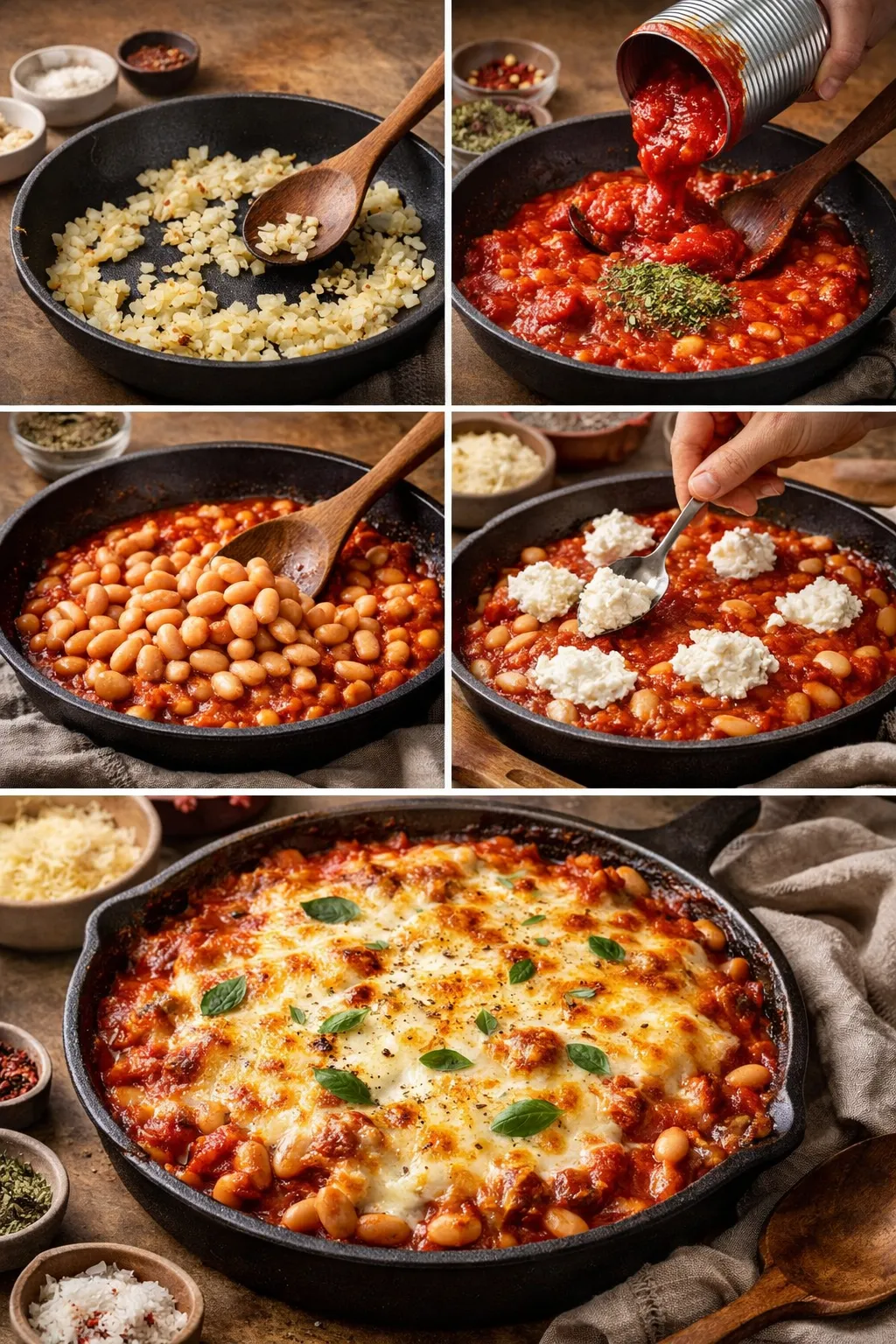
👩🍳 Instructions
- Preheat your oven to 200°C (400°F).
- Heat olive oil in a large oven-safe skillet over medium heat. Add the chopped onion and cook until soft and slightly translucent. Don’t rush this step—it’s where the base flavor starts to build.
- Stir in the garlic and cook for about a minute, just until fragrant. You’re looking for aroma, not browning.
- If using sausage, add it now. Break it up with a spoon and cook until browned and fully cooked through. Let it get a little color—it adds extra depth.
- Add the tomato paste and cook for 1–2 minutes, stirring it into the mixture. This helps bring out a richer, slightly deeper flavor in the sauce.
- Pour in the crushed tomatoes. Add herbs, salt, pepper, and chili flakes. Let everything simmer gently for about 10 minutes so the flavors can come together.
- Add the white beans and stir carefully to combine. Let them sit in the sauce for a few minutes to absorb some of that flavor.
- Spoon small portions of ricotta across the surface without fully mixing it in. It’s better when it stays in soft, creamy pockets.
- Sprinkle mozzarella and Parmesan evenly over the top. Don’t worry about making it perfect—slightly uneven is actually better here.
- Transfer the skillet to the oven and bake for 15–20 minutes, until the cheese is melted, bubbling, and lightly golden on top.
- Remove from the oven and let it rest for a few minutes. This helps everything settle a bit. Finish with fresh basil before serving.
✨ Small Tips That Make a Difference
- If the sauce feels too thick before baking, add a small splash of water or broth—it helps everything stay soft and creamy
- Let the dish rest for 5–10 minutes after baking; it thickens slightly and becomes easier to serve
- Use good-quality canned tomatoes if you can—it really affects the overall flavor
- Don’t overmix after adding ricotta; those creamy pockets are part of what makes the dish feel special
- Leftovers taste even better the next day, once everything has had more time to settle together
🌟 Making It Truly Yours
One of the best things about this dish is how naturally it adapts to you over time. The first time you make it, you might follow the recipe a bit more closely, just to understand how everything comes together. But after that, something shifts. You stop measuring as carefully, you start adjusting small things, and before you know it, you’re cooking it almost from memory.
That’s usually a sign of a good, practical recipe—the kind that doesn’t stay fixed on the page but becomes part of your routine.
It’s also very forgiving, which makes it easy to experiment without worrying too much about the outcome. You don’t have to get every detail exactly right. The structure is simple enough that small changes don’t break the dish—they just slightly reshape it.
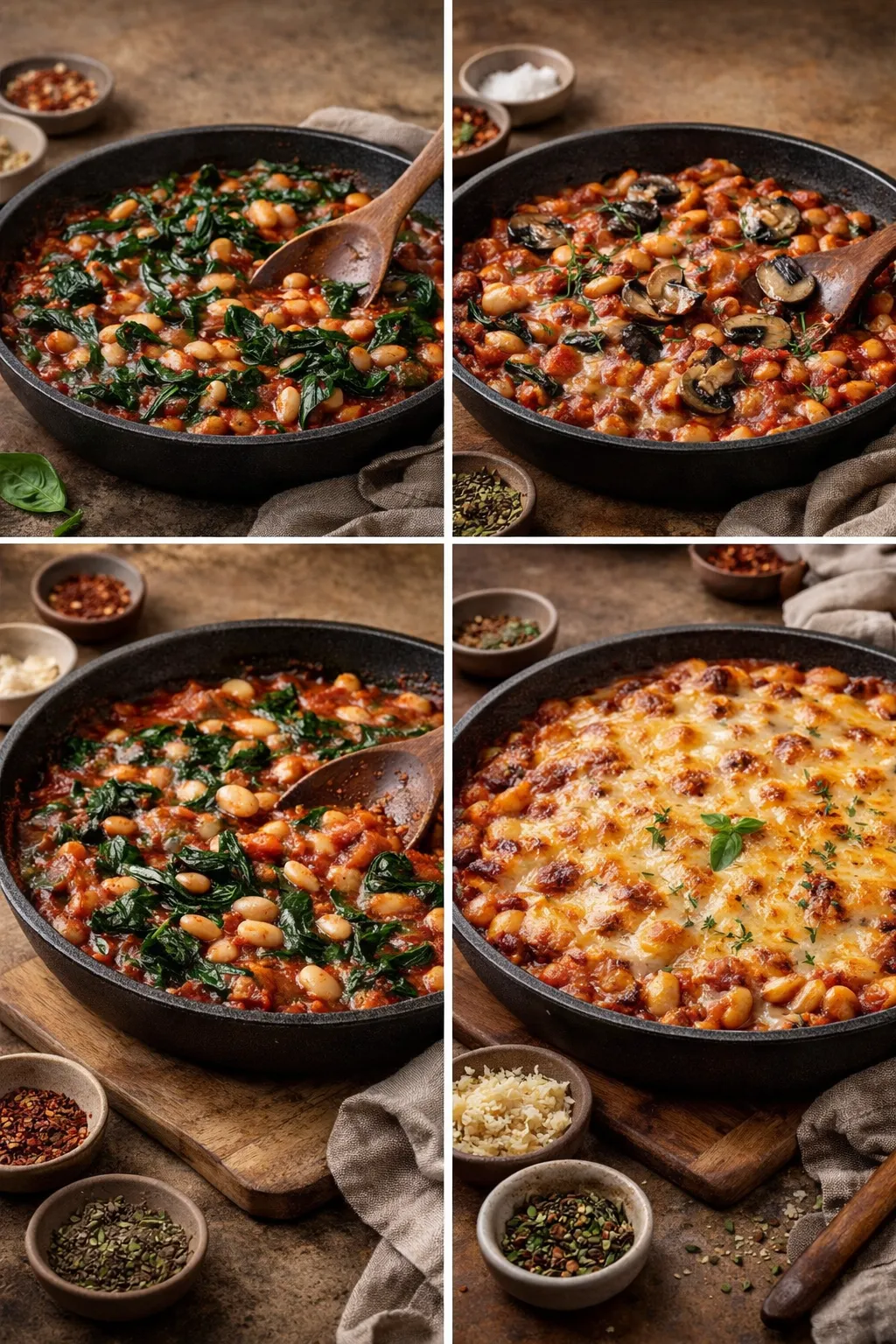
Adding vegetables is probably the easiest way to adjust it. You don’t need to rethink the whole recipe, just fold them in as you go. Spinach softens almost immediately and blends into the sauce, zucchini becomes tender and mild, and mushrooms add a deeper, more savory note that makes the whole dish feel a bit richer.
At the same time, you can simplify it just as easily. If you don’t feel like adding extra ingredients, it still works perfectly on its own. That balance—between flexibility and reliability—is what makes it so easy to return to.
It also works well for different preferences. You can keep it vegetarian without feeling like anything is missing, or add sausage if you want something a bit more substantial. Even small changes in seasoning can shift the overall feel of the dish.
Over time, you’ll probably find yourself adjusting things without even thinking about it:
- adding a little more cheese when you want it extra comforting
- using more garlic or herbs depending on what you have
- increasing the spice level slightly if you’re in the mood for something warmer 🌶️
None of these changes require planning. They just happen naturally, and the dish still works every time.
That’s what makes it feel personal. It slowly becomes less about following instructions and more about cooking something familiar in your own way.
🥖 Serving and Atmosphere
The way you serve this dish can completely change how it feels, even though the recipe itself stays the same. That’s one of the things that makes it so versatile—it can shift from something casual to something a bit more put-together without any extra effort.
Right out of the oven is when it’s at its best. The cheese is fully melted, slightly golden on top, and the sauce has thickened just enough to hold everything together without feeling dry. There’s a moment, just after you take it out, where it looks and smells exactly like the kind of meal you were hoping for.
You don’t need to rush it, though. Letting it sit for a few minutes actually helps. It settles, becomes a bit easier to serve, and the flavors seem to come together more clearly.
When it comes to serving, there’s no single “correct” way to do it. You can make it feel like a full meal with a few simple additions, or keep it as straightforward as possible. A slice of crusty bread is probably the most natural pairing—it adds texture and gives you a way to scoop up the sauce without thinking twice about it.
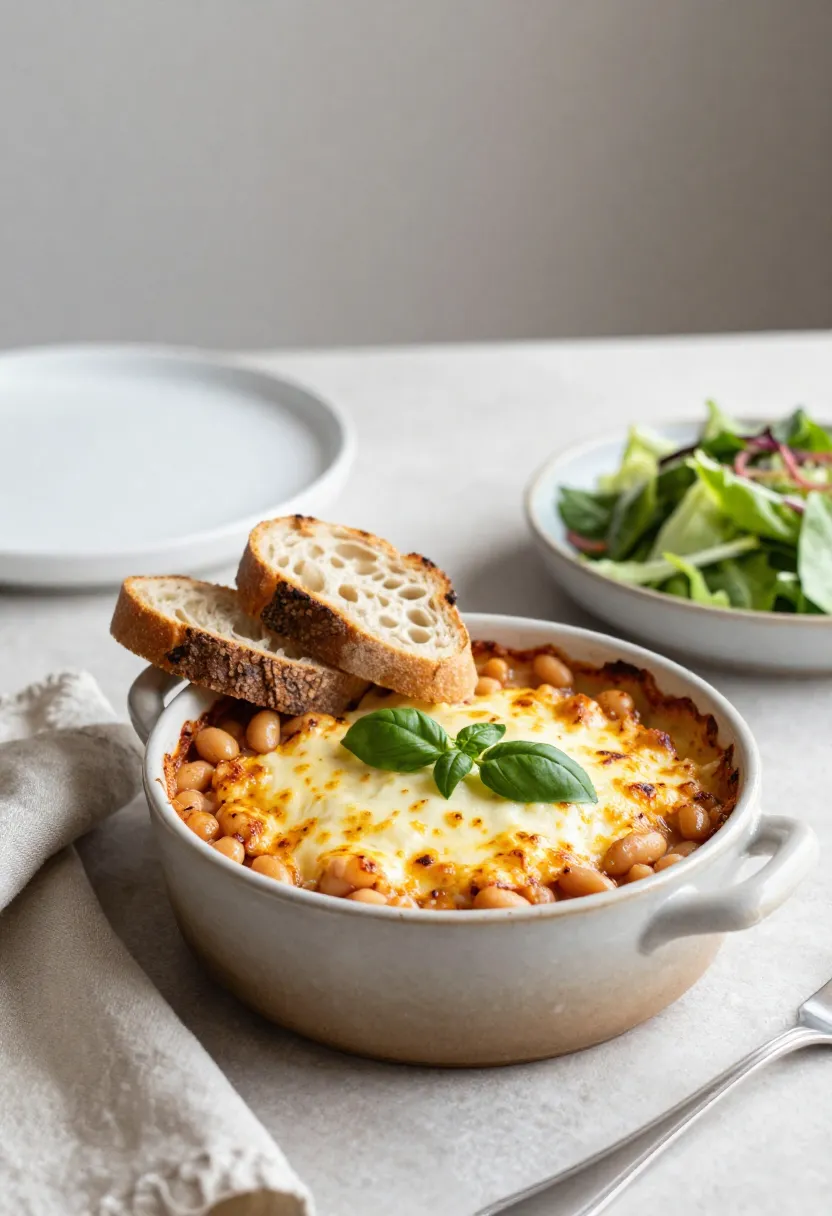
If you want something lighter on the side, a simple salad works well. Nothing complicated, just something fresh to balance the richness of the dish. Even a few leaves with a bit of dressing can make a difference.
A few easy serving ideas that tend to work well:
- crusty bread or toast for a bit of crunch
- a light salad to balance the richness
- fresh herbs on top for a bit of contrast and freshness
But at the same time, none of this is necessary.
This is also the kind of meal that feels completely fine when it’s not “served” at all. You can eat it straight from the pan, standing in the kitchen, or sitting somewhere comfortable after a long day. It doesn’t lose anything in a more relaxed setting.
And maybe that’s the point—it adapts not just to your ingredients, but to your mood as well.
💛 Why This Dish Stays With You
Some recipes make a strong first impression. They look great, taste great, maybe even feel a bit special. But after that, they don’t always become part of your regular cooking. They stay occasional.
This dish feels different from the start, but especially after you’ve made it more than once.
It doesn’t rely on being impressive. Instead, it focuses on being consistent and easy to come back to. You know roughly how it works, you know it won’t take too long, and you don’t need to think too much while making it. That kind of reliability becomes more valuable over time than something more complicated.
It’s also the kind of meal that fits into different situations without needing to change much. You can make it on a busy evening when you don’t have much energy, or on a slower day when you just want something warm and familiar. It doesn’t feel out of place in either case.
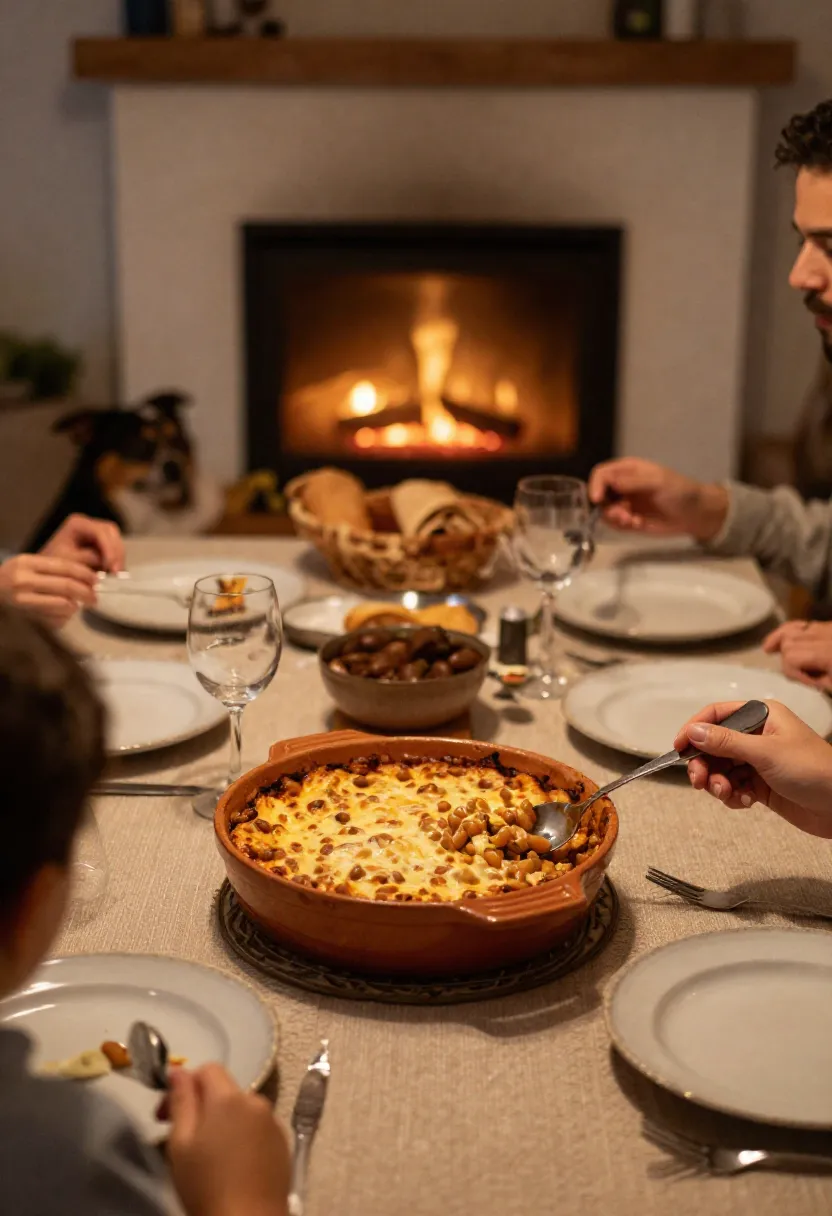
There’s something quietly comforting about that.
After a while, it becomes one of those dishes you remember without trying. Not because it’s unusual, but because it works. Because it does exactly what you need it to do.
It gives you a few simple things that matter more than they seem at first:
- something warm and filling at the end of the day
- a process that doesn’t feel overwhelming
- and a result that still feels like proper, home-cooked food
And maybe that’s why it stays with you.
Not because it’s perfect, but because it’s reliable. Because it fits into everyday life without asking too much from you. Because it gives you comfort without turning cooking into a task.
In the end, that’s what most people are really looking for. Something simple, something good, and something they’ll actually want to make again. 💛