When people hear “salad,” they usually picture something light and kind of boring. The thing you order because you should, not because you actually want it.
This one flips that idea a bit.
Potsticker salad isn’t trying to surprise you with anything fancy. No weird ingredients, no extra steps. It just keeps the good part—the dumplings—and builds the rest around them.
And honestly, that’s what makes it work.
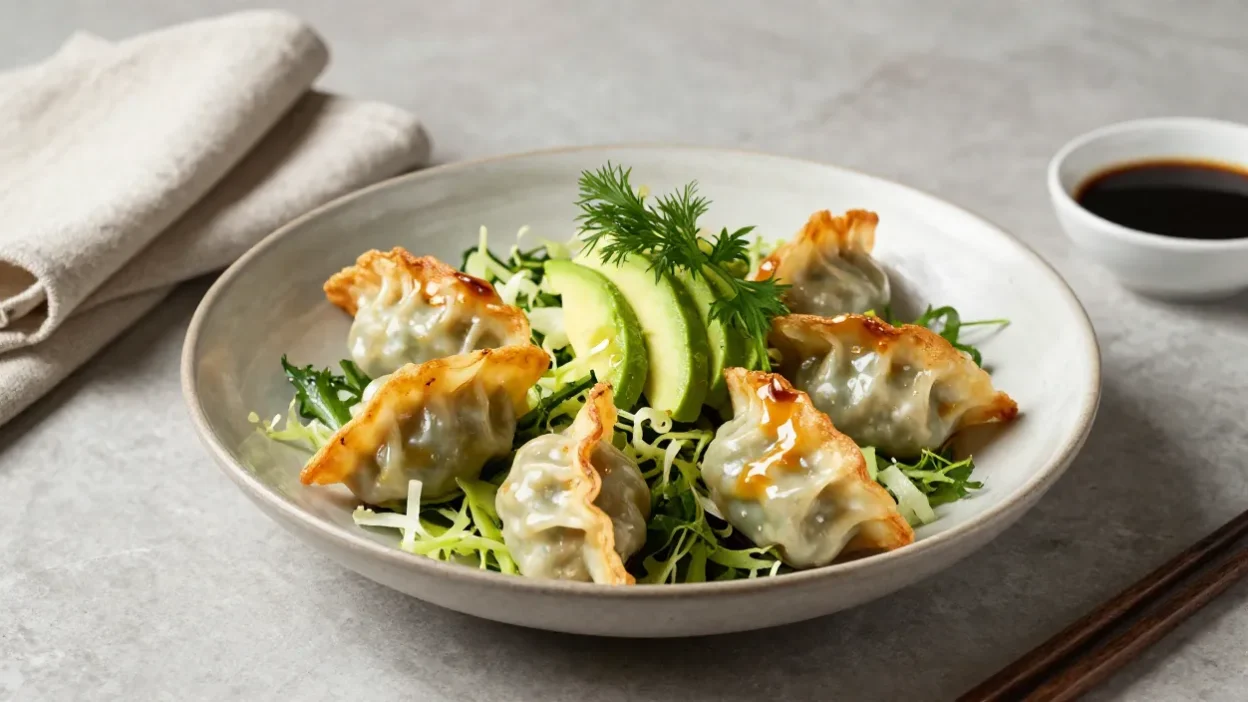
The dumplings are still the main event. Warm, savory, a little crispy on the outside, soft inside. You bite into one and it actually feels like food, not just something on the side of your plate. The whole thing eats like a proper meal.
The vegetables do a different job.
Cabbage, cucumbers, herbs—they add crunch and freshness, sure, but mostly they keep everything from feeling too heavy. You get that mix: rich, then crisp, then something bright. It resets your palate without trying too hard.
I’ll admit, the first time I heard “dumpling salad,” it sounded slightly wrong. But once you eat it, it clicks pretty fast. Nothing feels forced. It’s just… balanced in a way you don’t overthink.
That’s why it stands out. Not because it’s new or complicated, but because it actually works in real life.
It’s the kind of thing you make on a random evening, or throw together for lunch, or put on the table when people come over and you don’t want to overcomplicate it. And you don’t walk away feeling like you made a “healthy choice” or a “cheat meal.” It sits somewhere in the middle—and that’s exactly the point.
🥢 The Beauty of Contrast in Every Bite
One of the main reasons this salad stays interesting from the first bite to the last is contrast. A lot of dishes lean too heavily on one texture or flavor, and after a few bites, everything starts to feel the same. Here, that doesn’t really happen.
This salad keeps things moving.
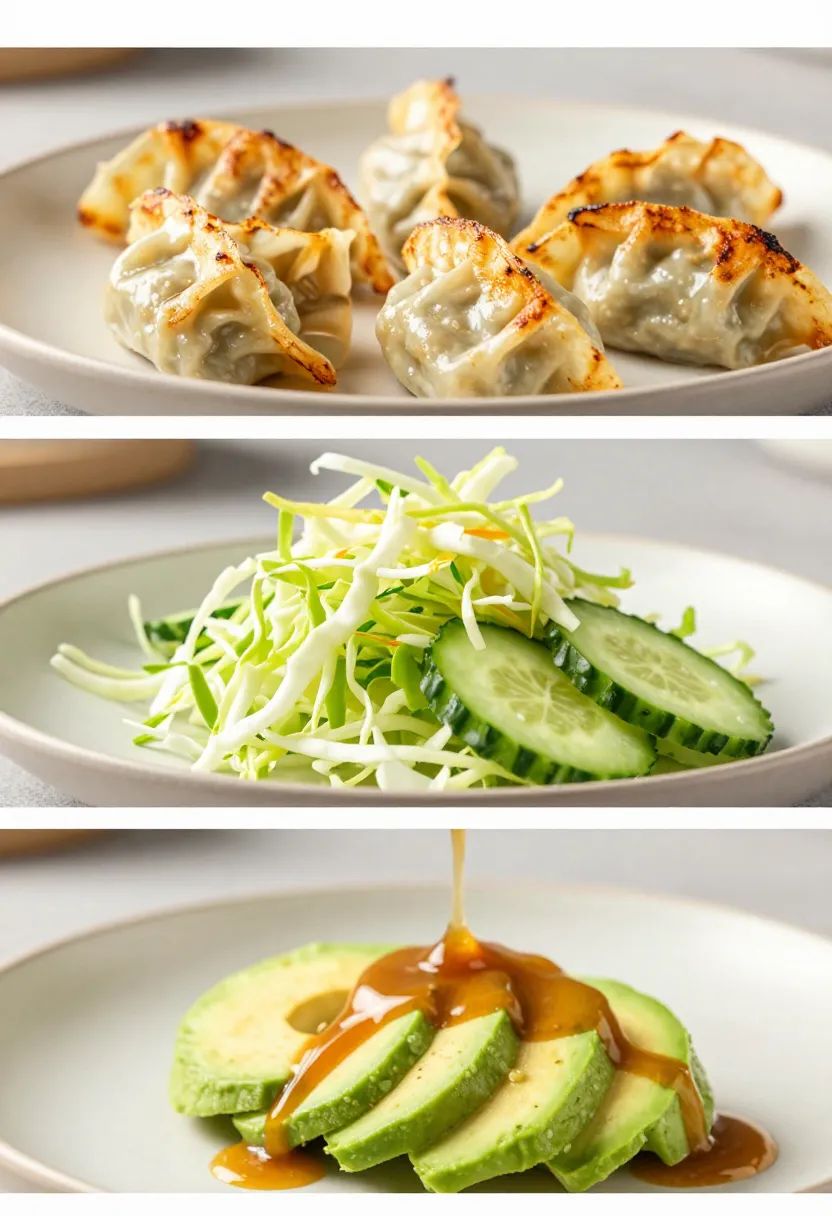
Each bite shifts a little. You might start with the crunch of cabbage or cucumber—fresh, slightly sharp, almost waking up your appetite. Then something softer comes in, like avocado, smoothing things out with that creamy texture. And then the dumplings—warm, savory, a bit crisp on the outside—bring everything back down and make it feel like a real meal.
It’s not random. The balance is doing the work.
The dressing is what ties it all together. It adds acidity, a bit of salt, sometimes a touch of sweetness. Without it, everything would feel separate, like a mix of ingredients on the same plate. With it, the whole thing starts to feel intentional.
| Component | Texture Contribution | Flavor Role | Temperature | Functional Role in the Dish |
|---|---|---|---|---|
| Dumplings | Crisp exterior, soft center | Rich, savory, umami | Warm | Serve as the central element, adding depth and making the dish filling |
| Cabbage / Greens | Firm, crunchy | Mild, slightly sweet | Cold | Provide structure and contrast, preventing the dish from feeling too dense |
| Cucumbers | Juicy, crisp | Clean, refreshing | Cold | Add lightness and help balance the richness of the dumplings |
| Avocado | Smooth, creamy | Neutral, buttery | Cool | Soften the overall texture and create a more rounded mouthfeel |
| Nuts (optional) | Hard, crunchy | Toasty, slightly rich | Room temp | Introduce an additional layer of texture and subtle complexity |
| Fresh Herbs | Soft, delicate | Bright, aromatic | Cold | Enhance freshness and provide a clean finish to each bite |
| Dressing | Light, fluid | Tangy, salty, slightly sweet | Ambient | Bind all components together and create flavor continuity |
What really matters isn’t just the ingredients, but how they interact. Warm and cold play off each other. Crunchy and soft keep switching places. Nothing stays the same for too long, and that’s what keeps the dish from getting boring.
There’s also a small detail you notice more as you eat. The flavors don’t hit all at once—they sort of move. First something fresh and crisp, then warmer and richer, and then a light, slightly acidic finish from the dressing and herbs.
That shift is what keeps you going back for another bite.
Because of that, the salad doesn’t need to be loud or overloaded with flavor. It stays interesting without trying too hard. And that balance—simple, but not flat—is actually harder to get right than it looks.
🌿 A Flexible Dish That Adapts to You
Beyond the balance and flavor, one of the most useful things about this salad is how flexible it is. A lot of recipes fall apart if you change even one ingredient or skip a step. This one doesn’t.
It gives you some freedom.
You don’t need exact measurements or a perfectly fixed ingredient list to make it work. You can adjust it based on what you like, what you have in the fridge, or even how hungry you are. The core idea stays the same, even if the details shift a bit.
That’s what makes it easy to come back to.
It works just as well for a quick, no-thinking dinner as it does when you actually feel like putting in a bit more effort. You can keep it simple, or build it up—it holds together either way.
The salad can move between lighter and more filling versions without much effort. If you lean into vegetables and herbs, it feels fresh and light, something you could eat on a warm day without feeling weighed down. If you go heavier on the dumplings—or add noodles or rice—it turns into something closer to a full meal.
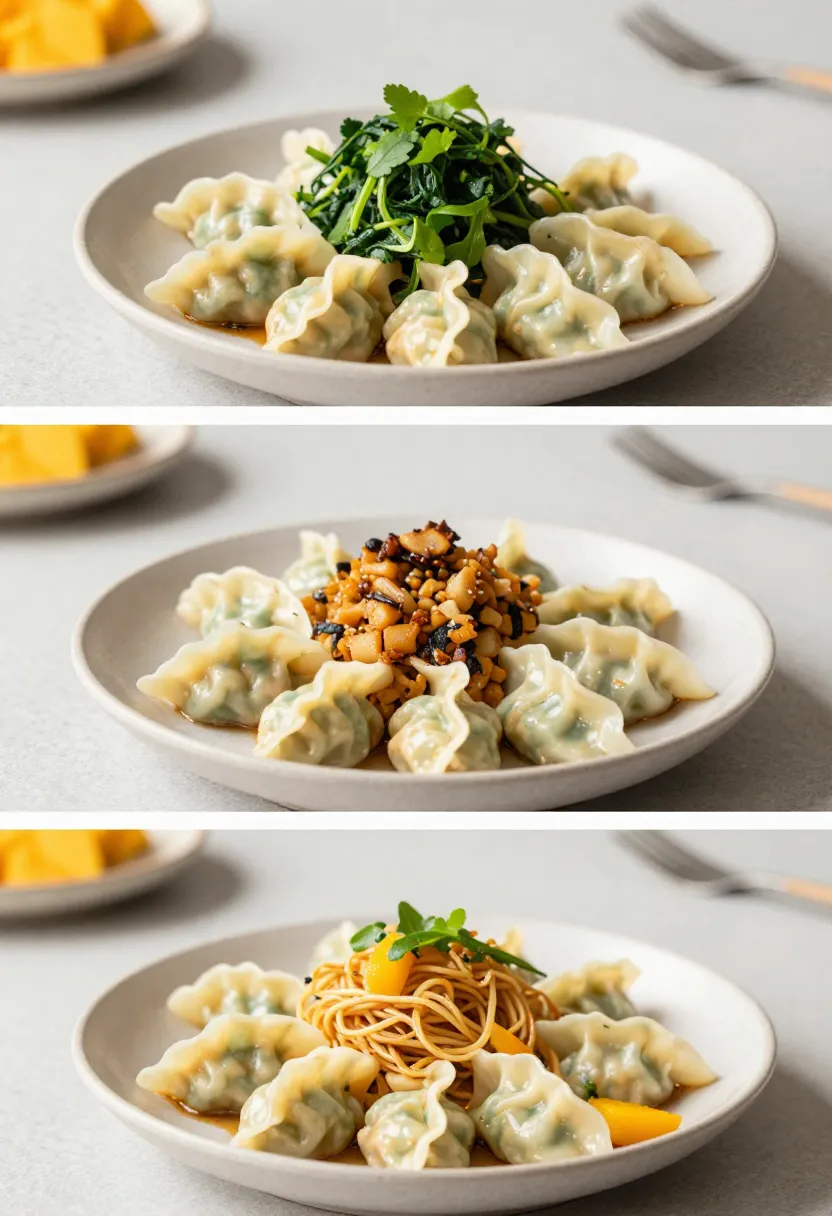
Same idea, different outcome.
It’s also very forgiving when it comes to swapping ingredients. You don’t have to follow the recipe too strictly for it to still taste good:
- cabbage can easily be replaced with lettuce, spinach, or whatever greens you have
- nuts can be switched, reduced, or skipped entirely
- chili oil or fresh chili can be added if you want more heat
- something sweet, like mango or citrus, can shift the flavor in a really nice way
None of these changes break the dish. They just push it in a slightly different direction.
That’s part of why it doesn’t get boring.
You can make it one way today and tweak it next time depending on your mood, the season, or what’s left in your kitchen. It doesn’t lock you into one version.
Another thing that matters—it’s a forgiving recipe overall. You don’t have to be precise with timing or technique. Slightly overcook something? Cut things unevenly? It’s fine. The dish can handle small mistakes without falling apart.
That makes it approachable, whether you cook all the time or only when you have to.
In everyday terms, this just means it fits into real life. You can throw it together quickly when you’re short on time, or slow down and build it more carefully if you’re in the mood. It works as a full meal, something to share, or just one part of a bigger table.
And that flexibility is probably the main reason it sticks around.
It’s not a one-time recipe. It’s the kind of thing you keep coming back to, adjusting it slightly each time, without losing what made it good in the first place.
🍜 Potsticker Salad Recipe (Crispy Dumplings with Fresh Vegetables)
This is one of those dishes that sits somewhere between comfort food and something that still feels fresh. It’s not trying to be especially light, but it’s not heavy either. It lands right in the middle—warm, crisp dumplings next to cool, crunchy vegetables, with a dressing that quietly pulls everything together.
That balance is what makes it easy to keep eating.
What I like most about this recipe is how practical it is. You’re not starting from scratch or spending hours cooking. Frozen potstickers do most of the work, and everything else is simple—ingredients you can find almost anywhere and prep in a few minutes. At the same time, it doesn’t feel like a shortcut meal. It still feels put together, like you actually meant to make it this way.
That contrast carries through the whole dish.
You get the golden, slightly crispy dumplings first, then something fresh and crunchy right after. Add in something softer, like avocado, and it rounds everything out. The dressing finishes it off—slightly tangy, a bit savory, with just enough sweetness to connect everything without taking over.
Nothing feels out of place.
It’s also one of those meals that fits into different situations without much effort. You can throw it together on a weekday when you don’t want to think too much about dinner. But it also works when you want something a little more interesting on the table.
And once you’ve made it once, you don’t really need to follow anything strictly. You adjust it without thinking—more greens, fewer dumplings, extra spice, whatever feels right that day.
Ingredients
For the salad:
- 400–450 g frozen potstickers (any filling you prefer)
- 4 cups shredded cabbage or coleslaw mix
- 3 small cucumbers, sliced or diced
- 1 ripe avocado, cut into chunks
- ½ red onion, thinly sliced
- 1 cup fresh herbs (cilantro, mint, or a mix)
- ½ cup toasted nuts (almonds, peanuts, or cashews)
For the dressing:
- ¼ cup neutral oil (such as sunflower or avocado oil)
- 2 tablespoons soy sauce
- 2 tablespoons rice vinegar
- 2 tablespoons honey (or maple syrup)
- 2 teaspoons sesame oil
- 1 teaspoon freshly grated ginger
- 1 garlic clove, finely minced
- Salt and black pepper to taste
Instructions
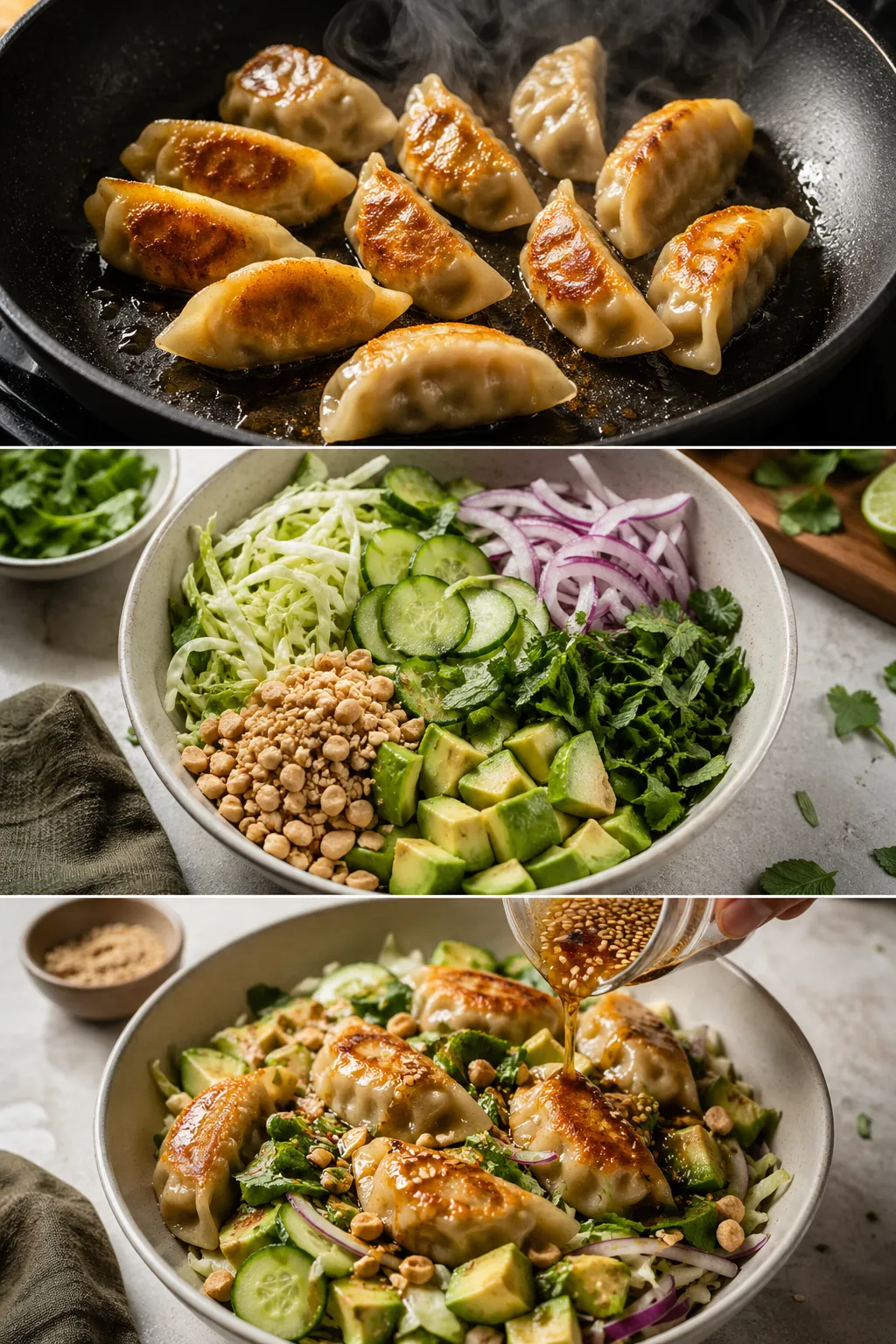
- Start by preparing the dressing. Combine all the ingredients in a jar or a small bowl and mix until smooth and well blended. It should look slightly glossy and evenly combined. Set it aside for a few minutes so the flavors can settle and develop.
- Heat a non-stick pan over medium heat and add a small amount of oil. Place the potstickers in the pan in a single layer, leaving a bit of space between them. Let them cook without moving them too much until the bottoms become golden and slightly crispy.
- Carefully add a small splash of water to the pan and cover it immediately with a lid. The steam will finish cooking the dumplings from the inside. Let them cook for a few minutes until they are tender and fully heated through.
- While the dumplings are cooking, prepare the salad base. In a large bowl, combine the shredded cabbage, cucumbers, avocado, red onion, fresh herbs, and toasted nuts. Toss everything lightly so the ingredients are evenly distributed.
- Once the dumplings are ready, transfer them directly into the salad while they are still warm. This helps create that contrast between warm and cold elements.
- Pour the dressing over the salad. Start with a moderate amount—you can always add more if needed. Gently toss everything together, making sure the dressing coats the ingredients without breaking the dumplings.
- Serve immediately. The texture is at its best when the dumplings are still warm and the vegetables are fresh and crisp.
💡 Quick Tips & Little Kitchen Tricks
- Don’t rush the dumplings—letting them properly crisp on one side makes a noticeable difference in texture
- Add the dressing right before serving to keep the vegetables from becoming too soft
- If the dressing feels too strong, you can dilute it slightly with a splash of water or lime juice
- Taste before serving—sometimes a small pinch of salt or an extra squeeze of acidity makes everything come together
- If you’re making it ahead, keep the components separate and combine just before eating for the best result
🍽️ More Than Just a Quick Meal
There are tons of recipes that promise to be quick and easy. And yeah, a lot of them are. You throw a few things together, spend 15–20 minutes, and dinner is technically done.
But sometimes that’s where it ends. You eat it—and it’s fine—but it doesn’t really hit. You’re full, but not satisfied, or you’re already thinking about what else you could snack on later.
This is where this salad lands differently.
It doesn’t ask for much. You don’t need to plan ahead, you don’t need anything fancy, and you definitely don’t need to be in the mood to cook. But somehow it still comes out feeling like a proper meal, not just something you made because you had to.
That’s a small shift, but you notice it.
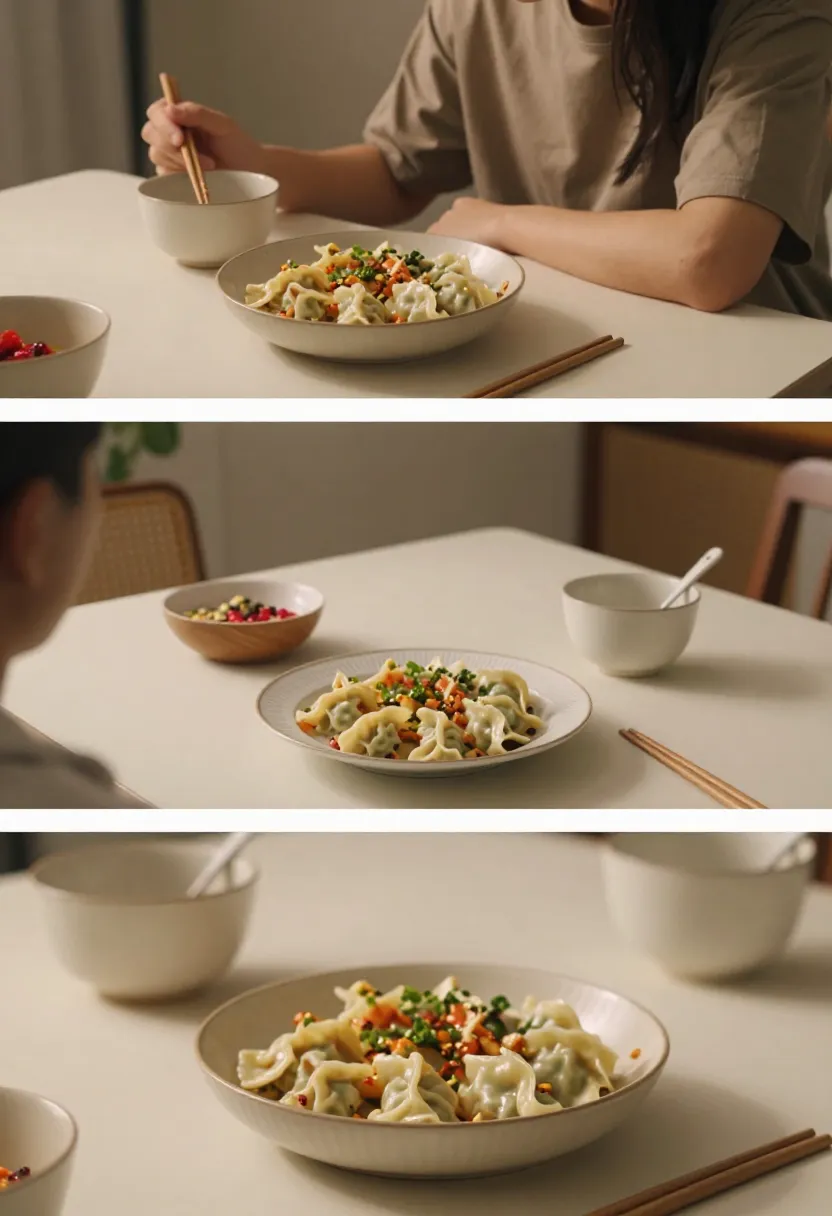
I think it works because nothing in it is trying to carry the whole dish alone. The dumplings do their thing—warm, filling, a bit of “comfort food”. The vegetables keep everything from getting too heavy. And the dressing quietly ties it all together so it actually tastes like one dish, not separate parts on a plate.
No single element has to do too much.
And because of that, it fits into real life pretty easily. You can make it after a long day when you’re tired and just want something that works. You can prep parts of it ahead and throw it together later. Or put it on the table when people come over and not feel like you took a shortcut.
It adapts without you thinking about it too much.
That’s usually the difference between recipes you try once and the ones you actually keep. This one falls into the second group. You make it, then make it again a bit differently, then again—and at some point you stop even checking the recipe.
It just becomes something you know how to do.
And once that happens, it’s not really “a recipe” anymore. It’s just one of those meals you can rely on when you don’t feel like figuring things out.
🔥 The Small Details That Influence the Final Result
The recipe itself is simple, but the result depends a lot on how you handle the small things. Nothing here is hard, but these details are exactly what decide whether the dish feels just okay or actually good.
The dumplings are the first place where this shows up. If you rush them, you’ll feel it. They might look ready, but if you take them off too early, they stay soft and kind of flat in texture. Not bad, just not very interesting. Give them a bit more time and let the bottom really turn golden and slightly crisp, and the whole dish improves immediately. That contrast matters more than you expect.
The same goes for the dressing. If it sits on the vegetables too long, they start to soften and lose their crunch. Cabbage wilts, cucumbers release water, and everything blends together a bit too much. Still edible, just less satisfying. Adding the dressing right before serving keeps everything sharper and more defined.
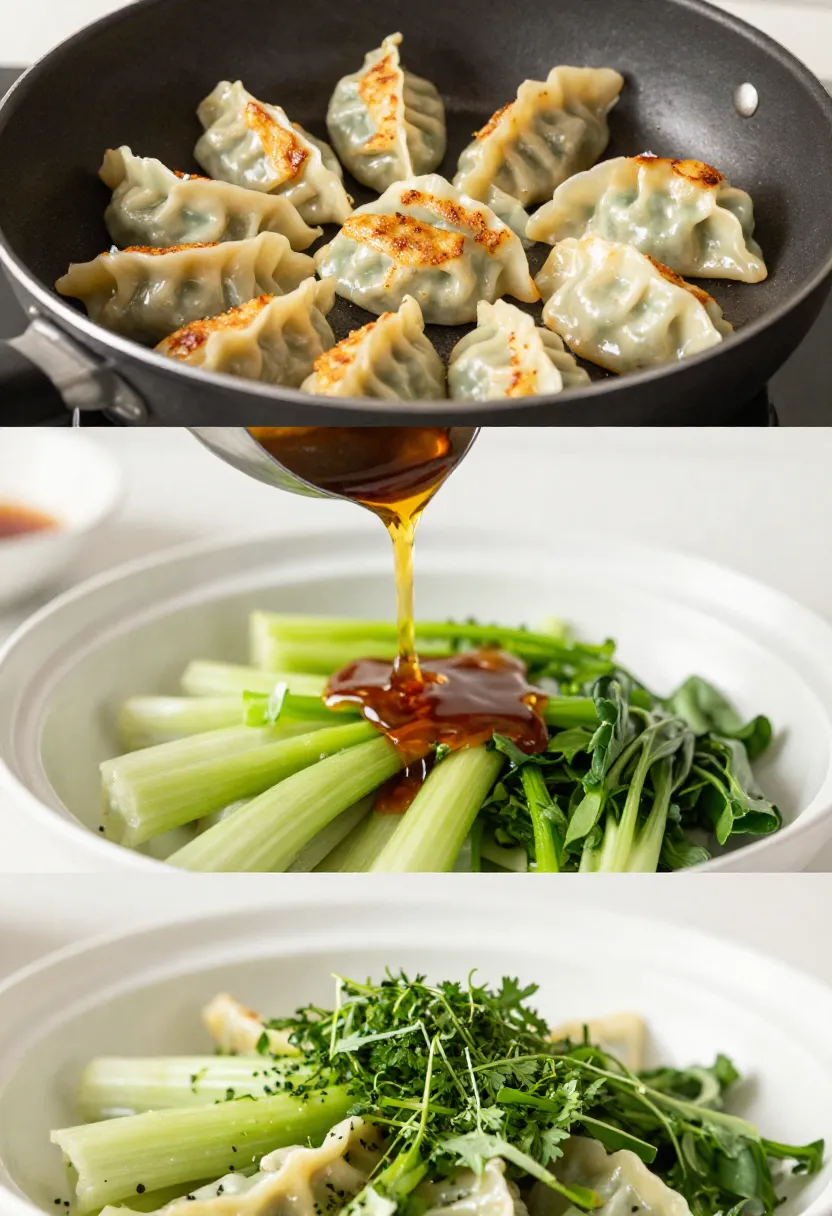
Herbs are one of those things people tend to underuse. They look like a finishing touch, but they actually do a lot of the balancing. Without enough of them, the dish leans heavy because of the dumplings. Add a proper handful, and suddenly it feels lighter and fresher. It’s one of the few times where adding more is usually the right move.
The dressing is also worth tasting before serving, even if you’ve made it before. Sometimes it just needs a bit more acidity or a pinch of salt. Small adjustments, but they change how everything comes together.
If you strip it down, a few things consistently make the difference:
- don’t rush the dumplings—let them actually crisp
- don’t add the dressing too early
- don’t be shy with the herbs
- taste and adjust before serving
None of this makes the recipe harder. It just makes it noticeably better once you’ve tried it both ways.
🥢 Serving, Variations, and Long-Term Use
One of the reasons this dish sticks around is how easy it is to adjust. It’s not one of those recipes where you have to follow everything exactly or it stops working. You can swap things, skip things, add something extra—and it still makes sense on the plate.
That alone makes it a lot more useful than it looks at first.
The base doesn’t really change: dumplings, vegetables, dressing. Once that’s in place, you can move things around depending on what you want. Some days you want it lighter—more greens, more herbs, fewer dumplings. Other days you’re hungrier, so you add more dumplings, maybe throw in some rice or noodles, and suddenly it’s a full, heavier meal.
Same idea, different result.
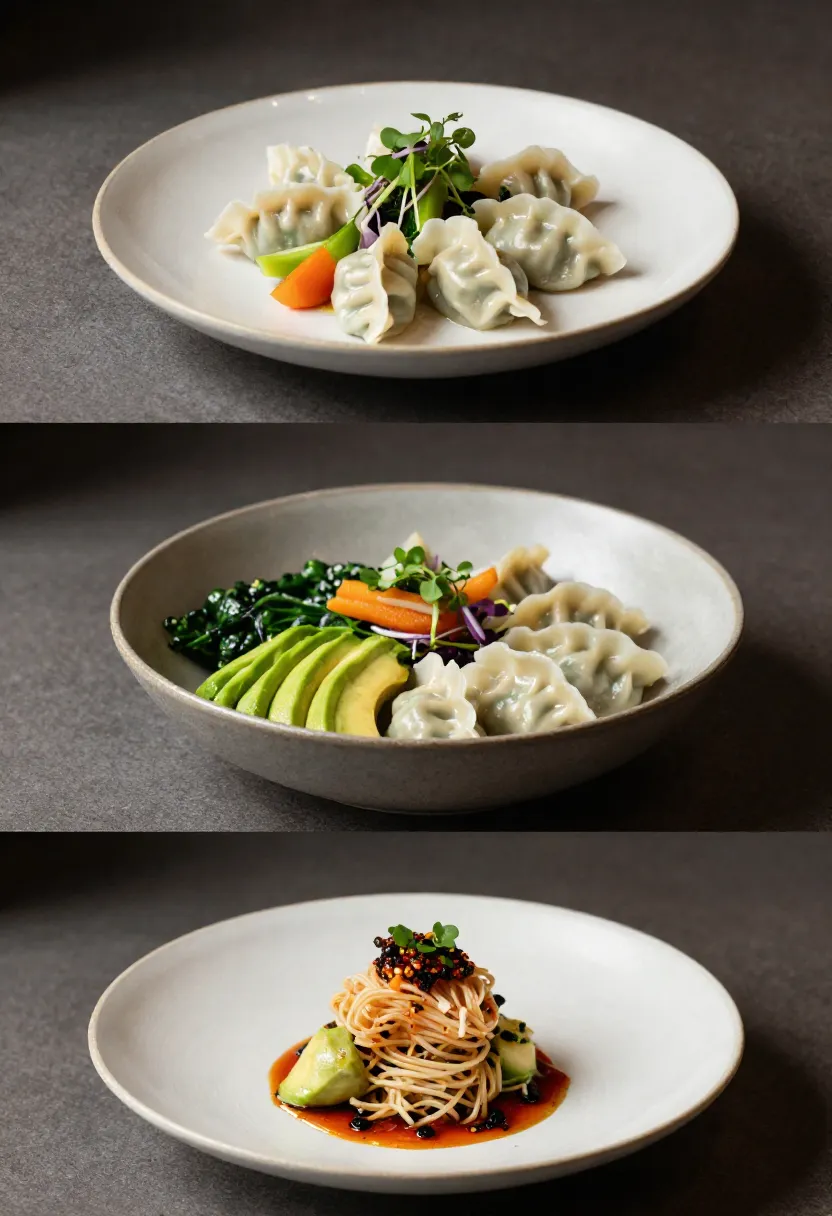
Flavors are easy to tweak too. If you want more heat, chili oil does the job instantly. If you feel like something a bit brighter, mango or citrus works better than you’d expect. And the dressing isn’t fixed either—you can push it more acidic, saltier, or a bit nuttier depending on what the dish needs that day.
It’s not something you have to overthink.
Even the way you serve it changes the feel. Put it in a big bowl in the center, and it’s casual, almost like something you’d throw together for friends without planning too much. Plate it individually, and it suddenly feels more intentional. Add a few extra herbs or a quick drizzle of dressing on top, and it looks like you put in more effort than you actually did.
After a few times, you stop treating it like a strict recipe anyway.
You just remember the base and adjust from there. Sometimes it’s fresher, sometimes heavier, sometimes a bit spicier. It depends on what’s in your kitchen and what you feel like eating. And that’s exactly why it doesn’t get boring.
At that point, it’s not really a recipe anymore. It’s more like a framework you reuse—a reliable option you can fall back on when you don’t feel like figuring things out from scratch.