🍝 Mushroom Stroganoff Recipe
Mushroom stroganoff is one of those dishes that doesn’t try to impress you — and somehow that’s exactly why it does. It’s simple, a bit rustic even, but when everything comes together, it feels like proper comfort food. The kind you actually want to eat at the end of a long day.
What makes this version work is the balance. The sauce is creamy, but not heavy to the point where you feel weighed down after a few bites. The mushrooms bring that deep, almost savory richness that makes the dish feel satisfying, even without meat. And then there’s that slight tang in the background — subtle, but important. It keeps everything from blending into one flat flavor.
It’s also the kind of recipe that doesn’t stress you out while cooking. You don’t have to follow every step perfectly. If something cooks a bit longer, or you adjust an ingredient slightly, it usually still turns out good. That’s part of why people keep coming back to it — it’s reliable without being boring.
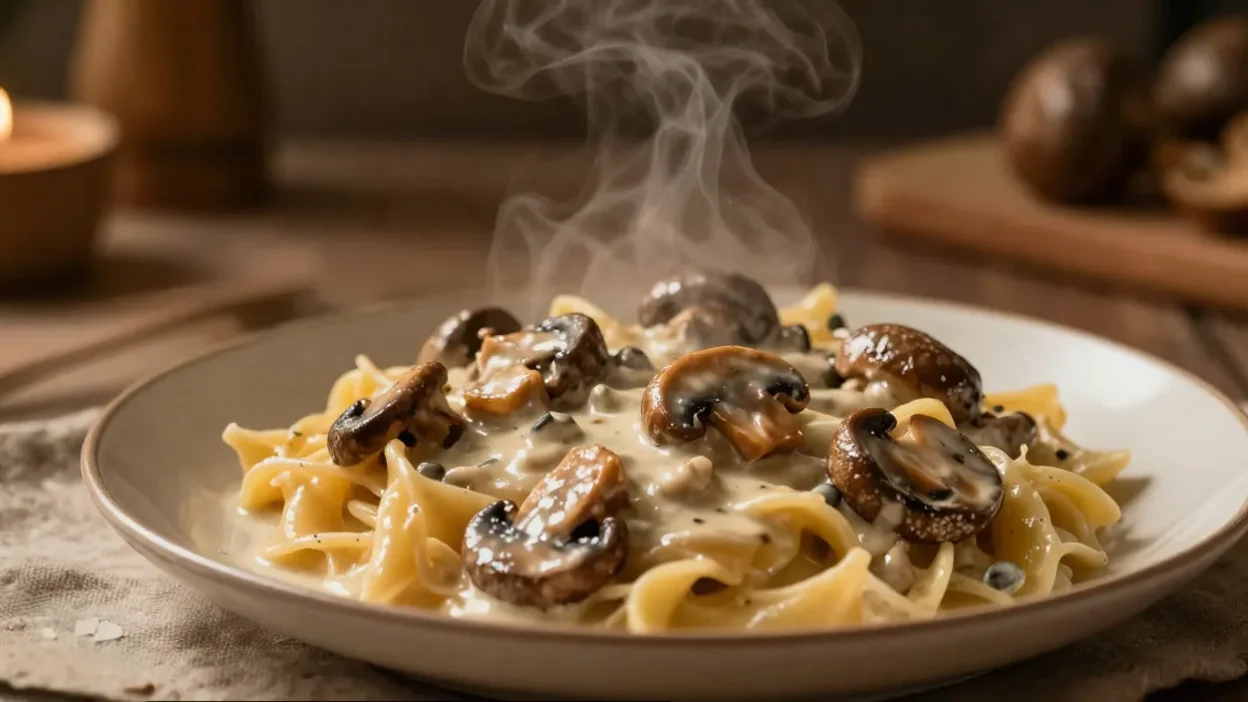
Another thing worth mentioning: the texture. When done right, the sauce should coat the pasta without drowning it. Not too thick, not too runny. Somewhere in between, where everything feels connected but not overloaded.
Ingredients
- 400 g pasta (fettuccine or tagliatelle work especially well)
- 1 tablespoon olive oil
- 1 medium onion, thinly sliced
- 2–3 garlic cloves, chopped
- 500–600 g mushrooms, sliced
- 2 teaspoons paprika
- 1 tablespoon tomato paste
- 1 tablespoon lemon juice
- ½ cup vegetable broth
- 1 tablespoon Worcestershire sauce (optional)
- ½ cup sour cream
- Salt and black pepper
- Fresh herbs (parsley or chives)
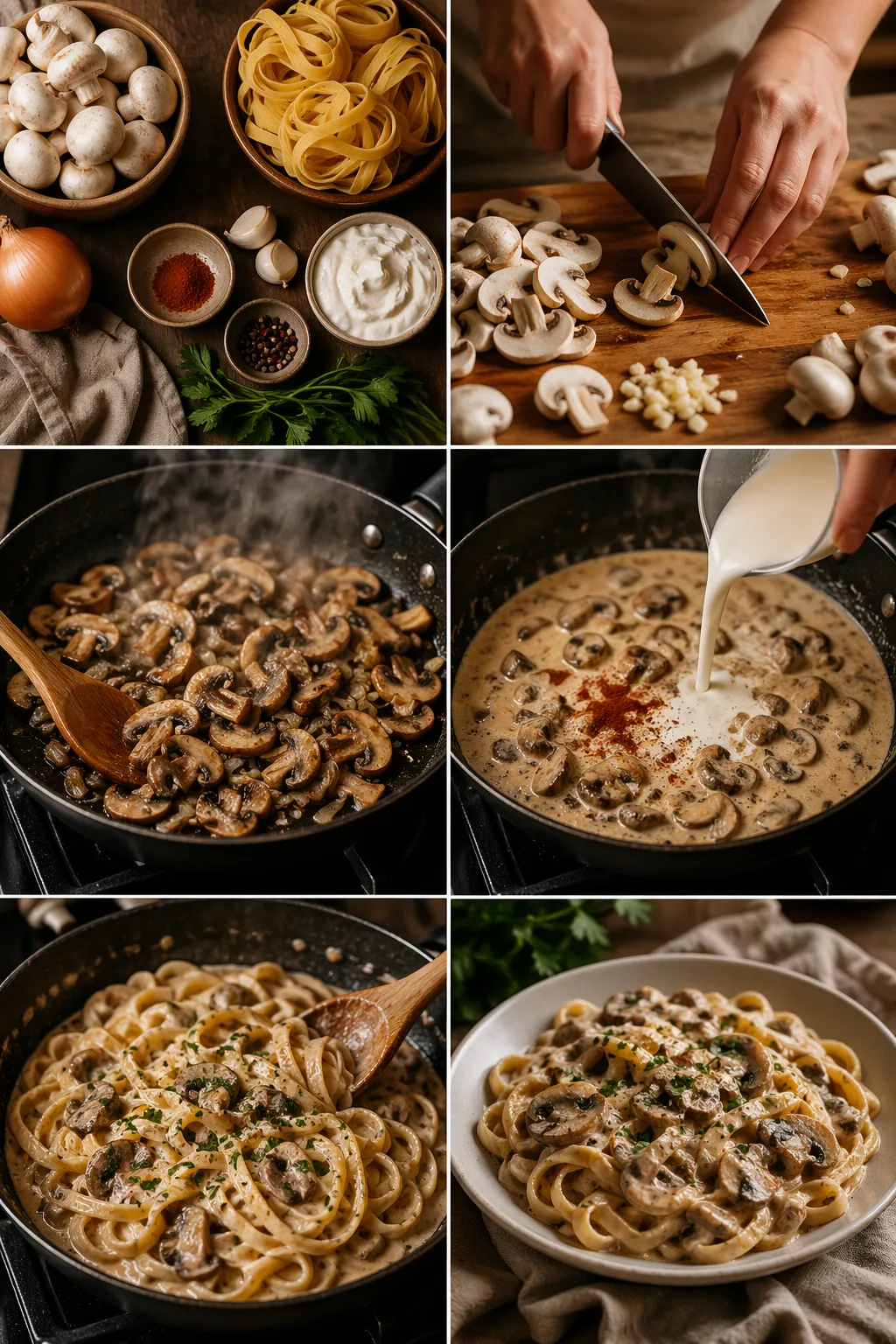
Preparation Steps
- Cook the pasta in salted boiling water until al dente. Before draining, reserve a small amount of the cooking water.
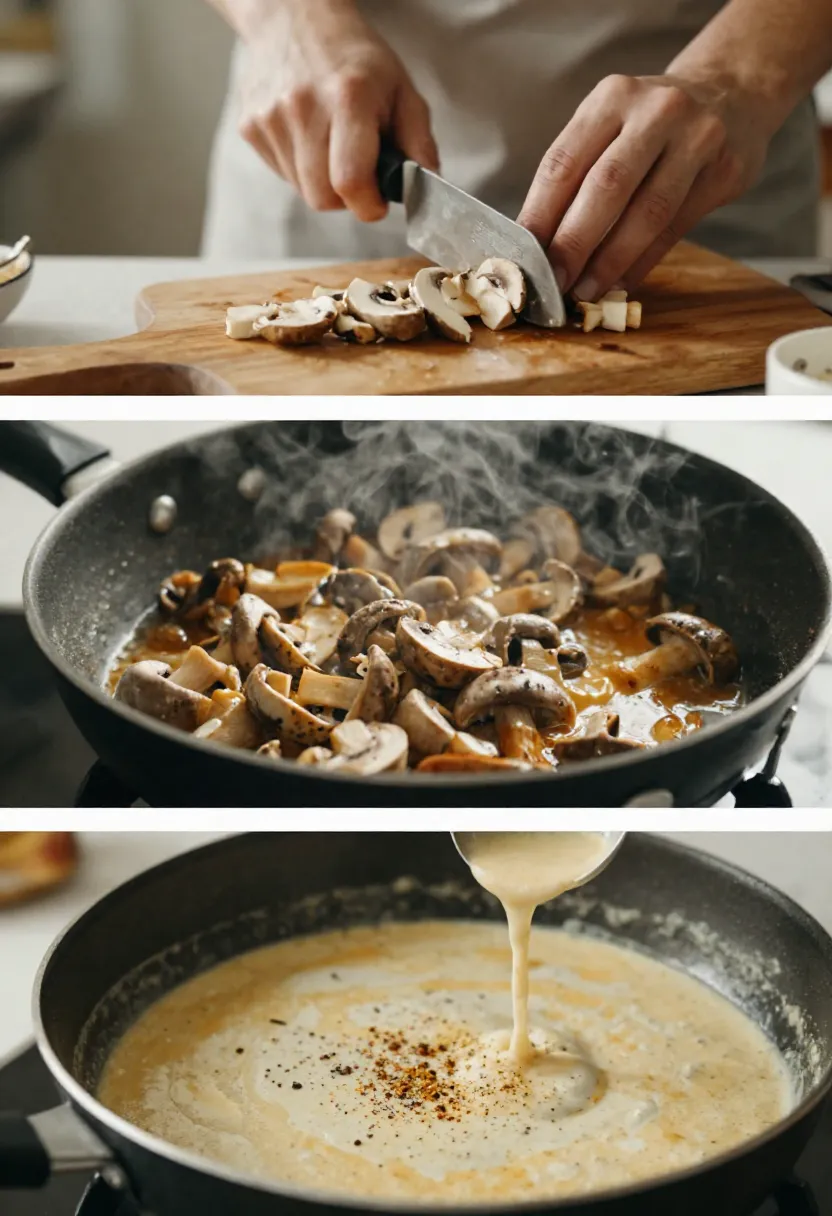
- Heat olive oil in a large pan over medium heat. Add the onion and cook slowly until soft and lightly golden. This step is simple, but it builds the base flavor, so it’s worth giving it a bit of time.
- Add the garlic and cook briefly, just until fragrant. It shouldn’t brown — just soften and release its aroma.
- Add the mushrooms. At first, they’ll release quite a bit of moisture — that’s normal. Let them cook without stirring too much in the beginning. Once the liquid evaporates, they’ll start to brown, and that’s where the flavor really develops 🍄
- Stir in the paprika and tomato paste. Let it cook for about a minute. This helps deepen the overall taste and gets rid of that raw tomato flavor.
- Pour in the vegetable broth and Worcestershire sauce. Let everything simmer gently for a few minutes so the flavors come together.
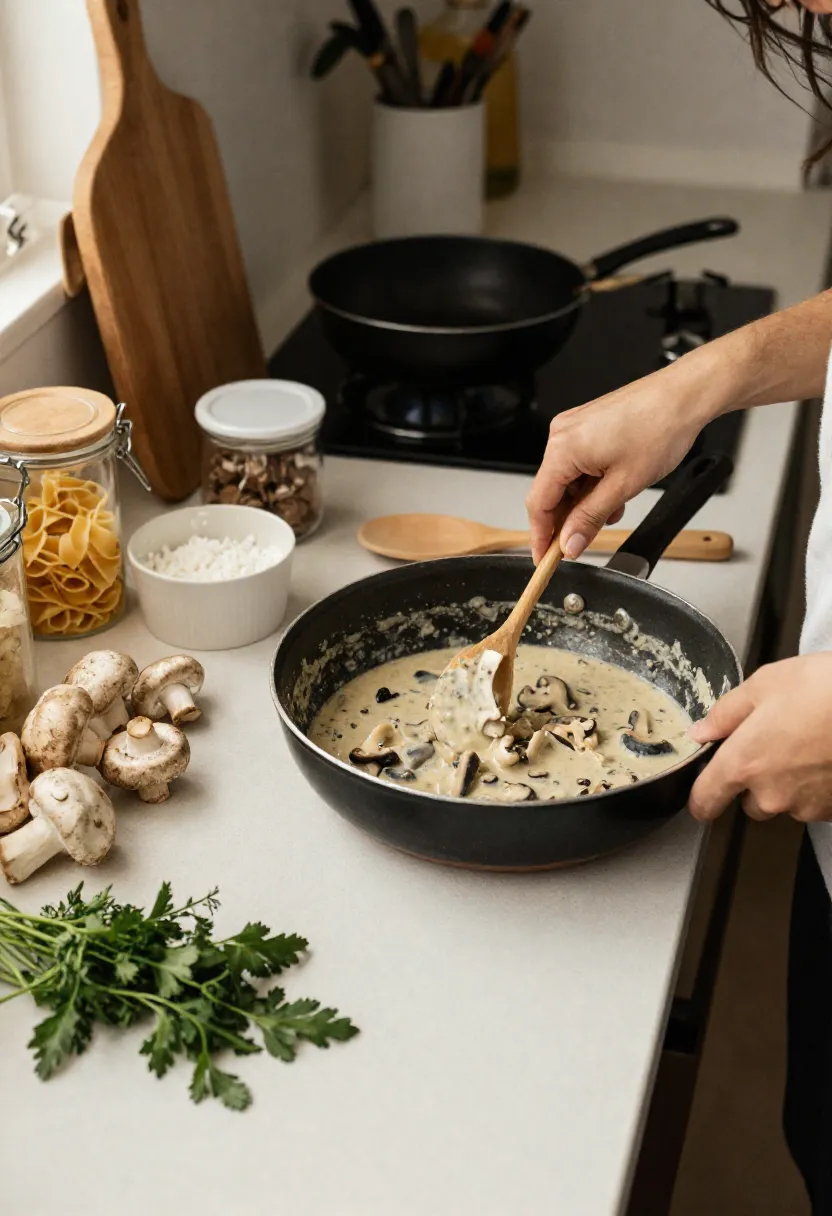
- Reduce the heat before adding the sour cream. Stir it in slowly and avoid letting the sauce boil — this helps keep it smooth.
- Add the lemon juice, then taste. Adjust salt and pepper as needed. This is the moment where everything balances out.
- Combine the sauce with the pasta. If the sauce feels too thick, add a bit of the reserved pasta water until it reaches the consistency you like.
- Finish with fresh herbs and serve right away.
Small Tips That Make a Difference
- don’t rush the mushrooms — the browning stage is where most of the flavor comes from
- add sour cream on low heat to avoid splitting the sauce
- save pasta water every time, even if you’re not sure you’ll need it
- taste at the end, not just during cooking — that final adjustment matters
- fresh herbs should go in last, not earlier
These are small things, but they tend to make the dish feel more “put together” without adding any extra complexity.
🌿 Small Changes That Actually Shift the Flavor
Once you’ve cooked mushroom stroganoff a couple of times, something changes — you stop treating it like a strict recipe. At the beginning, you probably follow everything step by step, maybe even double-check amounts. But after that, it becomes more intuitive. You remember the general flow, not the exact details.
And that’s usually when the dish gets better.
You start noticing small things that didn’t seem important before. Like how the sauce tastes slightly different depending on when you add acidity. Or how one extra minute of cooking mushrooms can completely change the depth of flavor. These aren’t big, dramatic changes — they’re subtle, but they add up.
Sometimes it’s not even about improving the dish, just adjusting it to your mood. One day you want something richer and heavier, especially if it’s cold outside. Another day you want it lighter, maybe a bit fresher, something that doesn’t feel too dense.
That’s where small tweaks come in. And the interesting part is, they don’t require any extra effort. You’re not adding complicated steps — you’re just slightly shifting what’s already there.
A few simple adjustments that actually change how the dish feels:
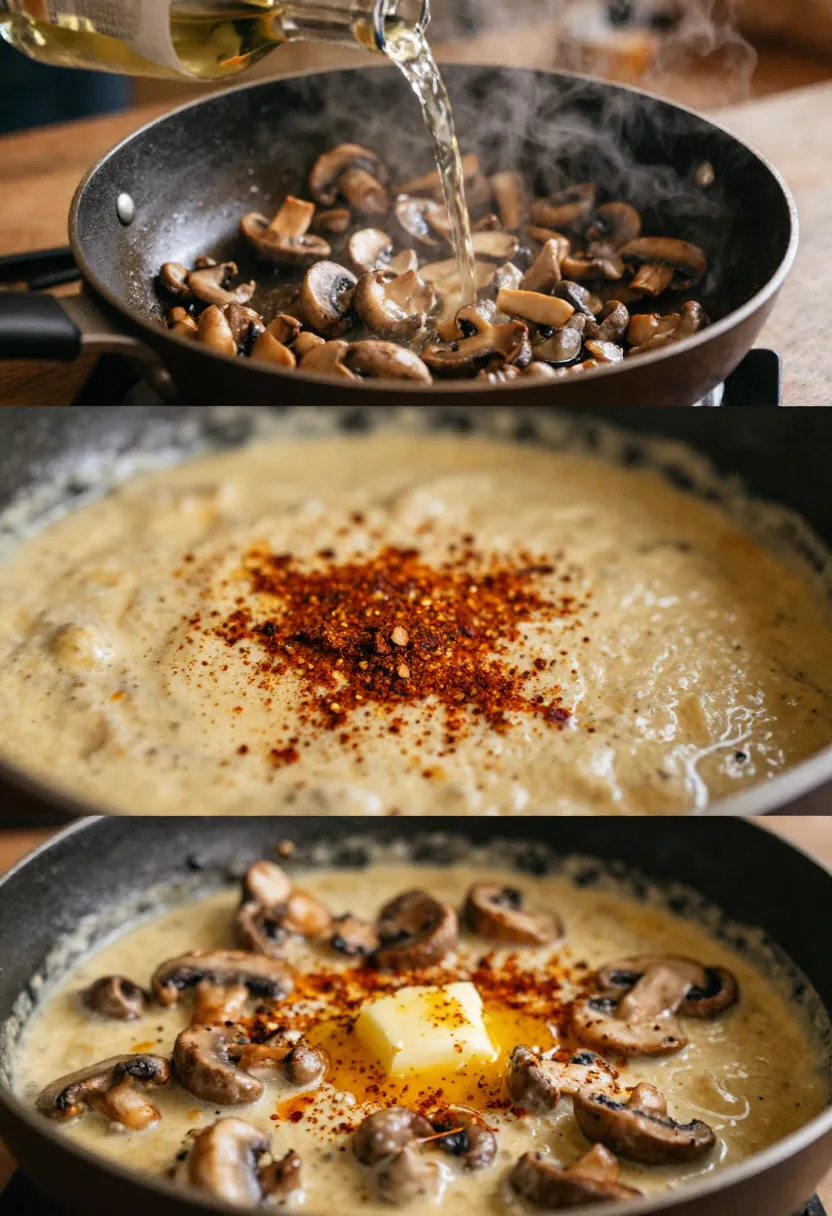
- adding a splash of white wine before the broth gives the sauce a deeper, slightly layered flavor 🍷
- using smoked paprika instead of regular creates a warmer, more rounded taste
- finishing with a small piece of butter softens the texture and makes everything feel smoother
- adding chili flakes introduces a quiet heat that builds slowly rather than hitting all at once
- increasing garlic slightly makes the dish feel more “bold” without changing the structure
None of these are necessary, and that’s kind of the point. You’re not fixing the recipe — you’re shaping it. Over time, you stop thinking in terms of “right” or “wrong” and start thinking in terms of what feels better that day.
And honestly, that’s when cooking becomes less mechanical and more natural.
🔄 Ingredient Flexibility (Cooking Without Overthinking It)
Realistically, no one cooks with perfect ingredients all the time. Sometimes you’re missing something, sometimes you just don’t feel like going to the store, and sometimes you want to use what you already have before it goes bad.
This is where mushroom stroganoff proves itself again — it doesn’t fall apart when things aren’t exact.
You can swap ingredients, adjust proportions, or even slightly change the structure, and it still works. Maybe not identical every time, but still good. Still recognizable. Still satisfying.
And the more you cook it, the more comfortable you become with making those changes without second-guessing yourself.
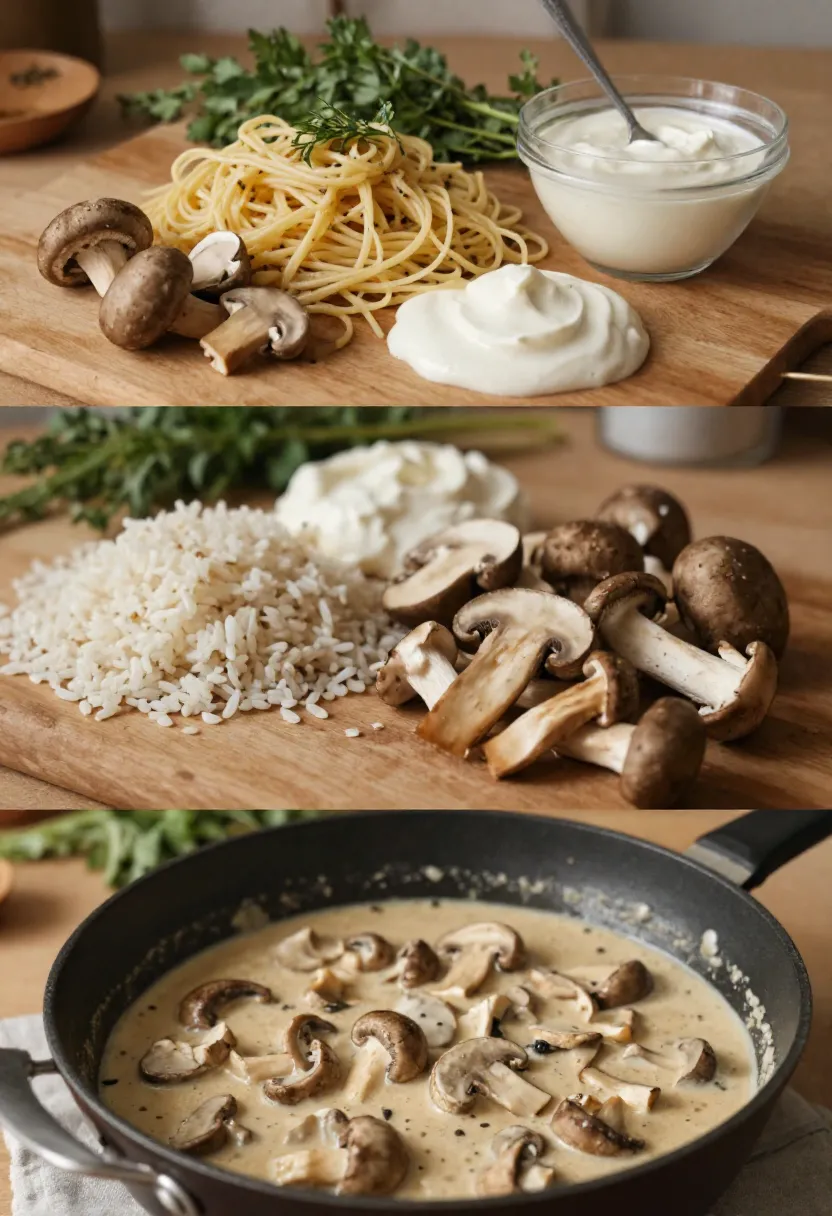
Here’s a more detailed look at substitutions and variations that actually make sense in a real kitchen:
| Ingredient | Possible Substitute | Notes |
|---|---|---|
| Sour cream | Greek yogurt / plant cream | Yogurt makes it lighter and slightly tangy, plant cream works well for dairy-free versions |
| Pasta | Rice / mashed potatoes | Completely changes texture, but still comforting and filling |
| Worcestershire | Soy sauce + a bit of vinegar | Keeps that savory depth, slightly sharper finish |
| Vegetable broth | Mushroom broth | Makes the overall flavor deeper and more focused 🍄 |
| Onion | Shallots / leek | Slightly milder and sweeter, blends more softly into the sauce |
| Garlic | Garlic powder (in small amount) | Not the same, but works if you’re out of fresh garlic |
| Butter | Olive oil | Lighter texture, less richness but still smooth |
| Lemon juice | Apple cider vinegar | Similar acidity, just a bit more noticeable |
| Paprika | Smoked paprika / mild chili | Adjusts warmth and intensity depending on preference |
| Mushrooms | Mixed mushrooms | Adds complexity and a slightly more interesting texture |
| Fresh herbs | Dried herbs | Less bright, but still adds a bit of balance |
| Cream (extra) | Milk + a bit of flour | Thinner, but can still create a creamy effect |
| Broth (low) | Water + seasoning | Works in a pinch, just needs a bit more salt and spice |
The main thing here is understanding that the dish isn’t fragile. You don’t have to get everything exactly right for it to work.
If anything, cooking it in slightly different ways each time is what makes it more interesting over time.
🍽️ Serving, Experience, and Why It Actually Stays in Rotation
Serving mushroom stroganoff isn’t complicated, but small details can change how it feels when you eat it. Not in a dramatic way — just enough to notice.
Timing is one of those things. Right after cooking, the sauce has a certain texture — smooth, slightly loose, coating everything evenly. If it sits too long, it thickens. Not ruined, just heavier. Some people actually prefer it that way, but it’s something you notice after making it a few times.
Fresh herbs at the end might seem like a minor detail, but they do more than just decorate the dish. Without them, everything can feel a bit too uniform — creamy, soft, same texture throughout. Add herbs, and suddenly there’s contrast. A bit of freshness that breaks things up.
Even something as simple as how you plate it can change the experience slightly. Not in a “fine dining” way — just in a way that feels more intentional.
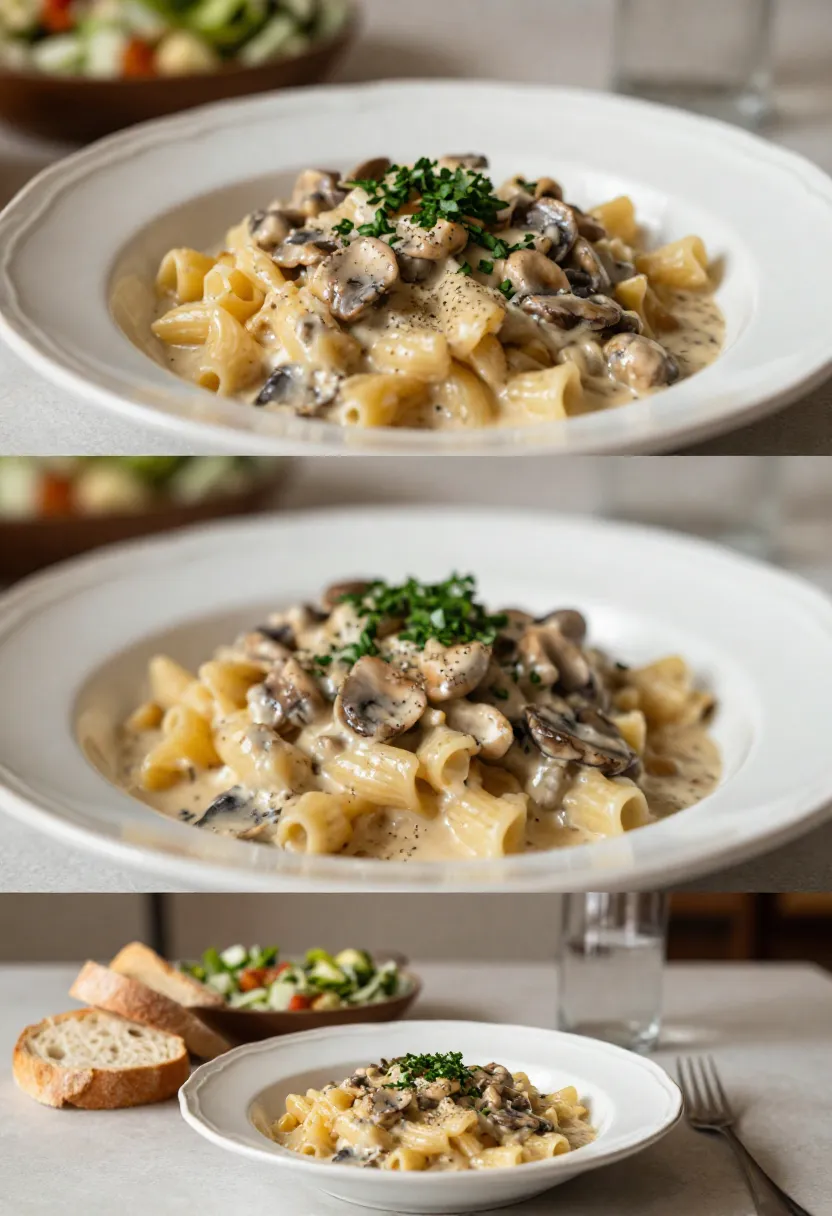
If you want to serve it in a way that feels a bit more complete, without making it complicated:
- add fresh herbs right before serving, not earlier 🌿
- use a wider plate so the sauce doesn’t feel crowded
- finish with freshly ground black pepper for a bit of sharpness
- serve immediately rather than letting it sit too long
- pair it with something simple like bread or a light salad
And then there’s the bigger reason this dish keeps coming back.
It’s not trendy. It’s not something people post because it looks impressive. But it hits a very specific balance that’s actually harder to get right than it seems. It’s warm, but not heavy. Creamy, but not overwhelming. Simple, but not boring.
After you’ve made it a few times, you start picking up on details without really thinking about them. You notice when the mushrooms are ready just by looking at them. You adjust the sauce without measuring. You taste once and know what it needs.
That’s usually the point where it stops being a recipe.
It becomes something you just make — without checking anything, without overthinking it.
And honestly, those are the dishes that stay the longest ❤️