Contents
Not every good meal begins with inspiration. In fact, if you think about it, most everyday cooking doesn’t. It usually starts in a much more ordinary way — somewhere between being a little tired and just hungry enough to want something real, but not motivated enough to make it complicated.
You open the fridge, not with a clear idea, but more with a question: what can I make out of this? And for a moment, nothing stands out. Everything looks… fine, but not exciting. A pack of chicken. Some vegetables that probably shouldn’t sit there much longer. A lemon that’s been around for a few days.
It doesn’t look like the beginning of anything memorable.
And yet, this is exactly how a lot of reliable meals begin.
There’s something about simple combinations that only makes sense once you start cooking. At first, the ingredients don’t seem connected in any meaningful way. But as you move through the process — cutting, heating, tasting — they start to come together in a way that feels more intentional than it originally looked.
That’s very much the case with lemon pepper chicken and asparagus.
It doesn’t rely on a strong first impression. There’s no moment where you think, this is going to be amazing. Instead, it builds gradually. You start cooking, and at some point — usually when everything hits the pan and the smell changes — you realize it’s going to turn out better than expected.
And that shift is subtle, but important.
Because dishes like this don’t try to impress. They work because they don’t ask too much from you. You don’t need to plan ahead. You don’t need to measure everything precisely. You don’t even need to be fully focused the entire time.
They fit into the kind of evenings that are actually common:
- when you don’t feel like cooking, but still want something homemade
- when you need something quick that doesn’t feel rushed or careless
- when you want a proper meal without turning it into a long process
- when you just want something that reliably tastes good
Over time, those are the recipes that stay. Not because they’re the most exciting, but because they solve a real problem — how to cook something satisfying without making it complicated.
And once you have a few dishes like that, you tend to come back to them without even thinking about it.
🍋 The Balance of Flavors That Feels Natural
Some flavor combinations stand out immediately. Others take a bit longer to notice. Lemon and black pepper fall into the second category.
On their own, they’re familiar to the point of being almost invisible. You’ve tasted them countless times, often without thinking about them as a pair. But when they come together in a simple dish like this, their role becomes much clearer.
Lemon brings brightness, but not just in a sharp or acidic way. It changes how everything else is perceived. It lifts the dish slightly, making it feel lighter even when there’s butter involved. Without it, the same ingredients would feel heavier, less defined.
Black pepper works more quietly. It doesn’t dominate the flavor, but it adds a kind of depth that’s easy to miss until it’s gone. It sits in the background, giving structure to the dish without drawing attention to itself.
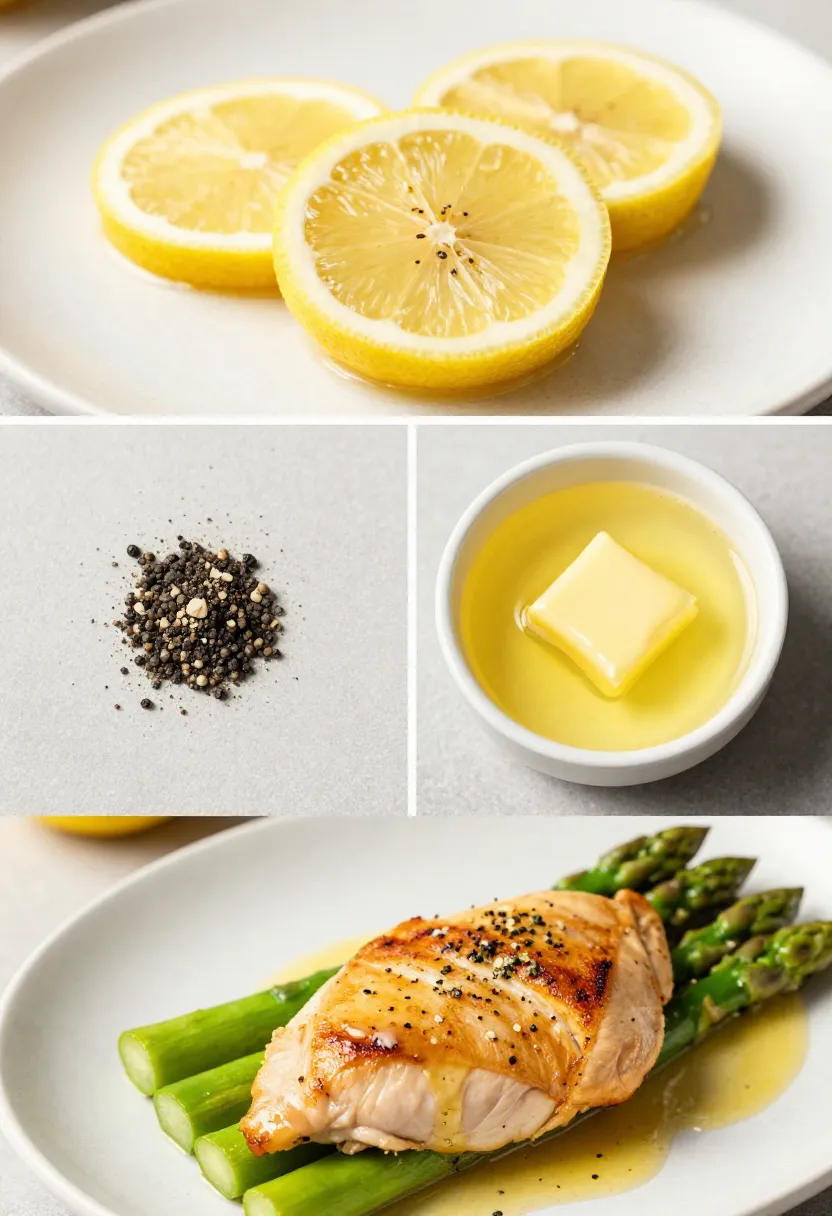
Then there’s butter, which might seem obvious, but actually plays a more important role than it gets credit for. It doesn’t just add richness — it connects the sharper elements. It softens the lemon, rounds out the pepper, and gives the whole dish a smoother, more cohesive feel.
When you look at these components together, their interaction becomes easier to understand:
| Component | Contribution to the Dish |
|---|---|
| Lemon 🍋 | Brightens the dish and keeps it from feeling heavy |
| Butter 🧈 | Adds richness and smooths out sharper flavors |
| Black pepper 🌶️ | Provides depth and subtle warmth |
| Chicken 🍗 | Absorbs flavors and creates a neutral base |
| Asparagus 🌿 | Brings freshness and a slight crisp texture |
What’s interesting is that none of these elements are particularly strong on their own. The dish doesn’t depend on intensity. Instead, it depends on how each part fills a role that would be noticeable if it were missing.
Texture plays an equally important role here. The chicken stays tender and soft, while the asparagus adds a slight firmness. That contrast might seem minor, but it changes how the dish feels overall. Without it, everything would blend together too much.
There’s also a kind of rhythm to how the flavors come through. You don’t get everything at once. First there’s the warmth, then the brightness, then something fresher at the end. It’s subtle, but it keeps the dish from feeling flat.
And that’s really the key. It’s not about bold flavors or complexity. It’s about balance that feels natural, even if you don’t immediately think about why it works.
🥄 Why This Recipe Fits Into Everyday Cooking
There’s a clear difference between recipes that look appealing and recipes that actually become part of your routine. The first group tends to stay saved somewhere — maybe bookmarked, maybe planned for “someday.” The second group gets used without much thought, simply because it fits into your day.
Lemon pepper chicken with asparagus belongs to that second group.
One of the main reasons is that it doesn’t require much from you. You don’t need to plan ahead or prepare multiple components. You can start with what you have and adjust along the way. That flexibility makes it easier to rely on, especially on days when you don’t feel like following something step by step.
Another thing that matters — and often gets overlooked — is how the cooking process feels. This recipe doesn’t create pressure. There’s no moment where everything has to come together perfectly within a few seconds. Instead, it moves at a steady pace.
You cook the vegetables, set them aside. You cook the chicken, build the sauce, bring everything back together. Each step is simple, and none of them feel rushed.
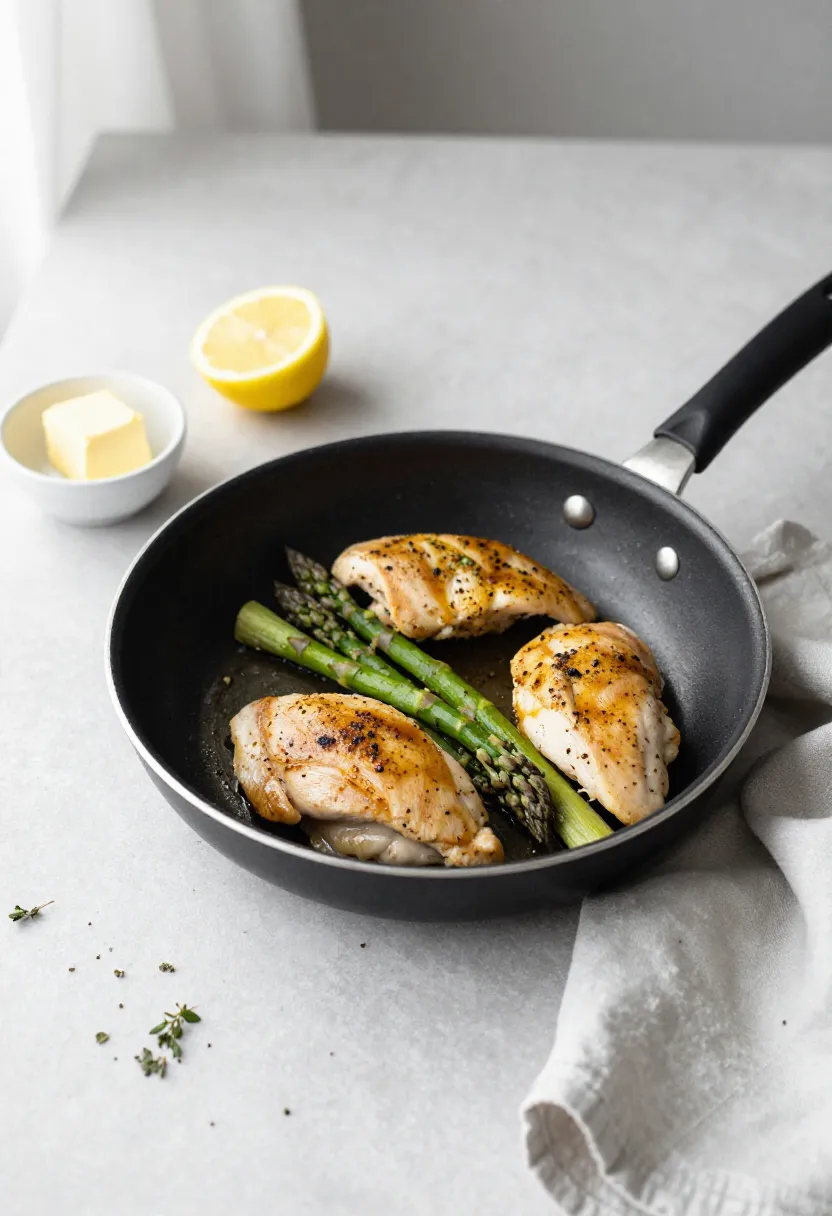
That makes it easier to cook while doing other things. You can pause briefly if needed, adjust the heat, taste along the way. It doesn’t demand constant attention, which is a big advantage in everyday situations.
There are also a few practical reasons why it tends to stay in rotation:
- it comes together quickly, without feeling rushed
- it uses one pan, which keeps cleanup manageable
- it allows small substitutions without changing the result too much
- it works well even if you’re not measuring everything precisely
But beyond practicality, there’s something else.
It doesn’t feel like a task.
You’re not following a complicated process or trying to achieve something specific. You’re just cooking — in a way that feels natural and manageable. And that changes how you experience the whole thing.
Because of that, the recipe becomes something you return to almost automatically. Not because it’s the most exciting option, but because it consistently works.
And in everyday cooking, that’s usually what matters most.
🍳 Lemon Pepper Chicken and Asparagus Recipe
This dish sits in a space that’s surprisingly hard to define, but very easy to appreciate once you try it. It’s not heavy enough to feel like comfort food, yet it’s far from light in a way that leaves you unsatisfied. It doesn’t rely on rich sauces or complex techniques, but it still feels complete — like a proper meal rather than something thrown together at the last minute.
At first glance, the ingredients might seem almost too simple. Chicken, asparagus, lemon, butter. Nothing unusual, nothing that suggests a standout dish. But that’s exactly where the strength of this recipe lies. It doesn’t try to impress with complexity. Instead, it builds flavor gradually, through small, familiar steps that come together in a way that feels effortless.
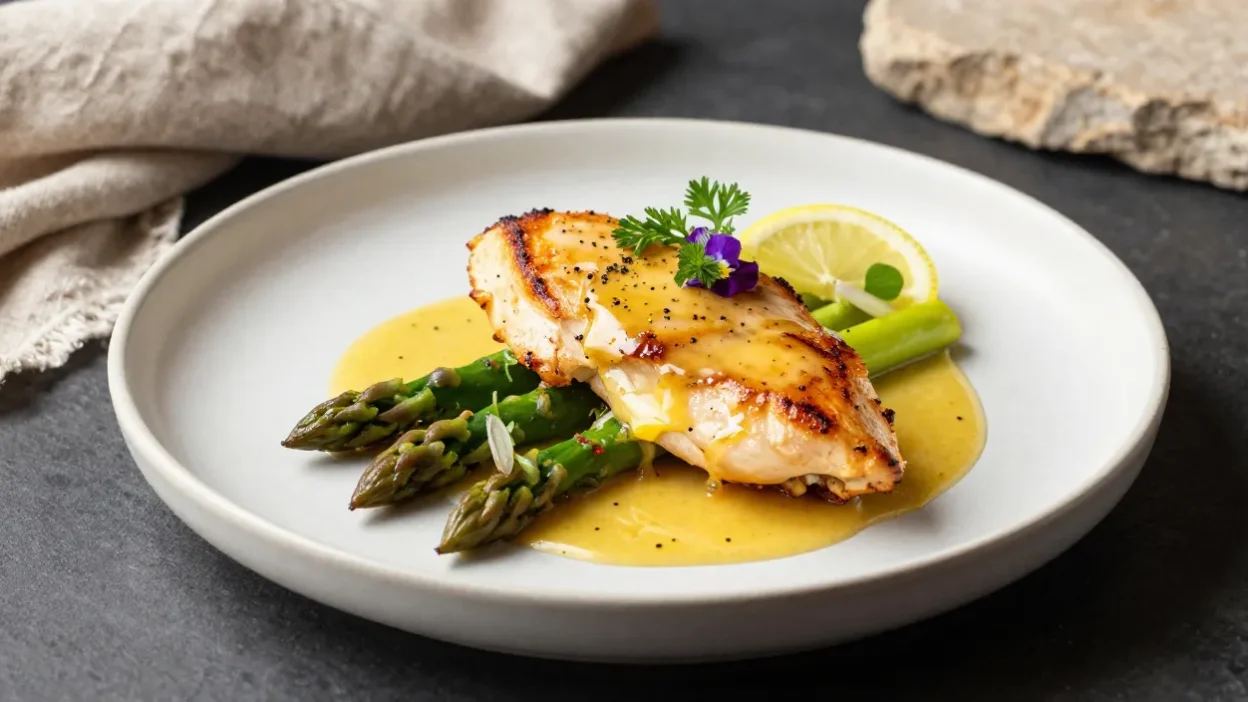
As the dish cooks, the transformation becomes noticeable. The chicken develops a light golden color, the asparagus softens while keeping its structure, and the lemon begins to lift everything with its brightness. The butter smooths out the sharper notes, and suddenly the whole dish feels more balanced than you might expect from such a short ingredient list.
It’s also the kind of recipe that adapts easily to real-life situations. You can make it on a weeknight without much planning, but it also works well if you’re cooking for someone else. It doesn’t feel overly casual, but it doesn’t require extra effort either. That balance makes it reliable in a way that more complicated recipes often aren’t.
Another thing worth mentioning is how forgiving the process is. There’s no single step where everything can go wrong. Even if the timing isn’t perfect, the result still holds together. That makes it a good option for days when you want to cook something decent without focusing too much on precision.
🛒 Ingredients
- 450 g (1 lb) chicken breast or thighs, sliced into thin strips
- Salt, to taste
- Freshly ground black pepper
- 1 tablespoon flour
- 4 tablespoons butter, divided
- 450 g (1 lb) asparagus, trimmed and cut into bite-sized pieces
- 3 cloves garlic, minced
- 80 ml (⅓ cup) chicken stock
- Zest and juice of 1 lemon 🍋
- Fresh herbs (parsley, dill, or basil — optional)

👨🍳 Instructions
- Prepare the chicken
Place the sliced chicken in a bowl, season with salt and black pepper, and add a light coating of flour. The flour isn’t meant to create a crust, but rather to give the chicken a slightly better texture and help the sauce come together later. - Cook the asparagus
Heat half of the butter in a large pan over medium heat. Add the asparagus and cook for a few minutes until it turns bright green and just tender. Stir in the garlic and cook briefly, then remove everything from the pan and set aside. - Cook the chicken
Add the remaining butter to the same pan. Once melted, place the chicken in a single layer. Let it cook without moving it too much at first, allowing it to develop a light golden color. Continue cooking until fully done, which usually takes about 5–7 minutes. - Build the sauce
Pour in the chicken stock and gently scrape the bottom of the pan to release any browned bits. Add the lemon juice and zest, then let the mixture simmer briefly so the flavors combine. - Combine everything
Return the asparagus to the pan and toss it with the chicken so everything is coated in the sauce. Let it cook together for another minute or two. - Adjust and finish
Taste the dish and adjust seasoning if needed. Add fresh herbs at the end if you’re using them, then serve immediately while everything is still warm.
🔑 Helpful Tips for Better Results
- keep the pan hot enough to brown the chicken instead of steaming it
- avoid overcrowding, as this affects texture more than expected
- add lemon toward the end to keep the flavor fresh and not muted
- cut asparagus evenly so it cooks at the same rate
- taste before serving — small adjustments make a noticeable difference
🔥 Small Changes That Can Shift the Whole Flavor
Once you’ve made this dish once or twice, it’s almost impossible not to start adjusting it a little. Not because something is missing, but because it feels flexible enough to handle small changes without falling apart.
And that’s usually where a recipe becomes more than just a one-time thing. You stop following it exactly and start treating it as a base.
At its core, lemon pepper chicken with asparagus is very stable in terms of structure. The balance between brightness, richness, and texture is already there. So when you tweak it, you’re not rebuilding the dish — you’re just shifting its direction slightly.
Sometimes that shift is about adding depth. Other times it’s about making it feel lighter, sharper, or a bit more comforting. The interesting part is that even small additions can change how the whole dish feels, without turning it into something completely different.
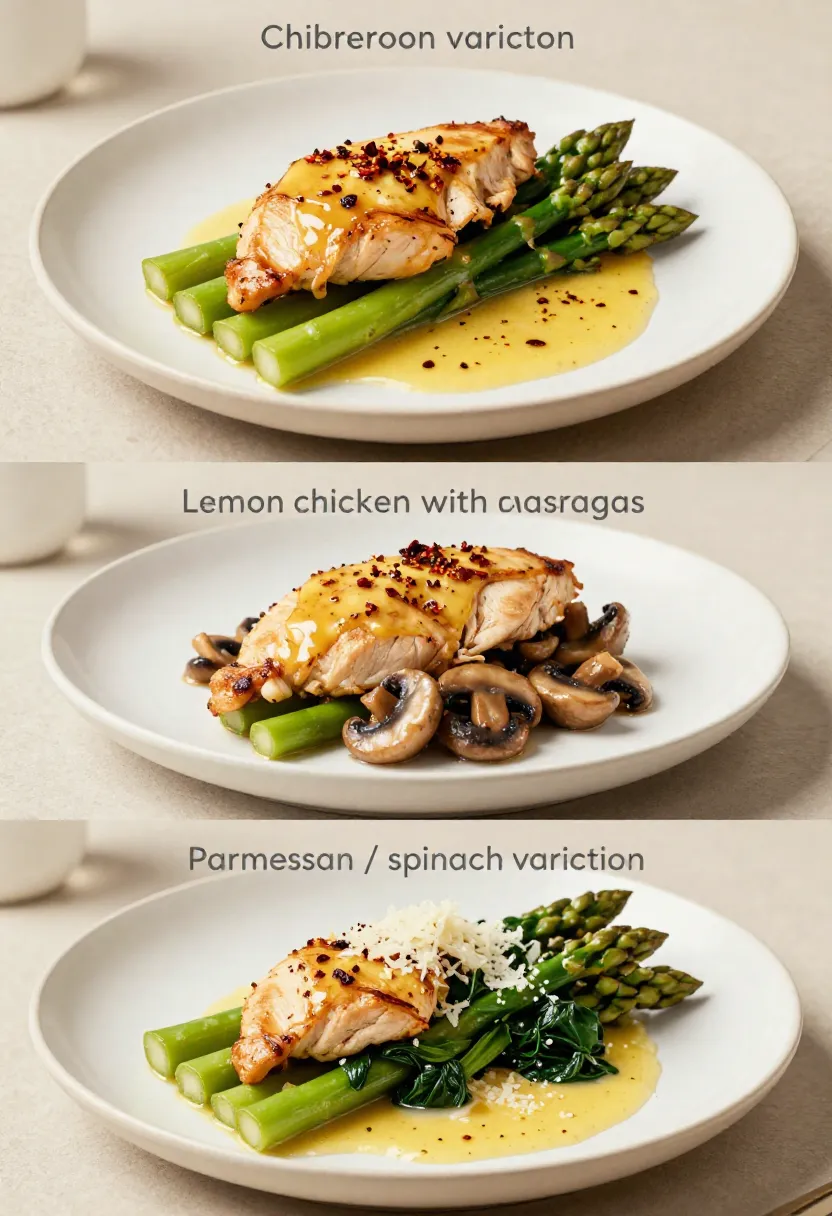
For example, adding a bit of heat doesn’t overpower the lemon — it just adds another layer that sits quietly in the background. Introducing mushrooms doesn’t change the identity of the dish, but it makes it feel more grounded, slightly more savory. A small amount of cheese at the end can push it closer to comfort food, while still keeping the original freshness intact.
These kinds of adjustments don’t require precision. You don’t need exact amounts or strict timing. They’re more about instinct and preference than rules.
If you want a few simple directions to experiment with, here are some natural variations that tend to work well:
- 🌶️ add chili flakes for a subtle heat that builds gradually
- 🍄 include mushrooms to deepen the overall flavor
- 🧀 finish with parmesan for a slightly richer, more rounded taste
- 🍷 replace part of the stock with white wine for a sharper edge
- 🥬 stir in spinach at the end for extra freshness and color
What’s important is that none of these changes take over the dish. They don’t compete with the main flavors — they just adjust the tone.
And once you get used to that idea, the recipe becomes much more flexible than it first appears.
🍽️ How to Serve It (Without Overthinking It)
One of the reasons this dish works so well is that it doesn’t depend heavily on what you serve with it. It’s complete enough to stand on its own, but also adaptable depending on what kind of meal you’re aiming for.
That said, the choice of side can shift the overall experience more than you might expect.
If you keep things simple, the dish stays light and balanced. Something like rice or a mild grain absorbs the sauce without competing with it, which keeps the focus on the chicken and asparagus. A fresh salad works in a similar way — it extends the “clean” feeling of the dish without adding weight.
On the other hand, if you’re in the mood for something more comforting, the same dish can easily move in that direction. Pasta, for example, turns it into something softer and more filling, while bread adds a slightly rustic feel, especially if you use it to pick up the remaining sauce.
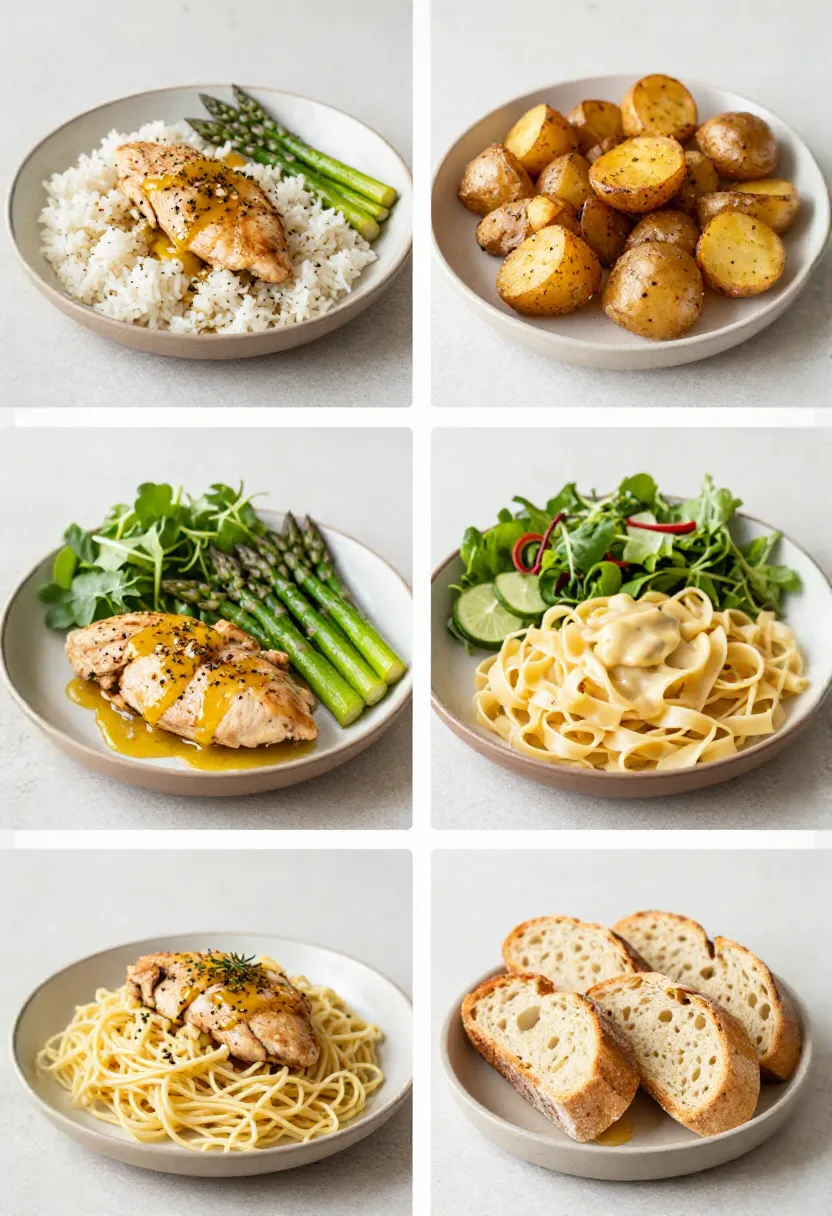
What’s interesting is that the dish doesn’t resist these changes. It adapts to them.
You don’t need to redesign anything or adjust the core recipe. You just change what goes alongside it, and the overall mood shifts naturally.
If you want a quick reference, here are the most common ways to serve it:
- 🍚 with rice for a simple, balanced meal
- 🥔 with roasted potatoes for something more filling
- 🥗 with a light salad to keep everything fresh
- 🍝 with pasta for a more comforting version
- 🥖 with bread to make the most of the sauce
Or, realistically, you can skip all of that.
There’s nothing wrong with serving it exactly as it is. The dish holds up perfectly well on its own, especially when you’re not trying to turn dinner into something more complicated than it needs to be.
🧊 Storage, Leftovers, and Why This Recipe Sticks
This is one of those dishes that behaves well after cooking, which is not always the case with quick meals. It stores easily, reheats without much trouble, and doesn’t lose its core flavor overnight.
That alone makes it more practical than many similar recipes.
If you have leftovers, they’ll keep in the fridge for a few days without any issues. The texture will change slightly — especially the asparagus, which becomes softer — but the flavor remains consistent. It doesn’t feel like a completely different dish the next day, just a slightly more relaxed version of it.
Reheating is straightforward. A pan works best if you want to bring back some of the original texture, but a microwave is perfectly fine if you’re in a hurry. Adding a small amount of liquid helps restore the sauce, especially if it has thickened or reduced in the fridge.
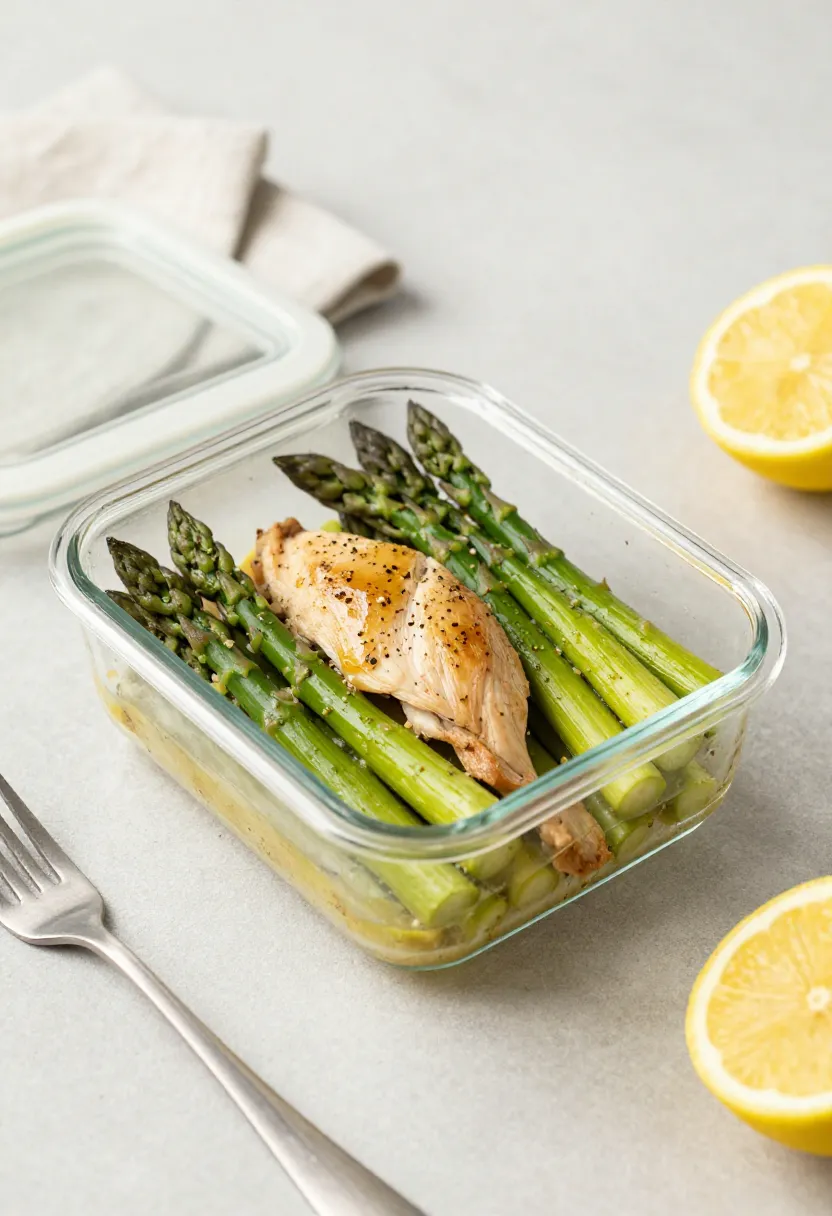
For quick reference:
- store in an airtight container for up to 3–4 days
- reheat gently, preferably in a pan
- add a splash of stock or water if needed
- expect slightly softer vegetables, but stable flavor
And if we’re being honest, this dish is at its best right after cooking. That’s when the textures are at their peak, and the balance feels the most precise.
But the fact that it still works well later is what makes it practical.
In the end, that’s probably why recipes like this tend to last.
They don’t rely on being impressive. They don’t depend on perfect conditions or exact execution. They simply work — consistently, without asking too much from you.
And over time, those are the dishes that become part of your routine. Not because they stand out, but because they fit.