At some point — usually without a clear reason — heavier meals stop sounding appealing. It’s not about dieting or suddenly becoming more disciplined. It’s more like a quiet shift in preference. After a few rich dinners in a row, something changes, and you start craving food that feels easier.
Not empty. Not boring. Just… lighter in a way that still feels complete.
This is where dishes like mango avocado spring rolls naturally fit in. They don’t try to replace comfort food, and they don’t pretend to be something they’re not. Instead, they offer a different kind of satisfaction — one that doesn’t rely on heaviness or richness to feel fulfilling.
What makes them work is how they manage to feel balanced without being complicated. There’s no overload of flavors, no strong seasoning trying to dominate the dish. Everything feels measured, even if it wasn’t carefully calculated.
The experience of eating them is also slightly different from most cooked meals. It’s not just about taste — it’s about texture, temperature, and that subtle feeling of freshness that’s hard to replicate in heavier dishes. Each bite feels clean, but not empty, which is a surprisingly rare combination.
If you try to break it down, the satisfaction comes from a mix of simple elements working together:
- a soft, slightly juicy base
- a creamy layer that smooths everything out
- a crisp texture that keeps the bite interesting
- a fresh note that prevents the dish from feeling heavy
It’s not dramatic, and that’s kind of the point. The appeal isn’t in intensity — it’s in how naturally everything fits together.
🥑 Understanding the Balance Behind the Flavor
At first glance, the ingredient combination doesn’t seem particularly striking. Mango, avocado, vegetables, herbs — all familiar, all relatively mild on their own. There’s nothing about this list that immediately suggests something memorable.
And yet, once combined, the result feels complete in a way that’s difficult to explain without actually tasting it.
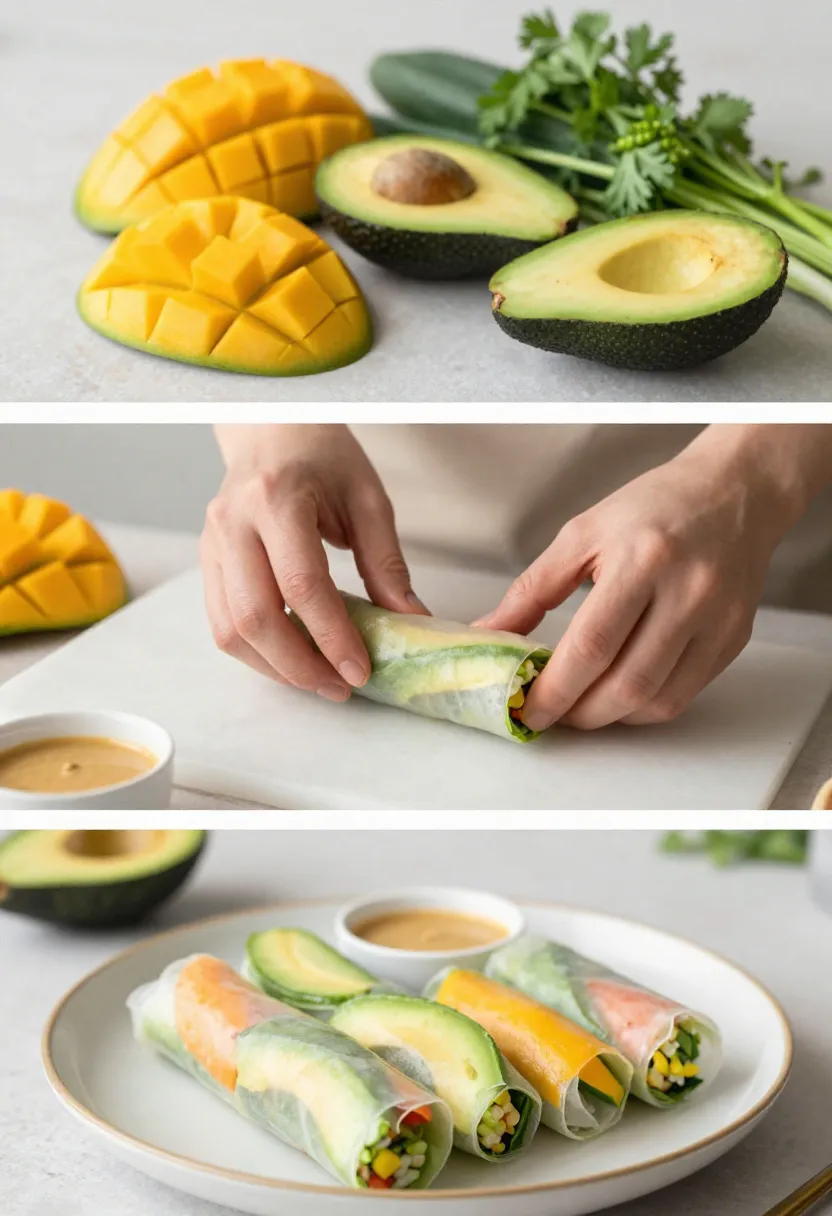
The key lies in how each ingredient contributes something specific without overwhelming the others. There’s no competition between flavors, which is often what makes simple dishes fall flat. Instead, each component fills a gap that would otherwise be noticeable if it were missing.
This balance becomes clearer when you look at the ingredients more closely:
| Ingredient | Role in the Dish |
|---|---|
| Mango 🥭 | Adds sweetness with a slight tang, preventing the overall flavor from becoming too soft |
| Avocado 🥑 | Provides creaminess and helps connect the sharper textures |
| Carrots & cabbage 🥕 | Introduce crunch and structure, making the rolls more satisfying |
| Cucumber 🥒 | Contributes freshness and a subtle cooling effect |
| Herbs 🌿 | Bring aroma and brightness, lifting the entire dish |
What stands out here is that none of these ingredients are particularly strong on their own. The dish doesn’t rely on intensity — it relies on contrast and interaction.
Texture also plays a central role. Without crunch, the rolls would feel too soft. Without creaminess, they would feel too sharp. Without moisture from the fruit, they might even feel dry.
So while the recipe looks simple, there’s an underlying structure that makes it work. It’s not complicated, but it’s not random either.
🍃 Why This Is the Kind of Recipe People Return To
Some recipes are memorable because they’re impressive. Others stay with you for a different reason — they fit easily into everyday life.
This is one of those recipes.
It doesn’t require much planning, and it doesn’t depend on exact measurements or perfect execution. That flexibility makes it easier to return to, especially on days when you don’t feel like following something strictly.
Another important factor is how adaptable it is. The core idea remains the same, but small changes don’t disrupt the result. You can adjust ingredients based on availability or preference without needing to rethink the entire dish.
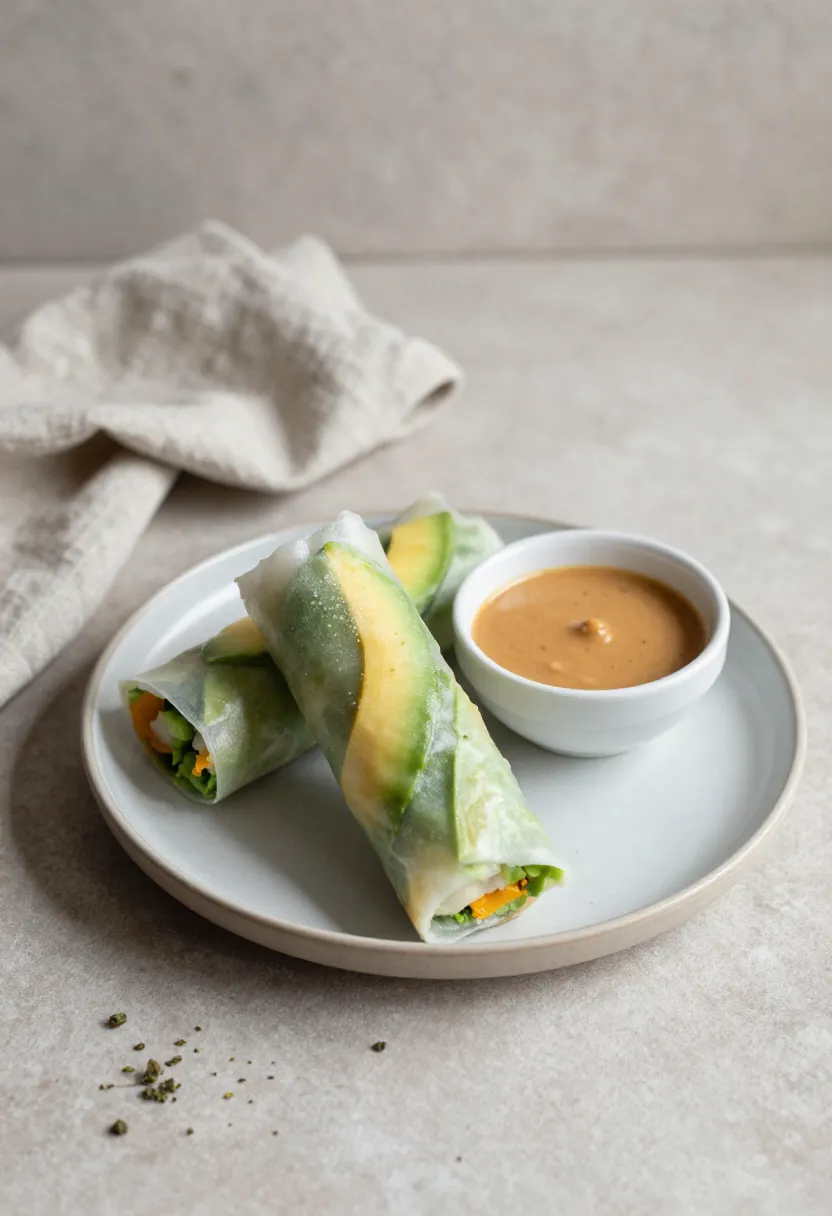
At the same time, it fits naturally into different situations without feeling out of place. Whether you’re cooking for yourself or preparing something to share, it works without needing to be adjusted too much:
- it serves as a light meal that doesn’t feel insufficient
- it works well when you want something fresh but still structured
- it can be presented casually or slightly more carefully, depending on the setting
- it’s especially practical in warmer seasons when cooking feels less appealing
Another aspect that often goes unnoticed is the process itself. Unlike many recipes, this one doesn’t involve active cooking for most of the time. Instead, it’s based on preparation and assembly.
That changes the overall experience. There’s less pressure, less timing involved, and fewer things that can go wrong. Even the rolling process, which might seem unfamiliar at first, becomes easier after a couple of attempts.
Because of that, the dish doesn’t feel demanding. It fits into the flow of a regular day rather than interrupting it.
And that’s usually the reason recipes like this stay relevant. Not because they’re complex or particularly striking, but because they’re easy to come back to — and just as easy to enjoy again.
🥢 Mango Avocado Spring Rolls Recipe
This is one of those dishes that sounds simple when you describe it, but somehow feels more complete once it’s actually on the plate. Fresh spring rolls aren’t cooked in the traditional sense — nothing is fried, nothing is baked — and yet they don’t feel like “just a light snack.”
What you’re really making here is a combination of textures wrapped into something you can hold in your hands. Soft rice paper on the outside, slightly chewy noodles inside, then layers of fruit and vegetables that each bring something different. It’s not dramatic or overly bold, but it keeps your attention in a quiet way.
The first bite is usually a bit surprising. You expect something very light, maybe even forgettable. But instead, there’s contrast — sweetness from the mango, creaminess from the avocado, a bit of crunch, and then that fresh finish from the herbs. It’s subtle, but it builds.
And then there’s the peanut sauce, which honestly changes everything. On its own, the roll is fresh and balanced. With the sauce, it becomes richer, deeper, a bit more satisfying. It fills in the gaps without overpowering the rest.
It’s also not the neatest dish to eat, and that’s worth mentioning. The wrappers are delicate, the filling shifts slightly, and the sauce tends to drip a little. But that’s part of the experience — it doesn’t feel stiff or overly controlled. Just real food, the kind you don’t have to handle perfectly.
🛒 Ingredients
For the spring rolls:
- 2 ripe mangoes (firm but sweet)
- 2 avocados
- 2 medium carrots
- 1 cucumber
- about 1–2 cups shredded red cabbage
- a small bunch of fresh mint
- a small bunch of fresh cilantro
- rice vermicelli noodles (around 70–80 g dry)
- 10–12 rice paper wrappers
For the peanut sauce:
- 1/3 cup peanut butter
- 2 tablespoons hoisin sauce
- 1 tablespoon soy sauce
- 1 tablespoon rice vinegar (or lime juice)
- 1/2 teaspoon sesame oil
- chili sauce or sriracha (optional)
- 1/3 cup warm water (adjust as needed)
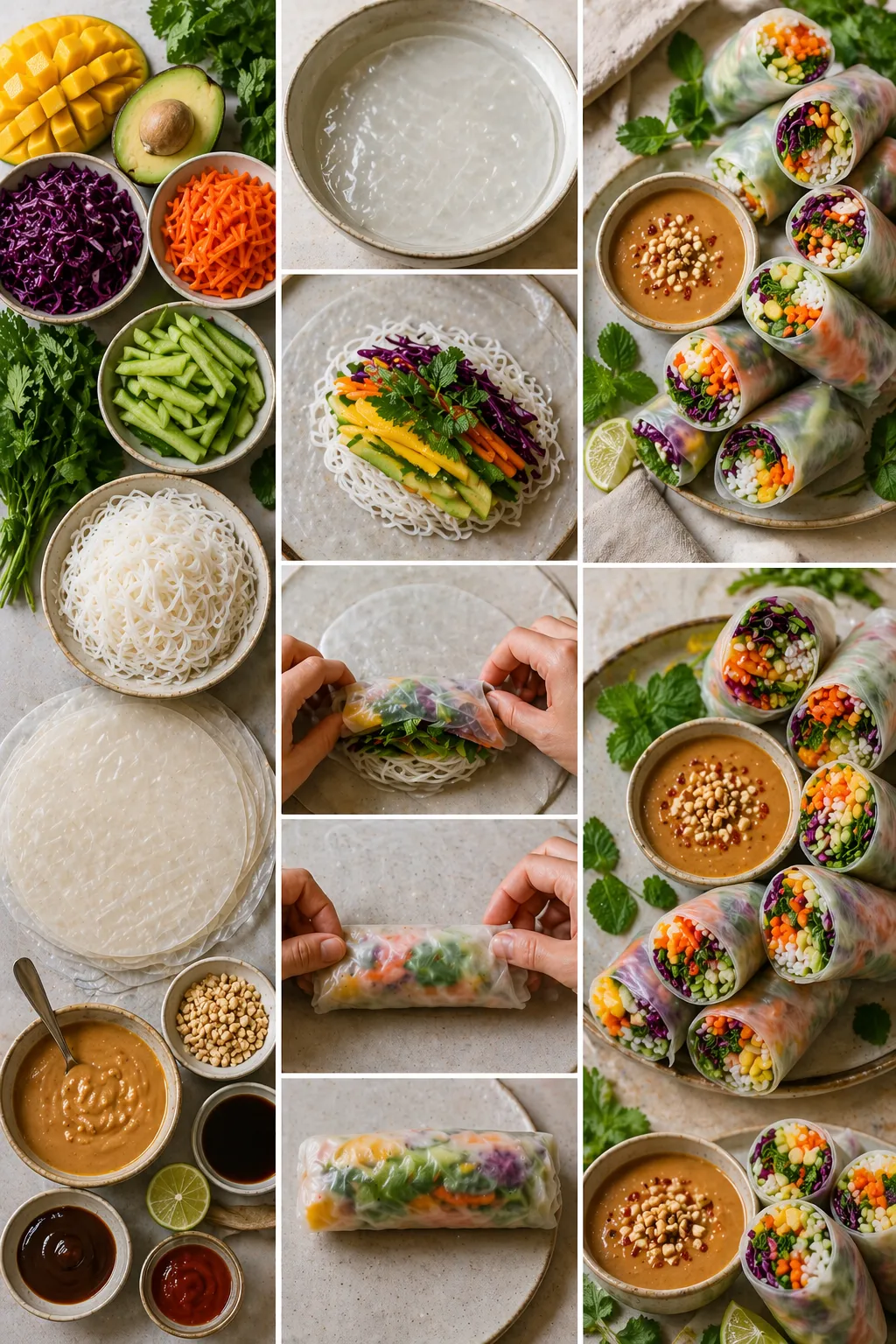
👩🍳 Step-by-Step Instructions
- Cook the noodles
Bring water to a boil and cook the rice noodles according to the package instructions. It usually doesn’t take long, so it’s easy to overdo it if you’re not paying attention.
Once ready, drain them and rinse under cold water. This step helps stop the cooking process and keeps them from sticking together. - Prepare the fillings
Slice mango, avocado, cucumber, and carrots into thin strips. They don’t need to be perfectly even, but keeping them similar in size makes rolling easier later.
Shred the cabbage if needed and set everything aside. Wash the herbs and gently dry them — excess moisture can make the rolls harder to handle. - Make the peanut sauce
In a bowl, combine peanut butter, hoisin sauce, soy sauce, vinegar, and sesame oil. At first, the mixture might feel thick and slightly uneven. That’s normal.
Add warm water gradually, stirring until the sauce becomes smooth and easy to dip. Taste it and adjust if needed. This part is flexible, and small changes can shift the flavor quite a bit. - Set up your workspace
Before you start rolling, it helps to have everything within reach. Lay out the wrappers, fillings, a bowl of warm water, and a clean surface.
It might seem like a small detail, but it makes the whole process smoother and less frustrating. - Soften the rice paper
Dip one wrapper into warm water for about 20–30 seconds. You’re looking for a texture that’s soft and flexible but not falling apart.
If it becomes too soft, it can tear easily, so it’s better to take it out slightly earlier than too late. - Add the filling
Place the softened wrapper on a flat surface. Start with a small amount of noodles, then layer the fruit, vegetables, and herbs on top.
Keeping the filling compact helps with rolling and prevents everything from slipping out. - Roll the spring roll
Fold the bottom edge over the filling, then bring in the sides, and roll forward gently. It doesn’t have to be tight enough to look perfect — just enough to hold everything together. - Repeat the process
Continue with the remaining ingredients. The first few rolls might feel slightly awkward, but the process becomes more natural with each one. - Serve immediately
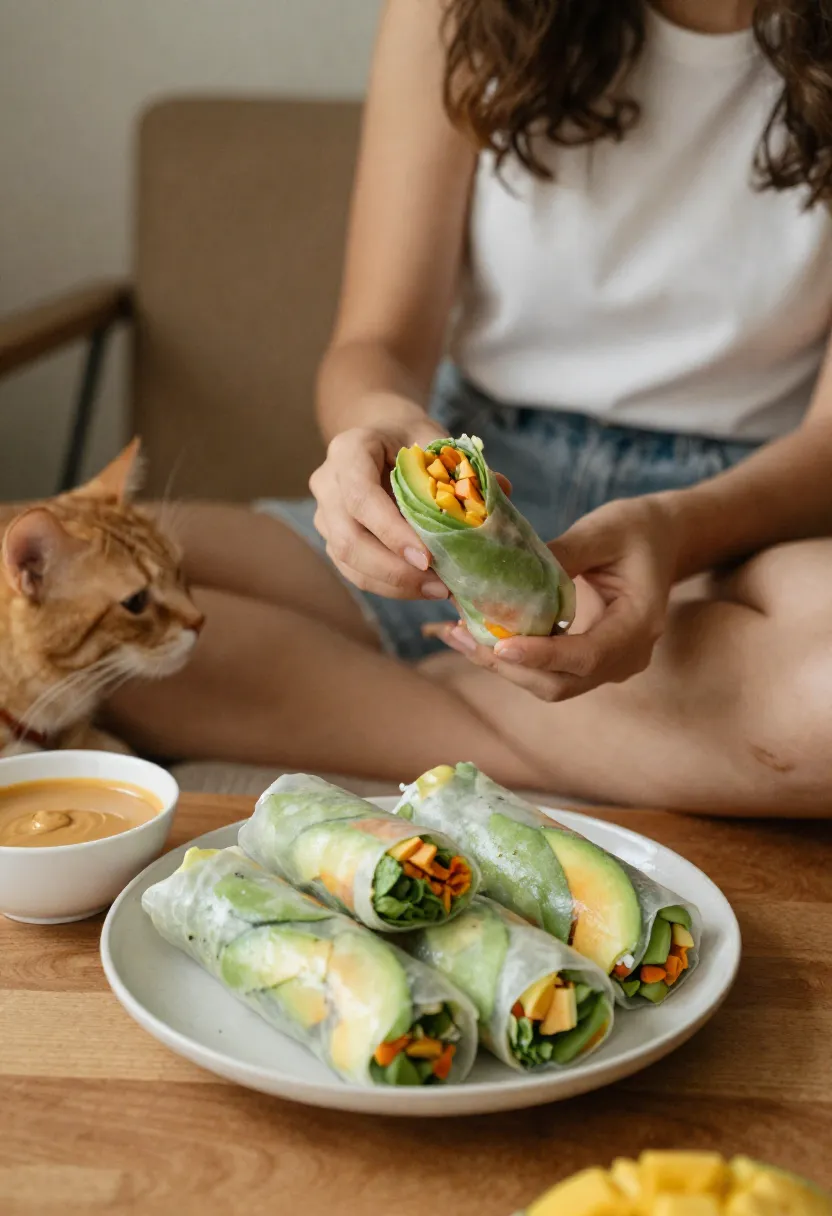
Arrange the finished rolls on a plate and serve with the peanut sauce. If you want, you can slice them in half to show the layers inside, but it’s not necessary.
💡 A Few Practical Tips
- Work with one rice paper sheet at a time to avoid sticking
- Keep finished rolls lightly covered so they don’t dry out
- Don’t overfill — it makes rolling much harder than it needs to be
- Adjust the sauce at the end, not the beginning, once flavors settle
✨ How to Make Them Look (Almost Too Good to Eat)
Presentation might seem like a small detail, but with a dish like this, it quietly changes how everything feels. Not just how it looks — but how you approach eating it.
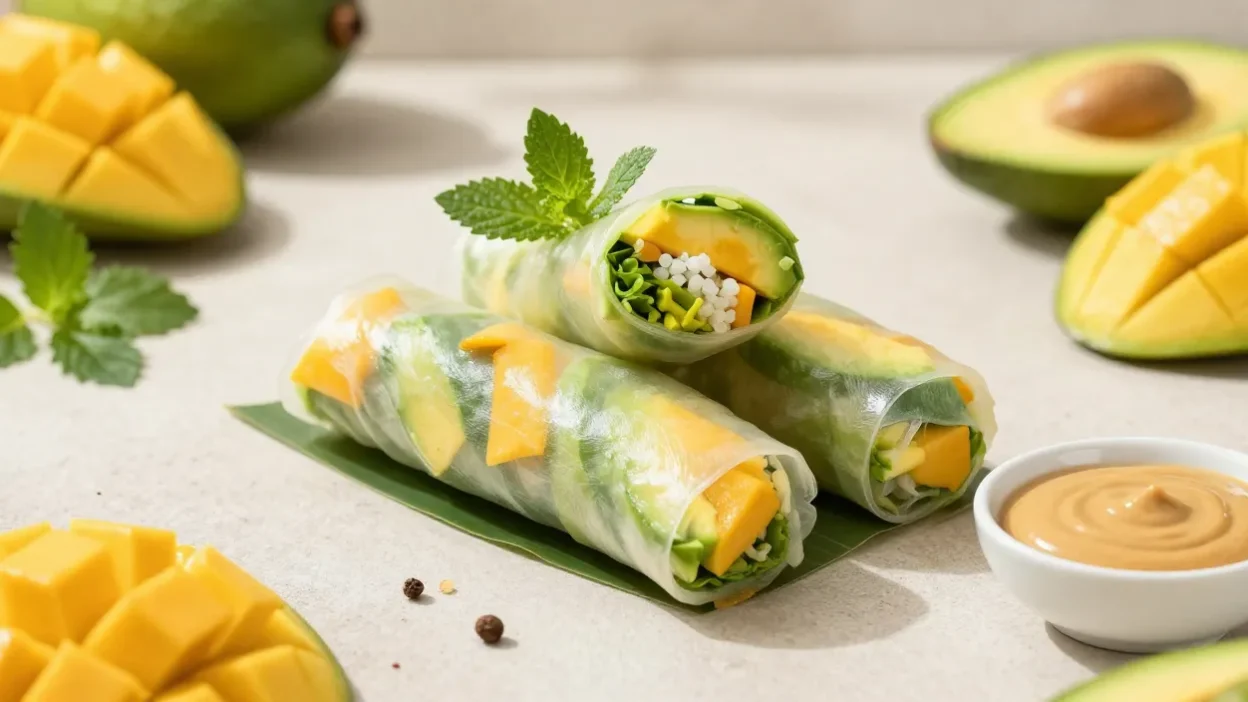
Spring rolls already have a natural advantage. You don’t need to decorate them in the usual sense. The rice paper is slightly transparent, so you can see what’s inside without cutting into them — soft greens, warm orange tones, bits of texture layered together. Even when they’re not perfectly shaped, they still look fresh. That’s kind of built in.
But there’s a difference between something that looks “fine” and something that feels intentional.
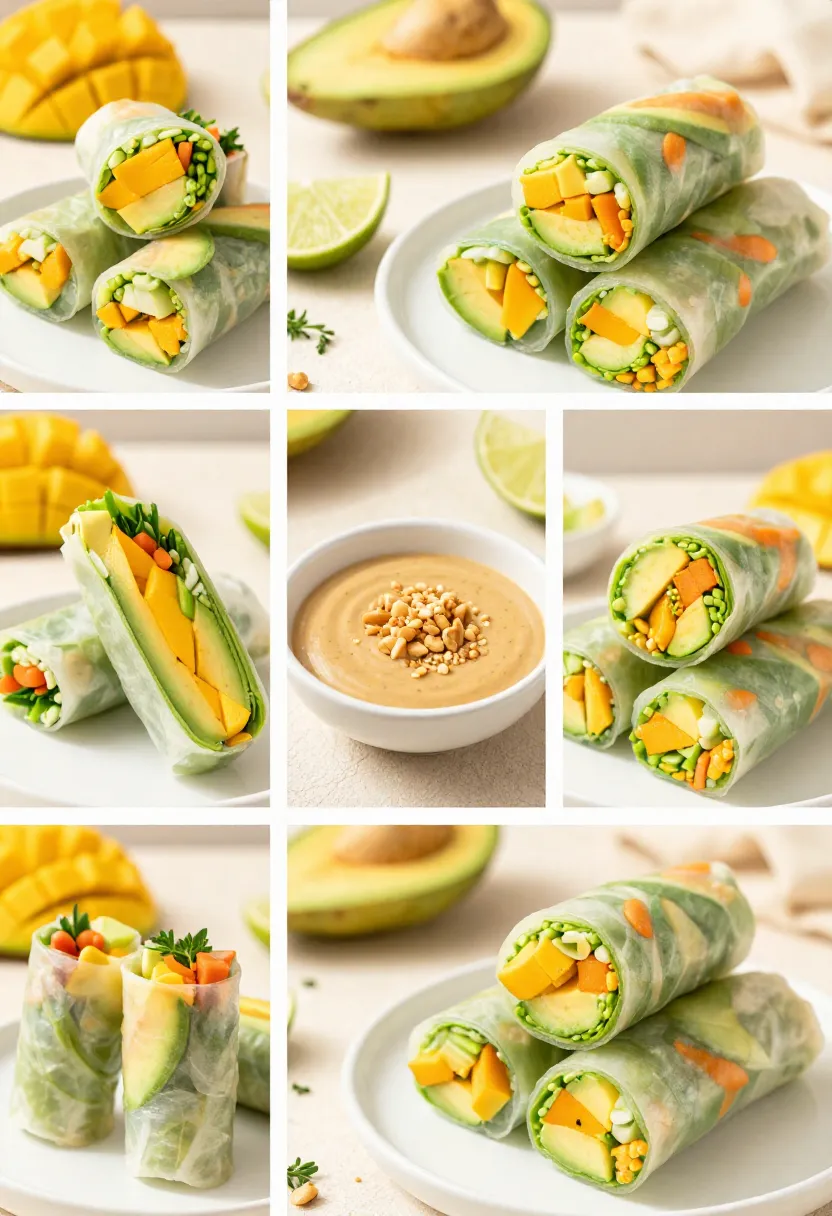
One thing people often overlook is spacing. When rolls are stacked or piled on top of each other, they start to lose definition. The wrappers stick slightly, the shapes blur together, and everything feels a bit heavier visually. When you place them in a single layer, even on a simple plate, it changes the impression. Suddenly, each roll stands on its own. You notice the variation — some slightly tighter, some softer, some with more visible filling.
Cutting them in half is another small shift that makes a bigger difference than expected. Especially when done diagonally, it reveals the inside in a way that feels satisfying to look at. You see the structure — how everything sits together, how the colors contrast. It makes the dish feel more complete, even though nothing about the ingredients has changed.
The sauce also plays a bigger role than just flavor. When it’s placed off to the side, it feels separate, almost like an afterthought. But when it sits on the same plate — in a small bowl, centered or slightly offset — it becomes part of the composition. It gives the dish a focal point.
If you want to take it just a step further, there are a few simple touches that don’t require effort but still make a difference:
- lightly sprinkle sesame seeds for a bit of texture on top
- add a few fresh herb leaves around the plate instead of only inside the rolls
- use a neutral plate so the colors stand out more naturally
- avoid overcrowding — empty space actually helps here
None of this is necessary. And honestly, if you’re just making these for yourself, you probably won’t care that much.
But if you take those extra seconds, the dish shifts from something casual to something that feels a bit more put together — without becoming overstyled or forced.
🧠 Things You’ll Probably Notice the First Time
There’s a difference between reading a recipe and actually making it. With spring rolls, that difference shows up pretty quickly — not in a frustrating way, just in small, slightly unexpected moments.
The first one usually happens with the rice paper.
At the beginning, it feels too firm. You might even wonder how it’s supposed to wrap around anything without cracking. Then you dip it into water, and within seconds it changes completely. It becomes soft, flexible… and slightly unpredictable. There’s a short window where it’s perfect. Too early, and it resists folding. Too late, and it becomes too delicate to handle comfortably.
You don’t really calculate that timing — you just start to feel it after a couple of tries.
The second thing people notice is how easy it is to overfill.
It feels logical at first: more ingredients should mean a better roll. More mango, more noodles, more everything. But then you try to roll it, and suddenly nothing stays where it should. The wrapper stretches, the filling shifts, and it becomes harder than expected.
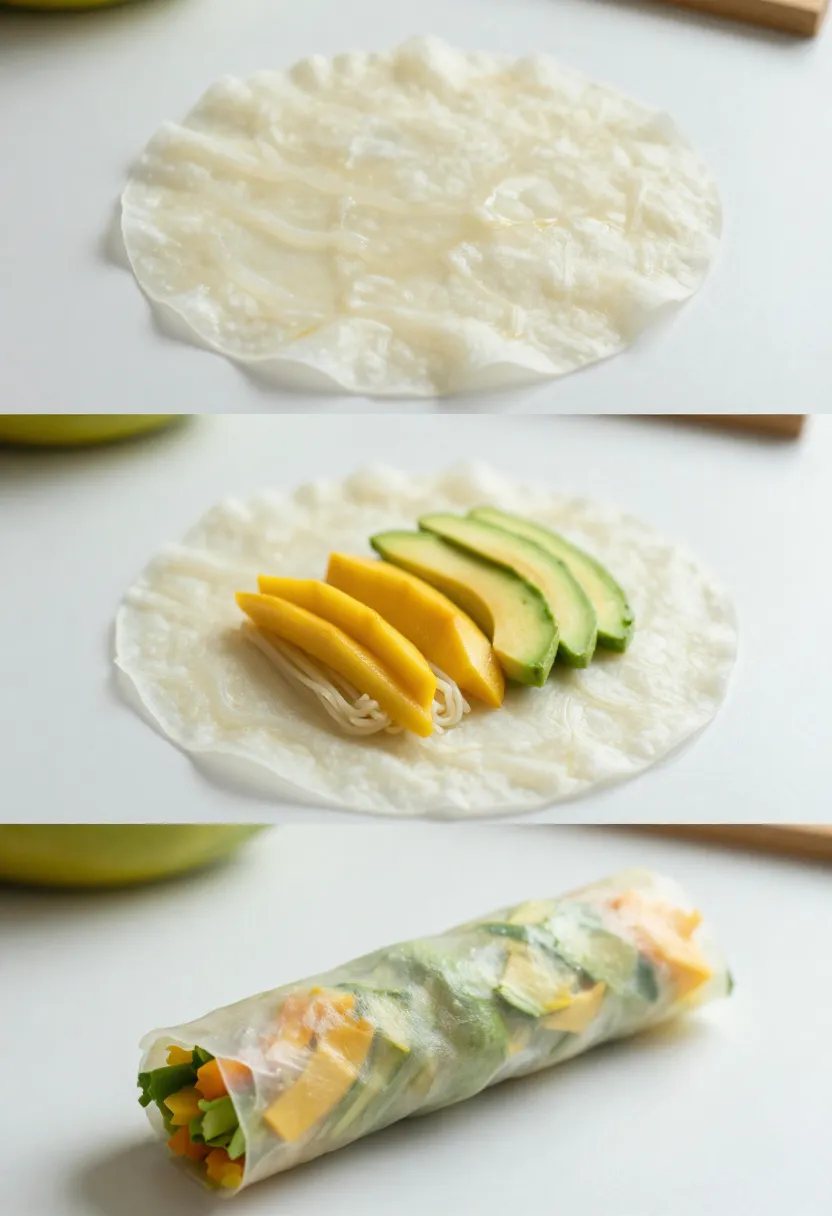
That’s usually the moment where the approach changes.
Instead of adding more, you start simplifying. Smaller portions, cleaner layers, less pressure on the wrapper. And everything becomes easier almost immediately.
Another thing that stands out is how forgiving the process actually is. Even when things don’t go perfectly, the result is still completely usable. A roll might be slightly loose, or uneven, or not as tight as you imagined — but once it’s finished, it still holds together well enough.
And more importantly, it still tastes exactly the same.
There’s also something about rhythm.
If you try to rush through it, the process feels slightly off. Movements become less controlled, wrappers tear more easily, small mistakes start to stack. But if you slow down — even just a little — everything becomes smoother. More predictable.
After a few rolls, your hands adjust. You stop thinking about each step. It becomes more about repetition than instruction.
A few small things tend to come up again and again during that first attempt:
- the wrapper feels different every time depending on how long it sits in water
- slightly less filling almost always works better than slightly more
- the first roll is rarely the best one — and that’s fine
- working slower at the start actually saves time overall
None of this is complicated. It just takes one try to understand it.
🌿 Final Thoughts (The Honest Version)
This isn’t the kind of recipe that tries to impress you immediately. There’s no dramatic first bite, no strong “wow” moment where everything suddenly stands out. If anything, it feels quieter than that. More gradual, less obvious.
At the beginning, it might even seem a bit too simple. You look at it and think — okay, fresh ingredients, nothing unusual, nothing complicated. But the interesting part happens after you actually eat.
You notice it in a very specific way. Not because something is missing, but because something isn’t there. There’s no heaviness afterward. No feeling of being overly full, no need to sit down and recover. You just feel… normal. Comfortable. And that’s something people don’t always expect from a meal, especially one that still feels complete.
Another thing that stands out is how little it asks from you. You don’t need to plan ahead or prepare anything complicated. You don’t need to follow the recipe perfectly for it to work. It adapts easily, which makes it much easier to repeat. It fits into a regular day without forcing you to adjust your schedule around it.
That’s probably why it tends to stay in rotation. Not because it’s the most exciting thing you’ve ever tried, and not because it’s particularly impressive. It’s because it works when you need something reliable, something that doesn’t require effort but still gives you a good result.
The process itself also feels different from typical cooking. It’s not especially fast, but it’s not stressful either. You’re not managing multiple pans or worrying about timing everything correctly. You’re just assembling ingredients step by step, and after a few rolls, the movements become almost automatic. It turns into a calm, repetitive process rather than something you have to actively think through.
In the end, what you get feels balanced in a very practical sense. The dish is light without feeling empty, fresh without becoming bland, and simple without losing interest. That combination is harder to achieve than it sounds, but here it comes together quite naturally.
After eating, there’s no second guessing. You don’t feel like you need something extra, and you don’t feel like you overdid it. It just feels like a good, complete meal.
And then, a few days later, you might find yourself thinking about it again. Not in a strong or obvious way — just a small, passing thought that it was actually really good.
That’s usually the sign. Recipes like this don’t rely on first impressions. They stay because they quietly fit into your routine — and once they do, they tend to come back again.