There are meals that instantly feel comforting the moment they arrive on the table. Not because they’re overly fancy or complicated, but simply because something about them feels familiar and satisfying right away. Chicken Parmigiana is definitely one of those dishes. Even before the first bite, the smell usually gives it away — warm tomato sauce, toasted breadcrumbs, and cheese slowly melting somewhere in the oven. It’s the kind of aroma that tends to make people wander into the kitchen asking what’s cooking.
Part of the reason people love Chicken Parmigiana so much is how straightforward it is. The ingredients are simple and the flavors are easy to recognize, yet when they come together they create something that feels special enough for a proper dinner. Crispy chicken with a golden crust, rich tomato sauce layered on top, and melted cheese tying everything together — it’s a combination that rarely disappoints. There’s nothing particularly complicated about it, and maybe that’s exactly why it works so well.
This particular version adds a few small touches that make the dish feel slightly more interesting without changing its character too much. One of those additions is sage. It’s not always the first herb people reach for when cooking chicken, but once you try it, it becomes surprisingly hard to imagine the dish without it. Sage has a warm, earthy aroma that develops beautifully when the leaves are briefly cooked in olive oil. The smell fills the kitchen almost immediately, and suddenly the whole meal feels a little more aromatic.
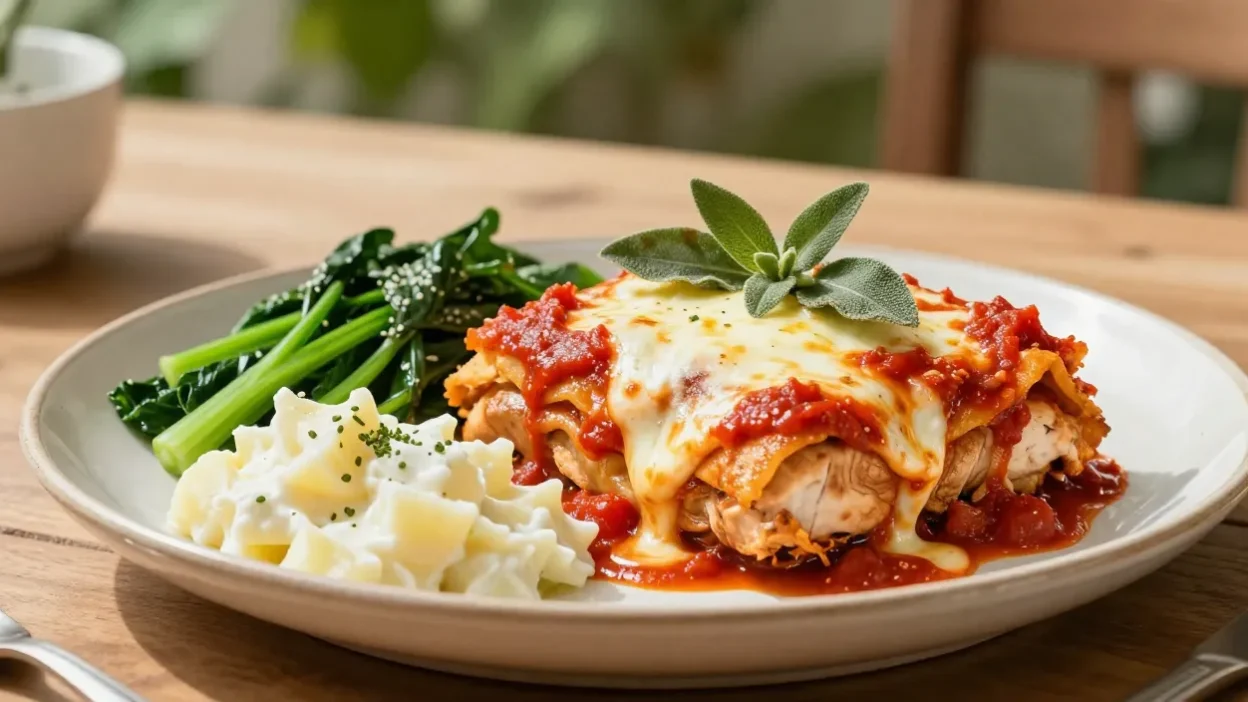
Alongside the chicken there’s also a simple mix of green vegetables and a portion of creamy potato salad. At first glance it might seem like quite a lot happening on one plate, but the balance actually makes sense once you start eating. The vegetables bring freshness and a bit of brightness, while the potato salad adds a softer, comforting element that works nicely with the crispy chicken. Instead of competing with each other, the different parts of the meal tend to complement one another.
In fact, one of the reasons this combination works so well is that it brings together several textures at the same time:
- crispy chicken coating
- smooth tomato sauce and melted cheese
- tender vegetables with a slight bite
- creamy potato salad
When you take a bite that includes a little bit of everything, the contrast makes the dish feel more interesting and balanced. 🍗🌿
Another thing worth mentioning is that this kind of dinner doesn’t require hours of preparation. That’s probably one of the reasons it shows up so often in home kitchens. The ingredients are easy to find, the cooking steps are manageable, and the end result feels far more impressive than the amount of effort involved. It’s the sort of meal that works equally well for a relaxed weeknight dinner or for a slightly more special evening when you want something comforting but still satisfying.
The Story Behind a Beloved Chicken Dish
Chicken Parmigiana sounds unmistakably Italian, and its roots do trace back to Italy, but the dish most people recognize today actually developed through a mix of culinary traditions. Like many popular recipes, it evolved over time as people adapted familiar dishes to the ingredients available in their new homes.
The original inspiration comes from eggplant parmigiana, a well-known dish from southern Italy. In that traditional recipe, slices of eggplant are layered with tomato sauce and cheese, sometimes with breadcrumbs in between, and baked until everything becomes soft and deeply flavorful. It’s simple food, but incredibly comforting.
When Italian families moved abroad, especially to countries like the United States, Canada, and Australia, recipes naturally began to change. Ingredients that were common in Italy were sometimes harder to find elsewhere, and cooks started adjusting their dishes based on what local markets offered. Chicken soon became a popular substitute for eggplant in many kitchens. It was widely available, provided more protein, and created a slightly heartier meal.
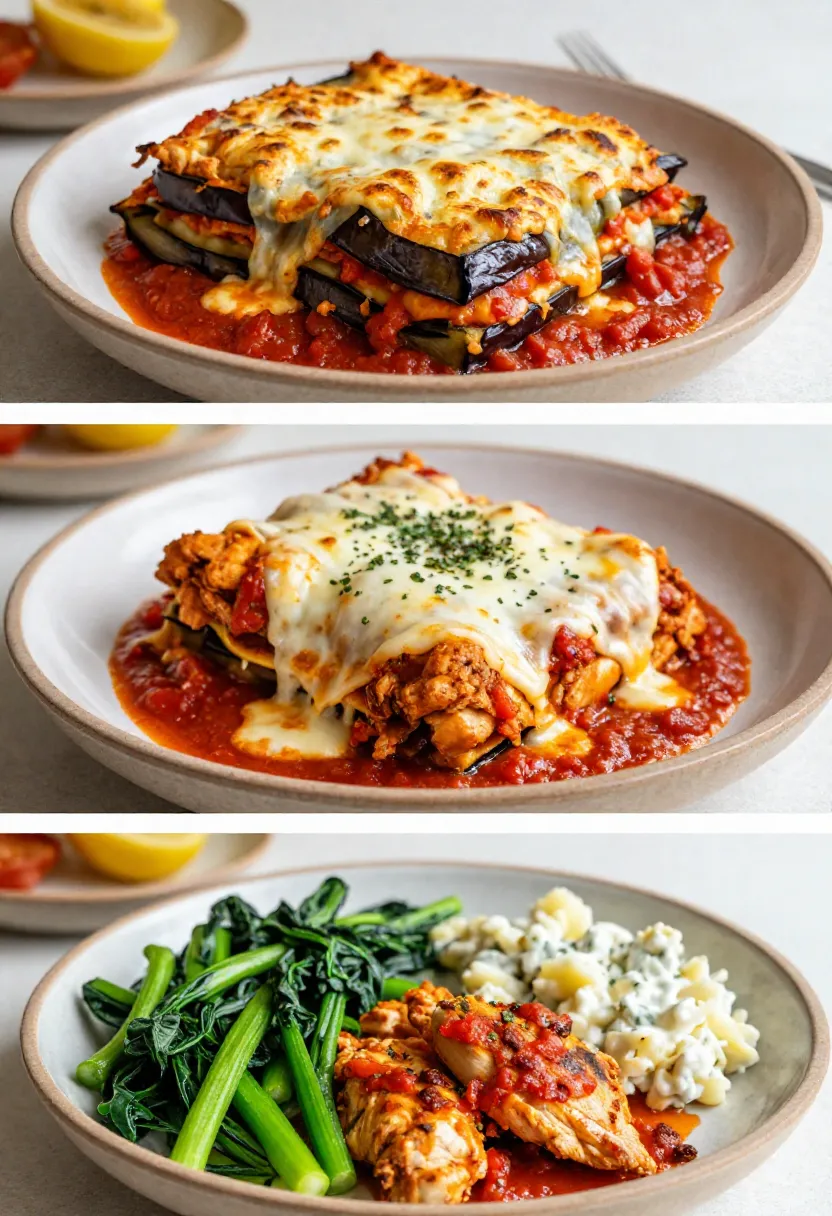
The idea turned out to be a very successful one. Breaded chicken cutlets paired perfectly with tomato sauce and melted cheese, creating a dish that was both filling and flavorful. Over time the chicken version became extremely popular and developed its own identity separate from the original eggplant recipe.
Today Chicken Parmigiana appears in many different forms. In some places it’s served in family restaurants with pasta on the side, while in others it might appear in casual pubs or cafés as a complete meal. Each cook tends to add their own small variations, which keeps the dish interesting and allows it to evolve over time.
Some common variations people experiment with include:
- adding extra herbs such as basil or oregano to the sauce
- using cheeses like provolone or parmesan for a sharper flavor
- serving the chicken with different side dishes depending on the season
What’s interesting is that none of these adjustments really change the heart of the dish. The combination of breaded chicken, tomato sauce, and melted cheese remains the foundation. Everything else simply builds on that base.
Because the recipe is so flexible, it easily welcomes additions like sage, fresh vegetables, or potato salad. These elements bring new flavors and textures to the plate while still keeping the overall dish recognizable and comforting.
Flavor Balance: Why Sage, Greens and Potatoes Work So Well Together
A good meal usually isn’t about just one flavor doing all the work. The best plates tend to have a bit of contrast going on — something crispy next to something soft, something rich balanced by something lighter. When those elements come together, the whole dish feels more satisfying.
Sage plays an important role here, even though it’s used in a fairly small amount. The herb has a warm, slightly earthy taste that pairs naturally with poultry. When the leaves are briefly fried in olive oil, they turn crisp and release their aroma into the pan. It’s one of those small cooking steps that makes a noticeable difference. Suddenly the chicken doesn’t just smell good — it smells amazing.
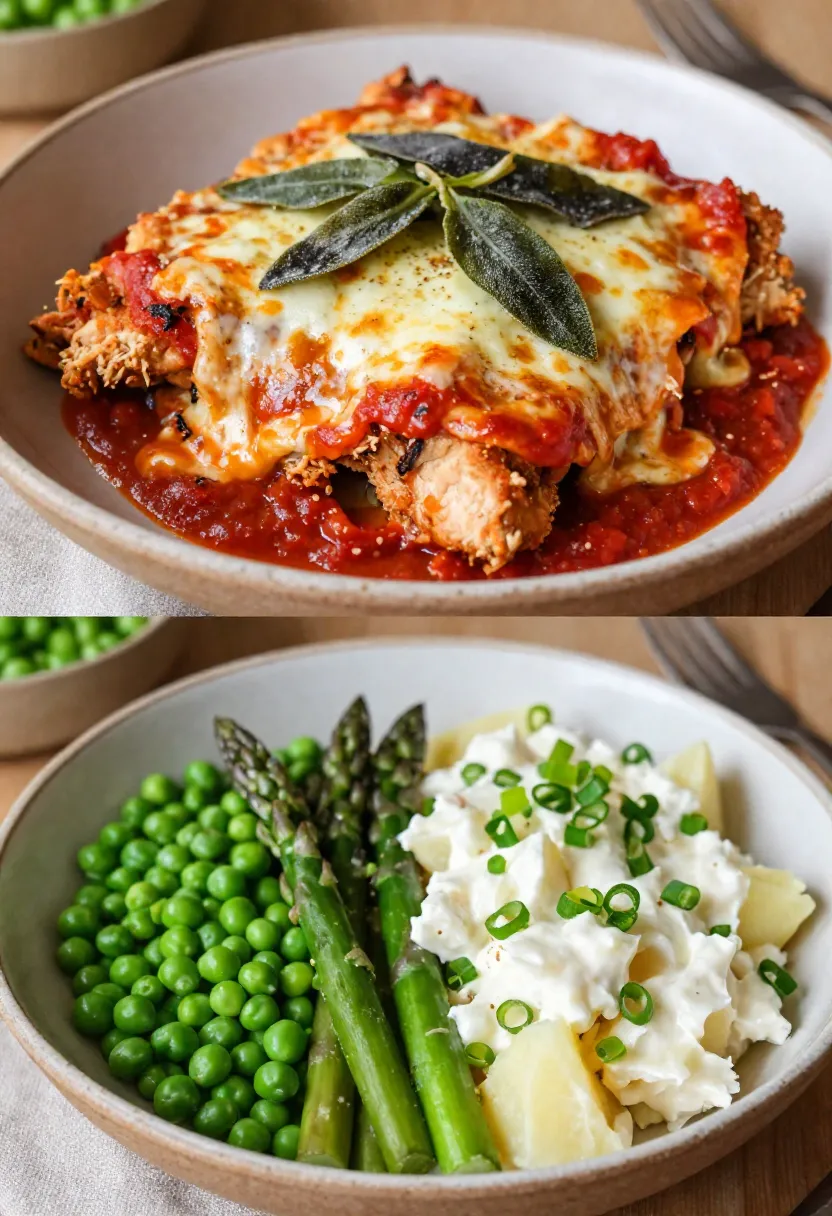
The vegetables bring a completely different kind of balance. Peas, green beans, and asparagus add a fresh note to the plate that contrasts nicely with the crispy chicken and melted cheese. Their flavor is lighter and a little sweeter, which helps keep the dish from feeling too heavy.
Potato salad finishes the plate in a way that feels comforting and familiar. Potatoes have that soft, creamy texture that smooths out stronger flavors around them. Mixing in spring onions adds a bit of sharpness, which prevents the salad from becoming overly rich.
When everything ends up on the same plate — the crispy chicken, the warm sauce, the bright vegetables, the creamy potatoes — the combination just works. Nothing competes too much with anything else. Each part supports the others, and that’s usually the sign of a really good meal. 😊
Chicken Parmigiana with Sage and Greens Recipe 🍗🌿
Some recipes feel a little special even before the first bite, and this Chicken Parmigiana is one of those meals. It’s warm, comforting, and full of familiar flavors, but the addition of sage and fresh greens gives it a slightly more refined feel. You still get the crispy chicken, the rich tomato sauce, and the melted cheese that make the dish so loved, yet the herbs and vegetables add a lighter, fresher note that keeps everything balanced.
What makes this version especially enjoyable is the contrast of textures. The chicken develops a golden, crunchy crust in the pan, while the inside stays tender and juicy. On top of that comes a layer of tomato sauce that’s been gently infused with sage, adding a subtle herbal aroma that pairs beautifully with poultry. Once the mozzarella melts in the oven, everything comes together into a comforting, savory topping that feels both simple and satisfying.
The side components matter just as much here. Bright green vegetables such as peas, green beans, and asparagus bring freshness to the plate and help balance the richness of the chicken and cheese. Then there’s the potato salad, which adds a creamy element that rounds out the meal. The combination may sound straightforward, but when everything is served together it feels like a complete dinner rather than just a main dish with sides.
Another nice thing about this recipe is that it doesn’t require complicated cooking techniques. The steps are fairly approachable, and most of the ingredients are easy to find in any grocery store. It’s the kind of meal that looks impressive when plated, but the process of making it remains relaxed and manageable. Whether you’re cooking for family, a small gathering of friends, or simply preparing a satisfying dinner at home, this dish tends to work surprisingly well.
Ingredients
For the chicken
- 1½ tablespoons olive oil
- 8 fresh sage leaves
- 1 large breaded chicken breast schnitzel (about 600 g), cut into two portions
- 1 cup Italian-style vegetable tomato sauce
- 1 tablespoon finely chopped sage
- ⅓ cup coarsely grated mozzarella cheese
- Salt and freshly ground black pepper
For the vegetables
- 1 cup frozen peas
- 100 g green beans, trimmed
- 1 bunch asparagus, woody ends removed
For the potato salad
- 250 g prepared potato salad
- 2 spring onions, thinly sliced
Cooking Instructions
- Preheat the oven to 220°C (425°F). Lightly grease a baking tray or line it with baking paper so the chicken does not stick while baking.
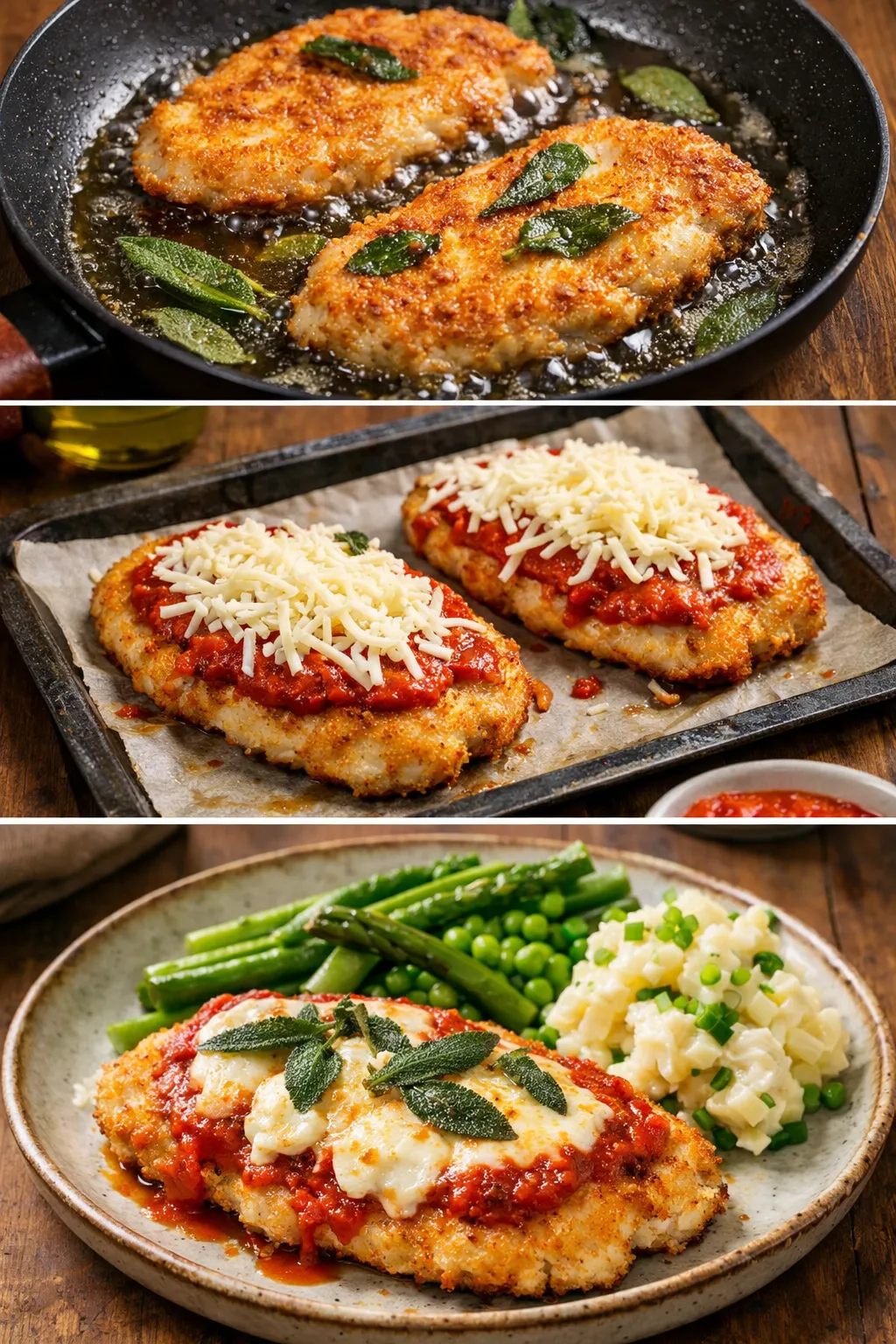
- Heat the olive oil in a large frying pan over medium heat. Add the sage leaves and cook them for several minutes, turning occasionally, until they become crisp and fragrant. Transfer the leaves to a plate lined with paper towels to absorb any excess oil.
- Using the same pan, place the breaded chicken schnitzels into the hot oil. Cook them for about 2–3 minutes on each side until the coating becomes golden and crispy. Once cooked, move the chicken pieces onto the prepared baking tray.
- In a small saucepan, combine the tomato sauce with the chopped sage. Place the pan over medium heat and allow the sauce to simmer gently for about 3 minutes, stirring occasionally so the flavors blend together.
- Spoon the warm tomato and sage sauce evenly over each piece of chicken. Sprinkle the grated mozzarella cheese on top and season lightly with salt and pepper.
- Transfer the tray to the oven and bake for about 8 minutes, or until the cheese has melted and becomes slightly bubbly.
- While the chicken finishes cooking, bring a medium pot of salted water to a boil. Add the peas, green beans, and asparagus and cook them for 3–4 minutes until they are tender but still bright green. Drain the vegetables and season lightly with salt.
- In a small bowl, mix the potato salad with the sliced spring onions until everything is well combined.
- Divide the chicken between serving plates. Add a generous portion of the warm vegetables and potato salad alongside the chicken.
- Finish the dish by sprinkling the crispy sage leaves over the chicken just before serving. Serve immediately while everything is warm.
Helpful Cooking Tips
- Crispier chicken: make sure the pan is properly heated before adding the schnitzel. If the oil is too cool, the coating may absorb oil instead of becoming crispy.
- Fresh cheese melts better: freshly grated mozzarella usually melts more smoothly than pre-shredded cheese.
- Don’t overcook the vegetables: keeping them slightly firm helps maintain their color and fresh flavor.
- Add extra flavor to the potato salad: a small squeeze of lemon juice or a pinch of black pepper can brighten the taste.
- Serve immediately: Chicken Parmigiana is at its best when the cheese is still melted and the chicken coating remains crisp.
Making the Dish Even Better: Helpful Cooking Tips 👨🍳
Cooking something truly delicious often isn’t about complicated techniques or rare ingredients. Most of the time, the real difference comes from small details — the kind that might seem minor at first but noticeably improve the final result. When making Chicken Parmigiana, a few simple habits in the kitchen can help the dish turn out even better.
One of the most important things to pay attention to is the crispiness of the chicken. A properly cooked schnitzel should have a golden, crunchy coating while the inside stays juicy and tender. If too many pieces are placed in the pan at once, the oil temperature drops and the chicken may end up steaming rather than frying. Cooking the schnitzels in batches may take a little longer, but it allows each piece to develop that satisfying crust that makes the dish so enjoyable.
Fresh herbs also make a noticeable difference here. Sage has a deep, aromatic character that really comes alive when the leaves are cooked briefly in olive oil. Dried sage can still work in a pinch, but fresh leaves tend to give the dish a brighter and more natural flavor. Even a small handful can change the aroma of the entire pan.
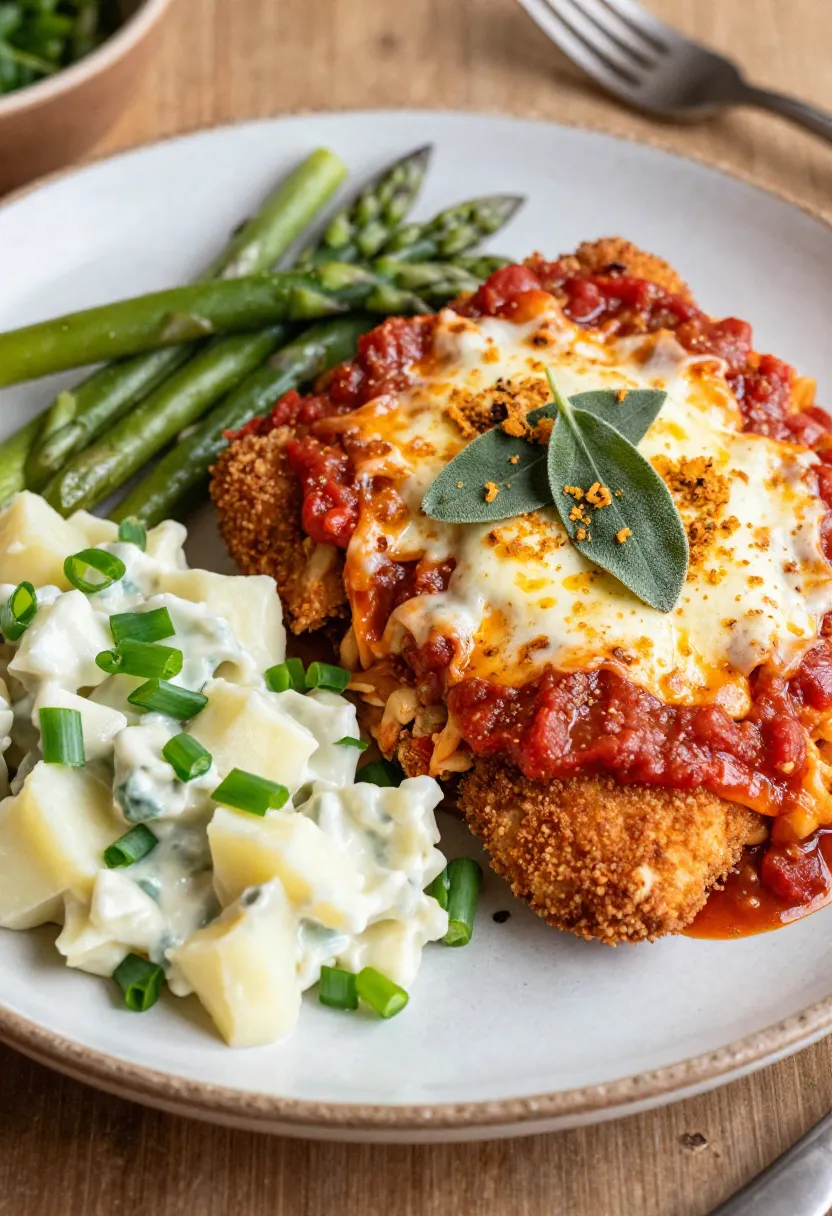
Cheese is another small detail that is easy to overlook. Pre-shredded mozzarella is convenient, but freshly grated cheese usually melts much more smoothly and evenly. When it melts in the oven, it forms that soft, slightly stretchy layer that makes Chicken Parmigiana so satisfying.
Vegetables deserve attention too. Peas, green beans, and asparagus cook fairly quickly, so it’s best to keep an eye on them while they’re in boiling water. Overcooking can cause them to lose their vibrant color and become too soft. A short cooking time helps them stay bright, fresh, and slightly crisp, which balances the richness of the chicken and cheese.
A few simple kitchen habits can really help when preparing this meal:
- keep the frying pan hot enough so the chicken stays crispy
- use fresh sage whenever possible for a stronger aroma
- grate mozzarella yourself for smoother melting
- cook vegetables briefly so they stay bright and flavorful
These may seem like small adjustments, but together they help elevate the entire dish and make the final plate feel more polished and satisfying.
Serving Ideas That Turn Dinner Into an Experience 🍽️
How food is presented might seem like a minor detail, but it can completely change how a meal feels. A thoughtfully arranged plate simply looks more inviting, and sometimes that alone makes the dinner feel a little more special.
Instead of placing everything in one corner of the plate, try giving each element a bit of space. The chicken can sit in the center, topped with melted cheese and tomato sauce, while the vegetables and potato salad rest alongside it. This arrangement not only looks nicer but also allows each component to stand out visually.
The crispy sage leaves added at the end are more than just decoration. Their delicate texture and aroma give the dish a finishing touch that feels intentional and refined. A little freshly cracked black pepper over the top can also add a subtle boost of flavor and fragrance.
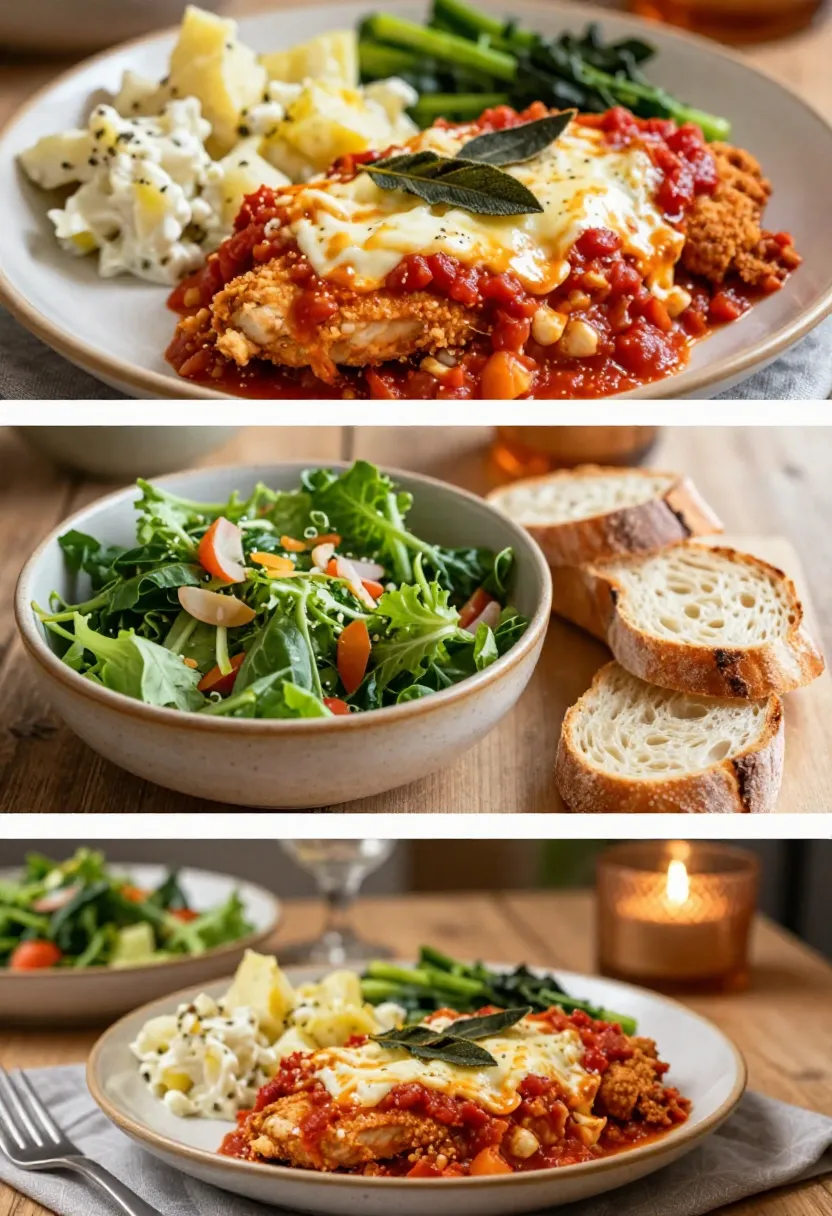
If you’re serving this dish for guests or for a slightly more relaxed weekend dinner, it’s easy to turn the meal into something that feels a bit more complete. A simple table setup with a few extra sides can create that comfortable “shared dinner” atmosphere that people tend to enjoy.
Some easy additions that pair well with this dish include:
- a light green salad with a simple vinaigrette
- slices of warm crusty bread or garlic bread
- a small bowl of olives or marinated vegetables
Drinks can also complement the meal nicely. Sparkling water with lemon keeps things refreshing, while iced tea works well for a casual dinner. For those who enjoy wine, a light white wine often pairs beautifully with chicken and herbs without overpowering the flavors.
In the end, the goal isn’t perfection. It’s simply creating a meal that looks inviting and feels enjoyable to share.
Creative Variations You Can Try at Home 🌱
One of the nicest things about cooking at home is that recipes don’t have to be followed exactly every single time. Once you understand the basic idea of a dish, it becomes much easier to experiment and adjust things depending on what you have in your kitchen.
Chicken Parmigiana is actually a great example of a recipe that welcomes small changes. The core elements remain the same — crispy coating, tomato sauce, and melted cheese — but the details around them can vary quite a bit.
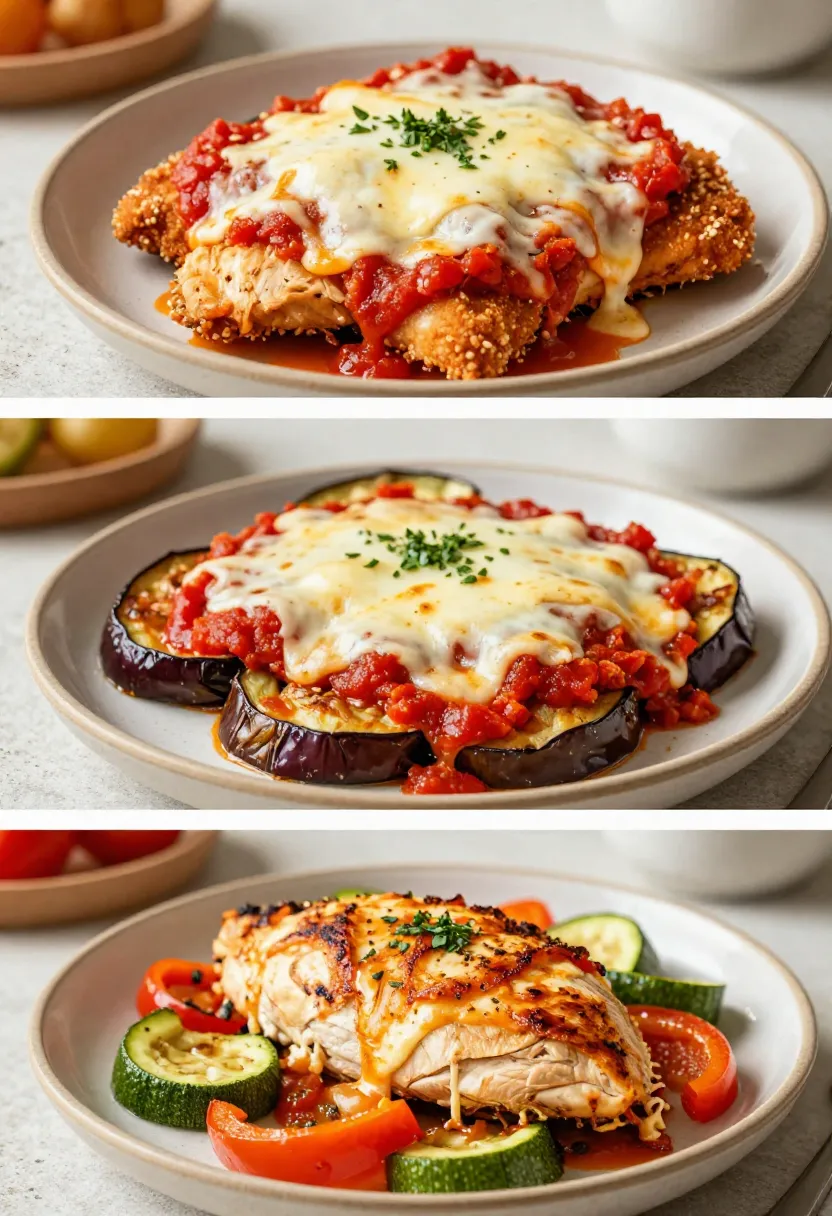
For example, some people prefer a lighter approach and choose to bake the chicken instead of frying it. While the texture may be slightly different, baking still produces a golden crust and keeps the dish a little lighter overall.
Others enjoy exploring vegetarian alternatives. Thick slices of eggplant or large portobello mushrooms can work surprisingly well in place of chicken. When roasted or baked, they absorb the tomato sauce beautifully and still deliver a satisfying bite.
Cheese is another area where experimentation can be fun. While mozzarella gives the dish its classic creamy melt, adding a little parmesan or provolone can introduce a deeper and slightly sharper flavor.
Seasonal vegetables can also change the character of the meal. Depending on what’s available, cooks sometimes swap the greens for other options such as:
- broccoli or broccolini
- sautéed zucchini slices
- roasted bell peppers
- fresh spinach quickly wilted in olive oil
Trying different variations can keep the recipe interesting over time. Cooking doesn’t have to be rigid, and sometimes the best meals happen when you adjust things based on your own preferences or whatever ingredients happen to be on hand.