
Why the GM Diet Still Sparks Curiosity

There is a quiet, almost unnoticeable moment that many people experience long before they ever decide to change the way they eat.
It might happen early in the morning, while standing in the kitchen and waiting for the kettle to boil, when you suddenly catch your reflection in the dark window and feel a small wave of self-awareness wash over you. It might happen while scrolling through old photos and realizing that your face once looked more rested, your posture more relaxed, your smile more open. Or it might come when your favorite jeans feel tighter than they used to, not enough to cause panic, but enough to make you pause.
Nothing dramatic happens in that moment. There is no crisis and no urgent promise to “start over tomorrow.” There is simply a gentle realization that something feels slightly out of balance, and that you would like to feel lighter, clearer, and more connected to your own body again.
For many people, this is where the quiet search begins.
Late at night, with a phone in hand and half-closed eyes, they type questions into search bars: How can I lose weight safely? Is there a simple way to reset my habits? Can one week really make a difference?
And sooner or later, the same name keeps appearing.
The GM Diet.
Short for the General Motors Diet, this seven-day eating plan has been circulating for decades, passed from one website to another, from fitness forums to personal blogs, from friends to colleagues who swear that “it actually worked for me.” Some people describe it as a powerful reset that helped them feel lighter and more energetic. Others dismiss it as another short-term trend that cannot possibly last. Many remain somewhere in between, curious but cautious, intrigued yet unsure.
At first glance, the GM Diet seems almost disarmingly simple.
For one week, each day focuses on a specific group of foods. Fruits on one day, vegetables on another, carefully combined meals later in the week, plenty of water, minimal processing, and very little room for improvisation. There are no complicated recipes, no expensive powders, no mysterious supplements that promise miracles in small plastic containers.
There is only structure.
And for people who feel overwhelmed by endless nutrition advice, that structure can feel unexpectedly comforting.
In a world where every week brings a new dietary philosophy — low-carb, high-fat, plant-based, fasting, intuitive eating, metabolic resets — many people feel lost before they even start. They stand in supermarkets unsure of what to choose, scroll through social media flooded with contradictory advice, and slowly begin to associate food with anxiety rather than nourishment.
Against this background, a clear seven-day plan can feel like a small island of calm.
One of my friends once described her experience with the GM Diet in a way that stayed with me. After a long period of stress and irregular meals, she decided to try it almost on impulse. A week later, she told me, smiling softly, “The biggest change wasn’t even on the scale. It was waking up and not arguing with myself about what I was allowed to eat.”
That sentence reveals something essential.
For many of us, food is never just food. It is comfort after a difficult day. It is celebration and nostalgia. It is habit and distraction. It is sometimes guilt, sometimes reward, sometimes emotional shelter. Over time, this emotional complexity can blur our natural hunger signals and disconnect us from our body’s quiet wisdom.
The GM Diet, in its strict simplicity, temporarily removes much of that emotional noise.
For seven days, it invites you into a more focused relationship with eating. It encourages you to notice hunger again, to recognize fullness, to drink water consciously, to prepare simple meals with intention, and to slow down in small but meaningful ways. For some people, this experience feels surprisingly grounding, even meditative.
Of course, this does not mean that the GM Diet is a perfect solution.
It is not a miracle system that can undo years of unhealthy habits. It is not designed as a lifelong eating pattern. It does not suit everyone, and it carries limitations that deserve honest discussion. Without balance and awareness, it can lead to nutrient gaps or unrealistic expectations.
But when approached thoughtfully, it can serve another purpose.
It can become a pause.
A short window in which you step away from mindless eating, emotional snacking, and constant decision-making, and instead listen more carefully to what your body is trying to tell you. It can be a starting point for reflection, rather than a finish line.
In this guide, we will explore what the GM Diet really is, where it comes from, how it works day by day, what benefits and risks it carries, and how to approach it in a way that supports both physical health and emotional balance.
You will not find dramatic promises of instant perfection here. Instead, you will find honest, practical, and compassionate guidance, written for people who care not only about quick results, but also about long-term well-being.
If you have ever felt curious about the GM Diet, uncertain whether it is right for you, or simply interested in understanding it beyond headlines and social media posts, you are in the right place.
Let’s walk through it together.
What Is the GM Diet? (History & Origins)

Before trying any structured eating plan, there is always one important question worth asking first.
Where did it actually come from?
Because behind every popular diet, there is a story. Sometimes it is rooted in science. Sometimes in marketing. Sometimes in good intentions mixed with oversimplification. And very often, it is a combination of all three.
The GM Diet is no exception.
Its full name, the General Motors Diet, immediately sounds unusual to modern ears. It does not evoke images of nutritionists, doctors, or wellness retreats. Instead, it brings to mind factories, machines, and corporate offices, which makes many people pause and wonder how a major automobile company could possibly be connected to a weight loss plan.
According to the most commonly shared version of its origin story, the GM Diet was developed in the 1980s for employees of the General Motors corporation. At the time, companies were becoming increasingly aware of the impact of employee health on productivity, insurance costs, and long-term performance. In collaboration with medical professionals and nutrition experts, General Motors allegedly created a short-term dietary program designed to help workers improve their fitness and lose excess weight within a limited period.
The idea was not to create a lifelong eating philosophy.
It was meant as a practical, time-bound intervention that could motivate people to adopt healthier habits and feel better physically within a short timeframe. In this sense, the GM Diet functioned more like a structured reset than a permanent solution.
However, it is important to approach this origin story with a healthy sense of realism.
Over the years, researchers and journalists have found little concrete documentation proving that General Motors officially developed or endorsed this exact diet plan. There are no publicly available corporate reports or medical papers that clearly outline its creation. Most likely, the “GM” label helped the diet gain credibility and attention in its early days, making it easier for people to trust and share it.
In other words, part of its success may be linked not only to its structure, but also to the powerful symbolism of its name.
Despite this uncertainty, the core idea of the GM Diet has remained remarkably consistent over time.
It is built around a seven-day cycle in which each day emphasizes a specific group of foods. This progression is designed to gradually shift the body from high-water, low-calorie foods such as fruits and vegetables toward more balanced meals that include lean protein and complex carbohydrates. Throughout the week, participants are encouraged to drink large amounts of water and avoid processed products, added sugars, and refined flours.
From a nutritional perspective, this approach reflects several basic principles that are widely accepted in health science.
High-fiber fruits and vegetables support digestion and satiety. Increased hydration helps regulate metabolism and reduce false hunger signals. Limiting ultra-processed foods lowers overall calorie intake and stabilizes blood sugar levels. Even though the GM Diet does not always balance macronutrients perfectly, its foundation rests on ideas that are not inherently harmful.
What made this plan particularly appealing, especially in its early years, was its simplicity.
At a time when many diets required complex calculations, strict calorie counting, or expensive meal replacements, the GM Diet offered something refreshingly straightforward. It did not ask people to memorize nutritional charts or invest in special products. It simply asked them to follow a daily structure using easily available foods.
As the internet expanded and online health communities grew, the GM Diet found new life.
It spread through email chains, early forums, blog posts, and later through social media platforms. Each retelling added small variations, personal experiences, and adaptations, which allowed the plan to evolve while maintaining its basic framework. Some versions became stricter, others more flexible, but the central idea of a one-week reset remained unchanged.
Today, the GM Diet exists less as an officially documented program and more as a shared cultural phenomenon in the wellness world.
It lives in personal success stories, in before-and-after photos, in discussion threads, and in conversations between friends who are looking for a simple way to restart healthier habits after periods of stress, travel, or emotional eating.
Understanding this background is essential.
The GM Diet is not a medical prescription handed down by a single authoritative institution. It is a community-shaped plan that has survived because many people have found it useful, at least temporarily, in reconnecting with their bodies and routines.
When you see it in this light, it becomes easier to approach it with both curiosity and critical thinking.
You can appreciate its structure without idealizing it. You can experiment with it without blindly trusting it. And you can learn from it without feeling pressured to turn it into a permanent lifestyle.
In the next section, we will look closely at how the GM Diet actually works from day to day, and why its sequence of foods is designed the way it is.
How the GM Diet Works — Day by Day Logic
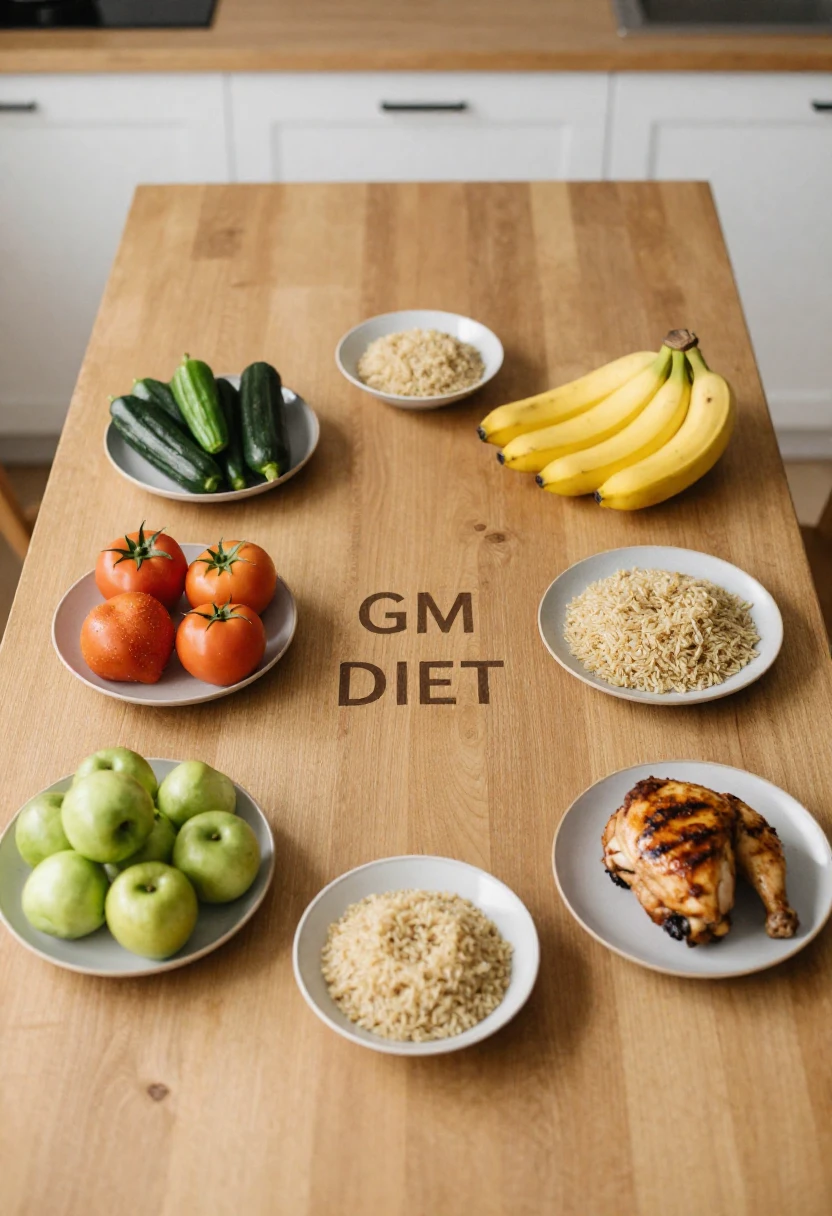
At first glance, the GM Diet may seem almost too rigid.
Seven days.
Seven clearly defined food patterns.
Very little flexibility.
For people who are used to intuitive eating or spontaneous meals, this structure can feel intimidating. Yet for many who try the GM Diet, this is precisely what makes it appealing. Instead of constantly asking themselves what they “should” eat, they are guided through the week by a simple, pre-defined rhythm.
But this rhythm is not random.
Behind the daily sequence lies a certain internal logic, shaped by basic principles of digestion, hydration, calorie control, and gradual metabolic adjustment. Understanding this logic is essential, because it allows you to follow the plan more consciously, rather than mechanically.
The GM Diet does not aim to shock the body into rapid change overnight.
Instead, it gradually shifts your system from light, water-rich foods toward more complex, balanced meals, while keeping overall calorie intake relatively low. In doing so, it tries to encourage fat loss, reduce water retention, and reset eating habits within a short time frame.
Let’s look at how this unfolds, day by day.
Day 1 — Fruits and Hydration
The first day is dedicated almost entirely to fruits, with the exception of bananas, which are reserved for later in the week.
You are encouraged to eat a variety of fresh fruits — apples, oranges, berries, melons, pears — while drinking plenty of water throughout the day.
From a physiological perspective, this serves several purposes.
Fruits are rich in water, fiber, and natural sugars, which means they hydrate the body, support digestion, and provide quick, gentle energy without overwhelming the digestive system. After periods of heavy or processed eating, this lightness can feel surprisingly refreshing.
Many people describe the first day as both cleansing and challenging.
Cleansing, because they feel less bloated and sluggish. Challenging, because the absence of savory foods can trigger cravings and emotional hunger. This is often the first moment when people realize how strongly their eating habits are tied to comfort rather than physical need.
Day 2 — Vegetables and Gentle Satiety
On the second day, the focus shifts to vegetables.
Raw, steamed, grilled, or lightly sautéed vegetables become the foundation of all meals, with minimal oil and seasoning. Potatoes are usually allowed once, often at breakfast, to provide slow-releasing carbohydrates.
Vegetables offer fiber, micronutrients, and volume with relatively low calories, which helps create a feeling of fullness without excess energy intake. This supports digestion while continuing the detox-like effect initiated on day one.
Psychologically, day two often feels more grounding.
Savory flavors return. Warm meals become possible. Many people feel calmer and more satisfied, which helps them regain confidence in the process.
Day 3 — Fruits and Vegetables Together
On the third day, fruits and vegetables are combined.
This day introduces more variety, which is important both nutritionally and emotionally. You can mix sweet and savory, fresh and cooked, light and filling options.
From a metabolic perspective, this combination provides a broader spectrum of vitamins, minerals, antioxidants, and fiber, while still keeping fat and protein intake low. The body remains in a relatively low-calorie state, encouraging fat utilization for energy.
For many participants, this is when they start feeling noticeably lighter and more energetic.
Not because of magic, but because digestion becomes more efficient and excess water weight often decreases.
Day 4 — Bananas and Milk
Day four is often considered the most unusual part of the GM Diet.
It centers on bananas and milk, sometimes accompanied by GM soup. Participants are usually allowed up to eight bananas and several glasses of milk throughout the day.
This combination may seem strange, but it serves a specific purpose.
Bananas provide potassium, natural sugars, and fiber, while milk offers protein, calcium, and fat. Together, they help stabilize blood sugar levels and reduce cravings that may have built up during the low-fat, low-protein days.
This is often the day when people feel emotionally soothed.
There is something comforting about bananas and milk, especially for those who associate them with childhood or simple, nurturing meals.
Day 5 — Protein, Tomatoes, and Balance
On day five, lean protein is introduced, usually in the form of chicken, fish, or sometimes beef, along with tomatoes and vegetables.
This marks an important metabolic shift.
After several days of minimal protein intake, the body is ready to rebuild and stabilize. Protein supports muscle tissue, satiety, and metabolic activity, while tomatoes provide antioxidants and hydration.
This day often brings a sense of renewed strength.
People report feeling more energized, less hungry, and more mentally focused, as their bodies receive nutrients that were temporarily limited.
Day 6 — Protein and Vegetables
Day six continues the focus on protein and vegetables, allowing more flexibility in food choices.
This is where the diet begins to resemble more conventional healthy eating patterns. Balanced meals with lean protein and fiber-rich vegetables support stable blood sugar, sustained energy, and better appetite control.
By this point, many participants feel surprisingly comfortable with simpler meals and smaller portions.
Their taste buds often become more sensitive, making natural flavors feel richer and more satisfying.
Day 7 — Whole Grains, Fruits, and Closure
The final day introduces whole grains, fruits, vegetables, and natural juices.
Brown rice is usually the centerpiece, accompanied by fresh produce.
This day symbolizes transition.
It prepares the body for a return to more balanced eating by reintroducing complex carbohydrates and a broader nutrient profile. It also encourages reflection on how eating habits have shifted over the week.
Emotionally, day seven often feels reflective.
Some people feel proud. Some feel relieved. Some feel motivated to continue healthier habits. Others realize that strict plans are not for them in the long term, which is also valuable insight.
The Deeper Logic Behind the Sequence
When viewed as a whole, the GM Diet follows a gradual progression.
It begins with hydration and light digestion, moves through fiber and micronutrients, introduces controlled carbohydrates, stabilizes blood sugar, rebuilds protein stores, and finally transitions toward balance.
This sequence aims to reduce calorie intake, improve digestion, limit processed foods, and temporarily simplify eating decisions.
It is not a perfect nutritional system.
It prioritizes short-term structure over long-term balance. It simplifies complex metabolic processes. And it assumes that all bodies respond similarly, which is rarely true.
However, its clarity and rhythm explain why so many people find it appealing.
It offers a temporary framework that helps break unhealthy patterns and create space for more mindful choices.
In the next section, we will explore exactly what you are allowed to eat each day, with practical examples and gentle guidance for making the plan realistic in everyday life.
Why It Might Help You Lose Weight Fast

One of the main reasons people become interested in the GM Diet is simple and deeply human.
They want to see results.
Not in six months. Not “eventually.” Not after countless confusing adjustments. They want to feel lighter, notice changes in the mirror, and regain a sense of control over their body in a relatively short time.
When stories circulate online about losing several pounds in one week, curiosity naturally grows. It feels almost unreal in a world where sustainable change is usually described as slow and gradual.
So how does the GM Diet make such rapid shifts possible?
The answer lies not in magic, but in a combination of physiological mechanisms that work together over seven carefully structured days.
A Natural Calorie Deficit Without Counting
The first and most important factor is energy balance.
Most days on the GM Diet are built around foods that are naturally low in calories but high in volume and fiber. Fruits, vegetables, soups, and lean proteins fill your plate without flooding your body with excess energy.
This means that, even without tracking numbers, most people end up eating significantly fewer calories than usual.
What makes this approach effective is that it does not rely on constant self-control or mathematical calculations. Instead, the food choices themselves guide you into a deficit. You feel full, yet your body quietly begins using stored fat to cover the energy gap.
For many participants, this feels far more manageable than traditional dieting.
Reduced Processed Foods and Hidden Sugars
Another powerful factor is what the GM Diet removes.
During the week, ultra-processed snacks, refined carbohydrates, sugary drinks, and fast food are almost entirely excluded. These products are often calorie-dense, addictive, and easy to overconsume without noticing.
When they disappear from your routine, your blood sugar levels tend to stabilize, insulin spikes become less frequent, and energy crashes become less dramatic. This creates a more balanced internal environment that supports fat burning and reduces unnecessary hunger.
Many people are surprised by how quickly cravings soften once these foods are removed.
Increased Fiber and Digestive Efficiency
Fruits, vegetables, and whole grains are rich in dietary fiber.
Fiber plays a crucial role in weight regulation because it slows digestion, improves satiety, supports healthy gut bacteria, and helps regulate blood sugar. During the GM Diet, fiber intake usually rises significantly, even for people who previously ate “fairly healthy.”
As digestion becomes more efficient, bloating often decreases, bowel movements become more regular, and the abdomen feels flatter. While this is not pure fat loss, it contributes to the visible and physical sense of lightness many people report.
High Water Intake and Reduced Water Retention
Hydration is another central pillar of the GM Diet.
Drinking large amounts of water helps flush excess sodium, supports kidney function, improves circulation, and reduces water retention. Paradoxically, when the body receives enough fluids, it is less likely to hold onto them.
In addition, proper hydration often reduces confusion between thirst and hunger. Many people discover that what they once interpreted as the need for a snack was actually mild dehydration.
As water balance normalizes, swelling decreases and body contours become more defined.
Temporary Glycogen Depletion
During the first days of the GM Diet, carbohydrate intake is relatively low and comes mainly from fruits and vegetables rather than refined grains.
As a result, the body begins to use stored glycogen from muscles and liver for energy. Glycogen binds water, so when it is depleted, several pounds of water weight may be lost quickly.
This explains why early weight loss can be dramatic.
It is real weight, but much of it is water rather than fat. Understanding this helps set realistic expectations and prevents disappointment later.
Short-Term Metabolic Activation
Although the GM Diet is low in calories, it does not eliminate food entirely. Frequent meals, natural sugars from fruits, and later protein intake keep metabolism active.
Protein days, in particular, support muscle tissue and increase the thermic effect of food, meaning the body burns more energy digesting and processing nutrients.
This combination helps prevent the sharp metabolic slowdown often associated with extreme fasting.
Psychological Reset and Behavioral Change
Weight loss is never purely physical.
It is deeply psychological.
The GM Diet creates a clear, time-limited challenge. You know it lasts seven days. You know exactly what is expected. This sense of structure reduces mental fatigue and increases commitment.
When people follow a plan successfully for a full week, they often experience a powerful boost in confidence. They begin to trust themselves again. They feel capable of change. This shift in mindset can influence eating behavior long after the diet ends.
In many cases, the greatest “loss” is not only on the scale, but in old habits.
Why Results Vary From Person to Person
It is important to be honest.
Not everyone will lose the same amount of weight on the GM Diet. Factors such as age, metabolism, hormonal balance, stress levels, sleep quality, and previous eating habits all play major roles.
Some people may lose several pounds. Others may see modest changes. Some may notice more difference in energy and digestion than in weight.
All of these outcomes are valid.
Rapid loss does not automatically mean better health, and slower progress does not mean failure.
The Bigger Picture
When viewed realistically, the GM Diet works quickly because it simplifies eating, reduces calories, increases hydration, removes processed foods, and encourages mindful habits.
It creates a temporary environment in which the body can rebalance itself.
However, this speed is both its strength and its limitation.
Without thoughtful transition afterward, results may fade. With awareness and intention, however, this short-term reset can become a doorway to lasting change.
In the next section, we will explore the detox and digestion claims often associated with the GM Diet, separating popular myths from what science and real experience actually suggest.
Detox & Digestion: What People Claim

When people talk about the GM Diet, weight loss is rarely the only thing they mention.
Very often, conversations quickly turn toward something more subtle and personal.
“I felt so clean inside.”
“My stomach finally relaxed.”
“My digestion completely changed.”
“My skin looked better.”
“I stopped feeling heavy after meals.”
These kinds of comments appear again and again in personal stories, blog posts, and online forums. For many participants, the most memorable effect of the GM Diet is not the number on the scale, but the sensation of internal lightness that seems to appear somewhere around the middle of the week.
This is where the idea of “detox” enters the conversation.
The word itself is powerful and emotionally charged. It suggests purification, renewal, and a fresh beginning. It promises that something harmful has been removed and something better has taken its place. In wellness culture, it has become almost mythical.
But what does detox really mean in this context?
And does the GM Diet actually support it?
The Body’s Natural Detox System
From a medical perspective, the human body already has a highly efficient detoxification system.
The liver, kidneys, lungs, digestive tract, and skin constantly work together to neutralize, process, and eliminate waste products. This system functions twenty-four hours a day, without requiring special diets, teas, or rituals.
No short-term eating plan can “activate” these organs in a magical way.
However, what diet can do is either support or burden this natural system.
When you eat highly processed foods, excess sugar, alcohol, artificial additives, and large amounts of saturated fat, your detox organs must work harder. Over time, this can contribute to fatigue, inflammation, and digestive discomfort.
When these stressors are removed, the system often functions more smoothly.
This is where the GM Diet begins to make sense.
Why Many People Feel “Detoxed” on the GM Diet
During the GM Diet, most participants dramatically reduce their intake of processed foods, fried meals, sugary snacks, and alcohol. At the same time, they increase their consumption of water, fruits, vegetables, and fiber.
This combination creates a supportive environment for natural detoxification.
Hydration helps the kidneys flush waste more efficiently. Fiber binds certain toxins and supports regular bowel movements. Antioxidants from fruits and vegetables protect liver cells and reduce oxidative stress. Reduced salt intake lowers water retention and bloating.
Together, these changes often create a tangible feeling of internal clarity.
People feel less swollen. Their stomach feels calmer. Their digestion becomes more predictable. Their energy stabilizes. Their skin may appear brighter simply because inflammation and dehydration decrease.
These effects are real, even if they are not the result of a mystical cleansing process.
Digestive Reset Through Simplicity
Another major factor behind improved digestion is simplicity.
Modern diets are often chaotic. We combine heavy meals with late-night snacking, sugary drinks with greasy foods, stress with rushed eating, and irregular schedules with poor sleep. The digestive system is constantly adapting to mixed signals.
The GM Diet temporarily removes much of this chaos.
Meals become predictable. Ingredients become simple. Portions become moderate. Eating times often become more regular.
For the gut, this consistency is deeply calming.
It allows digestive enzymes, stomach acid, and gut bacteria to operate in a more stable environment. Over several days, this stability can reduce bloating, gas, constipation, and discomfort.
Many participants describe this as their stomach “finally relaxing.”
The Role of Fiber and Water
Fiber and water deserve special attention.
Most people do not consume enough of either.
The GM Diet, by emphasizing fruits, vegetables, soups, and fluids, dramatically increases both. Fiber acts like a gentle broom inside the intestines, supporting waste removal and feeding beneficial bacteria. Water softens stool, improves nutrient absorption, and supports circulation.
When these two elements work together, digestion often becomes smoother and more efficient.
This is one of the main reasons people feel lighter, even when fat loss is still modest.
Gut Microbiome Changes
Although the GM Diet is short-term, it can still influence the gut microbiome.
Plant-rich diets encourage the growth of bacteria associated with reduced inflammation and improved metabolic health. When fruits, vegetables, and whole grains dominate the plate, beneficial microbes tend to flourish.
While one week cannot permanently transform the microbiome, it can create a positive shift that makes healthier eating afterward feel more natural.
Some people notice reduced sugar cravings and better appetite control as a result.
Where Detox Claims Become Exaggerated
Despite these benefits, detox language can easily become misleading.
The GM Diet does not remove “stored toxins” from fat cells. It does not cleanse the blood in a special way. It does not repair organs in seven days. It does not erase years of lifestyle choices.
When websites or influencers claim otherwise, they are oversimplifying complex biology.
Real health is built through consistent habits, not dramatic cleanses.
Emotional and Psychological Cleansing
Interestingly, many people experience what could be called an emotional detox.
By stepping away from emotional eating, constant snacking, and comfort foods, participants become more aware of their relationship with food. They notice when they eat out of boredom, stress, or habit rather than hunger.
This awareness can feel uncomfortable at first.
But it is also empowering.
It creates space for reflection and conscious choice, which is often more valuable than any physical cleansing effect.
A Balanced Perspective
When people say that the GM Diet “detoxed” them, what they usually mean is that their body was given a short break from excess, overload, and confusion.
It was supported with water, fiber, simplicity, and consistency.
And in response, it functioned better.
This is not magic. It is physiology meeting mindfulness.
In the next section, we will explore the potential risks and nutritional gaps of the GM Diet, because every structured plan, no matter how popular, deserves honest and balanced evaluation.
Potential Risks & Nutrient Gaps

It is easy to become enthusiastic about any plan that promises quick results and visible changes.
When you feel lighter, more energized, and more in control of your eating, it is natural to assume that everything about the experience must be positive. However, real wellness is never built on enthusiasm alone. It is built on understanding, balance, and honesty.
And that means looking carefully at the limitations of the GM Diet, not in order to dismiss it, but in order to use it wisely.
Every structured eating plan, especially one designed for rapid change, carries potential risks. The GM Diet is no exception.
Temporary Imbalance of Macronutrients
One of the most noticeable characteristics of the GM Diet is its uneven distribution of macronutrients.
During the first half of the week, protein and healthy fats are extremely limited. Most calories come from fruits, vegetables, and small amounts of carbohydrates. While this can support short-term weight loss, it does not reflect balanced nutrition.
Protein is essential for muscle maintenance, immune function, hormone production, and metabolic stability. Healthy fats are necessary for brain health, vitamin absorption, and cellular repair. When both are restricted for several days, some people may experience fatigue, weakness, dizziness, or irritability.
For individuals who are physically active or already lean, this imbalance can feel particularly challenging.
Possible Micronutrient Gaps
Although fruits and vegetables provide many vitamins and minerals, they do not cover everything the body needs in optimal amounts.
During the GM Diet, intake of nutrients such as vitamin B12, iron, zinc, omega-3 fatty acids, and vitamin D may become insufficient, especially if animal products and fortified foods are limited.
For one week, this is rarely dangerous for healthy individuals. However, repeating the diet frequently or extending it beyond the recommended duration can increase the risk of deficiencies.
Subtle symptoms such as low energy, poor concentration, weakened immunity, and brittle nails may begin to appear over time.
Energy Fluctuations and Low Blood Sugar
Because the GM Diet is low in calories and often low in fat and protein, blood sugar levels may fluctuate, particularly in the early days.
Some participants experience headaches, shakiness, lightheadedness, or sudden drops in energy. These symptoms are more common in people who are sensitive to carbohydrate swings or who previously consumed large amounts of sugar and refined foods.
While these reactions often improve as the body adapts, they should not be ignored.
Persistent dizziness, fainting, or extreme weakness are signs that the plan may not be suitable for you.
Muscle Loss Risk
Rapid weight loss always carries the risk of losing not only fat, but also muscle tissue.
When calorie intake is low and protein is limited, the body may break down muscle for energy. This can reduce metabolic rate and weaken physical performance.
The GM Diet attempts to address this through protein days later in the week, but for some individuals, this may not be sufficient to fully protect lean mass.
This is especially relevant for older adults, athletes, and those focused on long-term fitness.
Emotional and Psychological Strain
Strict plans can sometimes create emotional pressure.
When food choices are highly restricted, people may begin to think in terms of “success” and “failure” rather than learning and adaptation. A small deviation can feel like a personal weakness instead of a normal human experience.
For individuals with a history of disordered eating, obsessive dieting, or negative body image, this rigidity can be harmful.
The GM Diet should never become a tool for punishment or control. It should remain an optional experiment, not a moral standard.
Sustainability Concerns
Perhaps the most important limitation of the GM Diet is sustainability.
It is not designed for long-term use.
Eating large amounts of fruits one day, only vegetables the next, and repeating this cycle week after week is neither realistic nor nutritionally complete. Without a thoughtful transition, many people return to old habits and regain lost weight.
This cycle of restriction and rebound can damage both metabolism and self-trust.
True health is built through patterns you can maintain, not challenges you endure.
Who Should Be Especially Careful
Certain groups should approach the GM Diet with extra caution or avoid it altogether without professional guidance.
These include pregnant and breastfeeding women, people with diabetes or blood sugar disorders, individuals with kidney or liver disease, those recovering from eating disorders, and anyone taking medication that requires stable nutrition.
For these individuals, rapid dietary changes can have serious consequences.
Listening to Your Body
One of the most valuable skills in any wellness journey is body awareness.
If you feel constantly exhausted, emotionally overwhelmed, mentally foggy, or physically unwell during the GM Diet, these are not signs of “detox.” They are messages asking for adjustment.
Respecting those signals is not weakness. It is intelligence.
Using the GM Diet Responsibly
When used occasionally, for a short reset, and followed by balanced eating, the GM Diet can be relatively safe for many healthy adults.
The key lies in intention.
Are you using it to reconnect with healthier habits, or to escape self-criticism?
Are you listening to your body, or forcing it into compliance?
Are you planning what comes next, or hoping the diet will “fix everything”?
Your answers to these questions matter more than any rule list.
In the next section, we will discuss who should avoid the GM Diet entirely, and how to decide whether this plan fits your personal health situation.
Who Should Avoid It (Real-World Caution)

When a diet becomes popular, it is often presented as if it were suitable for everyone.
Social media posts, enthusiastic testimonials, and dramatic before-and-after photos create the impression that all bodies will respond in the same way, following the same rules and achieving the same results. In reality, nothing could be further from the truth.
Every body carries its own history.
It reflects years of habits, stress, sleep patterns, medical conditions, hormonal rhythms, and emotional experiences. What feels energizing and motivating for one person may feel exhausting and destabilizing for another.
For this reason, the GM Diet, like any short-term restrictive plan, is not universally appropriate.
Understanding when to step back is just as important as knowing when to try.
Pregnant and Breastfeeding Women
During pregnancy and breastfeeding, the body’s nutritional needs increase significantly.
Calories, protein, iron, calcium, folate, omega-3 fatty acids, and many other nutrients are required in higher amounts to support both mother and child. A low-calorie, restrictive plan like the GM Diet cannot reliably provide this balance.
Following such a diet during this period may compromise fetal development, milk production, and maternal health.
For women in these life stages, gentle, well-rounded nutrition is far more valuable than rapid weight changes.
People With Diabetes and Blood Sugar Disorders
The GM Diet involves large fluctuations in carbohydrate intake, especially during fruit-focused days.
For individuals with diabetes, insulin resistance, hypoglycemia, or metabolic syndrome, these swings can be dangerous. Sudden rises and drops in blood sugar may lead to dizziness, confusion, weakness, and long-term complications.
Medication dosages are often carefully calibrated around stable eating patterns. Disrupting these patterns without medical supervision can create serious risks.
If blood sugar regulation is part of your health journey, professional guidance is essential before considering any restrictive diet.
Individuals With Kidney, Liver, or Heart Conditions
The kidneys and liver play central roles in processing nutrients, fluids, and metabolic waste.
Dramatic changes in protein intake, hydration levels, and electrolyte balance can place additional stress on these organs. For people with chronic kidney disease, liver disorders, or certain heart conditions, this stress may worsen symptoms.
High potassium intake from fruits and bananas, for example, can be problematic for individuals with impaired kidney function.
What seems “natural” is not always “safe” in specific medical contexts.
Those Recovering From Eating Disorders
Perhaps the most sensitive group includes people with current or past eating disorders, including anorexia, bulimia, binge eating disorder, and chronic restrictive dieting.
The GM Diet’s rigid structure, food rules, and emphasis on rapid results can easily reactivate unhealthy thought patterns. What begins as a “reset” may quickly turn into obsession, guilt, or self-punishment.
For anyone with this history, flexible, supportive, professionally guided nutrition is far more healing than short-term challenges.
Mental well-being is part of health, not a separate category.
Highly Active Individuals and Athletes
People who train intensively place high demands on their bodies.
Muscle repair, energy production, hormonal balance, and immune function all depend on adequate calories, protein, and fats. During the early days of the GM Diet, these needs are often not met.
As a result, athletes may experience reduced performance, slower recovery, increased injury risk, and persistent fatigue.
For those who move their bodies daily and vigorously, stability matters more than speed.
Individuals With Chronic Fatigue or High Stress Levels
Stress and exhaustion already tax the nervous and hormonal systems.
Introducing severe dietary restriction on top of emotional burnout, poor sleep, or chronic workload can worsen symptoms rather than relieve them. Instead of feeling “reset,” some people feel depleted, anxious, and disconnected from their body.
In such cases, nourishment, rest, and gentle routine are far more therapeutic than discipline.
People Taking Certain Medications
Many medications interact with food intake.
Blood pressure drugs, antidepressants, thyroid medication, and anti-inflammatory drugs often require stable nutritional patterns for optimal effectiveness and safety. Sudden changes in calorie intake, hydration, and nutrient balance can alter how these drugs are absorbed and metabolized.
If you rely on daily medication, dietary experiments should never happen in isolation.
Listening Beyond Rules
Even if you do not belong to any of these categories, your body still deserves attention.
No online guide can replace personal awareness.
If you feel persistent weakness, emotional distress, digestive pain, heart palpitations, or mental fog, these are not obstacles to “push through.” They are invitations to pause and reassess.
Health is not built through suffering.
Choosing Responsibility Over Pressure
The wellness industry often celebrates extremes.
“Push harder.”
“Be stricter.”
“Don’t quit.”
But true self-care sometimes means choosing moderation over intensity, patience over speed, and support over isolation.
Deciding not to follow the GM Diet can be just as healthy as completing it.
Both choices require self-respect.
In the next section, we will focus on practical tips that can help make the GM Diet smoother, safer, and more realistic for those who decide to try it.
Tips for a Smoother Week — Practical Advice

Deciding to try the GM Diet is one thing.
Living through seven structured days in the middle of real life — with work deadlines, family responsibilities, social invitations, emotional ups and downs, and unexpected stress — is something entirely different.
This is where many people struggle.
Not because the plan is impossible, but because they underestimate how much preparation, flexibility, and self-kindness it actually requires.
A smooth experience does not come from rigid perfection. It comes from thoughtful planning and realistic expectations.
Here are practical ways to make the week feel supportive rather than exhausting.
Prepare Before You Begin
The most successful GM Diet experiences usually start before day one.
Take time to shop for fresh fruits, vegetables, lean proteins, and whole grains in advance. Wash and cut produce. Prepare basic ingredients. Cook a large pot of GM soup if you plan to use it.
When healthy options are already waiting in your refrigerator, you are far less likely to reach for convenience foods in moments of fatigue or stress.
Preparation is not obsession. It is self-respect.
Create a Gentle Daily Rhythm
Try to eat at roughly similar times each day.
Regular meals help stabilize blood sugar, reduce impulsive snacking, and support digestion. Skipping meals and then overeating later often leads to energy crashes and emotional frustration.
A calm rhythm — breakfast, lunch, light snack, dinner — gives your body a sense of safety and predictability.
This matters more than many people realize.
Drink Water Intentionally, Not Mechanically
Yes, hydration is important.
But constantly forcing yourself to drink without listening to your body can become stressful. Instead, build gentle habits. Start your morning with water. Keep a bottle nearby. Sip between meals. Drink when you feel dry, tired, or distracted.
Herbal teas and infused water with lemon or cucumber can make hydration more enjoyable.
Think of water as nourishment, not a task.
Respect Hunger and Fullness Signals
Even within a structured plan, your body communicates.
Some days you may feel hungrier. Other days you may feel satisfied with less. Try to notice these signals instead of overriding them completely.
If you are genuinely hungry, choose an allowed food and eat slowly. If you are full, allow yourself to stop.
Mindfulness builds trust, and trust supports long-term health.
Season Simply, But Thoughtfully
Bland food is unnecessary.
Herbs, garlic, ginger, lemon juice, vinegar, and mild spices can transform simple ingredients into comforting meals without adding excessive calories.
Learning to season gently during this week often helps people rediscover the natural richness of whole foods.
It is a skill that remains valuable long after the diet ends.
Plan for Social Situations
Life does not pause for diets.
You may be invited to lunch, birthday celebrations, or casual dinners during the week. Instead of feeling anxious, plan ahead.
Check menus in advance. Choose simple options that fit your day’s structure. Eat beforehand if necessary. Communicate kindly with friends if you need to.
You do not owe anyone an explanation for caring about your health.
Use Movement as Support, Not Punishment
Light physical activity can enhance the benefits of the GM Diet.
Walking, gentle stretching, yoga, or relaxed cycling support circulation, digestion, and mood. They help reduce stress and prevent stiffness.
Avoid intense workouts, especially during low-calorie days. Your body needs energy for recovery.
Movement should feel like cooperation, not discipline.
Prioritize Sleep and Recovery
Sleep is often overlooked in weight loss discussions.
Yet poor sleep disrupts hunger hormones, increases cravings, reduces motivation, and weakens immunity. During the GM Diet, quality rest becomes even more important.
Aim for regular bedtimes, reduce screen exposure in the evening, and create a calming nighttime routine.
Your body heals while you sleep.
Be Kind to Your Inner Dialogue
The way you talk to yourself matters.
If you approach the week with self-criticism, perfectionism, and fear of failure, every small challenge will feel heavy. If you approach it with curiosity and compassion, difficulties become learning experiences.
Progress is not linear. Neither is growth.
Speak to yourself as you would to a close friend.
Keep a Simple Reflection Journal
Some people find it helpful to jot down short daily notes.
How did I feel today?
What was easy?
What was difficult?
What surprised me?
These reflections deepen self-awareness and make the experience more meaningful than just “getting through” seven days.
Focus on the Bigger Intention
Finally, remember why you started.
Was it to reconnect with your body? To reduce mindless eating? To feel lighter and clearer? To rebuild confidence?
Keep that intention close.
The GM Diet is only a tool. You are the journey.
In the next section, we will explore what happens after the seven days end, and how to protect your results while building healthier long-term habits.
What Happens After the 7 Days — Long-Term Success

The final day of the GM Diet often arrives with a mixture of emotions.
There may be pride, especially if you followed the structure closely. There may be relief, because the strict rhythm is finally loosening. There may be curiosity as you step on the scale or try on clothes that felt tight just a week ago.
But perhaps the most important question does not appear on day seven.
It appears on day eight.
What now?
Because the true impact of any short-term plan is not measured by what happens during it, but by what happens afterward.
The Risk of Rebound
When a structured diet ends abruptly, many people return immediately to previous habits.
Old portion sizes resurface. Processed snacks quietly return to the pantry. Late-night eating creeps back into routine. Within days, water weight may reappear, digestion may slow again, and motivation may weaken.
This is not failure.
It is simply what happens when restriction is not followed by transition.
The body, after several days of lower calorie intake, may also increase hunger signals. Hormones such as ghrelin rise, encouraging you to eat more. If you respond with large, heavy meals, weight can return quickly.
Understanding this biological response removes shame from the equation.
Your body is not “working against you.” It is protecting itself.
The Power of Gradual Reintroduction
Instead of jumping back into old patterns, think of the days after the GM Diet as a gentle bridge.
Reintroduce foods slowly and intentionally. Add healthy fats like olive oil, nuts, and avocado in moderate amounts. Include balanced meals with protein, complex carbohydrates, and vegetables. Continue prioritizing hydration and fiber.
This approach helps stabilize blood sugar, protect digestion, and maintain part of the progress you made.
Balance, not restriction, becomes the new goal.
Protecting Muscle and Metabolism
If you lost weight quickly, some of that loss may include muscle tissue.
To protect your metabolism, prioritize adequate protein intake and incorporate resistance-based movement, such as bodyweight exercises, light strength training, or resistance bands.
Muscle mass supports metabolic health and long-term weight stability. Without it, maintaining results becomes more difficult.
This is where sustainable habits begin to matter more than short-term discipline.
Keeping the Habits That Worked
Every person’s experience with the GM Diet is different.
Some discover that drinking more water changed their energy levels. Others realize they were overeating processed snacks out of habit rather than hunger. Some reconnect with the simplicity of home-cooked meals.
Instead of focusing only on the number lost, ask yourself:
What felt genuinely good this week?
What habits improved my mood or digestion?
What would I like to keep?
Maybe it is starting the morning with fruit instead of pastries.
Maybe it is planning meals in advance.
Maybe it is eating more vegetables at dinner.
Small habits compound over time.
Moving From Reset to Lifestyle
The GM Diet is often described as a reset.
But a reset has value only if it leads somewhere.
True long-term success is rarely dramatic. It does not rely on extreme cycles of restriction and indulgence. It grows quietly from daily consistency — balanced meals, mindful portions, regular movement, adequate sleep, emotional awareness.
When you see the GM Diet as the beginning of reflection rather than the final solution, it becomes more powerful.
It teaches awareness.
And awareness is the foundation of change.
Redefining Success
Success does not always mean keeping every pound off forever.
Sometimes it means learning that strict plans are not right for you. Sometimes it means understanding your triggers. Sometimes it means realizing that your body responds better to flexibility than control.
All of these insights are valuable.
The scale offers numbers.
Experience offers wisdom.
A Gentle Perspective
If you approach the end of the GM Diet with gratitude rather than pressure, you are far more likely to integrate what you learned.
Thank your body for adapting. Thank yourself for trying something new. Reflect on the week without judgment.
Then move forward with a broader vision of health.
Because the real goal was never just rapid weight loss.
It was reconnection.
In the next section, we will share short real-life inspired experiences that reflect how different people interpret their week on the GM Diet, highlighting the emotional and practical lessons behind the numbers.
Real Voices — Mini Stories & Lessons Learned

Behind every diet plan, every before-and-after photo, and every success headline, there is always a real person.
A real life.
A real schedule.
A real emotional landscape.
A real relationship with food that cannot be summarized in numbers alone.
The GM Diet is no different.
While online descriptions often focus on kilograms lost or inches reduced, personal experiences reveal something much deeper. They show how differently people respond, what they struggle with, and what they carry with them long after the seven days are over.
Here are a few stories inspired by the most common patterns shared by participants around the world.
Anna — Learning to Listen Again
Anna is a thirty-four-year-old graphic designer who spends most of her day in front of a screen.
Before trying the GM Diet, her meals were irregular and impulsive. Coffee in the morning. A rushed sandwich in the afternoon. Late-night delivery after long workdays. She rarely felt truly hungry, and rarely felt truly satisfied.
She decided to try the GM Diet after realizing that she could no longer remember the last time she had eaten without multitasking.
The first two days were difficult.
Eating only fruits and vegetables felt emotionally empty to her. She missed the ritual of “real meals.” But by the third day, something shifted.
“I started noticing when I was actually hungry,” she said later. “Not bored-hungry. Not stressed-hungry. Real hunger.”
By the end of the week, Anna had lost a small amount of weight, but more importantly, she had rebuilt trust with her body’s signals. Months later, she still practices eating without screens whenever possible.
For her, the GM Diet became a lesson in presence.
Mark — Breaking the Snacking Cycle
Mark, a forty-one-year-old project manager, had struggled with constant snacking for years.
His desk drawer was always full of cookies, crackers, and chocolate. He rarely ate large meals, but he was almost never not eating something. Stress and deadlines fueled the habit.
He approached the GM Diet with skepticism, convinced he would quit by day three.
Surprisingly, the strict structure worked in his favor.
“When there were clear rules, I stopped negotiating with myself,” he explained. “I didn’t spend all day thinking about food.”
The early days were uncomfortable, especially when sugar cravings appeared. But after several days of fruit, vegetables, and soup, his appetite stabilized.
By the end of the week, he realized he had gone through entire afternoons without reaching for snacks.
Today, he still enjoys treats, but he no longer eats them automatically.
For Mark, the GM Diet became a reset for impulse control.
Lina — Redefining Motivation
Lina, a twenty-seven-year-old graduate student, tried the GM Diet after seeing it praised on social media.
She hoped it would finally give her the “perfect body” she believed she needed.
At first, she followed every rule obsessively. She weighed fruit. Measured milk. Avoided social gatherings. Checked the scale daily.
By day five, she felt exhausted and anxious.
“I realized I was doing this out of self-criticism, not self-care,” she later reflected.
She finished the week, but with a new mindset. Instead of chasing numbers, she began focusing on strength, mental health, and balanced meals.
For Lina, the GM Diet became a mirror that revealed her relationship with perfectionism.
David — Discovering Simplicity
David, a fifty-year-old small business owner, joined his wife in trying the GM Diet out of curiosity.
He had never followed any diet before and considered himself “too practical for that kind of thing.”
To his surprise, he enjoyed the simplicity.
“I liked knowing exactly what was for dinner,” he laughed. “No debates. No excuses.”
He discovered that he actually preferred lighter meals and felt more energetic without heavy sauces and fried foods.
After the week, he kept cooking simple vegetable-based dinners several times per week.
For David, the biggest gift was clarity.
What These Stories Have in Common
Despite their differences, these experiences share important themes.
None of these people found permanent solutions in seven days. None experienced perfection. None emerged transformed overnight.
What they gained was awareness.
They noticed patterns.
They recognized triggers.
They questioned habits.
They reflected on motivations.
And this awareness stayed with them.
The Quiet Value of Short Experiments
Short-term plans like the GM Diet can be valuable when they are treated as experiments rather than tests of worth.
An experiment invites curiosity.
What happens if I eat more plants?
What happens if I reduce sugar?
What happens if I slow down?
There are no failures in honest experiments. There are only observations.
When approached this way, even imperfect experiences become useful.
Your Story Matters Too
If you choose to try the GM Diet, your story will be unique.
Your challenges will differ. Your reactions will vary. Your lessons will belong only to you.
And that is exactly as it should be.
Because health is not about copying someone else’s journey.
It is about understanding your own.
In the final section, we will bring everything together and reflect on whether the GM Diet is truly worth trying, and how to decide what role, if any, it should play in your personal wellness path.
Conclusion — Is the GM Diet Worth It?

After seven days of structure, simplicity, challenges, discoveries, and quiet moments of reflection, most people arrive at the same realization.
The GM Diet is not really about fruits, vegetables, bananas, soup, or rice.
It is about attention.
It is about paying attention to how you eat, why you eat, when you eat, and what your body tries to tell you in between meals. It is about stepping out of automatic habits and choosing, even briefly, to become more present in your daily nourishment.
When viewed through this lens, the GM Diet becomes more than a weight-loss plan.
It becomes a temporary pause in a fast, distracted world.
What the GM Diet Does Well
The greatest strength of the GM Diet lies in its clarity.
For one week, it removes confusion. It simplifies decisions. It encourages hydration. It increases fruit and vegetable intake. It limits processed foods. It invites mindfulness.
For many people, this alone leads to visible and emotional benefits.
They feel lighter.
They feel calmer around food.
They feel more confident in their ability to change.
They feel reconnected to their body.
These are meaningful outcomes.
Not because they last forever on their own, but because they open the door to deeper awareness.
Where It Falls Short
At the same time, the GM Diet is not designed for long-term nourishment.
It does not provide consistent balance of protein, fats, and carbohydrates. It does not suit every lifestyle or medical condition. It does not teach flexible eating in complex social and emotional environments.
If used repeatedly or without reflection, it can lead to frustration, nutrient gaps, or cycles of restriction and rebound.
Structure becomes harmful when it replaces intuition.
Who May Benefit Most
The GM Diet tends to work best for people who:
• Feel stuck in unhealthy routines
• Want a short reset after travel or stress
• Need external structure to regain focus
• Are generally healthy and informed
• Plan to transition thoughtfully afterward
For these individuals, it can serve as a starting point rather than a destination.
Who Should Look Elsewhere
It is less suitable for people who:
• Have medical conditions affecting metabolism
• Struggle with rigid thinking around food
• Need high energy for physical training
• Are seeking permanent solutions in short-term plans
For them, personalized, flexible approaches are far more supportive.
The Most Important Question
Before deciding whether the GM Diet is “worth it,” it may help to ask yourself one honest question:
Am I doing this out of care for my body, or out of frustration with it?
The answer matters.
When motivation comes from respect, even imperfect plans can lead to growth. When it comes from self-criticism, even “successful” diets can leave emotional scars.
A Gentle Final Perspective
Health is not a seven-day event.
It is a lifelong relationship with your body, shaped by choices, habits, emotions, culture, and compassion. No single plan can define that relationship.
But short experiences, when approached wisely, can illuminate it.
If the GM Diet helps you drink more water, eat more plants, slow down, and listen more closely to yourself, then it has served a valuable purpose.
If it teaches you that you need more flexibility, nourishment, or support, that lesson is equally valuable.
Nothing is wasted when it deepens understanding.
And in the end, that understanding is what truly lasts.