Why Nutrients Matter in a Plant-Based Diet
There is often a quiet moment at the beginning of every plant-based journey.
It usually happens sometime after the excitement settles.
You’ve discovered new recipes.
You’ve fallen in love with roasted vegetables, creamy hummus, colorful grain bowls, and homemade plant milks.
You feel lighter. More connected to what you eat. More intentional.
And then, one day, a small question appears:
“Am I getting everything my body needs?”
Maybe it comes after feeling a little more tired than usual.
Maybe after reading an article about protein or vitamin B12.
Maybe after a concerned friend asks, “But where do you get your nutrients?”
Suddenly, eating plants feels more complicated than it did before.
Plant-based diets are powerful. They are rich in fiber, antioxidants, and protective compounds that support long-term health. They can improve digestion, heart health, energy levels, and overall well-being.
But like any way of eating, they work best when they are balanced.
A truly nourishing plant-based lifestyle is not about cutting things out.
It is about learning how to build things in.
It is about understanding which nutrients matter most, where to find them, and how to combine foods in ways that help your body absorb and use them.
When you know this, something beautiful happens.
You stop worrying.
You start trusting your choices.
You enjoy your meals more.
In this guide, we’ll walk through the essential nutrients every plant-based eater should pay attention to — in a simple, practical, and supportive way.
No fear.
No extremes.
No perfection required.
Just real food, real knowledge, and real confidence in the way you nourish yourself.
Let’s begin.
Protein — What It Is and Where to Get It
For many people, the first question about a plant-based diet is always the same:
“Where do you get your protein?”
It’s asked with curiosity.
Sometimes with concern.
Sometimes with genuine confusion.
Protein has been placed on a pedestal in modern nutrition. It’s often presented as the foundation of strength, energy, and health — something that only animal foods can truly provide.
But the truth is much calmer than that.
Protein is simply made of amino acids — small building blocks your body uses to repair tissues, support muscles, produce enzymes, and maintain immune function. Your body doesn’t care whether those amino acids came from a chicken breast or a bowl of lentils.
What matters is that you get enough — and that you get variety.
Understanding Plant Protein
Unlike most animal foods, many plant foods contain “incomplete” proteins, meaning they don’t have all essential amino acids in high amounts on their own.
This used to cause worry.
But in real life, it’s rarely a problem.
When you eat a variety of plant foods throughout the day — grains, legumes, nuts, seeds, and vegetables — your body naturally combines their amino acids.
You don’t need to “pair” foods perfectly at every meal.
You just need diversity over time.
And most people already do that without thinking.
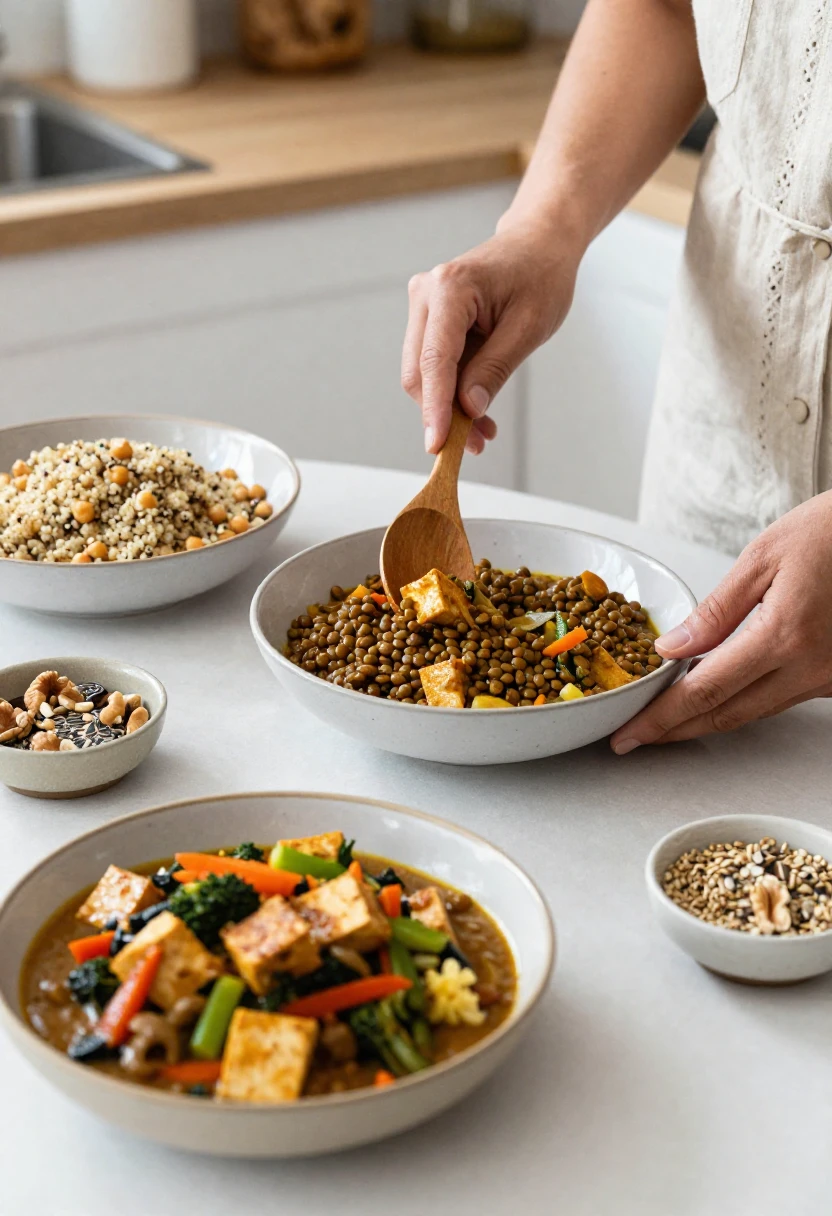
Reliable Plant-Based Protein Sources
Some plant foods are especially rich in protein and easy to use daily:
- Lentils and beans (chickpeas, black beans, kidney beans)
- Tofu, tempeh, and edamame
- Quinoa and whole grains
- Nuts and seeds (almonds, pumpkin seeds, hemp seeds)
- Plant-based yogurts and fortified milks with added protein
When these foods appear regularly on your plate, protein takes care of itself.
How Much Do You Really Need?
Most adults need roughly 0.8 grams of protein per kilogram of body weight, though active people may need more.
On a plant-based diet, this is very achievable.
A bowl of lentil soup.
A tofu stir-fry.
A bean-based salad.
A smoothie with nut butter.
These small choices add up quickly.
Signs You’re Getting Enough
When protein intake is balanced, you usually notice:
- steady energy levels,
- good recovery after activity,
- stable appetite,
- healthy hair and nails.
If you’re eating regularly and including legumes or soy products most days, you’re likely doing well.
Making Protein Feel Natural
The goal isn’t to count grams obsessively.
It’s to build meals around real, satisfying foods.
A grain bowl with beans.
A curry with lentils.
A sandwich with hummus and seeds.
When protein is woven into meals naturally, it stops being something you worry about.
It simply becomes part of how you eat.
Iron — The Gentle Energy Mineral
Iron works quietly in the background of your body.
It helps carry oxygen through your bloodstream.
It supports your energy levels.
It plays a role in focus, immunity, and overall vitality.
When iron levels are steady, you rarely think about it.
When they’re low, you feel it.
Fatigue that doesn’t match your sleep.
Shortness of breath during simple activity.
Difficulty concentrating.
A sense of constant tiredness.
For many people following a plant-based diet, iron is one of the first nutrients they hear warnings about. But again, the reality is more balanced than the fear.
Plant-Based Iron: What’s Different?
Iron comes in two forms:
- Heme iron (from animal foods)
- Non-heme iron (from plant foods)
Plant-based diets rely on non-heme iron. This form is absorbed a little less efficiently — but that doesn’t mean it’s inadequate.
It simply means absorption depends more on what you eat alongside it.
And that’s something you can easily influence.
Excellent Plant Sources of Iron
Many everyday plant foods contain meaningful amounts of iron:
- Lentils and chickpeas
- Beans and split peas
- Spinach and kale
- Pumpkin seeds and sesame seeds
- Tofu and tempeh
- Quinoa and fortified cereals
When these foods appear regularly in your meals, iron intake stays strong.
The Vitamin C Connection
One of the simplest ways to improve iron absorption is to pair iron-rich foods with vitamin C.
Vitamin C helps convert non-heme iron into a form your body absorbs more easily.
This can look very natural:
Lentils with tomatoes.
Spinach with lemon juice.
Beans with bell peppers.
Oatmeal with berries.
You don’t need supplements to make this work.
You just need thoughtful combinations.
What Can Block Iron Absorption?
Some substances reduce iron absorption when eaten at the same time:
- Large amounts of coffee or tea
- Excess calcium
- Certain antacids
This doesn’t mean you must avoid them. It simply helps to space them away from iron-rich meals when possible.
Listening to Your Body
If you feel persistently tired, pale, or weak despite eating well, it may be worth checking iron levels with a healthcare provider.
Iron deficiency is common — across all diets — and easy to address when noticed early.
Building Iron Into Daily Life
Iron doesn’t need special treatment.
A bean stew with vegetables.
A tahini-drizzled salad.
Tofu with citrus dressing.
Seed-topped grain bowls.
These small, regular choices create stability.
And when iron is steady, energy feels lighter.
Days feel easier.
Life feels more spacious.
Vitamin B12 — The Vegetarian Golden Rule
If there is one nutrient that deserves special attention in a plant-based diet, it is vitamin B12.
Not because it’s difficult.
Not because it’s dangerous.
But because it’s essential — and easy to overlook.
Vitamin B12 supports your nervous system, helps form red blood cells, and plays a key role in energy production. It affects memory, mood, focus, and overall vitality.
When B12 levels are healthy, you feel steady and clear.
When they’re low, the effects can be subtle at first — and serious over time.
Why B12 Is Different From Other Nutrients
Unlike protein, iron, or fiber, vitamin B12 is not naturally present in most plant foods.
It is produced by certain bacteria and traditionally entered the food chain through soil and animal products. In modern, sanitized food systems, that natural exposure is largely gone.
This means that even the most balanced plant-based diet usually does not provide reliable B12 on its own.
And that’s okay.
It’s not a failure.
It’s simply a reality of modern nutrition.
Why B12 Matters So Much
Vitamin B12 supports some of your body’s most delicate systems.
When levels drop, people may experience:
- ongoing fatigue,
- tingling in hands or feet,
- difficulty concentrating,
- mood changes,
- memory issues.
Because these symptoms develop slowly, many people don’t connect them to nutrition right away.
That’s why prevention matters more than correction.
Reliable Plant-Based Sources of B12
For most people following a plant-based diet, B12 comes from two main sources:
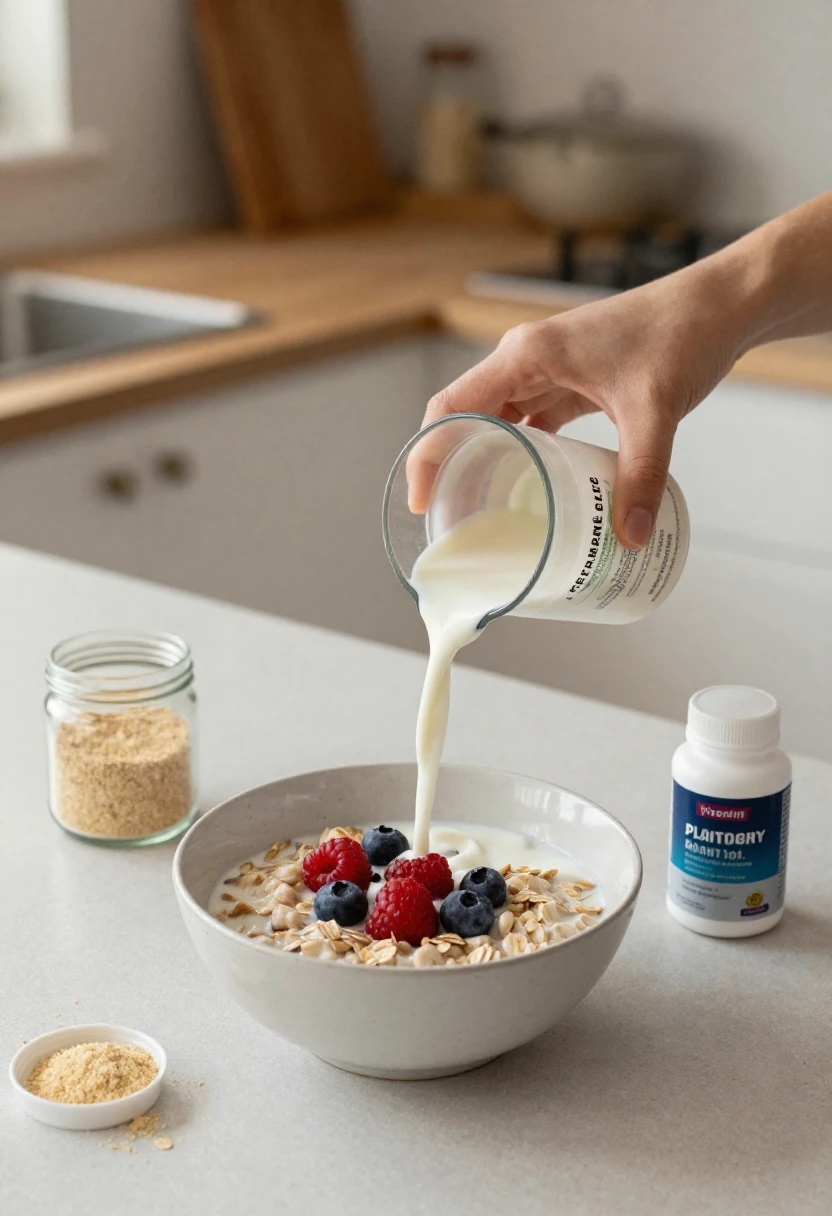
- fortified foods,
- supplements.
Fortified foods may include:
- plant milks,
- breakfast cereals,
- nutritional yeast,
- some plant-based yogurts.
Supplements are often the most consistent option. They are affordable, widely available, and easy to use.
Taking B12 regularly is one of the simplest ways to protect long-term health.
How Much Do You Need?
Most adults need about 2.4 micrograms of B12 per day, but supplements often provide higher amounts because absorption is limited.
Many people choose either:
- a small daily dose, or
- a larger weekly dose.
Both approaches can work when taken consistently.
A healthcare provider can help you choose what fits your needs.
Letting Go of Supplement Guilt
Some people feel uncomfortable about taking supplements.
They worry it means their diet is “incomplete.”
In reality, supplementation is a modern solution to a modern problem.
Many people — including meat eaters — are low in B12 and take supplements as well.
Using tools that support your health is not weakness.
It is wisdom.
Making B12 Part of Your Routine
The easiest way to stay consistent is to attach B12 to something you already do.
Take it with breakfast.
Keep it near your toothbrush.
Add it to your weekly planning.
When it becomes automatic, it stops feeling like “extra work.”
It becomes self-care.
Confidence Through Awareness
When you understand B12, you stop worrying about it.
You know what to do.
You know you’re covered.
You trust your choices.
And that confidence makes plant-based living feel lighter and more sustainable.
Calcium — Building Strong Bones Without Dairy
For many people, calcium is almost automatically linked to milk.
From childhood, we’re taught that strong bones come from dairy. That message is so deeply rooted that choosing a plant-based diet can sometimes feel like stepping away from bone health.
But calcium is not owned by milk.
It exists throughout the plant world — quietly, generously, and in many forms that the body can use well.
Why Calcium Matters
Calcium supports much more than bones.
It helps muscles contract.
It supports nerve function.
It plays a role in heart rhythm.
It contributes to healthy teeth and joints.
Your body constantly uses calcium. When intake is low, it pulls from bone reserves, slowly weakening structure over time.
That’s why steady intake matters.
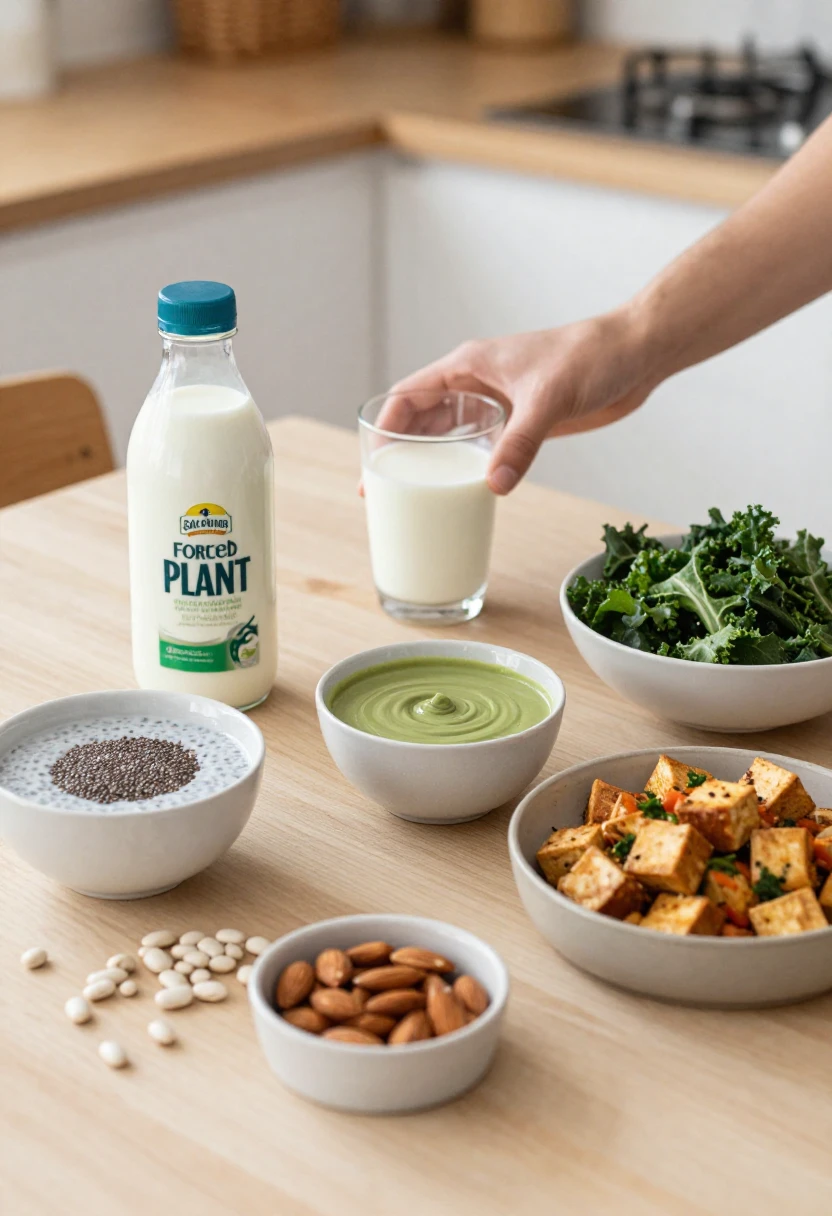
Excellent Plant-Based Sources of Calcium
Many plant foods naturally contain calcium, while others are fortified to match dairy levels:
- Fortified plant milks (almond, soy, oat)
- Fortified tofu (made with calcium sulfate)
- Tahini and sesame seeds
- Kale, bok choy, and collard greens
- Almonds and white beans
When these foods appear regularly, calcium needs are easily met.
Absorption: More Than Just Quantity
Not all calcium is absorbed equally.
Some leafy greens, like spinach and beet greens, contain compounds that limit absorption. They’re still nutritious — just not primary calcium sources.
Other greens, such as kale and bok choy, are absorbed very efficiently.
Pairing calcium-rich foods with vitamin D and healthy fats also improves uptake.
The Role of Vitamin D
Calcium and vitamin D work together.
Without enough vitamin D, calcium absorption drops.
That’s why bone health is never about one nutrient alone. It’s about teamwork.
Sunlight, fortified foods, and supplements all play roles here.
How Much Do You Need?
Most adults need about 1,000 mg of calcium per day, slightly more after age 50.
This can sound intimidating — until you see how quickly it adds up.
A fortified latte.
A tahini dressing.
A tofu stir-fry.
A side of greens.
Small choices build strong foundations.
Letting Go of Dairy Anxiety
You don’t need dairy to protect your bones.
You need consistency.
When calcium-rich plant foods become part of your routine, bone health becomes a natural outcome — not something you worry about.
Making Calcium Feel Effortless
Sprinkle sesame seeds on salads.
Blend fortified milk into smoothies.
Choose calcium-set tofu.
Add greens to soups.
These habits feel small.
Over time, they are powerful.
Omega-3 Fatty Acids — Nourishing the Heart & Brain
Omega-3 fats are often called “brain food,” and for good reason.
They support memory, mood, concentration, and emotional balance. They protect the heart, reduce inflammation, and contribute to healthy skin and joints.
When omega-3 intake is steady, many people notice clearer thinking, more stable energy, and better overall resilience.
When it’s low, the effects are subtle at first — dryness, brain fog, low mood — and easy to dismiss.
Understanding Plant-Based Omega-3s
Omega-3s come in different forms.
In plant foods, they appear mainly as ALA (alpha-linolenic acid). Your body can convert ALA into DHA and EPA — the forms most active in the brain and heart — but this conversion is limited.
This doesn’t mean plant-based omega-3s are ineffective.
It means they work best when intake is regular and intentional.
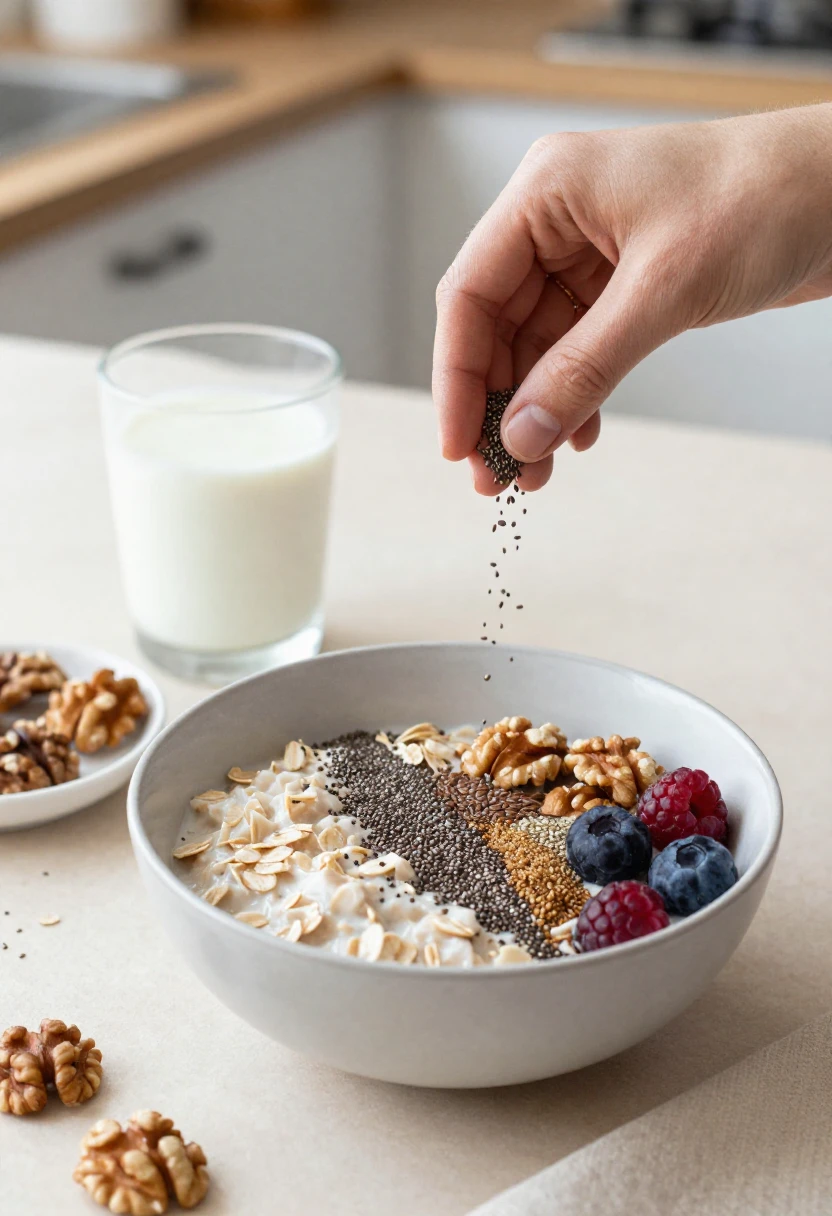
Top Plant Sources of Omega-3
Several everyday foods provide generous amounts of ALA:
- Chia seeds
- Ground flaxseeds
- Walnuts
- Hemp seeds
- Flaxseed oil
Including one or two of these daily makes a meaningful difference.
A spoon of chia in oatmeal.
Ground flax in smoothies.
Walnuts on salads.
Simple habits. Powerful impact.
Do You Need DHA/EPA Supplements?
Some people choose to take algae-based DHA/EPA supplements, especially if they are pregnant, breastfeeding, or managing cognitive health.
These supplements are vegan and directly provide the forms your body uses most.
They’re optional — but valuable for some.
A healthcare provider can help you decide.
Protecting Omega-3 Quality
Omega-3 fats are sensitive to heat, light, and air.
Store seeds and oils in cool, dark places.
Grind flax fresh when possible.
Avoid overheating omega-3-rich oils.
These small steps preserve their benefits.
Balancing Omega-6 Intake
Modern diets are often high in omega-6 fats (from processed oils and snacks). When omega-6 dominates, omega-3 benefits are reduced.
Focusing on whole foods and minimizing ultra-processed products helps restore balance naturally.
Making Omega-3 Part of Daily Life
Omega-3 intake doesn’t require special meals.
It requires rhythm.
A sprinkle here.
A spoon there.
A handful occasionally.
When these fats become part of your routine, your body responds quietly and steadily.
And over time, that steadiness supports clarity, calm, and long-term vitality.
Vitamin D — Sunshine Vitamin for Immune & Mood Support

Vitamin D is often called the “sunshine vitamin,” and that name is more than poetic.
Your body produces vitamin D when sunlight touches your skin. It’s one of the few nutrients you don’t have to eat — at least in theory.
In practice, many people don’t get enough.
Modern life keeps us indoors. We work inside, commute in cars, and spend more time in front of screens than in natural light. In colder months, sunlight becomes scarce. In hotter climates, we avoid the sun for safety.
Slowly, quietly, vitamin D levels drop.
Why Vitamin D Matters
Vitamin D plays a central role in overall health.
It supports immune function.
It helps regulate mood.
It aids calcium absorption.
It contributes to muscle strength and bone health.
Low vitamin D has been linked to frequent infections, fatigue, low mood, and weakened bones.
It influences both physical and emotional well-being.
Vitamin D and Plant-Based Diets
Few foods naturally contain vitamin D.
Most natural sources are animal-based, such as fatty fish and egg yolks. This means people following plant-based diets often rely on fortified foods and sunlight.
Common plant-based sources include:
- Fortified plant milks
- Fortified cereals
- Fortified orange juice
- UV-exposed mushrooms
These foods help, but they rarely provide everything on their own.
The Role of Sunlight
Sun exposure remains the most natural source of vitamin D.
For many people, 10 to 20 minutes of sunlight on arms and face several times a week can help maintain healthy levels, depending on location, skin tone, and season.
Balance matters.
Too little sun limits vitamin D.
Too much increases skin risk.
Mindful exposure is key.
Supplementation: A Helpful Tool
Because sunlight and food are often insufficient, vitamin D supplements are widely used — by people of all diets.
Most adults benefit from 600 to 800 IU daily, though some need more based on blood levels.
Testing can help personalize this.
Vitamin D and Emotional Health
One of vitamin D’s lesser-known roles is in mood regulation.
Low levels are associated with seasonal sadness, low motivation, and mental fatigue. Supporting vitamin D can be part of caring for emotional resilience, especially in winter.
Making Vitamin D Part of Your Routine
Simple strategies work best:
Choose fortified foods regularly.
Spend brief time outdoors.
Consider supplements if needed.
When vitamin D is steady, the body feels stronger, more resilient, and more balanced.
It becomes another quiet pillar of plant-based health.
Zinc & Magnesium — Tiny Minerals, Big Impact
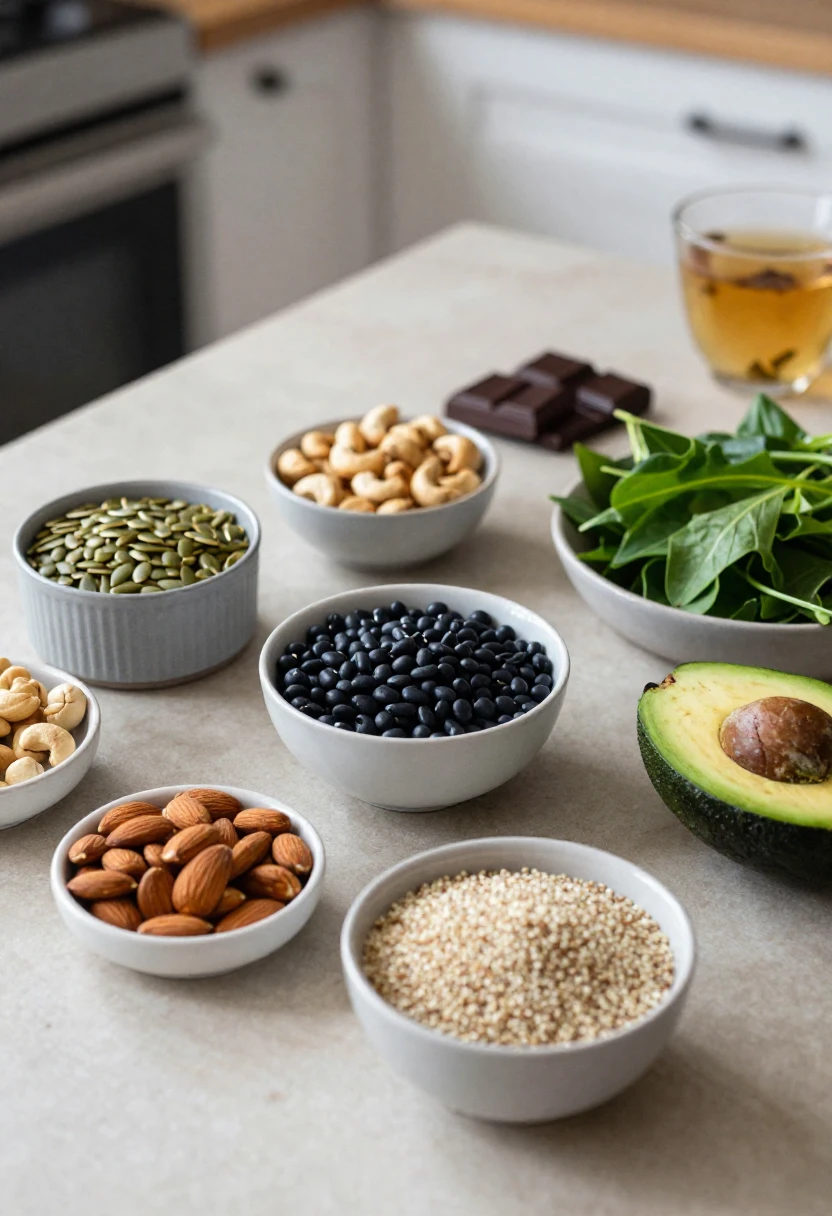
Zinc and magnesium rarely get the spotlight.
They don’t trend on social media.
They aren’t usually the first nutrients people talk about.
Yet inside your body, they are constantly at work.
These two minerals support hundreds of biochemical reactions. They influence energy, immunity, sleep, stress response, and muscle function. When they’re balanced, you feel steady and resilient. When they’re low, things begin to feel “off” without an obvious reason.
Why Zinc Matters
Zinc plays a key role in immune health, wound healing, taste perception, and hormone balance.
It helps your body defend itself and recover.
Low zinc levels may show up as:
- frequent colds,
- slow healing,
- low appetite,
- changes in taste or smell,
- brittle hair or nails.
Because zinc from plant foods is absorbed a little less efficiently, plant-based eaters benefit from paying gentle attention to intake.
Plant Sources of Zinc
Many everyday foods provide zinc:
- Pumpkin seeds
- Hemp seeds
- Chickpeas and lentils
- Whole grains
- Cashews
- Tahini
Soaking, sprouting, and cooking beans and grains improves zinc absorption by reducing natural compounds that block uptake.
Why Magnesium Matters
Magnesium is deeply connected to relaxation.
It supports muscle function, nerve signaling, heart rhythm, and stress regulation. It also plays a role in sleep quality and mood stability.
Low magnesium is common and may contribute to:
- muscle cramps,
- headaches,
- poor sleep,
- anxiety,
- low energy.
Modern diets and chronic stress both deplete magnesium over time.
Plant Sources of Magnesium
Plant foods are naturally rich in magnesium:
- Dark leafy greens
- Almonds and cashews
- Black beans and lentils
- Whole grains
- Avocado
- Dark chocolate (in moderation)
When whole foods form the foundation of your diet, magnesium intake often improves naturally.
Supporting Absorption
Balanced digestion supports mineral uptake.
Eating varied foods, staying hydrated, and managing stress all influence how well your body uses zinc and magnesium.
It’s not just what you eat — it’s how your body processes it.
Supplements: Sometimes Helpful
Some people benefit from magnesium supplements for sleep or muscle relaxation. Zinc supplements may be helpful during illness or deficiency.
These are tools, not requirements.
Personalized guidance is best.
Making Minerals Part of Everyday Life
A seed-topped salad.
Beans in soup.
Whole grains at breakfast.
A square of dark chocolate at night.
These choices feel small.
Together, they support deep, lasting balance.
Fiber — The Digestive & Metabolic Superstar
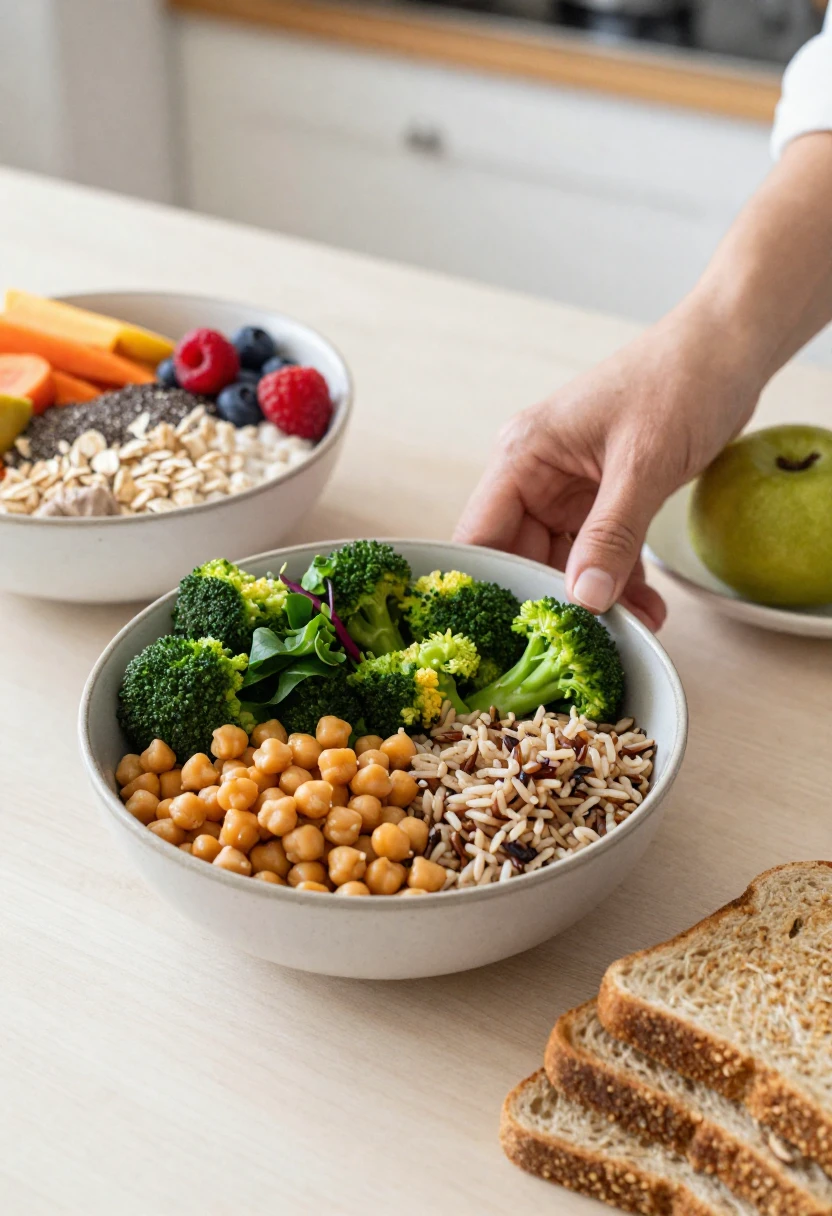
If plant-based nutrition had a quiet hero, it would be fiber.
It doesn’t promise quick results.
It doesn’t come in flashy packaging.
It doesn’t get much attention.
And yet, it supports almost every system in your body.
Fiber feeds your gut bacteria, regulates digestion, stabilizes blood sugar, supports heart health, and helps manage appetite. It plays a central role in long-term wellness — especially in plant-based diets, where it naturally thrives.
Why Fiber Matters So Much
Fiber is the part of plant foods your body cannot digest.
Instead of being absorbed, it travels through your digestive system, where it performs essential work.
It helps move waste efficiently.
It slows the absorption of sugars.
It reduces cholesterol levels.
It nourishes beneficial gut microbes.
A healthy gut influences immunity, mood, metabolism, and inflammation. Fiber is its primary fuel.
Plant-Based Diets and Fiber Advantage
One of the greatest strengths of plant-based eating is fiber intake.
Beans, vegetables, fruits, whole grains, nuts, and seeds are all fiber-rich. When these foods form the foundation of your meals, you naturally exceed the fiber intake of most modern diets.
This is one reason plant-based diets are linked to better digestive and metabolic health.
Types of Fiber: Soluble and Insoluble
Fiber comes in two main forms, and both are important.
Soluble fiber dissolves in water and forms a gel-like substance. It helps regulate blood sugar and cholesterol. It’s found in oats, beans, apples, and flaxseeds.
Insoluble fiber adds bulk to stool and supports regularity. It’s found in whole grains, vegetables, and seeds.
A varied diet provides both.
Increasing Fiber Gently
If you’re new to high-fiber eating, more is not always better at first.
Sudden increases can cause bloating, gas, and discomfort.
The body needs time to adapt.
Gradually adding beans, whole grains, and vegetables allows your gut microbiome to adjust. Drinking enough water also helps fiber do its job smoothly.
Signs Your Fiber Intake Is Balanced
When fiber intake is steady, you may notice:
- regular digestion,
- stable energy,
- fewer cravings,
- better appetite control.
These are quiet signals of internal balance.
Making Fiber Part of Everyday Meals
Fiber doesn’t require special planning.
It grows naturally when you choose:
Whole fruit instead of juice.
Brown rice instead of white.
Beans instead of processed snacks.
Vegetables at every meal.
Over time, these choices reshape digestion and metabolism from the inside out.
And that transformation is lasting.
Iodine — Often Forgotten but Essential
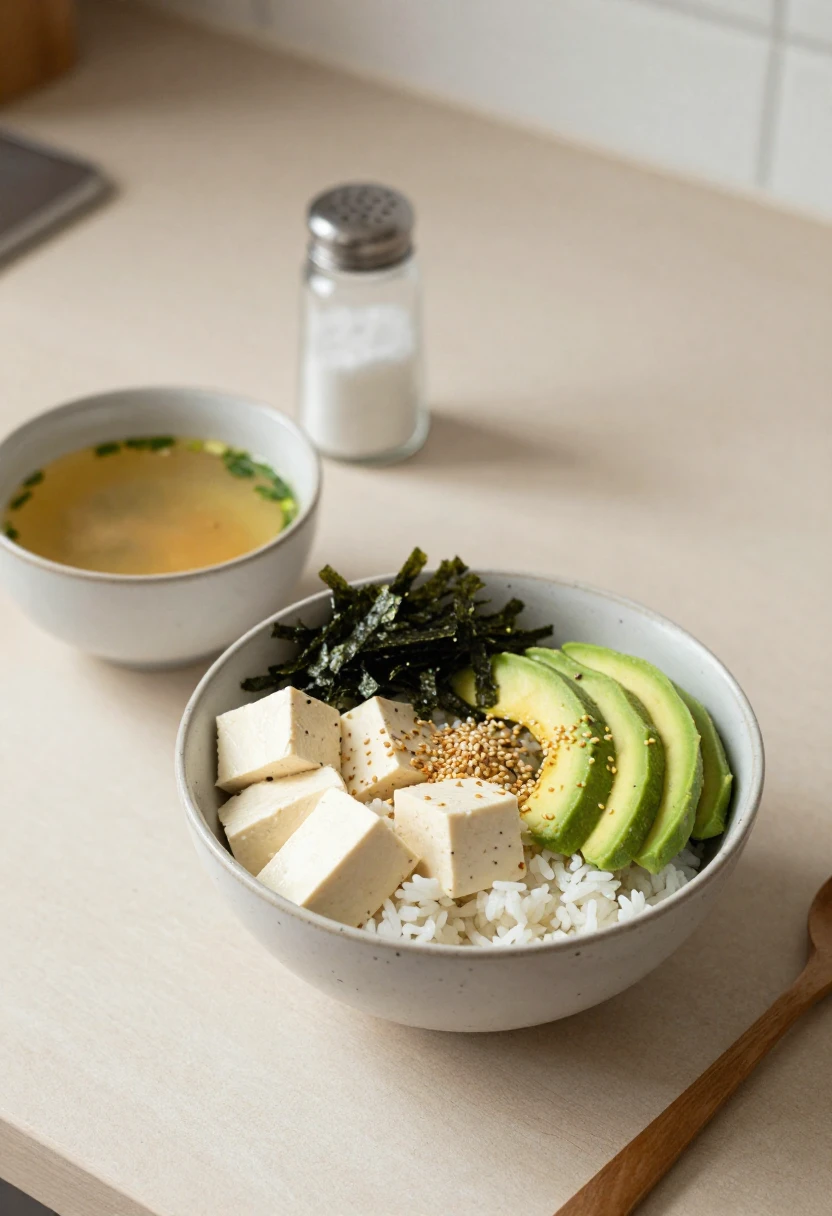
Iodine is one of the most overlooked nutrients in modern diets.
It rarely appears in wellness conversations.
It isn’t commonly listed on food labels.
It doesn’t attract much attention.
And yet, your thyroid depends on it every single day.
The thyroid is a small, butterfly-shaped gland in your neck, but it plays a huge role in how your body functions. It regulates metabolism, body temperature, energy production, and even mood.
Without enough iodine, this delicate system begins to struggle.
Why Iodine Matters
Iodine is essential for producing thyroid hormones.
These hormones influence how fast your body burns energy, how alert you feel, and how well many organs function.
Low iodine intake may contribute to:
- fatigue,
- feeling cold easily,
- weight changes,
- brain fog,
- dry skin.
Because these symptoms are common and nonspecific, iodine deficiency often goes unnoticed.
Iodine and Plant-Based Diets
Most natural iodine sources come from seafood and dairy, which means plant-based eaters need to be more intentional.
This doesn’t mean iodine is difficult to obtain.
It simply means it requires awareness.
Reliable Plant-Based Sources of Iodine
There are two main plant-friendly iodine sources:
- Iodized salt
- Sea vegetables (such as nori, wakame, and kelp)
Iodized salt is the most practical option for most people. Using small amounts in home cooking can easily meet daily needs.
Sea vegetables are rich in iodine but should be used carefully, as some varieties contain very high amounts.
Moderation matters.
How Much Do You Need?
Most adults need about 150 micrograms of iodine per day.
This amount is modest and easy to reach with iodized salt or occasional seaweed.
Problems usually arise not from too little planning — but from none at all.
When Supplements May Help
Some multivitamins include iodine, which can be helpful for people who avoid iodized salt and seaweed.
As always, testing and professional guidance offer clarity.
Making Iodine Part of Daily Life
A pinch of iodized salt in cooking.
Nori sheets with rice.
Seaweed in soup.
These small additions protect thyroid health quietly and effectively.
When iodine is balanced, metabolism feels steady.
Energy feels consistent.
The body feels supported.
And all without much effort.
Practical Meal Examples That Hit All the Nutrient Marks
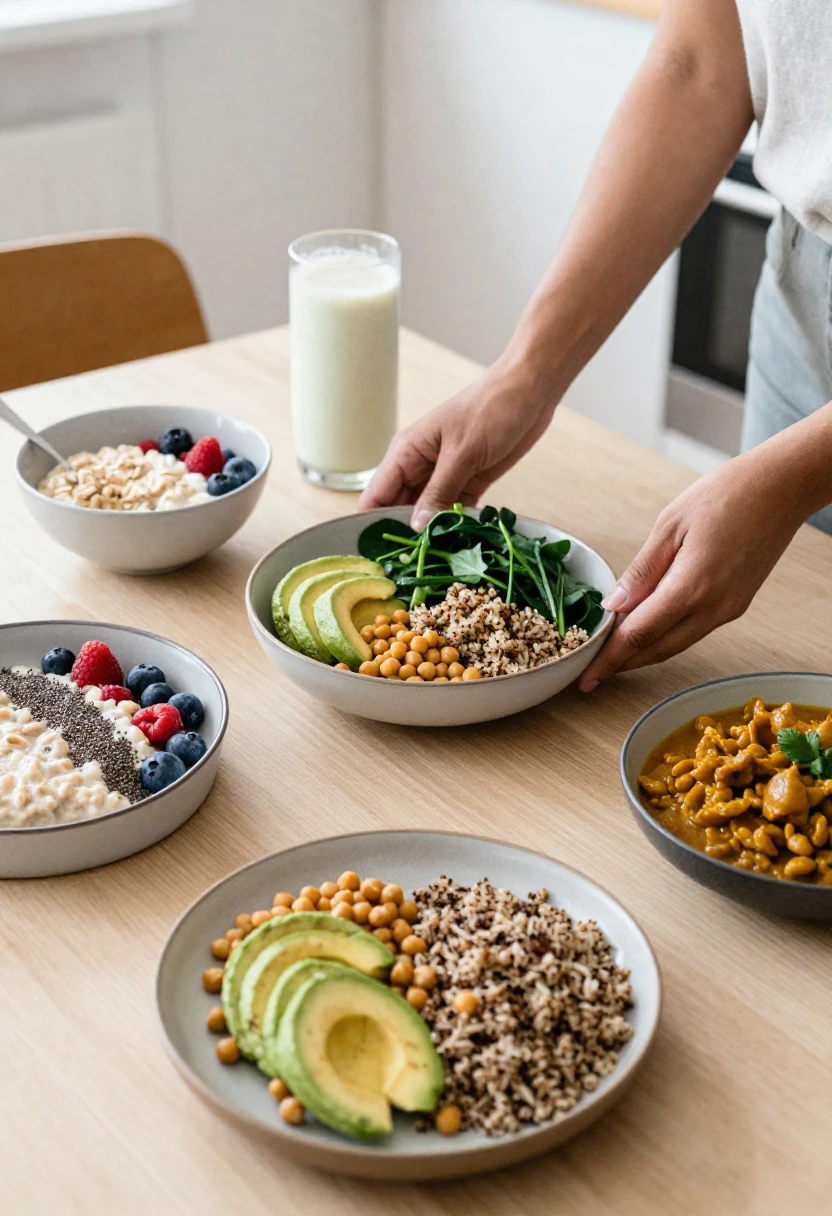
Understanding nutrients is helpful.
But seeing how they come together on a real plate is what makes everything feel doable.
A balanced plant-based diet isn’t built from perfect meals. It’s built from simple combinations that repeat in different forms — day after day — until nourishment becomes second nature.
Here are a few practical examples that bring many key nutrients together naturally.
A Nourishing Breakfast Bowl
Imagine a warm bowl of oatmeal made with fortified plant milk.
Topped with chia seeds, walnuts, berries, and a spoon of almond butter.
In one meal, you’ve included:
Protein from oats and nuts.
Omega-3s from chia and walnuts.
Calcium and vitamin D from fortified milk.
Fiber from whole grains and fruit.
Magnesium from nuts and seeds.
It’s comforting, filling, and quietly powerful.
A Balanced Lunch Plate
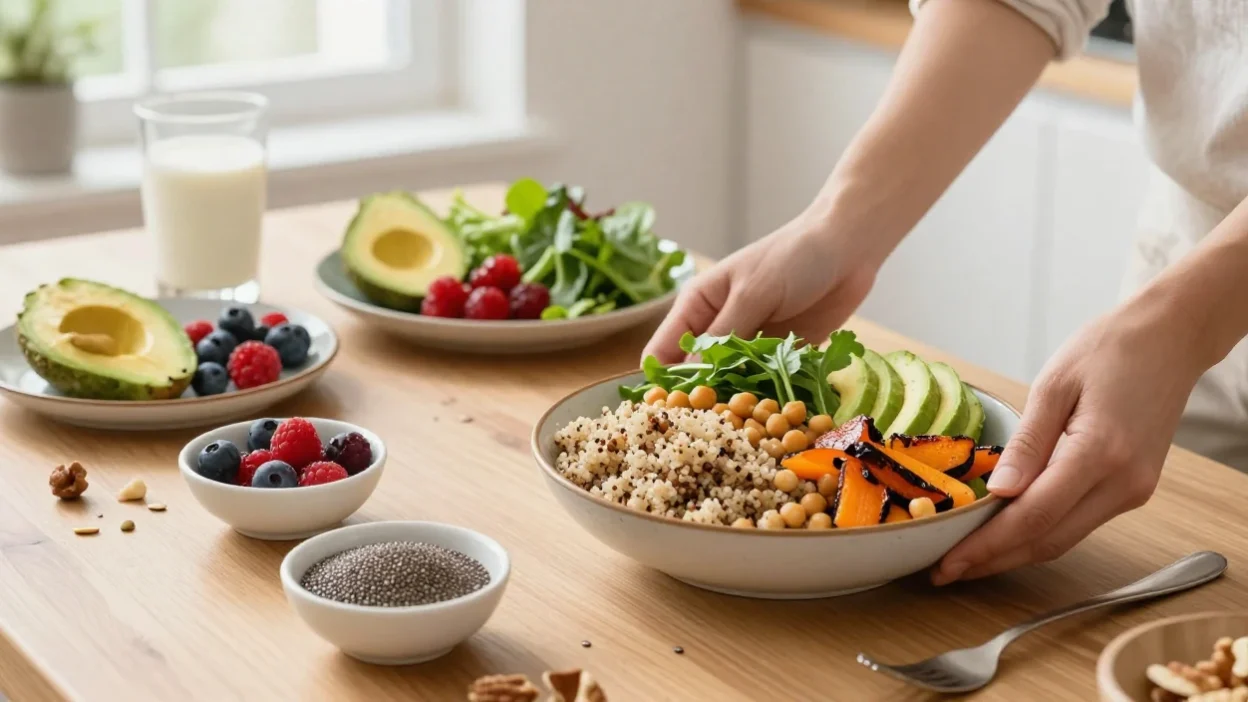
A grain bowl with quinoa, roasted chickpeas, kale, avocado, and tahini dressing.
Finished with lemon juice and iodized salt.
This meal provides:
Complete plant protein from quinoa and chickpeas.
Iron from legumes and greens.
Vitamin C from lemon to boost absorption.
Healthy fats from avocado and tahini.
Calcium and zinc from sesame seeds.
It feels fresh, satisfying, and energizing.
A Cozy Dinner Example
A lentil and vegetable curry served with brown rice.
Made with tomatoes, garlic, ginger, spinach, and coconut milk.
This dish offers:
Protein and iron from lentils.
Fiber from vegetables and grains.
Magnesium from whole foods.
Antioxidants from spices.
Comfort from warmth and aroma.
It’s nourishment wrapped in flavor.
A Smart Snack Combination
Apple slices with peanut butter.
Hummus with whole-grain crackers.
Soy yogurt with flaxseed.
These snacks support:
Stable blood sugar.
Protein intake.
Omega-3 supply.
Mineral balance.
They prevent energy crashes and unnecessary cravings.
The Bigger Picture
Notice something important in all these meals.
None are complicated.
None require supplements at every turn.
None feel restrictive.
They work because they combine variety, whole foods, and intention.
When meals are built this way, nutrients take care of themselves.
You stop micromanaging.
You start enjoying food again.
And that’s the real goal.
Conclusion — Nourished by Plants, Balanced for Life
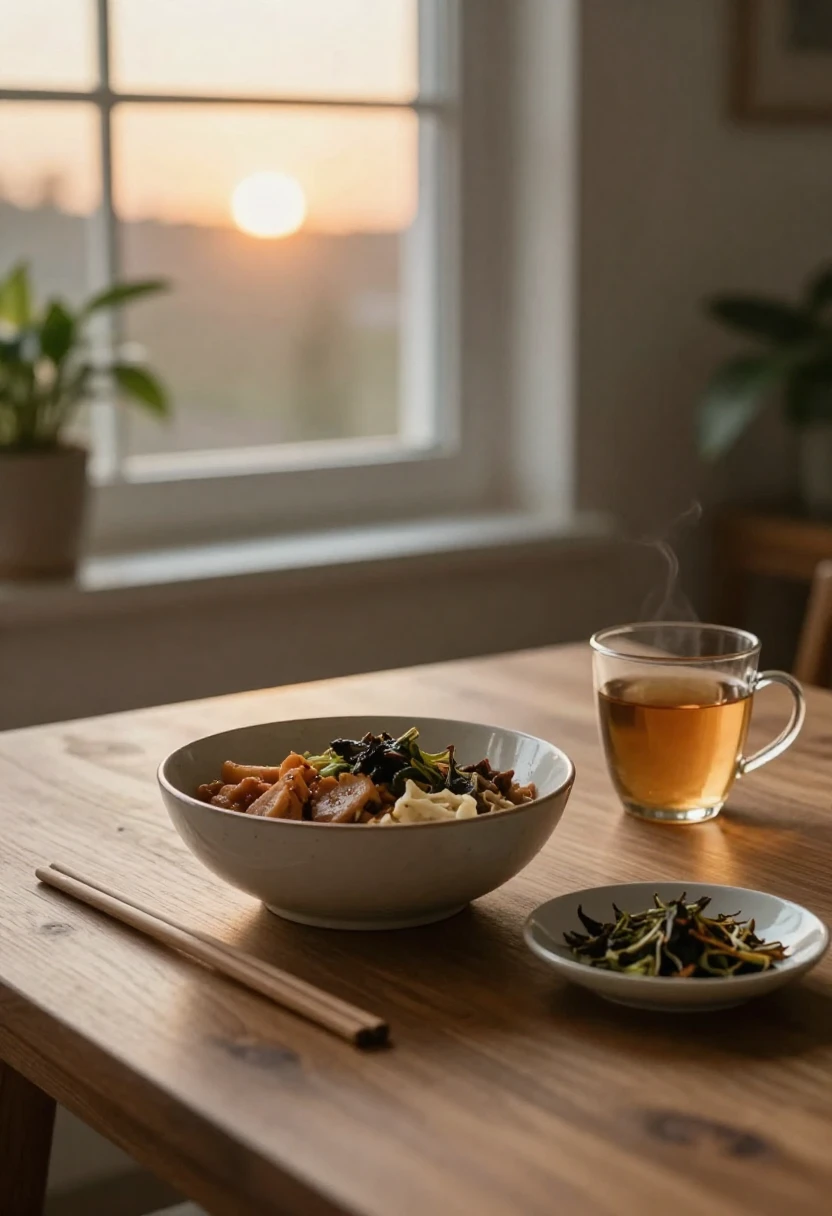
Choosing a plant-based diet is often about more than food.
It’s about health.
About values.
About feeling more connected to your body and the world around you.
And when it’s done with awareness, it can be deeply nourishing.
As you’ve seen, thriving on plants is not about chasing perfection or memorizing endless nutrition charts. It’s about understanding a few key nutrients, building variety into your meals, and developing trust in your choices.
Protein, iron, B12, calcium, omega-3s, vitamin D, zinc, magnesium, fiber, iodine — each plays a role. None need to dominate your thoughts. Together, they create balance.
When you include whole grains, legumes, vegetables, fruits, nuts, seeds, and fortified foods regularly, your body receives what it needs.
More importantly, your relationship with food stays healthy.
You eat with confidence.
You listen to your body.
You adjust when needed.
You enjoy the process.
Plant-based living becomes sustainable — not stressful.
Some days will be beautifully balanced.
Others will be simple and imperfect.
Both are part of real life.
What matters is consistency over time, curiosity instead of fear, and nourishment instead of restriction.
When you approach food this way, plants don’t just fuel you.
They support you.
They energize you.
They grow with you.
And that is the foundation of vibrant, lasting health.