
Healthy living used to feel straightforward. Eat this, avoid that. Follow the plan, stick to the rules, measure the results. For a long time, health was presented as something external — a checklist to complete or a standard to meet.
Today, that definition is quietly changing.
More people are beginning to realize that health doesn’t look the same for everyone, and it rarely fits into rigid systems for long. What works beautifully for one person can feel restrictive, exhausting, or even harmful for another. As a result, the conversation around healthy living is shifting away from perfection and toward adaptability, awareness, and sustainability.
The future of healthy living isn’t about finding the next ideal diet or routine. It’s about learning how to support the body and mind in ways that make sense within real lives — busy schedules, emotional ups and downs, cultural differences, and changing needs over time. It’s about flexibility rather than control, and curiosity rather than judgment.
This evolution also reflects a deeper understanding of well-being. Health is no longer just about physical outcomes. Mental clarity, emotional resilience, energy, and a sense of balance are now recognized as equally important. Healthy living is becoming less about how things look on the outside, and more about how life feels on the inside.
In this article, we’ll explore where healthy living is headed — what’s changing, what’s staying, and what truly matters as we move toward a more thoughtful, human-centered approach to wellness.
From Rules to Awareness: How Wellness Has Evolved

Not long ago, wellness culture revolved around rules. Eat at certain times. Eliminate entire food groups. Follow strict routines and track every detail. Health was often presented as something that could be mastered through discipline alone — as if the body were a problem to solve rather than a system to understand.
For some, these structures felt comforting. Rules offered clarity and a sense of control. But over time, many people began to notice the cost. Rigid approaches were difficult to sustain, emotionally draining, and often disconnected from real life. What started as “healthy habits” could slowly turn into pressure, guilt, or burnout.
As awareness grew, so did skepticism. People began questioning whether health should feel like a constant effort, or whether well-being could exist without perfection. This shift opened the door to a more nuanced understanding of wellness — one that recognizes the body as dynamic, responsive, and deeply influenced by context.
Today, wellness is increasingly framed as awareness rather than obedience. Instead of asking, “What rule should I follow?” the question becomes, “What do I need right now?” This subtle change creates space for listening — to energy levels, hunger cues, stress, mood, and life circumstances.
Scientific research has also contributed to this evolution. We now understand more about how stress affects the body, how sleep and mental health influence physical outcomes, and why long-term habits matter more than short bursts of intensity. Health is no longer seen as a linear path, but as a series of ongoing adjustments.
This doesn’t mean structure has disappeared. It means structure is being used differently — as support rather than control. Awareness allows people to adapt routines as life changes, without feeling like they’ve failed.
In the future of healthy living, success won’t be defined by how strictly rules are followed, but by how well individuals can respond to their own needs with clarity and compassion.
Nutrition in the Future: Flexible, Not Extreme
For years, nutrition has swung between extremes. One approach replaces another, each promising clarity, control, or better health outcomes if followed closely enough. Low-this, high-that. Strict plans, long lists of rules, and the constant sense that the “right” way to eat is always just out of reach.
But the future of nutrition looks different.
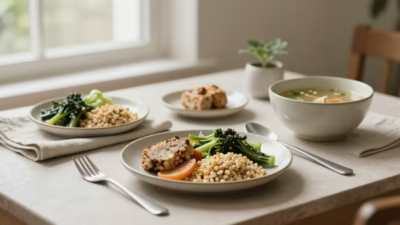
Rather than moving from one rigid system to the next, there is growing recognition that flexibility is what makes eating sustainable. Bodies change. Schedules change. Energy needs shift. A way of eating that supports someone today may not fit their life — or their health — a year from now.
Modern nutrition conversations are beginning to focus less on labels and more on patterns. How food supports daily energy. How meals fit into real routines. How nourishment affects mood, focus, and overall resilience. This approach leaves room for a variety of eating styles to coexist, without positioning any single one as the universal answer.
Importantly, flexibility doesn’t mean carelessness. It means understanding the why behind choices instead of following rules by default. It allows people to adapt their eating in response to stress, activity levels, health needs, and personal values — without guilt or fear of “doing it wrong.”
There’s also a growing appreciation for cultural and personal context. Food is more than fuel; it’s tradition, comfort, connection, and pleasure. A future-focused view of nutrition respects this complexity rather than reducing meals to numbers or macros.
As healthy living continues to evolve, nutrition is becoming less about control and more about support. The goal isn’t perfection. It’s nourishment that can flex and evolve alongside real life.
Personalization Over Perfection
One of the clearest signals of where healthy living is headed is the shift from perfection to personalization. For a long time, wellness advice assumed that one set of habits could work for everyone — if only people tried hard enough. When it didn’t work, the problem was framed as personal failure rather than a mismatch.
Today, that narrative is slowly unraveling.
Personalization acknowledges a simple truth: bodies are different. Genetics, environment, stress levels, sleep, culture, and life stage all influence how health shows up for each person. What feels energizing for one individual may feel depleting for another, even if both are following “healthy” advice.
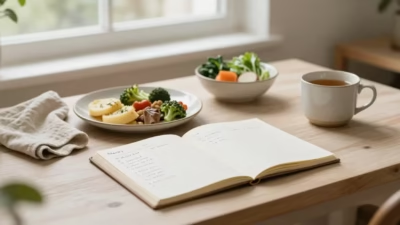
This perspective removes much of the pressure that perfection creates. Instead of chasing an ideal routine, personalization encourages experimentation, observation, and adjustment. It invites people to notice patterns — how certain foods affect energy, how movement feels in different seasons, how rest impacts mood — and to respond accordingly.
Technology has played a role in this shift, but personalization isn’t only about data. It’s also about intuition and lived experience. Learning to trust internal signals, rather than overriding them to meet external expectations, is becoming a central part of modern wellness.
Letting go of perfection doesn’t mean lowering standards. It means redefining success. Progress becomes measured by consistency and well-being, not by strict adherence. Flexibility becomes a strength rather than a weakness.
In the future of healthy living, personalization allows health to fit into life — not the other way around. It creates room for change, growth, and self-respect, which are far more sustainable than any idealized version of “doing it right.”
Metabolic Health and Everyday Energy

For a long time, conversations about health focused heavily on appearance — weight, body shape, or external markers of “fitness.” But as our understanding deepens, attention is shifting toward something more practical and meaningful: how the body functions day to day.
Metabolic health isn’t about extremes or optimization. At its core, it’s about the body’s ability to manage energy efficiently — to fuel movement, thinking, mood, and recovery without constant highs and crashes. When metabolism is supported, energy feels steadier, focus improves, and daily life requires less effort just to get through.
This shift matters because many people live in a state of low-level exhaustion. Irregular eating, chronic stress, poor sleep, and constant stimulation can all disrupt the body’s natural rhythms. Rather than pushing harder, the future of healthy living emphasizes restoring balance — through regular nourishment, adequate rest, and habits that reduce strain rather than add to it.
Everyday energy is also deeply individual. Some people feel best with structured meals; others thrive with more flexibility. Some need more movement to feel alert, while others need more recovery. Supporting metabolic health means recognizing these differences and responding to them with curiosity instead of comparison.
Importantly, this approach reframes health goals. Instead of chasing visible outcomes, the focus shifts to questions like: Do I have enough energy for my life? Can I concentrate? Do I recover well? These signals are often more honest indicators of well-being than numbers on a scale or app.
As we look toward the future, metabolic health becomes less about control and more about capacity — the ability to live fully, think clearly, and move through days with resilience.
The Role of Technology in Healthy Living

Technology has become an inseparable part of modern life, and wellness is no exception. From step counters to sleep trackers and nutrition apps, digital tools now offer more insight into our bodies than ever before. Used thoughtfully, they can support awareness, motivation, and learning. Used without care, they can quietly add pressure.
The future of healthy living doesn’t reject technology — it redefines its role.
Rather than acting as a constant judge, technology is beginning to function as a guide. Data can help people notice patterns: how sleep affects energy, how stress shows up in the body, or how routines shift over time. When approached with curiosity rather than obsession, this information can support better decision-making.
At the same time, there’s growing recognition that numbers don’t tell the whole story. Metrics can’t fully capture mood, intuition, or emotional well-being. Over-reliance on tracking can disconnect people from their own internal signals, replacing awareness with anxiety.
This is why balance matters. Technology works best when it complements self-awareness instead of replacing it. The most sustainable wellness routines use data as a reference point, not a rulebook.
Looking ahead, the integration of technology into healthy living will likely become more personalized and less intrusive. Tools will aim to support long-term habits, not constant optimization. The goal isn’t to measure everything — it’s to understand enough to live better.
When technology supports choice rather than control, it becomes a quiet ally in the background of healthy living, not the main focus.
Mental and Emotional Health as Core Wellness

For much of wellness history, mental and emotional health were treated as secondary — important, but separate from “real” health. Today, that separation no longer makes sense. The future of healthy living places mental and emotional well-being at the center, not on the sidelines.
Stress, anxiety, and emotional overload don’t just affect how we feel; they shape how the body functions. Chronic stress can disrupt sleep, digestion, appetite, focus, and energy. It can make even well-intentioned health habits harder to maintain. Recognizing this connection has changed how we define wellness itself.
Healthy living is increasingly understood as the ability to regulate, recover, and respond, not just perform. Emotional resilience — the capacity to move through challenges without becoming overwhelmed — is now seen as just as important as physical strength or endurance.
This shift also encourages a softer approach to self-care. Rest is no longer framed as laziness. Boundaries are recognized as protective rather than selfish. Mental health support, whether through therapy, community, or simple daily practices, is becoming a foundational part of long-term well-being.
Importantly, emotional health doesn’t require constant positivity. It’s about creating space for the full range of human experience — stress, joy, uncertainty, and growth — without turning them into problems to fix.
As healthy living evolves, the goal becomes less about avoiding discomfort and more about building the capacity to navigate it. When mental and emotional health are supported, physical habits tend to follow more naturally.
Food Quality, Not Just Macros
For years, nutrition advice has been dominated by numbers. Calories, macros, percentages, targets. While these tools can be useful in certain contexts, they often overlook a bigger picture — the quality of food and the experience of eating.
The future of healthy living places more emphasis on what food is made of, how it’s prepared, and how it fits into daily life. Whole, minimally processed foods tend to offer more than nutrients alone. They provide fiber, micronutrients, and natural variety, all of which support digestion, energy, and long-term health.
But food quality isn’t just about ingredients. It’s also about access, culture, and enjoyment. A meal that feels satisfying and comforting can support well-being in ways that no macro breakdown can measure. When eating becomes overly analytical, it can disconnect people from hunger, fullness, and pleasure — signals that are essential for sustainable health.
This doesn’t mean macros are irrelevant. It means they are one tool among many, not the foundation of every decision. Quality-focused eating allows for flexibility. It values nourishment without turning meals into math problems.
There’s also a growing awareness that “healthy” food doesn’t have to be perfect. Simple meals, familiar flavors, and realistic choices matter more than elaborate plans that are hard to maintain. Consistency often outweighs precision.
As healthy living continues to evolve, food quality becomes a bridge between nutrition and life. It supports the body while respecting the human need for ease, connection, and enjoyment.
Movement for Longevity, Not Punishment
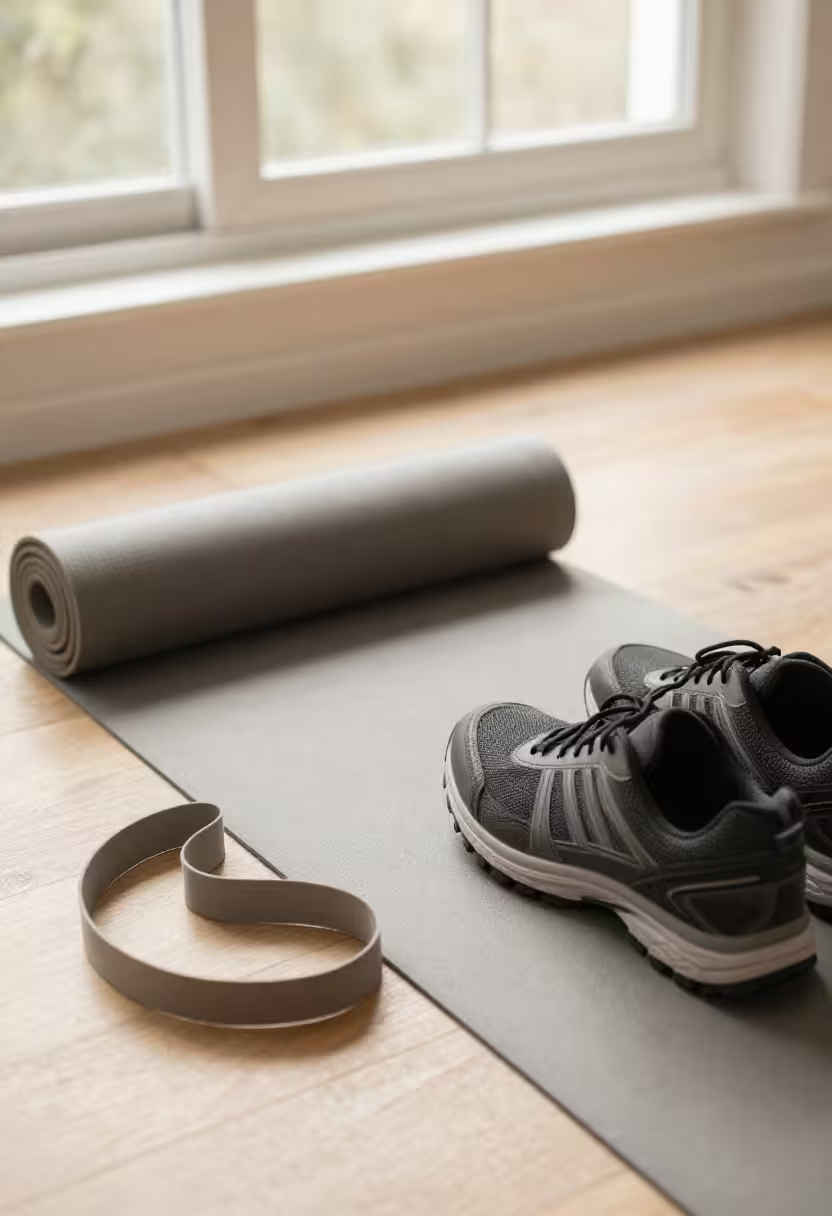
Movement is slowly being redefined — and that shift may be one of the most important changes in the future of healthy living. Instead of being framed as something to compensate for eating or to force the body into a certain shape, movement is returning to its original purpose: supporting life over the long term.
For many people, exercise has been tied to pressure. Rigid plans, intensity targets, and the idea that more is always better have made movement feel like an obligation rather than a benefit. While structured training has its place, it’s not the only — or even the most sustainable — way to stay healthy.
Longevity-focused movement prioritizes consistency, joint health, and enjoyment. Walking, stretching, strength training, mobility work, gentle cardio, and playful forms of movement all contribute to resilience. What matters most is not how impressive the activity looks, but whether it can be maintained over years without burnout or injury.
This approach also respects the body’s changing needs. Energy levels fluctuate. Stress ebbs and flows. Some days call for intensity; others call for rest. Movement that adapts to life — rather than competing with it — is far more likely to become a lifelong habit.
There’s growing recognition that rest is part of movement, not the opposite of it. Recovery supports muscle repair, nervous system balance, and mental clarity. Without it, even the best intentions can lead to exhaustion.
In the future of healthy living, movement becomes less about discipline and more about relationship — learning how the body responds, what feels supportive, and when to push or pause. When movement is rooted in care rather than punishment, it stops being something to endure and becomes something that quietly supports health for years to come.
Sustainability and Long-Term Thinking
One of the clearest markers of where healthy living is headed is a shift from short-term results to long-term sustainability. Instead of asking, “How quickly can I change?” the more meaningful question becomes, “Can I live this way for years?”
Many health approaches fail not because they don’t work, but because they demand too much. Extreme routines, strict rules, or constant optimization often clash with real life — work, family, stress, and unpredictability. When habits require continuous effort just to maintain, they tend to collapse under pressure.
Sustainable healthy living prioritizes rhythms over resets. It favors habits that can flex with changing circumstances rather than breaking at the first disruption. This might mean choosing consistency over intensity, simplicity over complexity, and recovery over constant progress.
Long-term thinking also extends beyond the individual. Food choices, movement habits, and daily routines are increasingly viewed through a wider lens — one that includes environmental impact, accessibility, and community. Wellness is no longer just personal; it’s interconnected.
This perspective encourages patience. Health is not built in weeks, and it’s not lost in days. Small, repeated actions accumulate quietly over time. When healthy living is designed to fit real life, it becomes resilient instead of fragile.
As the wellness landscape continues to evolve, sustainability emerges as a guiding principle — not just for bodies, but for lifestyles. Healthy living that lasts is healthy living that adapts.
Letting Go of Wellness Trends
Wellness trends have a way of arriving loudly and leaving quietly. One year it’s a superfood, the next it’s a new routine, a new rule, a new promise of doing health “better.” While trends can spark curiosity, they often come with an unspoken message: you should be doing more.
The future of healthy living is beginning to move away from that pressure.
More people are recognizing that constantly chasing the next trend can create confusion, comparison, and fatigue. What’s marketed as innovation can sometimes pull attention away from the basics that quietly support health every day — regular meals, enough rest, movement that feels good, and space to breathe.
Letting go of wellness trends doesn’t mean rejecting new ideas altogether. It means approaching them with discernment. Asking questions like: Does this fit my life? Is it sustainable? Does it add clarity or stress? These questions help separate genuinely supportive practices from those that simply look appealing in the moment.
There’s also a growing awareness that trends often simplify complex issues. Health is rarely improved by one product or one habit alone. When wellness is reduced to quick fixes, it can erode trust in the body and replace intuition with constant external guidance.
Stepping back from trends creates room for confidence. It allows people to build routines based on experience rather than influence. Over time, this approach feels steadier — less reactive, more grounded.
In the future of healthy living, wellness becomes quieter. Less about keeping up, and more about tuning in.
Final Thoughts — Healthy Living as a Personal Journey
As the idea of healthy living continues to evolve, one thing becomes increasingly clear: there is no single destination. Health isn’t something to arrive at and maintain perfectly — it’s something that unfolds over time, shaped by experience, change, and self-awareness.
The future of healthy living invites a gentler mindset. One that values flexibility over rigidity, sustainability over speed, and understanding over comparison. It encourages people to move away from external definitions of “doing it right” and toward practices that genuinely support their lives.
Healthy living, in this sense, becomes deeply personal. It looks different at different stages. It adapts to seasons, stress, energy, and priorities. And it leaves room for imperfection, because real life is rarely tidy or predictable.
Rather than chasing trends or ideal routines, the most supportive approach is often the simplest one: paying attention. Noticing what nourishes, what drains, what helps you feel more present and capable in your day-to-day life. These small observations, repeated over time, create a foundation that no trend can replace.
Ultimately, the future of healthy living isn’t about doing more — it’s about doing what matters. With patience, curiosity, and respect for your own needs, health becomes less of a project and more of a relationship — one that can grow and evolve alongside you.


Cool blog! Is your theme custom made or did you download it from somewhere? A theme like yours with a few simple adjustements would really make my blog stand out. Please let me know where you got your theme. Bless you