There’s a specific kind of tiredness that doesn’t go away with sleep. It’s the kind that shows up in the kitchen, when you open the fridge and stare inside a little longer than usual, hoping inspiration will magically appear. On days like that, cooking can feel mechanical. Necessary. Something to get through rather than enjoy.
But every once in a while, food flips that feeling completely.
You decide not to rush. You put on a show in the background. You take ingredients out slowly. Suddenly, cooking becomes a pause instead of a chore. That’s the space where comfort food truly shines — not because it’s fancy, but because it asks very little from you while giving a lot back.
Themed cooking lives exactly in that space.
It’s not about recreating something perfectly or impressing anyone with technique. It’s about cooking with intention. About choosing to make something playful instead of practical. And that shift, small as it seems, changes the entire experience.
Pizza is almost unbeatable when it comes to this kind of cooking. It’s forgiving, flexible, and deeply familiar. You don’t need to measure everything perfectly. You don’t need years of experience. You can adjust as you go, trust your hands, and still end up with something satisfying.
That’s why pizza works so well as a base for creative ideas. It welcomes experimentation without punishing mistakes. And when you pair that with a theme — something nostalgic, a little spooky, a little fun — the result feels personal.
This Demogorgon Pizza wasn’t created to be impressive in a technical sense. It exists to match a mood. A cozy, slightly eerie, comfort-filled mood that fits perfectly with a quiet evening, dim lights, and something familiar playing in the background 🍿🕯️
Why a Monster Pizza Actually Makes Sense 😈🧀
Calling something a “monster pizza” sounds dramatic, but the idea itself is surprisingly grounded.
If you look at the Demogorgon not as a creature, but as a shape, it suddenly becomes very usable. Open. Radial. Balanced. Its design naturally leads the eye outward, which is exactly what a pizza already does.
This is why the concept works without overcomplicating things.
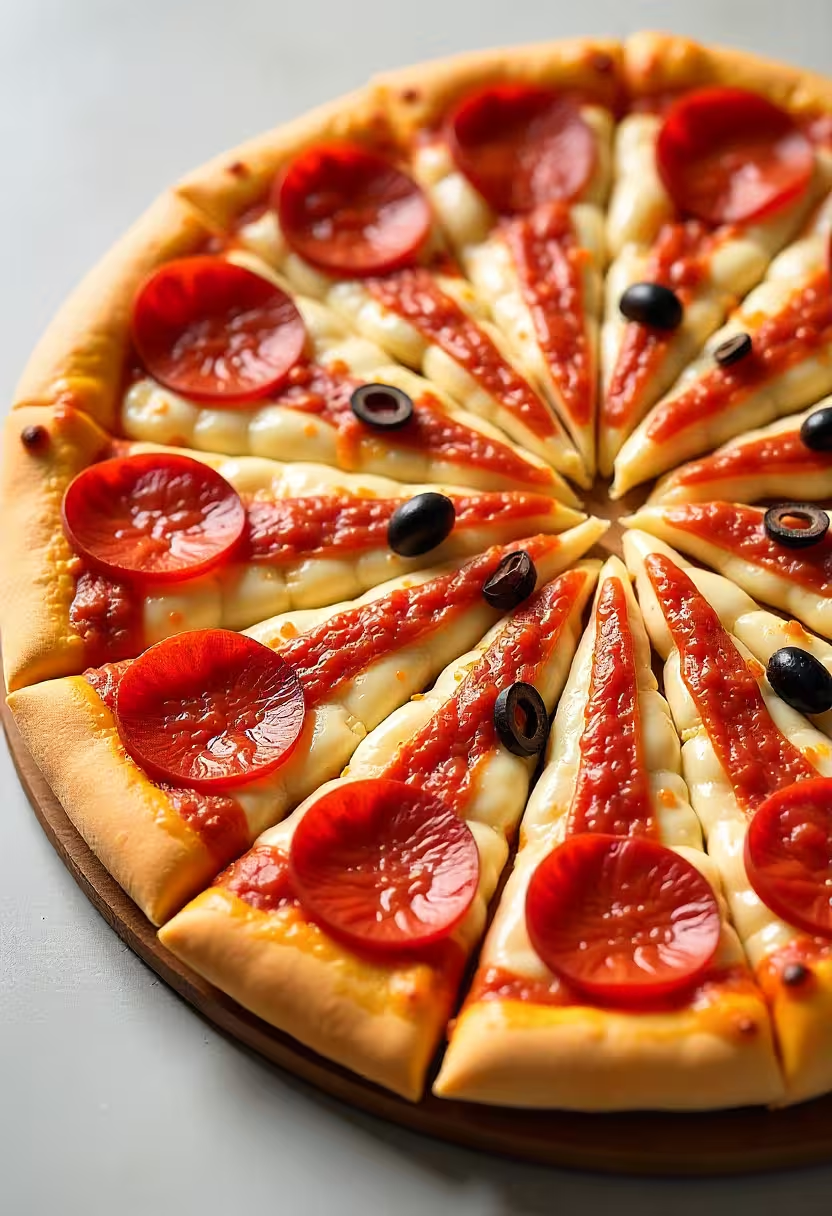
Instead of focusing on tiny details that are hard to reproduce, this pizza relies on a few simple visual principles:
- repetition of familiar toppings
- contrast between dark and light elements
- movement from the center outward
These are things people already do instinctively when decorating food, even if they don’t think about it that way.
From a reader’s perspective, this matters a lot. A visually bold recipe can be intimidating if it feels unattainable. But when the design is built on ingredients people already trust — pepperoni, olives, cheese, tomato sauce — that fear disappears.
There’s comfort in familiarity.
Readers don’t need to learn a new flavor profile or hunt down specialty products. They already know what this pizza will taste like. The only “new” thing is how it looks, and that makes the idea feel safe enough to try.
This balance between creativity and familiarity is what makes recipes like this perform well on food blogs. They feel fresh without being risky. Fun without being gimmicky. And most importantly, they don’t ask the reader to step outside their comfort zone — they gently invite them to play inside it.
A Recipe That Invites Participation, Not Perfection 🫶🍕
Some recipes demand precision. This one doesn’t — and that’s intentional.
This is not the kind of dish where everything has to be measured, timed, and executed flawlessly. It’s the opposite. It’s the kind of recipe where small imperfections actually add to the final result.
The pepperoni petals don’t have to be symmetrical. The olives don’t need to line up perfectly. In fact, when things look a little uneven, the design feels more organic, more alive.
That’s why this pizza works so well in shared spaces.

It invites people into the process without pressure:
- someone adjusts toppings while passing by
- someone else offers an opinion that may or may not be followed
- kids help because it feels like assembling, not cooking
From a food-blog perspective, this approach is powerful. Readers don’t just want instructions — they want reassurance. They want to know that if their version looks slightly different, it’s still “right.”
This recipe quietly gives that reassurance.
It also fits naturally into moments that aren’t about perfection:
- relaxed weekends
- casual watch nights
- small gatherings where food is part of the atmosphere, not the focus
There’s no expectation to plate it beautifully or serve it formally. It’s meant to sit in the middle of the table, be admired for a second, and then slowly disappear slice by slice.
That’s the kind of food people remember. Not because it was flawless, but because it felt good to make and even better to share 🍕🖤
With that mindset in place, moving on to the ingredients and the full recipe feels natural — not like a step-by-step obligation, but like the next part of the experience.
Demogorgon Pizza Recipe 🍕😈
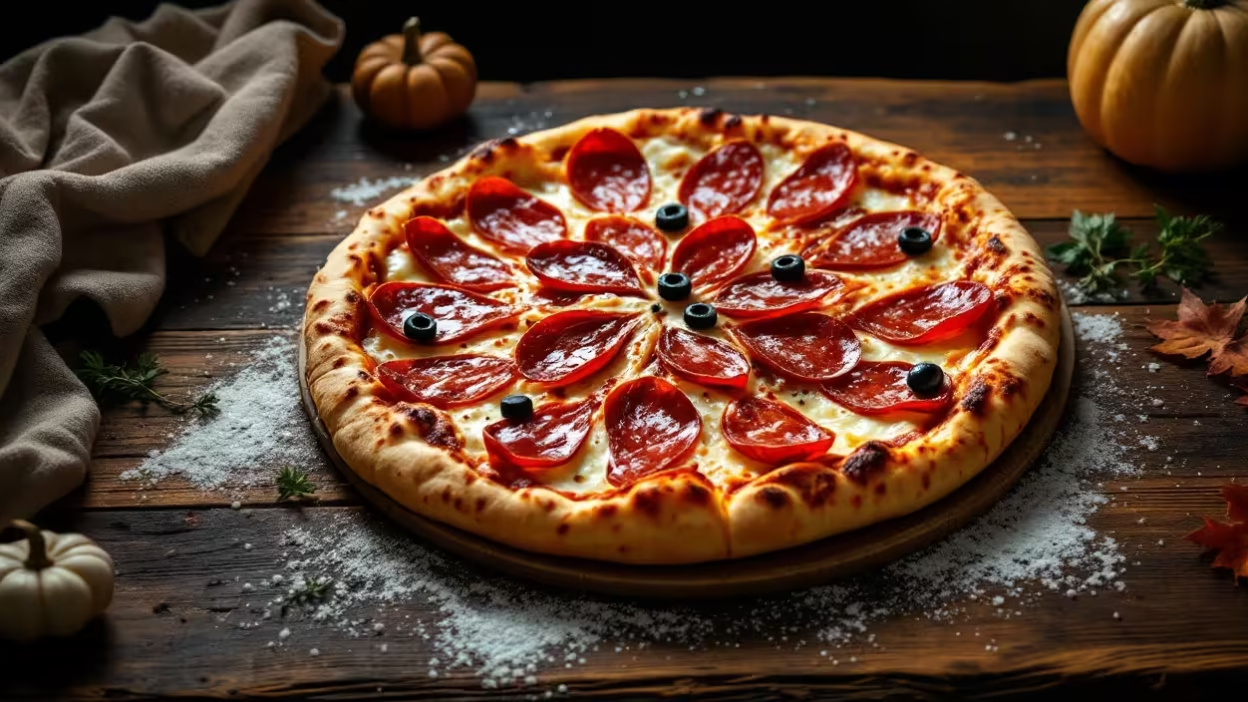
This Demogorgon Pizza is a comfort-food recipe with a playful, slightly spooky twist, designed for cozy evenings, themed watch parties, and casual gatherings where food is part of the atmosphere. At its core, it’s a classic pepperoni pizza made with tomato sauce, plenty of melted mozzarella, and savory toppings that most people already know and love. What makes it different is the presentation — a bold, flower-like design inspired by pop-culture aesthetics that turns a familiar dish into a visual centerpiece.
The recipe is intentionally approachable and flexible. You don’t need special equipment, advanced skills, or hard-to-find ingredients. The focus is on shaping, layering, and having fun with the process rather than chasing perfection. Small imperfections only add character, making each pizza slightly unique. Whether you’re cooking alone, with friends, or with family, this recipe encourages creativity while still delivering the comfort and reliability of a homemade pizza that tastes as good as it looks.
Ingredients 🧾🍕
- 1 large pizza dough (store-bought or homemade)
- ½ cup pizza sauce or marinara
- 2 cups shredded mozzarella cheese (low-moisture preferred)
- 40–50 pepperoni slices (small or medium size)
- ½ cup black olives (sliced or halved)
- 2 tablespoons grated Parmesan cheese
- 1 tablespoon olive oil
- ½ teaspoon garlic powder (optional)
- Fresh basil or parsley for garnish (optional)
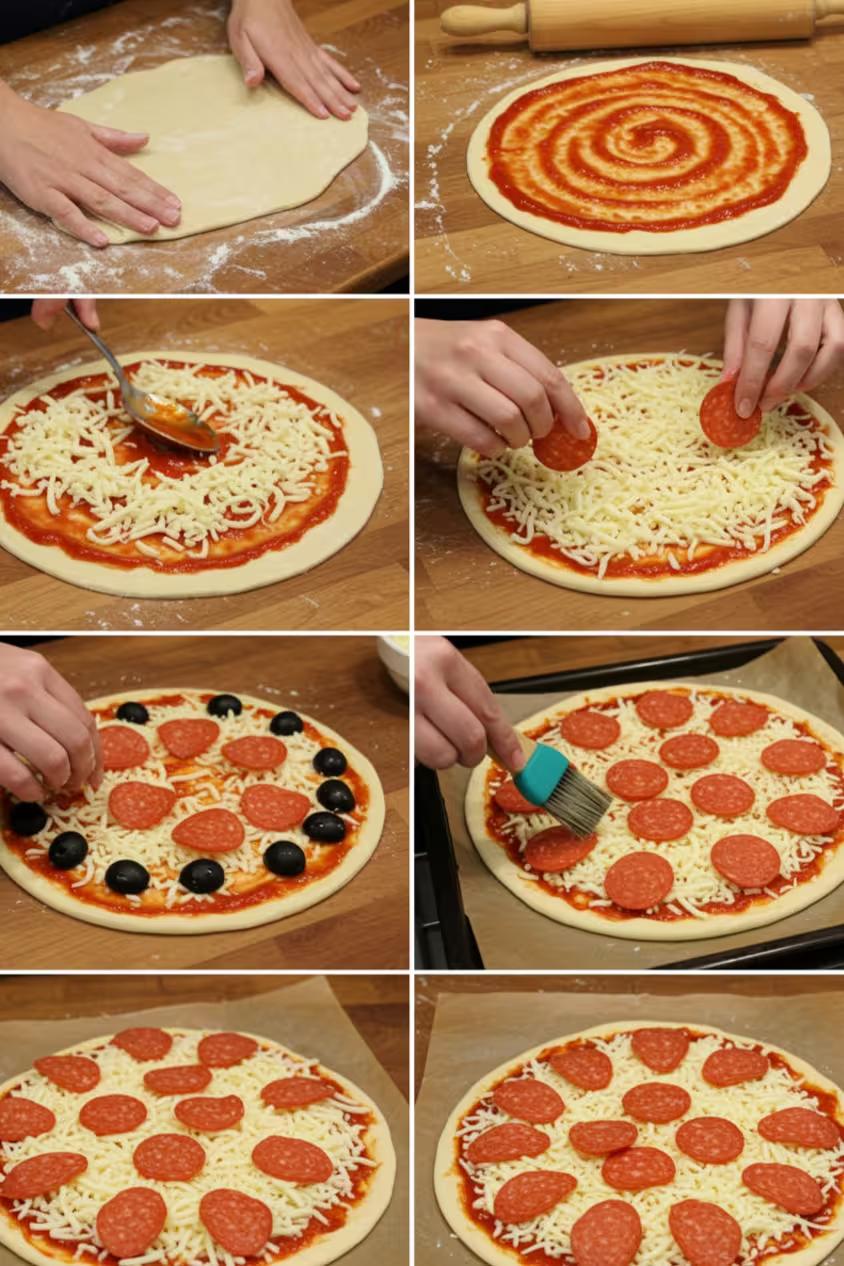
How to Make Demogorgon Pizza at Home 🍕🔥
- Preheat the oven to 450°F / 230°C. Place a pizza stone or heavy baking sheet inside the oven while it heats.
- Lightly flour a clean work surface and roll the pizza dough into a 12–14 inch round. The shape does not need to be perfectly even.
- Transfer the rolled dough onto a sheet of parchment paper for easy handling.
- Spread the pizza sauce evenly over the dough, leaving a 1-inch border around the edges for the crust.
- Sprinkle about 1½ cups of mozzarella cheese evenly over the sauce.
- Arrange a small circle of pepperoni slices in the center of the pizza to form the core of the design.
- Starting from the center, place the remaining pepperoni in 5–6 overlapping sections, extending outward like petals.
- Fill the spaces between the pepperoni sections with the remaining mozzarella cheese.
- Use black olives to create the “teeth,” placing them along the inner edges of the pepperoni and toward the center.
- Brush the exposed crust with olive oil and sprinkle with garlic powder if using.
- Carefully transfer the pizza (with parchment) onto the hot stone or baking sheet.
- Bake for 15–20 minutes, until the crust is golden and the cheese is fully melted and lightly browned.
- Remove from the oven, sprinkle with Parmesan cheese and fresh herbs if desired, and allow to rest for 3–5 minutes before slicing.
Cooking Tips 💡
- Avoid overloading the pizza with sauce or toppings to prevent a soggy center.
- Preheating the baking surface helps achieve a crisp bottom crust.
- For cleaner slices and a visible design, cut the pizza following the pepperoni “petals.”
How to Serve and Enjoy Demogorgon Pizza 🍽️🖤
Once the pizza is out of the oven, the most important step is surprisingly simple: don’t rush it. Let it sit for a couple of minutes, let the cheese settle, let the crust firm up just enough. That short pause makes slicing easier and keeps the design intact.
This pizza works best when it’s served as a shared centerpiece. Place it in the middle of the table and let everyone see it before the first slice disappears. The visual impact is part of the experience, especially if the pizza is meant for a themed night or casual gathering.
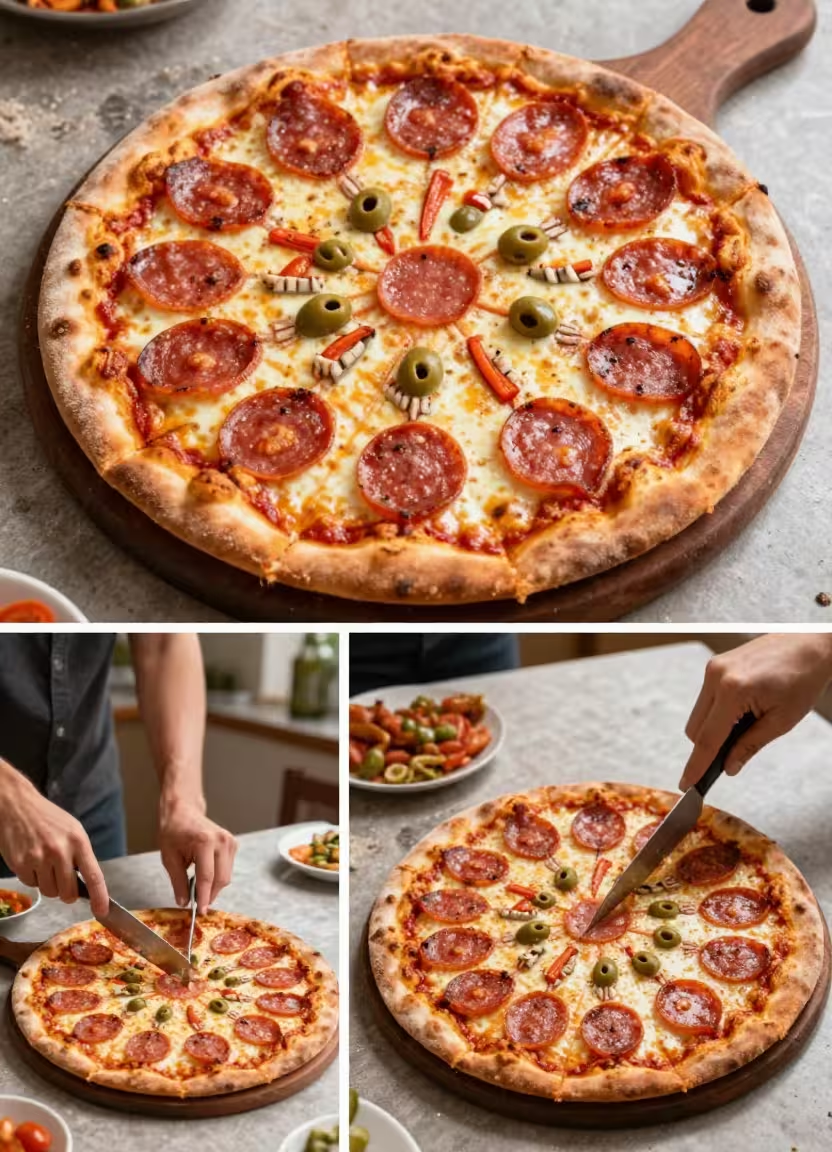
A few simple serving ideas that work particularly well:
- slice along the “petal” lines to preserve the design
- serve on a dark wooden board or baking tray for contrast
- keep the sides minimal so the pizza stays the focus
As for pairings, there’s no need to overthink it. Light, familiar sides complement the pizza without competing with it:
- simple green salad
- garlic bread or breadsticks
- sparkling water, soda, or a casual drink of choice
This isn’t a formal dish, and it doesn’t want to be. It’s meant to be eaten comfortably, casually, and with good company 🍕😊
Make It Your Own: Variations and Small Twists 🎨🧀
One of the best things about this recipe is how easily it adapts to different tastes, diets, and moods. The base idea stays the same, but the details can shift without breaking the concept.
If you like experimenting, here are a few easy directions to explore:
- Vegetarian version: swap pepperoni for roasted red peppers, mushrooms, or thinly sliced zucchini
- Extra cheesy version: mix mozzarella with provolone or fontina for deeper flavor
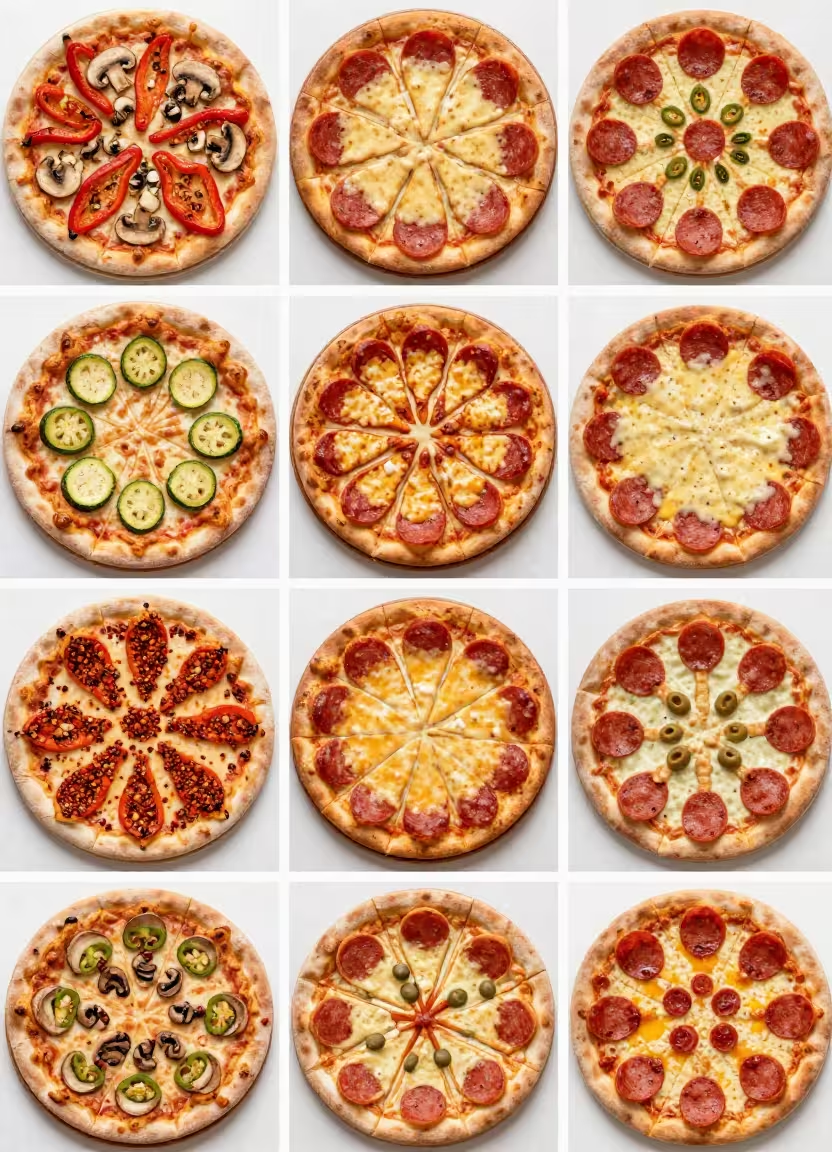
- Spicy version: add chili flakes to the sauce or use jalapeño slices for extra heat
- Kid-friendly version: use mini pepperoni and fewer olives for a softer look
You can also play with the shape. Some pizzas end up more symmetrical, others more wild and organic. Both work. The design doesn’t need to be perfect to be effective — sometimes the slightly messy versions feel more alive.
From a food-blog perspective, this flexibility matters. It shows readers that a recipe isn’t a rulebook. It’s a starting point. Something to adapt rather than follow blindly.
Why Recipes Like This Stay With Us 🕯️🍕
Long after the plates are cleared and the leftovers are packed away, what people usually remember isn’t the exact flavor balance or crust texture. They remember the moment.

They remember:
- laughing in the kitchen while arranging toppings
- arguing playfully about how it “should” look
- watching the pizza bake through the oven door
- sharing the first slice
That’s what recipes like this are really about.
They slow things down. They turn everyday ingredients into an experience. They create a small break from routine, even if it’s just for one evening. And in a world that often feels rushed and noisy, that kind of pause matters more than ever.
This Demogorgon Pizza isn’t trying to be perfect or impressive in a traditional sense. It’s meant to be enjoyed, shared, and remembered. And if it inspires someone to play a little more with their food, invite others into the kitchen, or simply enjoy cooking again — then it’s done its job.
Sometimes, the best comfort food isn’t just warm and cheesy. Sometimes, it’s the food that brings people together around the table 🖤🍕