Why Natural Wine Feels Different

There’s a quiet moment many people recognize — you pour a glass of wine at the end of a long day, take the first sip, and notice something unexpected. It feels lighter. Softer. Somehow easier on your body. No heavy fog the next morning, no sharp headache creeping in. Just a gentle warmth and a sense of ease.
For many, this is the moment they start asking: “Is this what people mean by natural wine?”
Natural wine has quietly moved from niche wine bars into everyday conversations about wellness, mindful living, and conscious food choices. It’s not about perfection or purity — it’s about simplicity. Grapes grown with care, fermented with patience, and bottled with minimal interference. The kind of wine that feels closer to the earth than to a factory.
In recent years, curiosity around the health benefits of natural wine has grown alongside interest in gut health, clean ingredients, and low-intervention foods. Some people say it feels gentler on digestion. Others notice fewer reactions. And many simply love the idea of drinking something that hasn’t been over-engineered.
Of course, wine is still alcohol — and balance always matters. But understanding why natural wine may feel different helps us make more mindful choices, not stricter ones. This guide explores the science, the myths, and the quiet truths behind natural wine, blending research with real-life experience and a little sensory storytelling along the way.
Think of this article as a friendly conversation over a shared glass — curious, honest, and grounded. Let’s explore what really makes natural wine feel better, and where wellness fits into the story.
What Is Natural Wine? Simple, Real & Unfiltered
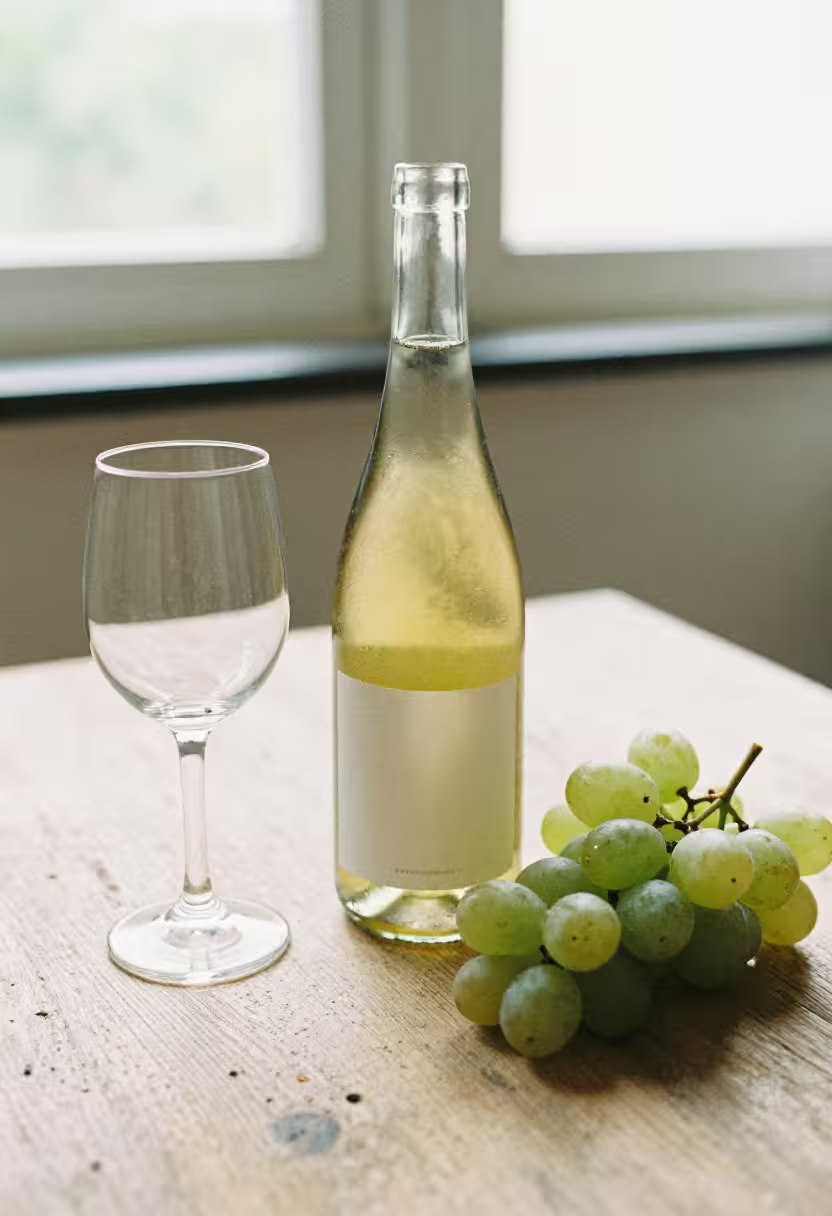
At its heart, natural wine is less a strict category and more a philosophy. It’s about letting grapes be grapes — and allowing wine to become wine with as little interference as possible. No shortcuts, no heavy manipulation, no long list of additives you’d never recognize in your own kitchen.
Imagine a small vineyard where the soil is alive, the vines grow at their own rhythm, and harvest still feels like a seasonal ritual rather than an industrial process. That’s where most natural wines begin.
The simplest definition
Natural wine is typically made from:
- Organically or biodynamically grown grapes
- Hand-harvested fruit
- Native (wild) yeasts for fermentation
- Little to no additives
- Minimal or no added sulfites
- No heavy filtration or correction
There’s no single global law that defines natural wine, which can feel confusing at first. But in practice, producers follow a shared intention: intervene as little as possible and let nature do the work.
How it differs from conventional wine
Most conventional wines are highly controlled products. They often involve:
- Cultured commercial yeasts
- Acid or sugar adjustments
- Color enhancers
- Clarifying agents
- Flavor-correcting additives
- Higher sulfite levels for stability
None of these are necessarily “bad,” but they do change how wine behaves in the body. Natural wine, by contrast, keeps things closer to their original state — sometimes a little cloudy, sometimes unpredictable, but often more expressive and alive.
You might even notice that no two bottles taste exactly the same. That’s not a flaw — it’s part of the charm.
Natural, organic, biodynamic — what’s the difference?
These terms are often used interchangeably, but they aren’t identical:
- Organic wine focuses on how grapes are grown, avoiding synthetic pesticides and fertilizers.
- Biodynamic wine goes a step further, treating the vineyard as a living ecosystem, often guided by lunar cycles.
- Natural wine includes organic or biodynamic farming plus minimal intervention in the cellar.
You can think of it like this:
organic and biodynamic describe how the grapes live, while natural wine describes how the wine is made.
Why this simplicity matters for how it feels
When fewer additives are involved, the wine tends to be closer to its raw ingredients. Many people who switch to natural wine describe it as:
“lighter on the body,”
“easier to digest,”
or “something I can enjoy without overthinking.”
That doesn’t make it magical — but it does make it honest.
And honesty, in food and drink, often translates into a better relationship with what we consume. Natural wine invites curiosity instead of perfection, awareness instead of excess. It’s less about chasing a flawless flavor and more about experiencing something alive.
The Roots: How Natural Wine Is Made
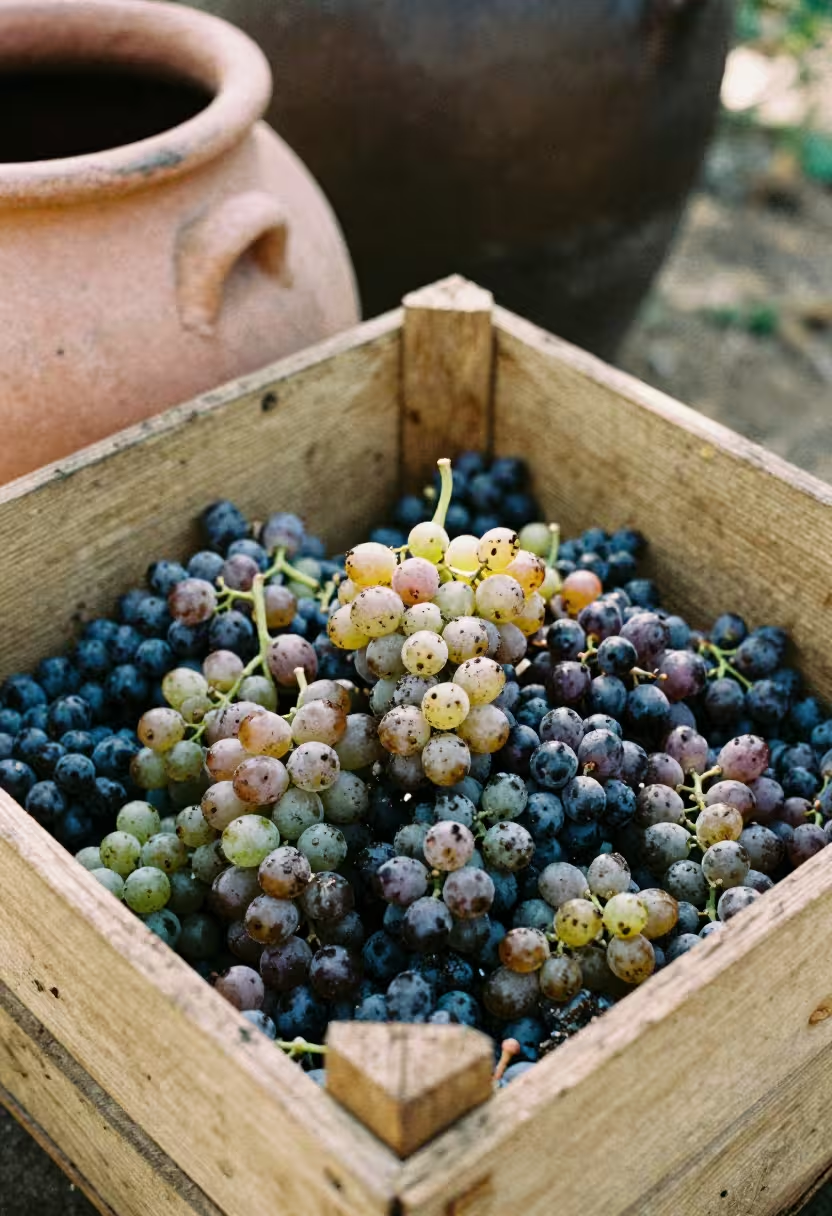
To understand why natural wine feels different, it helps to slow down and look at how it comes into being. Not in a technical, factory-like way — but through the rhythm of seasons, soil, and patience. Natural wine isn’t engineered; it’s grown, waited for, and gently guided.
There’s something almost meditative about its process. Less control. More trust.
It starts in living soil
Everything begins in the vineyard. Natural winemakers usually work with organic or biodynamic farming, meaning no synthetic pesticides, herbicides, or chemical fertilizers. Instead, they rely on compost, cover crops, and biodiversity to keep vines healthy.
Healthy soil isn’t just an environmental ideal — it affects flavor and structure. Living soil supports complex microbial life, and that life subtly shapes the grapes themselves. You could say the wine already carries a kind of quiet ecosystem before it’s even picked.
Many growers describe their vineyards less as “production zones” and more as gardens. You’ll often hear them talk about balance, observation, and restraint.
Hand-harvesting and gentle handling
Most natural wines are harvested by hand, not machines. This allows winemakers to select grapes carefully and avoid damaging them before fermentation even begins.
It’s slower. More labor-intensive. And very intentional.
That slowness matters, because damaged grapes can oxidize or ferment too quickly — which often leads to more intervention later. Natural wine tries to avoid that domino effect from the start.
Wild fermentation: letting nature lead
One of the defining features of natural wine is fermentation with native (wild) yeasts. These are yeasts that already live on the grape skins and in the winery environment.
Commercial wines usually use lab-selected yeasts designed to produce predictable flavors. Wild fermentation, on the other hand, is more expressive — sometimes surprising, sometimes delicate, sometimes a little rebellious.
This process:
- Preserves regional character
- Creates more nuanced aromas
- Reflects the vineyard more honestly
- Avoids artificial flavor steering
It’s not about perfection; it’s about authenticity.
Minimal intervention in the cellar
Once fermentation begins, natural winemakers tend to step back rather than step in. That means:
- No unnecessary filtering or fining
- No flavor adjustments
- No color correction
- Minimal manipulation
Some wines may look slightly cloudy or change over time — a visual reminder that they’re alive. For many drinkers, this is part of the charm, not a flaw.
What about sulfites?
Sulfites deserve their own conversation (and we’ll explore them more deeply later), but here’s the short version:
natural wines usually contain very low levels of added sulfites, or none at all.
Sulfites help stabilize wine, but in higher amounts they’re often blamed — fairly or not — for headaches or sensitivities. By using clean fruit and careful handling, natural winemakers can reduce the need for them.
This doesn’t make natural wine “sulfite-free” in every case, but it does mean the final bottle is often gentler and less processed.
A slower process, a quieter result
When you put it all together, natural wine is the result of many small, mindful decisions:
- respecting the vineyard
- trusting fermentation
- avoiding correction
- embracing variation
It’s a slower path — and you can often taste that patience. The wine feels less constructed, more relaxed. Less like a product, more like a conversation between nature and time.
Natural Wine & Antioxidants: Friend or Fad?

You’ve probably heard it before, maybe said it half-jokingly while pouring a glass:
“Red wine has antioxidants — so it’s basically health food, right?”
The truth, as usual, lives somewhere in the middle. But when it comes to natural wine, the antioxidant conversation becomes more interesting — and a little more grounded in how the wine is actually made.
What are antioxidants, really?
Antioxidants are compounds that help protect our cells from oxidative stress — the kind caused by free radicals, pollution, inflammation, or everyday metabolic processes. Over time, too much oxidative stress is linked to aging and chronic disease.
Wine contains several naturally occurring antioxidants, mainly:
- Polyphenols
- Flavonoids
- Resveratrol
These compounds come primarily from grape skins, seeds, and stems — especially in red wine, where skins stay in contact with the juice during fermentation.
Why natural wine may contain more of them
Here’s where production choices start to matter.
Natural wines often:
- Use organically grown grapes, which tend to produce more polyphenols as a natural defense
- Avoid aggressive filtration that can strip compounds away
- Rely on longer skin contact
- Skip excessive processing
Because of this, many natural wines retain a richer profile of plant compounds compared to heavily refined alternatives.
It’s not about boosting numbers on a lab chart — it’s about preserving what’s already there.
Resveratrol: the most famous name in the glass
Resveratrol gets a lot of attention for its potential links to:
- heart health
- inflammation balance
- cellular protection
It’s found mainly in grape skins, which is why red and skin-contact wines tend to contain more of it.
That said, natural wine isn’t a supplement. You’d never drink it for resveratrol alone — and it wouldn’t make sense to try. But when enjoyed moderately, it can be part of a broader pattern of antioxidant-rich foods like olive oil, berries, herbs, and vegetables.
Think of it as a supporting character, not the hero.
A quieter kind of benefit
What many people actually notice isn’t something measurable — it’s how the wine feels. Natural wines are often described as:
“lighter”
“less heavy the next day”
“easier to enjoy slowly”
This may be partly due to lower intervention and fewer additives rather than antioxidants alone. Still, the two ideas are connected: less processing often means fewer disruptions to the wine’s natural balance.
A gentle reality check
It’s important to say this clearly:
alcohol is still alcohol. Even natural wine should be enjoyed thoughtfully and in moderation.
Health doesn’t come from the wine itself, but from how it fits into a wider lifestyle — shared meals, slower evenings, mindful portions, and food that feels nourishing rather than extreme.
In that context, natural wine becomes less about “benefits” and more about alignment: choosing something closer to nature, less manipulated, and more intentional.
Heart Health: Can Your Glass Help Your Heart?

Few topics around wine spark more curiosity than heart health. For years, headlines have floated the idea that a small glass of wine — especially red — might be “good for your heart.” Then came the counter-headlines, urging caution. So where does natural wine fit into this conversation?
The honest answer is nuanced. And nuance, luckily, fits beautifully with a mindful, food-first lifestyle.
Where the idea comes from
Much of the heart-health discussion around wine comes from observations in Mediterranean cultures, where moderate wine consumption often accompanies meals rich in vegetables, olive oil, legumes, and social connection.
Researchers noticed lower rates of certain cardiovascular issues in these populations and began studying possible links. One of the key suspects? Polyphenols, the same antioxidant compounds we talked about earlier.
These compounds may help:
- support healthy blood vessels
- reduce oxidative stress
- contribute to balanced inflammation
- support cholesterol function
Again — may is the important word.
Why natural wine enters the picture
Natural wine doesn’t magically turn alcohol into medicine. But its minimal processing may help preserve more of the grape’s natural compounds that are associated with these effects.
Compared to heavily processed wines, natural wine often contains:
- fewer added chemicals
- lower sulfite levels
- fewer corrective interventions
- more intact plant compounds
This doesn’t make it “healthy” on its own, but it may make it less disruptive when enjoyed in moderation.
Some people describe it as feeling more “in harmony” with their body — a subtle but meaningful difference.
Moderation is the real key
Most scientific discussions around wine and heart health share one non-negotiable point:
benefits, if any, are linked to small amounts only.
That usually means:
- one small glass with food
- not every day
- never as a coping mechanism
Beyond that, alcohol’s risks begin to outweigh any potential upside.
A helpful way to think about it is this: natural wine doesn’t create heart health — but in a balanced lifestyle, it may fit more gently than heavily processed alternatives.
The ritual matters more than the molecule
There’s also something quietly powerful about how wine is consumed. A slow dinner. A shared table. A pause in the evening. Conversation instead of scrolling.
These rituals themselves support emotional and cardiovascular well-being, lowering stress and encouraging connection — both strongly linked to heart health.
In that sense, the benefit may not be in the glass alone, but in the moment around it.
A grounded takeaway
Natural wine doesn’t promise protection or cures. What it offers is simplicity:
- fewer interventions
- fewer unknowns
- a closer relationship between ingredient and experience
When enjoyed mindfully, with food and intention, it can belong to a heart-conscious lifestyle — not as a solution, but as a small, thoughtful pleasure.
Gut Feeling: Natural Wine and Digestive Well-Being
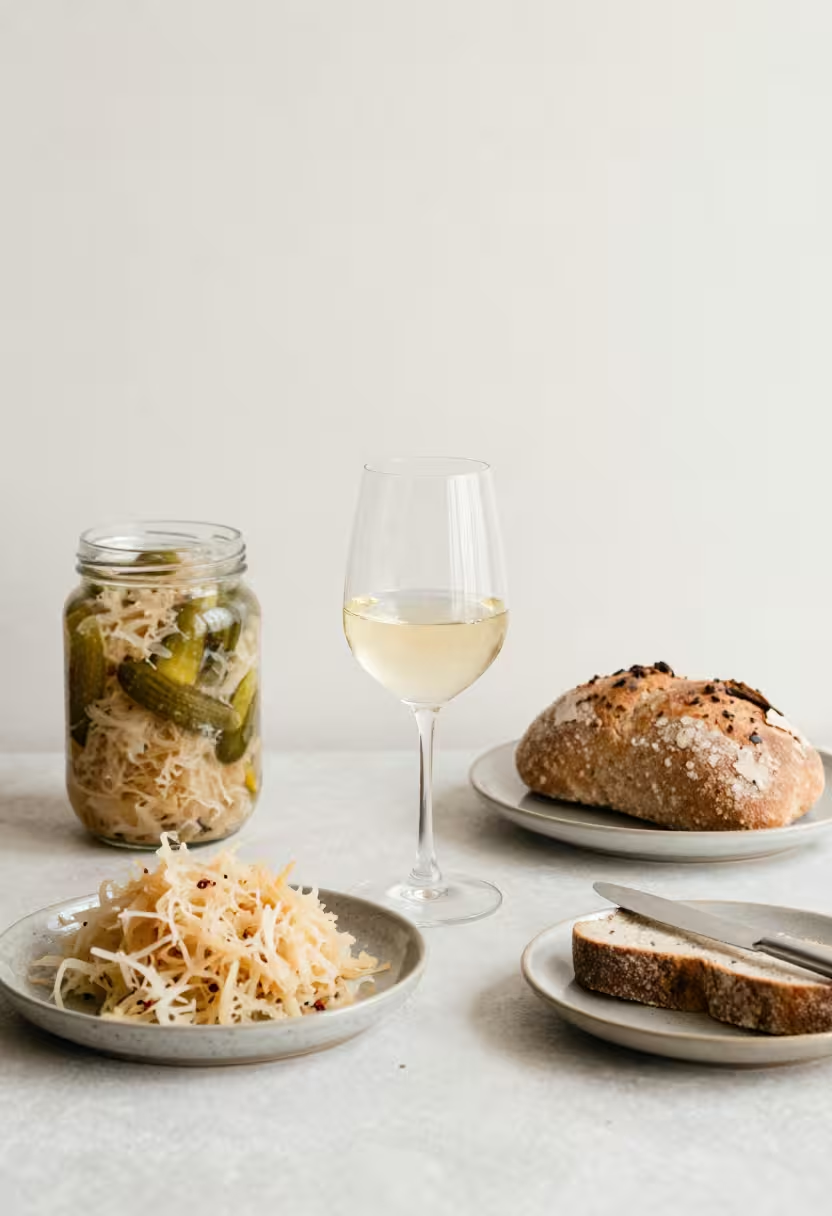
For many people, the first reason they become curious about natural wine isn’t science — it’s experience. A quieter stomach. Less heaviness. Fewer uncomfortable reactions the next day. It often starts with a simple thought: “This one just feels easier to drink.”
So what’s really going on when it comes to digestion and gut comfort?
The gut doesn’t love complexity
Our digestive system works best when it doesn’t have to fight unnecessary extras. Highly processed foods — and drinks — often contain additives that can irritate sensitive systems or create extra work for digestion.
Conventional wines may include:
- added sulfites in higher quantities
- stabilizers
- fining agents
- residual processing aids
These aren’t harmful for most people, but for some, they can contribute to bloating, discomfort, or that heavy feeling after a glass.
Natural wine, by contrast, tends to be simpler in composition. Fewer inputs mean fewer potential irritants.
The role of fermentation
Natural wine relies on spontaneous fermentation, led by native yeasts. Fermentation itself plays a fascinating role in digestion across many foods — think yogurt, kimchi, or sourdough.
While wine is not a probiotic food in the same sense, the fermentation process can:
- break down certain compounds in grapes
- reduce residual sugars
- create organic acids that feel lighter on the palate
This can make natural wine feel more “digestible,” even if it doesn’t directly feed gut bacteria.
Sulfites and sensitivity
Sulfites are often blamed for digestive or headache-related discomfort. While true sulfite allergies are rare, sensitivity is more common — especially among people already attentive to how food makes them feel.
Because natural wines usually contain:
- no added sulfites, or
- very minimal amounts
some people report fewer reactions when switching to them.
It’s not a guarantee, but it’s a meaningful difference for those who notice patterns in their body.
Less sugar, less strain
Another quiet factor is residual sugar. Many mass-market wines contain more sugar than expected, often added to adjust flavor.
Natural wines are typically fermented fully, leaving little residual sugar behind. Lower sugar content can mean:
- less fermentation happening in the gut
- less bloating
- a cleaner finish
That “lighter” feeling after a glass often starts here.
Listening to your body’s signals
One of the most valuable ideas behind natural wine culture is attentiveness. People who drink it often slow down, notice flavors, and check in with how they feel afterward.
You might hear someone say:
“I don’t need much — just one glass feels enough.”
That awareness is part of digestive wellness too.
A gentle reminder
Natural wine isn’t a digestive remedy, and it won’t solve gut issues on its own. But when enjoyed occasionally, with food, and in mindful amounts, it may align more comfortably with a body that values simplicity and balance.
Sensitivity & Additive Avoidance: Why Some People Feel Better with Natural Wine

If you’ve ever heard someone say, “Wine just doesn’t agree with me anymore,” you’re not alone. For many people, the issue isn’t alcohol itself — it’s everything that can come with it.
Headaches, flushing, fogginess, tightness in the chest, restless sleep… these reactions often spark curiosity about what’s actually inside the glass. This is where natural wine quietly enters the conversation.
Not all reactions are the same
It’s important to say this gently and clearly:
true allergies to wine are rare. But sensitivities are much more common — and they vary from person to person.
Some people react to:
- sulfites
- histamines
- certain fining agents
- residues from pesticides
- added sugars or flavor correctors
Because conventional wines may include several of these, it can be difficult to pinpoint what causes discomfort.
Why sulfites get so much attention
Sulfites are natural byproducts of fermentation, but many commercial wines add extra amounts to improve shelf life and consistency.
In sensitive individuals, higher sulfite levels may contribute to:
- headaches
- flushing
- nasal congestion
- a “tight” or heavy feeling
Natural wines typically contain little to no added sulfites, which is one reason some people find them easier to tolerate.
It’s not about being anti-sulfite — it’s about minimizing what doesn’t need to be there.
Fewer additives, fewer unknowns
Beyond sulfites, industrial winemaking can involve a surprisingly long list of processing aids. These aren’t always listed on labels, which can make mindful choices harder.
Natural wine tends to avoid:
- artificial stabilizers
- clarifying agents derived from chemicals
- aggressive correction techniques
For people with food sensitivities, this simplicity can feel like relief. The ingredient list becomes intuitive: grapes, time, and care.
Histamines and the “wine headache”
Histamines are naturally present in fermented foods, including wine. Red wines generally contain more than whites, and longer fermentation can increase levels.
Some natural wines may still contain histamines — but because they’re often made from healthier grapes with fewer interventions, some drinkers report milder reactions.
It’s very individual, and there’s no universal rule. Still, many people find that lighter, low-intervention wines feel gentler overall.
Listening instead of labeling
One of the most refreshing things about the natural wine world is its encouragement to listen to your body rather than follow rigid rules.
You might notice:
- certain grapes feel better than others
- smaller amounts feel more satisfying
- drinking with food makes a difference
- slower sipping changes the experience
These observations matter more than any label.
Natural wine doesn’t promise perfection — it invites awareness.
Moderation Matters: The Fine Line Between Benefit and Harm

At this point, it’s important to pause and say something honest:
even the most natural wine in the world is still alcohol.
That doesn’t cancel out everything we’ve talked about — but it does frame it. Wellness isn’t about choosing the purest version of something and ignoring its limits. It’s about understanding context, rhythm, and intention.
Natural doesn’t mean unlimited
It’s easy to fall into the idea that if something is organic, minimal, or traditional, it must automatically be “good for you.” Natural wine gently resists that logic.
Yes, it may be:
- lower in additives
- less processed
- easier for some people to tolerate
But it still affects the nervous system, the liver, and sleep — especially in larger amounts.
Health conversations around alcohol consistently point to moderation as the deciding factor.
What moderation actually looks like
Rather than rigid numbers, moderation is often better understood as awareness.
For many people, that might look like:
- one small glass with a meal
- not drinking every day
- choosing quality over quantity
- stopping when the body says “enough”
Natural wine culture often supports this naturally. Bottles are shared. Glasses are smaller. The focus shifts from consumption to experience.
The role of intention
There’s a quiet difference between drinking to disconnect and drinking to connect.
When wine becomes part of a slow dinner, a conversation, or a moment of appreciation, it tends to be approached with more care. This shift in intention matters more than it seems — psychologically and physically.
You might notice:
“I don’t need as much when I’m actually paying attention.”
That awareness is a form of wellness in itself.
Balance over perfection
Health isn’t built from one ingredient or one habit. It comes from patterns:
- nourishing food
- movement
- rest
- relationships
- enjoyment without excess
Natural wine can sit gently within that picture — not as a health strategy, but as a mindful pleasure.
When framed this way, it stops being about justification and starts being about choice.
Pairing with Food: Turning Wine into a Wellness Ritual

There’s something deeply human about sharing food and drink together. A table, a few plates, a glass poured slowly — suddenly the day loosens its grip. This is where natural wine feels most at home: not as a standalone drink, but as part of a meal.
When paired thoughtfully with food, wine shifts from stimulation to support. It becomes gentler, more grounded, more connected to the body.
Why wine with food feels different
Drinking wine on its own can feel sharp or overwhelming, especially for sensitive systems. Food changes that dynamic in several ways:
- it slows alcohol absorption
- supports digestion
- softens acidity
- balances flavor intensity
This is one reason traditional food cultures rarely separate wine from meals. It’s not about indulgence — it’s about harmony.
Natural wine, with its lower intervention and often brighter acidity, tends to integrate especially well into this rhythm.
Simple, nourishing pairings
You don’t need elaborate recipes or perfect pairings. In fact, natural wine often shines next to humble, seasonal food.
Think:
- roasted vegetables with olive oil
- fresh bread and soft cheese
- lentils, grains, and herbs
- simple fish or eggs
- fermented or pickled sides
These kinds of meals support digestion and allow the wine to play a supporting role rather than dominate the table.
A light skin-contact white with a warm grain salad.
A fresh red with tomatoes and olive oil.
A pét-nat with brunch on a slow weekend morning.
Small pleasures, thoughtfully combined.
The ritual matters more than the rule
There’s a quiet wellness in repetition: lighting a candle, setting the table, sitting down instead of eating on the go. When wine becomes part of a ritual rather than a reaction, its effect changes.
You might notice:
“I drink less, but enjoy it more.”
That’s a common shift when people move toward natural wine culture. The emphasis moves from quantity to presence.
Eating slowly supports digestion
From a physiological point of view, slower meals help:
- regulate blood sugar
- reduce digestive stress
- support satiety
- improve awareness of fullness
Wine, when sipped slowly alongside food, naturally encourages this pace. It becomes a pause rather than a push.
A softer definition of wellness
Wellness doesn’t have to be restrictive or joyless. Sometimes it looks like a shared table, a thoughtfully cooked meal, and a glass of something honest.
Natural wine fits into this vision not because it’s “healthy,” but because it encourages attention, moderation, and pleasure without excess.
Environmental Wellness: Why Natural Wine Is Gentler on the Earth

Wellness doesn’t stop with our bodies. It extends outward — into the soil, the air, the ecosystems that quietly support everything we eat and drink. One of the reasons many people feel drawn to natural wine is that it often reflects a more respectful relationship with the planet.
Not in a loud, performative way — but in small, consistent choices that add up.
Farming that works with nature, not against it
Most natural winemakers rely on organic or biodynamic practices. This means avoiding synthetic pesticides, herbicides, and fertilizers that can harm soil life and surrounding ecosystems.
Instead, they support the vineyard through:
- compost and natural fertilizers
- cover crops between vines
- biodiversity (flowers, insects, animals)
- healthier microbial soil life
Living soil retains water better, resists erosion, and supports long-term vineyard health. Over time, this creates resilience — something increasingly important in a changing climate.
Biodiversity over monoculture
Industrial agriculture often favors uniformity. Natural wine farming leans toward diversity.
A vineyard that allows wild plants, insects, and microorganisms to coexist becomes more self-regulating. Pests are controlled naturally. Soil stays alive. The ecosystem balances itself.
This diversity doesn’t just benefit the environment — it subtly influences the character of the wine, giving it a sense of place that can’t be replicated elsewhere.
Fewer chemicals, cleaner surroundings
Reducing chemical inputs has ripple effects:
- less runoff into groundwater
- healthier neighboring farms
- safer working conditions for growers
- fewer residues entering the food chain
For people who care about what ends up in their glass and where it came from, this matters deeply.
Natural wine often aligns with a broader lifestyle of mindful consumption — choosing products that respect both personal health and planetary boundaries.
Small producers, human-scale impact
Many natural wines come from small, independent growers rather than large industrial operations. Supporting them helps sustain:
- rural communities
- traditional farming knowledge
- artisanal practices
- local economies
There’s something quietly powerful about knowing your bottle comes from a real place, made by people who walk their vines every day.
Sustainability as a form of care
Environmental wellness isn’t about perfection. It’s about intention.
Choosing natural wine doesn’t “save the planet,” but it participates in a gentler system — one that values regeneration over extraction, patience over speed.
And for many people, that awareness changes the experience of drinking. The wine feels more connected, more meaningful, more alive.
Real Stories: Why Some People Choose Natural Wine

Not everyone discovers natural wine through research or intention. Often, it happens quietly — by accident, through a friend, a small bar, or a single surprising glass that feels different. What follows is rarely dramatic, but it’s often meaningful.
Here are a few gentle, imagined snapshots inspired by the kinds of stories people share again and again.
“I stopped waking up with that heavy feeling”
Anna, a graphic designer in her thirties, used to love a glass of red in the evening — but not the way it made her feel the next morning.
“It wasn’t a hangover exactly. Just this dull heaviness. When I switched to natural wine, I noticed it didn’t happen as much. I didn’t change how often I drank — just what I drank.”
For her, the shift wasn’t about rules. It was about listening. The wine felt lighter, easier, more compatible with her rhythm.
“It made me slow down”
Marco, who works in food, describes his first experience with natural wine as surprising.
“It tasted alive. A little unpredictable. I couldn’t drink it mindlessly.”
That unpredictability changed his relationship with wine. He started pouring smaller glasses, pairing them with food, paying attention. The act became slower, more intentional — almost meditative.
“I liked knowing where it came from”
For Lina, sustainability was the entry point.
“I started caring more about how my food was produced. Wine was the last thing I questioned.”
Learning that many natural wines come from small farms using regenerative practices made her feel more connected to what she consumed. It aligned with values she already lived by elsewhere.
A common thread: awareness, not perfection
These stories aren’t about transformation or discipline. They’re about subtle shifts:
- choosing quality over quantity
- noticing how the body responds
- feeling more connected to food
- enjoying wine with presence
Natural wine doesn’t promise to fix anything. But it often invites a different relationship — one rooted in curiosity rather than consumption.
The quiet power of choice
What stands out across these experiences is how personal they are. There’s no universal reaction, no single “right” way to enjoy wine. But when people feel empowered to choose what suits them best, something softens.
And sometimes, that’s the real benefit.
FAQ: Natural Wine & Health — Common Questions Answered

Is natural wine actually healthier than regular wine?
Natural wine isn’t a health product, but it can be a gentler option for some people. Because it’s made with fewer additives and minimal processing, many drinkers find it easier to tolerate. Any potential benefit depends on moderation, overall lifestyle, and individual sensitivity.
Does natural wine contain sulfites?
Yes — all wine contains naturally occurring sulfites created during fermentation.
However, natural wine usually has no added sulfites or very low amounts, which is one reason some people report fewer headaches or reactions.
Can natural wine cause fewer headaches?
For some people, yes — but not for everyone.
Headaches can be influenced by:
- sulfites
- histamines
- dehydration
- sugar
- drinking too much
- lack of food
Because natural wines often have fewer additives and lower residual sugar, some people experience fewer negative effects. Still, moderation matters most.
Is natural wine better for digestion?
Natural wine may feel easier to digest due to:
- simpler ingredient composition
- full fermentation (less leftover sugar)
- fewer processing aids
That said, it’s not a probiotic or digestive treatment. Think of it as less disruptive, rather than actively healing.
Can I drink natural wine every day?
Even natural wine is still alcohol, so daily consumption isn’t generally recommended from a health perspective.
Many people who enjoy natural wine choose:
- smaller portions
- fewer drinking days
- wine with meals
- more intentional occasions
This rhythm often feels more sustainable and balanced.
Is natural wine always organic?
Not always — but most natural wines are made from organically or biodynamically grown grapes. The key difference is that natural wine focuses on minimal intervention during winemaking, while organic certification focuses on farming practices.
Does natural wine taste different?
Often, yes — but not in a bad way.
Natural wines can be:
- fresher
- more vibrant
- slightly cloudy
- more expressive or “alive”
Some taste very familiar, others more playful or surprising. Flavor varies widely, which is part of the appeal.
Is natural wine suitable for beginners?
Absolutely. In fact, many people find natural wine more approachable once they get past the idea that wine has to taste a certain way.
Starting with lighter styles — fresh whites, chilled reds, or pét-nats — can be a gentle entry point.
Can natural wine fit into a wellness lifestyle?
Yes, when approached mindfully.
Natural wine aligns well with wellness values like:
- simplicity
- transparency
- moderation
- sustainability
- enjoyment without excess
It’s not about rules — it’s about awareness and balance.