Can Diet Really Influence Endometriosis Symptoms?
Endometriosis is more than a “painful period condition.”
It’s a complex inflammatory disorder that can affect energy, digestion, mood, hormones, and overall quality of life. And while there’s no single cure, many people find that what they eat can make a meaningful difference in how they feel day to day.
Diet won’t reverse endometriosis — but it can support your body, ease inflammation, stabilize hormones, and reduce the frequency or intensity of flare-ups. For some, small dietary shifts bring noticeable relief: less bloating, fewer pain spikes, calmer digestion, more steady energy. For others, the impact is subtle but still supportive, working alongside medical treatment rather than replacing it.
Why does food matter so much? Because endometriosis is rooted in chronic inflammation.
And your diet has a powerful influence on inflammation levels, gut function, and overall hormonal balance. Anti-inflammatory foods, omega-3s, whole grains, fresh produce, and nourishing fats can help soothe the body, while heavily processed foods, excess sugar, and certain proteins may worsen symptoms in sensitive individuals.
If you’ve ever wondered whether changing your diet might help — or felt overwhelmed by conflicting advice — this guide will walk you through a calm, balanced, evidence-informed approach. No extremes, no fear-based rules, no “miracle cures.” Just supportive nutrition principles designed to help your body feel a little lighter, calmer, and more resilient.
Why an Anti-Inflammatory Approach Matters
Endometriosis is, at its core, an inflammatory condition. The lesions themselves can trigger inflammation, and inflammation can, in turn, worsen pain, bloating, fatigue, and flare-ups. It becomes a cycle that’s hard to break — but diet is one of the few tools you can influence every single day.
An anti-inflammatory approach isn’t a rigid diet or a list of forbidden foods.
It’s a gentle shift toward eating foods that help calm the body rather than aggravate it.
When you focus on anti-inflammatory eating, you’re supporting your system in several key ways:
• Reducing inflammatory markers
Certain foods — particularly fruits, vegetables, whole grains, and healthy fats — are rich in antioxidants and phytonutrients. These compounds help neutralize inflammation at a cellular level, making flare-ups less intense.
• Supporting hormonal balance
Endometriosis symptoms often fluctuate with hormonal changes. A nutrient-dense, fiber-rich diet can support more stable hormone metabolism, reducing the spikes that may worsen pain.
• Improving gut function
Gut health plays a surprisingly big role. When the gut is inflamed or unbalanced, it can amplify systemic inflammation and make symptoms harder to manage. Anti-inflammatory foods tend to be gut-friendly and stabilizing.
• Enhancing overall energy and resilience
Chronic pain and inflammation are exhausting. Eating in a way that supports your body’s natural healing processes can help reduce fatigue and regulate blood sugar — two major factors in how you feel throughout the day.
This is why many healthcare professionals recommend an eating style similar to the Mediterranean diet for endometriosis: rich in plants, healthy oils, omega-3s, whole grains, herbs, legumes, and colorful foods. It’s flexible, nourishing, and sustainable — not restrictive or overwhelming.
Think of it as creating a calmer internal environment.
When inflammation quiets down, the body has more space to function with ease — and you may notice that symptoms do, too.
Core Foods to Include — Fruits, Vegetables, Whole Grains & Fiber
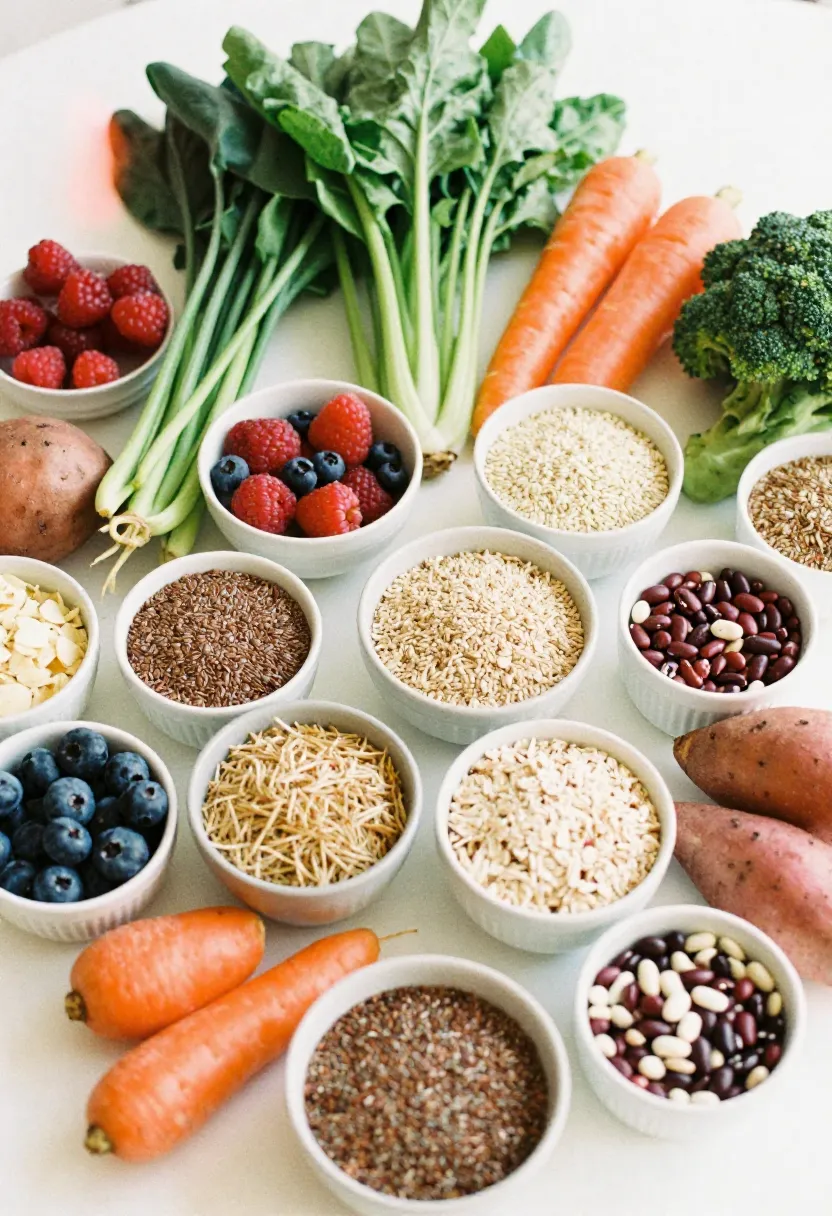
When it comes to supporting your body with endometriosis, some of the most powerful tools are also the simplest: fruits, vegetables, whole grains, and fiber-rich foods. These everyday staples form the foundation of an anti-inflammatory, hormone-balanced eating plan — and they can make a meaningful difference in how you feel.
Why fruits and vegetables matter
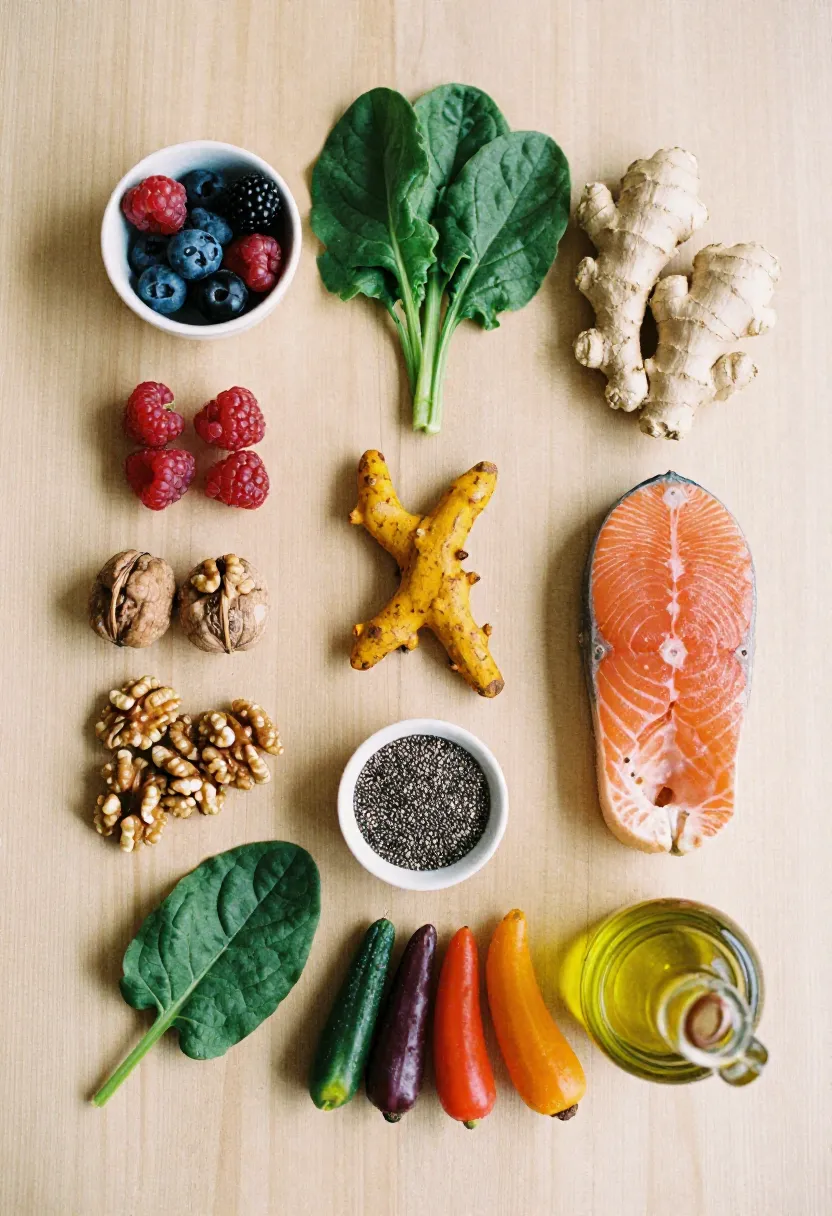
They’re packed with antioxidants, vitamins, minerals, and plant compounds that naturally calm inflammation. Colorful produce like berries, leafy greens, carrots, peppers, broccoli, and tomatoes contain phytonutrients that help your immune system regulate inflammation instead of overreacting to it.
Eating a variety of colors isn’t just pretty — it’s medicine for your cells.
The role of whole grains
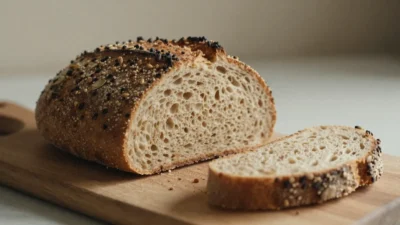
Whole grains like quinoa, brown rice, buckwheat, whole oats, farro, and barley provide steady energy, essential nutrients, and fiber that supports gut and hormone health. Unlike refined grains, they digest slowly, helping to keep blood sugar stable — which may reduce hormonal fluctuations that worsen symptoms.
Fiber: a quiet hero for hormone balance
Fiber plays a major role in eliminating excess estrogen from the body. Since estrogen dominance (or sensitivity) can worsen endometriosis symptoms, keeping digestion regular and efficient is essential. High-fiber foods also feed beneficial gut bacteria, which further helps regulate inflammation.
Examples of supportive foods:
- berries, apples, oranges, kiwis
- leafy greens: spinach, kale, rocket, chard
- cruciferous vegetables: broccoli, cauliflower, Brussels sprouts
- whole grains: quinoa, oats, brown rice, bulgur
- legumes: chickpeas, lentils, beans
- root vegetables: sweet potatoes, carrots, beetroot
You don’t need to overhaul your diet overnight — simply adding more plants and whole grains, meal by meal, can create powerful cumulative benefits.
Good Fats & Omega-3s — Why Healthy Fats Help
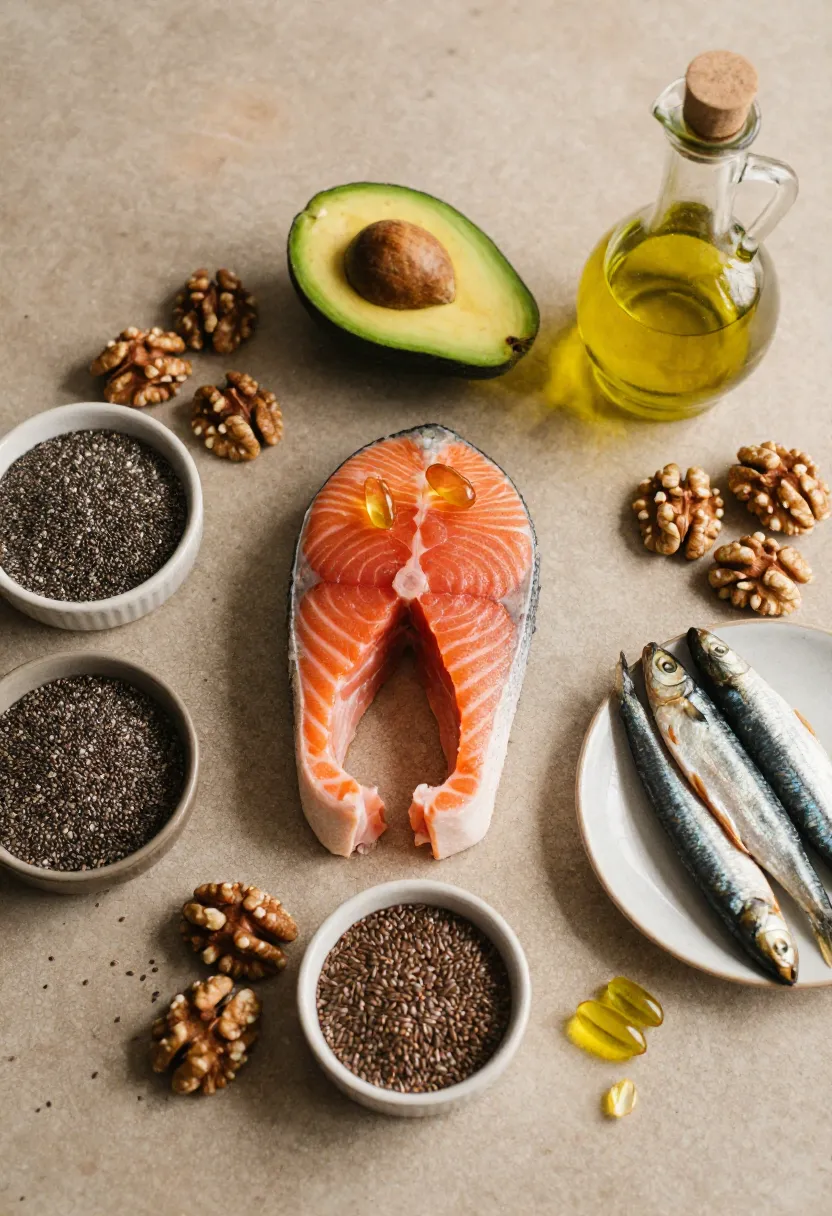
For anyone living with endometriosis, healthy fats are more than just a nutrient — they’re a powerful tool for calming inflammation, supporting hormones, and easing flare-ups. While the word “fat” often gets a bad reputation, the right kinds of fats actually help your body feel more balanced, nourished, and resilient.
Omega-3s: the anti-inflammatory superheroes
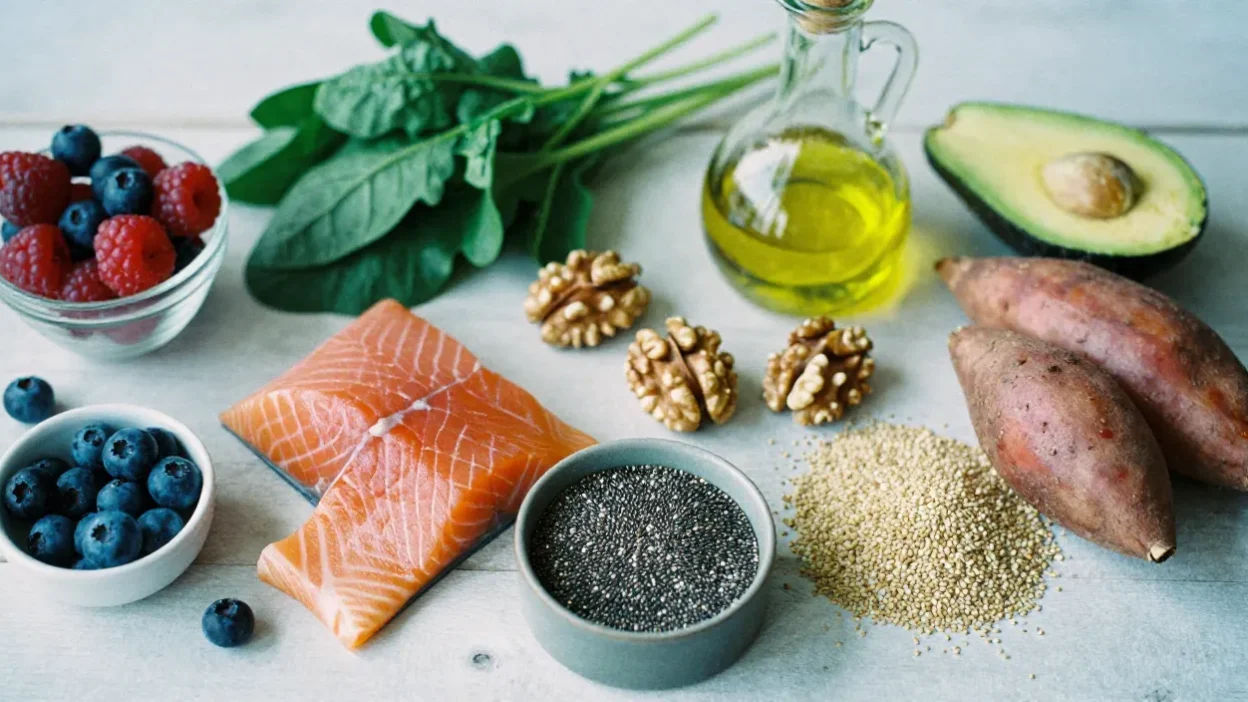
Omega-3 fatty acids — found in oily fish, walnuts, chia seeds, flaxseeds, and algae-based supplements — are well known for their strong anti-inflammatory effects. They help counterbalance the omega-6 fats that dominate most Western diets and contribute to chronic inflammation.
For people with endometriosis, omega-3s may help:
- reduce pelvic pain
- calm inflammatory pathways
- support hormone regulation
- improve overall energy and mood
Even small daily additions can make a difference — think flaxseed on oatmeal or a salmon fillet a few times a week.
Healthy fats support hormone balance
Hormones are made from fat — literally. When your diet includes high-quality fats, your endocrine system can function more smoothly. Unstable blood sugar and insufficient dietary fat can worsen hormonal fluctuations, which may intensify endometriosis symptoms.
Healthy fat sources provide steady nourishment without the inflammatory effects of processed or fried foods.
Where to find beneficial fats:
- avocado
- extra-virgin olive oil
- salmon, mackerel, sardines
- walnuts
- chia, flax, and hemp seeds
- nut butters (unsweetened, natural)
- olives
Why not all fats are equal
While healthy fats help soothe inflammation, trans fats and highly processed oils do the opposite. Fried foods, fast-food items, and some packaged snacks may drive inflammation higher — contributing to discomfort, hormonal shifts, and flare-ups.
Healthy fats nourish.
Inflammatory fats aggravate.
Choosing the former helps create a calmer internal environment — essential when managing a condition that’s deeply tied to inflammation.
Lean Proteins & Balanced Meals
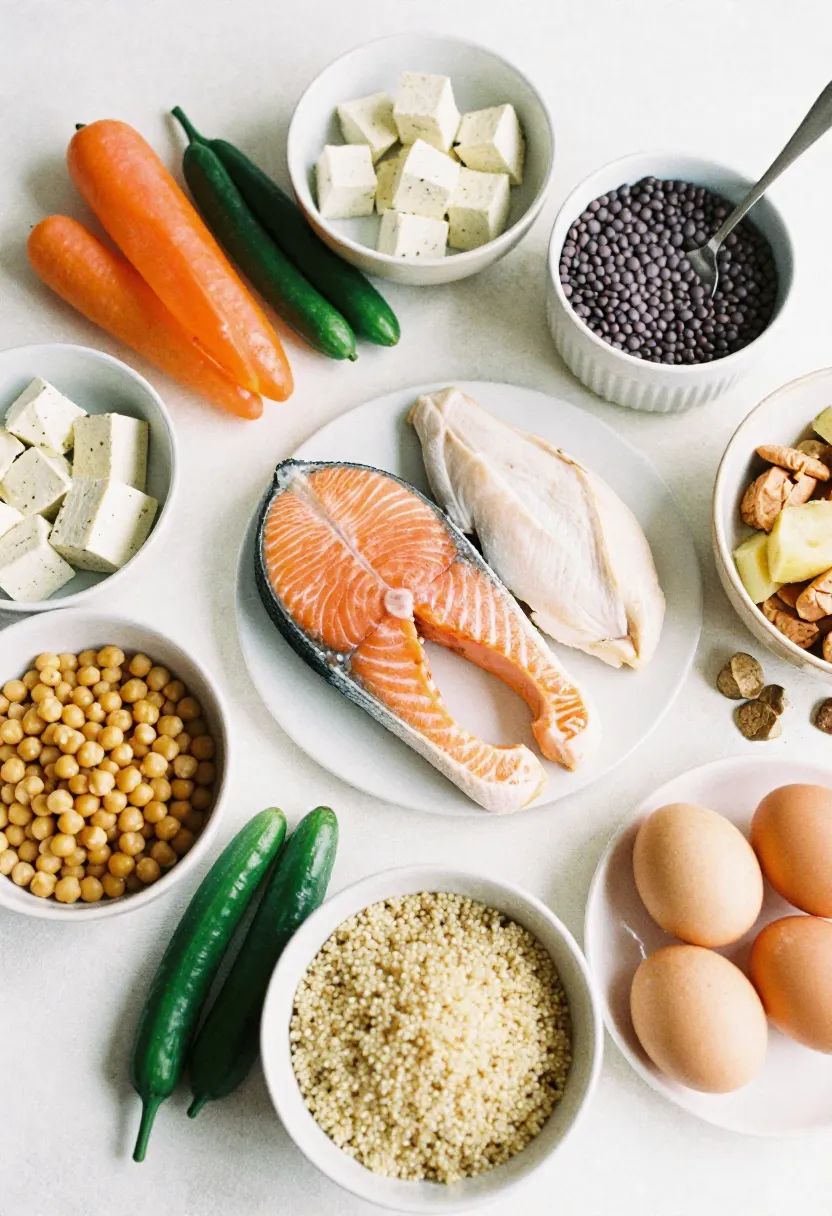
Protein plays a central role in supporting your body when you’re managing endometriosis — not just for energy and muscle repair, but also for keeping blood sugar stable, reducing inflammation, and helping hormones stay in better balance. The goal isn’t to follow a high-protein diet, but to choose lean, anti-inflammatory protein sources consistently throughout the day.
Why protein matters for endometriosis
Balanced protein intake helps:
- stabilize blood sugar (preventing hormonal swings that may worsen symptoms)
- keep you full and energized
- support muscle recovery and overall resilience
- reduce cravings linked to fatigue or inflammation
Protein is also essential for supporting the immune system — an important factor when your body is dealing with chronic inflammatory processes.
Best protein sources to support wellness
Focus on gentle, nutrient-rich options that nourish without adding inflammatory stress:
- Fish — especially oily varieties such as salmon, mackerel, tuna, and sardines (great omega-3 boost).
- Poultry — chicken or turkey prepared simply, without heavy frying or ultra-processed coatings.
- Plant proteins — lentils, chickpeas, beans, tofu, tempeh — rich in fiber and anti-inflammatory benefits.
- Eggs — a complete protein source with valuable nutrients, often well tolerated.
- Lean meats — occasionally included if part of your normal diet, but ideally limited compared to plant or fish proteins.
What about red meat?
Many people with endometriosis find that large amounts of red or processed meats can worsen symptoms due to higher saturated fat levels and their potential to fuel inflammation. You don’t have to eliminate them entirely, but reducing frequency — and prioritizing quality — may help.
Build balanced meals (the gentle way)
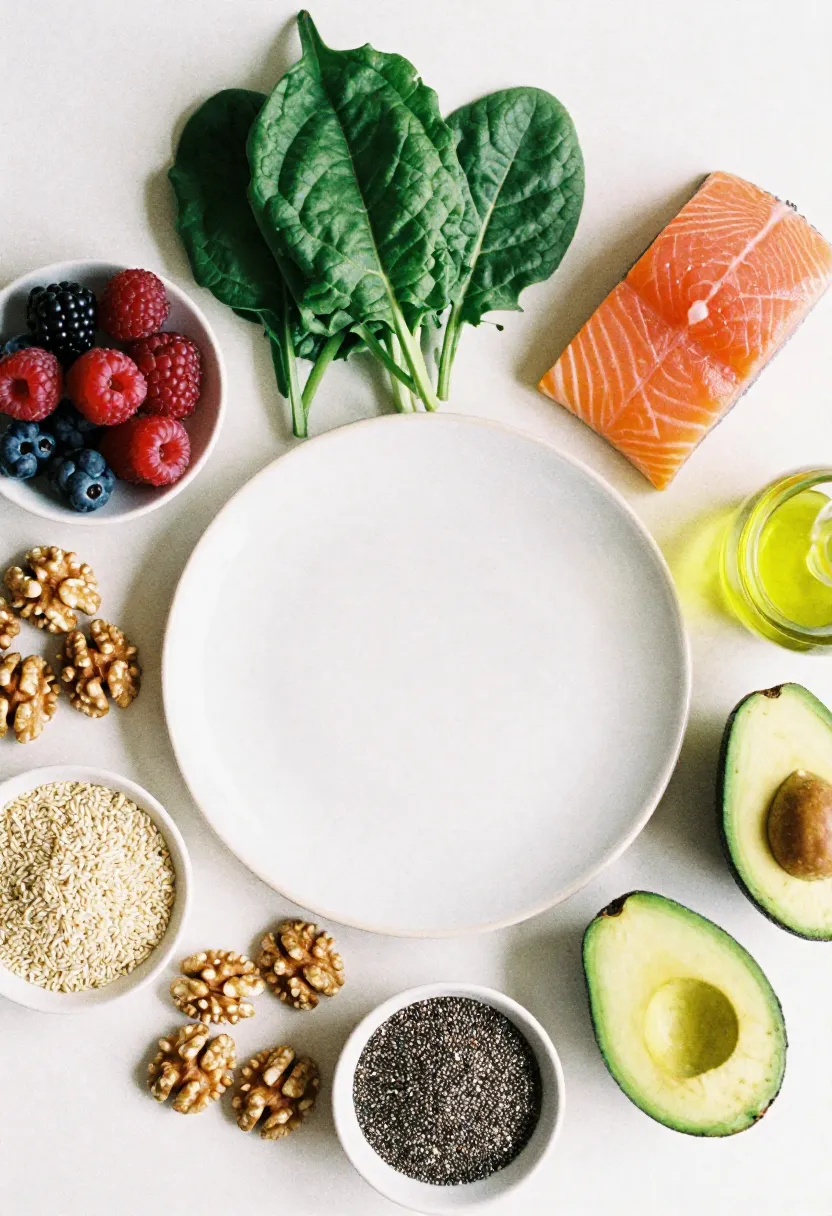
A supportive plate doesn’t have to be complicated. Try aiming for:
- 1 serving of lean protein
- 1–2 handfuls of vegetables
- 1 serving of whole grains or complex carbs
- a drizzle of healthy fat
This combination keeps energy stable, supports hormone health, and helps reduce inflammation — all key factors for endometriosis wellness.
Balanced proteins aren’t just “diet rules.”
They’re a way to help your body feel grounded, nourished, and more able to handle the ups and downs of your condition.
Foods to Limit or Avoid — Red Meat, Processed Foods, Trans Fats, Excess Sugar

When managing endometriosis through nutrition, what you reduce can be just as important as what you add. Certain foods tend to fuel inflammation or disrupt hormones — two key factors that can worsen pain, bloating, fatigue, and flare-ups. You don’t need to ban them completely, but being mindful of how often they appear on your plate can make a noticeable difference.
Red and processed meats
Some studies suggest that diets high in red or processed meats may contribute to inflammation and hormone imbalance. This doesn’t mean you can never enjoy them — just that keeping portions smaller and choosing them less frequently may help reduce flare-ups.
Ultra-processed foods
Foods with long ingredient lists, additives, artificial flavors, refined oils, and preservatives can place extra stress on the body. They often contribute to inflammation, digestive discomfort, and blood sugar spikes — all of which may intensify symptoms.
These include:
- fast food
- packaged snacks
- processed deli meats
- frozen meals with additives
- convenience sauces high in sugar or refined oils
Trans fats and heavily fried foods
Trans fats — found in some baked goods, fried foods, and processed snacks — are known to increase inflammation. They can also interfere with hormone regulation and negatively affect gut health.
Supporting your body means choosing fats that calm inflammation, not ones that feed it.
Excess sugar
Sugar isn’t inherently “bad,” but too much can cause blood sugar instability and inflammation. High-sugar diets may also worsen fatigue, hunger swings, and hormonal shifts — all of which can play a role in symptom severity.
Common culprits:
Why moderation matters more than perfection
An anti-inflammatory diet for endometriosis isn’t about deprivation or strict rules. The goal is support, not restriction.
Think of it this way: you’re creating a calmer internal environment, and limiting these foods simply reduces the triggers that make that harder to achieve.
When you gently shift away from foods that fuel inflammation and towards those that nourish, your body often responds with more steadiness, fewer flares, and smoother days.
Considering Dairy, Gluten or Caffeine — What the Evidence Says
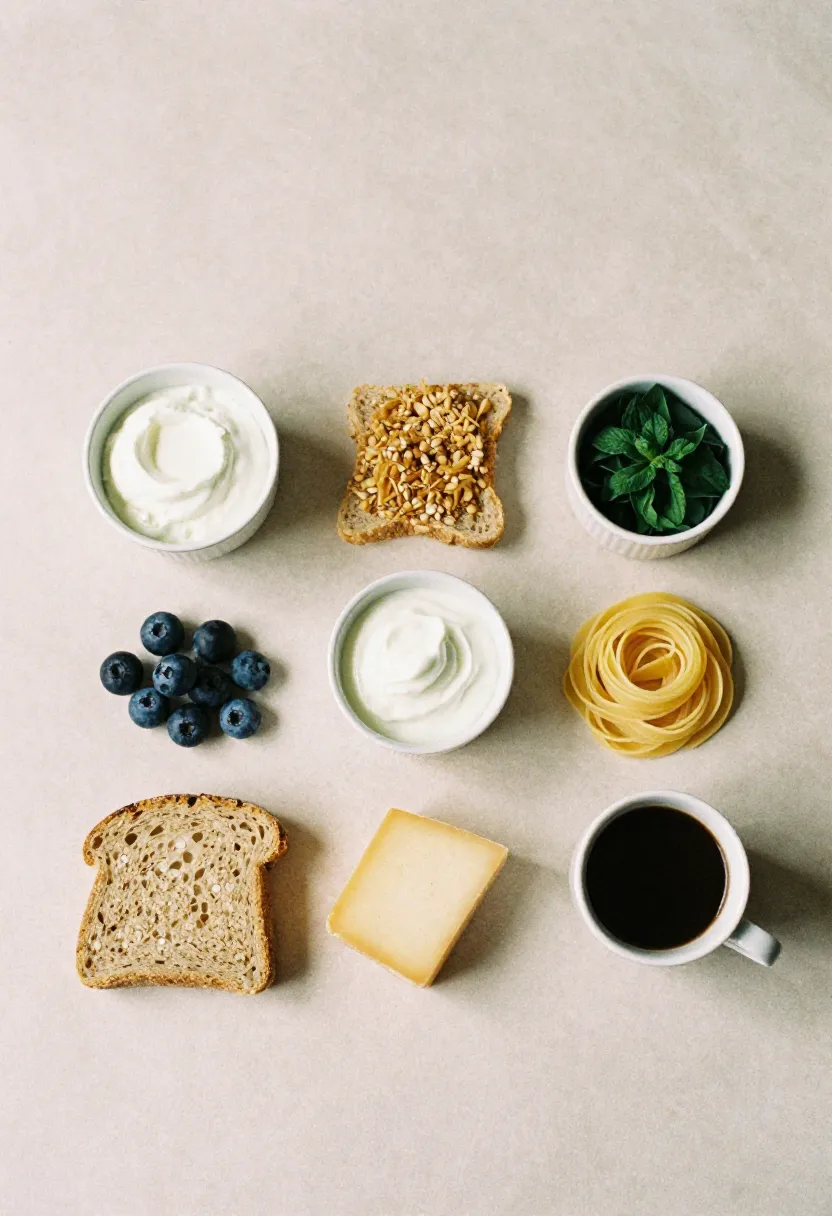
When you start looking for advice about endometriosis and diet, you’ll quickly encounter debates around dairy, gluten, and caffeine. Some people swear they feel dramatically better after removing them; others notice no change at all. The truth lies somewhere in the middle — and it’s more personal than universal.
This section aims to give you calm, balanced guidance without fear-based messages or extreme rules.
Dairy: Should You Avoid It?
Dairy is one of the most commonly debated food groups for endometriosis.
Some individuals report that reducing or removing dairy helps with:
- bloating
- inflammation
- digestive discomfort
- skin issues
This may be because dairy can trigger inflammation in people who are sensitive to lactose or certain milk proteins. But for others, dairy provides valuable nutrients like calcium, vitamin D, and protein — without causing symptoms.
Bottom line:
Dairy isn’t automatically “bad.”
If you suspect sensitivity, try a gentle trial reduction and monitor symptoms — ideally with guidance from a healthcare professional.
Gluten: Helpful to Reduce for Some
Some small studies and many anecdotal reports suggest that reducing gluten may help decrease pain and inflammation for certain people with endometriosis. This seems most relevant for those who have:
- digestive issues
- bloating
- celiac disease or non-celiac gluten sensitivity
- chronic gut inflammation
That said, there is no universal requirement to avoid gluten unless you have a diagnosed sensitivity. Whole grains can be incredibly beneficial for hormone and gut health.
Bottom line:
If you notice symptoms after eating gluten-containing foods, it may be worth experimenting — slowly and gently — rather than jumping into extreme restriction.
Caffeine: How Much Is Too Much?
Caffeine affects everyone differently. For some, coffee or energy drinks can trigger:
- heightened anxiety or jitters
- worsened cramps
- digestive irritation
- hormone fluctuations
For others, moderate caffeine seems to have no impact at all.
If you rely heavily on caffeine to push through fatigue, it may be a sign that your body needs more support and recovery, not just stimulation.
Bottom line:
You don’t need to quit caffeine entirely — but monitoring intake (1–2 cups/day) and spacing it out from meals may help minimize discomfort.
The Key Message: Personalization Over Perfection
Dairy, gluten, and caffeine affect people differently. Instead of adopting “all-or-nothing” rules, it’s more helpful to:
- observe your personal reactions
- make gradual changes
- keep a symptom journal
- listen to your body
- avoid one-size-fits-all advice
Nutrition for endometriosis is about gentle experimentation and finding what genuinely makes you feel better — not following strict or stressful restrictions.
Gut Health, Fiber & Antioxidants — Supporting Systemic Health

Gut health plays a surprisingly powerful role in managing endometriosis symptoms. The gut isn’t just responsible for digestion — it also influences inflammation, hormone balance, immunity, and even pain sensitivity. When your gut microbiome is thriving, your whole body feels more stable. When it’s imbalanced or inflamed, symptoms can feel much more intense.
That’s why a diet rich in fiber, antioxidants, and gut-supportive foods can be one of your strongest allies.
Fiber: Helping Hormones Stay Balanced
Fiber supports hormone regulation in two key ways:
- It improves digestion, helping the body eliminate excess estrogen — a hormone that can worsen endometriosis symptoms when not properly cleared.
- It feeds beneficial gut bacteria, which support metabolic and inflammatory balance.
Good sources include:
- oats
- beans and lentils
- whole grains
- berries
- pears and apples
- Brussels sprouts
- flax and chia seeds
When digestion runs smoothly, your hormones often follow.
Antioxidants: Calming Inflammation from Within
Antioxidants help neutralize oxidative stress — a driver of inflammation in endometriosis. A diet full of colorful plants is naturally rich in these inflammation-fighting compounds.
Especially powerful sources:
- berries (blueberries, strawberries, raspberries)
- leafy greens
- carrots, sweet potatoes, pumpkin
- red cabbage
- beets
- peppers
- tomatoes
The richer the color, the richer the antioxidant content.
Gut-Friendly Foods: Feeding Your Microbiome
Certain foods help reduce inflammation by directly supporting the gut:
- Fermented foods: kefir, kimchi, sauerkraut, yogurt (if dairy is tolerated), miso
- Prebiotic foods: bananas, oats, garlic, onions, asparagus, chickpeas
- Omega-3 fats: help soothe the gut lining
These foods help diversify and strengthen your microbiome — which in turn supports immune calmness and reduces inflammatory load.
Why Gut Health Matters for Endometriosis
Research increasingly shows that gut imbalance (dysbiosis) can worsen systemic inflammation, hormonal fluctuations, and pain pathways. Since endometriosis is both inflammatory and hormone-sensitive, improving gut function can directly impact symptom intensity.
A healthy gut won’t cure endometriosis — but it can make your daily life more comfortable, predictable, and steady.
Example Meal Ideas & Recipes — Simple Balanced Meals for Every Day
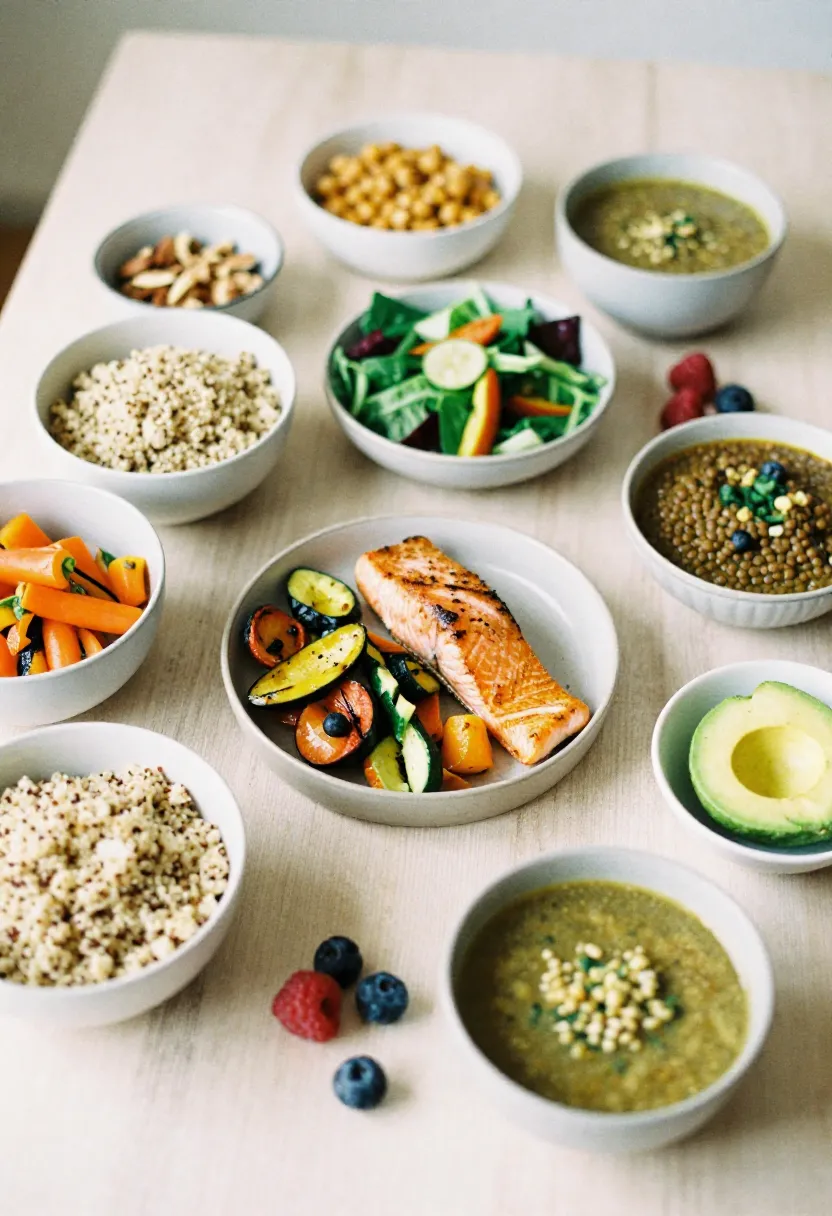
Eating for endometriosis doesn’t have to feel restrictive, complicated, or time-consuming. In fact, the most supportive meals are often the simplest: colorful, nourishing, anti-inflammatory, and full of whole-food ingredients your body can use with ease.
Here are gentle, practical ideas to help you build balanced meals without stress — meals that nourish your hormones, calm inflammation, and keep energy steady throughout the day.
⭐ Breakfast Ideas
• Oatmeal with berries, chia seeds & a drizzle of flax oil
Rich in fiber, antioxidants, and omega-3s — a perfect anti-inflammatory start.
• Greek yogurt (or dairy-free yogurt) with walnuts & kiwi
Supports gut health and provides healthy fats plus vitamin C.
• Veggie omelette with spinach, mushrooms & herbs
Protein + greens = a blood sugar–friendly, hormone-supportive combo.
• Smoothie with spinach, banana, frozen berries & hemp seeds
Easy to digest, antioxidant-rich, and great on busy mornings.
⭐ Lunch Ideas
• Quinoa bowl with chickpeas, roasted vegetables & olive oil
Balanced, fiber-rich, and excellent for hormone regulation.
• Salmon salad with mixed greens, avocado & lemon dressing
Packed with omega-3s to calm inflammation.
• Lentil soup with carrots, celery, turmeric & garlic
Warm, soothing, and deeply supportive for gut health.
• Brown rice sushi with veggies & tofu
Light, nourishing, and gentle on the digestive system.
⭐ Dinner Ideas
• Baked salmon with broccoli, sweet potato & herbs
A powerhouse anti-inflammatory plate.
• Stir-fried tofu with vegetables & ginger
Gut-friendly, plant-forward, and full of antioxidants.
• Turkey or chicken meatballs with quinoa & roasted zucchini
Lean protein + fiber = steady energy and balanced digestion.
• Vegetable curry with coconut milk, turmeric & chickpeas
Soothing spices help reduce inflammation.
⭐ Snack Ideas
• Apple slices with almond butter
Fiber + healthy fats for stable blood sugar.
• Mixed nuts or walnuts
A quick source of anti-inflammatory omega-3s.
• Hummus with carrots or cucumber
Plant protein + crunch.
• Berries with a spoon of chia pudding
Gentle on digestion, rich in antioxidants.
⭐ A gentle reminder
These ideas aren’t strict rules — just supportive templates you can mix and match. The goal is to build meals that feel nourishing, satisfying, and sustainable, not to follow a rigid plan.
When you eat in a way that supports your gut, hormones, and inflammation levels, you’re giving your body the calm and steady environment it needs to feel better.
Hydration, Lifestyle & Other Supportive Habits (Sleep, Stress, Movement)

Nutrition plays a powerful role in managing endometriosis — but it’s only one piece of a much bigger picture. Your daily habits, stress levels, hydration, and sleep cycles all influence inflammation, pain sensitivity, hormones, and energy. When these elements work together, your body has a stronger foundation for healing and balance.
Here’s how small lifestyle choices can make a surprisingly big difference.
Hydration: Simple, but essential
Drinking enough water supports digestion, hormone regulation, and the body’s natural detoxification processes. Dehydration can worsen bloating, fatigue, headaches, and inflammation — all common issues in endometriosis.
Supportive choices:
- water
- herbal teas (ginger, chamomile, peppermint)
- infused water with lemon or berries
- coconut water occasionally for electrolytes
Hydration doesn’t need to be perfect — just consistent.
Sleep: Your body’s repair system
High-quality sleep helps regulate hormones, control inflammation, and restore your nervous system. Poor or inconsistent sleep can intensify pain sensitivity and worsen flare-ups.
Tips for better sleep:
- keep a gentle, regular sleep routine
- limit screens before bed
- enjoy a calming herbal tea
- practice slow breathing or stretching
- create a cozy, cool sleep space
Your body recovers most effectively when it feels safe and rested.
Stress management: Calm the nervous system, calm the symptoms
Stress doesn’t cause endometriosis, but it can magnify pain and inflammation. Chronic stress keeps the body in “fight or flight” mode, increasing tension and hormonal imbalance.
Supportive practices:
- gentle yoga
- walking in nature
- meditation or breathwork
- journaling
- creative hobbies
- short breaks throughout the day
Reducing stress isn’t about perfection — it’s about creating tiny moments of relief.
Movement: Build strength without overwhelming your body
Exercise can help reduce inflammation, improve circulation, and boost mood — but intense workouts sometimes worsen symptoms during flare-ups. The key is listening to your body.
Supportive options:
- walking
- Pilates
- yoga
- strength training with moderate intensity
- swimming or cycling
Movement should feel supportive, not punishing.
Putting it all together
You don’t need a perfect routine — just small, consistent steps that help your body feel calmer and more supported. Hydration, rest, gentle movement, and stress management all work alongside nutrition to create an environment where symptoms become more manageable.
Endometriosis isn’t something you “push through.”
It’s something you manage with care, patience, and holistic support.
When to Consult a Doctor or Nutritionist — Individual Needs & Monitoring
Every person with endometriosis has a unique experience — different symptoms, different triggers, different responses to food and lifestyle changes. That’s why professional guidance can be incredibly valuable. While diet can support your well-being, it works best when paired with personalized medical insight and ongoing monitoring.
Here’s when it might be especially helpful to reach out for expert support:
If your symptoms are getting worse or interfering with daily life
Pelvic pain, bloating, fatigue, or digestive issues that intensify over time may need medical evaluation. A doctor can help confirm whether your symptoms relate to endometriosis or if there’s another condition involved.
If you’re unsure which foods trigger or relieve your symptoms
A registered dietitian or nutritionist specialising in women’s health can help you:
- identify patterns
- manage elimination trials safely
- prevent unnecessary restriction
- ensure nutrient balance
Their support can save months of trial and error.
If you’re experiencing digestive issues or suspect food sensitivities
Gut symptoms — constipation, diarrhea, bloating, nausea — may indicate underlying sensitivities or microbiome imbalances. Professional guidance ensures you avoid overly restrictive diets and stay nutritionally supported.
If you’re considering cutting out entire food groups
Removing gluten, dairy, meat, grains, or caffeine should be done thoughtfully.
A nutrition professional can make sure you:
- stay nourished
- avoid nutrient deficiencies
- replace missing nutrients effectively
- understand whether the change is actually necessary
If you’re struggling with fatigue, mood changes, or low energy
These symptoms can be linked to endometriosis, anemia, inflammation, or hormone disruptions. A doctor can run blood tests to uncover what your body needs.
If you suspect nutrient deficiencies
Low iron, vitamin D, omega-3s, magnesium, or B12 can worsen pain, inflammation, and energy issues. Targeted testing can identify what to supplement — and what to avoid.
If diet changes feel overwhelming or stressful
Nutrition shouldn’t feel like pressure.
A dietitian can help create a calm, flexible eating plan that supports your life instead of adding stress.
If you’re planning pregnancy or fertility treatment
Endometriosis can affect fertility, so specialized medical and nutritional support can help optimize your well-being during this phase.
The key message:
You don’t need to navigate endometriosis alone. With the right healthcare and nutrition guidance, you can create a personalized plan that helps your body feel more supported, less inflamed, and more balanced day to day.
Conclusion — Diet as Part of a Holistic Approach to Managing Endometriosis

Endometriosis is a complex condition — one that affects not only the reproductive system but also digestion, energy, mood, inflammation, and overall quality of life. While there’s no single food or diet that can “fix” it, what you eat truly can influence how your body feels and responds to everyday challenges.
Nutrition becomes powerful when it’s supportive, flexible, and sustainable — not restrictive or overwhelming. By prioritizing anti-inflammatory foods, nourishing fats, whole grains, fiber, and balanced meals, you create an internal environment that helps your body cope more gently with symptoms. And by reducing ultra-processed foods, excess sugar, and inflammatory fats, you take pressure off your system, giving it space to breathe and recover.
But diet is only one piece of the puzzle.
Hydration, sleep, stress management, gentle movement, and personalized medical care all work together to help you feel more grounded and resilient. Relief doesn’t come from extremes — it comes from building small, consistent habits that support your body day after day.
Most importantly, managing endometriosis through nutrition should never feel like punishment or fear. It’s about listening to your body, understanding your triggers, and nourishing yourself with compassion. Your journey is unique, and there’s no “perfect” plan — just the one that helps you feel better, calmer, and more in control.
Food can’t cure endometriosis, but it can help you live more comfortably and vibrantly alongside it.
And that, in itself, is a powerful form of healing.
FAQ — Common Questions About Diet & Endometriosis
1. Can diet cure endometriosis?
No — endometriosis cannot be cured through food alone.
However, many people find that certain dietary changes help reduce inflammation, ease pain, improve digestion, and support overall well-being. Diet is a supportive tool, not a replacement for medical care.
2. How long does it take to see improvements from diet changes?
Everyone is different, but many notice subtle improvements within 2–6 weeks, especially in bloating, digestion, and energy levels.
Hormone-related symptoms may take 2–3 months to shift, depending on consistency and overall lifestyle factors.
3. Do I need to cut out gluten or dairy completely?
Not necessarily.
Some people feel significantly better reducing gluten or dairy, while others see no change at all. The response is highly individual. A gentle elimination trial, ideally with guidance, can help determine your personal sensitivity.
4. Should I avoid red meat?
You don’t have to eliminate it entirely, but eating red or processed meats frequently may increase inflammation for some people. Choosing leaner proteins or plant-based options more often can be supportive.
5. Are supplements helpful for endometriosis?
They can be, but it depends on your personal needs. Common supplements that may help include:
- omega-3 fatty acids
- magnesium
- vitamin D
- B vitamins
But testing and professional guidance matter — supplements should fill gaps, not guesswork.
6. Does caffeine make endometriosis worse?
Not for everyone.
Some people find caffeine increases cramps or anxiety, while others notice no effect. Moderation (1–2 cups daily) is usually safe unless you’re personally sensitive.
7. Are soy or plant-based diets good for endometriosis?
Soy can be beneficial for some due to its phytoestrogens, which may help balance estrogen levels — but responses vary.
A mostly plant-based or Mediterranean-style diet often supports lower inflammation and more stable hormones.
8. How do I know which foods trigger my symptoms?
Keeping a simple symptom journal can help. Track what you eat, how you feel, and any flare-ups. Over time, patterns often become clear — without needing extreme food rules.
9. Is it safe to try an elimination diet on my own?
It can be, as long as it’s done gently and not overly restrictive. However, working with a dietitian can help ensure you stay nourished and avoid unnecessary elimination.
10. What’s the most important dietary change for endometriosis?
For most people, the biggest game-changer is adding more:
- colorful fruits and veggies
- healthy fats
- omega-3s
- whole grains
- fiber
- anti-inflammatory herbs and spices
Small, consistent additions matter more than strict removals.