
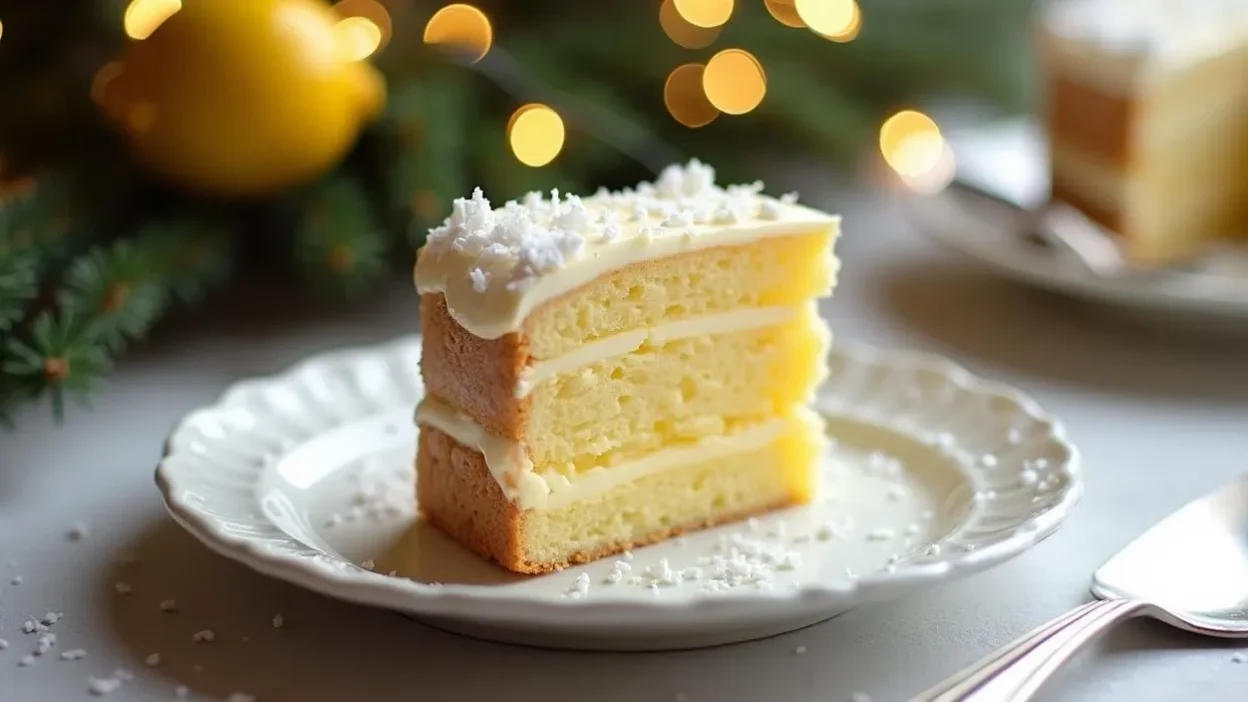
A traditional Romanian dessert made with thin pastry layers and a silky lemon custard cream, topped with coconut flakes. This light and tangy layered cake is perfect for festive occasions like Christmas or Easter, and it's easily adaptable for a dairy-free diet. ❄️🍋
Ingredients
For the Dough
- 550 g all-purpose flour
- 10 tbsp milk (or plant-based milk)
- 10 tbsp vegetable oil
- 10 tbsp caster sugar
- 2 eggs
- 1 packet baking ammonia (or 1 tsp baking powder)
- Few drops of lemon juice
- Pinch of salt
For the Cream
- 1 liter milk (or plant-based milk)
- 200 g unsalted butter (or plant-based butter)
- 6 tbsp sugar
- 10 tbsp all-purpose flour
- Zest from 1 lemon
- Juice from 1–2 lemons (to taste)
- 1 tbsp vanilla essence
To Decorate
- Coconut flakes
Instructions
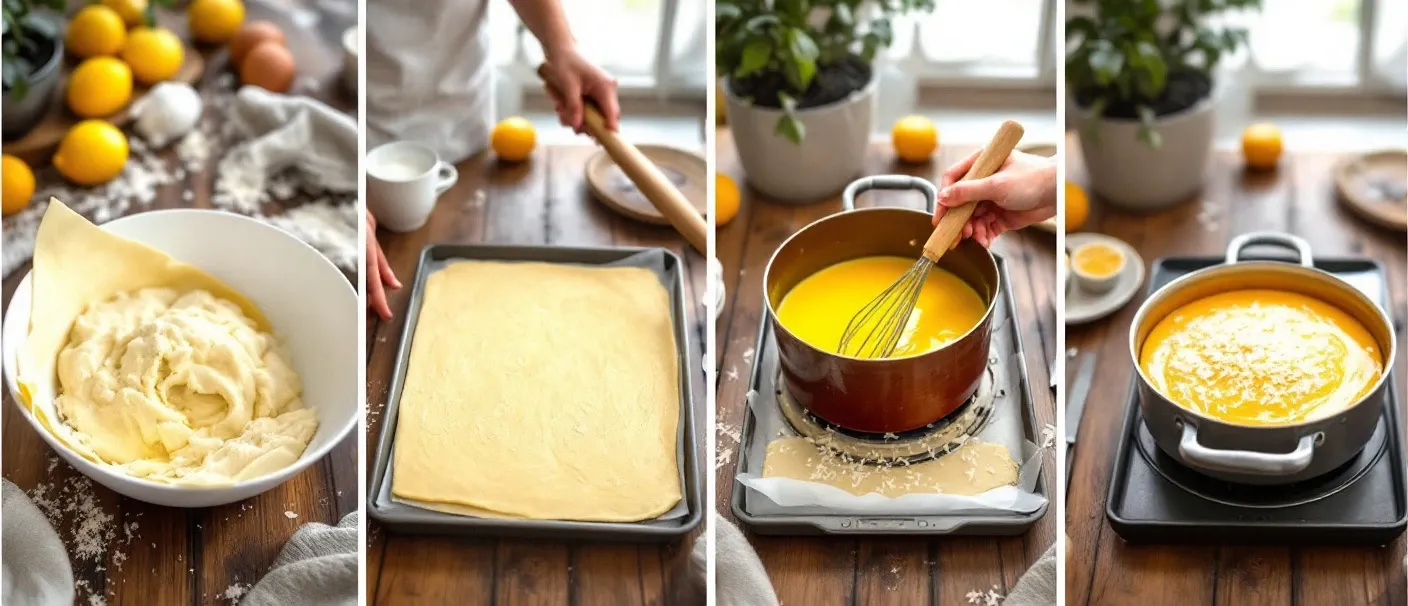
- In a bowl, mix milk, eggs, sugar, and oil until combined.
- Add lemon juice over the baking ammonia (or baking powder) and stir into the wet mixture.
- Add salt, then gradually incorporate flour until a soft, elastic dough forms.
- Let dough rest for 30 minutes.
- Divide dough into 3 equal parts. Roll each into thin rectangular sheets.
- Bake each sheet on baking paper on the back of a tray at 150°C (300°F) for 12–15 minutes. Let cool.
- For the cream, whisk together flour, sugar, and lemon zest in a saucepan.
- Gradually add milk, whisking constantly to avoid lumps.
- Cook on low heat for 20 minutes until thickened. Remove from heat.
- Stir in lemon juice and vanilla essence. Let cool slightly.
- Add butter in small pieces, whisking gently to incorporate without splitting.
- Line the baking tray with cling film. Layer cake: dough sheet, cream, repeat.
- Finish with cream on top. Sprinkle with coconut flakes.
- Wrap the cake and press with a board and weight (e.g. heavy books).
- Refrigerate for at least 12 hours. Serve at room temperature.
Notes
Romanian Layered Lemon Cake – Prajitură Alba ca Zăpada (“Snow White Cake”)
The Romanian Layered Lemon Cake, known locally as Prajitură Alba ca Zăpada (“Snow White Cake”), is a beloved dessert often found on festive holiday tables, especially at Christmas and Easter. 🇷🇴✨ Light, refreshing, and delicately flavored with lemon, this cake has long been a favorite among homemade Romanian sweets. Even today, despite the convenience of store-bought assortments, many families still prepare this traditional treat at home. Nothing compares to the bright, tangy flavor and soft, creamy texture of a Snow White cake made from scratch. 💛 🌟 Why It’s Called “Snow White” CakeThe name comes from its pale layers and snowy look: tender pastry sheets filled with lemon cream and topped with a dusting of coconut flakes. Elegant yet simple, this cake combines a delicate appearance with a vibrant, refreshing taste. 🍋❄️ 🍋 A Beloved Holiday Classic
Across Romania, this cake has become a symbol of festive gatherings. Its refreshing lemon filling provides a perfect balance to the richer desserts often served during holidays. Whether enjoyed at Christmas, Easter, or family celebrations, Snow White Cake is treasured for both its flavor and its timeless place on the dessert table. 🕰️ When and How to Serve
- Bring the cake to room temperature before serving (30–45 minutes out of the fridge).
- Serve at the end of a festive meal or as a centerpiece dessert at gatherings. 🎉
✅ Dairy-Free Option: Use plant-based milk and butter to make it suitable for all guests.
✅ Ammonia Substitute: If you can’t find cake ammonia, baking powder works well.
✅ Cream Troubleshooting: If the cream is too thin, add 1 tbsp cornstarch dissolved in water and cook gently.
✅ Perfect Fit: Bake the pastry sheets on the back of the tray you’ll use for assembling.
✅ Rest Time: Allow the cake to set for at least 12 hours before slicing.
✅ Butter Temperature: Always use room-temperature butter for a smooth cream.
❓ FAQ – Snow White Cake
How do you store it?Keep in an airtight container in the fridge for up to 3 days. Can it be frozen?
Yes — the assembled cake can be frozen for up to 1 month. Thaw overnight in the fridge before serving. Is it kid-friendly?
Absolutely! The soft texture and light lemon flavor make it a favorite among children. 🎉 A Timeless Dessert to Impress
Prajitură Alba ca Zăpada is more than just a cake — it’s a symbol of celebration and tradition. Its balance of tangy lemon, creamy filling, and soft pastry layers makes it unforgettable. Whether you’re preparing it for a holiday, a family gathering, or simply to try something new, this Snow White Cake is sure to become a tradition of its own. 💫🍋




This sounds absolutely divine! The combination of delicate pastry layers and a silky lemon custard is incredibly appealing, especially the mention of its adaptability for a dairy-free diet. My question is, what kind of plant-based milk and butter work best in your experience to achieve the same texture and flavour as the traditional recipe? I’m eager to try this, and knowing your recommendations would be invaluable.