Contents
- Why Cooking at Home Feels Different
- What Is Mindful Cooking? (Beyond Just “Healthy Eating”)
- The Science of Cooking and Emotional Regulation
- The Psychology of Simple Meals
- How Home Cooking Reduces Anxiety
- Cooking as a Form of Self-Respect
- The Sensory Therapy of the Kitchen
- Simple Meals That Feel Emotionally Supportive
- Mindful Cooking vs Emotional Eating
- Creating a 20-Minute Mindful Cooking Ritual
- When Cooking Feels Overwhelming
- Conclusion — The Quiet Power of Feeding Yourself
Why Cooking at Home Feels Different

There is a quiet moment that many of us recognize, even if we rarely stop to name it.
It happens in the evening, when the day has already taken everything it wanted from you. Your inbox is still full. Your mind is still replaying unfinished conversations. Your shoulders are tense without you realizing it. And yet, somehow, you find yourself standing in the kitchen, opening the refrigerator, taking out a few simple ingredients, and placing them gently on the counter.
Not because you are trying to impress anyone.
Not because you are following a diet.
Not because you are chasing perfection.
But because, in that moment, cooking feels like the most natural way to come back to yourself.
You wash vegetables slowly. You hear water running. You smell garlic as it hits warm oil. You stir a pot and watch steam rise. Your phone stays face down. Your breathing softens without effort.
Nothing extraordinary is happening.
And yet, something inside you settles.
In a world that constantly asks us to be faster, better, more productive, and more available, home cooking offers something radically different. It invites us to slow down. To focus on one small, human task. To care for ourselves in a way that does not require applause or validation.
More and more people are rediscovering this quiet power of everyday rituals — not only in food, but in the way they design their homes, their routines, and their emotional spaces. Platforms like https://www.hellolovelyliving.com/ beautifully reflect this philosophy, showing how intentional living, gentle creativity, and mindful habits can transform ordinary moments into sources of comfort and meaning.
Cooking fits naturally into this way of life.
It is not just about nutrition.
It is about atmosphere.
It is about rhythm.
It is about emotional safety.
It is about creating small islands of calm inside busy days.
For many of us, modern eating has become rushed and fragmented.
We eat while answering messages.
We snack while scrolling.
We order food without tasting it.
We finish meals without remembering them.
Over time, this disconnection does not only affect our bodies. It affects our emotional balance. We feel restless even after eating. We crave more without knowing why. We look for comfort in food but rarely find it.
Mindful home cooking offers a different path.
It brings us back into relationship with what we consume. It reminds us that feeding ourselves is not a task to get through, but an experience to inhabit. It turns preparation into presence and meals into moments of grounding.
I once heard someone say, “When I cook, it feels like I’m putting my thoughts in order.” And that simple sentence captures something deeply true.
Chopping vegetables becomes a form of meditation.
Stirring soup becomes a form of reassurance.
Baking bread becomes a form of patience.
Through repetition and attention, the kitchen becomes a quiet emotional anchor.
This article is not about becoming a perfect home cook.
It is not about elaborate recipes, expensive tools, or Instagram-worthy plates.
It is about something much gentler.
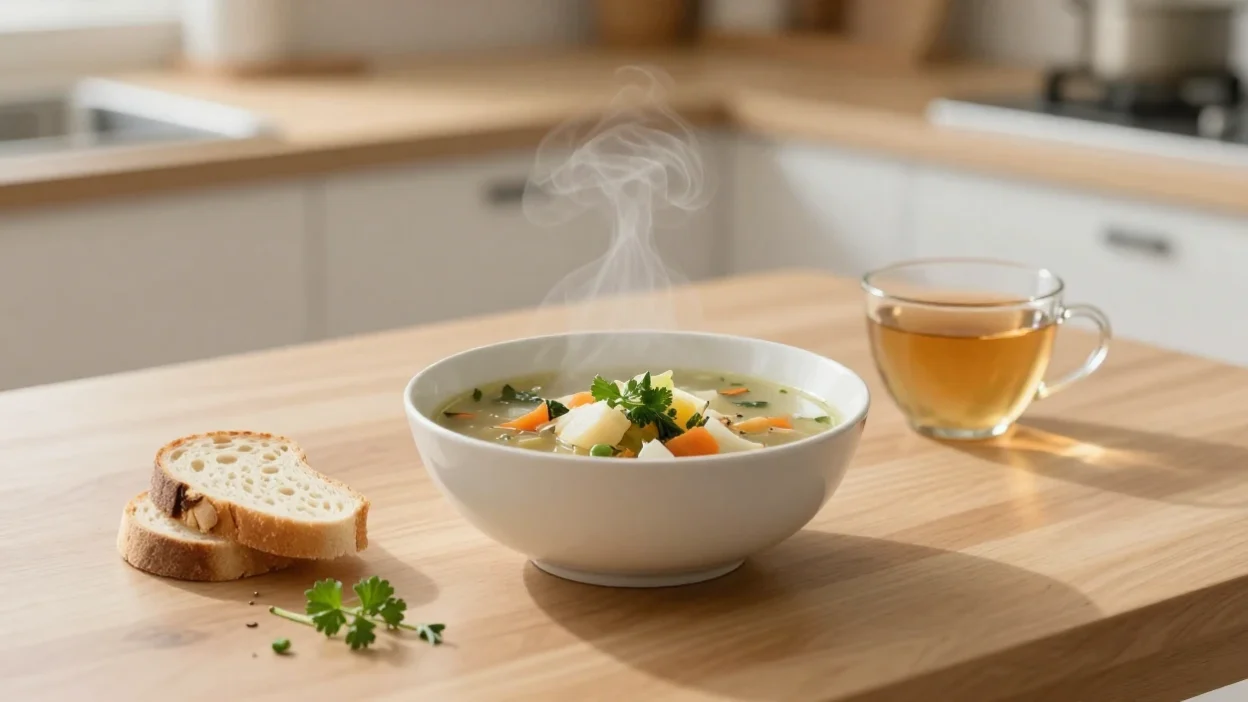
It is about how simple meals — soups, rice bowls, roasted vegetables, warm teas, fresh bread — can support emotional well-being when they are prepared with care and awareness.
It is about how feeding yourself can become an act of self-respect rather than obligation.
And it is about how, in a noisy world, the smallest rituals often carry the deepest healing.
In the sections that follow, we will explore how mindful home cooking affects the nervous system, supports mental health, reduces anxiety, and helps rebuild a peaceful relationship with food — not through discipline, but through presence.
If you have ever felt calmer while stirring a pot, more grounded while slicing fruit, or more at home in yourself while waiting for something to simmer, you already understand what this journey is about.
Let’s explore it together.
What Is Mindful Cooking? (Beyond Just “Healthy Eating”)
For many people, the phrase mindful cooking sounds like another passing wellness concept, something that belongs on social media feeds filled with perfectly arranged plates and carefully filtered light. It is often misunderstood as a stricter version of healthy eating, a discipline wrapped in aesthetic language, or a refined form of meal preparation designed for those who have extra time and flawless routines.
In reality, mindful cooking has very little to do with perfection and almost nothing to do with rigid food rules.
At its core, mindful cooking is about attention. It is about the quality of presence you bring into the kitchen, not the complexity of what you prepare. The same simple bowl of rice and vegetables can feel either rushed and mechanical or grounding and restorative, depending entirely on how it is made.
The essential question is not what you are cooking, but where your awareness rests while you are doing it.
If your hands are slicing vegetables while your mind is replaying stressful conversations, planning tomorrow’s obligations, or scrolling through notifications, the act remains functional but emotionally empty. When your awareness gently follows the rhythm of your movements, however, the experience begins to shift. Cutting becomes steadier. Breathing slows without effort. Time softens.
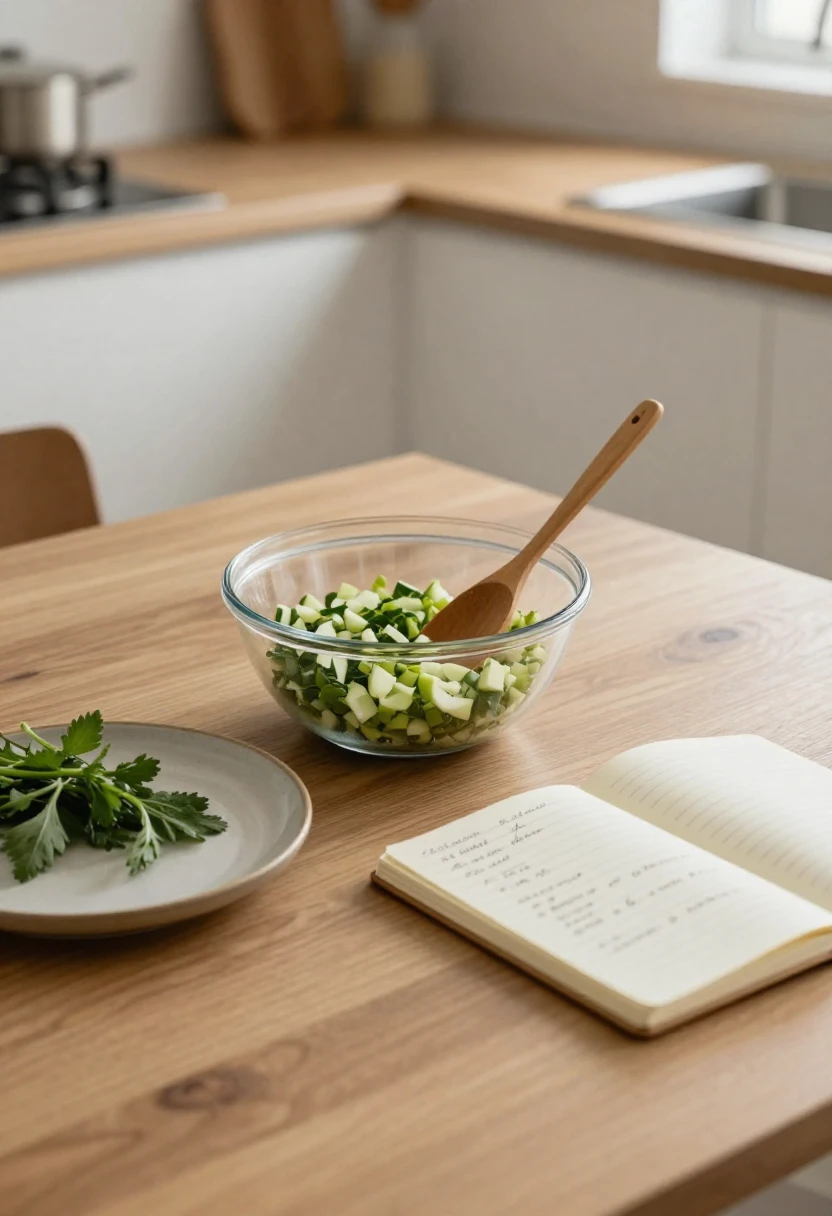
There is also an important distinction between cooking and merely assembling food. Assembling is efficient and sometimes necessary, especially in busy seasons of life, yet it rarely engages the senses in a meaningful way. Mindful cooking, by contrast, involves participation. You rinse produce and notice its texture. You listen to the subtle change in sound when onions move from sharp to sweet in a warm pan. You taste, adjust, and respond.
Even the simplest meal becomes a conversation rather than a transaction.
This presence does not require elaborate recipes or gourmet techniques. Some evenings, mindful cooking may look like simmering a pot of soup slowly and allowing its aroma to fill the room. Other days, it may mean heating frozen vegetables and seasoning them thoughtfully, acknowledging that nourishment does not have to be complicated to be sincere. What defines the experience is intention rather than appearance.
When you engage your senses deliberately, the kitchen becomes a place of embodied awareness. The scent of herbs, the warmth of steam against your face, the resistance of dough under your palms, and the steady sound of a knife against a cutting board all serve as gentle anchors. These sensory cues guide your nervous system away from abstract worry and back into physical reality.
Modern life rewards multitasking, and it often feels unnatural to do only one thing at a time. Many of us cook while checking emails, watching videos, or responding to messages, rarely granting ourselves a fully undivided moment. Mindful cooking invites a quieter approach in which preparation becomes the primary focus rather than a background task. At first, this shift can feel uncomfortable because it exposes how restless the mind has become. With practice, however, the simplicity of single-tasking begins to feel reassuring.
There is also a subtle psychological dimension to this practice. Preparing your own meal with attention reinforces a sense of agency. In a world where much feels outside personal control, choosing ingredients, shaping flavors, and nourishing yourself intentionally creates a small but meaningful experience of self-direction. That feeling of authorship over something as intimate as your food can quietly strengthen emotional resilience.
Mindful cooking is not about following a system or performing health in a visible way. It is about cultivating a relationship with food that is rooted in curiosity and self-respect. Instead of asking what you are “allowed” to eat, you begin asking what would genuinely support your energy, your mood, and your sense of balance today. The answers change from one day to the next, and that flexibility is part of the practice.
Over time, the kitchen transforms from a space of obligation into a space of return. It becomes somewhere you step into not because you have to, but because you recognize that the simple act of preparing a meal can help reorder scattered thoughts and soften emotional tension. In that sense, mindful cooking is less about food itself and more about rebuilding a gentle, attentive relationship with yourself.
In the next section, we will explore what happens inside the brain and nervous system when you cook with awareness, and why this seemingly ordinary act can have such a powerful effect on emotional regulation.
The Science of Cooking and Emotional Regulation
When people describe cooking as “therapeutic,” they are often speaking from direct experience.
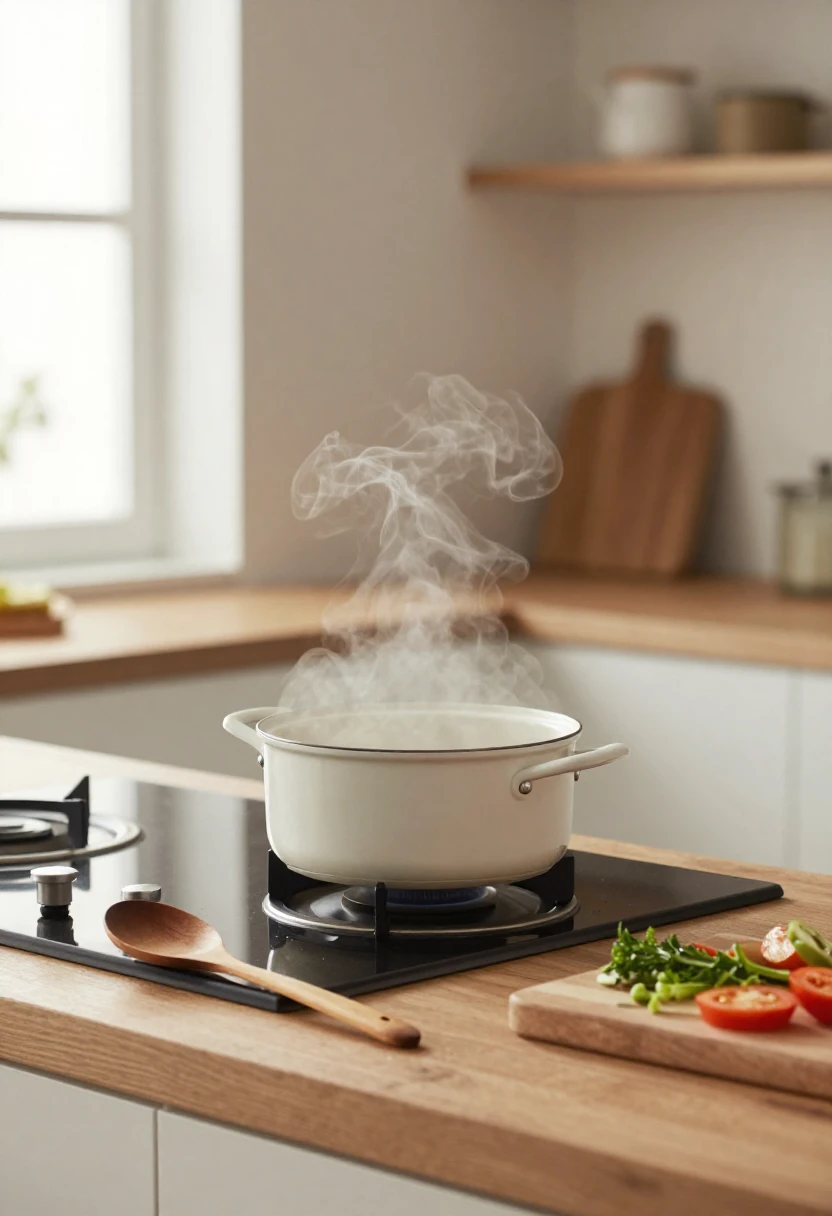
They notice that their thoughts become quieter while chopping vegetables. Their breathing slows while stirring soup. Their shoulders relax while waiting for water to boil. They feel calmer afterward, even if nothing in their external life has changed.
For a long time, these sensations were dismissed as subjective impressions.
Today, neuroscience and psychology offer clear explanations for why they happen.
The Nervous System and the Feeling of Safety
At the center of emotional regulation lies the autonomic nervous system, which constantly balances between two main states.
One is the sympathetic system, responsible for alertness, urgency, and stress responses. It prepares the body for action, increases heart rate, and sharpens focus in challenging situations. The other is the parasympathetic system, often called the “rest and digest” mode, which supports relaxation, digestion, and recovery.
Modern life keeps many people in a prolonged sympathetic state.
Emails arrive at all hours. News cycles never stop. Social media encourages comparison. Work and personal responsibilities overlap. The body rarely receives clear signals that it is safe to slow down.
Mindful cooking provides exactly such signals.
Repetitive, predictable movements, gentle sensory input, and a familiar environment communicate stability to the nervous system. As you wash, cut, stir, and taste, the parasympathetic system gradually becomes more active. Heart rate decreases. Muscle tension softens. Digestion improves. Breathing becomes deeper.
This shift is not imagined.
It is physiological regulation.
Repetition as a Calming Mechanism
The human brain finds comfort in rhythm.
Activities that involve steady, repeated motions — kneading dough, slicing vegetables, stirring a pot — engage neural circuits associated with focus and emotional stability. These movements resemble those used in other calming practices such as knitting, gardening, or gentle handcraft.
When the hands move rhythmically, the mind follows.
Racing thoughts slow. Mental clutter reorganizes. Attention narrows to the present task.
This is one reason many people feel unexpectedly peaceful while cooking even after highly stressful days.
Dopamine, Completion, and Emotional Reward
Cooking also activates the brain’s reward system.
Each small step completed — washing produce, finishing preparation, assembling a plate — releases modest amounts of dopamine, a neurotransmitter associated with motivation and satisfaction. Unlike the sharp spikes triggered by social media or sugar, these releases are gentle and stable.
They create a sense of quiet accomplishment.
You see tangible results from your effort. Something nourishing exists because you made it. This reinforces self-efficacy and supports emotional confidence.
The Power of Smell and Memory
Olfactory pathways are directly connected to emotional and memory centers in the brain.
The scent of garlic, onions, herbs, bread, or soup can instantly evoke feelings of comfort, nostalgia, or belonging. These associations are often formed in childhood and remain deeply embedded throughout life.
When familiar cooking aromas fill the kitchen, they can activate feelings of safety and connection that predate conscious thought.
This sensory memory contributes significantly to the emotional soothing effect of home cooking.
Attention, Flow, and Mental Relief
Psychologists describe a state called “flow,” in which attention becomes fully absorbed in an activity. During flow, self-criticism decreases, time perception changes, and mental fatigue lessens.
Mindful cooking often generates mild forms of this state.
When you focus on texture, timing, seasoning, and coordination, your mind has little space for rumination. Worries temporarily lose their grip. The present moment becomes sufficient.
This mental relief can be profoundly restorative.
Regulation Through Predictability
Uncertainty is one of the strongest drivers of anxiety.
Cooking familiar meals in familiar ways introduces predictability into daily life. Knowing how a recipe unfolds, how long it takes, and how it will taste creates small islands of certainty inside otherwise complex days.
These islands accumulate.
Over time, they strengthen emotional resilience.
Embodied Self-Regulation
Emotional regulation is not achieved through thinking alone.
It is learned through the body.
Warmth in the hands, steady breathing, relaxed posture, rhythmic movement, and sensory engagement all feed information to the brain about internal safety. Mindful cooking naturally integrates these elements.
In this sense, the kitchen becomes a space of embodied self-regulation rather than mental control.
Why This Matters Long-Term
When emotional regulation improves, many secondary benefits follow.
Sleep becomes deeper.
Irritability decreases.
Cravings soften.
Decision-making improves.
Self-trust strengthens.
These changes do not arise from willpower.
They arise from repeated experiences of calm and competence.
A Quiet Form of Therapy
Mindful cooking is not a replacement for professional mental health care.
But it can be a powerful complementary practice.
It offers daily opportunities to regulate the nervous system without special equipment, apps, or instructions. It uses what is already present: food, hands, time, and attention.
Over weeks and months, these small moments accumulate into emotional stability.
In the next section, we will explore why simple meals, in particular, carry such strong psychological comfort and how repetition can become a source of emotional safety rather than boredom.
The Psychology of Simple Meals
In a culture that constantly celebrates novelty, abundance, and endless choice, simplicity is often misunderstood.
We are surrounded by messages that suggest meaningful food must be visually impressive, nutritionally optimized, and endlessly varied. Menus grow longer, recipes become more complex, and social platforms reward excess and spectacle. Over time, many people begin to associate emotional satisfaction with complication, believing that comfort must be earned through effort and variety.
Yet real life tells a different story.
When people feel tired, overstimulated, anxious, or emotionally depleted, they rarely crave elaborate creations. Instead, they long for something familiar, predictable, and gently reassuring. They seek meals that do not demand interpretation or performance, but simply offer nourishment and stability.
This is where simple meals reveal their quiet psychological power.
Familiarity as Emotional Safety
Human beings are deeply oriented toward patterns and continuity.
From early childhood, emotional security is built through repetition and reliable care. Bedtime rituals, familiar voices, consistent meals, and predictable routines teach the nervous system that the world is safe and manageable.
Simple meals carry this same quality into adulthood.
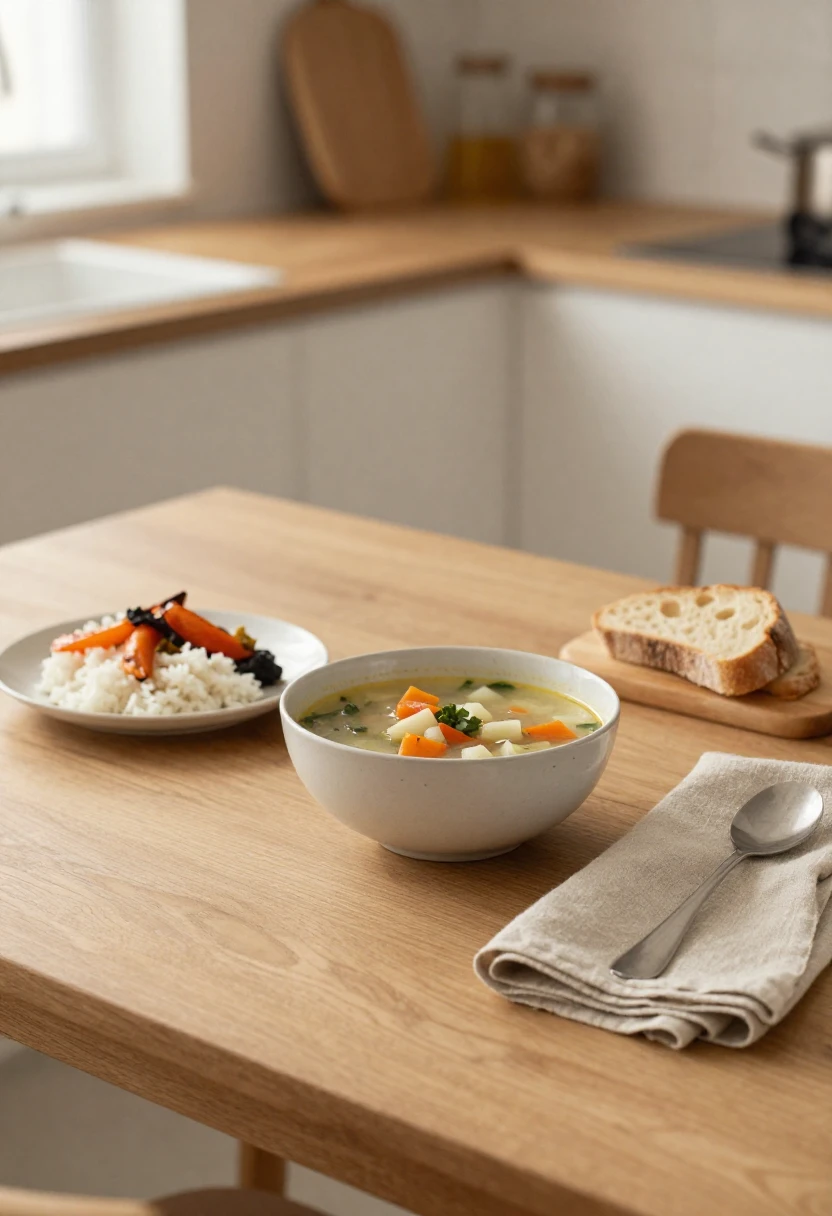
A bowl of soup prepared in the same way each week, a familiar rice dish, softly toasted bread with butter, or gently roasted vegetables becomes more than food. It becomes an emotional reference point that signals stability and reassurance.
Because these meals are known in advance, they reduce uncertainty. The mind does not need to analyze or evaluate. The body relaxes into expectation. This predictability allows psychological tension to soften.
Emotional Memory and Comfort
Many people carry strong emotional memories connected to basic home-cooked meals.
Perhaps it was soup made during childhood illness, rice waiting after school, bread prepared with care, or the scent of dinner drifting through the house in the evening. These experiences were often accompanied by protection, warmth, and belonging.
Over time, the brain links those foods with feelings of safety.
When similar meals appear later in life, they activate those same emotional networks, often without conscious awareness. The body remembers being cared for. The nervous system remembers being held.
This is why simple foods often feel comforting in ways that complex dishes rarely match.
Repetition as Emotional Regulation
Repetition is frequently misunderstood as monotony.
In reality, repetition is one of the most powerful tools for emotional regulation.
Across cultures and disciplines, repetition appears wherever stability is needed. Musicians practice scales. Children thrive on routines. Spiritual traditions rely on repeated rituals. Athletes refine movement through consistent drills.
Simple meals function in much the same way.
When you prepare and eat familiar dishes regularly, you reinforce a sense of continuity. Your body learns that nourishment is reliable. Your mind learns that care is consistent.
This repetition reduces subconscious anxiety and builds emotional resilience.
Rather than feeling boring, it becomes grounding.
Reducing Decision Fatigue
Modern food culture places enormous cognitive demands on individuals.
Every day involves evaluating what to cook, what to buy, what aligns with health advice, what fits within financial limits, and what will satisfy both physical hunger and emotional needs. Each of these decisions consumes mental energy, even when they seem minor.
Over time, this constant evaluation contributes to emotional exhaustion and increases vulnerability to impulsive or disconnected eating.
Simple meals gently remove much of this burden.
When you rely on a small collection of trusted dishes, internal negotiation decreases. You no longer have to analyze every meal. Instead, you move through food preparation with confidence and ease.
This preservation of mental energy supports emotional balance.
Simplicity and Self-Trust
There is a quiet relationship between simple food and self-trust.
When you consistently nourish yourself with basic, reliable meals, you demonstrate to yourself that your needs matter and that you are capable of meeting them. You do not rely on trends, external validation, or complicated systems to justify your choices.
Over time, this builds internal stability.
You begin trusting your instincts. You feel less dependent on rules. You develop confidence in your own rhythms.
This sense of self-reliance strengthens emotional resilience.
The Sensory Softness of Comfort Foods
Simple meals often share similar sensory qualities.
They tend to be warm rather than sharp, soft rather than harsh, mild rather than aggressive, and balanced rather than overwhelming. Soups, stews, porridges, rice bowls, and gently baked vegetables all belong to this category.
These textures and temperatures activate calming sensory pathways. They are easier to digest physically and emotionally. They reduce physiological stress responses and promote relaxation.
This is why people naturally gravitate toward such foods during periods of vulnerability.
Emotional Nourishment Beyond Nutrition
Psychological nourishment cannot be measured in calories or macros.
It is reflected in how safe, supported, and grounded a meal makes you feel.
A technically perfect plate eaten in anxiety offers less emotional benefit than a simple bowl of soup eaten with presence. Simple meals create space for connection with yourself. They allow you to notice hunger, satisfaction, preferences, and emotional states without distraction.
They encourage dialogue rather than avoidance.
When Simplicity Becomes a Sanctuary
Over time, many people develop a small personal collection of emotionally supportive meals.
There may be a soup that always comforts, a breakfast that stabilizes energy, or a dinner that signals rest and closure. These dishes become anchors within daily life.
During difficult periods, they provide continuity. During busy seasons, they offer refuge. During uncertainty, they restore balance.
They become small sanctuaries built from ordinary ingredients.
A Reframed Understanding of Simplicity
Simple meals are not signs of limited imagination.
They are signs of emotional intelligence.
They reflect an understanding that complexity is not always nourishing and that comfort does not require extravagance. They represent a conscious choice to prioritize stability over stimulation and presence over performance.
By embracing simplicity, you give yourself permission to rest, to trust, and to feel supported by your own routines.
In the next section, we will explore how mindful home cooking helps reduce anxiety and restore a sense of control in everyday life, especially during emotionally demanding periods.
How Home Cooking Reduces Anxiety

Anxiety rarely appears out of nowhere.
Most of the time, it grows quietly from small, accumulated pressures. Unfinished tasks, constant notifications, financial concerns, social expectations, health worries, and emotional responsibilities slowly pile up until the nervous system begins living in a permanent state of alertness.
Many people learn to function inside this tension without realizing how deeply it affects them.
They move quickly.
They eat quickly.
They think quickly.
They rest poorly.
Over time, this rhythm becomes normal.
Mindful home cooking offers a gentle interruption to this cycle.
Not through force or discipline, but through rhythm, predictability, and embodied presence.
Restoring a Sense of Control
One of the central drivers of anxiety is the feeling of powerlessness.
When life feels unpredictable, when plans change constantly, and when external demands dominate personal time, the mind begins searching for areas where control can be restored.
Cooking provides exactly such a space.
In the kitchen, actions lead directly to outcomes. Ingredients become meals. Effort becomes nourishment. Time invested becomes something tangible and useful. This clear cause-and-effect relationship reassures the brain that it is capable of shaping its environment.
Over time, this sense of agency reduces helplessness and strengthens emotional stability.
Creating Predictable Rituals
Rituals are powerful psychological tools.
They transform ordinary actions into anchors of safety. When something happens in the same way at the same time each day, the nervous system begins to relax in anticipation.
Home cooking often becomes such a ritual.
Preparing soup in the evening, making breakfast before work, or cooking dinner while listening to the same calming music creates continuity. These repeated patterns communicate reliability to the body and reduce background anxiety.
Life may remain complex, but at least one small corner remains steady.
Slowing the Body Through the Hands
Anxiety is not only mental.
It lives in the body.
Tight shoulders, shallow breathing, clenched jaws, restless movements, and racing heartbeats all reflect internal stress. Cognitive reassurance alone rarely dissolves these symptoms.
Mindful cooking works through physical pathways.
Cutting, stirring, kneading, washing, and arranging involve rhythmic, purposeful movement. These actions naturally slow breathing and relax muscles. As the body calms, the mind follows.
This embodied regulation is far more effective than forced positive thinking.
Reducing Decision Overload
Anxious minds are often overwhelmed by choices.
From morning until night, people are expected to decide what to eat, what to wear, how to respond, where to go, and what to prioritize. Each decision consumes emotional energy.
Simple home cooking reduces this overload.
When meals are familiar and planned, one major category of daily decision-making disappears. The mind is freed from constant evaluation and negotiation. This reduction in cognitive load lowers baseline anxiety levels.
Replacing Passive Coping With Active Care
Many anxious patterns involve passive coping.
Endless scrolling.
Mindless snacking.
Late-night streaming.
Avoidance of difficult emotions.
While these behaviors offer temporary distraction, they rarely provide genuine relief.
Cooking is different.
It is an active form of self-support. It requires participation, attention, and care. Instead of escaping discomfort, you engage with something constructive and nurturing.
This shift from avoidance to agency strengthens emotional resilience.
Creating a Safe Emotional Environment
The kitchen can become a psychological refuge.
Warm lighting, familiar scents, gentle sounds, and predictable routines combine to form a calming sensory environment. Over time, your nervous system learns to associate this space with safety.
Entering the kitchen begins to trigger relaxation responses automatically.
This conditioning effect is subtle but powerful.
Reconnecting With the Present Moment
Anxiety is often future-oriented.
It focuses on what might happen, what could go wrong, and what remains unresolved. Mindful cooking gently pulls attention back into the present through sensory engagement and physical coordination.
You must focus on timing, texture, temperature, and taste.
There is little space for catastrophic thinking when your hands are fully occupied.
This anchoring effect reduces rumination.
Strengthening Emotional Self-Efficacy
Each time you prepare a nourishing meal, you reinforce a core belief: I can take care of myself.
This belief counteracts helplessness and builds emotional confidence. Over time, it influences how you respond to stress in other areas of life.
You become less reactive and more grounded.
A Sustainable Form of Regulation
Unlike many anxiety-management techniques that require special environments or extended time, home cooking is woven into daily life.
It does not demand extra scheduling. It does not require equipment. It does not separate “therapy” from “living.”
It integrates emotional regulation into ordinary routine.
This integration makes it sustainable.
A Gentle Reminder
Mindful home cooking is not a cure for clinical anxiety disorders, and it should never replace professional support when needed.
However, it can become a powerful daily practice that supports emotional balance alongside other forms of care.
Through rhythm, presence, and nourishment, it teaches the nervous system that safety can be created in small, repeatable ways.
In the next section, we will explore how cooking can function as an act of self-respect and self-connection, rather than obligation or pressure.
Cooking as a Form of Self-Respect
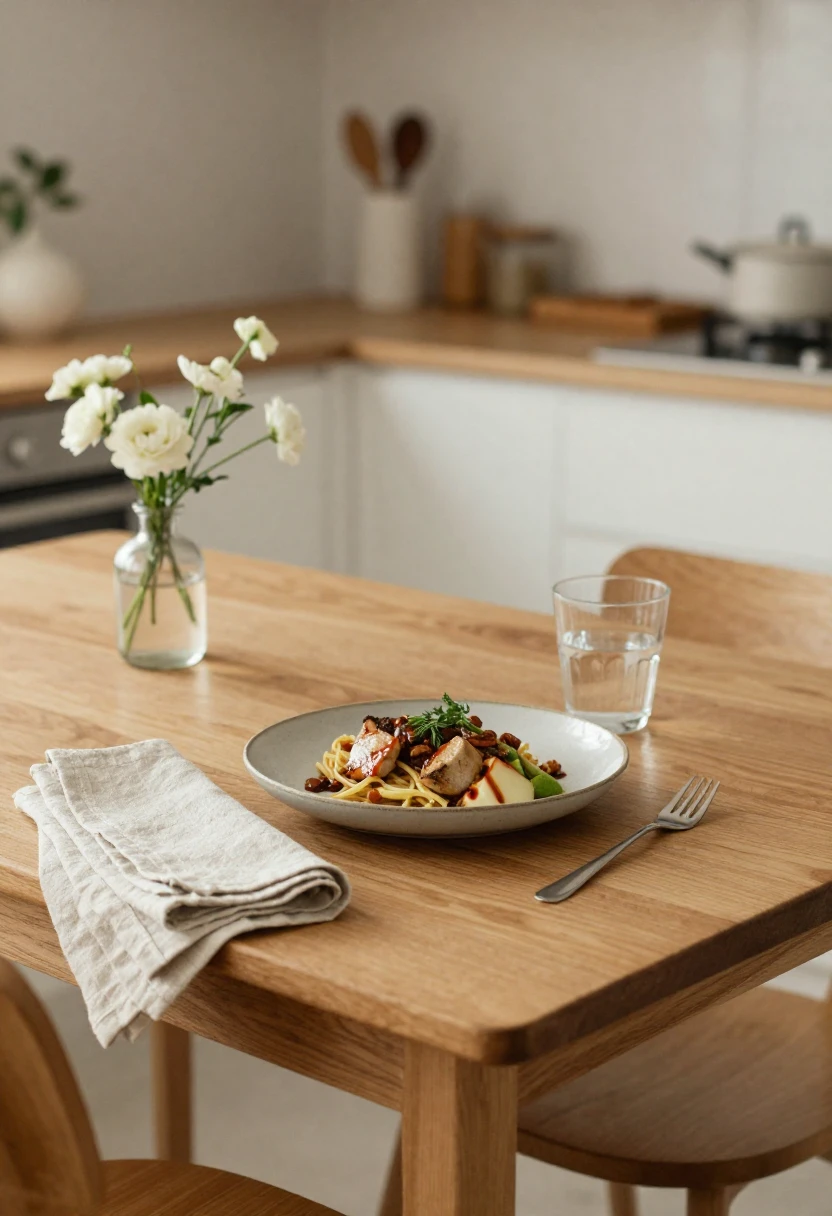
For many people, cooking has slowly transformed from a natural part of daily life into something that feels like an obligation. It appears on mental to-do lists alongside work deadlines, unanswered messages, household responsibilities, and emotional commitments. It is often approached with a sense of urgency, completed in a hurry at the end of exhausting days, and accompanied by quiet self-criticism about not doing it well enough, creatively enough, or consistently enough.
Over time, this mindset changes the emotional meaning of nourishment.
Instead of being a form of care, cooking becomes another source of pressure.
Mindful home cooking invites a different perspective. It asks what happens when preparing food is no longer framed as a duty to fulfill, but as an expression of respect toward one’s own body, time, and emotional needs.
In modern life, self-neglect rarely looks dramatic. More often, it appears in subtle, socially accepted forms. People skip meals because they are busy. They eat while standing or working. They rely heavily on ultra-processed convenience foods. They ignore hunger signals until exhaustion forces them to notice. They postpone nourishment until it becomes an afterthought.
These patterns are rarely the result of laziness or indifference.
They usually develop in response to overwhelm, chronic stress, and the feeling that personal needs must always come last.
Choosing to cook, even when it would be easier not to, gently interrupts this cycle. It becomes a quiet statement that your well-being deserves time, attention, and effort, not because you have earned it through productivity, but because you are inherently worthy of care.
Psychologically, the way you feed yourself reflects how you relate to yourself.
When meals are consistently rushed, chaotic, or careless, the subconscious message is that your needs are secondary. When meals are prepared with intention, even in very simple ways, that message changes. It becomes an affirmation that your comfort, health, and stability matter.
These messages do not remain isolated.
They accumulate over time and shape self-esteem in subtle but powerful ways.
Many adults also carry an internal dialogue around food that is surprisingly harsh. Thoughts such as “I should eat better,” “I am too lazy to cook properly,” or “I never do this right” often operate in the background, influencing emotional well-being without conscious awareness.
Mindful cooking gradually softens this inner voice.
As you prepare meals regularly, familiarity grows. Skills develop naturally. Confidence replaces hesitation. What once felt intimidating becomes routine. Cooking begins to feel like evidence that you can show up for yourself consistently, even during difficult periods.
Self-respect is expressed not only through actions, but through presence.
Rushing through meals, eating while distracted, or barely tasting food communicates emotional distance from your own experience. Slowing down, engaging with texture, aroma, and flavor, and allowing yourself to fully inhabit the process reflects dignity and care.
When you treat your own time and body as valuable, you reinforce healthy emotional boundaries.
Mindful cooking also tends to encourage more thoughtful choices, though not in a rigid or moralistic way. Over time, people naturally begin choosing fresh ingredients more often, balancing meals more intuitively, and reducing reliance on emotional shortcuts. These shifts do not come from self-control, but from increased awareness of how different foods affect energy, mood, and mental clarity.
For many individuals, relationships with food are complicated by guilt, comparison, restriction, or cycles of overindulgence and punishment. Cooking for oneself with attention gradually reshapes this dynamic. Food stops being an enemy to fight or a reward to earn. It becomes a partner in physical and emotional well-being.
This change is profoundly healing.
Trust is built through consistency.
Each time you prepare a nourishing meal, you reinforce reliability within yourself. You demonstrate, again and again, that you are capable of meeting your own needs, even when life feels uncertain. Over time, this repetition strengthens emotional security and reduces dependence on external validation.
In many cultures, productivity is measured almost exclusively through visible output such as emails answered, projects completed, and goals achieved. Cooking rarely appears on these lists. Yet preparing food is one of the most fundamental productive acts. It sustains energy, supports concentration, protects health, and enables meaningful participation in life.
Recognizing this reframes cooking as meaningful work rather than wasted time.
Mindful cooking does not require perfection.
Some meals will be rushed. Some will be repetitive. Some will be unbalanced. Some will fail. Self-respect lies not in flawless execution, but in responding to these moments with patience and choosing to continue caring for yourself without self-punishment.
When nourishment becomes a consistent expression of respect rather than pressure, something subtle begins to shift. People often feel more grounded, more capable, and more deserving of rest and support. This sense of empowerment does not arise from control or discipline. It grows quietly from repeated experiences of self-directed care.
The Sensory Therapy of the Kitchen

Long before we understood the language of nervous systems, dopamine pathways, or emotional regulation, human beings were already using the senses to calm themselves.
We warmed our hands over fire.
We inhaled the scent of herbs.
We listened to water simmering.
We kneaded dough with steady, repetitive movements.
The kitchen, in many ways, has always been a sensory sanctuary.
When approached mindfully, it becomes one of the few everyday spaces where all five senses can work together in a grounding, harmonizing way. This sensory immersion is not decorative or incidental. It is therapeutic at a biological level.
Sight: Soft Focus and Visual Order
Modern life overwhelms the eyes with bright screens, rapid motion, artificial light, and constant visual stimulation. Our attention is pulled outward in sharp, fragmented bursts.
By contrast, the visual environment of a calm kitchen can be remarkably regulating.
Natural light falling across a wooden surface, steam rising slowly from a pot, the deep green of herbs against a neutral countertop, the gradual transformation of raw ingredients into a finished meal — these images move gently rather than aggressively. They encourage sustained attention rather than rapid scanning.
When you visually track the slow changes in cooking, your brain shifts from hypervigilant mode into focused observation. This subtle transition supports mental clarity and reduces overstimulation.
Sound: Rhythm and Reassurance
The kitchen produces a soundtrack unlike any other room in the house.
The steady chop of a knife against a cutting board.
The low hum of water beginning to boil.
The soft crackle of onions in warm oil.
The quiet bubbling of soup.
These sounds are rhythmic and predictable. They lack the sudden spikes of notification alerts or traffic noise. The brain interprets rhythmic sound as a sign of safety because it reflects controlled, intentional activity rather than chaos.
Even silence in the kitchen can feel different from silence elsewhere. It is often filled with subtle, organic noise that reassures rather than startles.
Smell: Direct Access to Emotion
Among all the senses, smell has the most direct pathway to the brain’s emotional centers.
The aroma of garlic, roasted vegetables, fresh bread, or simmering broth can immediately evoke memories and emotional states. These associations are often formed early in life and remain deeply embedded.
Unlike visual or auditory information, scent bypasses rational processing and activates memory and emotion almost instantly. This is why certain cooking smells can trigger comfort before you consciously identify them.
In moments of stress, these familiar aromas can gently shift your emotional baseline toward calm.
Touch: Grounding Through Texture
Touch is one of the most powerful regulators of the nervous system.
In the kitchen, hands are constantly engaged. You feel the cool firmness of vegetables, the softness of dough, the warmth of a ceramic bowl, the resistance of a knife slicing through produce. These tactile sensations anchor awareness in the present moment.
When hands move deliberately and purposefully, the brain receives steady feedback that the body is safe and coordinated. This feedback reduces dissociation and mental wandering, bringing attention back to physical experience.
The act of kneading dough or washing rice, for example, can feel surprisingly meditative because the repetition creates continuity between thought and movement.
Taste: Conscious Satisfaction
Taste, when experienced mindfully, offers immediate feedback about nourishment and satisfaction.
Modern eating often disconnects taste from awareness. Meals are consumed quickly, distractedly, and sometimes without fully registering flavor. In mindful cooking, tasting becomes an intentional act. You adjust seasoning slowly. You notice sweetness, acidity, warmth, and depth.
This attention enhances satisfaction and reduces the urge for excess because the brain feels acknowledged rather than deprived.
Conscious tasting restores balance between desire and fulfillment.
Multisensory Integration and Emotional Balance
What makes cooking uniquely powerful is that all these sensory channels operate simultaneously.
You see color and transformation.
You hear rhythm and heat.
You smell warmth and memory.
You feel texture and temperature.
You taste adjustment and completion.
When multiple senses engage harmoniously, the brain integrates the experience as coherent and safe. This integration supports emotional stability and reduces fragmentation of attention.
In psychological terms, sensory integration helps shift the body from stress reactivity toward regulated presence.
The Kitchen as an Embodied Space
Many forms of stress disconnect people from their bodies.
Anxiety pulls attention into imagined futures. Rumination traps the mind in the past. Digital environments encourage disembodied interaction.
Cooking brings you back.
It requires physical coordination, spatial awareness, and sensory engagement. It demands that you inhabit your body rather than observe life from a mental distance.
This embodied presence is inherently stabilizing.
A Subtle but Lasting Effect
The therapeutic quality of the kitchen does not depend on dramatic transformations or gourmet creations. It emerges from small, repeated sensory experiences that communicate safety and coherence to the nervous system.
Over time, these experiences accumulate.
The scent of soup becomes associated with calm. The sound of chopping signals transition from work to rest. The warmth of a meal signals closure to the day.
These associations deepen emotional resilience.
Simple Meals That Feel Emotionally Supportive
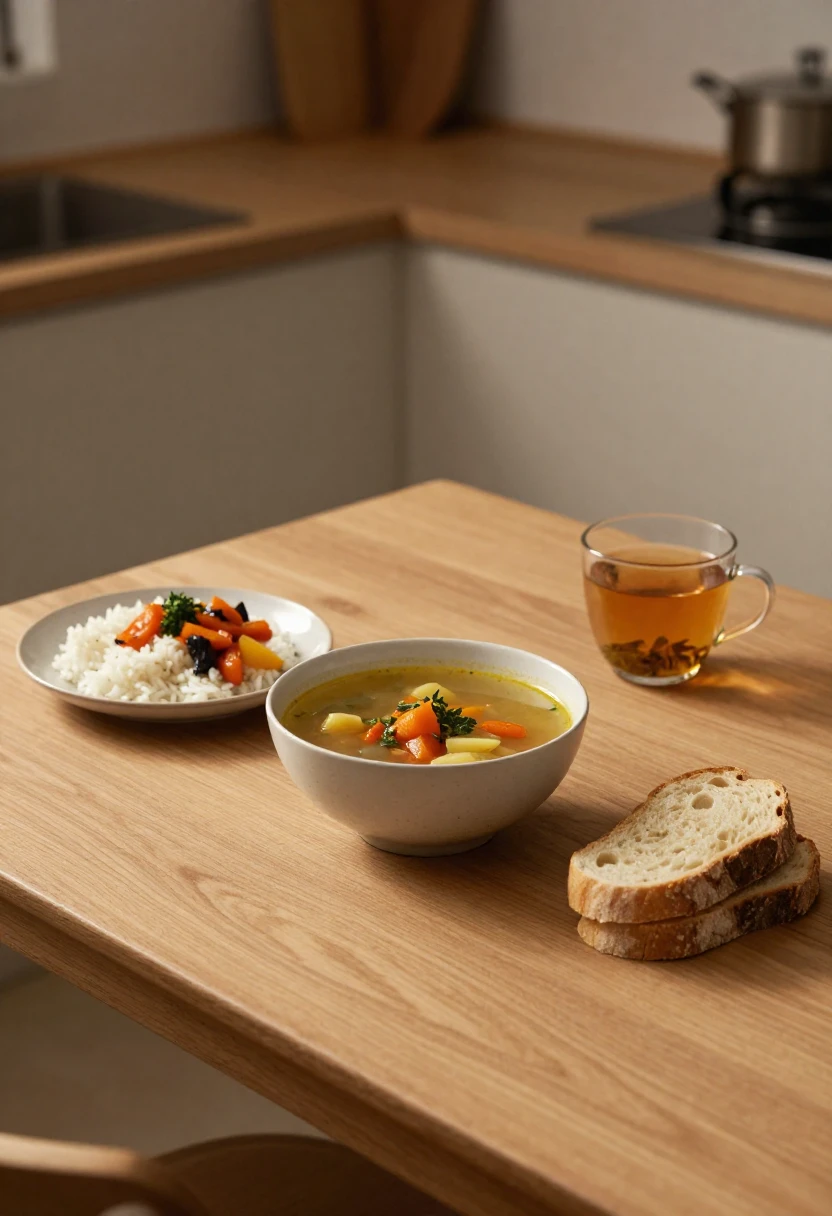
Not all meals affect us in the same way.
Some leave us physically full but emotionally unsettled. Others may be nutritionally balanced yet strangely unsatisfying. And then there are certain simple dishes that seem to do more than nourish the body. They soften tension, steady emotions, and create a quiet sense of being cared for.
These meals rarely look impressive.
They are often humble, repetitive, and deeply personal.
Yet their emotional impact is profound.
Why Certain Foods Feel Like Comfort
Emotionally supportive meals usually share several qualities.
They are warm rather than cold.
They are soft rather than sharp.
They are gently flavored rather than aggressively seasoned.
They are familiar rather than experimental.
These characteristics signal safety to the nervous system.
Warmth relaxes muscles and improves circulation. Soft textures reduce digestive effort. Mild flavors avoid sensory overload. Familiarity reduces uncertainty.
Together, these elements create an environment in which both body and mind can rest.
Soup: The Universal Emotional Anchor
Across cultures, soup occupies a unique emotional position.
It appears during illness, exhaustion, grief, celebration, and transition. It is offered to children, elders, and guests alike. It represents care in its most accessible form.
Psychologically, soup works on multiple levels.
It is warm, hydrating, easy to digest, and slow to consume. It invites sitting down. It encourages breathing between spoonfuls. It often carries childhood associations of being looked after.
Whether it is vegetable broth, lentil soup, chicken soup, or miso, its emotional function remains similar.
It reassures.
Rice Bowls and Grain-Based Meals: Stability and Grounding
Simple grain-based meals provide another form of emotional support.
A bowl of rice with vegetables, beans, eggs, or lightly seasoned protein creates a sense of structure. There is a clear base, a balance of textures, and a predictable rhythm to each bite.
These meals feel grounding because they combine softness with substance. They provide steady energy without heaviness and offer a feeling of stability during periods of emotional fluctuation.
Many people instinctively return to such meals when life feels chaotic.
Baked and Roasted Vegetables: Gentle Transformation
Roasting or baking vegetables transforms them slowly and predictably.
Raw sharpness becomes softness. Natural sugars deepen. Aromas fill the kitchen gradually.
This process mirrors emotional soothing.
Watching vegetables caramelize and soften over time reinforces patience and trust in gradual change. The resulting dish feels comforting without being indulgent.
It communicates balance.
Fresh Bread and Simple Toast: Symbolic Nourishment
Bread carries deep cultural and emotional symbolism.
Across societies, it represents survival, generosity, and community. Making or eating fresh bread, even in its simplest forms, connects people to centuries of shared experience.
A slice of warm toast with butter, olive oil, or honey can feel remarkably stabilizing. It offers warmth, texture, and subtle sweetness without excess.
For many, it evokes safety and continuity.
Herbal Teas and Warm Drinks: Emotional Transitions
Emotionally supportive meals are not limited to solid food.
Warm drinks play a crucial role in regulating mood.
Herbal teas, warm lemon water, light broths, and gently spiced beverages often function as emotional bridges. They mark transitions between work and rest, stress and recovery, activity and stillness.
Holding a warm cup activates tactile comfort and slows breathing, reinforcing calm.
Simple Breakfasts That Create Stability
Morning meals shape emotional tone for the entire day.
Simple breakfasts such as oatmeal with fruit, eggs with toast, yogurt with honey, or rice porridge provide predictability and grounding at a time when the nervous system is especially sensitive.
These meals reduce morning anxiety by establishing rhythm and reliability.
Personal Comfort Repertoires
Over time, most people develop their own collection of emotionally supportive meals.
There may be a soup prepared during difficult winters, a breakfast that feels safe during busy seasons, or a dinner that signals rest after demanding days.
These dishes become personal anchors.
They are chosen not for novelty, but for reassurance.
Emotional Support Without Overindulgence
One of the most important qualities of these meals is that they comfort without overwhelming.
They do not rely on extreme sweetness, heaviness, or excess. Instead, they satisfy through balance, warmth, and presence.
This prevents the emotional rollercoaster often associated with indulgent comfort foods.
Learning to Recognize What Supports You
Mindful cooking encourages curiosity about emotional responses to food.
You begin noticing which meals leave you calmer, which improve sleep, which reduce irritability, and which support focus. Over time, this awareness allows you to choose nourishment strategically rather than impulsively.
You feed not only hunger, but emotional needs.
A Gentle Perspective
Emotionally supportive meals are not universal.
What comforts one person may feel unappealing to another. Cultural background, memory, physiology, and personal history all play roles.
The goal is not to imitate someone else’s comfort, but to discover your own.
Mindful Cooking vs Emotional Eating
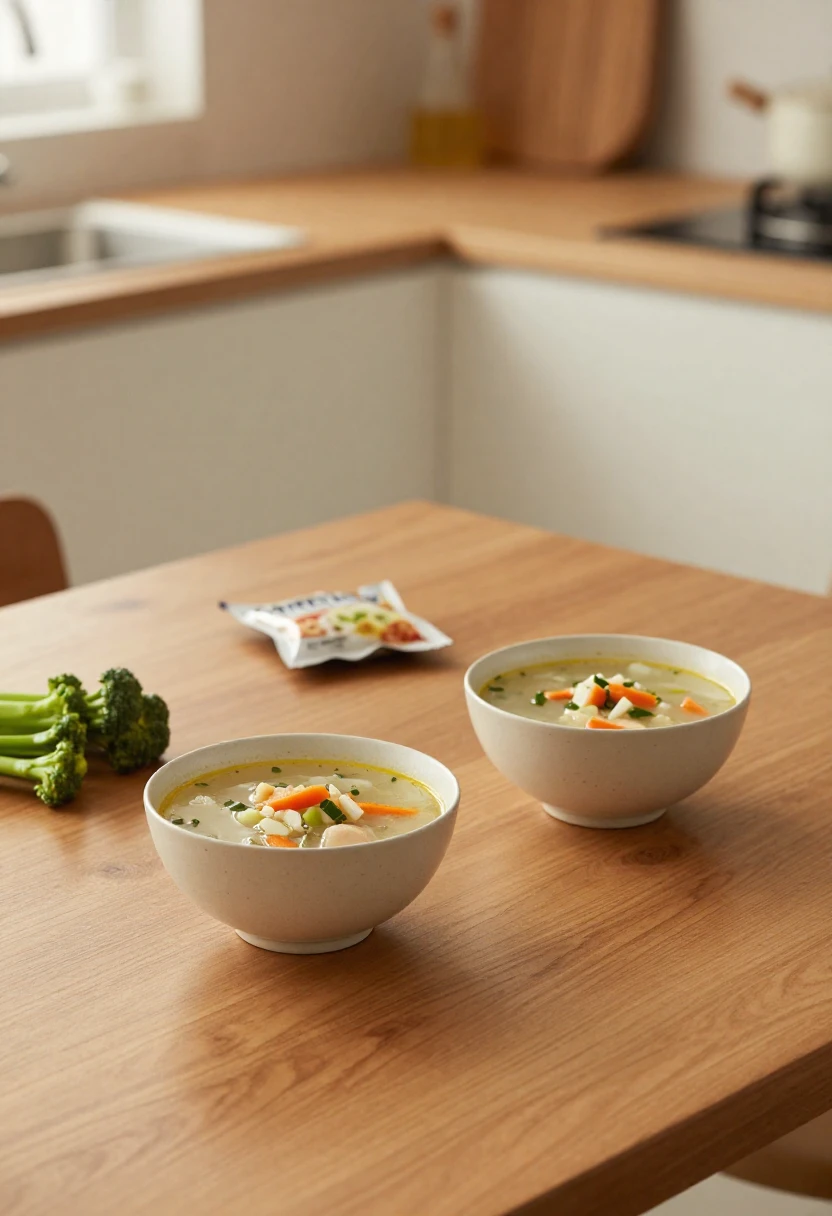
For many people, food has become one of the primary ways of managing difficult emotions.
Stress, loneliness, boredom, frustration, sadness, and even success are often accompanied by eating, not because the body needs nourishment, but because the mind is searching for relief. Over time, this pattern becomes automatic. The connection between emotional discomfort and reaching for food strengthens until it feels almost instinctive.
This does not mean that emotional eating reflects weakness or lack of discipline.
It reflects adaptation.
At some point, food worked as a coping tool, and the nervous system remembered.
Understanding the difference between emotional eating and mindful cooking begins with compassion rather than judgment.
The Purpose Behind Emotional Eating
Emotional eating is driven by the desire to change an internal state.
When feelings become uncomfortable, the brain seeks something that offers immediate distraction, stimulation, or soothing. Highly processed foods, especially those rich in sugar, fat, and salt, activate reward pathways quickly and reliably. They provide a short-term sense of comfort, control, or escape.
In that moment, the body is not asking for nutrients.
It is asking for regulation.
Food becomes a substitute for rest, connection, reassurance, or safety.
The Cycle of Temporary Relief
Although emotional eating often brings momentary relief, it rarely resolves the underlying emotion.
After the initial comfort fades, people frequently experience guilt, physical discomfort, or frustration with themselves. These secondary emotions then reinforce the desire to escape again through eating, creating a self-perpetuating loop.
Over time, this cycle weakens trust in bodily signals and increases emotional dependence on food.
How Mindful Cooking Changes the Dynamic
Mindful cooking interrupts this pattern before it reaches consumption.
Instead of reacting immediately to emotional discomfort, it introduces a pause. You move into preparation rather than consumption. You shift from passive coping to active care. You engage your senses and body before eating.
This shift alters the emotional trajectory.
By the time food is ready, nervous system arousal has often decreased. Breathing has slowed. Mental agitation has softened. The original emotional intensity may no longer require numbing.
Eating becomes a continuation of regulation rather than an attempt to escape.
Awareness Instead of Suppression
Mindful cooking does not aim to eliminate emotional eating through force.
It cultivates awareness.
While washing vegetables or stirring soup, you may notice tension, sadness, fatigue, or irritability. Instead of covering these feelings immediately, you remain present with them in a gentle way.
This teaches the brain that emotions can be experienced without being immediately “fixed.”
Over time, emotional tolerance increases.
The Role of Intention
One of the clearest differences between emotional eating and mindful cooking lies in intention.
Emotional eating is often driven by urgency and secrecy. It happens quickly, sometimes without full awareness, and often in isolation. Mindful cooking, by contrast, is deliberate. It involves choice, planning, and engagement.
You decide to nourish rather than numb.
This decision reinforces self-trust.
Restoring Hunger and Fullness Awareness
Emotional eating blurs internal signals.
People may eat when they are not physically hungry and stop only when discomfort appears. Mindful cooking supports reconnection with bodily cues by slowing the entire process.
When preparation is unhurried, appetite can recalibrate. You are more likely to recognize true hunger and notice satisfaction earlier.
This regulation reduces overeating naturally.
Replacing Reactivity With Response
Emotional eating is reactive.
An emotion appears, and food follows.
Mindful cooking introduces response.
An emotion appears, and you choose how to care for it. Sometimes that care includes food. Sometimes it includes rest, conversation, movement, or reflection.
The key difference is agency.
Compassion as the Foundation
Many people approach emotional eating with harsh self-judgment.
They label themselves as weak, undisciplined, or broken.
This attitude deepens emotional distress and strengthens reliance on coping behaviors.
Mindful cooking grows from compassion.
It recognizes that seeking comfort is human. It honors the underlying need rather than condemning the behavior.
From this place, change becomes possible.
Gradual Transformation, Not Perfection
Shifting from emotional eating to mindful nourishment is gradual.
There will still be moments of impulsive eating. There will still be days when stress overrides intention. These experiences are part of learning, not evidence of failure.
Each time you choose preparation over reaction, awareness over avoidance, and care over criticism, you strengthen new neural pathways.
A New Relationship With Food
Over time, food begins to occupy a different place in emotional life.
It becomes a source of support rather than escape, nourishment rather than distraction, connection rather than compensation.
This transformation is subtle, but deeply liberating.
In the next section, we will explore how to create a realistic 20-minute mindful cooking ritual that fits into everyday life, even during busy or emotionally demanding periods.
Creating a 20-Minute Mindful Cooking Ritual
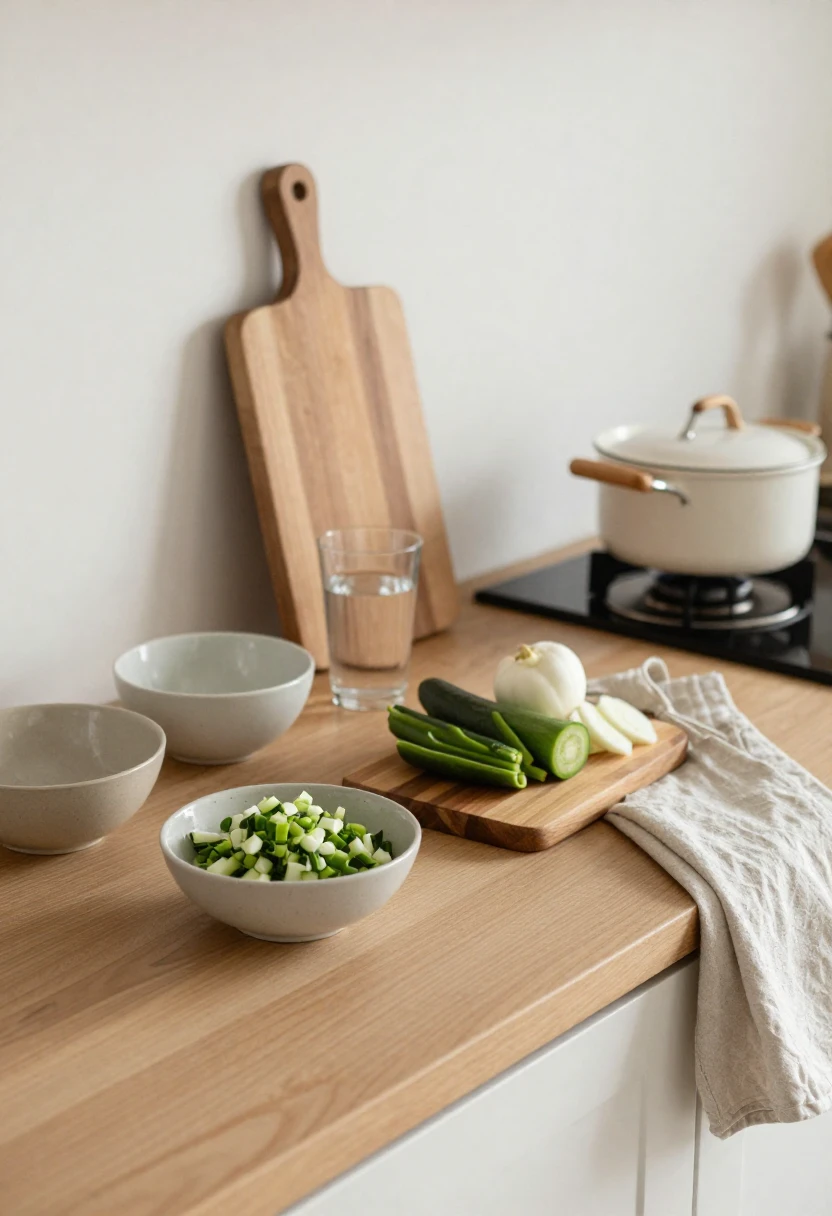
One of the most common reasons people give for not cooking more often is lack of time.
Days feel compressed. Schedules overlap. Energy runs low. By the evening, the idea of preparing a meal can feel overwhelming, even when the desire for something warm and nourishing is strong.
Mindful cooking is often imagined as something slow and elaborate, reserved for quiet weekends or rare free evenings. In reality, it can exist within very small windows of time. A twenty-minute ritual, practiced consistently, can be enough to restore emotional balance and create a sense of grounded routine.
What matters is not duration.
It is intention.
Redefining What “Enough Time” Means
Many people underestimate what can be created in twenty focused minutes.
With simple ingredients and clear structure, this amount of time is sufficient to prepare soups, grain bowls, omelets, roasted vegetables, salads with warm elements, pasta with vegetables, or gently sautéed dishes.
More importantly, twenty minutes of full presence often feels more nourishing than an hour of distracted cooking.
When attention is undivided, time expands psychologically.
Preparing the Environment
A mindful ritual begins before the first ingredient is touched.
Creating a calm environment supports emotional regulation. This may involve dimming harsh lighting, opening a window for fresh air, clearing unnecessary clutter from the counter, or playing soft instrumental music.
Silencing notifications and placing the phone out of reach reduces cognitive intrusion and protects the experience from fragmentation.
These small adjustments signal to the nervous system that this time is protected.
Choosing One Simple Dish
The foundation of a sustainable ritual is simplicity.
Select meals that require few steps and ingredients, and that you can prepare confidently without constant reference to instructions. Familiarity reduces stress and allows attention to remain in the present moment.
Over time, building a small personal repertoire of “twenty-minute meals” creates reliability and ease.
Beginning With Conscious Transition
Moving directly from work or emotional stress into cooking can feel jarring.
A short transition helps.
Before starting, take a few slow breaths, wash your hands intentionally, and pause for a moment of stillness. This brief reset marks the boundary between external demands and personal care.
It prepares the mind for presence.
Engaging Fully With Each Step
During the ritual, each stage becomes an opportunity for awareness.
While washing produce, notice temperature and texture. While cutting, observe rhythm and coordination. While stirring, pay attention to aroma and sound. While seasoning, taste slowly and adjust deliberately.
These micro-moments of attention accumulate into emotional regulation.
Working With Time, Not Against It
Instead of rushing to finish, allow the process to unfold naturally within the time frame.
Choose dishes that simmer, roast, or cook steadily, allowing brief pauses for breathing or reflection. Use waiting moments to tidy gently rather than reaching for distractions.
This maintains continuity of attention.
Ending With Intentional Eating
The ritual does not end when the food is ready.
Serving and eating deserve the same presence as preparation.
Arrange the meal simply. Sit down. Take the first bite slowly. Notice temperature, flavor, and texture. Allow yourself to experience completion.
This closure reinforces satisfaction and reduces the impulse for unnecessary snacking.
Adapting to Different Energy Levels
Not every day will support full engagement.
On low-energy days, the ritual may consist of reheating soup and adding fresh herbs with attention. On busy days, it may involve assembling a simple bowl with care.
Consistency matters more than intensity.
Making It a Habit, Not a Performance
A ritual becomes meaningful through repetition.
Practiced several times a week, a twenty-minute mindful cooking routine becomes embedded in daily life. The nervous system begins anticipating it as a period of restoration.
This expectation itself reduces baseline stress.
Protecting the Ritual Emotionally
Some people abandon routines when they cannot perform them “perfectly.”
Mindful cooking thrives on flexibility.
Missing a day, feeling distracted, or choosing convenience occasionally does not undo progress. Self-kindness preserves continuity.
A Sustainable Anchor
Over time, this small daily ritual becomes an anchor.
No matter how unpredictable life feels, there remains one dependable moment of self-directed care. This stability strengthens emotional resilience and reinforces a sense of personal agency.
In the next section, we will explore what happens when cooking itself feels overwhelming and how to approach nourishment gently during periods of burnout, low mood, or emotional exhaustion.
When Cooking Feels Overwhelming
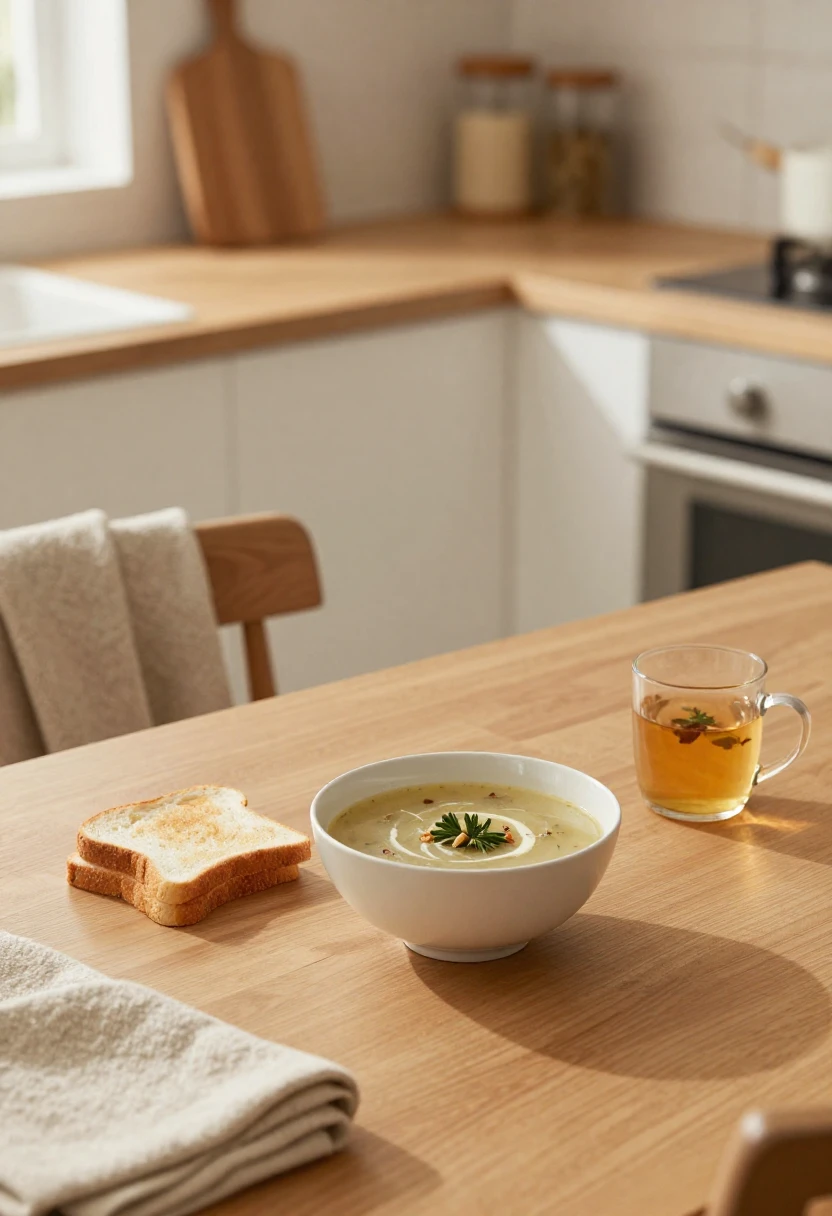
There are periods in life when even the most nourishing habits feel heavy.
During times of emotional exhaustion, chronic stress, grief, depression, burnout, or major transitions, the simple act of preparing food can begin to feel insurmountable. Opening the refrigerator may trigger fatigue rather than inspiration. Thinking about recipes may feel like another demand rather than an opportunity for care.
In these moments, it is important to understand that difficulty with cooking is not a personal failure.
It is a signal.
It reflects depleted emotional and physical resources.
Mindful home cooking, when practiced with compassion, recognizes these seasons and adapts to them rather than insisting on unrealistic standards.
Understanding Emotional and Physical Fatigue
When the nervous system remains under prolonged stress, basic tasks require more effort.
Motivation decreases. Concentration weakens. Decision-making becomes exhausting. Even small choices feel overwhelming. This is not laziness. It is neurological and hormonal fatigue.
Under these conditions, asking yourself to “just be more disciplined” often increases shame without increasing capacity.
Support begins with realism.
Letting Go of Idealized Standards
Many people carry an internal image of what “proper cooking” should look like.
Home-cooked meals are imagined as fresh, balanced, beautifully prepared, and nutritionally perfect. When energy is low, failing to meet this image can trigger self-criticism and avoidance.
Mindful cooking invites you to release this fantasy.
Nourishment does not require aesthetic perfection.
A simple bowl of reheated soup, toast with eggs, frozen vegetables with olive oil, or yogurt with fruit can be deeply supportive when prepared with acceptance.
Using Gentle Shortcuts Without Guilt
Convenience foods are often portrayed as moral failures.
In reality, they are tools.
Frozen vegetables, pre-cut produce, canned beans, rotisserie chicken, pre-cooked grains, and ready-made soups can preserve nourishment during difficult periods. Using them wisely allows you to continue caring for yourself when capacity is limited.
Choosing these supports is an act of wisdom, not weakness.
Simplifying Decisions
Decision fatigue intensifies overwhelm.
When energy is low, reducing options becomes essential. Creating a small list of fallback meals can be transformative. These may include two or three dishes that require minimal thought and effort.
Knowing that these options exist removes pressure and restores a sense of safety.
Redefining Mindfulness in Low-Energy Seasons
Mindfulness does not always mean slow, immersive rituals.
Sometimes it means acknowledging limitations honestly and responding with kindness.
Heating soup while taking three deep breaths can be mindful. Arranging toast and fruit with care can be mindful. Drinking warm tea attentively can be mindful.
Presence adapts to capacity.
Honoring Emotional Signals
Difficulty with cooking often reflects deeper needs.
It may signal the need for rest, connection, professional support, or reduced responsibilities. Instead of forcing productivity, mindful practice encourages listening.
What is my body asking for today?
What kind of support do I need?
Who can help me right now?
These questions foster resilience.
Avoiding the Shame Spiral
One of the most damaging aspects of burnout is self-blame.
When people criticize themselves for not “keeping up,” motivation decreases further. Shame consumes energy that could otherwise support recovery.
Gentle self-talk protects healing.
Rebuilding Capacity Gradually
As energy returns, reintroducing cooking slowly is more sustainable than abrupt changes.
Starting with one mindful meal per day or a few per week allows confidence to rebuild without pressure. Small successes accumulate into renewed stability.
Asking for and Accepting Support
Caring for yourself does not require doing everything alone.
Accepting help, sharing meals, ordering nourishing food occasionally, or cooking with others are all valid expressions of self-respect.
Interdependence supports emotional health.
A Compassionate Perspective
Periods of low capacity are part of being human.
They do not erase progress. They do not reflect character. They are invitations to soften expectations and deepen self-trust.
Mindful cooking includes knowing when to simplify, when to rest, and when to seek support.
In the next section, we will bring all of these ideas together and reflect on the quiet power of feeding yourself with awareness in everyday life.
Conclusion — The Quiet Power of Feeding Yourself

In a world that constantly asks for more — more speed, more productivity, more availability, more perfection — the simple act of preparing a meal for yourself with care can feel almost revolutionary.
Not because it is dramatic.
Not because it is impressive.
But because it is intentional.
Mindful home cooking is, at its essence, a quiet form of resistance against fragmentation. It resists the idea that nourishment should be rushed, outsourced, optimized, or treated as an afterthought. It resists the belief that your needs must always come second to external demands. It gently insists that your body, your time, and your emotional landscape deserve attention.
Throughout this journey, we have explored how cooking with awareness influences the nervous system, reduces anxiety, builds self-respect, supports emotional regulation, and restores a sense of stability through simple, repeated rituals. We have seen that emotionally supportive meals do not require complexity, luxury, or perfection. They require presence, curiosity, and kindness.
What makes mindful cooking powerful is not what appears on the plate.
It is what happens inside you while preparing it.
It is the moment when scattered thoughts begin to slow.
It is the shift when breathing deepens without effort.
It is the realization that you are capable of caring for yourself, even on difficult days.
Over time, these moments accumulate.
They become a language of self-trust.
They teach you that nourishment is not something to earn through discipline or control, but something to offer yourself through respect and understanding. They remind you that emotional well-being is built through small, repeated choices rather than dramatic transformations.
Mindful home cooking does not promise constant calm, permanent motivation, or flawless habits. Life remains unpredictable. Stress still appears. Energy still fluctuates. There will be days when cooking feels easy and days when it feels impossible.
What changes is your relationship with those fluctuations.
Instead of responding with criticism, avoidance, or resignation, you learn to respond with flexibility and care. You learn to adjust rather than abandon. You learn to listen rather than force.
In this way, the kitchen becomes more than a functional space.
It becomes a place of return.
A place where you reconnect with your senses.
A place where you restore emotional balance.
A place where you practice being gentle with yourself.
You do not need perfect ingredients, elaborate recipes, or ideal circumstances to begin. You only need willingness to show up, even briefly, with attention.
A pot of soup.
A bowl of rice.
A cup of warm tea.
These ordinary things, prepared with presence, carry extraordinary emotional meaning.
Feeding yourself mindfully is not about becoming someone new.
It is about coming back to who you already are.
Someone worthy of care.
Someone capable of tenderness.
Someone deserving of peace.
And that quiet truth, practiced day after day, is what truly sustains well-being.