Contents
- Why Diet Is Central to Diabetes Control
- Understanding Blood Sugar and Insulin Response
- The Best Foods for Blood Sugar Control
- Foods to Limit or Avoid When Managing Diabetes
- Sample Daily Meal Plan for Diabetes
- Portion Control and Glycemic Index: What Matters Most
- Drinks and Diabetes — What’s Best and What to Skip
- Lifestyle Habits That Complement a Diabetes-Friendly Diet
- Common Myths About Diet & Diabetes — Evidence Explained
- Real Questions People Ask About Diet for Diabetes
Why Diet Is Central to Diabetes Control

Managing diabetes can feel overwhelming at first — numbers to track, symptoms to watch, foods to rethink. But here’s the reassuring truth: for many people, your daily diet is one of the most powerful tools for stabilizing blood sugar, improving energy levels, and protecting long-term health. And the best part? You don’t need extreme restrictions or expensive products to make it work.
Food is information.
Every meal sends signals to your body about how to release insulin, how quickly glucose enters the bloodstream, and how efficiently your cells use that energy. When you choose foods that support these processes, blood sugar levels naturally become steadier — often far more than with medication alone.
This doesn’t mean you must follow a rigid diet or give up everything you love. In fact, flexible, sustainable eating habits often lead to the best outcomes. Many of the most effective strategies come down to simple shifts: adding more fiber, balancing meals with protein and healthy fats, choosing slow-digesting carbohydrates, and spacing meals evenly throughout the day.
Throughout this article, we’ll explore science-backed nutrition strategies that genuinely help manage diabetes — not trends, not myths, not fear-based rules. You’ll also find practical examples, a daily meal plan, guidance on portion control, and insights into lifestyle habits that work with your diet to support your blood sugar.
Think of this not as a diet, but as a steady, empowering way of eating that helps your body work at its best.
Understanding Blood Sugar and Insulin Response

To manage diabetes through food, it helps to understand what’s happening inside your body every time you eat. The process is simple at its core — but powerful enough to influence your energy, mood, appetite, and long-term health.
How Blood Sugar Works
Whenever you eat carbohydrates — fruit, bread, rice, oats, potatoes, pasta, even milk — your body breaks them down into glucose, the main form of sugar used for energy.
Glucose then moves into your bloodstream, raising your blood sugar levels.
This rise is normal. It’s how your body fuels your brain and muscles.
The key is how quickly glucose enters your blood, and how efficiently your body responds.
The Role of Insulin
Insulin is a hormone produced by the pancreas.
Its job is to act like a key: it “unlocks” your cells so glucose can move out of the bloodstream and into the places it’s needed.
- When insulin works well → blood sugar stays stable.
- When insulin doesn’t work efficiently → glucose builds up in the bloodstream.
What Happens in Diabetes
In type 2 diabetes or prediabetes, two things often happen:
- Insulin resistance — cells stop responding to insulin properly, so glucose has trouble getting inside.
- Impaired insulin production — the pancreas can’t keep up with your body’s needs.
As a result, blood sugar stays higher for longer after meals.
Why Diet Matters So Much
Food can either:
- help stabilize blood sugar (by slowing digestion, lowering glucose spikes, improving insulin sensitivity)
- or make it harder to control (with fast-digesting carbs, sugars, and low-fiber meals)
This is where nutrition becomes a powerful tool.
The right foods can:
- improve how cells respond to insulin
- lower overall blood sugar levels
- reduce inflammation
- support energy throughout the day
- prevent dangerous highs and lows
And you don’t need perfection — even small, consistent changes make a dramatic difference.
The Best Foods for Blood Sugar Control

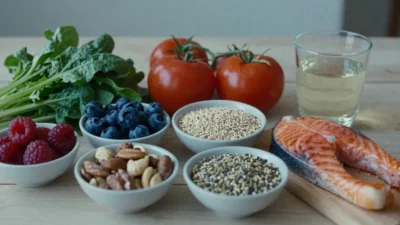
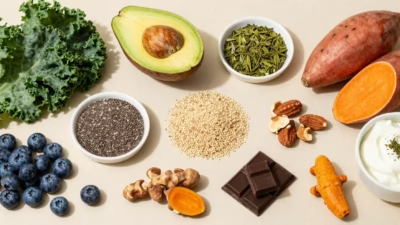
When it comes to managing diabetes naturally, not all foods affect your body in the same way. Some help stabilize glucose, improve insulin response, and keep you full longer. Others digest slowly thanks to fiber, healthy fats, or protein. Many also reduce inflammation — an important factor in long-term blood sugar balance.
Below — найкращі продукти, які реально працюють.
1. High-Fiber Vegetables (Especially Non-Starchy Ones)
Fiber is one of the most powerful tools for blood sugar control.
It slows digestion, stabilizes glucose rise, and improves insulin sensitivity.
Best choices:
- leafy greens (spinach, kale, chard)
- broccoli, cauliflower
- zucchini, eggplant
- peppers, cucumbers
- carrots (in moderation, but still great!)
Aim to make half your plate vegetables at lunch and dinner.
2. Whole Grains with Low Glycemic Impact
Whole grains contain fiber, vitamins, minerals, and phytochemicals that support slow, steady glucose release.
Best choices:
- oats (especially steel-cut)
- quinoa
- barley
- brown or wild rice
- buckwheat
Studies show that fiber-rich whole grains improve insulin response and reduce post-meal glucose spikes.
3. Lean Proteins for Glucose Stability
Protein slows the absorption of carbohydrates and reduces appetite swings.
Best sources:
- salmon, trout, sardines
- chicken or turkey
- eggs
- tofu, tempeh
- Greek yogurt or cottage cheese
- legumes (lentils, chickpeas, beans)
Combining protein + fiber is one of the best ways to prevent blood sugar spikes.
4. Healthy Fats to Slow Digestion
Healthy fats keep you full and help stabilize glucose by slowing digestion.
Top picks:
- avocados
- nuts and seeds (almonds, walnuts, chia, flax)
- extra virgin olive oil
- peanut or almond butter
- olives
A drizzle of olive oil or a handful of nuts can make a noticeable difference.
5. Low-Glycemic Fruits
Fruit isn’t the enemy — it’s the form of fruit that matters.
Whole fruits with fiber digest slowly and provide vitamins, antioxidants, and hydration.
Best choices for diabetes:
- berries (blueberries, raspberries, strawberries)
- apples
- pears
- citrus fruits
- peaches and plums
Avoid fruit juices — they spike glucose quickly.
6. Legumes (A Blood Sugar Powerhouse)
Beans, chickpeas, and lentils contain fiber + protein + slow carbs — the perfect trio.
Legumes help:
- reduce post-meal glucose
- support healthy cholesterol
- keep you full longer
They’re one of the most researched foods for diabetes control.
7. Fermented Foods for Metabolic Support
Your gut health directly affects blood sugar. Fermented foods support a healthier microbiome, which in turn helps with insulin sensitivity.
Best choices:
- yogurt (plain, unsweetened)
- kefir
- sauerkraut
- kimchi
- miso
- tempeh
Aim for a small serving daily or a few times a week.
8. Cinnamon & Turmeric (Small Additions, Big Benefits)
These spices may help reduce inflammation and improve insulin response.
They’re not magic cures, but research shows modest, consistent benefits.
Add to:
- oatmeal
- yogurt
- smoothies
- curries
- roasted vegetables
9. Water, Tea, and Hydrating Drinks
Dehydration makes glucose levels rise.
Simply drinking more water can improve blood sugar control and reduce cravings.
Great options:
- water
- herbal tea
- green tea (supports metabolism and insulin sensitivity)
The beauty of these foods is that they work together.
You don’t need extremes — just steady, nourishing choices that help your body find balance naturally.
Foods to Limit or Avoid When Managing Diabetes

When you’re trying to control blood sugar naturally, some foods make the process easier — and others make it dramatically harder.
This doesn’t mean you can never have these foods again. It simply means they should be occasional treats rather than daily habits.
The goal isn’t restriction.
The goal is blood sugar stability — and these foods tend to disrupt it the most.
1. Sugary Drinks (the #1 Cause of Glucose Spikes)
Sodas, sweet iced teas, energy drinks, fruit juices, and flavored coffees enter the bloodstream extremely quickly because they contain no fiber.
This causes rapid sugar spikes followed by crashes.
Even 100% fruit juice can act like sugary soda in the body.
Better choices:
water, sparkling water, herbal teas, green tea, coffee (unsweetened), or fruit-infused water.
2. Refined Carbohydrates
Refined carbs digest almost as fast as sugar.
Avoid or limit:
- white bread
- white rice
- regular pasta
- pastries
- crackers
- sugary cereals
- instant mashed potatoes
These foods have a high glycemic index and cause quick glucose surges.
Better swaps:
whole grains, quinoa, oats, whole-grain pasta, barley, sweet potatoes.
3. Deep-Fried Foods
Fried foods combine carbs + unhealthy fats, often causing:
- insulin resistance
- inflammation
- high triglycerides
- delayed glucose spikes that last hours
Examples: fried chicken, fries, onion rings, doughnuts.
Better idea: air-frying, baking, grilling.
4. Processed Meats
Processed meats can increase inflammation and are often high in sodium, which can worsen blood pressure — a common concern for people with diabetes.
Examples: sausages, bacon, deli meats, hot dogs.
Better options:
lean chicken, turkey, fish, tofu, legumes.
5. Sweets and Desserts (Enjoy Mindfully)
Cakes, cookies, chocolate bars, ice cream, and candy cause significant glucose spikes.
They’re not forbidden — especially when portioned thoughtfully — but they should be occasional and balanced with fiber or protein.
Tip:
Pair a small dessert with nuts or yogurt to slow absorption.
6. Ultra-Processed Snacks
Chips, flavored popcorn, cheese puffs, and snack bars often contain:
- added sugars
- refined oils
- fast carbs
- low fiber
These lead to unpredictable blood sugar swings.
Better snack choices:
nuts, Greek yogurt, hummus with veggies, cottage cheese, boiled eggs, chia pudding.
7. Excess Alcohol
Alcohol can cause both dangerous lows and highs in blood sugar — depending on timing, type, and whether you’ve eaten.
Safer approach:
limit intake, always pair alcohol with food, and avoid sugary mixers.
8. Anything With Hidden Sugars
Many everyday “healthy” foods contain added sugars:
- flavored yogurts
- granola
- sauces (BBQ, teriyaki)
- ketchup
- salad dressings
- protein bars
- canned soups
Reading labels helps more than you might think.
A Gentle Reminder
This isn’t about perfection or fear.
You don’t have to cut everything out — you simply need to understand how different foods affect your body and choose the ones that help you feel steady and energized.
Sample Daily Meal Plan for Diabetes
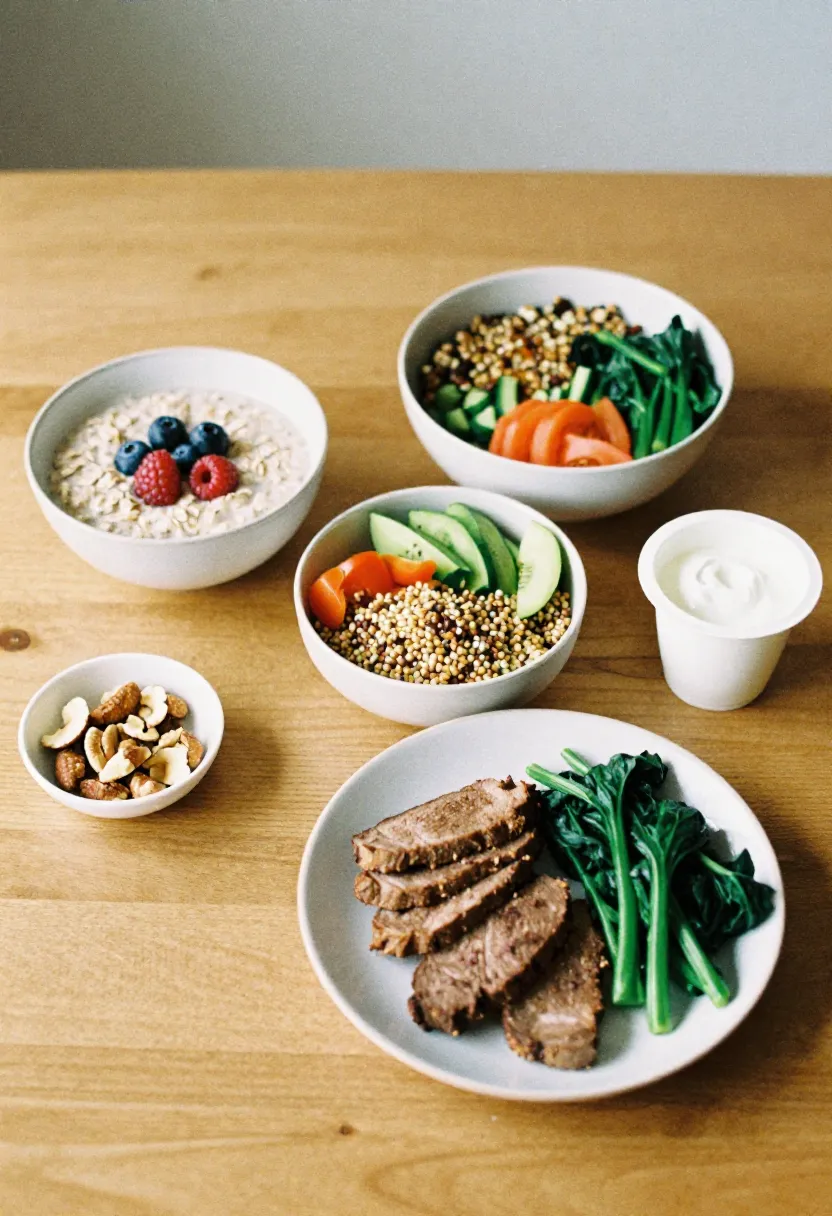
A diabetes-friendly day of eating doesn’t have to feel restrictive. In fact, the most effective meals are satisfying, flavorful, and built around foods that keep your blood sugar steady.
Нижче — приклад цілого дня харчування, який допомагає тримати рівень глюкози під контролем, не позбавляючи вас радості від їжі.
Це не “ідеальна дієта”. Це реалістична, збалансована модель, яку легко адаптувати під будь-який графік.
🌅 Breakfast — Slow Energy, Gentle Digestion
Option 1: High-Fiber Power Oatmeal
- steel-cut oats
- handful of blueberries
- 1 tbsp chia or flax seeds
- spoon of Greek yogurt
- cinnamon on top
Why it works:
Oats + fiber + protein = slow glucose release, perfect morning stability.
Option 2: Veggie Omelet
- 2–3 eggs
- spinach, mushrooms, tomatoes
- slice of whole-grain toast
- avocado on the side
Why it works:
Healthy fats + protein + fiber = extremely stable blood sugar.
Option 3: Low-Sugar Yogurt Bowl
- plain Greek yogurt
- chopped nuts
- raspberries or strawberries
- drizzle of chia seeds
Why it works:
Protein-rich breakfast helps prevent mid-morning crashes.
🍏 Mid-Morning Snack — Optional, But Helpful
Smart choices:
- a small apple + a handful of almonds
- cottage cheese
- carrot sticks with hummus
- a boiled egg
Snacks with protein + fiber help avoid spikes before lunch.
🥗 Lunch — Balanced, Filling, and Fiber-Forward
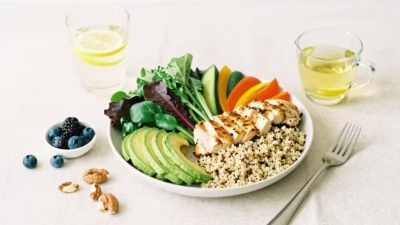
Option 1: Quinoa Bowl
- cooked quinoa
- salmon or chicken
- broccoli or roasted veggies
- olive oil + lemon dressing
Why it works:
Whole grains + protein + healthy fats = beautiful balance.
Option 2: Lentil Soup + Side Salad
- lentils, carrots, celery, tomatoes
- greens with olive oil dressing
Why it works:
Legumes are one of the top foods for blood sugar control.
Option 3: Whole-Grain Wrap
- whole-grain tortilla
- turkey or tofu
- lettuce, cucumbers, peppers
- avocado or hummus spread
Why it works:
High fiber + high satiety keeps energy stable for hours.
Afternoon Snack — For a Smoother Evening
Choose something small and satisfying:
- handful of walnuts
- Greek yogurt
- berries + a spoon of chia
- celery sticks with peanut butter
- sugar-free kefir
Snacks help prevent late-day overeating and glucose highs at dinner.
🍽️ Dinner — Steady Blood Sugar Overnight
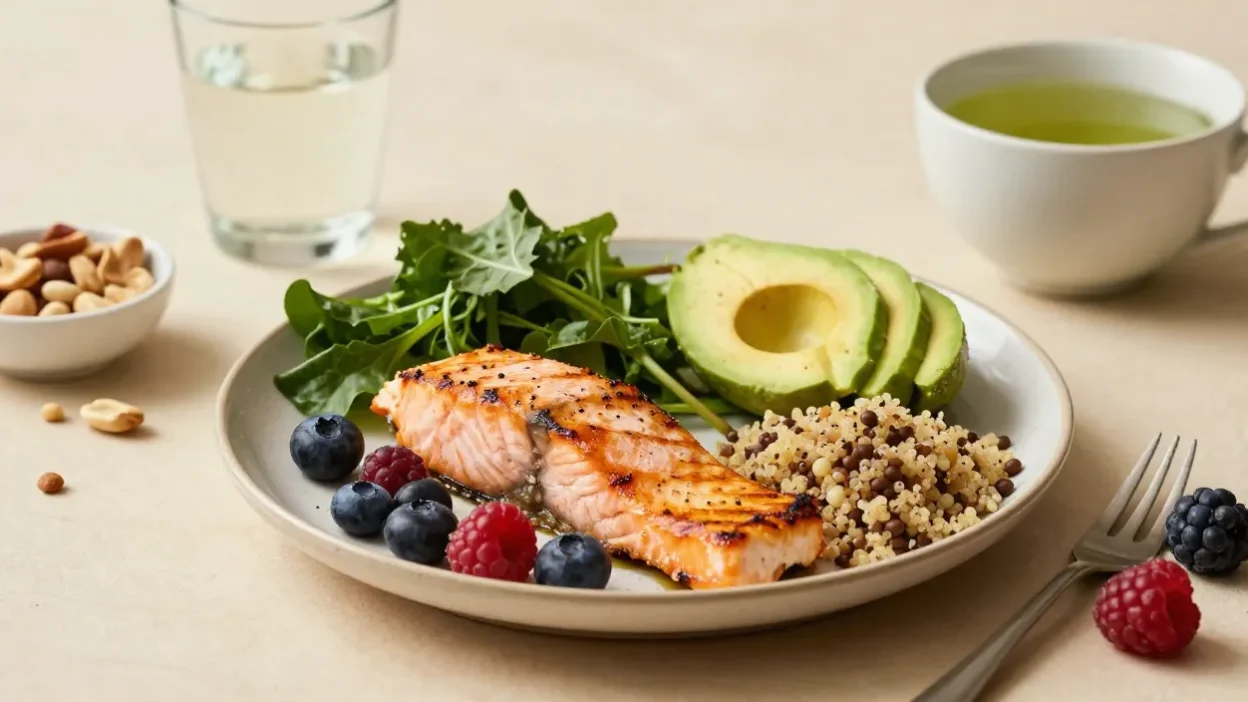
Option 1: Baked Salmon Plate
- salmon baked with herbs
- roasted sweet potatoes
- steamed green beans or asparagus
Why it works:
Omega-3s + slow carbs + fiber = nighttime glucose stability.
Option 2: Chicken Stir-Fry
- chicken or tofu
- broccoli, bell peppers, zucchini
- small portion of brown rice
Why it works:
High vegetables, moderate whole grains, great flavor.
Option 3: Turkey Chili
- ground turkey
- beans, tomatoes, onions
- spices (cumin, paprika, chili)
Why it works:
Beans help flatten post-meal glucose spikes.
🍫 After-Dinner Treat (If You Want One)
- 1–2 squares of 70% dark chocolate
- or Greek yogurt with a few berries
- or herbal tea with cinnamon
Small, mindful treats are perfectly fine — especially when paired with protein or fiber.
💧 Hydration Throughout the Day
- water
- tea (especially green tea)
- black coffee (unsweetened)
- sparkling water
Staying hydrated keeps glucose levels more stable.
A day like this doesn’t feel restrictive — it feels balanced, flexible, and enjoyable. And that’s what makes it sustainable.
Portion Control and Glycemic Index: What Matters Most
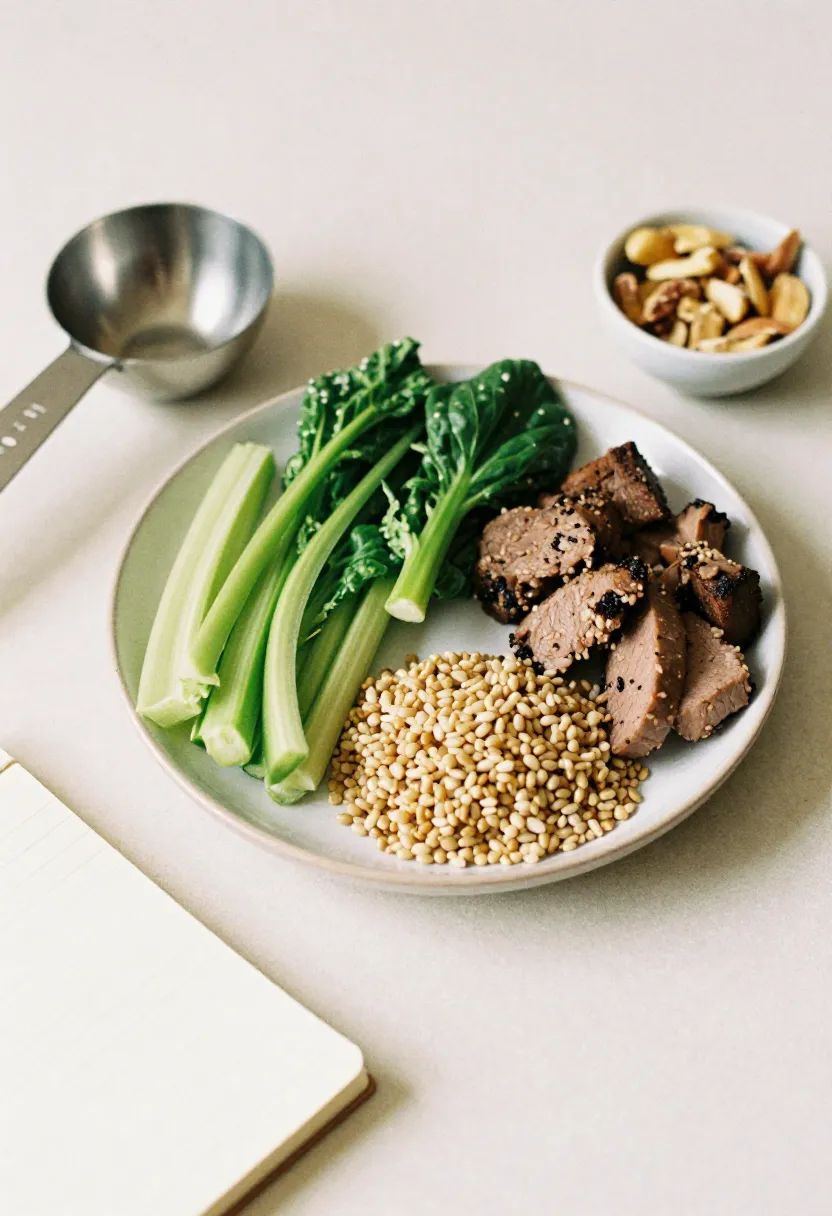
When you’re managing diabetes through diet, it’s not only what you eat that matters — it’s also how much and how quickly your food affects your blood sugar. Portion control and the glycemic index work together like two quiet stabilizers, helping your body maintain smoother, more predictable glucose levels throughout the day.
Portion Control: Gentle Structure, Not Restriction
Portion control isn’t about tiny plates or feeling hungry. It’s about creating balanced meals that give your body the right amount of energy at the right pace. A helpful structure is simply imagining your plate: a generous serving of non-starchy vegetables, a palm-sized portion of protein, and a small serving of slow-digesting carbohydrates. This naturally leads to meals that keep blood sugar steadier without forcing you to count every bite.
Even the order in which you eat matters. Starting your meal with vegetables and protein before moving to carbs can noticeably reduce the size of your glucose spike — a phenomenon supported by research showing that fiber and protein slow the absorption of sugar. And if you tend to experience nighttime highs, eating a lighter portion of carbohydrates at dinner can help your glucose remain more stable while you sleep.
Understanding Glycemic Index: The Speed Factor
The glycemic index (GI) is simply a measure of how fast a food raises your blood sugar. High-GI foods break down quickly, flooding your bloodstream with glucose. Low- and moderate-GI foods digest more slowly, creating a gentle rise instead of a surge. Whole fruits, legumes, most vegetables, and whole grains fall into this slower category, which is why they’re so supportive for people with diabetes.
But GI isn’t a fixed rule — it changes depending on what you eat with the food. A slice of whole-grain bread eaten alone behaves very differently than the same bread paired with avocado, nut butter, or eggs. Adding protein, healthy fat, or fiber lowers the real-life glycemic impact of a meal, making combinations more meaningful than individual numbers.
How These Two Tools Work Together
Portion control determines how much glucose enters your system, while the glycemic index affects how quickly it arrives. When you use both ideas together, you create meals that keep you full, energized, and balanced without feeling restricted. You don’t need perfect precision — just an awareness of how your plate is built and how it makes you feel afterward.
With this foundation, managing blood sugar becomes less about strict dieting and more about small, thoughtful choices that support your body’s natural rhythms.
Drinks and Diabetes — What’s Best and What to Skip

What you drink throughout the day can influence your blood sugar just as much as what you eat — sometimes even more. Because liquids digest quickly, they can cause sudden spikes that catch people off guard. Understanding how different drinks behave in your body makes it far easier to keep your glucose steady and your energy consistent.
Why Some Drinks Cause Rapid Spikes
Sugary beverages — like sodas, sweetened teas, bottled coffees, flavored waters, fruit punches, and even 100% fruit juices — raise blood sugar incredibly fast. Without fiber to slow absorption, these drinks send glucose straight into the bloodstream, which is why a single glass of juice or a sweet latte can create a sharper spike than a dessert.
It’s not about “bad versus good” — it’s simply how the body processes liquid sugar.
The Drinks That Really Support Stability
Water remains the simplest and most effective choice. Staying hydrated helps your body use insulin more efficiently and prevents glucose from concentrating in the bloodstream. Sparkling water works just as well if you prefer something more refreshing.
Tea is another strong ally, especially herbal and green teas. Many contain antioxidants that support metabolic health and gentle blood sugar regulation. Coffee can also fit perfectly into a diabetes-friendly lifestyle, as long as it isn’t loaded with sugars or flavored syrups. Black coffee, or coffee with a splash of milk, gives you the energy boost without the glucose swing.
Smoothies can be helpful when they are made thoughtfully — with whole fruits, leafy greens, protein, and no added juices or sweeteners. In contrast, store-bought or juice-based smoothies often act like liquid sugar.
What to Know About Alcohol
Alcohol affects blood sugar in unpredictable ways. Some drinks — like dry wine or spirits served without sugary mixers — may have a mild effect, especially when paired with food. Others, including sweet cocktails, liqueurs, cider, and standard beer, can push glucose levels up quickly.
If you do choose to drink, slow and mindful consumption with a meal is the safest approach.
Simple Swaps That Make a Big Difference
Replacing just one sugary drink a day with water, unsweetened tea, or a cleaner coffee option can dramatically improve daily glucose patterns. Most people notice fewer afternoon crashes, less thirst, and more stable hunger levels once liquid sugars are reduced.
Managing diabetes doesn’t require cutting out beverages you love — it simply means choosing drinks that help your body stay balanced rather than overwhelmed.
Lifestyle Habits That Complement a Diabetes-Friendly Diet

Food is the foundation of blood sugar control — but it’s not the only pillar.
Your daily habits influence glucose levels just as much as the meals you choose. When diet, movement, sleep, and stress management work together, blood sugar becomes far more stable and predictable. And the beauty is that these habits don’t need to be intense or complicated. Small, steady practices create the biggest impact.
Movement: Your Body’s Natural Glucose Regulator
You don’t need long gym sessions or high-intensity routines. Even light, consistent movement helps your muscles pull glucose from the bloodstream more efficiently — with or without insulin.
A 10–15 minute walk after meals can significantly flatten post-meal spikes. Gentle strength training a few times a week helps the body use glucose more effectively long-term.
Think of movement as a partner to your meals, not a punishment for eating.
Sleep: The Quiet Force Behind Blood Sugar Stability
Poor sleep makes the body more resistant to insulin, increases hunger hormones, and can trigger cravings for quick carbs.
Just one night of poor sleep can temporarily worsen glucose control.
Aim for a restful routine: a consistent bedtime, dimmed lights before sleep, no late heavy meals, and a cool bedroom. These small rituals support your body’s natural ability to regulate blood sugar.
Stress Management: Lower Stress, Lower Glucose
Stress hormones like cortisol increase blood sugar — sometimes dramatically — even if your diet is perfect.
That’s why calm mornings, deep breaths, short breaks, and enjoyable activities matter. Meditation, nature walks, journaling, reading, slow stretching, or simply stepping away from screens can bring glucose levels down gently.
The goal isn’t a stress-free life — it’s a more grounded one.
Hydration: The Underrated Stabilizer
Mild dehydration concentrates glucose in the bloodstream. Drinking enough water helps your kidneys regulate excess sugar and improves insulin efficiency.
You don’t need to obsess over liters — just aim for steady hydration across the day.
Consistency Over Perfection
Lifestyle habits aren’t about doing everything flawlessly. They’re about small, repeatable routines that reinforce what your diet is already doing for you.
A balanced meal + a short walk + good sleep + a calm moment = one of the most powerful glucose-control formulas you can create.
Common Myths About Diet & Diabetes — Evidence Explained

Diabetes comes with an overwhelming amount of advice — not all of it accurate, and much of it repeated so often that it starts to feel like truth. Sorting fact from fiction helps you make food choices with confidence instead of confusion. Below are some of the most common myths people encounter, along with the real science behind them.
Myth 1: “People with diabetes should avoid all carbs.”
Carbohydrates aren’t the enemy — fast carbs are.
Your body still needs carbohydrates for energy, fiber, and brain function. The key is choosing slow-digesting carbs like whole grains, legumes, vegetables, and whole fruits. These foods release glucose gradually and support steady energy rather than dramatic spikes.
Cutting out all carbs isn’t sustainable or necessary. Eating the right carbs in the right portions is far more effective.
Myth 2: “Fruit is too sugary for people with diabetes.”
Whole fruits — especially berries, apples, pears, citrus, and stone fruits — are rich in fiber, vitamins, and antioxidants. The fiber slows down how quickly the natural sugars enter your bloodstream, making fruit completely diabetes-friendly.
The real issue is fruit juice, not fruit. Juice removes the fiber and delivers sugar instantly.
Myth 3: “You must eat the same amount of carbs at every meal.”
This advice is outdated for most people. What matters more is the quality of the carbs, how they’re combined with protein and fat, and how your body responds. Some days you may naturally eat more carbs, some days fewer — and that’s perfectly fine as long as your meals stay balanced.
Myth 4: “Sugar substitutes are always safe and helpful.”
Not all sweeteners behave the same way. Some — like stevia or monk fruit — have minimal impact on blood sugar. Others can still raise glucose or cause digestive discomfort. And for many people, very sweet flavors (even zero-calorie ones) keep cravings alive.
Using small amounts of natural sweetness and focusing on whole foods usually works better long-term.
Myth 5: “If you take medication, what you eat doesn’t matter.”
Food and medication work together, not separately.
A balanced diet can improve insulin sensitivity, reduce the amount of medication needed, and help stabilize blood sugar far more effectively. Medication alone cannot counteract high-sugar or high-refined-carb eating patterns.
Myth 6: “You need a strict diet to control diabetes.”
Strictness usually leads to burnout. Consistency leads to success.
Most people see the biggest improvements when they follow flexible, nourishing habits — balanced meals, mindful portions, daily movement, and good hydration — not rigid rules.
Myth 7: “Only overweight people get type 2 diabetes.”
Weight can influence insulin resistance, but it’s far from the whole story.
Genetics, stress levels, sleep quality, hormonal balance, and even past health events all play major roles. Anyone can develop diabetes — and anyone can improve glucose control with supportive lifestyle habits.
Real Questions People Ask About Diet for Diabetes

People living with diabetes often share the same concerns, frustrations, and curiosities — especially when trying to build eating habits they can maintain for life. Here are clear, realistic answers to the questions that come up most often.
Can I still eat carbs if I have diabetes?
Yes — and you should. Your body needs carbohydrates for energy and brain function. The key is choosing slow-digesting carbs like whole grains, fruits, vegetables, lentils, and beans. These foods raise blood sugar gradually and keep you fuller for longer. You don’t need to eliminate carbs, just choose them wisely.
Is it okay to eat fruit daily?
Absolutely. Whole fruits contain fiber, vitamins, antioxidants, and water — all of which support stable blood sugar. Berries, apples, pears, peaches, plums, and citrus fruits are excellent choices. What to avoid is fruit juice, which delivers sugar without fiber and leads to rapid spikes.
Is a low-carb or keto diet required for diabetes?
Not at all. Some people do well with moderated carbs; others function best with balanced plates that include whole grains and legumes. What matters most is consistency, fiber, portion size, and how your glucose responds to meals — not adhering to one rigid diet.
Should I avoid eating after 6 pm?
There is no universal rule here. Your blood sugar responds more to what and how much you eat at night than to the specific time. A lighter, balanced dinner with protein, vegetables, and slow carbs can support more stable overnight glucose.
Can cinnamon or supplements control my blood sugar?
Cinnamon and certain supplements may help support glucose control slightly, but they cannot replace healthy eating patterns. Their effect is mild compared to the impact of balanced meals, consistent movement, and good sleep.
How often should I eat to manage diabetes?
This varies from person to person. Some feel best with three balanced meals; others prefer small meals and snacks. What matters is preventing extreme hunger and avoiding long gaps that cause big swings in energy and blood sugar.
Is it possible to reverse diabetes with diet?
Many people can significantly improve glucose control — and in some cases reach normal ranges — through diet, weight balance, physical activity, and reduced inflammation. While not everyone will achieve full remission, nearly everyone can improve their metabolic health with supportive habits.
Can I still have sweets?
Yes, in moderation. A small dessert paired with protein or healthy fat — such as a piece of dark chocolate with nuts, or berries with yogurt — has a gentler effect on blood sugar. Occasional treats fit perfectly into a balanced long-term lifestyle.