Contents
- What “Plant-Based” Actually Means (And What It Doesn’t)
- Why People Make the Switch — And Why It’s Worth It
- The Biggest Mistakes Beginners Make (And How to Avoid Them)
- How to Transition to a Plant-Based Diet Step by Step
- What to Actually Eat — A Practical Plant-Based Food Guide
- How to Handle the Hard Moments
- How to Make It Stick Long-Term
- Conclusion
- FAQ
There’s a moment a lot of people have — standing in the grocery store, staring at their usual cart full of the same things they’ve been buying for years, and thinking: maybe it’s time to change something.
Maybe you watched a documentary. Maybe a friend mentioned how much better they’ve been feeling. Maybe you just feel a little sluggish lately and something in you is ready for a reset. Whatever brought you here, that nudge is worth listening to.
Plant-based eating has this reputation for being complicated, expensive, or just… a lot. Like you need to overhaul your entire life, give up everything you love, and start cooking elaborate meals with ingredients you can’t pronounce.
But here’s the thing — it doesn’t have to be that way.
The people who transition successfully aren’t the ones who flip a switch overnight. They’re the ones who start small, stay curious, and give themselves permission to figure it out as they go. No pressure, no perfectionism.
This guide is built for real life. You’ll learn what plant-based eating actually means, how to start without feeling overwhelmed, what to eat, how to handle the tricky moments, and — most importantly — how to make it last.
Let’s start from the beginning.
What “Plant-Based” Actually Means (And What It Doesn’t)
Before you change anything on your plate, it helps to get clear on what you’re actually working toward — because “plant-based” gets thrown around a lot, and it means different things to different people.
Plant-Based vs. Vegan — What’s the Difference?
These two terms often get used interchangeably, but they’re not the same thing.
Vegan is an ethical stance. It means avoiding all animal products — not just in food, but in clothing, cosmetics, and everyday life. It comes from a place of values around animal rights.
Plant-based is more about what’s on your plate. It means building your diet primarily around whole plant foods — vegetables, fruits, legumes, grains, nuts, and seeds. Some people who eat plant-based still occasionally have eggs, fish, or dairy. Others don’t. There’s no single rulebook.
What both have in common: plants are at the center of every meal.
The label matters less than the direction you’re moving in.
Do You Have to Be 100% Plant-Based to See Benefits?
Short answer: no.
This is probably the most liberating thing to know before you start. Research consistently shows that even shifting toward more plant foods — without going fully plant-based — can have real, measurable effects on your health.
A diet that’s 70–80% plants is dramatically different from one that’s 20%. You don’t need to hit some imaginary finish line to feel the difference.
Think of it less like a binary switch and more like a dial you’re gradually turning. Every meal where you choose plants over processed food or heavy meat dishes counts. Every step in the right direction adds up.
That framing alone takes a lot of pressure off — and it’s also what makes this sustainable long-term.
Why People Make the Switch — And Why It’s Worth It
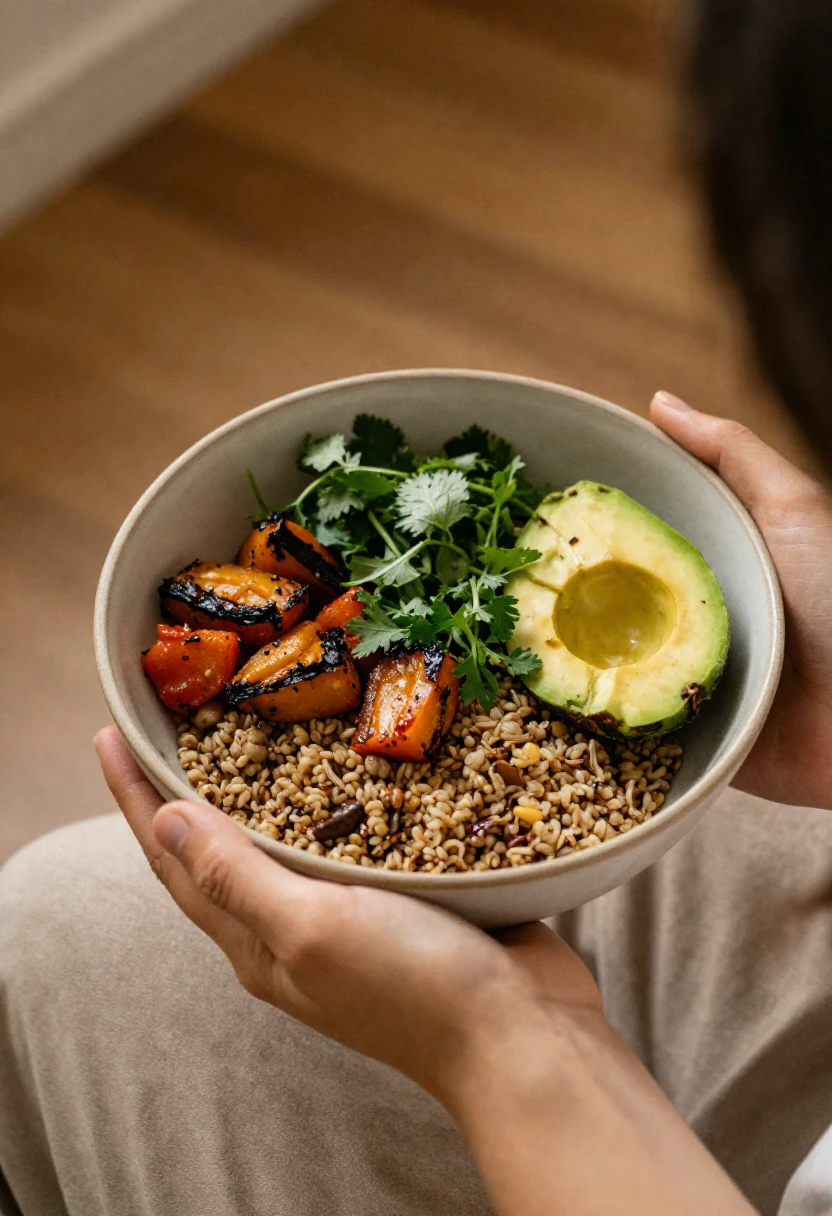
People come to plant-based eating from all kinds of directions. Some are chasing better health. Some are tired of feeling heavy and slow after meals. Some stumble into it accidentally after trying one really good lentil soup. Whatever the entry point — most people who stick with it will tell you the same thing: they wish they’d started sooner.
Health Benefits Backed by Research
The science here is pretty consistent. A diet built around whole plant foods has been linked to:
- Lower risk of heart disease — plants are naturally low in saturated fat and rich in fiber, which supports healthy cholesterol levels
- Better blood sugar regulation — especially relevant for anyone managing or trying to prevent type 2 diabetes
- Reduced inflammation — many chronic diseases are rooted in long-term inflammation, and plant foods are packed with antioxidants that help counter it
- Healthier body weight — not because plants are magic, but because whole foods tend to be more filling per calorie
None of this means you need to eat perfectly to see results. Even gradual shifts show up in lab work, energy levels, and how you feel day to day.
How It Affects Energy, Digestion, and Mood
This is the part people don’t always expect — and it’s often what keeps them going.
Within the first few weeks of eating more plants, a lot of people notice:
- Digestion improves. More fiber means things move the way they should. Bloating from heavy, processed meals starts to ease up.
- Energy feels more stable. Instead of that mid-afternoon crash, meals start to feel like actual fuel — steady and clean.
- Mood shifts. This one sounds surprising, but the gut-brain connection is real. What you eat affects your microbiome, and your microbiome has a lot to say about how you feel mentally.
It’s not dramatic overnight. But it’s noticeable — and once you feel it, it becomes its own motivation.
The Environmental Angle (Briefly, Without Preaching)
You’ve probably heard that plant-based diets are better for the planet. And it’s true — animal agriculture is one of the largest contributors to greenhouse gas emissions, land use, and water consumption globally.
But here’s the thing: you don’t have to be an activist to care about this. Plenty of people find that once they start eating more plants for personal health reasons, the environmental piece becomes a quiet bonus — something that makes the choice feel even better.
It doesn’t need to be your main reason. But it’s worth knowing it’s there.
The Biggest Mistakes Beginners Make (And How to Avoid Them)
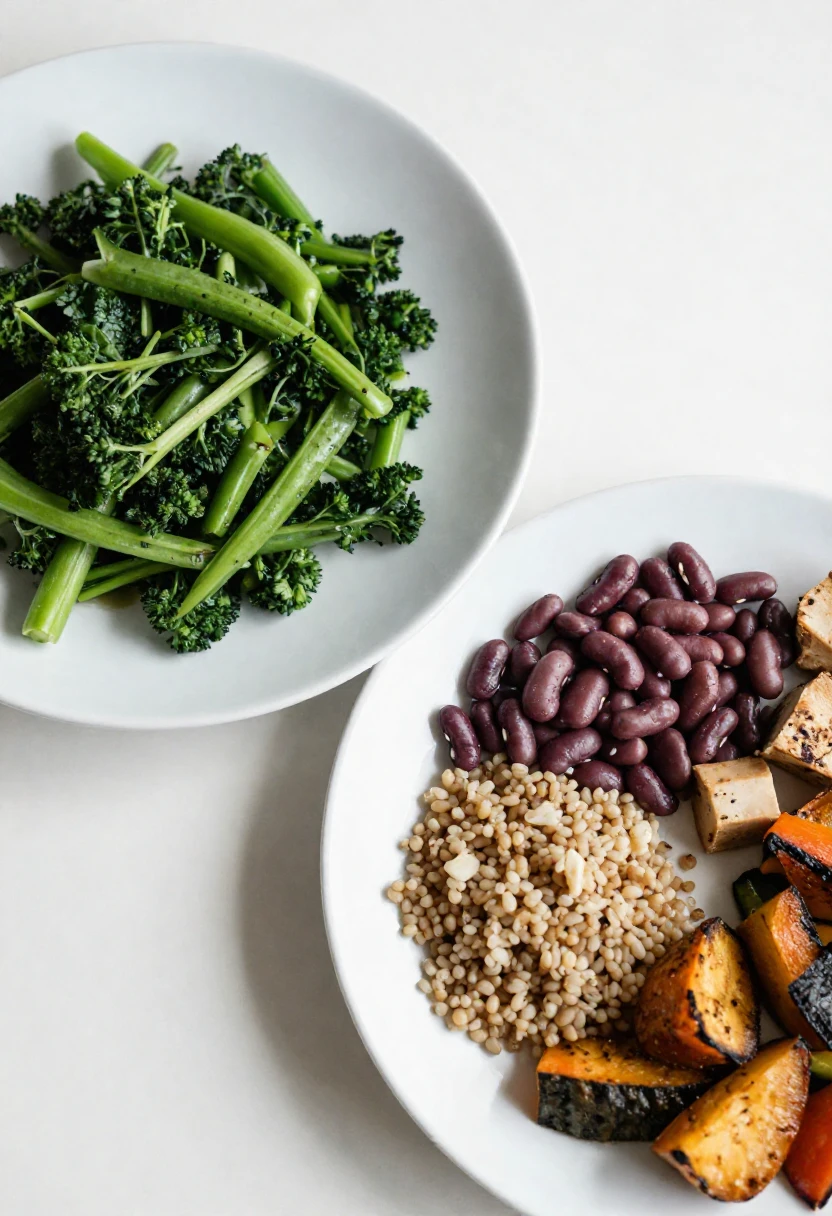
Most people who “tried plant-based eating and it didn’t work” didn’t fail because the diet was wrong for them. They hit one of a handful of very common, very avoidable mistakes. Knowing them upfront saves you a lot of frustration.
Going All-In Overnight
This is the most classic one. You watch something inspiring, feel motivated, and decide that starting Monday — everything changes. Out goes the meat, the dairy, the eggs. In comes a fridge full of kale and chickpeas you’re not quite sure what to do with.
By Wednesday, you’re exhausted, craving everything, and wondering why this feels so hard.
The problem isn’t your willpower. The problem is the approach.
Your taste buds, your gut bacteria, your meal habits — they’ve been built over years. Trying to replace all of that in 72 hours is a recipe for burnout, not transformation.
The people who actually stick with plant-based eating almost never went cold turkey. They shifted gradually, meal by meal, week by week, until the new way of eating started to feel natural.
Not Eating Enough (Or Enough Variety)
Plant foods are less calorie-dense than animal products. That’s often a good thing — but it also means you need to eat more volume to feel satisfied.
A common beginner mistake: swapping a chicken breast for a small side salad and wondering why you’re hungry two hours later. That’s not a plant-based meal. That’s just… less food.
A proper plant-based plate is generous. It’s got:
- A solid source of protein — lentils, beans, tofu, tempeh, edamame
- A base of complex carbs — rice, quinoa, oats, sweet potato
- Plenty of vegetables — roasted, raw, sautéed, whatever you enjoy
- Some healthy fat — avocado, olive oil, nuts, seeds
Variety matters too. If you’re eating the same two meals on rotation, you’ll get bored — and boredom is what sends people back to old habits.
Relying Too Heavily on Processed “Vegan” Foods
Walk into any supermarket now and you’ll find plant-based burgers, vegan cheese, dairy-free ice cream, meatless sausages. Some of it is genuinely good. Some of it is marketing dressed up as health food.
Here’s the honest truth: a processed vegan snack is still a processed snack. It might be better than some alternatives, but it’s not what the research on plant-based diets is actually pointing to.
The benefits come from whole plant foods — the ones that look more or less like they did when they came out of the ground. Beans, not bean-flavored chips. Oats, not oat-based cookies with five types of sugar.
Use the convenience products as a bridge — something to grab when life gets busy. But build your actual diet around real, whole ingredients. That’s where the magic is.
How to Transition to a Plant-Based Diet Step by Step
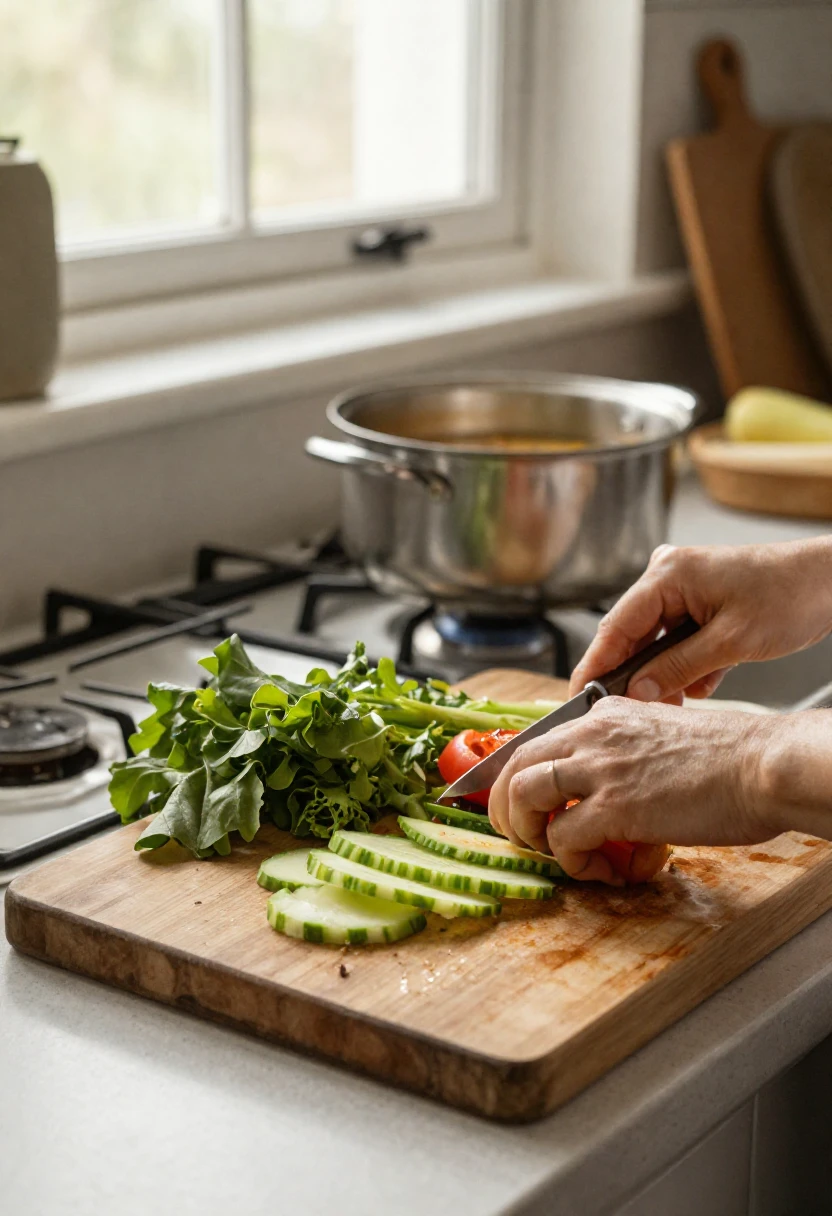
Here’s where things get practical. No vague advice like “just eat more vegetables.” This is an actual approach — one that works with your real life, not against it.
Start With What You Already Love
This is the move most people skip, and it makes all the difference.
Before you go looking for new recipes or exotic ingredients, sit down and think about the meals you already enjoy. Chances are, more of them are plant-friendly than you realize — or they’re one small swap away from being so.
Love pasta? A marinara with lentils or a garlicky white bean sauce is just as satisfying as a meat ragu. Taco Tuesday is already halfway there — swap the ground beef for seasoned black beans or walnut “meat” and you won’t miss much. Big fan of stir-fry? It was practically built for tofu and vegetables.
Start with familiar formats. Just change what’s inside.
This keeps the transition feeling comfortable rather than foreign. You’re not learning a new cuisine from scratch — you’re gently reshaping the one you already know.
The “Crowd Out, Don’t Cut Out” Approach
This is one of the most effective mindset shifts you can make.
Instead of focusing on what you’re removing from your plate, focus on adding more plants. Crowd out the less nourishing stuff by filling up on the good stuff first.
In practice, it looks like this:
- Add a handful of spinach to your morning eggs
- Throw chickpeas into a soup you already make
- Start dinner with a big vegetable dish before anything else hits the table
- Make your usual lunch bowl, but double the greens and halve the meat
Over time, as plants take up more and more real estate on your plate, the other stuff naturally shrinks — without you having to white-knuckle your way through cravings.
You’re not depriving yourself. You’re just making room.
Building a Weekly Meal Rhythm
Willpower is unreliable. Routine is not.
The most sustainable plant-based eaters aren’t the ones with the most discipline — they’re the ones who’ve built a rhythm that makes good choices easy and automatic.
A simple weekly structure might look like this:
Pick 3–4 base recipes you enjoy and rotate them. A big pot of soup on Sunday. A grain bowl situation on Wednesday. A stir-fry on Friday. You’re not eating the same thing every day — you’re working with a loose framework that reduces decision fatigue.
Batch cook a few staples at the start of the week:
- A pot of grains — rice, quinoa, farro
- A batch of cooked legumes — or just open a few cans
- Roasted vegetables you can throw into anything
- A sauce or dressing that makes everything taste good
With these four things in your fridge, you can put together a solid plant-based meal in ten minutes. That’s the goal — making the healthy choice the easy choice.
Start with one or two plant-based dinners per week if you’re new to this. Then three. Then maybe most of them. Let it grow at its own pace.
There’s no finish line. There’s just the next meal.
What to Actually Eat — A Practical Plant-Based Food Guide
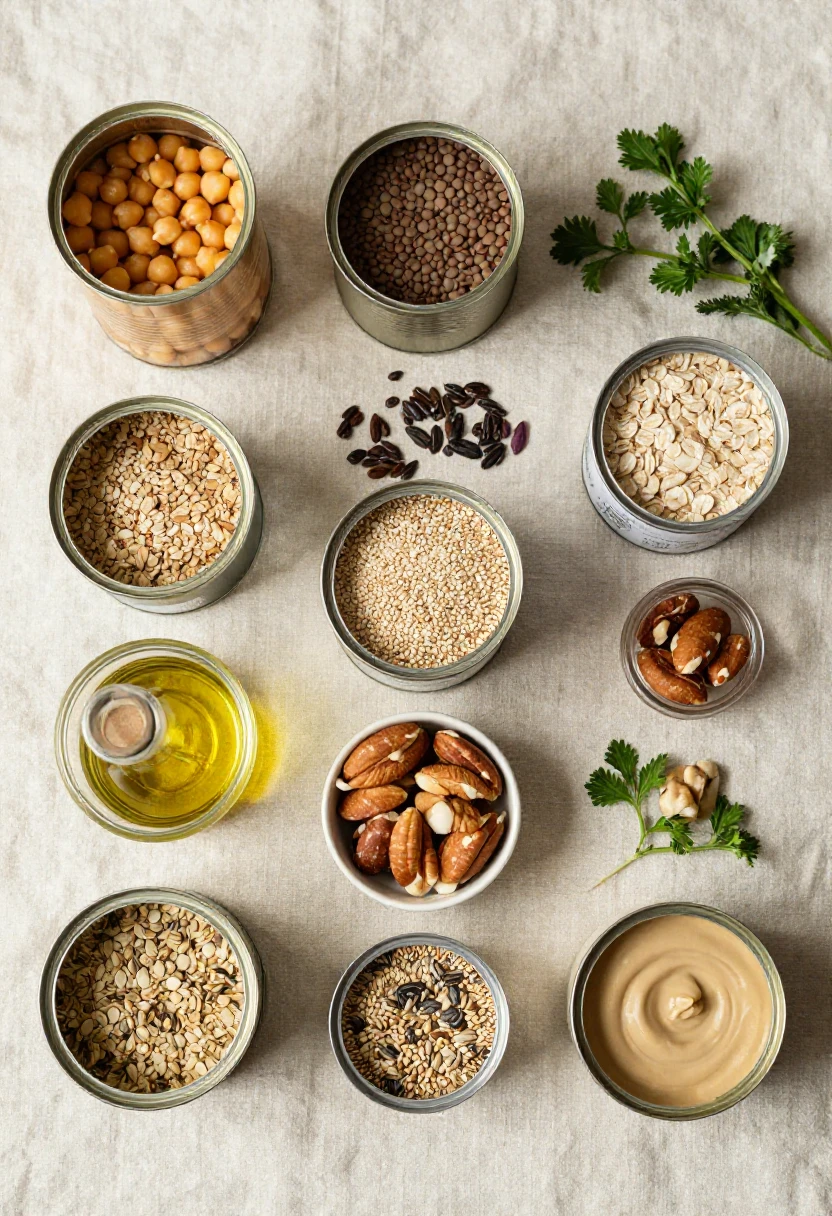
One of the first questions people ask when they start thinking about plant-based eating is: but where do I get my protein? It’s a fair question — and we’ll get to it. But protein is just one piece of a much bigger, more colorful picture.
Here’s what a well-built plant-based diet actually looks like on a practical level.
Protein Sources That Aren’t Boring
Yes, you can get plenty of protein from plants. No, you don’t have to eat plain tofu every day.
The plant kingdom has more protein variety than most people realize:
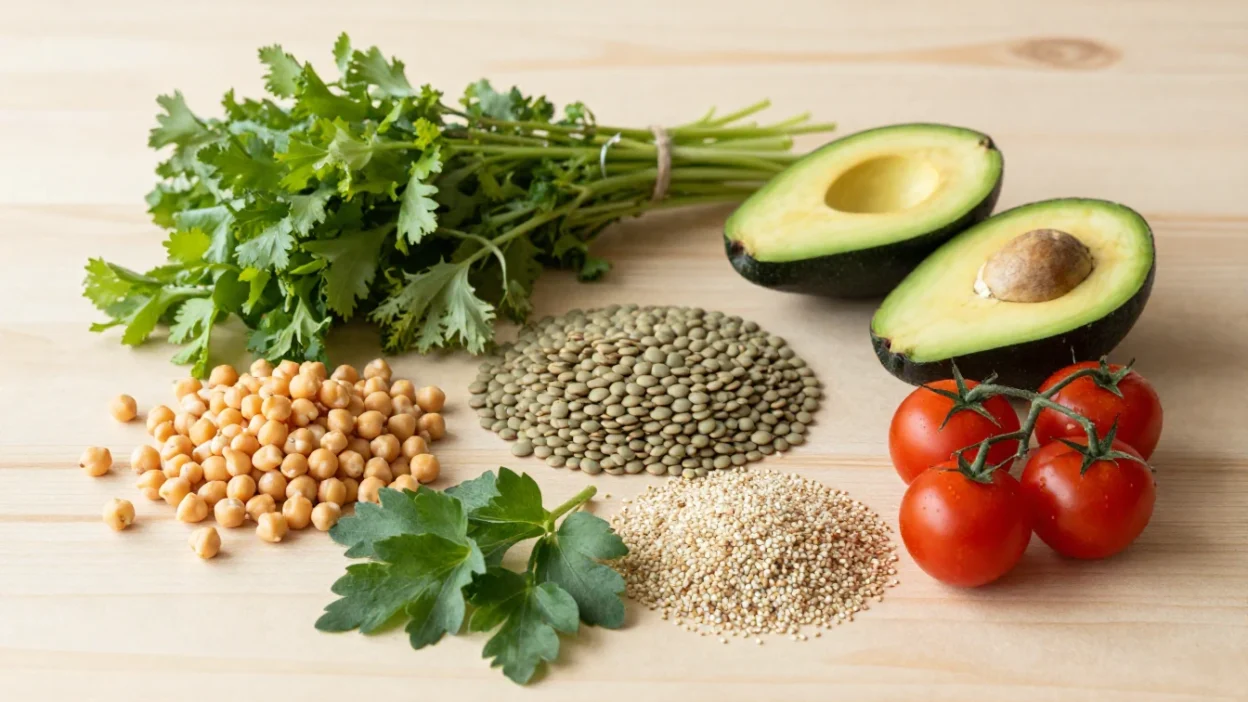
- Lentils — one of the most underrated foods out there. Cheap, filling, versatile, and packed with both protein and fiber. Red lentils melt into soups and curries. Green and brown lentils hold their shape beautifully in salads and stews.
- Chickpeas — roast them crispy for snacking, blend them into hummus, toss them into a curry or a grain bowl. They work everywhere.
- Black beans, kidney beans, white beans — endlessly adaptable. Tacos, soups, pasta, dips — beans belong in all of it.
- Tofu — the flavor it absorbs from a good marinade will surprise you. Baked, pan-fried, or crumbled into scrambles, it’s one of the most useful proteins in a plant-based kitchen.
- Tempeh — fermented, nutty, and heartier than tofu. Slice it thin, marinate it, and pan-fry it until crispy. It’s genuinely delicious.
- Edamame — a handful as a snack, stirred into a rice bowl, or tossed into a salad. Simple and satisfying.
- Seitan — made from wheat gluten, it has a meaty texture that works well in stir-fries and sandwiches. Not for those avoiding gluten, but worth knowing about.
Don’t stress about combining proteins at every meal. As long as you’re eating a variety of plant foods throughout the day, your body gets what it needs.
Healthy Fats, Grains, and Legumes to Stock Up On
Protein gets all the attention, but the rest of your plate matters just as much.
Healthy fats keep you full, support brain health, and make food taste good:
- Avocado and avocado oil
- Extra virgin olive oil
- Nuts — almonds, walnuts, cashews
- Seeds — flaxseed, chia, hemp, pumpkin
- Natural nut butters
Complex carbohydrates and grains give you steady energy and form the backbone of most plant-based meals:
- Brown rice, white rice — both have a place
- Quinoa — a complete protein on its own, which is a nice bonus
- Oats — endlessly useful for breakfast and baking
- Farro, barley, millet — worth exploring when you’re ready for variety
- Sweet potatoes — filling, naturally sweet, and work in both savory and sweet contexts
Vegetables — and here, more is always more:
- Dark leafy greens: spinach, kale, Swiss chard, arugula
- Cruciferous vegetables: broccoli, cauliflower, Brussels sprouts, cabbage
- Root vegetables: carrots, beets, parsnips
- Everything else: zucchini, peppers, mushrooms, tomatoes, eggplant
Mushrooms deserve a special mention. They have a deep, umami richness that makes them one of the best meat substitutes — not because they taste exactly like meat, but because they satisfy that same craving for something hearty and savory.
A Simple Pantry Checklist
Stock these and you’ll always be able to put a solid plant-based meal together, even on the busiest days:
Canned and jarred:
- Canned chickpeas, black beans, lentils, white beans
- Canned crushed tomatoes
- Coconut milk
- Tahini
- Good quality olive oil
Dry goods:
- Rolled oats
- Brown rice or quinoa
- Red lentils
- Pasta (regular or whole wheat)
- Nutritional yeast — this one’s a game changer. It adds a cheesy, savory depth to sauces, soups, and dressings
Freezer:
- Frozen edamame
- Frozen spinach and peas
- Frozen berries for smoothies and oatmeal
Spices and flavor builders:
- Garlic (fresh and powdered)
- Cumin, smoked paprika, turmeric, coriander
- Soy sauce or tamari
- Lemon juice — brightens everything
With a pantry like this, you’re never more than twenty minutes away from a meal that’s genuinely good.
How to Handle the Hard Moments
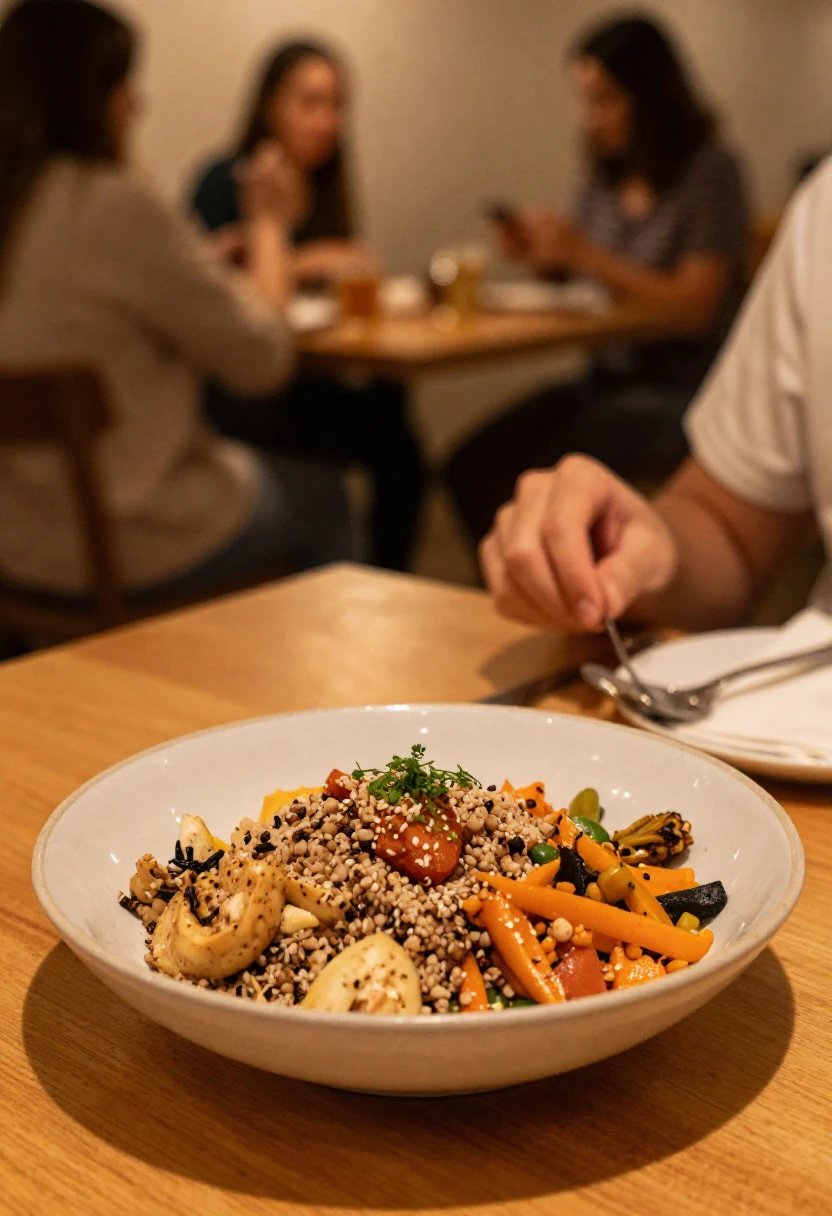
Eating at home with a stocked pantry and a good recipe? Easy. But real life has dinner parties, work lunches, late nights when nothing sounds appealing, and moments when you just really want a cheeseburger. This is where most plant-based transitions get tested — and where a little preparation goes a long way.
Eating Out and Social Situations
The good news: eating out plant-based is easier than it’s ever been. Most restaurants now have options — even if they’re not labeled as such.
A few strategies that actually help:
Scan the menu before you arrive. Most restaurants post their menus online. A quick two-minute look before you leave the house means you’re not sitting there anxiously scanning the page while everyone else orders.
Look beyond the “vegan” label. Sometimes the most satisfying plant-based meal on a menu isn’t the one marked with a little leaf icon. Side dishes, appetizers, and vegetable-forward mains can be combined into something genuinely great. A grain dish here, roasted vegetables there, a bean-based appetizer — suddenly you have a real meal.
Don’t be afraid to ask for small modifications. Most kitchens are happy to leave off cheese, swap a sauce, or serve something on the side. You don’t need to make it a production — a simple, friendly ask is usually all it takes.
At social gatherings: bring something. This isn’t just practical — it’s generous. Show up with a dish you genuinely love and that happens to be plant-based, and you’ll often find that everyone reaches for it first. Food has a way of converting people better than any conversation about nutrition ever could.
As for the social pressure — the comments, the questions, the relatives who take it personally — the best response is usually no response at all. Eat what you eat, enjoy it visibly, and let the food speak for itself.
Cravings and How to Work With Them (Not Against Them)
Cravings are information, not weakness.
When you’re craving something specific — cheese, meat, something rich and heavy — your body is usually telling you something. Not that you need that exact food, but that you need something it provides.
- Craving cheese? You might need more fat or salt. Try adding tahini, avocado, or nutritional yeast to your next meal.
- Craving meat? Often it’s the umami, the texture, or the protein. Mushrooms, lentils, tempeh, or a well-seasoned bean dish can hit that same spot.
- Craving something sweet? Blood sugar might be dipping. A small handful of dates with nut butter, or a banana with almond butter, usually does the job.
The worst thing you can do is try to white-knuckle through a craving. That’s a battle you’ll eventually lose — and then feel bad about. Instead, get curious. Ask what the craving is really about and find a plant-based answer to it.
Most cravings are also habit-driven rather than physical. If you’ve had a snack at 3pm every day for ten years, you’ll feel that pull at 3pm — not because your body needs it, but because your brain expects it. Over time, as you build new habits, those pulls shift too.
What to Do When You Slip Up
At some point, you’ll eat something that wasn’t part of the plan. A slice of birthday cake. A piece of your mom’s lasagna. A late-night drive-through run because it was that kind of week.
Here’s the only thing that matters: what you do next.
One meal — even one week — doesn’t erase progress. The people who succeed long-term aren’t the ones who never slip. They’re the ones who don’t let a slip turn into a spiral.
There’s no need for punishment, detox plans, or dramatic restarts. Just go back to eating the way you want to eat at your next meal. That’s it. That’s the whole recovery plan.
Progress in this context isn’t linear. It’s more like a general direction — mostly plant-based, getting better over time, with occasional detours that don’t define you.
Give yourself the same grace you’d give a friend. You’d never tell someone else that one imperfect meal means they’ve failed. Don’t say it to yourself either.
How to Make It Stick Long-Term
Starting a plant-based diet is one thing. Staying with it — through busy weeks, stressful seasons, and the inevitable moments when motivation dips — is something else entirely. This is where the real work happens. And it’s also where the real rewards are.
Finding Your “Why” and Coming Back to It
Motivation is unreliable. It shows up strong at the beginning, then quietly fades somewhere around week three when you’re tired and the fridge is empty and someone brought donuts to the office.
What lasts longer than motivation is a reason that actually matters to you.
Maybe it’s your energy levels. Maybe it’s a health number your doctor flagged. Maybe it’s wanting to feel better in your body, or cook more confidently, or just stop feeling sluggish after every meal. Whatever it is — get specific about it and write it down somewhere you’ll actually see it.
Because there will be moments when you forget why you started. And in those moments, having a concrete, personal reason to come back to is worth more than any meal plan or willpower pep talk.
Your “why” doesn’t have to be dramatic or noble. “I just feel better when I eat this way” is a completely valid reason — and often the most durable one.
Building a Flexible Routine, Not Rigid Rules
Rigidity is the enemy of sustainability.
The people who burn out on plant-based eating are usually the ones who set up a system with no room for real life — no exceptions, no flexibility, no grace when things go sideways. Eventually real life wins, and the whole thing collapses.
The people who thrive long-term treat it more like a default setting than a strict code.
In practice, that might look like:
- Plant-based at home, flexible when out — you control what’s in your kitchen, and that’s where most of your meals happen anyway
- Mostly whole foods, occasional treats — you’re not building a religion, you’re building a lifestyle
- Progress over perfection — an 80% plant-based diet sustained for years does more for your health than a 100% plant-based diet that lasts three months
Build in the flexibility intentionally. Decide in advance that there will be exceptions — holiday meals, travel, celebrations — and that those exceptions are part of the plan, not failures within it.
A routine that bends doesn’t break.
Communities, Cookbooks, and Resources That Help
You don’t have to figure this out alone — and you shouldn’t have to.
Cookbooks can completely change your relationship with plant-based cooking. A few that are genuinely worth having:
- Plenty by Yotam Ottolenghi — vegetable-forward cooking that feels luxurious, not virtuous
- Oh She Glows by Angela Liddon — approachable, everyday plant-based recipes with real staying power
- The How Not to Die Cookbook by Michael Greger — if you want the science alongside the recipes
Online communities offer something cookbooks can’t — real people sharing real struggles and wins. Subreddits like r/PlantBasedDiet or r/veganrecipes are full of beginners asking the same questions you have, and people who’ve been doing this for years sharing what actually works.
Meal planning apps like Mealime or Forks Over Knives can take a lot of the weekly decision-making off your plate — literally.
And finally: follow food accounts that make plants look genuinely delicious. What you see regularly starts to shape what you want. Fill your feed with beautiful, craveable plant-based food and you’ll find yourself wanting to cook it.
The environment you create around yourself matters. Make it one that supports the direction you’re heading.
Conclusion
Switching to a plant-based diet isn’t about becoming a different person overnight. It’s not about being perfect, never eating cheese again, or having a deep philosophical stance on every meal you eat.
It’s about moving in a direction that feels good — physically, mentally, and practically — and building habits that actually fit your life.
You don’t need to overhaul everything at once. Start with one meal. Then another. Stock your pantry with a few good staples. Find two or three recipes you genuinely love. Give yourself room to mess up and come back without drama.
The transition looks different for everyone. Some people go all-in within a month and never look back. Others spend a year slowly crowding out meat and dairy, meal by meal, until one day they realize their whole relationship with food has quietly shifted.
Both paths work. Your path works.
What matters most is that you start — and that you’re kind to yourself along the way.
FAQ
Q: How long does it take to transition to a plant-based diet? There’s no set timeline. Some people feel comfortable within a few weeks; others take several months to fully shift their habits. Going at your own pace is not just okay — it’s actually what makes the change stick long-term.
Q: Will I get enough protein on a plant-based diet? Yes — if you’re eating a variety of plant foods. Lentils, beans, tofu, tempeh, edamame, quinoa, and seeds all contribute meaningful protein. As long as you’re eating enough overall and not living on salad alone, protein deficiency is rarely an issue.
Q: What if my family or partner doesn’t want to eat plant-based? You don’t have to convert anyone. Many plant-based meals are easy to adapt — cook a shared base and let people add what they want on top. Over time, good food tends to do its own convincing without any pressure from you.
Q: Is plant-based eating expensive? It doesn’t have to be. The most affordable foods in any supermarket — dried beans, lentils, oats, rice, frozen vegetables, canned tomatoes — are all plant-based staples. Where costs go up is with specialty products and meat substitutes. Stick mostly to whole foods and it’s one of the most budget-friendly ways to eat.