Introduction — Why Homemade Horchata Feels Like a Small Celebration
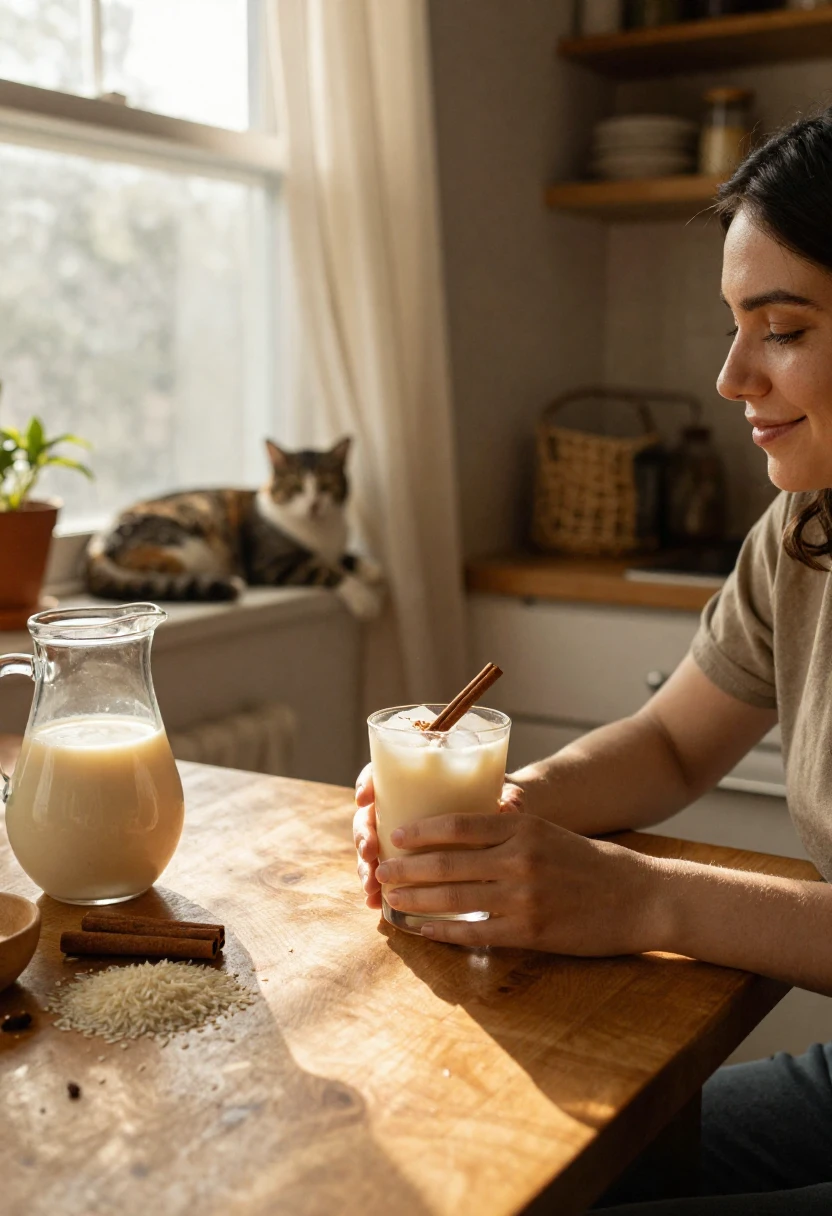
There’s something quietly magical about the first sip of a well-made horchata.
It’s cold and creamy, gently sweet, touched with cinnamon and vanilla — refreshing, yet comforting at the same time. On a hot afternoon, it feels like relief. After a spicy meal, it feels like balance. And in many homes across Mexico, it feels like home.
Maybe you’ve tasted horchata at a small neighborhood taquería. Maybe it came in a tall plastic cup, filled with ice, slightly frothy on top. Or maybe it was poured from a large glass pitcher at a family gathering, made lovingly by someone who has been perfecting the recipe for years.
However you first encountered it, chances are it stayed with you.
Because horchata isn’t just a drink.
It’s a memory. A pause in the day. A reminder that simple ingredients, handled with care, can become something extraordinary.
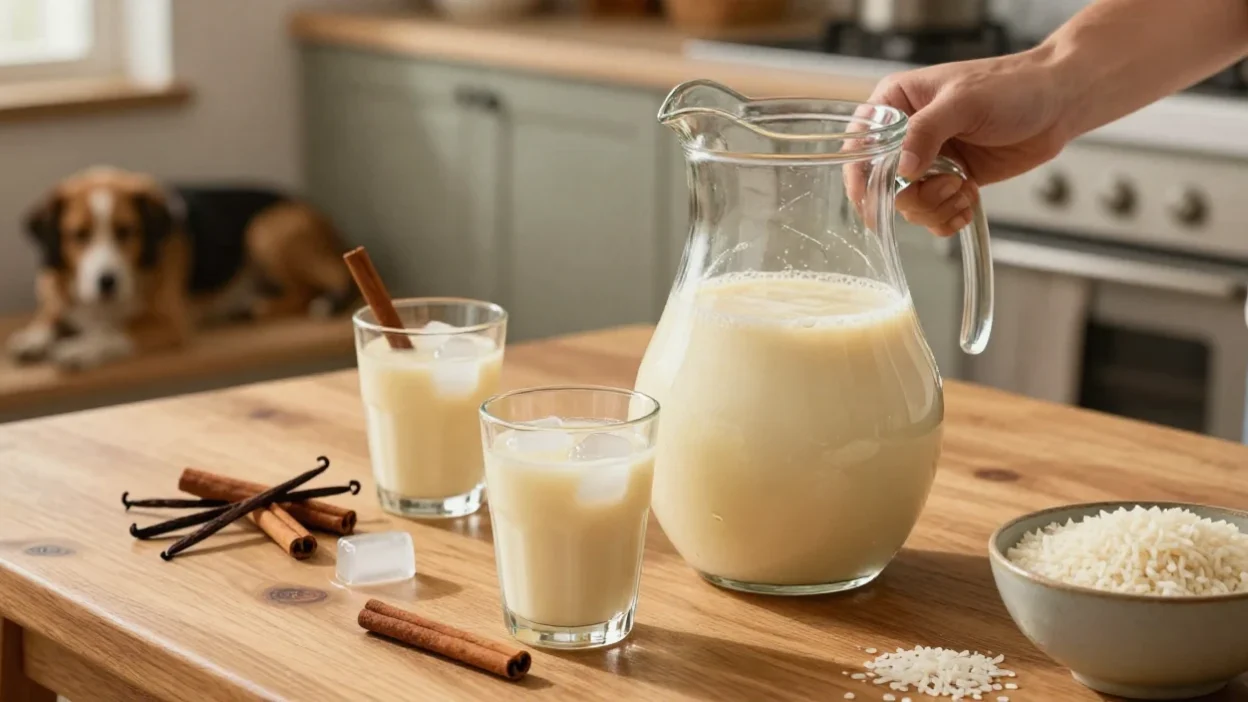
At its heart, traditional Mexican horchata is made from humble things: rice, water, cinnamon, sugar, and time. No complicated equipment. No rare ingredients. Just patience, attention, and a little intuition.
And yet, so many homemade versions miss the mark — too grainy, too bland, too sweet, or oddly flat.
That’s where this guide comes in.
In this article, we’ll walk through:
- what makes horchata truly authentic,
- how to achieve that smooth, silky texture,
- small tricks that make a big difference,
- and how to adapt the recipe to your own taste without losing its soul.
Whether you’re making horchata for the first time or trying to perfect your family recipe, this is an invitation to slow down, soak the rice, breathe in the cinnamon, and enjoy the process.
Because some of the best flavors in life aren’t rushed.
What Is Horchata? Origins & Cultural Context
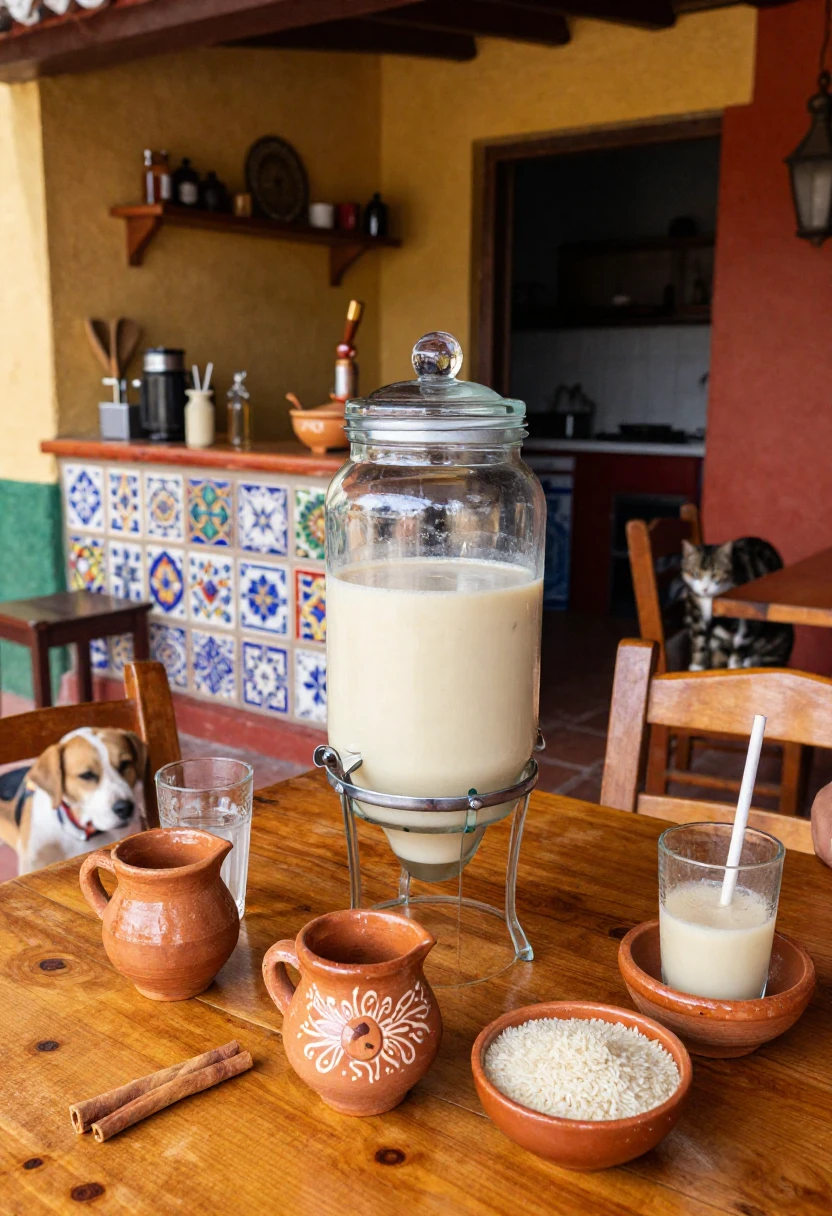
To truly appreciate homemade horchata, it helps to understand where it comes from — and how it traveled, transformed, and rooted itself in different cultures.
Because horchata isn’t just one drink.
It’s a family of traditions, shaped by geography, ingredients, and history.
From Europe to Latin America
The word horchata originally comes from Spain, where a famous version is made from tiger nuts (chufa) and is especially popular in the region around Valencia.
This Spanish horchata is pale, nutty, and slightly earthy — very different from the rice-based drink most people know today.
When Spanish influence reached Latin America, the concept of horchata traveled too. But ingredients changed. Tiger nuts were rare. Rice was abundant. Cinnamon and vanilla became central. And slowly, a new version was born.
The Rise of Mexican Rice Horchata
Over time, rice-based horchata became a staple in Mexican food culture, especially as part of aguas frescas — refreshing homemade drinks made from fruits, grains, and seeds.
Unlike bottled beverages, these drinks were traditionally prepared fresh:
- in home kitchens,
- at street stalls,
- in small family restaurants.
Horchata became the gentle counterbalance to bold, spicy food. It cooled the mouth after chili heat. It softened rich flavors. It refreshed people working under the sun.
It wasn’t “special occasion” food.
It was everyday comfort.
Why Rice Became the Heart of Horchata
Rice does something special when soaked, blended, and strained.
It creates:
- a naturally creamy texture,
- subtle sweetness,
- and a smooth body without heaviness.
Combined with cinnamon and vanilla, it becomes both refreshing and soothing — a rare balance that few drinks achieve.
This simplicity is why horchata endured.
It didn’t depend on luxury ingredients. It depended on care.
A Drink Passed Through Generations
In many families, horchata recipes are rarely written down.
They’re learned by watching:
- how long the rice soaks,
- how fine the blending is,
- how sweetness is adjusted “by feel.”
One person’s horchata might be lighter. Another’s more milky. Some prefer strong cinnamon. Others keep it subtle.
And all of them are valid.
That flexibility is part of its beauty.
Horchata isn’t about strict rules.
It’s about respecting tradition while making it your own.
The Magic of Traditional Ingredients
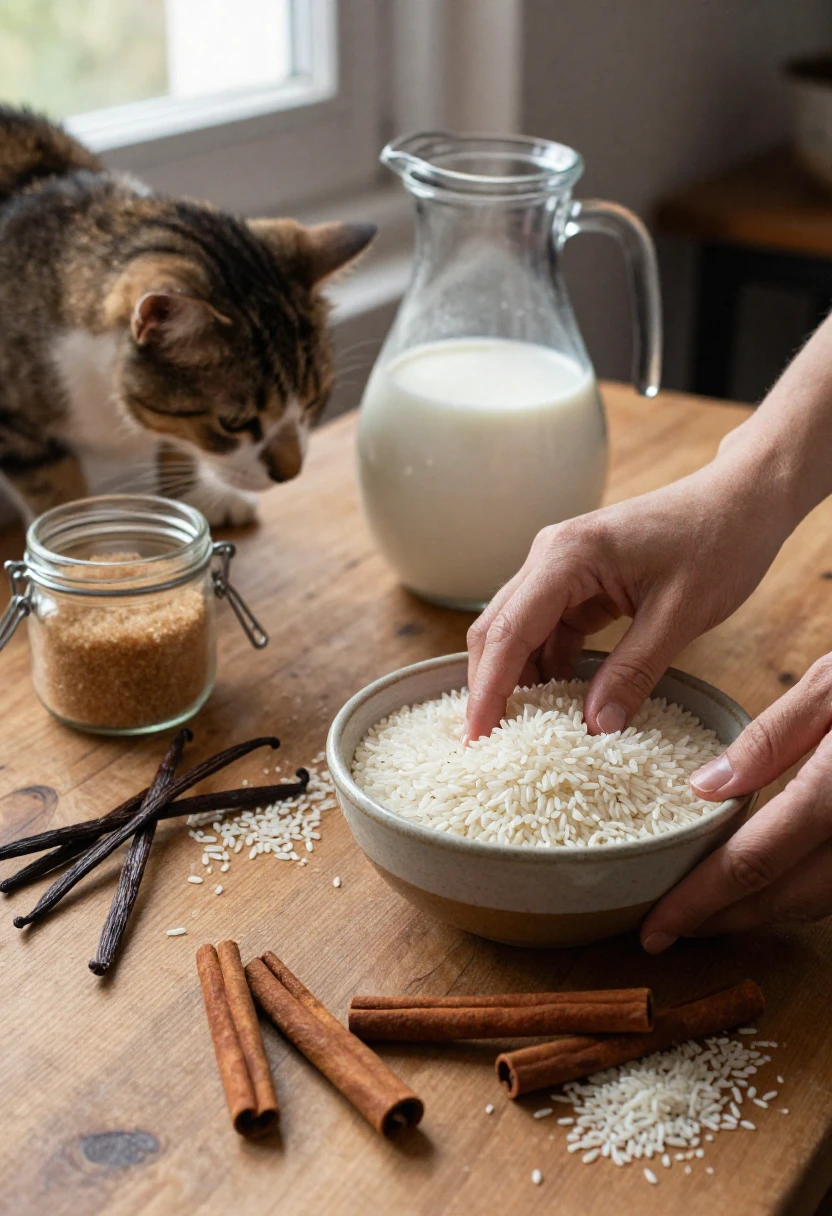
One of the most beautiful things about authentic horchata is how little it asks of you.
No long shopping list.
No specialty stores.
No complicated techniques.
Just a few humble ingredients — each playing a quiet but essential role.
When they come together, something surprisingly layered and comforting is born.
Rice: The Foundation of Creaminess
Rice is the soul of Mexican horchata.
When soaked and blended, it releases natural starches that create:
- a soft, milky texture,
- gentle body,
- and subtle sweetness.
Long-grain white rice is traditionally used because it blends smoothly and doesn’t overpower the flavor. It acts like a blank canvas — ready to absorb cinnamon, vanilla, and sugar.
Without rice, horchata loses its identity.
With it, the drink becomes quietly luxurious.
Cinnamon: Warmth and Depth
Cinnamon is what gives horchata its signature aroma.
Not sharp.
Not spicy.
But warm, rounded, and comforting.
Traditionally, whole cinnamon sticks are soaked with the rice. This slow infusion creates a deeper, more natural flavor than powdered cinnamon ever could.
It’s the scent that fills the kitchen overnight — subtle, inviting, nostalgic.
Vanilla: The Gentle Finishing Note
Vanilla is often optional, but when used well, it transforms the drink.
Just a small amount adds:
- softness,
- sweetness,
- and a bakery-like warmth.
It doesn’t shout.
It whispers.
And in horchata, whispers matter.
Water: The Quiet Hero
It may sound obvious, but water quality matters.
Since horchata is mostly water, using clean, fresh-tasting water makes a noticeable difference. It allows the rice and spices to shine without interference.
In traditional kitchens, this was always understood instinctively — good water makes good drinks.
Sweetener: Finding Your Balance
Sugar is most commonly used, but horchata isn’t meant to be aggressively sweet.
The goal is balance:
- enough to enhance the rice,
- enough to soften the cinnamon,
- not enough to dominate.
Some people prefer brown sugar, piloncillo, or even honey. Each brings its own personality. None are “wrong” — as long as the drink stays gentle and drinkable.
Optional Milk: Creaminess, Your Way
Some traditional recipes use only water.
Others add milk, evaporated milk, or condensed milk.
This choice affects:
- richness,
- color,
- and mouthfeel.
Milk makes horchata feel more dessert-like. Water-only versions feel lighter and more refreshing. Both are authentic — just different expressions.
Why These Ingredients Work Together
What makes horchata special isn’t any single element.
It’s the harmony.
- Rice gives body.
- Cinnamon gives warmth.
- Vanilla gives softness.
- Sugar gives balance.
- Water gives life.
Nothing overwhelms.
Nothing competes.
It’s simplicity refined through generations.
Horchata vs Rice Pudding: What’s the Difference?
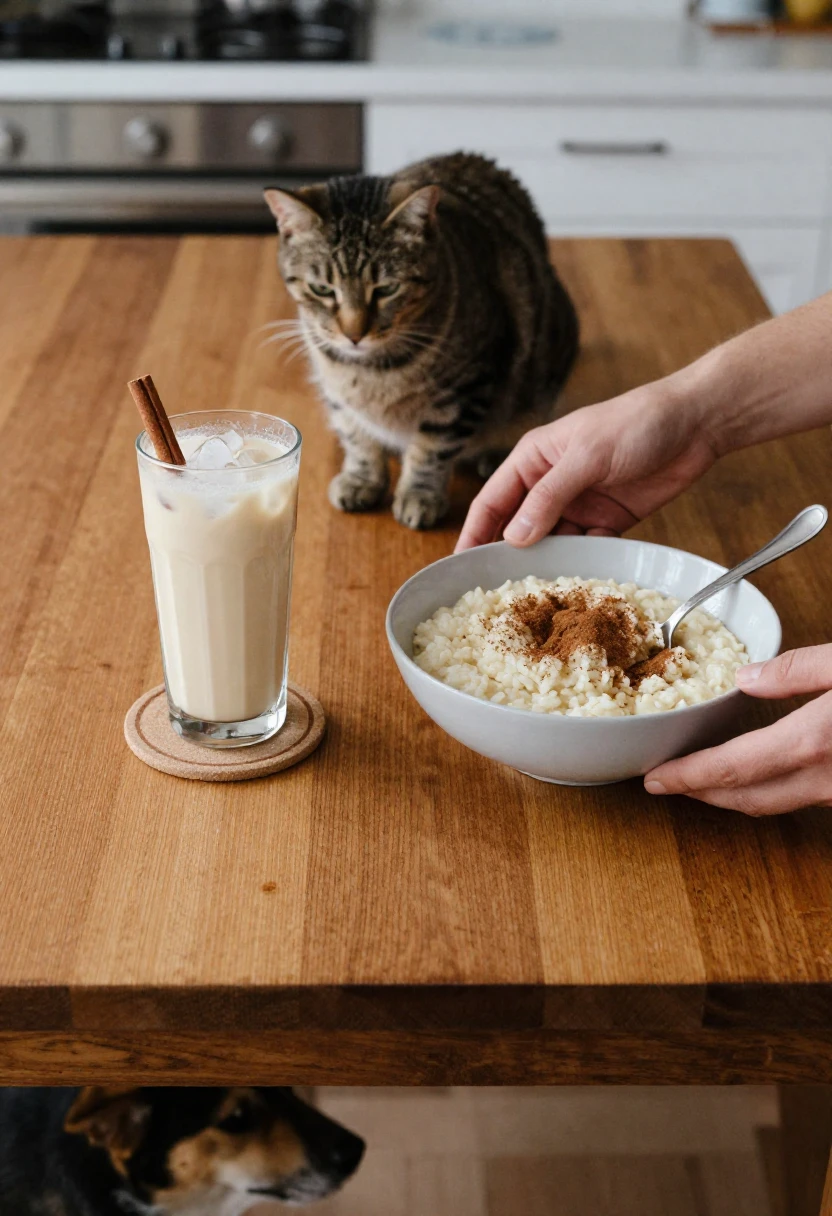
If you’ve ever made horchata for the first time and thought, “This smells a bit like rice pudding…” — you’re not wrong.
These two share similar ingredients.
But they’re meant for completely different experiences.
Understanding that difference helps you get horchata just right.
Same Roots, Different Destinations
Both horchata and rice pudding usually begin with:
- rice,
- cinnamon,
- sugar,
- sometimes milk,
- and a touch of vanilla.
From there, they take very different paths.
Rice pudding leans into thickness, warmth, and comfort.
Horchata leans into lightness, refreshment, and flow.
One is eaten with a spoon.
The other is meant to be poured over ice and sipped slowly.
Texture Is the Biggest Difference
Texture is where most homemade horchata goes wrong.
Rice pudding is meant to be:
- thick,
- creamy,
- almost custard-like,
- visibly rich.
Horchata should be:
- smooth,
- pourable,
- light,
- slightly cloudy but not heavy.
If your horchata feels dense, sticky, or overly creamy, it’s drifting toward dessert territory.
Temperature Changes Everything
Rice pudding is usually served warm or at room temperature.
Horchata is meant to be cold — often over ice.
That cold temperature is essential. It turns the gentle sweetness and cinnamon into something refreshing rather than heavy.
Warm horchata doesn’t feel like horchata.
It feels unfinished.
Purpose: Comfort vs Refreshment
Rice pudding is about comfort.
It’s for slow evenings, small bowls, and quiet moments.
Horchata is about balance.
It’s designed to:
- cool spicy food,
- refresh after heat,
- cleanse the palate,
- hydrate and soothe.
It belongs beside tacos, tamales, and street food — not on a dessert plate.
How to Avoid “Accidental Rice Pudding”
If your horchata starts feeling too thick, it’s usually because of:
- too much rice,
- not enough straining,
- too much milk,
- over-blending without dilution.
The fix is simple:
strain thoroughly and don’t be afraid to thin it slightly with cold water.
Good horchata should feel like silk — not cream.
A Useful Mental Image
Here’s an easy way to remember:
If you’d happily eat it with a spoon → it’s rice pudding.
If you want to pour it over ice → it’s horchata.
Aim for the second.
Step-by-Step Horchata Recipe (Authentic & Homemade)
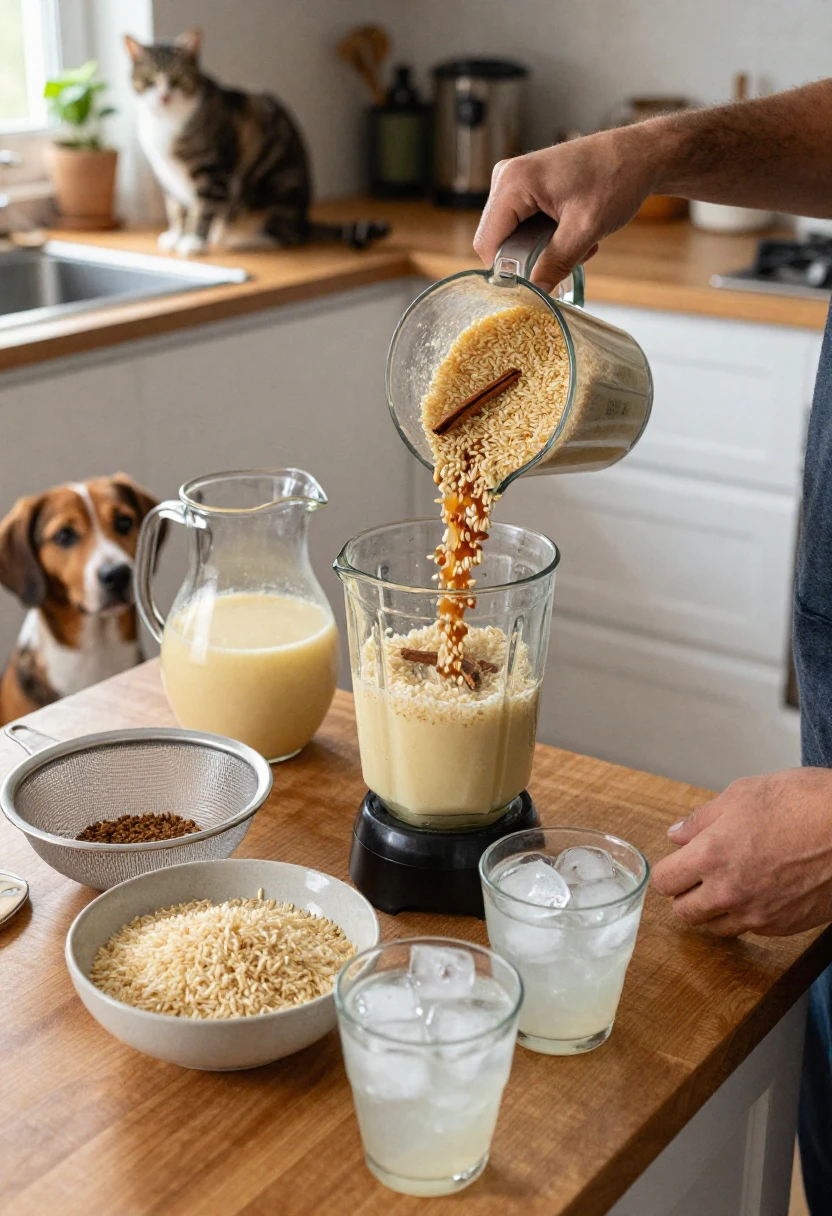
Making horchata at home is less about speed and more about rhythm. It’s a slow, gentle process — soak, blend, strain, taste, adjust — and that’s where its magic lives.
Once you’ve done it a few times, it becomes almost meditative.
Here’s how to make it the traditional way.
📝 Ingredients (Basic Authentic Version)
You’ll need:
- 1 cup long-grain white rice
- 1 cinnamon stick (Mexican cinnamon if available)
- 3–4 cups water (for soaking)
- 2–3 cups cold water (for blending/diluting)
- ½–¾ cup sugar (to taste)
- 1 teaspoon vanilla extract (optional)
- ½–1 cup milk, evaporated milk, or condensed milk (optional)
- Ice, for serving
Step 1: Rinse and Soak the Rice
Start by rinsing the rice under cold water until the water runs mostly clear.
Then place it in a bowl with:
- the cinnamon stick
- 3–4 cups of water
Cover and let it soak for at least 6 hours, ideally overnight.
This step softens the rice and allows the cinnamon to slowly release its flavor. Don’t rush it — good horchata starts here.
Step 2: Blend Until Completely Smooth
Transfer the soaked rice, cinnamon, and soaking water into a blender.
Blend on high speed for 1–2 minutes, until the mixture looks milky and finely ground.
You’re aiming for:
- no visible rice grains,
- no gritty texture,
- a smooth, cloudy liquid.
If your blender struggles, blend in two batches.
Step 3: Strain for Silkiness
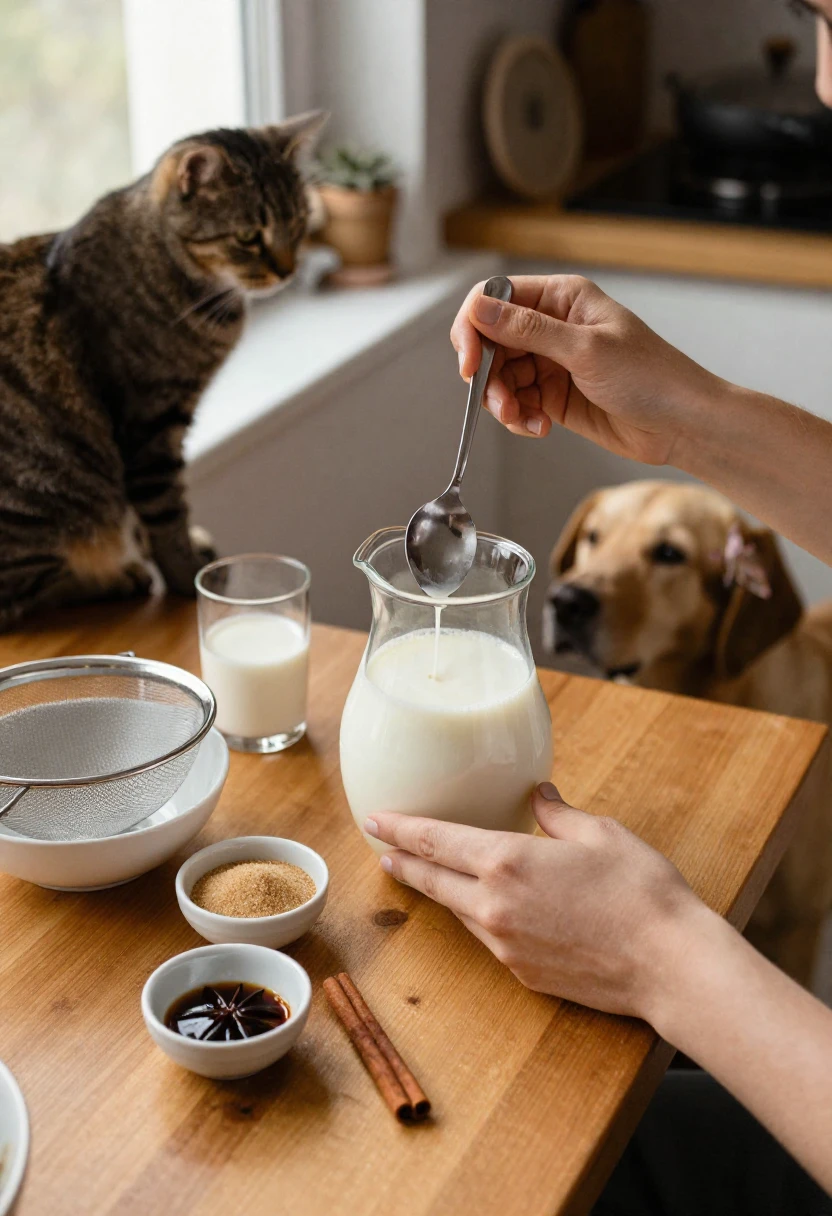
Place a fine-mesh sieve, nut milk bag, or cheesecloth over a large pitcher or bowl.
Slowly pour the blended mixture through it.
Use a spoon or clean hands to gently press the liquid through.
This step is essential.
It’s what separates smooth horchata from grainy disappointment.
Discard the solids.
Step 4: Sweeten and Flavor
To the strained liquid, add:
- sugar (start small and adjust),
- vanilla (if using),
- milk or condensed milk (if desired).
Stir well until fully dissolved.
Taste. Pause. Adjust.
Good horchata is balanced — never aggressively sweet.
Step 5: Dilute and Chill
Add cold water little by little until the texture feels light and drinkable.
Most people prefer horchata slightly thinner than milk.
Refrigerate for at least 1–2 hours before serving.
Cold is part of the recipe.
Step 6: Serve Over Ice
Fill a glass with ice and pour in the chilled horchata.
If you like, add:
- a tiny sprinkle of cinnamon,
- or a cinnamon stick for aroma.
Take a sip.
This is the moment.
Quick Texture Check
Your finished horchata should be:
✅ smooth
✅ pourable
✅ lightly creamy
✅ refreshing
❌ not thick
❌ not gritty
❌ not heavy
If it feels too thick → add cold water.
If it tastes flat → adjust sugar or vanilla.
A Small Home-Kitchen Tip
Many traditional cooks say horchata tastes better the next day.
After resting overnight, the flavors blend and soften beautifully. If you can wait — it’s worth it.
Tips for the Best Texture and Flavor
A good horchata is pleasant.
A great horchata is unforgettable.
The difference usually isn’t in the ingredients — it’s in the small decisions you make along the way. These quiet details are what turn a simple rice drink into something people remember.
Here’s how to refine your horchata until it feels just right.
Soak Longer Than You Think You Need To
If there’s one step that most beginners rush, it’s soaking.
Six hours works.
Overnight works better.
Long soaking:
- softens rice fully,
- improves blending,
- enhances creaminess,
- deepens cinnamon flavor.
When in doubt, wait.
Blend Until You Think It’s “Enough”… Then Blend More
Under-blending leads to grainy horchata.
Your mixture should look:
- cloudy,
- smooth,
- almost milky.
If you still see tiny rice particles, keep going. Your blender is building texture.
Strain Twice for Extra Silkiness
If you want café-quality smoothness, strain twice.
First pass removes large solids.
Second pass catches fine grit.
This extra step takes two minutes — and elevates the entire drink.
Sweeten Gradually, Never All at Once
Sugar behaves differently in liquid.
Start with less than you think you need. Stir. Taste. Adjust.
Remember:
Cold dulls sweetness slightly.
Your horchata will taste a bit less sweet after chilling.
Respect the Cinnamon
Cinnamon should support, not dominate.
If it tastes sharp or bitter, you likely:
- used too much,
- soaked too long,
- or used powdered cinnamon.
Stick with whole sticks when possible.
Choose Your Milk Wisely (If Using It)
Milk is optional — not mandatory.
- Regular milk → classic creaminess
- Evaporated milk → richer texture
- Condensed milk → sweetness + body
If using condensed milk, reduce added sugar.
Don’t Skip the Resting Time
Fresh horchata is good.
Chilled horchata is better.
Resting allows:
- flavors to blend,
- starches to settle,
- sweetness to soften.
Two hours minimum. Overnight is ideal.
Taste It Like a Guest Would
Before serving, take a quiet moment.
Ask yourself:
- Is it refreshing?
- Is it balanced?
- Would I want another glass?
If the answer is yes — you’re there.
A Traditional Kitchen Trick
Some home cooks add a tiny pinch of salt.
Not enough to taste — just enough to enhance sweetness and depth.
It sounds strange. It works.
Creative Variations to Try
Once you’ve mastered classic horchata, something interesting happens.
You stop following the recipe so closely.
You start listening to your taste.
You begin experimenting — gently, intuitively, confidently.
That’s how horchata has always evolved: not through rigid rules, but through small personal touches passed from one kitchen to another.
Here are some thoughtful, delicious ways to explore beyond the traditional version — without losing its soul.
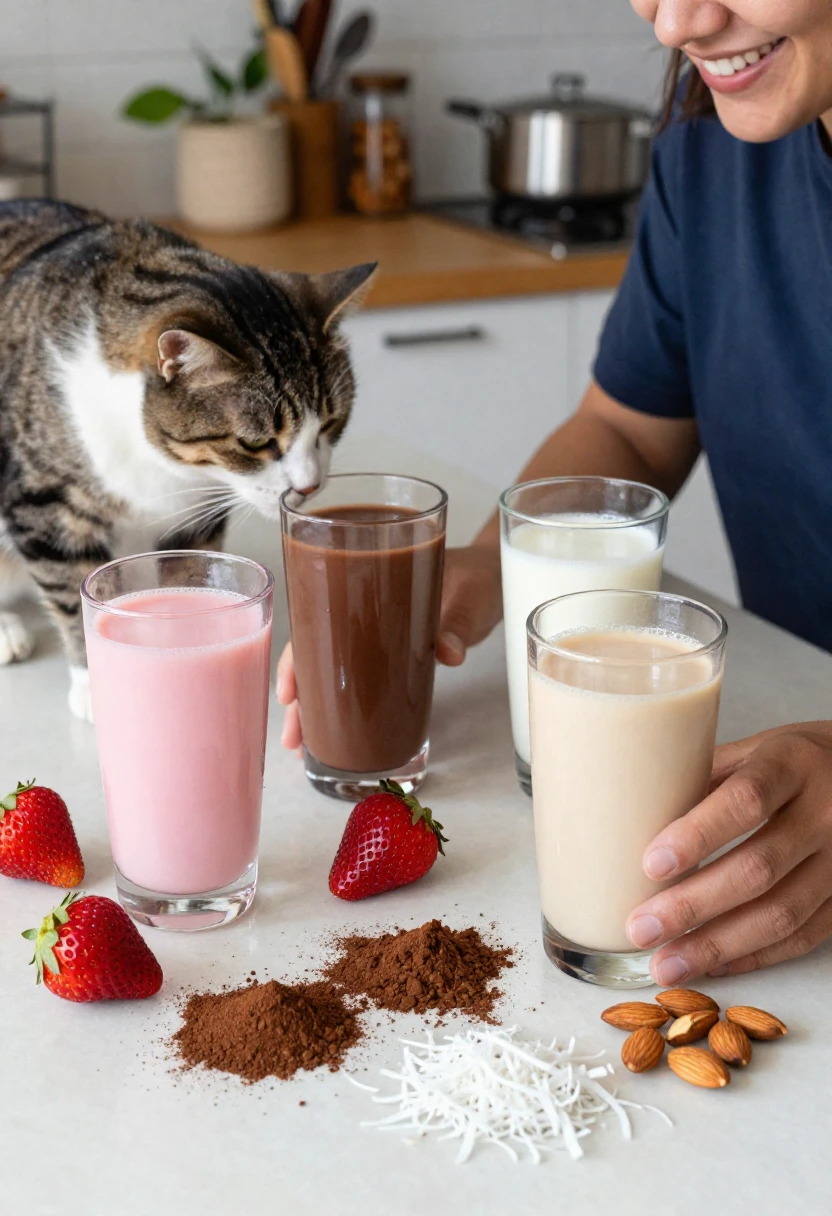
Almond Horchata: Light, Nutty, and Elegant
One of the most popular variations is adding almonds to the base.
How it works:
- Soak ¼ cup raw almonds with the rice and cinnamon
- Blend everything together
- Strain thoroughly
What it adds:
- subtle nuttiness,
- extra creaminess,
- a slightly more “luxury” feel.
Almond horchata is especially beautiful when served very cold on hot days. It feels refreshing and refined at the same time.
Coconut Horchata: Tropical and Comforting
If you love coconut flavors, this version feels like a gentle vacation in a glass.
Two easy ways to do it:
- Replace part of the water with coconut milk
- Or add 2–3 tablespoons shredded coconut when blending
Result:
- soft tropical aroma,
- richer mouthfeel,
- natural sweetness.
Coconut horchata pairs wonderfully with spicy food and grilled dishes.
Strawberry Horchata: Fresh and Playful
This variation is especially popular in warm seasons and family gatherings.
How to make it:
- Blend fresh strawberries separately
- Strain them
- Mix into finished horchata to taste
Why this matters:
Adding fruit after straining preserves smoothness and prevents graininess.
The flavor becomes:
- lightly fruity,
- softly creamy,
- visually beautiful.
It’s horchata — but with personality.
Chocolate Horchata: Dessert in a Glass
For special occasions, chocolate horchata is unforgettable.
Options:
- Unsweetened cocoa powder
- Melted dark chocolate
- Chocolate syrup (use lightly)
Add it after straining and sweetening.
This version works best when:
- slightly thicker,
- a little richer,
- served very cold.
It feels indulgent without being heavy.
Coffee Horchata: For Slow Mornings
Coffee horchata bridges breakfast and refreshment.
How:
- Replace part of the water with cold brew coffee
- Or add espresso to taste
What you get:
- gentle caffeine,
- creamy bitterness,
- subtle sweetness.
It’s perfect for late mornings when you want something between coffee and dessert.
Spiced Horchata: Warmth Without Heat
Cinnamon is traditional — but it doesn’t have to work alone.
Try adding:
- a tiny pinch of nutmeg,
- a clove (remove after soaking),
- star anise (very lightly),
- or orange zest.
These additions should whisper, not shout.
If you can clearly identify the spice, it’s probably too much.
Vegan and Dairy-Free Horchata (Naturally)
Traditional horchata is often dairy-free by default.
If you want creaminess without milk:
- use almond milk,
- oat milk,
- coconut milk,
- or cashew milk.
Each creates a different character:
- oat = cozy and soft
- almond = light and clean
- cashew = rich and smooth
There’s no wrong choice — only preference.
Low-Sugar and Naturally Sweetened Versions
If you prefer less sugar, you can experiment with:
- dates (blended and strained),
- maple syrup,
- honey,
- agave.
Important:
Always dissolve sweeteners fully and taste after chilling. Sweetness changes with temperature.
How to Experiment Without Ruining a Batch
Here’s a simple rule:
Never change everything at once.
Start with:
- one new ingredient,
- small quantity,
- mixed into a portion, not the whole batch.
This way, you learn what works — without wasting time and ingredients.
A Cultural Note on “Authenticity”
Some people worry that variations aren’t “real” horchata.
But in reality, horchata has always evolved.
Every family.
Every region.
Every generation.
As long as you respect the base — rice, cinnamon, care, patience — your version is valid.
Tradition lives through adaptation.
Pairing Horchata with Mexican Food
Horchata is wonderful on its own. Cold, gently sweet, softly spiced — it doesn’t need anything else to shine.
And yet, when it’s paired with the right food, something special happens.
It becomes more than a drink.
It becomes part of the meal’s rhythm.
In Mexican cuisine, horchata has always played a quiet but essential role: it balances heat, softens richness, and refreshes the palate between bold bites. It’s not there to compete with food. It’s there to support it.
Why Horchata Works So Well With Spicy Dishes
If you’ve ever eaten something truly spicy and reached instinctively for horchata, you already understand its power.
Chili heat builds.
Oil coats the tongue.
Flavors intensify.
Horchata steps in gently.
Its cool temperature calms the mouth. Its subtle sweetness eases the burn. Its creamy texture creates a soft barrier that helps reset your taste buds. Unlike soda, it doesn’t clash. Unlike water, it doesn’t disappear.
It restores balance.
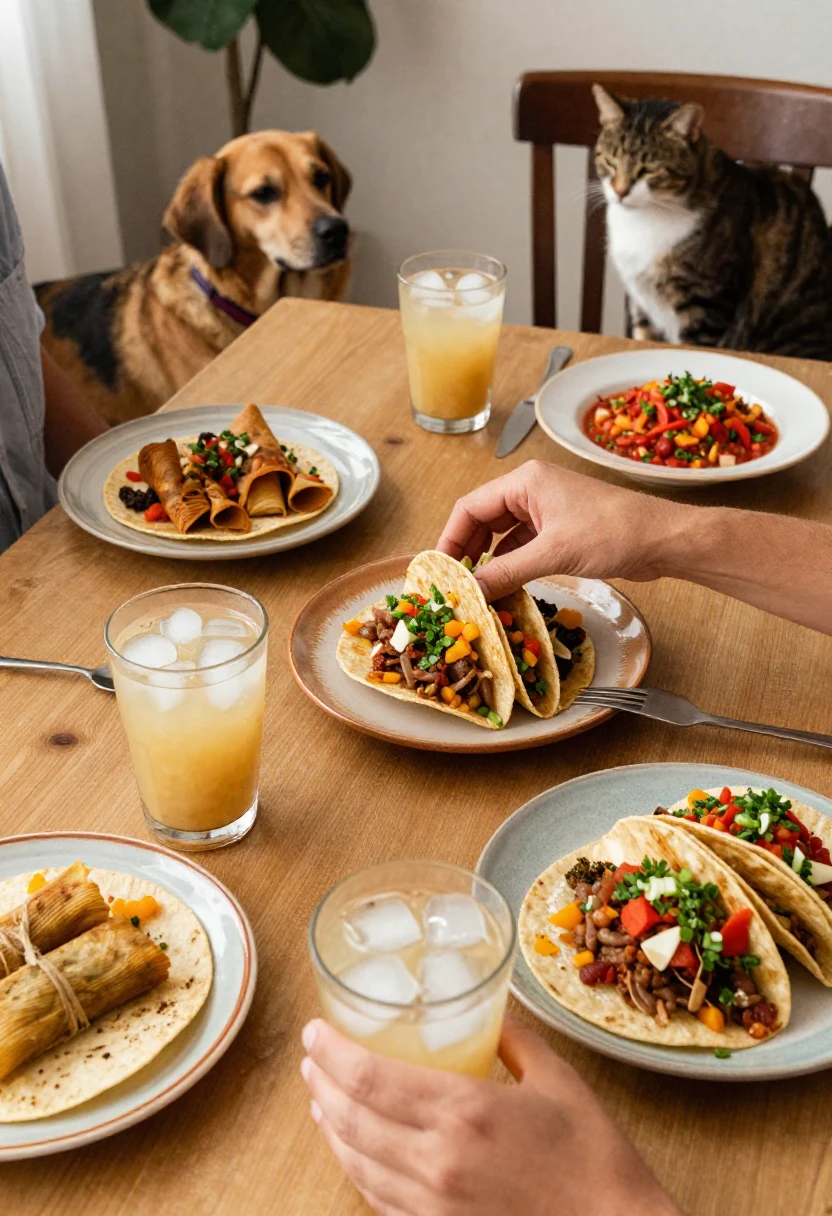
That’s why you’ll so often see horchata served alongside tacos with spicy salsa, enchiladas, chilaquiles, or richly seasoned meats. It allows you to enjoy heat without being overwhelmed by it.
The Perfect Match for Street Food
Horchata and Mexican street food belong together.
Imagine standing near a small food stand on a warm afternoon. There’s the sound of sizzling meat, the smell of fresh tortillas, the clink of ice in plastic cups. Someone hands you a taco — juicy, salty, dripping slightly. And next to it, a cold horchata.
That combination is intentional.
Street food is often bold and intense. Horchata brings calm. It keeps the meal enjoyable from first bite to last.
Pairing With Rich and Comforting Foods
Not all Mexican food is spicy. Much of it is deeply comforting — slow-cooked, layered, and filling.
Think of tamales, creamy soups, rice dishes, or stewed meats.
With these meals, horchata doesn’t cool heat. Instead, it lightens heaviness.
After a few bites of something rich, a sip of horchata refreshes your mouth and keeps the meal from feeling too heavy. It creates space for the next bite.
Horchata With Sweet and Savory Meals
Interestingly, horchata also works beautifully with slightly sweet or neutral dishes.
With breakfast foods like pan dulce, sweet breads, or simple egg dishes, horchata feels almost like a dessert beverage. It adds comfort without being overpowering.
With mild savory dishes, it becomes a gentle contrast — not sharp, not acidic, just smooth and steady.
Temperature Matters More Than You Think
One small detail makes a big difference: horchata should be properly cold.
When it’s well chilled, it refreshes.
When it’s lukewarm, it feels heavy.
If you’re serving horchata with food, always chill it thoroughly and serve it over ice when possible. That temperature contrast is part of the pairing.
Serving Horchata at Home
When you’re serving horchata with a homemade Mexican meal, think of it the same way you think of bread or rice.
It’s not an afterthought.
It’s part of the table.
Pour it into simple glasses. Add ice. Let people refill freely. Let it be present, not precious.
That’s how it has always been enjoyed — casually, generously, without ceremony.
A Small Hosting Secret
If you’re serving guests spicy food, make sure horchata is visible and accessible.
People may not ask for it.
But they’ll be grateful it’s there.
Health & Nutrition Notes
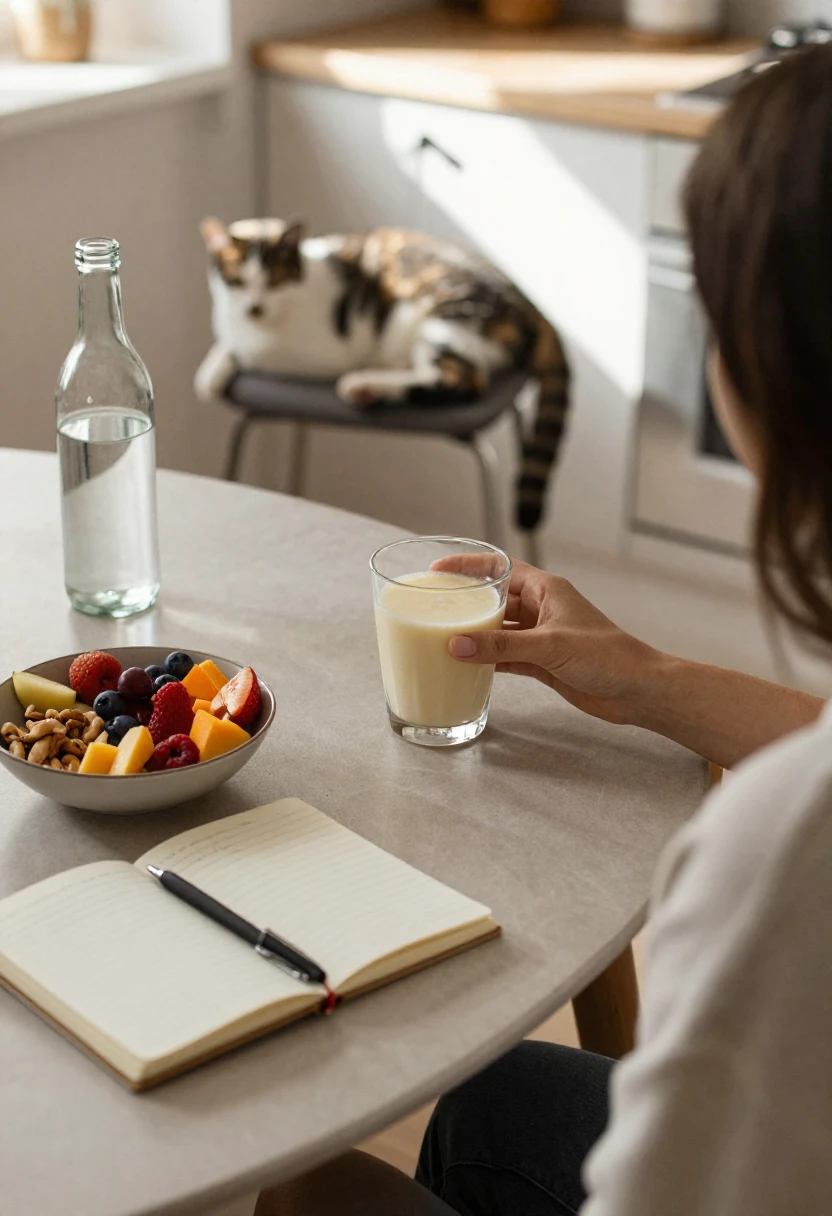
Horchata is often seen as a treat — something sweet, cooling, and comforting. And yes, it can absolutely be enjoyed that way. But when you look a little closer, you’ll find that homemade horchata can also fit beautifully into a thoughtful, balanced way of eating.
It all depends on how it’s made.
Naturally Simple, When Made at Home
Traditional horchata is built on very basic ingredients: rice, water, cinnamon, and sugar. When you prepare it yourself, you know exactly what goes into your glass — no artificial flavors, no preservatives, no unnecessary additives.
That alone makes homemade horchata very different from many bottled versions, which are often much sweeter and more processed.
At home, you’re in control. And that changes everything.
Energy From Carbohydrates, Not Chemicals
Rice provides natural carbohydrates, which means horchata offers gentle, steady energy rather than a sharp sugar spike.
When paired with meals — especially spicy or savory ones — this can help:
- maintain energy levels,
- prevent sudden crashes,
- support digestion.
It’s not an “energy drink.”
It’s nourishment in a soft, traditional form.
Sugar: Balance Is the Key
Most horchata contains added sugar, and that’s part of its character. It’s meant to be lightly sweet.
But “lightly” is important.
When you make horchata at home, you can adjust sweetness to your real taste — not to mass-market preferences. Many people discover they enjoy it far less sweet than store-bought versions once they get used to it.
Less sugar means:
- better hydration,
- fewer energy dips,
- more space to enjoy it regularly.
Dairy or No Dairy: Both Can Be Healthy
Some horchata recipes include milk or condensed milk. Others are completely dairy-free.
Both can fit into a healthy lifestyle.
Milk-based horchata offers more protein and calcium, making it feel more filling. Water-based or plant-based versions feel lighter and are easier on digestion for some people.
There is no “better” option — only what suits your body best.
Fiber and Digestion
While horchata isn’t high in fiber, it’s gentler on digestion than many heavy drinks.
When properly strained, it’s smooth and easy to digest. When paired with fiber-rich meals, it supports comfort rather than heaviness.
Some variations with almonds, oats, or seeds add small amounts of fiber and healthy fats, making the drink more nutritionally rounded.
Making Horchata Lighter (If You Want To)
If you’d like a lighter everyday version, small changes go a long way.
You can:
- reduce sugar slightly,
- use more water and less milk,
- rely more on cinnamon and vanilla for flavor,
- sweeten with dates or honey in moderation.
These adjustments keep the soul of horchata intact while aligning it with your personal wellness goals.
Hydration and Refreshment
Because horchata is mostly water, it contributes to hydration — especially when served cold.
On hot days, it can be more appealing than plain water, which means people often drink more fluids without forcing themselves to.
That’s an underrated benefit.
A Note on Moderation
Horchata is not meant to replace water.
It’s not meant to be consumed in huge quantities every day.
It’s meant to be enjoyed — regularly, comfortably, without guilt.
When something is made with care and enjoyed with awareness, it rarely becomes a problem.
Food as Comfort and Connection
Finally, health is not only about nutrients.
Horchata connects people to tradition, family, and memory. It slows meals down. It invites sharing. It creates small moments of pleasure.
Those things matter too.
A drink that makes you feel grounded and calm is part of wellness — even if it contains sugar.
Common Mistakes & How to Avoid Them
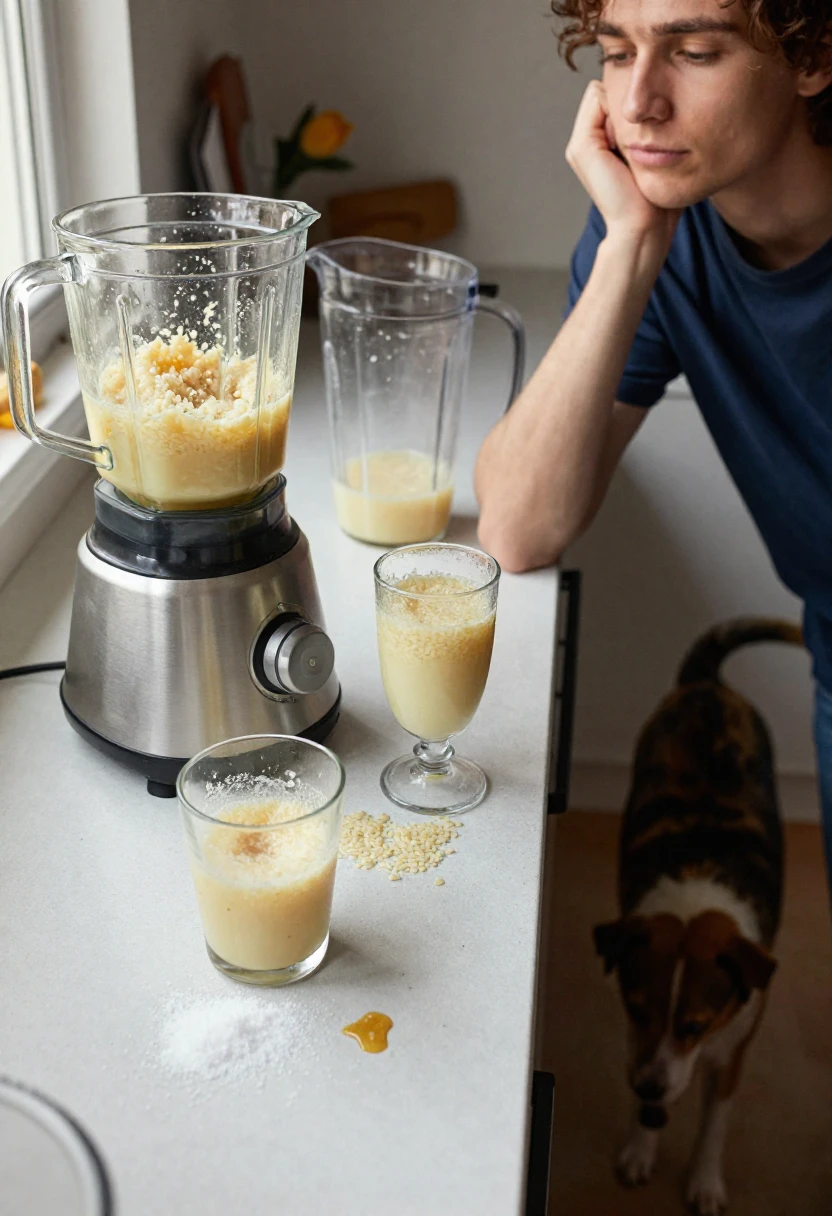
Most disappointing horchata isn’t the result of bad ingredients.
It’s the result of small, well-intended shortcuts that slowly pull the drink away from its true character.
The good news? Once you recognize these patterns, they’re easy to fix.
Rushing the Soaking Process
One of the most common mistakes is impatience.
Rice needs time to soften. Cinnamon needs time to release its warmth. When soaking is rushed, the blender has to work harder, and the final drink often feels rough or thin.
Horchata rewards waiting. Overnight soaking may seem inconvenient, but it’s often the difference between “okay” and “beautiful.”
Under-Blending the Base
If your horchata feels sandy or gritty, under-blending is usually the reason.
Blending isn’t just about breaking down rice. It’s about releasing starches that create body and smoothness. A quick pulse is rarely enough. The mixture should look cloudy and silky before you move on.
If your blender struggles, work in smaller batches. Texture is worth the extra minute.
Skipping Proper Straining
Many people strain once and move on.
That’s often not enough.
Fine rice particles can slip through and settle later, creating a chalky layer at the bottom of the pitcher. Double straining may feel excessive, but it creates the smoothness people associate with great horchata.
When in doubt, strain again.
Making It Too Sweet
Commercial horchata is often aggressively sweet, and many home cooks unconsciously copy that style.
But traditional horchata is gentle.
If sweetness dominates, it hides the rice and cinnamon completely. Always sweeten gradually, tasting between additions, and remember that cold temperatures soften sweetness.
What tastes “perfect” warm may taste bland once chilled — and vice versa.
Using Powdered Cinnamon Instead of Sticks
Powdered cinnamon seems convenient, but it behaves very differently in liquid.
It doesn’t infuse slowly. It disperses unevenly. It can leave bitterness and sediment.
Whole cinnamon sticks create cleaner, rounder flavor. If you care about authenticity and texture, they’re worth using.
Adding Too Much Milk
Milk can be beautiful in horchata. Too much milk turns it heavy.
When richness overtakes refreshment, horchata starts to feel like dessert instead of a drink. Add dairy slowly and stop as soon as the texture feels balanced.
If it feels like melted ice cream, it’s gone too far.
Forgetting to Taste at Each Stage
Many people only taste at the end.
By then, it’s harder to correct mistakes.
Taste after blending.
Taste after straining.
Taste after sweetening.
Taste after chilling.
Each stage tells you something. Great horchata is built through small adjustments, not one final correction.
Serving It Too Warm
Temperature matters more than most realize.
Lukewarm horchata feels flat and heavy. Fully chilled horchata feels alive.
Always allow enough time for proper chilling. If you’re in a hurry, add ice — but never rely on ice alone.
Storing It Incorrectly
Horchata should be stored in a sealed glass container in the refrigerator.
Open containers absorb fridge odors easily. Plastic can hold flavors. Both affect taste.
Proper storage keeps your horchata fresh for two to three days without quality loss.
Trying to “Fix” Everything at Once
When something feels off, beginners often change multiple things at once.
More sugar. More milk. More cinnamon. More water.
This creates confusion.
Change one thing. Taste. Then decide.
That’s how you learn.
Frequently Asked Questions (FAQ)
When people start making horchata at home, the same thoughtful questions tend to appear again and again. That’s a good sign. It means you’re paying attention — not just following a recipe, but trying to understand it.
Here are clear, honest answers to the most common ones.
Is homemade horchata really different from store-bought?
Yes — very different.
Store-bought horchata is usually pasteurized, heavily sweetened, and stabilized so it can sit on shelves for months. That process changes both texture and flavor.
Homemade horchata is fresher, lighter, and more nuanced. You can taste the rice. You can smell the cinnamon. Nothing feels artificial or flattened.
Once you get used to the homemade version, bottled horchata often feels surprisingly dull.
How long does horchata last in the refrigerator?
Properly stored in a sealed glass container, homemade horchata usually stays good for about two to three days.
After that, the flavor begins to fade and separation becomes more noticeable. It may still be safe, but it won’t taste its best.
Always shake or stir before serving, as natural separation is normal.
Can I make horchata without sugar?
You can — but it will taste very different.
Sugar isn’t only for sweetness. It also rounds out the rice and cinnamon and brings the flavors together.
If you prefer less sugar, it’s better to reduce it gradually rather than remove it completely. Some people use dates, honey, or maple syrup instead, which can work well when used lightly.
Why is my horchata gritty?
Grittiness almost always comes from one of three things: under-blending, insufficient straining, or rushing the soaking process.
Make sure the rice is fully softened, blend until the mixture looks milky, and strain thoroughly — preferably twice. Those three steps solve most texture problems.
Is horchata supposed to be thick or thin?
Traditional horchata should be light and pourable.
It shouldn’t feel watery, but it shouldn’t feel heavy either. Think somewhere between milk and almond milk in texture.
If it coats your mouth too much, thin it with cold water. If it feels empty, add a touch of milk or blend a little longer next time.
Can I freeze horchata?
Technically, yes — but it’s not ideal.
Freezing changes the texture and can cause separation when thawed. The flavor also loses some of its softness.
Horchata is best enjoyed fresh. It’s meant to be a living, short-lived drink.
Do I need special equipment?
Not really.
A basic blender and a fine strainer are enough. You don’t need expensive tools. What matters more is patience and attention.
Many beautiful horchata recipes were made long before modern appliances existed.
Why does my horchata taste flat?
Flatness usually means imbalance.
It may need:
- a little more sweetness,
- a touch more vanilla,
- slightly more cinnamon,
- or simply more chilling time.
Taste, adjust gently, and let it rest. Flavor often develops with time.
Can children drink horchata?
Yes, in moderation.
Homemade horchata is generally gentle and family-friendly, especially when not overly sweet. Many people grow up drinking it at family meals and celebrations.
Is horchata gluten-free?
Traditional rice-based horchata is naturally gluten-free.
However, always check ingredients if using packaged products or flavorings, as additives can sometimes contain gluten.
Conclusion — Why Homemade Horchata Is Worth It
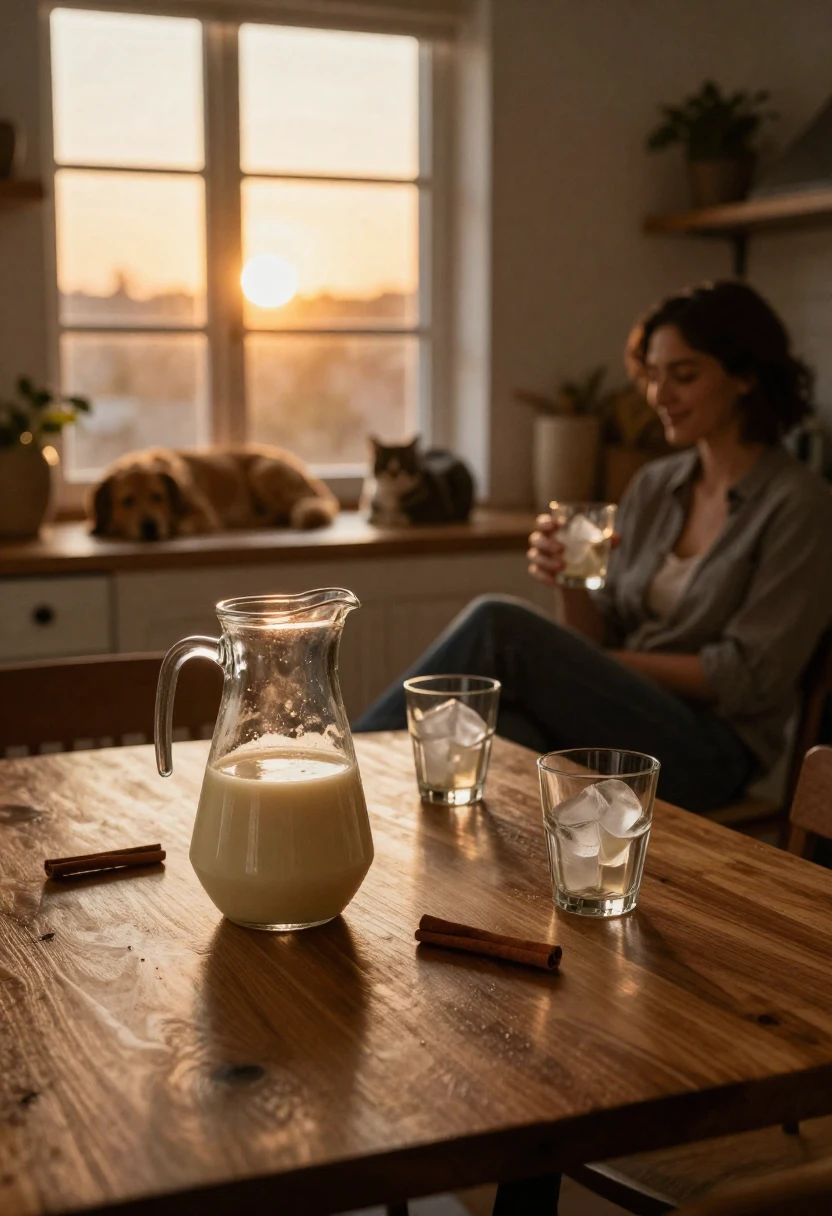
In a world filled with shortcuts, instant mixes, and bottled versions of almost everything, making horchata from scratch can feel almost rebellious.
It takes time.
It asks for patience.
It can’t be rushed.
And that’s exactly why it matters.
When you soak the rice overnight, when you wait for the cinnamon to bloom, when you strain slowly and taste carefully, you’re doing more than following a recipe. You’re participating in a tradition that has traveled through generations, kitchens, and cultures.
You’re choosing presence over convenience.
Homemade horchata teaches a quiet lesson: simple ingredients become extraordinary when treated with care. Rice, water, sugar, and spice — nothing rare, nothing expensive — yet together they create something deeply comforting and memorable.
It’s the drink you pour when friends come over on a warm afternoon.
It’s what you serve alongside spicy food to bring balance.
It’s what you keep in the fridge and reach for when you want something gentle and familiar.
And over time, it becomes yours.
Maybe you’ll prefer more cinnamon.
Maybe less sugar.
Maybe almond milk or coconut milk instead of dairy.
Maybe a hint of strawberry in summer.
All of that is part of the story.
Because horchata isn’t about perfection.
It’s about connection — to food, to memory, to rhythm, to home.
Once you’ve made it yourself, slowly and thoughtfully, you’ll understand why people return to it again and again.
Not just for the taste.
For the feeling.