Why the Rules of Diets Often Fail Us

There’s a moment many of us know too well: you sit down with a plate of food and instead of asking “Am I hungry?” your mind whispers, “Is this allowed?”
Maybe it’s the calorie count you memorized last summer, the “clean eating” post you scrolled past this morning, or the quiet guilt that seems to follow certain foods around.
For years, diet culture has taught us to outsource our hunger to rules — portion charts, color-coded lists, good foods, bad foods, timing windows, forbidden cravings. We’ve learned to negotiate with our bodies instead of listening to them. And slowly, without even noticing, we drift away from the simple truth:
Your body already knows how to eat.
It always has.
But after years of dieting, emotional eating, rushing meals, or ignoring hunger because the clock says it’s “too early,” those inner signals can become quiet — like a radio station you haven’t tuned into for a long time. Intuitive eating invites you to turn the volume back up.
It’s not a diet.
It’s not a weight-loss strategy.
It’s not a set of rules.
It’s an invitation to rebuild trust with your body through curiosity, awareness, and compassion.
Imagine eating because you’re hungry — not because you’re stressed, bored, or told to “finish your plate.”
Imagine stopping when you feel comfortably full — without guilt or pressure, without the fear of “breaking the rules.”
Imagine choosing foods that truly satisfy you — not the ones you think you should want.
That’s the heart of intuitive eating: a return to your own voice.
You might already feel a spark of relief reading this. Or a bit of skepticism. Or both. That’s completely normal. Learning to eat intuitively isn’t about perfection — it’s about a gentle shift toward self-trust, one small meal, one moment, one mindful breath at a time.
If you’ve ever felt exhausted by diets, confused by trends, or disconnected from your hunger, you’re not alone. And this guide is for you.
What Is Intuitive Eating? — Core Principles and Philosophy
Intuitive eating is often described as “listening to your body,” but that’s only the beginning. In truth, it’s a gentle, evidence-based framework created by two dietitians — Evelyn Tribole and Elyse Resch — to help people rebuild a healthy, peaceful relationship with food.
It’s not about willpower, discipline, or control.
It’s about relearning trust — the trust that your body can guide you better than any diet ever could.
At its core, intuitive eating is built on a simple but radical idea:
Your body is wise.
Your hunger is valid.
Your satisfaction matters.**
After years of mixed messages — eat less, eat clean, avoid carbs, don’t snack, only snack, control cravings, ignore cravings — many of us lose the ability to hear that inner wisdom. Intuitive eating brings us back home to it.
The 10 Principles of Intuitive Eating (in warm, simple language)
These aren’t rules. They’re gentle guideposts — invitations rather than obligations:
- Reject the Diet Mentality
Let go of the idea that you must shrink yourself to be worthy or healthy. - Honor Your Hunger
Eat when you’re hungry. Hunger is not a failure — it’s a signal. - Make Peace with Food
Give yourself unconditional permission to eat. Restriction fuels cravings. - Challenge the Food Police
Silence the inner critic that labels food as “good” or “bad.” - Discover the Satisfaction Factor
Eat foods that taste good and feel good in your body. - Feel Your Fullness
Pause and check in with your comfort level. Fullness is a sensation, not a rule. - Cope with Emotions with Kindness
Food can comfort, but it’s not the only comfort you deserve. - Respect Your Body
Treat it with dignity — even if you’re not in love with it today. - Movement — Feel the Difference
Exercise to feel alive, not to burn calories. - Honor Your Health with Gentle Nutrition
Choose foods that support your well-being, without rigidity or guilt.
What intuitive eating is NOT
To clear things up from the start:
- It’s not about eating anything, anytime, without awareness.
- It’s not incompatible with nutrition science.
- It’s not anti-health.
- It’s not a quick fix.
It’s a process — a compassionate, gradual recalibration. With practice, the noise of diet culture fades, and your own needs become clearer, steadier, kinder.
A small story moment
A reader once told us:
“For years I ate what I thought I should eat. Now I’m learning to eat what actually satisfies me — and for the first time in my life, meals feel peaceful.”
That’s the heart of intuitive eating: replacing pressure with presence, and shame with understanding.
Why Intuitive Eating Matters — Beyond Weight Loss
One of the most refreshing truths about intuitive eating is that it shifts the conversation away from weight and toward well-being — physical, emotional, and psychological. Instead of forcing the body into a smaller shape, intuitive eating invites you to build a gentler, more trusting partnership with yourself.
And when that partnership strengthens, remarkable things begin to change — often in ways diets never could.
1. It reduces stress around food
Chronic dieting puts your body into a constant state of vigilance:
How many calories? Is this allowed? When’s my next meal? Did I eat too much?
These thoughts create stress — and stress can weaken immunity, disrupt hormones, affect digestion, and increase cravings.
Intuitive eating removes the pressure.
No more checking labels with fear.
No more guilt after meals.
No more mental math.
Instead, meals become softer, calmer, and more connected to what your body actually needs.
2. It supports more stable eating patterns
Restriction often leads to overeating — a cycle that feels like failure but is actually your body fighting for balance.
When you allow yourself to eat consistently and without judgment:
- hunger feels less urgent,
- overeating becomes less frequent,
- cravings lose their intensity,
- you naturally gravitate toward balanced meals.
Your body trusts you again — and you begin to trust it back.
3. It improves psychological well-being
Studies show that intuitive eaters tend to experience:
- higher self-esteem,
- improved body satisfaction,
- reduced anxiety around food,
- lower rates of disordered eating behaviors.
Why?
Because intuition naturally supports compassion, not criticism.
Your inner dialogue softens.
Your choices feel more aligned with who you are, not who you “should” be.
4. It strengthens your connection to hunger and fullness cues
Years of dieting can blur the simple sensations of hunger and satiety.
Intuitive eating helps you:
- feel early hunger, not just the “starving” point,
- notice comfortable fullness, not stuffed discomfort,
- choose foods that satisfy both body and mind,
- eat at a pace that feels right.
When you’re tuned in, eating becomes grounding rather than confusing.
5. It supports long-term, sustainable health
Gentle, flexible eating tends to create more sustainable habits than rigid dieting.
People who practice intuitive eating often find that they:
- naturally incorporate more nutritious foods,
- enjoy movement more,
- sleep better,
- feel more stable emotionally,
- maintain weight ranges that are healthy for their bodies.
No extreme swings, no burnout — just steady care.
A short reflection
Imagine living in a body that doesn’t feel like a battleground.
Imagine meals that don’t feel like tests.
Imagine choosing foods because they bring nourishment, comfort, and clarity — not because of rules.
That is why intuitive eating matters.
It’s not about perfection; it’s about peace.
How to Start Practicing Intuitive Eating — Gentle First Steps
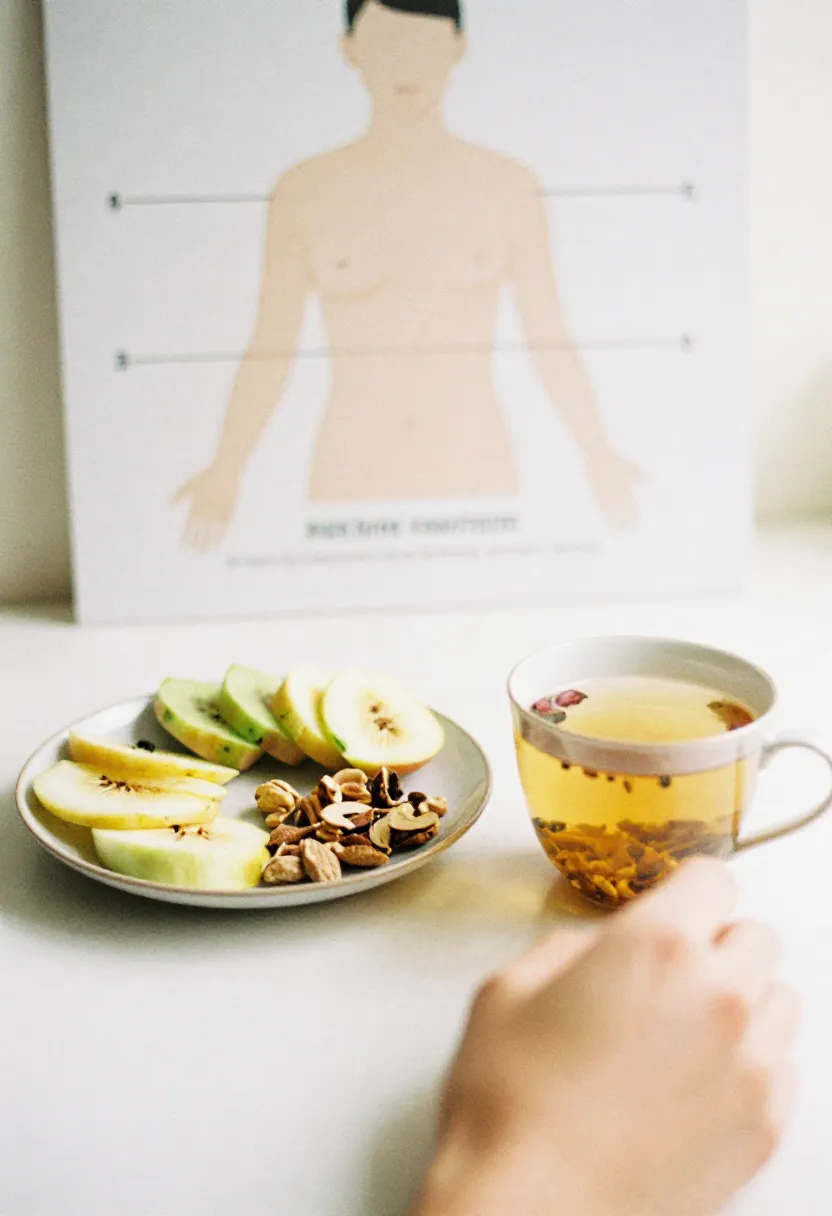
Beginning intuitive eating can feel both liberating and intimidating. After years (or decades) of following food rules, calorie charts, or “good vs. bad” lists, the idea of listening inward may seem unfamiliar — even scary. But intuitive eating isn’t about throwing structure away. It’s about replacing external rules with internal guidance.
Think of this phase as learning a language you once knew fluently — the language of your own body.
Here are the soft, practical first steps to help you reconnect.
1. Start noticing your hunger — without judgment
Hunger isn’t a problem. It isn’t a sign of weakness.
It’s simply your body’s way of saying:
“I need energy.”
Try tuning in at different points of the day:
- mild hunger: a gentle nudge
- moderate hunger: growing awareness
- strong hunger: urgency, irritability, low energy
You’re not trying to “control” hunger — just observe it.
Many people find this step surprisingly emotional. That’s okay. You’re rebuilding trust.
2. Allow yourself to eat when you’re hungry
Dieting often teaches us to delay hunger, silence it, or bargain with it. Intuitive eating asks you to do something revolutionary:
Respond to hunger with food.
Eat a meal.
Have a snack.
Bring a nourishing softness to the moment.
When your body learns it can rely on you, cravings and overeating begin to fade naturally.
3. Notice fullness with curiosity, not rules
Fullness has many layers:
- softly satisfied
- comfortably full
- very full
- uncomfortably stuffed
Instead of labeling any fullness as “good” or “bad,” explore how each one feels. Over time, you’ll rediscover the sweet spot: satisfied and content.
A helpful question to ask during meals:
“How is this feeling in my body right now?”
4. Remove food labels — stop calling foods “good” or “bad”
This is one of the hardest shifts, but also the most freeing.
When we forbid a food, it becomes more powerful — and more tempting. This often leads to guilt → overeating → restriction → craving again.
Instead, practice telling yourself:
All foods are morally neutral.
You’re not “good” for eating salad or “bad” for eating pizza.
You’re simply feeding yourself — with different types of satisfaction.
5. Add satisfaction back into eating
This is where intuitive eating becomes joyful.
Ask yourself:
- What sounds good right now?
- What texture, temperature, or flavor would satisfy me?
- What food would feel comforting? Energizing? Nourishing?
When satisfaction is honored, overeating becomes less likely — because the meal truly hits the spot.
6. Create small rituals of presence
You don’t need to meditate at every meal. But small moments make a big difference:
- Sit down to eat
- Take the first few bites slowly
- Pause halfway through
- Notice your breath
- Notice your body’s response
These gentle rituals help you reconnect to internal cues.
7. Be patient with yourself — this is a process, not a performance
You will have moments where you overeat. Moments where you undereat. Moments where emotions overwhelm hunger. This is normal.
Intuitive eating is not about getting it “right” every time.
It’s about rebuilding a relationship — and relationships grow with patience.
One reader once wrote:
“At first I didn’t hear any signals. Then I heard whispers. Now hunger feels like a language I understand again.”
You’ll get there too.
Common Misconceptions & Challenges — What Intuitive Eating Isn’t
Whenever intuitive eating comes up, people often imagine a free-for-all approach where you eat donuts all day simply because you “felt like it.” But that’s not intuitive eating — that’s rebellion against years of restriction. And it’s a normal stage for many people who have lived under strict food rules.
To truly understand intuitive eating, it’s important to clear up the most common misunderstandings and acknowledge the gentle challenges that come with learning a new (or rather, rediscovered) way to eat.
Misconception 1: “Intuitive eating means eating anything, any time, without thinking.”
No — intuitive eating is aware, not impulsive.
It asks:
- Am I hungry?
- What am I hungry for?
- What would satisfy me?
- How will this food make me feel afterward?
It’s not chaos.
It’s consciousness.
Misconception 2: “You’ll just crave junk food forever.”
Cravings for highly palatable foods often come from two things:
- Restriction — when a food is forbidden, the brain wants it more.
- Emotional need — when food becomes comfort, distraction, or reward.
Once permission is restored and deprivation fades, something beautiful happens:
Cravings become calmer and more balanced.
Many people naturally begin choosing a wider variety of foods — including nutritious ones — because satisfaction becomes part of the equation.
Misconception 3: “It’s anti-nutrition.”
Absolutely not.
In fact, intuitive eating includes a full principle called Gentle Nutrition, which honors health without rigidity or guilt.
It’s the difference between:
“I have to eat this salad.”
and
“I want to feel good, and vegetables help with that.”
Nutrition remains important — it’s just no longer a weapon or punishment.
Misconception 4: “It will make me lose control.”
Many fear that if they stop dieting, they’ll spiral.
But what actually happens is the opposite:
- Eating becomes more stable
- Bingeing decreases
- Hunger feels less overwhelming
- Food loses its power over you
Control is replaced with confidence.
Misconception 5: “Intuitive eating is easy.”
It’s simple — but not easy.
Diets give you rigid rules.
Intuitive eating asks you to notice nuance.
Some of the challenges that often arise:
- Not recognizing hunger signals (dieting can mute them)
- Overwhelm when all foods become “allowed”
- Emotional eating surfacing more clearly
- Fear of weight changes
- Social pressure and diet culture messaging
These challenges are not failures — they are milestones in the process of healing.
A gentle reframing
Instead of viewing intuitive eating as something you must “master,” approach it as:
- a practice,
- a relationship,
- a continuous conversation with your body.
There’s no test.
No pass/fail.
Just learning, adjusting, softening, and growing.
One reader described it perfectly:
“Intuitive eating felt messy at first, but then it started to feel like freedom.”
That’s the journey — from confusion to clarity, from rules to trust.
How to Combine Intuitive Eating with Nutrient-Rich, Wholesome Choices
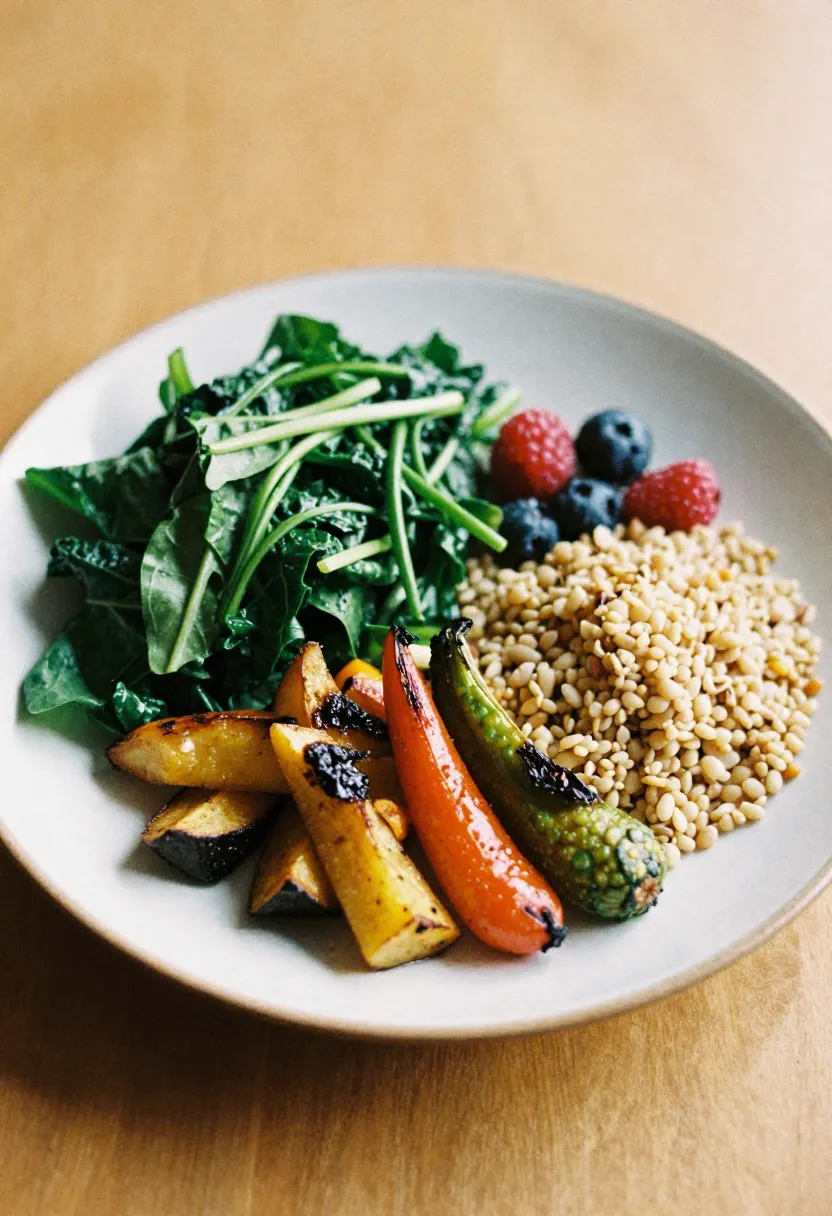
One of the most beautiful parts of intuitive eating is that it doesn’t dismiss nutrition — it simply puts it in the right place. Instead of forcing “healthy choices” through guilt or restriction, intuitive eating invites you to choose nourishing foods because they feel good in your body, not because you’re trying to earn worthiness or avoid shame.
This is what the creators of intuitive eating call Gentle Nutrition — the final principle, introduced last on purpose, after rebuilding trust, honoring hunger, and making peace with food.
Let’s explore how to bring nourishment and intuition together in a way that feels supportive, flexible, and deeply human.
1. Start with satisfaction — always
A meal that satisfies you is a meal that prevents overeating, mindless snacking, and emotional cravings.
Ask yourself before eating:
“What sounds good and what will make me feel good after?”
Satisfaction is both:
- Immediate (taste, texture, aroma)
- Long-term (energy, comfort, digestion)
A crunchy salad might feel refreshing at lunch; a warm soup might feel grounding on a chilly night. Both choices can be intuitive and nourishing.
2. Let nutrition guide you, not control you
Nutrition becomes gentle when it sounds like:
- “I want to add berries because they taste fresh and energizing.”
- “I feel better when I include protein at breakfast.”
- “I love how stable my energy feels when I eat more fiber.”
It’s not about avoiding anything — it’s about noticing what supports your body.
This creates a natural shift toward balanced meals without force.
3. Add nourishing elements instead of restricting foods
Instead of focusing on what to remove, try adding:
- more colorful vegetables
- fruit you genuinely enjoy
- satisfying proteins
- whole grains you like
- nuts or seeds for texture
- fermented foods for digestion
- warm, comforting meals when your body wants grounding
Adding feels expansive.
Restricting feels tight.
Your body knows the difference.
4. Notice how different foods make you feel — without judgment
This is where intuition grows.
Pay attention after eating:
- Do you feel energized or sluggish?
- Comfortably full or still hungry?
- Calm or jittery?
- Satisfied or craving something else?
This isn’t about labeling foods as “good” or “bad.”
It’s simply data — gentle, curious information your body offers.
Patterns will emerge naturally, not through rules but through awareness.
5. Create meals that balance pleasure + nourishment
Think of it as a harmony, not a formula.
Your meals might look like:
- avocado toast with a handful of greens,
- pasta with veggies and a protein you enjoy,
- yogurt topped with nuts, seeds, and fruit,
- a warm grain bowl with roasted vegetables and a satisfying sauce,
- chocolate after dinner because it truly completes the meal.
This is what real-life, sustainable nourishment looks like.
6. Leave space for fun foods — they matter too
Satisfaction foods (desserts, comfort dishes, nostalgic favorites) are part of intuitive eating.
Denying them only increases cravings and reinforces the restrict–binge cycle.
Your body thrives on nutrients, yes —
but your mind thrives on joy, connection, and memories.
Health includes both.
A gentle truth
When you stop fighting your body and start listening, you naturally begin choosing foods that make you feel well. Gentle nutrition grows from trust, not control.
One reader said:
“Once I knew I could have any food, I started craving vegetables again — not because I ‘should,’ but because they truly felt good.”
That’s intuitive eating at its best: nourishment grounded in freedom.
Real-Life Stories & Mindful Moments — Why It Feels Right to Many

Intuitive eating isn’t just a philosophy or a set of principles — it’s a lived experience. And for many people, this experience feels like exhaling after years of holding their breath. The shift can be subtle at first, then beautifully profound.
Here are a few gentle, true-to-life stories and reflections that show what intuitive eating looks like in practice — not perfection, but presence.
1. Anna’s Story — Discovering Hunger Again
Anna spent most of her twenties ignoring hunger.
Breakfast was “optional.” Lunch was “too busy.” Dinner was “whatever was left.” Hunger felt like something to conquer, not something to answer.
When she began intuitive eating, her first revelation was simple:
Hunger was not the enemy — it was a message.
At first, she set reminders to check in with her body.
Within weeks, her hunger signals grew clearer.
Within months, she stopped needing reminders entirely.
She says:
“It felt like hearing my own voice again.”
2. Mark’s Story — The Cookie That Changed Everything
After decades of dieting, Mark didn’t trust himself around sweets.
His rule was: no cookies in the house — ever.
When he tried intuitive eating, his therapist suggested something radical:
Buy the cookies.
The first few days were messy.
He ate more than he wanted.
He felt scared.
But he kept reminding himself: “I’m allowed to have this.”
By week three, something shifted.
He realized he could eat one cookie, enjoy it, and move on.
Mark said:
“The less I feared cookies, the less I needed them.”
That’s the power of permission.
3. Maya’s Story — Rediscovering Satisfaction
Maya had always eaten fast.
She grew up in a busy household, worked long shifts, and saw meals as functional, not pleasurable.
When she learned about the satisfaction factor, she started slowing down — just for the first three bites of each meal.
She noticed:
- textures she’d never paid attention to,
- flavors she’d forgotten she loved,
- fullness arriving more gently and more predictably.
Eating became an act of connection, not just consumption.
Her favorite quote:
“Satisfaction filled me in ways overeating never could.”
4. Lena’s Story — Making Peace with “Bad Foods”
Lena labeled food constantly:
good, bad, clean, junk.
It exhausted her.
The first time she ate pizza without guilt, she cried.
Not because of the pizza, but because of the peace.
She realized:
Food wasn’t hurting her. The shame was.
Now pizza night is her favorite ritual — not because it’s rebellious, but because it’s joyful.
5. Amir’s Story — When Movement Became Freedom
Amir used to exercise only to “burn off” food.
It felt like punishment.
When he integrated intuitive eating, he shifted from punishment to pleasure:
- walking because it cleared his head,
- stretching because it felt grounding,
- dancing because it made him smile.
He said:
“My body stopped being a problem to fix and became a place to live.”
Why these stories matter
Because intuitive eating isn’t a switch — it’s a relationship.
It comes alive in:
- tiny moments of awareness,
- choices made with calm rather than fear,
- rediscovered enjoyment,
- softened rules,
- renewed trust.
Most people who embrace intuitive eating describe the same feeling in different words:
Relief.
Freedom.
Coming home.
When Intuitive Eating May Not Be Enough — Situations to Watch

Intuitive eating is a compassionate, empowering approach — but like any framework, it has its boundaries. Some people need additional support, structure, or medical guidance alongside it. This doesn’t mean intuitive eating “fails” or that you’re doing it wrong. It simply means your body or circumstances require a bit more care.
Think of intuitive eating as a foundation.
Sometimes you need extra scaffolding to help that foundation feel steady.
Here are situations where intuitive eating alone might not be sufficient — and where gentle, professional guidance can make all the difference.
1. When hunger and fullness cues feel completely missing
For some people, years of dieting, chronic stress, trauma, or irregular eating can mute internal signals. If you:
- rarely feel hungry,
- feel hungry all the time,
- can’t sense fullness,
- or feel disconnected from your body entirely,
then intuitive eating may feel confusing or inaccessible at first.
In these cases, a dietitian or therapist trained in IE can help rebuild these cues step by step. Sometimes your body needs time, structure, and safety before intuition feels clear again.
2. When emotional eating is overwhelming
Emotional eating is normal and human — we all do it.
But when food becomes:
- the only coping mechanism,
- a constant escape from stress, sadness, or boredom,
- tied to shame or secrecy,
- or used to numb difficult emotions,
then intuitive eating alone may not address the deeper layers.
Emotional support from a therapist can help you explore what’s beneath the urge — not to take food away, but to expand your toolkit.
3. When medical conditions require structured eating
Certain health needs simply require more specific guidance:
- diabetes
- digestive disorders (IBS, IBD, celiac)
- thyroid conditions
- PCOS
- food allergies or intolerances
- pregnancy or breastfeeding
- eating disorders in active recovery
Intuition can still play a role, but medical nutrition therapy must be part of the picture to keep your body safe and supported.
4. When eating disorder history complicates hunger cues
For those who have experienced restrictive or binge eating disorders, hunger and fullness signals can be extremely distorted or absent altogether. Intuitive eating is often a late-stage tool in recovery — not the starting point.
A registered dietitian and therapist experienced in ED care can help rebuild stability first.
5. When diet culture messages still feel overpowering
If thoughts like:
- “I can’t trust myself,”
- “I must control everything I eat,”
- “I’ll lose control without rules,”
- “I should look a certain way,”
constantly dominate, intuitive eating may feel impossible.
This is where mindset work, body image support, and community can help create safety for intuition to grow.
6. When life circumstances make regular eating difficult
Stress, grief, parenting newborns, shift work, financial limitations — real life sometimes makes it hard to hear the body’s signals. In these moments, intuitive eating might need:
- flexible meal planning
- gentle structure
- supportive routines
- help from others
This isn’t failure. It’s adaptability.
A compassionate reminder
Needing support does not make you weak.
Intuition thrives best in a regulated, nourished, cared-for body.
One reader said:
“I thought intuitive eating wasn’t working for me. Then I realized I needed healing first — and intuition came afterward, like a soft whisper.”
If intuitive eating feels hard, confusing, messy, or overwhelming, it usually means you need more support, not more rules.
Gentle Conclusion — Your Body, Your Trust, Your Food Journey

Intuitive eating isn’t a destination you arrive at.
It’s a relationship you build — one meal, one breath, one quiet moment of awareness at a time. It’s a slow softening of the rules you never chose but somehow inherited. It’s a gradual return to the body you’ve lived in all along.
And most beautifully, intuitive eating gives you back something diet culture often takes away:
the right to trust yourself.
Your hunger is not a flaw.
Your cravings are not a problem.
Your body is not a project to perfect.
It is a living, breathing home — one that speaks to you in sensations, preferences, rhythms, and needs. When you stop fighting it, a surprising peace arrives. Meals become simple again. Choices feel clearer. Food becomes nourishment instead of negotiation.
Intuitive eating isn’t perfect, linear, or polished.
Some days you’ll feel deeply in tune; other days will feel noisy or confusing.
Both are okay. Both are part of the journey.
What matters is not performing intuition but practicing gentleness:
- listening instead of judging,
- noticing instead of controlling,
- respecting instead of resisting,
- choosing foods that support both health and happiness.
Over time, your body learns to trust that you will feed it.
And you learn to trust that your body knows what it needs.
A reader once said:
“For the first time in my life, eating feels like coming home.”
May this guide help you move toward that same feeling — slowly, kindly, intuitively.